Home Blog Page 258

Recovery or Recession? – Three Questions about China’s Economy

0

For some time, there have been some commentary in the international community that speak ill of China’s economy.

What is the trend of China’s economy?

Recently, the National Bureau of Statistics of China has published the statistics about China’s national economic performance in 2023.

It shows that China’s economy has rebounded and moved upward, with high-quality development solidly advancing, new economic drivers developing faster, market demand recovering steadily, green transformation forging ahead, and foreign trade becoming more resilient.

China’s economy will continue to provide strong impetus for the world.

Is China’s economy stagnating? As shown by the statistics, China’s economy is making steady progress, and remains the biggest engine of global growth.

The International Monetary Fund has stated that China will be the largest driver of global economic growth in the next five years, and one percentage point increase in gross domestic product (GDP) growth in China leads to 0.3 percentage point increase in growth in other economies.

As the only country encompassing all industrial categories in the United Nations industrial classification, China contributes to around one-third of world economic growth over the years.

The scale of China’s manufacturing industry has ranked first in the world for 13 consecutive years.

In 2023, the Chinese economy has achieved a year-on-year GDP growth of 5.2 per cent, outpacing most major economies.

China is now advancing Chinese modernisation on all fronts through high-quality development, delivering modernisation to more than 1.4 billion people.

It will be a remarkable achievement in human history, one that will provide continuous impetus to the development of China and the wider world.

Will China’s declining population pose economic challenges?

China’s demographic dividend is turning into talent dividend, as innovation is the primary driving force for development.

China now ranks first in the world in terms of the size of talent pool, human resources in science and technology and the total number of researchers.

China’s industrial optimisation and upgrading has achieved remarkable results and is moving up the mid-to-high-end value chain.

China’s expenditure on research and development and investment in high-tech industries have maintained double-digit growth for many years.

The number of China’s patent applications ranks first in the world, and the number of unicorn companies ranks second in the world.

China is pushing ahead green and low-carbon transformation, which will provide impetus for development in green infrastructure, green energy, green transportation and other fields, and generate a market of 10 trillion yuan per year.

Is China’s Door closing?

China remains firmly committed to opening up, sharing development opportunities with the world.

President Xi Jinping’s call for high-quality Belt and Road cooperation and the Global Development Initiative have provided the most inclusive and extensive international cooperation platform.

China is the major trading partner of more than 140 countries and regions.

Our overall tariff level has been cut to 7.3 per cent, relatively at par with the developed members in the World Trade Organisation.

China is the world’s largest source of international development financing.

Since the beginning of this century, China has provided approximately $1.34 trillion in loans and grants to more than 20,000 projects in 165 low- and middle-income countries.

By opening up wider, China aims to develop together with all in the world.

Recently, there are some negative rhetoric against China’s economy.

Some countries want to shut out China in the name of “de-risking”, to “decouple” from China, fragment industrial and supply chains, and build “small yards with high fences”.

However, facts speak louder than words. In the post-epidemic era, despite challenging international environment, increasing uncertainty of the world economy and insufficient growth momentum, China’s economy can still achieve its growth targets beyond expectations with per capita disposable income continuing to rise, which is a strong demonstration of China’s resilience, vitality and potential.

To shut out China is to throw away opportunities, cooperation, stability and development.

Such a move would only create and spread risks, and no one would benefit from it.

As Premier Li Qiang has stated in the special address at the Opening Ceremony of the World Economic Forum Annual Meeting 2024, the world has entered a new period of turbulence and transformation, yet the overall direction of human development and progress will not change, the overall dynamics of world history moving forward amid twists and turns will not change, and the overall trend toward a shared future for the international community will not change.

After all the shifts and changes over the years, all should cherish communication the more and exchange, solidarity and cooperation, openness and sharing, peace and stability, forging ahead with a shared aspiration for a better future toward building a community with a shared future for mankind!
Managing Migration: Global approach based on partnership, cooperation needed – Amb. Simone Giger

0

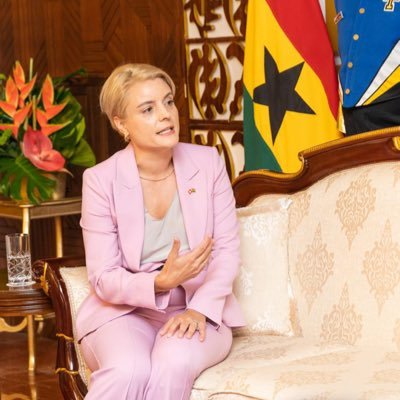
Madam Simone Giger, Ambassador of Switzerland to Ghana, says a global approach based on partnership and cooperation is needed to manage migration effectively.

She said given the complexities and global nature of migration, an efficient collaborative approach was essential in addressing the challenges it presented.   

The Swiss Ambassador, speaking at the opening of the 2024 Migration Management Course being hosted by the Kofi Annan International Peacekeeping Training Centre (KAIPTC), said, “Migration cannot be tackled by any country alone.”

The two-weeks course, second in a series, with 28 participants from ECOWAS Member States, is being funded by the Swiss Government and the Swiss State Secretariat for Migration (SEM).

The Migration Management Course offers a unique platform for participants to enhance their capacities and strengthen their resolve to promote effective practices that are fundamental to managing migration and movement patterns in the sub-region.

Ambassador Giger said it was of utmost importance that different countries partnered at the regional and international levels with a shared commitment and understanding of the issues and challenges of migration while finding effective solutions.

She stated that migration was a diverse and complex phenomenon with many different causes with many different consequences.

“Migration can mean flight and protection from conflict, insecurity, economic hardship or climate change, but it can also mean studies and new work opportunities.

It entails trafficking and smuggling, fraud and crime, human rights abuses and separated families but also family reunions, development, remittances, integration and new beginnings,” she said.  

The Swiss Ambassador said governments and societies were constantly asked to respond and keep up to those complex challenges and opportunities that migration implied which differed from one context to the other.

Therefore, she noted, that the Migration Management Course would deliver a comprehensive picture of the migration phenomenon with special focus on the West African region while aiming at discussing regional solutions and encouraging international and regional cooperation.

Switzerland, she said, was committed to supporting the Migration Management Course and expressed optimism that it would constitute real added value for the region and each participating country.

Air Commodore David Akrong, Deputy Commandant, KAIPTC, who spoke on behalf of the Commandant, Major General Richard Addo Gyane, said the root causes of migration were numerous and complex and that trends and patterns in migration in Africa were shaped by factors, including rapid population and labour force growth, unstable politics, escalating ethnic conflicts, economic decline and environmental deterioration.

Those factors, he said, were usually brought about by a mismatch between the rapid population growth and the available resources, low level of requisite technology to exploit the available natural resources and capacity to create employment and jobs at the countries of origin.

Air Cdre Akrong said over the years, the challenges had driven people to move in search of better or alternative opportunities and that for some communities, migration had become a survival strategy.

“Properly managed migration can bring benefits both to migrants and societies,” he noted.

He expressed optimism that the Migration Management Course would equip participants with the knowledge, tools and skills to help reduce the negative effects of migration while maximising the positive aspects.

Mr Chamango Tchagam Blaise Aime, a participant and a Human Rights Advocate from Cameroon, said an issue of grave concern was the armed conflict in the northwest and southwest of Cameroon that had caused many people to move internally and externally.

“Many Cameroonians have moved from the southwest and the northwest regions to other safer regions and out of the country to neighbouring Nigeria, and the situation is worrying. These internally and externally displaced persons are facing serious humanitarian concerns.”

As a human rights defender, Mr Chamango said after the two-week course, he hopes to have a good mastery of the legal and institutional framework governing migration regionally and internationally to help deal with the emerging crisis in Cameroon.

Dr Edwin Alfred Nii Obodai Provencal chairs GITFiC-AfCFTA Tertiary Student Club

0

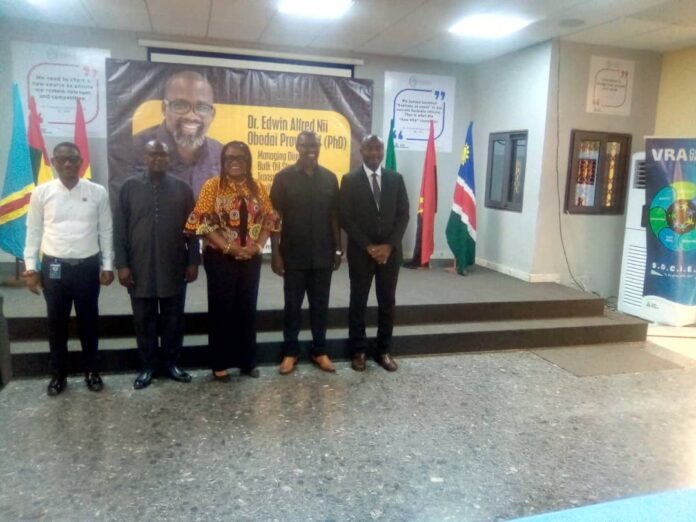
Dr Edwin Alfred Nii Obodai Provencal, the Managing Director of Bulk Oil Storage and Transportation Company has been outdoored as the Chairman of the GITFiC-AfCFTA Tertiary Students Club.

The Ghana International Trade and Finance Conference works with the private sector and the Government sector in the sub-region and the continent at large to drive the African Continental Free Trade Agreement (AfCFTA).

It is to broaden development agenda of the continent as defined in the A.U. (Agenda 2063) and global trade issues at large.

It has three thematic basic areas of services which are Trade, Trade Finance, and Logistics to enhance intra Africa trade, regional integration, trade liberalization, trade policies, and practices of the African continent.

The GITFiC-AfCFTA Tertiary Students Club was officially established in March 2023 at the University of Ghana and has since been replicated at three other institutions in Ghana, namely the University of Development Studies (UDS), All Nations University (ANU), and Kwame Nkrumah University of Science and Technology (KNUST).

Prof Rosina Kyerematen, Dean of Students Affairs, University of Ghana in an opening remark expressed the hope that the Club was not going to be a talking shop but “we are going to put things to action.”

“I always say that the difference between us and industrialised or developed countries is that they take research very seriously. They vote millions of dollars to fund research and they take serious action with data and innovation they come with.

“It is about time we got serious as Africans. We are lagging because we do not see the seriousness in merging industry, academic, government, policymakers, and young people – all of us sitting at one table producing ideas and not just government, but private industries putting in money to fund research,” she stated.

Prof Kyerematen said: “I am happy that the Club has been put together, which will hopefully work with industry, policymakers, academia so that when we do our research at the universities, please do not let it just be on the shelves to gather dust. When we come to the trade industry, Bulk, please help us.”

Dr Provencal in a speech said as patrons and club members, they acknowledged the pivotal role young minds played in shaping Ghana and the continent at large and that they would provide a platform to channel energy, creativity, and passion towards advancing AfCFTA objectives to effect meaningful change in communities.

“This can be done through entrepreneurship, startups and dreaming to become some of Africa’s giant production and manufacturing success stories. These, I am informed, are the ideals behind this initiative for which I am today honoured to be chairing,” he stated.

The Chairman said empowering the next generation of leaders with the knowledge and skills to navigate regional trade complexities, fresh avenues would be unlocked for growth and development across Africa, yet the journey toward realizing AfCFTA’s full potential would be fraught with challenges.

“We must confront and address infrastructure deficits, regulatory barriers, and skills shortages that threaten to impede our progress. However, it is precisely in the face of these challenges that our resolve must remain unshakable, and our determination resolute,” he stated.

Dr Provencal said: “As members of the GITFiC-AfCFTA Tertiary Students Club, we bear a responsibility not only to ourselves but to future generations. We must seize the opportunities AfCFTA presents and chart a course toward a more prosperous and inclusive future.

“We must dare to dream big, think boldly, and act decisively in pursuit of our shared aspirations. As members of the GITFiC-AfCFTA Tertiary Students Club, we carry the torch of hope. We can reshape Africa’s narrative, rewriting the story of our continent for generations to come,” he said.

Minister reiterates government’s commitment to fostering youth-led businesses

0

Mr Kwabena Okyere Darko-Mensah, the Western Regional Minister, has reiterated the government’s commitment to creating a conducive environment where youth-led businesses will thrive.

He said the Government, through agencies and development partners, were working tirelessly to provide opportunities for the teeming youth to uncover their true entrepreneurial potential as means of creating jobs for sustainable development.

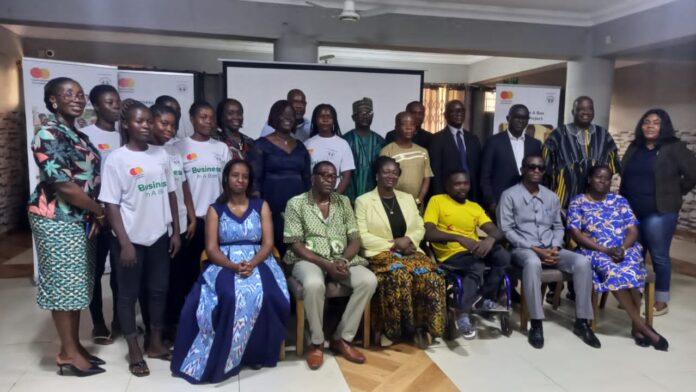
Mr Darko-Mensah was speaking at a regional sensitisation drive, organised by the Ghana Enterprises Agency (GEA) and the Mastercard Foundation to educate the youth on a Business in a Box (BizBox) Project, designed to empower young entrepreneurs to grow their businesses.

The workshop, held in Takoradi, was attended by young people in the Western Region to introduce them to the objectives and strategies of the BizBox Project and its registration and selection processes.

The project is a four-year collaborative initiative between the GEA and Mastercard Foundation that sought to equip the Ghanaian youth with knowledge and skills in entrepreneurship to setup competitive enterprises.

It would target about 250,000 young people between 15 to 35 years, with 70 per cent being women and 10 per cent Persons with Disability (PWDs) across the country.

The BizBox Project would be anchored on five pillars; Youth Skills Development, Access to market, Access to start-up, Youth social network, and Institutional strengthening policy and regulatory support.

Mr Darko-Mensah said recent statistics by the International Labour Organisation (ILO) underscored the severity of the youth unemployment challenge in Ghana, saying; “The ILO indicates that 60 per cent of our youth are underemployed, 12 per cent are unemployed, and 28 per cent are not in the labour force”.

“These alarming figures highlight the need for urgent and strategic interventions to equip our young people with the skills, technology, and opportunities to thrive in the workforce”.

The government recognised the pivotal role of the youth in national development, hence the initiative, he said.

 “Initiatives such as the National Entrepreneurship and Innovation Programme and GEA’s Youth Entrepreneurship and Employment Program (YEEP) exemplify the commitment to fostering the entrepreneurial ecosystem by providing integrated support for young businesses to grow and succeed”.

Mrs Kosi Yankey-Ayeh, the Chief Executive Officer of GEA, said the BizBox Project was carefully designed to augment government’s efforts to solve the youth unemployment problem in the country.

Madam Rica Rwigamba, the Country Director, Mastercard Foundation, said the BizBox Project was an expansion of the Young Africa Works Strategy, which was implemented in 2020, and achieved significant successes by empowering about 94,000 young people to start-up their own businesses.

The Foundation committed to building partnerships with the GEA and other institutions to address the challenges young people faced in establishing their businesses, she noted.

Atwima Nwabiagya South NDC elders lead reconciliation efforts

0

Three elders of the NDC in the Atwima Nwabiagya South constituency are leading a reconciliation effort to bring all members of the party on board to work for the party’s victory in the December general election.

Warrant Officer Class One (WO1) retired, Nana Afoakwa Dua, who is leading the efforts told the Ghana News Agency in an interview that, grass-root reorganization was needed to rekindle members and bring them on board for victory in the December elections.

    Other members of the elders are Nana Ntim Gyakari, a retired educationist and Mr Joseph Felix Mensah, a retired civil servant.

     Nana Afoakwa Dua, who was a former Municipal Chief Executive, said the elders submitted themselves to lead the reconciliation efforts at the first meeting of the NDC cadres for the year, in the constituency.

  The meeting was to evaluate their activities for 2023 and plans for 2024.

       He said the three elders had been charged to work to ensure unity and understanding among the parliamentary candidates, constituency executives, former DCEs and members of the various party wings in Atwima Nwabiagya, Atwima Mponua and Atwima Kwanwoma constituencies.

   Nana Afoakwa Duah thanked the party for the confidence reposed in them and said the three would work tirelessly to bring all party members and supporters together for a resounding victory in this year’s elections.

     He said disunity at any level could affect the chances of the party and that every member of the party, whether past or present, needed to be active in the activities of the party.

Ghanaians actively assist foreigners to register fishing businesses – CEMLAWS

0

The Centre for Maritime Law and Security (CEMLAWS) has condemned Ghanaians assisting foreigners to register fishing businesses, seeking permits for importing vessels, and obtaining fishing licenses to exploit the country’s resources.

CEMLAWS in a policy draft titled “Enforcement of Beneficial Ownership Requirements to Curb Illegal Foreign Participation in Ghana’s Industrial Fisheries Sector,” was copied to the Ghana News Agency in Tema. 

The policy draft is an output of a two-year project funded under the Bloomberg Philanthropies Vibrant Oceans Initiative, “Enhancing Transparency in the Fisheries Sectors of Benin,” and coordinated by CEMLAWS with project partners in the respective countries.

The document was reviewed by the project lead, Dr Kamal-Deen Ali, who is also the Executive Director of CEMLAWS, together with his officials.

They said although Section 47(1) of the 2002 Fisheries Act (Act 625), intended to safeguard Ghanaians as the beneficiaries of local industrial fishing licenses, “in reality, Ghanaians have been actively assisting foreigners to register fishing businesses using corporate structures, to conceal the actual ownership often through fronting schemes.”

It added that in such schemes, not only do the Ghanaian partners or fronts lose out significantly on the economic benefits, but also the state, and society lose the opportunity to use the fisheries sector for socio-economic development. 

The document noted that a closer observation of the trend revealed that the infiltration of foreigners in Ghana’s fisheries sector was largely due to the failure to implement a beneficial ownership regime.

Currently, a fishing business incorporated, or a fishing vessel registered in Ghana was typically considered to be owned by a Ghanaian, even though the individual served as the legal owner and not the beneficial owner of the business or vessel licensed.

CEMLAWS stated that there was a need to implement and coordinate the enforcement of beneficial ownership regimes within the industrial fisheries sector, noting that such a move would help eliminate foreign involvement and enable Ghana to harness the benefits of coastal resources. 

It said apart from the tuna fisheries sector, there was an outright prohibition against foreign ownership and participation in industrial fisheries, adding that Sections 46 and 47 of the Fisheries Act emphasised three crucial criteria for granting licenses for industrial fishing.

The criteria are industrial fishing without a licence is expressly prohibited; industrial fishing licenses, barring exceptions for tuna fisheries and bare-boat charters, were exclusively issued to vessels that were Ghanaian-owned; and a clear line is drawn between mere legal ownership of a company’s shares and its beneficial ownership or control over the vessel.

It recommended that the Fisheries Commission (FC), and the Ghana Maritime Authority (GMA) institute measures that truly revealed the beneficial ownership of the industrial sector.

This would help address the issues of Ghanaian fronts, opaque schemes, or special purpose vehicles to register and licence foreign fishing vessels to operate in Ghanaian waters,

The Ministry of Fisheries and Aquaculture Development (MoFAD), CEMLAWS called for the amendment of the Fisheries Regulations (LI 1968) to ensure that the applicant providing information on shareholding should additionally include beneficial ownership information.

It also recommended that beneficial ownership information of applicants for vessel registration and licenses should be evaluated and investigated, stressing that greater scrutiny was required for corporate shareholders and multi-layered ownership schemes as they could be obfuscating.

The policy draft also suggested that the Fishing Licence Register must contain updated entries on beneficial ownership and ensure that renewal of registrations and licenses was subject to a declaration of beneficial ownership.

It also called for the development of regulations for the submission of beneficial ownership information using the data required by the Registrar of Companies as a baseline with additional industry-specific information.

It said given that industrial fishing was primarily reserved for Ghanaians, the MoFAD and FC must collaborate with the Registrar of Companies to regulate the registration of business entities involving foreign participation.

Bank of Ghana Approves RightCard (LemFi) to Operate Remittances to Ghana

0

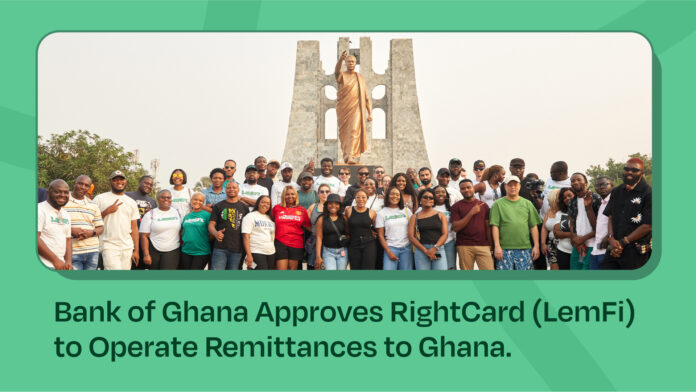
RightCard Payment Services Limited (LemFi) says it has obtained approval from the Bank of Ghana (BoG) to resume its remittance services to Ghana with some of its approved partners.

This is consistent with RightCard’s (LemFi) commitment to providing secure and efficient services while complying with the set regulatory framework by the Bank of Ghana.

Today, RightCard (LemFi) has formally announced the resumption of its services to Ghana, following a temporary suspension of its money transfer services to Ghana in November 2023, the company said in a statement.

RightCard Payment Services Limited (LemFi) can now deliver its services in Ghana through payment companies, BigPay and ExpressPay, as approved by the Bank of Ghana.

RightCard (LemFi) delivers innovative services and products in various markets, through the LemFi app. LemFi is already licenced as an Electronic Money Institution with the Financial Conduct Authority in the United Kingdom.

“We are grateful to stakeholders at the Bank of Ghana as well as our partners for their role in ensuring service restoration”, says Precious Ama Kwartemaa Oduro, LemFi’s Country Manager.

“We resume our operations with a better understanding, and we are now better positioned to address the evolving needs of the Ghanaian market.”

LemFi’s return to Ghana is marked by a renewed focus on improved customer satisfaction, strengthened partnerships with key stakeholders, and a commitment to fostering financial inclusion. Customers, existing and prospective, can now take advantage of LemFi’s competitive exchange rate offering, zero transaction fees and instant transfer delivery by downloading the app from the iOS or Google Play Store.

NDC will not make promises it can’t deliver-Mahama

0

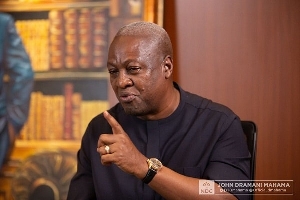
Former President John Dramani Mahama, says the National Democratic Congress (NDC) will not make promises to Ghanaians it cannot fulfill.

“One of the basic principles of leadership is honesty. Don’t tell the people you will do something that you know you do not intend to do.”

The Former President who is the Flagbearer of the NDC, said this when he addressed the Upper East Region House of Chiefs on his two-day tour of the Region dubbed “Building Ghana” tour.

The tour, he said was intended to solicit views of Ghanaians to enable the Party draft its manifesto for this year’s elections.

 “We all must create before we can share. And so our first responsibility will be to stabilize the economy and start growing the economy again. We can only do that if we put our money where our mouths are, and put our investment in the right place,” he said.

The Former President said the next NDC government would look at the value chain in every part of the country and invest in it, adding that Benin’s leading export was cotton and it was revolutionizing the country.

“And so one of the things we are going to do, is to revive our cotton industry so that our families can earn more. Upper East Region has become important in food production, but we need to provide more irrigation facilities so that we can expand the production of food and other agricultural crops,” he said.

He said rehabilitation works began on the Vea and Tono Dams under the late former President John Evans Atta Mills, “Unfortunately, it has stalled, and we need to bring more land under irrigation. That will be a priority for us.

“We started the Tamde irrigation dam, and even today, with the little part that they have started producing, I saw a video where they were harvesting so much carrots for sale in the markets, and that is just a fraction of the land we are bringing under cultivation.

“We will finish that project because we need a pump to lift the water and irrigate another 3500 hectares of land. If we have all that land available, why will our people leave here and go to the South for menial jobs,” he quizzed.

Mr Mahama said his next administration would look at the capacity of every Region and put investments at the needed areas to provide meaningful jobs for the citizenry.

Pe Ditundini Adiali Ayagitam III, President of the Region’s House of Chiefs and Paramount Chief of the Chiana Traditional Area, was hopeful that the Flagbearer would engage residents in the Region for their inputs to enable him and his team to craft a strategy to end the conflict in Bawku if he gets the mandate as President.

“Ghanaians need peace to go about their normal duties. The Kusaug Traditional Council needs peace in Bawku to restore the area back to its former status,” he said, and wished the former President well in his activities in the Region.

Re-christen AfCFTA as ATU- Prince Mba

0

Renaming the African Continental Free Trade Area (AfCFTA) as African Trade Union (ATU) will re-invigorate the enthusiasm of Africans to effectively participate in the agreements, Mr Prince Bagnaba Mba, President of Forum for Equity has said.

“The acronym AFCFTA is mouthful and will sound better as ATU, for African Trade Union. Issues of marketing need simple and catchy names that will attract participants and investors”.

Mr Mba who was speaking to the Ghana News Agency on the importance of the AfCFTA to the development of African countries, extolled the architects of the zone for coming out with such an important agreement that could bring a common market to Africans and beyond.

AfCFTA was established in March 2018, with the primary objective to create a single market to help facilitate the free movement of persons, goods and services, and investments which will help fast-track the creation of African customs union.

It also aimed to reinforce intra-African trade, harmonize the coordination of trade liberalization and facilitation regimes and instruments across the Regional Economic Communities (RECs) and across Africa in general.

It is also to accelerate regional and continental integration procedures, and resolve multiple and overlapping memberships challenges and to augment industrial competitiveness through production, market access and resources reallocation.

Mr Mba said one of the greatest achievements of Ghanaians under the leadership of President Nana Addo Dankwa Akufo-Addo was the implementation of the African Continental Free Trade Agreement, creating a single united market with headquarters in Accra, Ghana.

“From March 2018,Ghana galvanised  continental support and to set the ball rolling and credit must be given to the Diplomatic Triangle, the President, his  Vice and the then Minister of Trade and Industry”.

He said as Graduates of former President JA Kufuor school of Economics Diplomacy, they applied their high sense of negotiations and made sure common good and fruitful interest was secured, but a careful observation showed lack of sensitisation at the grassroots, the market operators and industrialists.

“The average African for whom, it was created does not know its present relevance”

He emphasized that the agreed pact should not be another bureaucratic establishment for technocrats or job for the boys in the corridors of power as a laudable organisation of that kind could be the realisation of the dreams of the founding fathers for a single unit African market where goods and services move unhindered.

Giving some examples, he mentioned the Federation of Football Associations (FIFA), United Nations (UN), African Union (AU) adding that making the name African Trade Union could bring in vibrancy and vigour into the agreements and investments.

Chelsea wants Xabi Alonso right now! Blues eager to replace troubled manager Mauricio Pochettino with famed Bayer Leverkusen head – but Spaniard is in no hurry.

0

Chelsea wants Bayer Leverkusen’s Xabi Alonso to replace ailing manager Mauricio Pochettino immediately, but they face heavy competition.

The Blues have slid to 11th in the Premier League after suffering successive defeats to Liverpool and, most recently, Wolves, with eight goals allowed in the process. According to The Guardian, Pochettino’s employment is not under immediate jeopardy, but Sport Zone reports that the Chelsea administration wants to replace him with Leverkusen manager Alonso as soon as possible.

THE BIGGER PICTURE

The former Liverpool, Real Madrid and Bayern Munich star has supposedly caught the eye of Chelsea co-owner Behdad Eghbali having guided the Werkself to the top of the Bundesliga, and remarkably his side remain unbeaten in all competitions at the start of February.

However, this would be far from a straightforward appointment. Alonso is sure to want to complete a potentially historic season with Leverkusen, and he will have no shortage of elite suitors in the summer as Jurgen Klopp prepares to step aside at Anfield and Thomas Tuchel faces an uncertain future at Bayern. He has also been linked with a return to Los Blancos, although Carlo Ancelotti has just signed a new contract there.

DID YOU KNOW?

Leverkusen extended their unbeaten run in the Bundesliga to 20 games with a 2-0 victory over Darmstadt on Saturday. They have never won the league, despite finishing as runners-up on five occasions. After a midweek cup tie, their next game sees them host title rivals Bayern in a blockbuster showdown.

WHAT NEXT FOR CHELSEA?

With Alonso likely out of reach, it remains to be seen whether Chelsea will turn to other options or afford Pochettino more time. The Blues are now 14 points off the top four and face a daunting FA Cup fourth-round replay at Aston Villa on Wednesday.