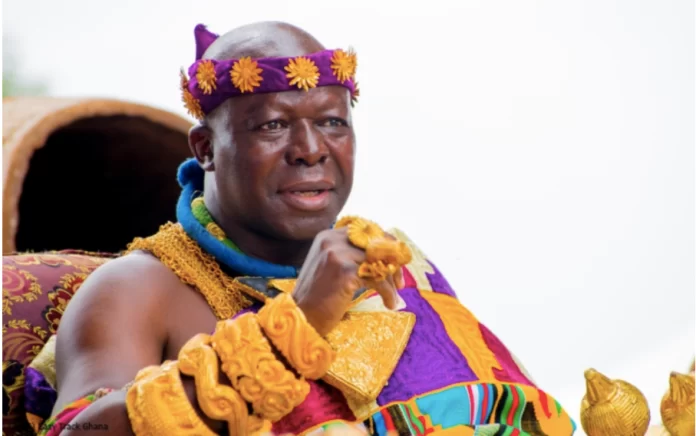
The Asantehene, Otumfuo Osei Tutu II, has commended the Controller and Accountant-General’s Department (CAGD) for its roles in shaping Ghana’s economic landscape.
He said the Department’s tireless efforts in upholding fiscal discipline served as a pillar of strength in the pursuit of sustainable development.
Otumfuo Osei Tutu gave the commendation in an address read for him by Nana Yim Awere Ababio, Toasehene, at the closing ceremony of the CAGD 2024 annual conference in Kumasi, adding that the Department’s unwavering commitment to transparency, accountability and prudent management of the nation’s finances were laudable.
The closing ceremony coincided with the launch of some technical tools, which were going to be deployed by the Department in its operations.
They were the Enhanced Standard Fixed Assets Register, which was deployed to Covered Entities in the early part of 2023, the International Public Sector Accounting Standards (IPSAS) Training Manual, and the IPSAS Compliant Financial Reporting Templates.
The others were the new GoG Accounting Policies for Covered Entities 2024, IPSAS Compliant Chart of Accounts and IPSAS Compliant Checklist to comprehensively track compliant status of entities.
These technical tools are being deployed to facilitate financial reporting at both the national level and at various covered entities within the three levels of government.
Otumfuo Osei Tutu observed that accounting reforms had been prominent on the public financial management reform agenda of IPSAS to provide consistent and transparent framework for reporting on the financial performance, financial position and cash flows of the government.
He, therefore, urged the accountants to take the books seriously and use them to improve upon their work.
Mr Kwasi Kwaning-Bosompem, the Controller and Accountant-General, said the manuals culminated in rigorous efforts and dedication to enhance financial governance and reporting standards.
The IPSAS manuals encompass crucial components essential for effectively managing public finances.
“Each manual is designed with a specific purpose to streamline our financial processes, strengthen accountability and ensure compliance with international standards,” he stated.
The Government of Ghana’s financial reporting template would serve as a standardised framework enhancing the consistency and transparency of financial reporting.
Mr Kwaning-Bosompem noted that the IPSAS Training Manual would equip professionals with the necessary knowledge and skills to implement the international standards successfully, ensuring a smooth transition to international best practices.
The two-day conference was held on the theme: “Enhancing Economic Growth through Innovation and Adaptation.”
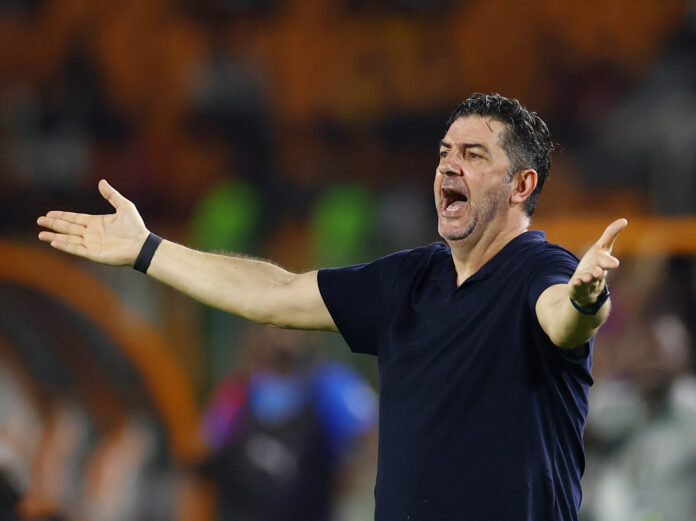
FILE PHOTO: Soccer Football - Africa Cup of Nations - Round of 16 - Egypt v DR Congo - Laurent Pokou Stadium, San Pedro, Ivory Coast - January 28, 2024 Egypt coach Rui Vitoria reacts REUTERS/Siphiwe Sibeko/File Photo
Egypt fired its head coach after its chances of a record-extending seventh Africa Cup of Nations victory were crushed last week.
The country’s football organisation said on Sunday that Rui Vitoria, the Portuguese manager, had been terminated.
Egypt struggled throughout the competition, losing every game until being eliminated in the final 16.
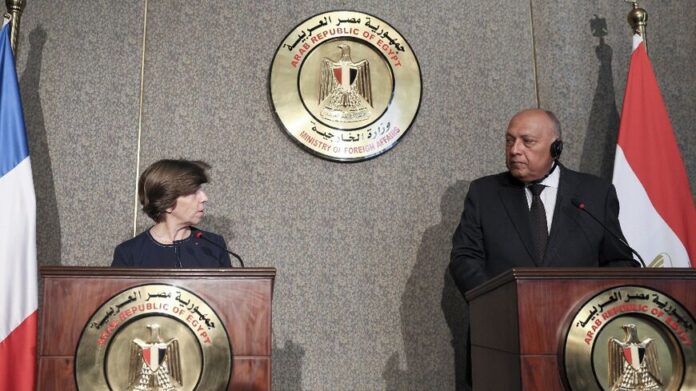
Egypt’s top diplomat met with his French colleague Stephane Sejourne on Sunday in the New Administrative Capital.
Following the discussion, Egyptian Foreign Minister Sameh Shoukry warned of a larger regional crisis if a truce in Gaza could not be negotiated.
“The war in Gaza, the threats we are seeing towards the navigation in the Red Sea, the military operations that took place in Syria and Iraq as well as the military situation on the Israeli-Lebanese borders, all warns from the escalation of the situation and slipping towards a wider conflict,” Shoukry said in a statement.
In his first official visit to the region, Sejourne stated that he opposes the forcible transfer of Palestinians to Egypt.
“You are worried about the forced displacement of people into your territory, we completely understand your concerns and the position of France is constant, we condemn and we refuse all actions that are a threat in this context.”
Tensions have been rising in the region since October 7.
The European Union on Saturday expressed deep concern over reports that the Israeli military intends to take its battle against Hamas to the town of Rafah at Gaza’s border with Egypt where more than a million people have escaped the fighting.
EU foreign policy chief Josep Borrell said that around 1 million Palestinians “have been displaced progressively against the Egyptian border. They claimed they were safe zones, but in fact what we see is that the bombing affecting the civilian population continues and it is creating a very dire situation.”
Such an offensive could push the refugees into Egypt, undermining Israel’s peace agreement with the country and angering the United States.
It might also torpedo slow-moving peace talks with Hamas and complicate efforts to release scores of Israelis abducted when the militant group rampaged through southern Israel on Oct. 7.
The prospect of a ground war in Rafah has raised fears about where the population would go to find safety.
The United Nations said the town is becoming a “ pressure cooker of despair.”
After visiting Cairo on Sunday, Sejourne will continue his trip in the Middle East, with stops which include Jordan, Beirut and Israel.
The US aims to execute further attacks against Iran-backed forces in the Middle East, according to the White House national security adviser, following recent strikes on Tehran-aligned militias in Iraq, Syria, and Yemen.
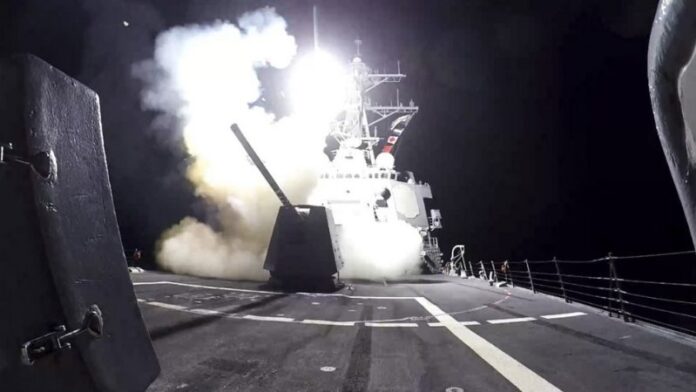
The US and the UK launched raids on 36 Houthi targets in Yemen, a day after the US military struck Tehran-backed forces in Iraq and Syria in retribution for a fatal attack on US troops in Jordan.
“We intend to take additional strikes, and additional action, to continue to send a clear message that the United States will respond when our forces are attacked, when our people are killed,” White House National Security Adviser Jake Sullivan told NBC’s “Meet the Press” program on Sunday.
The strikes are the latest blows in a conflict that has spread into the Middle East since Oct. 7, when the Iran-backed Palestinian militant group Hamas stormed Israel from the Gaza Strip, igniting war.
The Biden administration’s diplomatic efforts to stem the fallout from the war also continued with top diplomat Antony Blinken departing for the region on Sunday afternoon.
Tehran-backed groups declaring support for the Palestinians have entered the fray across the region: Hezbollah has fired at Israeli targets at the Lebanese-Israeli border, Iraqi militias have fired on U.S. forces in Iraq and Syria, and the Houthis have fired on shipping in the Red Sea and at Israel itself.
Iran has so far avoided any direct role in the conflict, even as it backs those groups. The Pentagon has said it does not want war with Iran and does not believe Tehran wants war either.
Sullivan declined to be drawn on whether the United States might attack sites inside Iran, something the U.S. military has been very careful to avoid.
Speaking to CBS’ “Face the Nation” program moments earlier, he said Friday’s strikes were “the beginning, not the end, of our response, and there will be more steps – some seen, some perhaps unseen”.
“I would not describe it as some open-ended military campaign,” he said.
Saturday’s strikes in Yemen hit buried weapons storage facilities, missile systems, launchers and other capabilities the Houthis have used to attack Red Sea shipping, the Pentagon said, adding it targeted 13 locations.
The Houthi military spokesperson Yahya Sarea said the strikes “will not pass without a response and consequences”.
Another Houthi spokesperson, Mohammed Abdulsalam, indicated the group would not be deterred, saying Yemen’s decision to support Gaza would not be affected by any attack.
Residents described being shaken by powerful blasts. “The building I live in shook,” said Fatimah, a resident of Houthi-controlled Sanaa, adding that it had been years since she had felt such blasts in a country that has suffered years of war.
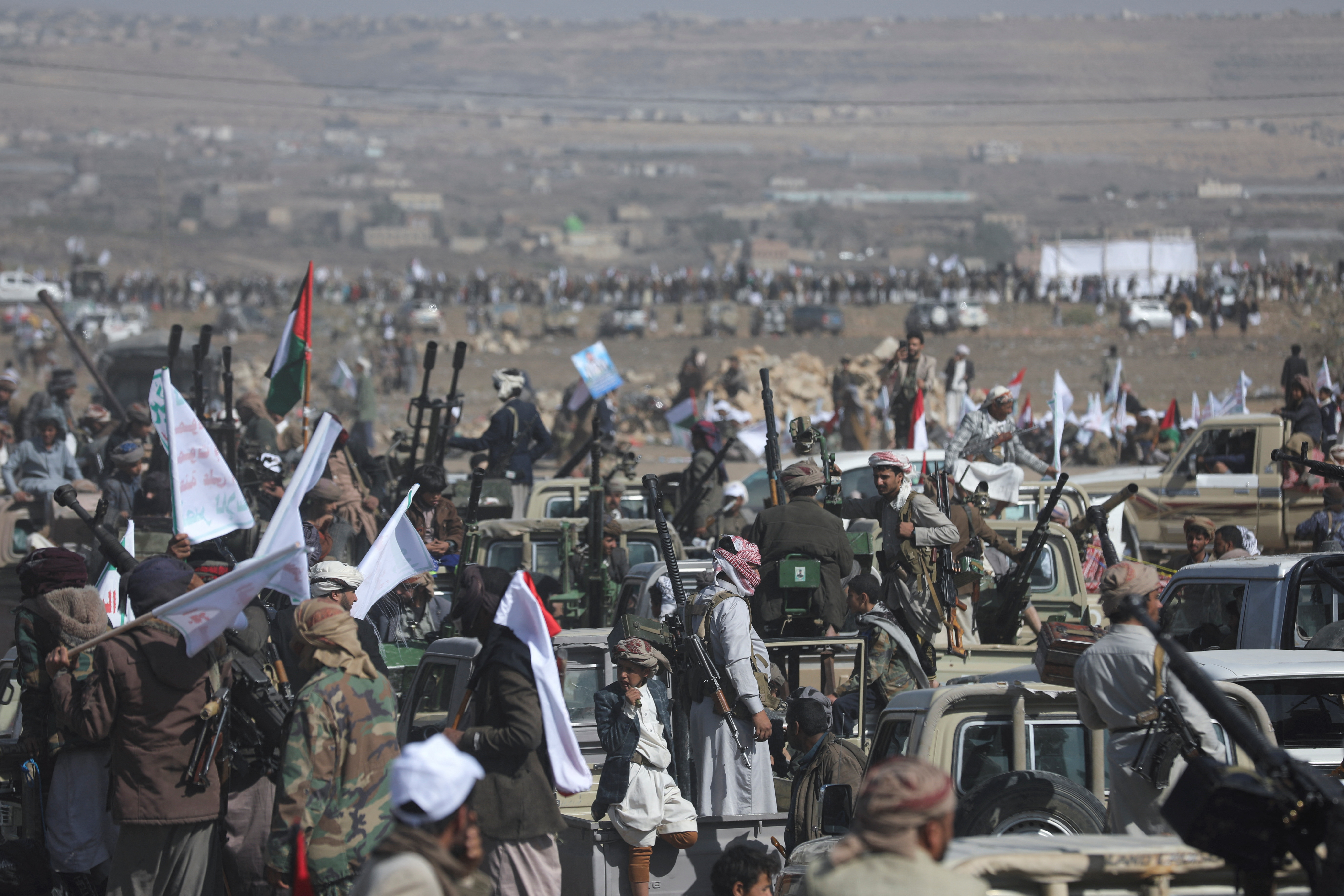
[1/10]Houthi tribesmen parade to show defiance after U.S. and U.K. air strikes on Houthi positions near Sanaa, Yemen February 4, 2024.REUTERS/Khaled Abdullah Acquire Licensing Rights, opens new tab
The Houthis did not announce any casualties.
Secretary of State Blinken will visit Saudi Arabia, Egypt, Qatar and Israel in the coming days on his fifth trip to the region since October, which will focus on advancing talks on the return of hostages taken from Israel by Hamas in exchange for a temporary ceasefire in Gaza.
He will also make a push on a U.S.-brokered mega deal between Saudi Arabia and Israel to normalize ties, which hinges on bringing an end to other Gaza conflict and steps toward a future Palestinian state.
IRAN SEEN AVOIDING DIRECT CONFRONTATION
The Yemen strikes are running parallel to the unfolding U.S. campaign of retaliation over the killing of three American soldiers in a drone strike by Iran-backed militants on an outpost in Jordan.
On Friday, the U.S. carried out the first wave of that retaliation, striking in Iraq and Syria more than 85 targets linked to Iran’s Islamic Revolutionary Guard Corps (IRGC) and militias it backs, reportedly killing nearly 40.
Mahjoob Zweiri, Director of the Gulf Studies Center at Qatar University, did not expect a change in Iran’s approach even after the latest U.S. strikes.
“They keep the enemy behind the borders, far away. They are not interested in any direct military confrontation which might lead to attacks on their cities or their homeland. They will maintain that status quo,” he told Reuters.
Iran’s foreign ministry said the latest attacks on Yemen were “a flagrant violation of international law by the United States and Britain”, warning the continuation of such attacks was a “worrying threat to international peace and security”.
While the Houthis say their attacks are in solidarity with Palestinians, the U.S. and its allies characterize them as indiscriminate and a menace to global trade.
Major shipping lines have largely abandoned Red Sea shipping lanes for longer routes around Africa. This has increased costs, feeding worries about global inflation while denying Egypt crucial foreign revenue from use of the Suez Canal.
Hundreds of people attended a Baghdad funeral procession for 17 members of the Popular Mobilization Forces (PMF) killed in the U.S. strikes. The PMF is a state security force containing several Iran-backed armed groups.
Hadi al-Ameri, a senior Iraqi politician close to Iran, said it was time to oust U.S. forces, 2,500 of whom are in Iraq in a mission to help prevent a resurgence of Islamic State. “Their presence is pure evil for the Iraqi people,” he said.
Iraq and the United States last month initiated talks about ending the U.S.-led coalition’s presence in the country.
The vibrant landscape of Ghana’s FinTech industry has taken center-stage at the esteemed FinTech Islands event in Barbados.
A delegation from Ghana made up of Mr. Martin Kwame Awagah, President Ghana Fintech and Payments Association and Mr. Richard Nunekpeku, Vice President Legal and Strategy, represented Ghana’s digital finance ecosystem in Barbados.
Ghana’s active participation in the FinTech Islands event reinforces its commitment to driving innovation, fostering collaboration, and contributing to the global dialogue on financial technology.
The delegation’s engagements underscored the strides Ghana had made in embracing digital transformation to enhance financial services and promote inclusive economic growth.
The FinTech Islands event offers a platform where nations converge to share insights, collaborate, and shape the future of financial technology in the Caribbean. Ghana’s representation reflected the country’s standing as a key player in the global FinTech ecosystem.
Mr. Awagah, the Association’s President, kicked off the proceedings with a thought-provoking panel session on “Banking for All of Us: FinTech Innovation Driving Financial Inclusion.”
His insights shed light on Ghana’s commitment to leveraging technology to foster financial inclusion on a broader scale.
He delved into how government policies such as the National Financial Inclusion Development Strategy (NFIDS), Digital Financial Services Policy, and the Cashlite Roadmap have set the stage for the
country’s digital financial evolution.
“These policies have tremendously transformed the delivery of financial services and we are even witnessing the offering of services in local languages, which is ensuring that financial access is not a barrier to the less educated. These solutions are reaching millions of citizens across various sectors of the economy, thereby enhancing financial inclusion,” he said.
The panel also included Mr. Zachary Harding Founding Partner, Delta Capital Partners – Caribbeann, Mr. Juan Zavala Aleman CEO and Co-Founder, FinZi – Columbia and Ms. Zia Paton PwC Partner, Digital Services – Caribbean.
Other officials from Ghana who participated in the panel discussion included Mr. Nunekpeku, the Vice President – Legal and Strategy Ghana Fintech and Payment Association.
He made a significant contribution to the discourse on “Fintechs Driving Adoption of Digital Money” as the panel’s moderator.
On this panel were Adam Swartzbaugh, Founder and CEO of Almond Finance and Aldwyn Wayne, Founder and CEO, Colour Bank and WiPay.
Mr. Nunekpeku’s insights underscored the pivotal role that fintech companies played in driving the widespread adoption of digital currencies, such as crypto and stablecoins.
In another panel discussion, Mr. Awagah shared the stage with Mr. Kwame Oppong, Director of Fintech and Innovation at the Bank of Ghana, who joined in virtually, with Ms Carmelle Cadet, Founder and CEO of EMTECH, a renowned suptech platform at the forefront of digitizing regulatory processes,
The panel engaged in a compelling discussion titled “CBDC Masterclass: Lessons Learned from the eCedi Hackathon.”
This insightful session delved into the intricacies of Central Bank Digital Currency (CBDC) implementation, drawing lessons from Ghana’s groundbreaking eCedik.
FILE PHOTO: The International Monetary Fund (IMF) logo is seen outside the headquarters building in Washington, U.S., September 4, 2018. REUTERS/Yuri Gripas//File Photo
Fitch Solutions, an international rating agency, says a gradual improvement in investor sentiment and a US$600 million International Monetary Fund (IMF) disbursement will keep the exchange rate stable.
In a report detailing interest rate and inflationary dynamics for 2024, the rating agency said it predicted that the disbursement and investor sentiments would keep the cedis at roughly GHS12.0/USD throughout first quarter of 2024, only slightly weaker than the average of GHS11.8 to a USD recorded in the year-earlier period.
As such, the report said price pressures stemming from imported goods and services will remain limited over the coming months, supporting the ongoing disinflationary trend.
The rating agency said inflation would remain above the 20 per cent mark ahead of the March Monetary Policy Committee (MPC) meeting, which will prompt a vigilant approach from central bank policymakers.
“In the coming months, price pressures will moderate at a much slower pace compared to the final quarter of 2023. This is partly due to the uptick in global oil prices caused by hostilities between Israel and Hamas, and a sharp increase in global shipping costs caused by rising tensions in the Red Sea. Consequently, inflation rates are set to stay well above the levels preferred by the Bank of Ghana with significant upside risks,’’ the report said.
This situation, the rating agency noted, underpinned their expectation that the central bank would not opt for a larger rate cut at the March MPC meeting.
The Ghana Cocoa Board (COCOBOD) has asked the public to disregard false interpretations given to a recent permit granted a local cocoa processing company to import cocoa beans from Cote d’Ivoire and Nigeria.
COCOBOD, in a statement copied to the Ghana News Agency, said it was “an industry practice” to allow factories to import cocoa beans from other countries.
COCOBOD in a letter dated January 25, 2024, approved a request by Afrotropic Cocoa Processing Company to import a total of 3,500 tonnes of cocoa beans from Cote d’Ivoire and Nigeria.
It also asked Afrotropic Cocoa Processing Company to obtain all necessary authorisations from relevant State institutions before commencing the importation.
Some stakeholders in the cocoa industry and others have raised issues about the approval, asking why the world’s second largest cocoa-producing country be importing cocoa beans?
COCOBOD, in its response, said: “All processing companies in Ghana established post November 2001 are permitted by law to import cocoa beans for processing in Ghana.”
The practice, according to COCOBOD, was to “help the companies meet their desired recipes for chocolate production and other uses.
“Ghana’s cocoa is a premium cocoa, and as part of cost management and operational strategy, companies often blend premium Ghana cocoa with less premium cocoa beans from other producing countries.
“It is an industry practice that has existed for over 20 years to allow factories to import from other countries, including Cote d’Ivoire, Togo, Nigeria, and Ecuador,” the statement said.
COCOBOD, therefore, urged the public to ignore the “widespread misinformation”, especially on social media.
The Economic Community of West African States (ECOWAS) has urged the government of Senegal to speed up processes and set a new date for its postponed general election.
Expressing concern over circumstances leading to postponement of the election, which was scheduled for February 25, 2024, it also appealed to the political class in the country to “prioritise dialogue and collaboration for transparent inclusive and credible elections”.
ECOWAS, in a statement, commended President Macky Sall for upholding his decision not to run for another term in office, and encouraged him to continue to “defend and protect Senegal’s long-standing democratic tradition”.
President Macky Sall, reportedly, postponed the February 25 elections following complaints by candidates, who were barred from contesting the elections.
The two-term President said he was not seeking re-election but did not set a new date for the polls.
It is against this backdrop that ECOWAS has asked the authorities to take steps and organise the elections as quickly as possible.
Reports indicate that a constitutional council had prevented several hopeful, including some high-profile politicians, from contesting the elections.
According to Mr Sall, the complaints could affect the elections hence his decision to “open national dialogue to create the conditions for a free, transparent and inclusive election in a peaceful and reconciled Senegal”.
Opposition candidates in Senegal described the President’s decision to postpone the election as a constitutional coup, while others have urged voters to protest against the move, which is said to be unprecedented.
ECOWAS, in its statement, said it was monitoring the situation in the country.
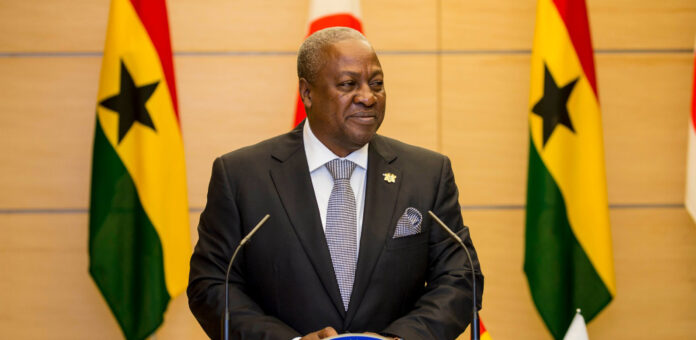
Former President John Dramani Mahama the Flagbearer of the National Democratic Congress (NDC), has promised to invest in infrastructural and programmes that will provide jobs for the youth.
“We are going to invest in things that will provide jobs for our young people,” the Flagbearer and former President said.
Addressing women and youth groups, chiefs, farmers and students at a community engagement at Zuarungu in the Bolgatanga East District of the Upper East Region, he said if elected as President, he would continue expansion works on irrigation projects the NDC government started before it left office.
“If you remember, under the Ghana Commercial Agricultural Project, we received money to expand some irrigation projects in the country, including the Vea and Tono Dams.
“Apart from that, in the Garu area, we built from scratch a new irrigation project called the Tamde Dam. This government has not continued and finished it. Because there is another 3000 hectares that is part of that project that must be finished, so that more young people can get work to do.
“And so when we assume office, we will continue and finish that, we will expand Vea and Tono, so that more of our people can get work to do,” he told the residents of Zuarungu.
Mr Mahama noted that when the NDC government designed the Tamale International Airport, the intention was not for only passengers, but for exportation of vegetables, goods and other products from the north to Europe.
He said from Tamale to Europe was five hours than from Accra to Europe, “And so if we are growing vegetables here, we have pack houses, we pack those vegetables and take them to Tamale, put them on flights to Europe. A lot of money will come back into the northern sector of the country.
“We will build the Cargo Centre at the Tamale Airport so that all the products that we produce from here that are exportable, we will be able to pack them nicely and send them to Tamale and fly them to Europe,” Mr Mahama said.
The Flagbearer said the cotton industry would also be revived as many countries made a lot of money from cotton production, and recalled that there were three cotton factories; one in the Upper East Region, one in Tumu and the other in Tamale.
“That was the product that used to give our parents cash because they paid cash for it.
Our parents grew sorghum, millet, guinea corn, groundnuts, maize and getting to the end of the farming season, they put cotton and after they had harvested their food, the cotton grows, they pick the cotton and sell.”
He said during former President John Agyekum Kufour’s regime, under the President’s Special Initiative, the Pwalugu tomato factory was retooled and new equipment were put into the factory.
Unfortunately, he said the plan to sustain and keep the factory running did not work out, “And so we are going to revive the Pwalugu tomato factory, and we are going to involve the irrigation farmers in the Tono area to produce enough tomatoes to feed that factory, so that we can create employment for our young people here.”
Mr Mahama also told the people of Zuarungu that the Wulugu Livestock Station would be revived as a raw material base for the operation of the Zuarungu meat factory, “We will grow the cattle at Wulugu and we will transport the cattle here in Zuarungu and produce meat.”
He disclosed that “I have already discussed with some private investors who are willing to come in and take those two projects up and revive them so that our young people can get work to do.”
The Flagbearer, who later engaged traders, professional and religious bodies in a town hall meeting in the Bolgatanga Central Constituency, was accompanied by Mr James Agalga, the leader of the Minority Caucus in Parliament and Member of Parliament (MP) for the Builsa North Constituency, Dr Dominic Akuritinga Ayine, MP for the Bolgatanga East Constituency and Mr Isaac Adongo, MP for Bolgatanga Central Constituency.
The rest were Mr Cletus Apul Avoka, MP for the Zebilla Constituency, Mr Mahama Ayariga, MP for Bawku Central Constituency, Mr Edward Abambire Bawa, MP for Bongo, Dr Clement Apaak, MP for the Builsa South Constituency among other Parliamentary Candidates and former government appointees.
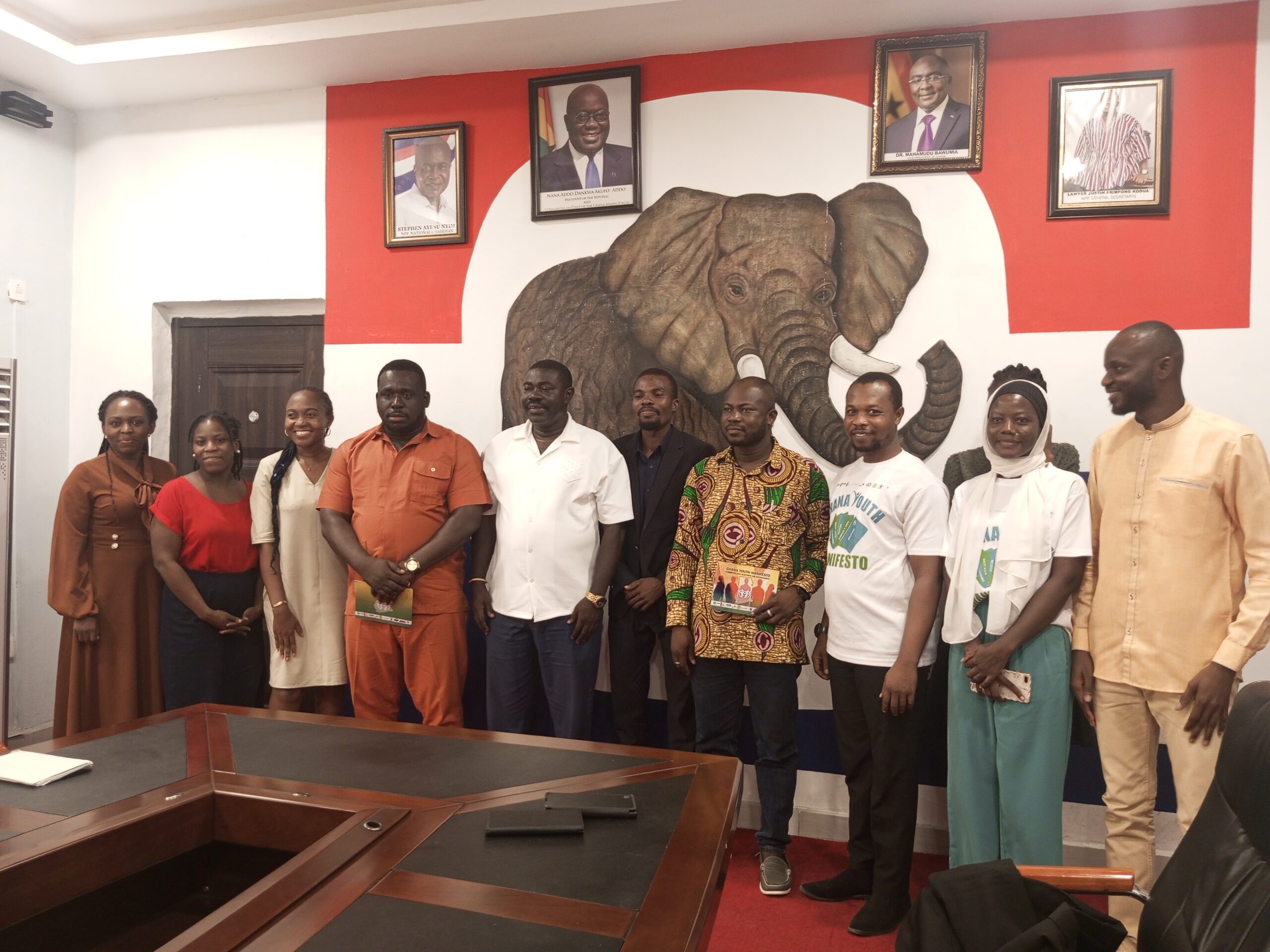
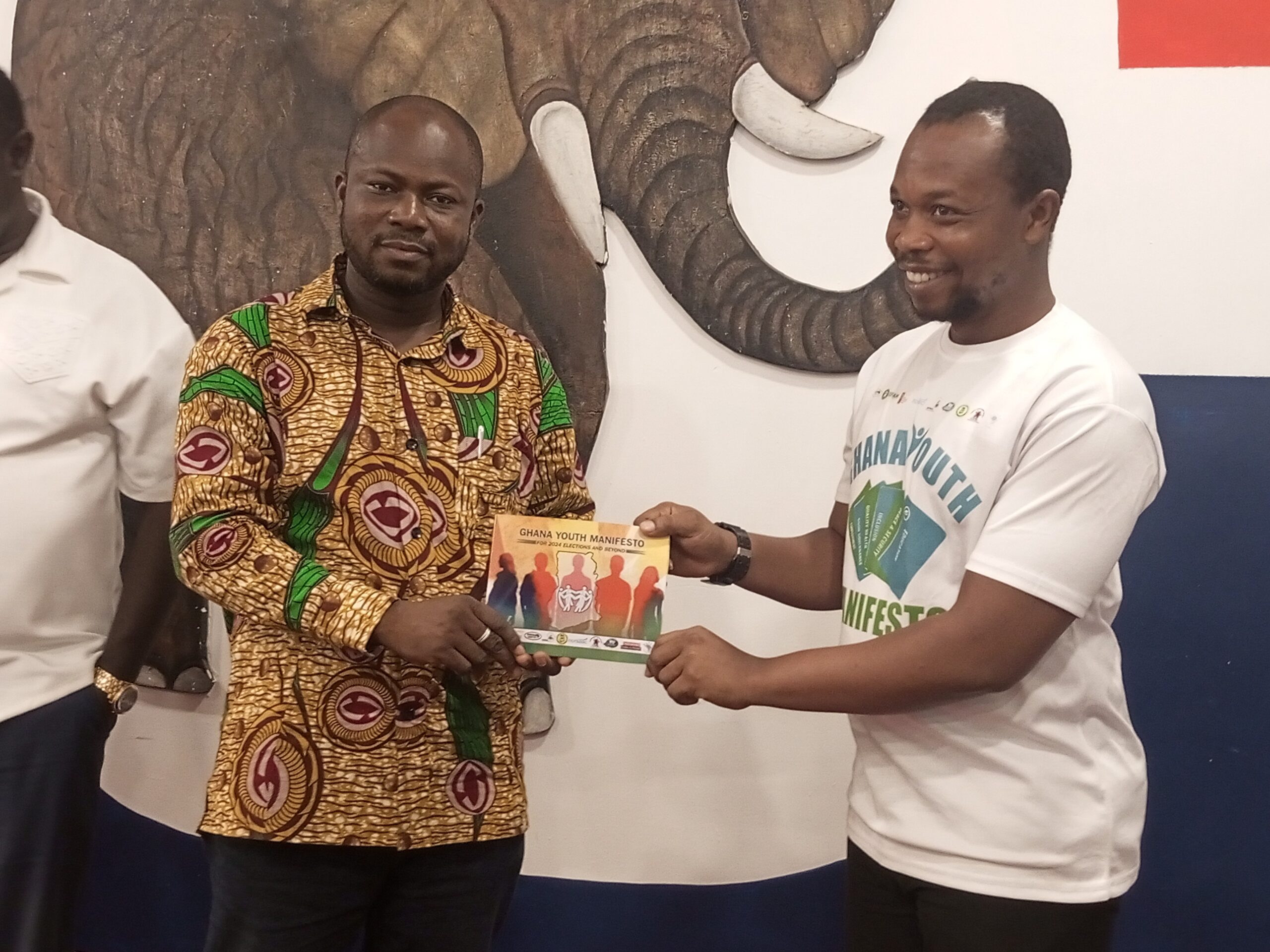
Mr Haruna Mohammed, the National Deputy General Secretary of the ruling New Patriotic Party (NPP) has received the Ghana Youth Manifesto for the 2024 general election and beyond.
Mr Solomon Okai, a Member of the Ghana Youth Manifesto Coalition and the Programmes Officer of the Foundation for Security and Development in Africa (FOSDA) presented a copy of the Manifesto to the NPP National Deputy General Secretary at the Party’s Headquarters in Accra.
The presentation of the Manifesto copied to the NPP national leadership was to enable the Party to consider some key issues, which are affecting Ghanaian Youth for incorporation in its Manifesto for the 2024 general election.
The Manifesto is a highlight of a collaborative effort by diverse youth organisations, groups, networks, and associations of the country to articulate a youth focused development vision.
The Ghana Youth Manifesto represents the aspirations, needs, and concerns of young Ghanaians and outlines a roadmap for achieving a more inclusive, equitable, and prosperous nation.
Mr Okai said the Ghana Youth Manifesto for 2024 election general election and beyond report assessed the views of over 3,500 young people who participated in a survey in All the 16 regions of Ghana to share their views on key national and youth development issues.
He said it captured their perspectives and priorities for the next government, including its first 100 days in power post the 2024 general elections.
He reiterated that it also covered six other key areas of interest to young people, including: Education, Employment, Health and Sexual Reproductive Rights, Good Governance, Youth with Disability, and Youth Peace and Security.
Mr Okai appealed to the NPP to consider incorporating into its manifesto the six major issues highlighted in the Ghana Youth Manifesto for 2024 election.
Mr Haruna Mohammed, receiving the report, lauded members of the Ghana Youth Manifesto for their foresight in coming out with the document of the Ghana Youth Manifesto for the 2024 general election and beyond.
He noted that the Party would take into consideration the key issues highlighted in the report, which were affecting youth.
He said over the past seven years, the NPP-led Government had been delivering on its promises of creating jobs for the youth.
He said the Government created the youth employment policy to help address the situation; adding that, over eight thousand people had been recruited throughout the country.
Touching on sports development, Mr Mohammed said the Government had constructed over 150 astro turfs and other multi-purpose sports complexes nationwide.
He noted that under the Youth Employment Agency (YEA) they were implementing the skills development programme, where the youth were being assigned to master craft men to undergo skills training.
Dr Asiedu Kokro, NPP National Deputy Director of Communications, said there was the need for the nation’s universities to ensure that the programmes they run had correlations with job creation, as part of efforts to address the unemployment issue in the country.
He advised the youth to stay focused, be bold, firm, and urged the youth to engage in activism; stating that activism was part of the democratic dispensation.
“Be vigilant and echo the concerns of the people,” he added.
Mr Christopher Wisdom Penu, the National Coordinator of the Ghana Youth Manifesto, acknowledged the immense financial support and technical support of a consortium of youth focused civil society organisations and international NGOs towards the Ghana Youth Manifesto for 2024 election.
The organisations include FOSDA, DANIDA, YEfL Ghana, NORSAAC, Africa Education Watch, Youth Advocate Ghana (YAG), West Africa Network for Peacebuilding (WANEP), ActionAID and the Global Platform, and The Gracedlife Leadership Centre (TGLC).