Home Blog Page 283

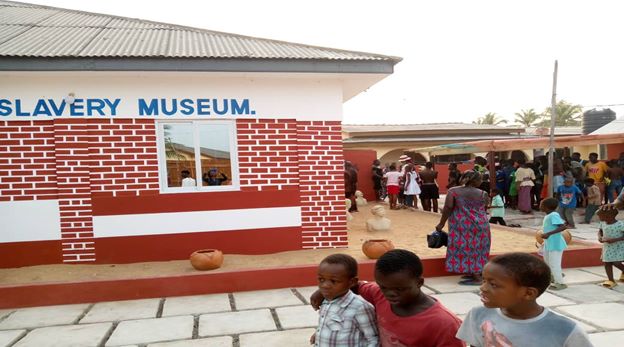
Hedzranawo Slavery Museum opened to the public

0

Hedzranawo Slavery Museum, one of the three-town tourism projects in the Somé Traditional Area of the Ketu South Municipality, has been opened to the public.

The projects, apart from helping to put the three communities of Hedzranawo, Adzido, and Adafienu on the slave map, aimed to identify, research, and add value to all enslaved heritage sites on Ghana’s Eastern coastline.

Professor Wazi Apoh, a Development Archaeologist and initiator of the projects, in an address during the commissioning ceremony, acknowledged Gerda Henkel Stiftung, senior students of the Department of Archaeology and Heritage Studies, University of Ghana (UG), Torgbui Sape Agbo V, his elders and the Community Project Committee members for their support.

He disclosed that the projects started when he and his colleague, Dr Mark Seyram Amenyo-Xa conducted research in 2018 to identify slave heritage sites in communities along Volta’s coast.

Professor Apoh indicated that the discovery of a “rich array of painful histories, memories, spaces and relics of slavery” in the three-town communities compelled him to return to Hedzranawo to pursue the CVERP initiative.

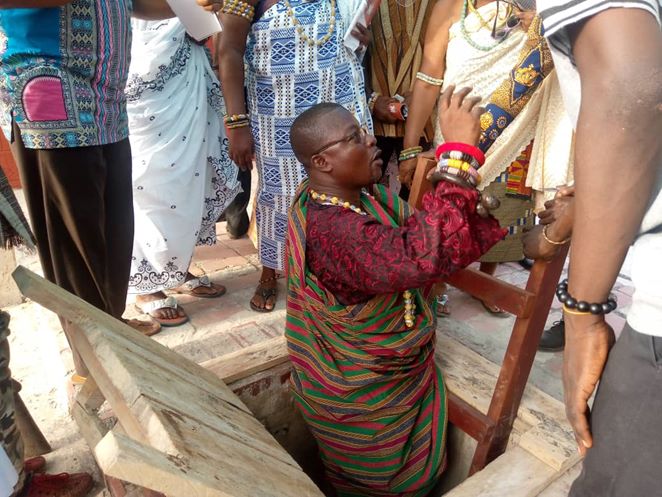
Torgbui Sape Agbo V, the ‘Dufia’ of Hedzranawo, also the ‘Awaklasuga’ of Somé who, with the help of a wooden staircase experienced the dungeon, spoke to Ghana News Agency, saying, “Our forefathers suffered.”

“I was in there for less than two minutes but couldn’t breathe. Inside the underground vault which I will call the concrete water tank was dark and hot. It’s terrible. Those who engaged in this trade were inhumane,” he said.

Dr Gideon Agble, a Senior Lecturer at the University of Business and Integrated Development Studies in Wa, was grateful for the initiative, saying it would add on to the already existing historical sites.

“The biggest shock for me is the underground vault. This is a proper dungeon, unlike other sites where it is a walkthrough.”

He said the fantastic nature of the site which made it different in architecture and design would go a long way to attract tourists who move to other known tourist sites.

The museum and two others, Hedzranawo-Adzido Slave Market, Memorial Centre, and Adafienu Palace Slavery Museum, are currently at different stages of completion with sponsorship from Gerda Henkel Foundation, started in 2019 under the Coastal Volta Enslaved Route Project (CVERP).

Community members still have remains of slavery like long chains and shackles at the Palace of Torgbui Dovoh of Adafienu.

There are also important relics such as the Treaty of Adafienu which was signed in 1852 to end slavery.

Others also include sword and staff with an embossed inscription of Her Majesty the Queen of England.

The rationale of the project was to focus attention on the slave relics of the areas as equally important heritage sites.

Such a drive would also enhance the CVERP sites as alternative sites of slave heritage commiseration, reflection, education, and healing,” the Heritage Expert and Dean of the School of Arts,” UG said.

Each of the seven sessions of the museum features aspects of slavery in the three-town area with exhibition materials in the showcases inside the museum galleries being materials possibly involved in the trade such as ancient bottles containing alcoholic beverages, ceramic plates, glass, and beads in addition to an underground vault, and a centuries-old dungeon for keeping slaves.

The newly commissioned Hedzranawo Slavery Museum, a rehabilitation of a brick building that served as an ancient European Slave Post would be opened to local and international tourists every day of the week except on Mondays.

NCCE instils Constitutional Democracy, Ghanaian values in pupils  

0

The Agona Swedru Catholic ‘A’ Junior High School (JHS) has been crowned the overall winner of the maiden edition of National Commission for Civic Education’s (NCCE) basic schools quiz competition in the Agona West Municipality of the Central Region.

They received a trophy, sponsored by Mallam Issah Effi, the Agona Swedru East and West Zongo Development Chief.

The quiz was organised for basic schools by Agona West Municipal Directorate of the NCCE, themed:”30 Years of Consolidating Constitutional Democracy: Building National Cohesion through Civic Education and Participation in Local Governance.”

It was to instil in the pupils the benefits of constitutional democracy through the spirit of patriotism and the respect for Ghanaian values.

Seven schools; Seventh Day Adventist (SDA), Junior B Girls Model, Catholic A, Anglican A, Salvation B, and the Blessed Assurance and Zion A, Junior High schools competed in the finals of the competition.

The contestants were quizzed on the 1992 Constitution, environmental issues, culture, festivals, Ghana’s political history and current affairs.

Girls Model JHS placed second and received a trophy, followed by Blessed Assurance JHS, Anglican A, Salvation B, Zion A, and SDA B in that order.

All the contestants received a medal, certificate of participation and other packages, while the teachers got the pocket-size Constitution as well as certificates for preparing the children.

Mr Sekyi Sam, the Agona West Municipal Director, NCCE, said the Zonal Quiz was to help the future leaders to understand, appreciate and value the country’s democracy and its cultural values.

Children of today were not appreciative of their cultural heritage as Ghanaians and had thrown them away, using social media to copy foreign cultures, he said.

The country was, therefore, gradually losing its unique values, which identified Ghanaians as unique people, hence the need to intensify education to help maintain them.

Adding civic education in schools’ curricula was to equip the students with knowledge to propel them to identify themselves as Ghanaians, Mr Sam said, and commended all who contributed towards the success of the quiz.

Mr Robert Ekow Ewur, the Central Regional Director of the NCCE, who graced the occasion, also advised the students to stick to their studies to become prominent citizens in the society.

He urged them to make good use of the knowledge and skills acquired to better their lives and that of others.

Mr Kwame Yeboah, the Deputy Director, Administration and Finance, Agona West Education Directorate, commended the teachers for adequately preparing the students for the competition.

He applauded the contestants for performing well and expressed the hope that they would imbibe such qualities in discharging their duties.

He encouraged schools who did not get a trophy to prepare well next time and urged the organisers for the educative programme.

Citations were also presented to personality and firms, which sponsored the programme.

District Level Elections: Five electoral areas in Cape Coast put on hold 

0

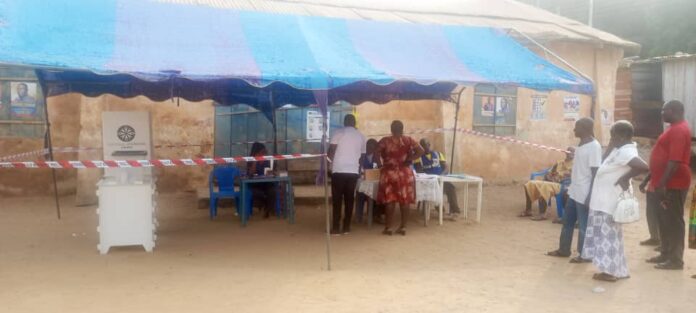
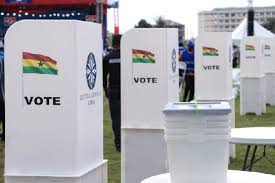
Elections in five Electoral Areas in the Cape Coast Metropolis have been put on hold by the Electoral Commission (EC). 

This is because the voting materials of the affected Areas were not included in the materials supplied. 

They are Kru town, Turom, Tamesase, University new site (Kwaprow) and Etsifi-Eyifua. 

“The Cape Coast Metro Office of the EC is yet to receive ballots papers for these electoral areas,” Mr Robert Asenso, the Metro EC Director, told the Ghana News Agency. 

“The ballot papers have not arrived, so we are still waiting, and my men are on the ground.” 

He could not ascribe any reason for the challenge; however, he urged the electorate in the affected communities to exercise restraints. 

The incumbent Assemblyman, Mr Cole Arthur, an aspirant for the Kru Town Electoral Area, was sad at the turn of events but optimistic of retaining the seat. 

Some frustrated electorates appealed to the EC to remedy the situation to enable them to exercise their franchise. 

Voting was ongoing at the remaining 40 polling centres as of 9:15hrs. 

Africa’s media heavyweights to explore benefits of AfCFTA

0

The Africa Prosperity Network (APN) and the African Continental Free Trade Area (AfCFTA) Secretariat will host African heads of state and top business leaders, among others at the next Africa Prosperity Dialogues (APD) in Ghana from January 25 – 27, 2024.

The three-day dialogue is on the theme: “Delivering Prosperity in Africa – Produce, Add Value, Trade,” and will be hosted by President Nana Akufo-Addo.

The APD 2024 Retreat will take place at the Peduase Presidential Lodge, Aburi Hills, in the Eastern Region.

Heads of international development institutions, foreign investors, social change-makers, and other Pan-African thought leaders will also attend.

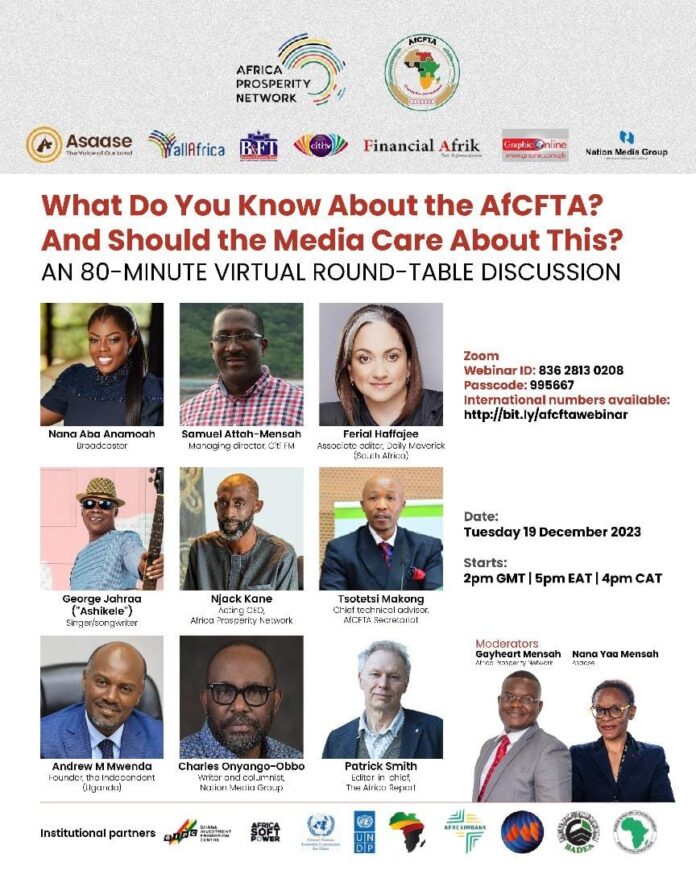
Ahead of the high-profile conference in Ghana, the APN Secretariat, in collaboration with AfCFTA, will organise a media webinar tomorrow, December 19, to unpack and discuss issues pertinent to the realisation of the AfCFTA’s single market focus – collective ownership by the people of Africa.

Themed: “What Do You Know About the AfCFTA ― and Why Should the Media Care?”, the discussions will examine the media’s role in mobilising mass engagement and participation in the AfCFTA and the opportunities it brings, especially as it is of immense benefit for the growth of SMEs in Global Africa (the sixth region of Africa).

A release issued by the APN Communication Directorate in Accra said Tuesday’s webinar would feature some of Africa’s media heavyweights; Audrey Gadzekpo, Samuel Atta-Mensah, Elizabeth Ohene, Ferial Haffajee, Joel Kibazo, Charles Onyango-Obbo, Andrew Mwenda, Mariama Sy Ba, David Ndii, Noo Saro-Wiwa and Dele Momodu.

They will discuss ways of internalising and normalising the unfolding reality of facilitating the free movement of people, goods and services among Africa’s 1.4 billion population.

It is also to prompt both AfCFTA actors and influential media players to do more to persuade Africans to tap into the potential of intra-African trade.

A major question that will emerge will be: “What can AfCFTA and member states do to support the media to build public education about the new, open Africa, and how seriously do African journalists themselves take the task of spreading the message?”

The AfCFTA, APN’s principal partner, has been at the forefront of Africa’s new trade paradigm and brought a new lease of life to the continent’s efforts of building the world’s largest single market.

But the lingering question of how to realise the single market through actionable and bankable policy positions has been brought to the fore, the release said.

The media webinar is essentially to get participants to explore and strategise on information-dissemination services and how they can engage and inform people across Africa and the global audiences, to participate actively in the AfCFTA and capitalise on the opportunities it presents.

There will be a presidential dinner gala and the Africa Prosperity Champions Awards ceremony on the night of January 26 at the Kempinski Gold Coast City Hotel in Accra.

District Level Election: NCCE engages identifiable groups in Afigya Kwabre North

0

The Afigya Kwabre North District Directorate of the National Commission for Civic Education (NCCE) is engaging various identifiable groups ahead of the District Level Election (DLE) scheduled for Tuesday, December 19.

This is to ensure they participate actively in the exercise to elect assembly and unit committee members to spearhead development in their local areas, as stipulated in the decentralisation concept.

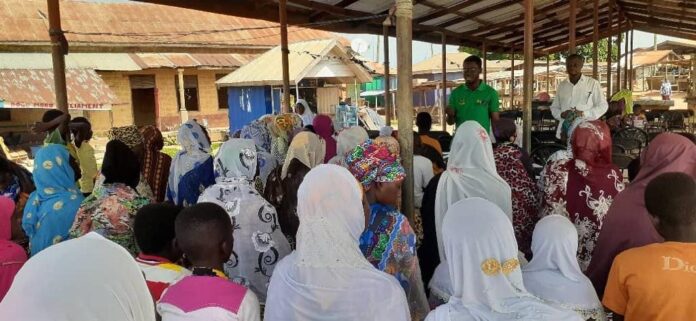
Led by Ms Jemimah Osei, the District Director, officials of the Directorate engaged churches, Muslim communities, Tailors and Dressmaking Associations and food vendors at Boamang and Denase, on the theme: “Empowering Communities.”

They took their audience through the importance of local elections and the roles of their representatives in lobbying for resource allocation at the district assembly level.

Most of the participants, however, expressed apathy in the local elections, citing non-performance on the part of their assembly members over the years as one of the reasons.

Ms Osei took time to convince them to rethink their abstinence in the interest of community development, reminding them that it was imperative for them to determine who they wanted to represent them.

After the elections, they had a responsibility to demand whatever the candidates promised to do for the community and urged them not to relinquish their civic right to vote.

“The District Level Elections are very important because you get to vote for people that will represent you at the local level,” she said.

“These individuals are integral parts of your communities, providing a channel for your needs to be advocated within the Assembly.”

She said elected assembly members served as channels through which assemblies conveyed development projects to communities through the lobbying and advocacy.

Electing such people should, therefore, be a priority for every citizen interested in the development of their local areas, she added.

Ghana Federation of Labour expresses concern over EC’s proposal to reduce voting period 

0

The Ghana Federation of Labour (GFL) has expressed concern over a proposal by the Electoral Commission (EC) to change the closing of voting time from 17:00 hours to 15:00 hours in the upcoming 2024 general election and subsequent ones. 

 The GFL urged the EC to provide further and better particulars about the intended amendments to the electoral system, especially on voting. 

 A statement jointly signed by Mr. Abraham Koomson and Mr. Caleb Nartey, Secretary General and President, respectively, and copied to the Ghana News Agency in Tema, noted that “the EC has so far not provided any convincing scientific justification for the reduction of the voting period from 10 hours to eight hours. 

 The GFL strongly kicks against the reduction of the voting hours, describing it as a “dangerous experiment” in the upcoming election. 

 According to the GFL, 2024 elections were crucial as stakes were high and tied to the peace and security of the country. 

 “A presidential winner in Ghana must obtain not less than 50 percent plus one of the total valid votes, which means every vote counts. 

 “But when a system is created for potential confusion on an election day, whereby potential electorates, mostly first-time voters, may have to struggle to find their polling stations, this plan to close at 15:00 hours could potentially disenfranchise thousands,” the GFL noted. 

 According to the GFL and the EC, the electorates and the political parties, and stakeholders, must learn lessons from Election 2008, when 

 Ghana narrowly escaped political turmoil because, at one point, the results were too close to call. 

 “It’s also our understanding that political parties were not thoroughly consulted by the EC on the proposed amendment on the closure of voting decisions. This suggests there is no buy-in yet. 

 “We have followed publications indicating stakeholders, including the ruling party, are already expressing skepticism. 

 “In view of the existing controversy over the handling of the 2020 general election and the potential impact on how parties react towards the pending elections,” the GFL stated. 

 The GFL called for immediate roundtable consultations with critical stakeholders, including the Coalition of Domestic Election Observers (CODEO), governance think-tanks, and CSOs, to scrutinise the EC’s assessment with reference to realities in difficult-to-reach communities. 

 The broad stakeholder consultation must also scrutinise the EC’s recent data-capturing measures, especially the potential chaos over the location of polling stations by those recently captured during the limited voter registration process. 

 The GFL also called for issues on the outstanding registration exercise and clarion calls to expand centres for easy identification of polling stations and voting centres. 

 The GFL also stated that the application of indelible ink to check multiple votes must continue until sole reliance on verification devices is proven to be effective and the process is acceptable to stakeholders. 

 The Federation called on the EC to abandon its plan to use the upcoming district elections for another level of piloting because of the potential incredibly low turnout, which will not reflect realities expected during general elections, as in the case of 2024, in which stakes are exceedingly high. 

 The GFL also urged the EC to critically consider vote patterns in difficult-to-reach areas where declarations of results always delay—cases of late starts or queues after 17:00 hours—and guarantee to address causes to ensure potential votes from such areas are not lost out. 

 The federation also called on the EC to revert to Inter-Party Advisory Committee (IPAC) structures and conventions with guarantees to build confidence to enhance buy-ins into reforms. 

 “Our Federation strongly believes the Commission is fully aware of the polarised political environment and accusing fingers pointed at it for some actions that many see as unconstitutional, depriving electorates of their legitimate rights amidst suspicions of biases influenced by some controversial appointments,” the GFL said. 

 According to GFL, “it is our hope that, at this crucial stage in our democratic dispensation, we do not make avoidable mistakes and build lost confidence in the electoral system to sustain the peace we enjoy today.” 

Protesters honor the 2016 death of a Hamas executive in Tunisia.

0

On Saturday, December 16, the march coordinator emphasized the background of this year’s commemoration.

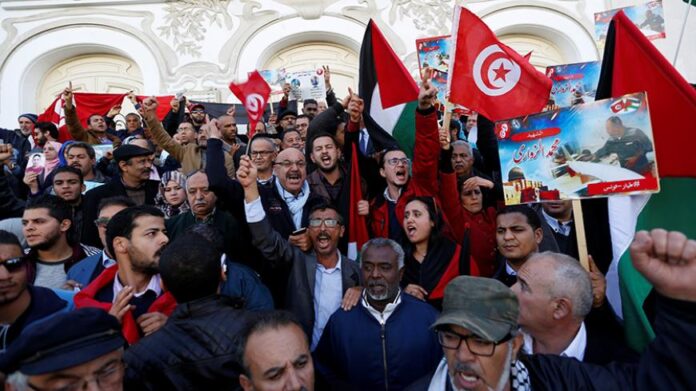
Almost a thousand demonstrators, many of whom were yelling “Free Palestine,” commemorated the seventh anniversary of Hamas executive Mohamed Zouari’s murder in Sfax, central-eastern Tunisia.

The 59-year-old Zouari was shot dead in the city on December 15, 2016. At the time, Tunisian authorities accused foreign agents of carrying out the murder.

“Every year we commemorate the anniversary [of the assassination] of the martyr Mohamed Zouari, but on a limited scale. This year’s commemoration is special because it coincides with the flooding of al-Aqsa [Hamas attack on 7 October],” Mourad Ayedi said.

The Hamas operation killed 1.140 people, mostly Israeli civilians on October 7. 

Since then, Israel’s military response has killed 18,800 Palestinians mainly women and children.

No resolution of the decades-long conflict seems within reach.

The U.N. General Assembly voted overwhelmingly on Tuesday (Dec. 13) to demand a humanitarian cease-fire in Gaza. The vote in the 193-member world body was 153 in favor, 10 against and 23 abstentions, and ambassadors and other diplomats burst into applause as the final numbers were displayed. 

The United States and Israel were joined in opposing the resolution by eight countries — Austria, Czechia, Guatemala, Liberia, Micronesia, Nauru, Papua New Guinea, and Paraguay.

Ongoing offensive

Three Israeli hostages who were mistakenly shot by Israeli troops in the Gaza Strip had been waving a white flag and were shirtless when they were killed, military officials said Saturday (Dec. 16), in Israel’s first such acknowledgement of harming any hostages in its war against Hamas.

Prime Minister Benjamin Netanyahu said in a nationwide address that the killings “broke my heart, broke the entire nation’s heart,” but he indicated no change in Israel’s intensive military campaign. “We are as committed as ever to continue until the end, until we dismantle Hamas, until we return all our hostages,” he said.

On December 16, the siege of Catholic Christians in the Holy Land announced that an unarmed mother and her daughter were killed by Israeli Denfence forces as they look for safety inside the convent of the Sisters of Mother Teresa.

For a month, Palestinians have been living under relentless bombardment by the Israleli military which has targeted “hospitals, refugee camps, mosques, churches, and UN facilities,” the United Nations Secretary-General said last month.

Since the outbreak of war, violence in the West Bank from Israeli forces and settlers has reached record levels. Since Oct. 7, 287 Palestinians have been killed in the West Bank, according to the Palestinian Health Ministry. That’s the deadliest year on record in the West Bank in 18 years, it said.

Allegations of foreign ties rise ahead of the Democratic Republic of the Congo’s presidential election.

0

As the Democratic Republic of the Congo (DRC) prepares for a pivotal presidential election, the political atmosphere is charged with accusations circulating on social media, particularly targeting opposition candidates with claims of being “foreigners.”

Accusations of foreign ties have gained momentum, infiltrating public discourse through various channels.

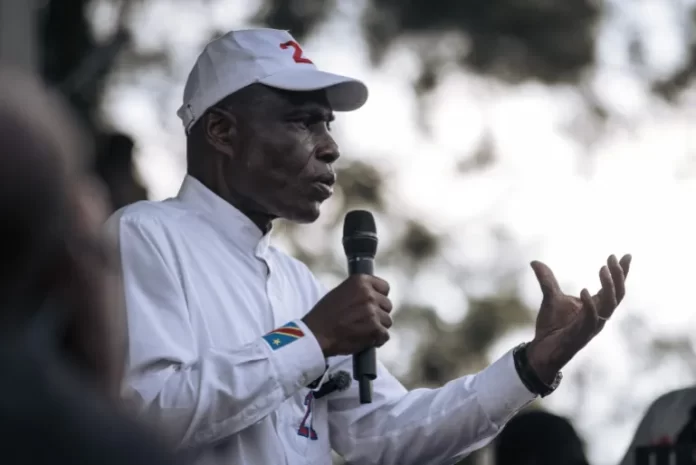
Martin Fayulu, a prominent candidate in the DRC Presidential Election, asserted, “Our country, the Democratic Republic of Congo, has been sold to foreigners. To become president, you have to go to foreigners so that they can strike a deal for you to become president.” 

In response to the allegations, Fayulu emphasized the need to restore national unity. “We are going to bring back national unity today. Since Mobutu left, if we can remember him for just one thing, what would it be? National unity. That’s why we talk about bringing national cohesion back. One father, one mother, one nation,” declared Fayulu. 

Fayulu further outlined his commitment to fighting corruption and promoting honest governance. “We’re going to fight corruption, we’re going to do what’s known in French as honest governance. If you steal state money, where will you end up? You’ll go to prison after an investigation, and we’ll see if you have any assets and how you acquired them. If you can’t prove how you accumulated your assets, then all your assets will become property of the State.”

The accusations come at a critical time for the DRC, with the nation grappling not only with internal political dynamics but also facing a resurgence of violence in the east, allegedly fueled by armed rebellions with external support.

Trump is going to install supporters to overhaul American foreign policy toward China, NATO, and Ukraine

0

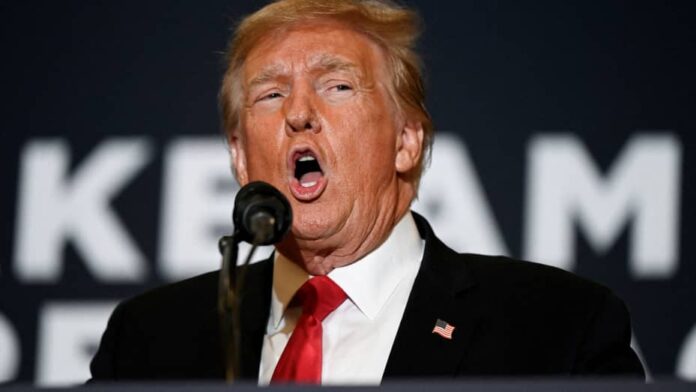
As a result, Donald Trump would have more freedom than during his first term to enact isolationist policies and whims; he would also be able to make significant changes to the U.S. stance on issues ranging from trade with China to the war in Ukraine, as well as to the federal institutions that implement and occasionally constrain foreign policy.

During his 2017–2021 term, Trump struggled to impose his sometimes impulsive and erratic vision on the U.S. national security establishment.

Approximately twenty current and former aides and diplomats stated that he would likely install loyalists in key positions in the Pentagon, State Department, and CIA.

He often voiced frustration at top officials who slow-walked, shelved, or talked him out of some of his schemes. Former Defense Secretary Mark Esper said in his memoir that he twice raised objections to Trump’s suggestion of missile strikes on drug cartels in Mexico, the U.S.’s biggest trade partner. The former president has not commented.

“President Trump came to realize that personnel is policy,” said Robert O’Brien, Trump’s fourth and final national security adviser. “At the outset of his administration, there were a lot of people that were interested in implementing their own policies, not the president’s policies.”

Having more loyalists in place would allow Trump to advance his foreign policy priorities faster and more efficiently than he was able to when previously in office, the current and former aides said.

Among his proposals on the campaign trail this year, Trump has said he would deploy U.S. Special Forces against the Mexican cartels – something unlikely to get the blessing of the Mexican government.

If he returns to power again, Trump would waste little time cutting defense aid to Europe and further shrinking economic ties with China, the aides said.

O’Brien, who remains one of Trump’s top foreign policy advisers and speaks to him regularly, said imposing trade tariffs on NATO countries if they did not meet their commitments to spend at least 2% of their gross domestic product on defense would likely be among the policies on the table during a second Trump term.

The Trump campaign declined to comment for this article.

Unlike in the lead-up to his 2016 election, Trump has cultivated a stable of people with whom he speaks regularly, and who have significant foreign policy experience and his personal trust, according to four people who converse with him.

Those advisers include John Ratcliffe, Trump’s last Director of National Intelligence, former U.S. Ambassador to Germany Richard Grenell, and Kash Patel, a former Trump staffer who held several positions in the intelligence and defense communities.

None of those people responded to interview requests.

While the specific policies of these informal advisers vary to some degree, most have been vocal defenders of Trump since he left office and have expressed concerns that America is paying too much to support both NATO and Ukraine.

“DOOMSDAY OPTION”

Trump has a commanding lead in the Republican presidential nomination race. If he becomes the Republican nominee and then defeats Democratic President Joe Biden next November, the world will likely see a much more emboldened Trump, more knowledgeable about how to wield power, both at home and abroad, the current and former aides said.

That prospect has foreign capitals scrambling for information on how a second Trump term would look. Trump himself has offered few clues about what kind of foreign policy he would pursue next time around, beyond broad claims like ending the Ukraine war in 24 hours.

Eight European diplomats interviewed by Reuters said there were doubts about whether Trump would honor Washington’s commitment to defend NATO allies and acute fears he would cut off aid to Ukraine amid its war with Russia.

One Northern European diplomat in Washington, who spoke on condition of anonymity because of the sensitivity of the issue, said he and his colleagues had kept talking to Trump aides even after the former president left the White House in 2021.

“The story from there was, ‘We were not prepared (to govern), and next time it has to be different,'” the diplomat said. “When they got into the Oval Office in 2017, they didn’t have any idea what the hell to do with it. But this won’t happen again.”

The diplomat, whose country is a NATO member, and one other diplomat in Washington said their missions have outlined in diplomatic cables to their home capitals a possible “doomsday option.”

In that hypothetical scenario, one of multiple post-election hypotheses these diplomats say they have described in cables, Trump makes good on pledges to dismantle elements of the bureaucracy and pursue political enemies to such a degree that America’s system of checks and balances is weakened.

“You have to explain to your capital. ‘Things might go rather well: the US keeps on rehabilitating herself’ (if Biden is re-elected),” said the diplomat, describing his mission’s view of American politics. “Then you have Trump, a mild version: a repetition of his first term with some aggressive overtones. And then you have the doomsday option.”

RETREAT FROM GLOBALISM

Michael Mulroy, the Deputy Assistant Secretary of Defense for the Middle East under Trump, said the former president would likely appoint individuals who subscribed to his isolationist brand of foreign policy and were unlikely to confront him.

All U.S. presidents have the power to name political appointees to the most senior jobs in the federal bureaucracy, including the State Department, Pentagon and the CIA.

“I think it will be based primarily on loyalty to President Trump,” Mulroy said, “a firm belief in the kind of foreign policy that he believes in, which is much more focused on the United States, much less on a kind of globalist (policy).”

Trump clashed with his own appointees at the Pentagon on a number of issues in his first term, from a ban on transgender service members that he supported to his 2018 decision to pull U.S. troops from Syria.

When his first defense secretary, Jim Mattis, resigned in 2018, the former four-star general stated he had significant policy differences with Trump. While Mattis did not explicitly lay them out, he stressed in his resignation letter the need to maintain an ironclad bond with NATO and other allies, while keeping enemies, like Russia, at arms-length.

Ed McMullen, Trump’s former ambassador to Switzerland and now a campaign fund-raiser who is in contact with the former president, stressed that most foreign service personnel he knew served the president faithfully.

But, he said, Trump was aware of the need to avoid choosing disloyal or disobedient officials for top foreign policy posts in a second term.

“The president is very conscious that competency and loyalty are critical to the success of the (next) administration,” he said.

Outside of Trump’s top circle of advisers, a potential Trump administration plans to root out actors at lower levels of the national security community perceived to be “rogue,” according to Agenda47, his campaign’s official policy site.

Such a step would have little precedent in the United States, which has a non-partisan bureaucracy that serves whichever administration is in office.

Trump has said he plans to reinstate an executive order he issued in the final months of his first term, which was never fully implemented, that would allow him to more easily dismiss civil servants.

In a little-reported document published on Agenda47 earlier this year, Trump said he would establish a “Truth and Reconciliation Commission,” which would, among other functions, publish documents related to “Deep State” abuses of power. He would also create a separate “auditing” body meant to monitor intelligence gathering in real time.

“The State Department, Pentagon, and National Security Establishment will be a very different place by the end of my administration,” Trump said in a policy video earlier this year.

NATO PULLOUT? NEW TRADE WAR

During a second term, Trump has pledged to end China’s most favored trading nation status – a standing that generally lowers trade barriers between countries – and to push Europeans to increase their defense spending.

Whether Trump will continue vital U.S. support for Ukraine in its war with Russia is of particular importance to European diplomats in Washington trying to prepare, as is his continued commitment to NATO.

“There are rumors that he wants to take the US away from NATO or withdraw from Europe, of course it sounds worrying but … we are not in a panic,” said a diplomat from one Baltic state.

Despite worries about the future of NATO, several diplomats interviewed for this article said pressure from Trump during his first term did lead to increased defense spending.

John Bolton, Trump’s third national security adviser who has since become a vocal critic of the former president, told Reuters he believed Trump would withdraw from NATO.

Such a decision would be earth-shaking for European nations that have depended on the alliance’s collective security guarantee for nearly 75 years.

Three other former Trump administration officials, two of whom are still in contact with him, played down that possibility, with one saying it would likely not be worth the domestic political blowback.

At least one diplomat in Washington, Finnish Ambassador Mikko Hautala, has spoken to Trump directly more than once, according to two people with knowledge of the interactions, which were first reported by The New York Times.

Those discussions centered on the NATO accession process for Finland. Hautala wanted to make sure Trump had accurate information about what Finland brings to the alliance and how Finland joining benefits the U.S., one of the people said.

Biden is unharmed after his car collides with a convoy.

0

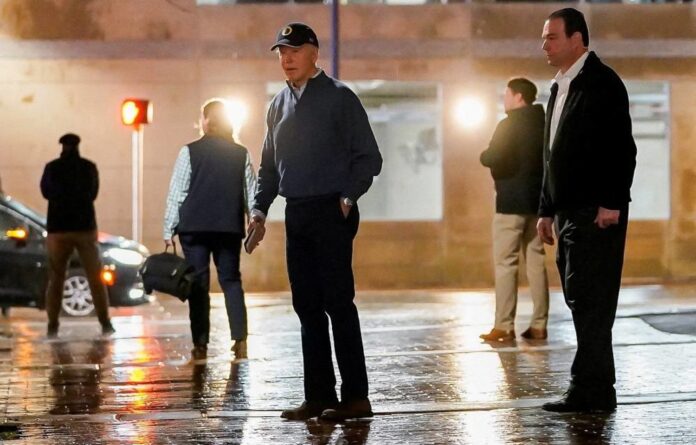
President Joe Biden was safe on Sunday night after a car collided with a motorcade SUV that was part of the president’s security detail, according to a Reuters witness.

Biden and First Lady Jill Biden had just left his campaign headquarters when the collision occurred, and Jill Biden was also safe following the incident, the witness said.

Moments after Biden responded to a question from a reporter a silver sedan with Delaware license plates hit what seemed to be a motorcade SUV shielding the motorcade at the intersection across from the entrance of the campaign headquarters, the pool report stated.

Television footage showed Secret Service agents escorting Biden to his car after the impact.

The silver sedan, which sustained damage to its bumper, was quickly surrounded by security officers after it stopped. Agents cornered the car and pulled weapons on the driver, who held his hands up.

The Bidens returned safely to their home in Wilmington following the incident, the witness said.