Home Blog Page 29

Unity is panacea to retain party in government- Asiedu Nketia 

0

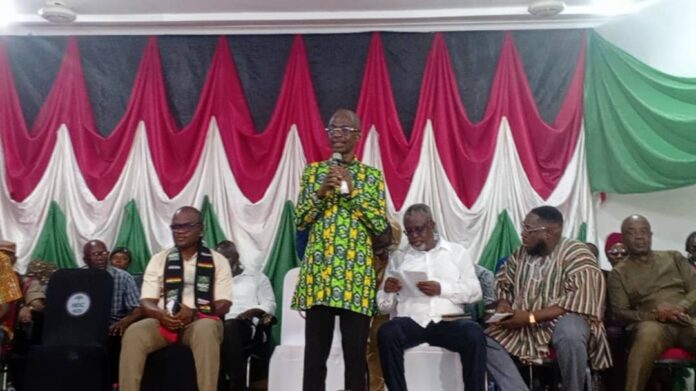
Mr Johnson Asiedu Nketia, the National Chairman of the ruling National Democratic Congress (NDC) has reiterated calls on supporters of the party, to unite and embrace peace to help retain the party in government. 

The National Chairman said unity was a process which needed collective efforts to consolidate the grassroots to pave the way for continued good governance for Ghanaians to enjoy better lives. 

Mr Asiedu Nketia made the call when he addressed supporters of the party in Agona West and East as part of his ‘thank you’ tour at Agona Swedru. 

The National Chairman was accompanied by Mr Ekow Okyere Panyin Aduamoah,  the Central Regional Minister, Mr Richard Asiedu, the Central Regional Chairman of the party, MMDCEs and other top officials of NDC. 

He said the tour of the Central region was a campaign promise given to the chiefs, the clergy, opinion leaders, floating voters and many others during the 2024 Presidential and Parliamentary elections. 

Mr Asiedu Nketia further admonished the supporters of the party not to joke with the electoral victory, particularly in Agona West where for many years NDC had not won such a massive vote, adding that the opponent was also seriously adopting strategies to re-organise itself to come out strongly in the 2028. 

He said Ghanaians were witnessing good governance under President Mahama, and his promise to appoint only 60 Ministers if he won the elections had been fulfilled in order not to drain the economy as the New Patriotic Party did with its 125 ministers. 

Mr Asiedu Nketia urged members of the party seeking for jobs to exercise restraints because not all the four million members of the NDC could be appointed Ministers.  

He expressed gratitude to the chiefs, the Queen mothers and all for their support and prayers which assisted the NDC to win the elections and pledged to reconstruct roads in the Agona Swedru enclave to facilitate free movement of goods and services. 

Mr Eric Gyamfi Odoom, the Agona West Municipal Chief Executive (MCE) said president Mahama’s reset agenda had reflected in the lives of the people in the Municipality in the areas of education, health, potable water, job creation and reshaping of feeder roads to improve the quality of life of the people. 

He said it was unprecedented that 10 million Ghana cedis was received from government as District Assembly Common fund under President Mahama’s reset agenda. 

He said the colossal amount released by the Common Fund administrator had assisted the Assembly to undertake many developmental projects including school blocks, health structures and potable water. 

Nana Kweku Esieni V, the Regent of Agona Swedru appealed to the National Chairman to use his good offices to help the construction of Swedru/Winneba-Junction Road, Swedru /Akim Oda and Swedru/Ajumako-Enyan-Essiam District roads to aid the transportation of goods and services. 

Gabon’s media regulator has suspended social media “until further notice.”

0

Gabon’s media watchdog said on Tuesday that social media sites have been shut down “until further notice.”

“Defamatory, hateful, and insulting content” is fueling conflict and division in society, according to a representative for the High Authority for Communication.

He claimed that the “unauthorized disclosure of personal data,” “cyberbullying,” and “spread of false information” are undermining democratic advancement and upending governmental institutions.

The body hasn’t named any social media platforms that will be included in the ban. The regulator said “freedom of expression, including freedom of comment and criticism,” remain “a fundamental right enshrined in Gabon.”

President Brice Oligui Nguema is facing his first wave of social unrest since taking office last year.

Teachers have been striking since December over pay and conditions and protests have spread to other public sector, including health, higher education and broadcasting.

Regulators reaffirm commitment to virtual asset oversight 

0

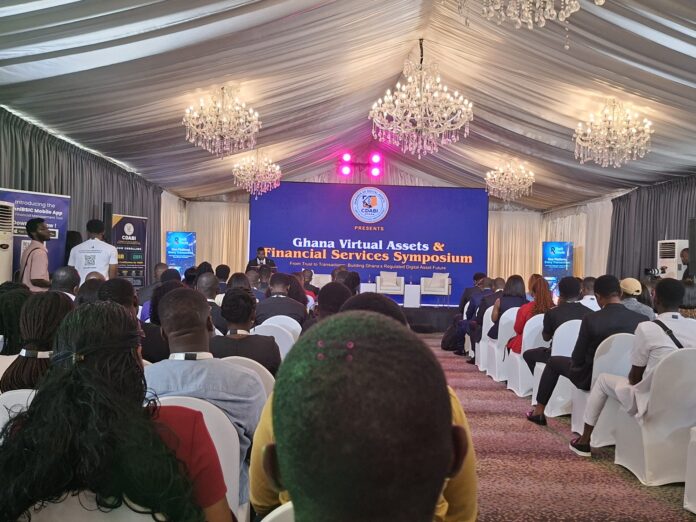
The Bank of Ghana (BoG) and the Securities and Exchange Commission (SEC) have reaffirmed their commitment to strict oversight and market discipline to match the rapid growth of virtual assets. 

The assurance was given at the Ghana Virtual Assets and Financial Services Symposium, where discussions focused on financial integrity, regulatory coordination and safeguarding the financial system. 

The symposium, organised by the Chamber of Digital Assets and Blockchain Innovations, brought together industry players to deliberate on the future of Ghana’s digital asset ecosystem. 

Speakers from the two institutions said virtual assets were becoming an important part of the financial landscape but must be anchored on transparency, accountability and investor protection. 

Mr Mensah Thompson, Deputy Director-General (Finance) at the SEC, said the Commission was placing financial integrity at the centre of the emerging regulatory framework.  

He announced that the SEC would publish the Virtual Asset Regulatory Sandbox Guidelines next week to enable supervised testing of virtual asset services. 

Mr Thompson said the guidelines, refined with industry input, would support the operationalisation of the Virtual Asset Service Providers Act.  

The SEC’s approach, he said, prioritised investor protection and compliance with global standards, including the Financial Action Task Force (FATF) Travel Rule. 

“Ghana is determined not to become a weak link in the global financial system. The integrity of financial markets must not be compromised by illicit use of new technologies,” Mr Thompson said. 

He disclosed that guidelines on digital and online foreign exchange trading were near completion and said the SEC would continue to clamp down on unlicensed operators to safeguard investor confidence. 

Mr Caleb Owuraku Asare, Head of FinTech and Innovation at the Bank of Ghana, said integrity and consumer protection were central to the virtual asset ecosystem.  

He said such activities must comply with Ghana’s financial laws and not undermine macroeconomic stability or monetary operations. 

“Although the innovation surrounding virtual assets is welcome, it must never be interpreted as a replacement for the Ghana cedi,” he said. 

Mr Asare said the Bank was monitoring demand for foreign-backed digital assets and noted that Ghana could develop cedi-backed stable coins if necessary.  

He cited ongoing cross-border pilot initiatives, including one with the National Bank of Rwanda, as evidence of the Bank’s commitment to responsible innovation. 

Mr Asare said strong market conduct and compliance were required from operators, adding: “Informed investors and responsible service providers are essential to maintaining market integrity.” 

Africa-China relations need critical review – Prof Amoah  

0

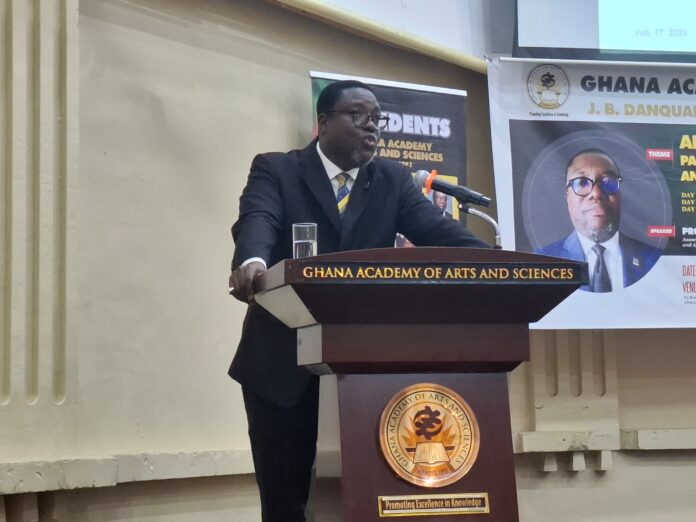
Professor Lloyd G. Adu Amoah, Associate Professor of Political Science at the University of Ghana, has called for a critical reassessment of Africa’s engagement with China within the evolving international political economy. 

He questioned the depth of Africa-China relations, describing the partnership as “heavy on form and very light on substance.” 

Prof Amoah made the call when he delivered the first of the 2026 J.B. Danquah Memorial Lectures organised by the Ghana Academy of Arts and Sciences (GAAS) in Accra on Tuesday. 

The lecture, on the theme “Africa-China Relations: Partnership, Peonage, Pawnage, and Possibilities?” examined the evolution of Africa-China ties and their implications for industrialisation, foreign direct investment and power relations. 

Prof Amoah said the lecture sought to “critically re-examine Africa-China entanglement in the light of imagining a new reality in the international political economy.” 

He traced Africa-China relations through three phases. The first, from the 1940s to the mid-1960s, was ideologically driven and rooted in shared anti-imperialist sentiments.  

Prof Amoah cited the construction of the TAZARA Railway as a concrete expression of early solidarity and noted that Ghana established diplomatic relations with China on July 5, 1960, under the administration of Dr Kwame Nkrumah. 

The second phase, spanning the 1980s to the end of the 20th century, saw the ideological rationale scaled down and overlaid by resource and power considerations, as China sought to consolidate its global standing.  

Prof Amoah referenced the establishment of the Forum on China-Africa Cooperation (FOCAC) in 2000 as a key institutional development that formalised continent-wide engagement. 

He said the third phase, beginning around 2011 when China became the world’s second-largest economy, was marked by China’s “obsession with the maintenance of its new superpower state.” 

On economic engagement, Prof Adu Amoah said Africa’s long-standing aspiration for industrialisation had not significantly advanced despite decades of engagement with China.  

Quoting research by African scholars, he said surges in commodity demand from China “may lock African countries in the traditional commodities export sector and result in diminished manufacturing export opportunities.” 

Prof Amoah noted that only 11.5 per cent of Africa’s workforce was employed in industry, unchanged from three decades ago.  

He also observed that China’s FDI inflows into Africa remained relatively small as a percentage of its global stock, standing at 4.4 per cent in 2021, and were concentrated mainly in resource-rich countries and sectors such as mining and construction. 

Prof Adu Amoah said: “The so-called Africa-China partnership from the get-go seems to have proved a quiet, vapid one, heavy on form and very light on substance.” 

He urged Ghana, given its historic and intellectual position on the continent, to play a leading role in reconstructing Africa-China relations to prioritise genuine industrial transformation and balanced engagement. 

The J.B. Danquah Memorial Lectures are organised annually by GAAS in honour of Dr Joseph Boakye Danquah, scholar, lawyer and one of the leading figures in Ghana’s independence movement.  

The series provides a platform for distinguished scholars and public intellectuals to address major national and international issues. 

AI Conference harnesses how the tool can serve humanity 

0

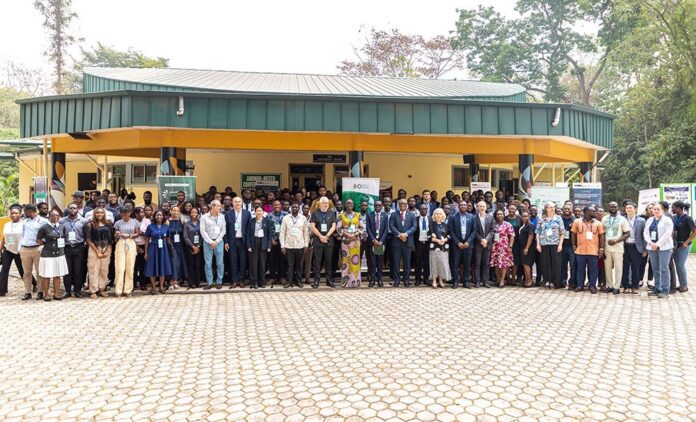
The Kwame Nkrumah University of Science and Technology (KNUST) has opened the Artificial Intelligence for Sustainable Development (AI4SD) mini conference to share data, challenges, and successes in navigating AI tools for development. 

The conference will examine how artificial intelligence can be designed and deployed to be context-aware, inclusive, and sustainable, directly supporting the development of goals that define the future. 

It is organised on the theme: “Leveraging Artificial Intelligence for the Sustainable Development Goals (SDGs).” 

The AI4SD’s vision has been to cultivate an ecosystem where research meets real-world applications.  

It is implemented by the KNUST, Ghana Atomic Energy Commission (GAEC), Université Paris-Saclay and the French National Center for Scientific Research (CNRS), with support from the French Embassy, International Development Research Center (IDRC), and AFD. 

Professor Jerry John Kponyo, AI4SD, Project Lead, observed that “we stand at a pivotal moment in history, where the tools we build can either widen the gap between the privileged and the underserved or bridge it”. 

He mentioned that in the past year, the AI4SD project had aggressively pursued solutions across critical sectors in agriculture and food security by developing a Crop Disease Detection Toolbox and a Smart Indigenous Weather App (SIW).  

These tools are designed to boost farmer productivity by placing advanced predictive capabilities directly into the hands of those who feed our nation.  

It has farm demonstration projects underway to study plant disease in real-time, bridging the gap between the laboratory and the field. 

Prof Kponyo mentioned that in terms of health and well-being, the project was developing AI-powered solutions to determine rare diseases in newborns and also created the MiG Tool for cross-modality imaging to improve diagnostic accuracy.  

Again, the project team has released the SignTalk-Gh Dataset, a collection of over 10,000 Ghanaian Sign Language videos representing over 4,000 structured sentences in healthcare interactions.  

This is data that would allow deaf patients to communicate more effectively with doctors in general consultations, mental health, and beyond, truly embodying the spirit of reducing inequalities. 

He added that the project was tackling environmental challenges by deploying AI sensors to monitor chemical stability and remove toxic heavy metals from water bodies polluted by illegal mining. 

In the energy sector, the team was collaborating with the Ghana Grid Company to use AI to predict transformer faults, ensuring a more reliable energy supply for the economy and in education, the team has established 15 Robotics Clubs in less privileged Senior High Schools across Ghana and donated 45 laptops to enhance their training.  

Prof. Mrs Rita Akosua Dickson, Vice-Chancellor, KNUST, called for continuity in the project and urged stakeholders to embrace the programme beyond its initial phase. 

She said it was very strategic and smart to leverage emerging technologies including AI, to reap the benefits to achieve the SDGs before 2030. 

Mr Julien Lecas, Head of Cooperation at the French Embassy, noted that supporting the AI4S was about creating the conditions for shared work and learning. 

Ali Suraj declares intention to contest National Nasara Organizer 

0

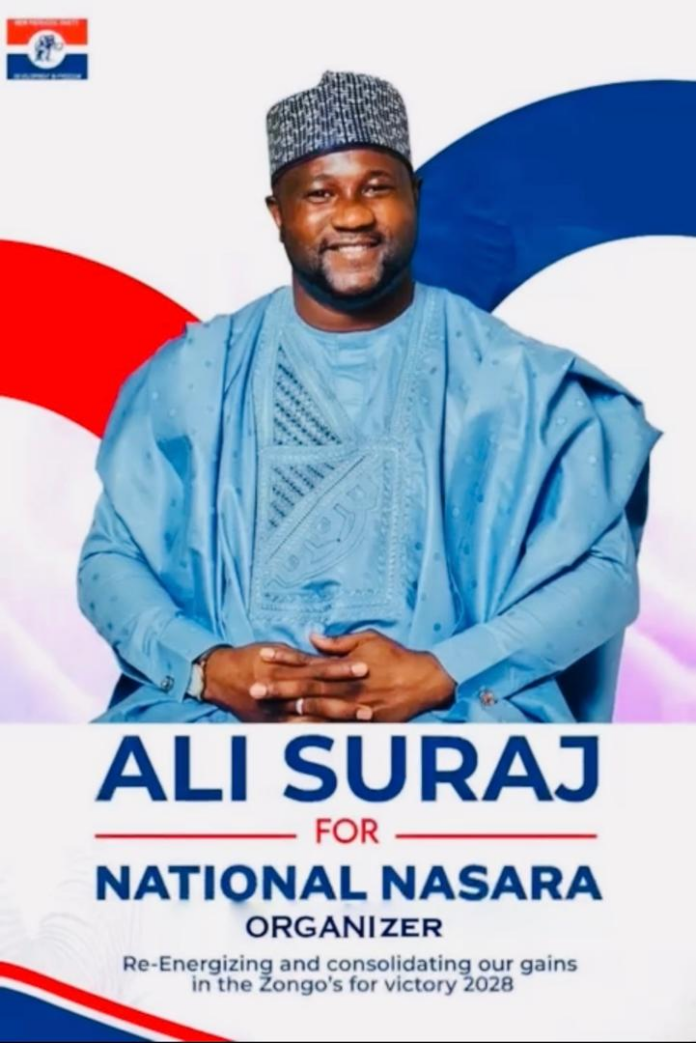
Alhaji Ali Suraj, a former presidential staffer in the NPP administration, has declared his intention to contest the National Nasara Organiser position of the party, when nominations are open. 

‎He noted that the decision to contest comes after careful consideration and in response to the many calls for renewed leadership rooted in the founding values and democratic ideals of the NPP and the Nasara fraternity. 

In a press release signed and issued in Kumasi on February 17, 2026, Alhaji Suraj stated that his vision was to re-energise and consolidate more gains in the Zongo communities for victory in 2028. 

‎He noted that, as a former Nasara Coordinator in the U.S.A, and having served on various committees of the party, he was motivated by the encouragement received from the grassroots and other patriots across the country to be part of the contest. 

‎He said the position for National Nasara Organiser required an able and experienced hand to lead, and he was in that position to take up the responsibility. 

‎Alhaji Suraj highlighted some policies that he would work to achieve as a National Nasara Organizer. 

Among them are the establishment of the National Nasara administration, a Nasara fraternity that is a year-round bridge between Muslims/Zongo Communities.‎ 

Others are re-energising and resourcing a vibrant Nasara wing and also a Nasara that focuses on trust, opportunity and discipline. 

‎As part of his policies, he also highlighted the establishment of a welfare driven system that will aid in enhancing mobilization in the Zongo/settler communities.‎ 

He urged Ghanaians to give Dr. Alhaji Mahmud Bawumia the mandate to lead the country, by voting for him in the 2028 general elections. 

Accountability Forum calls for forensic audit in COCOBOD finance 

0

The Ghana Accountability Forum (GAF) called for a forensic audit into the finances of the Ghana Cocoa Board (COCOBOD), as the nation’s cocoa sector undergoes structural reforms.  
  
In that regard, the forum called on the government to set up an independent committee that would publish its findings to strengthen public sector transparency and accountability.  
  
The GAF is a non-partisan platform that brings together civil society organizations (CSOs), anti-corruption advocates, media practitioners, youth activists, and concerned citizens to collectively demand accountability in public life.  
  
It serves as a safe and credible space for dialogue, advocacy, research, and citizen engagement focusing on anti-corruption advocacy, public financial accountability, social accountability, access to information, media freedom, and whistleblower protection.  
  
A statement issued and signed by Mr Raphael Godlove Ahenu, the Interim Chairman of the GAF said parliamentary oversight over the management of the COCOBOD ought to be strengthened too.  
  
“In fact, accountability should not be politicized but rather seen as a national responsibility to safeguard Ghana’s most iconic agricultural sector,” a copy of the statement made available to the Ghana News Agency (GNA) stated.  
  
It observed that a comprehensive investigation into the operations of the COCOBOD was required to hold authorities accountable, as the nation reformed her cocoa sector.  
  
The statement indicated that: “The scale of financial strain, declining cocoa output, and growing concerns among farmers demand urgent scrutiny of management decisions, financial commitments, and governance practices within COCOBOD”.  
  
It said “The current situation within the cocoa sector raises serious questions about oversight, accountability, and long-term sustainability.  
  
A thorough investigation is necessary to establish the facts and protect the national interest”, saying that: “Reports suggest that the COCOBOD’s debt burden has increased significantly”.  
  
It said the sharp decline in the nation’s annual cocoa production could have far-reaching consequences on rural livelihoods and the broader economy, citing factors like illegal mining, ageing cocoa farms, plant diseases, and inadequate support systems for farmers as major contributors.  
  
The statement added that: “Cocoa is central to Ghana’s economy and identity and that calls for courage, transparency, and reforms, placing accountability at the heart of the sector governance structure”.  

Table Tennis: Sheroes season three slated for February 21 

0

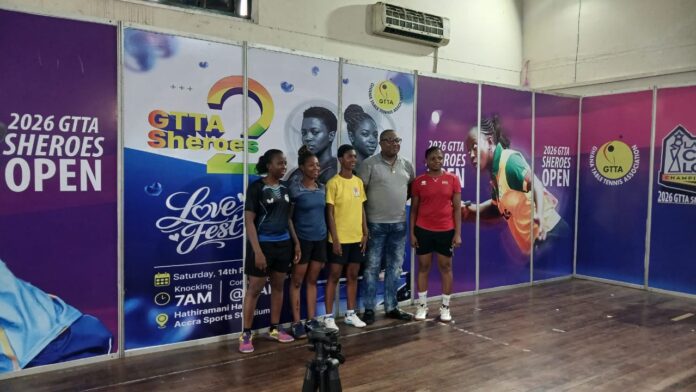
The excitement surrounding the 2026 Ghana Table Tennis Association (GTTA) Sheroes Series is set to continue with series three titled ” “Show Time,” scheduled for Saturday, February 21, 2026. 

With Series One producing a champion in Augustina Baidoo and Series Two crowning Cynthia Kwabi in commanding fashion, the third instalment is expected to raise the competitive stakes even higher as the series gathers momentum. 

The upcoming “Show Time” contest would offer another platform for Ghana’s top female table tennis players to assert their dominance, respond to earlier results, and strengthen their standing in the series rankings. 

As the competition progresses week by week, consistency and mental resilience are increasingly becoming decisive factors separating contenders from challengers. 

The Sheroes Series also presents an important opportunity for the technical team to assess players’ form and readiness ahead of the upcoming World Championship. 

The Sheroes initiative continues to serve as a key developmental programme by the GTTA, providing regular competitive exposure while promoting the growth of women’s table tennis across the country. 

With two editions already delivering thrilling outcomes, the stage is set for another compelling showdown on February 21, where once again, it will truly be “Show Time.” 

Senegalese prosecutor denies claims that police killed and tortured a student.

0

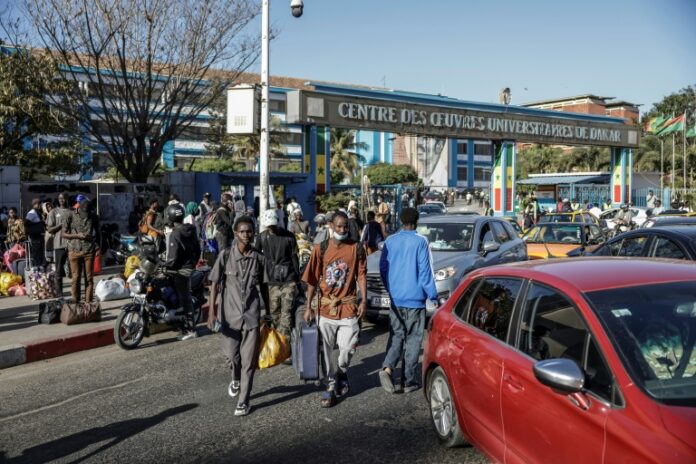
On Tuesday, a Senegalese public prosecutor asserted that a student who was slain by police, according to demonstrators, actually died after “jumping from the fourth floor.”

The west African nation has been rocked by the death of medical student Abdoulaye Ba on February 9 under mysterious circumstances when police broke up his university campus in the city, Dakar, after days of student protests.

According to the coroner’s postmortem report, a number of injuries to his skull and chest were “complicated by massive internal bleeding,” ruling out “an isolated natural cause.”

The students’ collective at the Cheikh Anta Diop University (UCAD) insisted last week that Ba was “brutally tortured to death by the police.”

But the Dakar court’s prosecutor on Tuesday rejected that account, insisting that Ba “had not been beaten.”

The student “jumped from the fourth floor of Pavilion F and unfortunately landed on the asphalt. This explains the injuries and other damage observed by the forensic doctor on his body,” Ibrahima Ndoye told the press.

According to Ndoye, Ba was attempting to flee from a fire that had broken out in their dormitory, resulting in “flames and smoke that were causing them to suffocate.”

The prosecutor did not give details about the cause of the alleged fire, which took place during the police intervention on campus.

His previous insistence on Saturday that Ba had not been tortured prompted the UCAD students’ association to accuse the prosecutor of “stirring up confusion.”

The government has described the student’s death as a “tragedy” and admitted to “police misconduct.” But Interior Minister Mouhamadou Bamba Cisse also justified the intervention by accusing students of attempting to destroy university campus infrastructure, citing video evidence.

Footage filmed by students and shared on social media showed the violence between the security forces and students.

In some of the images, officers are seen entering university grounds and firing tear gas into buildings while students retaliated by throwing stones.

In one video authenticated by AFP, police officers are seen striking a screaming man with blunt instruments.

France and Algeria decide to resume security cooperation following the French Interior Minister’s visit.

0

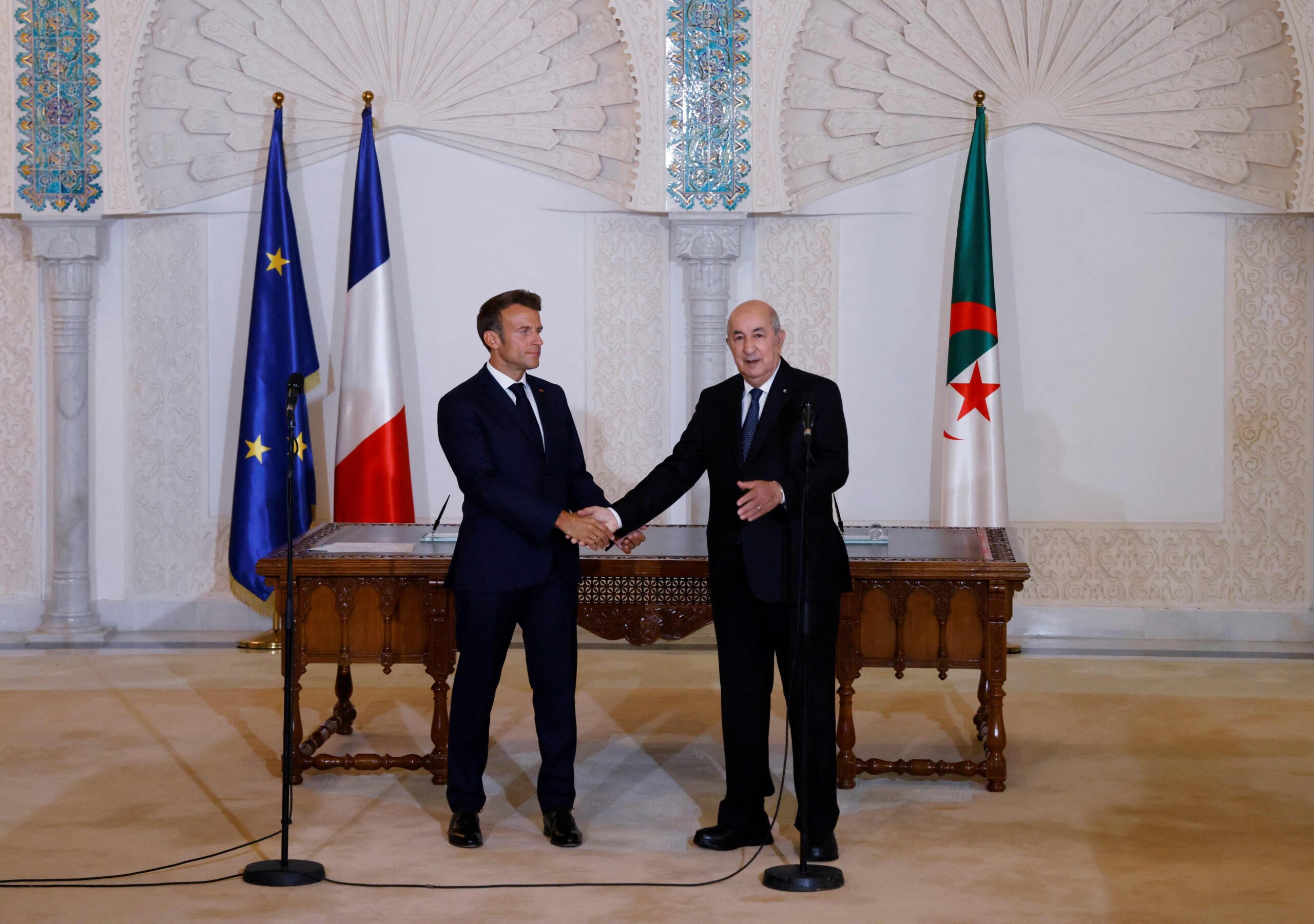
The first indication of a thaw in diplomatic relations came Tuesday when French Interior Minister Laurent Nuñez visited Algiers and pledged to resume security cooperation.

Nuñez claimed that both parties had decided to “reactivate a high-level security cooperation mechanism” following their meeting with President Abdelmadjid Tebboune.

The visit was made against the backdrop of strained ties between France and its former colony, which have been strained since Paris formally supported Moroccan sovereignty over the disputed Western Sahara territory in 2024, where Algeria backs the Polisario Front, a group that advocates for independence.

Working sessions on Monday, according to Nuñez, were focused on “restoring normal security relations,” which includes collaboration in intelligence, policing, and legal matters.

He thanked the Algerian president for instructing his services to work with French authorities to “improve cooperation on readmissions.” Algeria has for months refused to take back its nationals living irregularly in France.

The renewed cooperation is expected to take effect “as quickly as possible” and continue “at a very high level,” Nuñez confirmed.

According to images released by Algerian authorities, the talks brought together senior security officials from both countries, including France’s domestic intelligence chief and Algeria’s head of internal security.

Invited by his counterpart Said Sayoud, Nuñez’s trip had been planned for months but repeatedly delayed.

Both sides have a backlog of issues to tackle. Before travelling, Nuñez said he intended to raise “all security issues,” including drug trafficking and counterterrorism.

Algeria plays a key role in the latter, sharing borders with junta-led Niger and Mali, both gripped by jihadist violence.

Ahead of the trip, Nuñez had also mentioned the case of Christophe Gleizes, a French sports journalist serving a seven-year sentence for “glorifying terrorism.”

It is unclear whether the matter was discussed with Tebboune, from whom the journalist’s family has requested a pardon.