Home Blog Page 299

Don’t vote for Mahama because he doesn’t understand the 24 hour economy – Bawumia

0

Former President John Dramani Mahama, according to Vice President Dr. Mahamudu Bawumia, does not grasp the 24-hour economy programme he is proposing.

According to the Vice President, such policy is already in place in the country, since hospitals, petroleum companies, and other businesses function on a 24-hour basis.

Dr. Bawumia consequently asked Ghanaians to vote for the fresh Patriotic Party instead of Mahama in the 2024 elections since he has nothing fresh to offer.

“John Mahama says he has a new idea. What is the idea? He says he wants a 24-hour economy. He doesn’t even understand that policy. Today in Ghana, our hospitals work 24 hours, our electricity company works 24 hours, our water company works 24 hours, our fuel stations work 24 hours, and many chop bars work 24 hours. Today because of digitalisation, you can transfer money 24 hours, you can receive money 24 hours… So he doesn’t understand his own policy. It doesn’t make sense.”

“So I want you to vote for me in 2024 because I will bring a new vision, I will bring a new policy. Mahama is the past, Dr Bawumia is the future. If John Mahama was there, we would say we have a dumsor economy, you can’t have a 24-hour economy in dumsor. So, you want to vote for Dr Bawumia in 2024, we will take the country to new heights,” Dr Bawumia stated.

Mahama opposes teacher licencing rather than licensure examinations – Apaak

0

Dr. Clement Apaak, the Deputy Ranking Member on Parliament’s Education Committee, has made it clear that former President John Dramani Mahama opposes the drafting of teacher licensure tests rather than teacher licencing itself.

Mahama pledged to do away with the licensure tests while on his ‘Building Ghana Tour’ in the Bono Region, claiming that teacher candidates didn’t need to take an additional test to be qualified.

Several organisations, such as the Colleges of Education Teachers Association of Ghana (CETAG), which uphold the significance of the tests, have sharply criticised his pledge.

In an interview with Umaru Sanda Amadu on Eyewitness News on Citi FM on Monday, Dr. Apaak said, “John Dramani Mahama is not opposed to licensing teachers; he is not opposed to teachers being professionals, and he is not opposed to adopting and following best practices. But we are opposed to the current practices, which is the decision not actually backed by the Teaching Act, that for one to be certified as a professional teacher and licensed, one has to write a licensure exam.”

“So it is important to distinguish and delineate between licensing teachers as professionals and saying that teachers must write an exam called a licensure exam, pass, and on the basis of that be given a license.”

Similarly, the Communications Officer of the National Democratic Congress (NDC), Sammy Gyamfi, has asserted that the exams were a ploy by the current administration to suppress teacher recruitment.

Mahama had explained thatteacher trainees already undergo rigorous four-year Bachelor of Education programs, encompassing at least 50 courses and eight semesters of intensive study and rigorous assessment via exams.

He, therefore, questioned the need for an additional exam after such comprehensive training.

We didn’t sack Buaben Asamoa & 3 others, they forfeited their membership – NPP

0

The New Patriotic Party (NPP) has maintained that it only adhered to its established beliefs and regulations, not banishing any of its members.

This comes after the party declared that Hopeson Adorye, Yaw Buaben Asamoa, Nana Ohene Ntow, and Boniface Abubakar Saddique were no longer party members due to their open support and campaigning for Alan Kyerematen, an independent running for president.

The NPP said in a statement released on Monday that the four had lost their party membership as a result of their egregious violations of Articles 3(5)(A)(4) and 3(9)(1) of the party’s Constitution.

The NPP in the statement, signed by its General Secretary, Justin Kodua Frimpong, noted that Article 3(9) (I) of their Constitution states that: “A Member of the Party who stands as an independent candidate against the officially elected member of the Party or who joins or declares his or her support for another Political Party, or for an independent candidate when the Party has sponsored a candidate in a general or by-election automatically forfeits his or her membership of the Party.”

Mr. Frimpong, in an interview on Eyewitness News on Citi FM, insisted that “The party has not sacked anybody. It is what the Constitution states that we are following. And the word used in the constitution is forfeiture.”

“We have not sacked them, it is their action that has made them forfeit their membership in the NPP.”

Meanwhile, the four members of the NPP have accepted the party’s stance and pledged commitment to the country’s success through their support for Independent Candidate, Alan Kyerematen.

Mr Asamoa in a statement issued on Monday said, “Though none of the persons mentioned has received a personal copy [of the letter from the party], we accept our resignation from the NPP and pledge our commitment to Ghana’s success through our support for Alan Kyerematen. We also take this opportunity to respond and set the minds of concerned, well-meaning patriots at ease.”

Premix fuel Administrator optimistic of Winning Asuogyaman Seat  

0

Nana Abrokwa Asare, the Administrator for National Premix Fuel, has promised to tackle youth unemployment in Asuogyaman Constituency when elected as MP. 

He said his ambition to enter Parliament in 2025 is to give hope to the youth and utilise the resources available for development. 

In an interview with the Ghana News Agency (GNA) after declaring his intention to contest in the upcoming NPP orphan constituency primaries, he said he would utilise tourism potentials in the area to create job avenues for the youth. 

Mr Abrokwa stated that the lack of jobs had made the youth more desperate and despondent, and that was why he was contesting the seat to bring relief to the youth and the people of Asuogyaman. 

 He mentioned mechanised irrigation farming, upgrading of tourist sites, skills development, and the upcoming port at Mpakadan as some of the activities he would pursue to create jobs. 

 Mr Abrokwa noted that already his charity organisation ‘Nabrok Foundation’ had empowered the youth through skills development and “I will leverage on that when given the opportunity.” 

 The Premix fuel administrator is one of the 18 aspirants cleared to contest in six orphan constituencies of the NPP in the Eastern Region. 

He is in the race with Mr Pius Hadzide, National Youth Authority boss, Mr Paul Asare Ansah, former CEO of Ghana Ports and Harbours Authority and one Chief Michael Ansah.  

Central Bank fines Zeepay Ghana Limited, suspends forex licence

0

The Bank of Ghana (BoG) has fined Zeepay Ghana Limited for breaching the Inward Remittance clause and ForeignExchange Act.

On remittance, Clause 7.3(a) states that the settlement bank shall “use the average interbank exchange rate published by the Ghana Association of Banks on the day the transfer is received or as prescribed by Bank of Ghana for the conversion of settlement funds into local currency.”

 A statement issued by the Bank said it had further suspended the Forex Licence of Zeepay Ghana Limited from November 27, 2023, to December 8, 2023, for violation of sections 3(1) and 15 (3) of the Foreign Exchange Act, 2006 (Act 723).

 It cautioned market players including banks, forex bureaus, forex brokers, Dedicated Electronic Money Issuers (DEMIs), Enhanced Payment Service Providers (EPSPs) and Money Transfer Operators (MTOs) to adhere strictly to the applicable forex market regulations and guidelines.

Election 2024: Vote on knowledge and truth, not political ideologies – Advocate for Christ Ghana

0

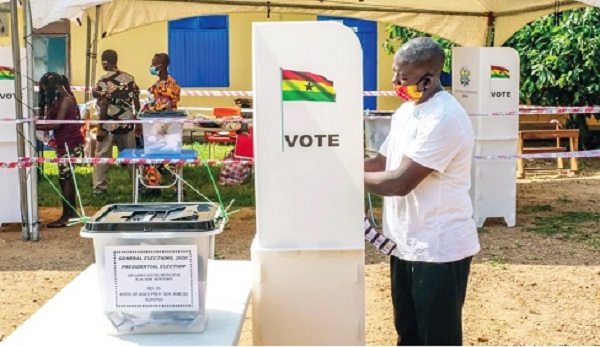
Advocate for Christ Ghana, a Christian movement, has urged the citizenry to vote in the 2024 General Election on knowledge and truth and not on political values and ideologies. 

It noted that over the years, elections in the country had been a money-making game, characterised by corruption and self-centred political system, and charged the populace, especially Christians to change the narrative.  

The movement said this at the fourth National Christian Forum 2023, on the theme: “Election 2024: Accessing The Impact Of Political Parties And How Christians Should Vote”. 

Mr Edem Senanu, Chairman of Advocate for Christ Ghana, said not only should the voices of Christians count, but their values of integrity, honesty, respect for others’ opinions and the use of decent words before, during and after the polls.

He said it was unfortunate that political leaders were more focused on their own interests than the welfare of the citizens and encouraged all to be active participants in making Ghana a better country.

Mr Bernard Joe Appeah, Manager at Frimpong Manso Institute, asked Christians in the media to set standards in their reportage and avoid slangs, biases, and slants. 

He said Christian politicians and leaders must also demonstrate Christian lifestyles as worthy ambassadors of God and charged the Electoral Commission and National Peace Council to demonstrate integrity before and after the elections. 

Mr Appeah urged all to avoid utterances and speeches that created tension, division, and acrimony and promote peace and decency. 

He advised the youth to exhibit discipline, honour, respect, patience and concern for the nation.

Advocates for Christ Ghana is a growing movement of professionals, parents, pastors and of all Christians seeking to provide a permanent and proactive voice on national issues in Ghana.

Spreading footprint of violent extremism from Sahel Region disturbing – Maj Gen Gyane 

0

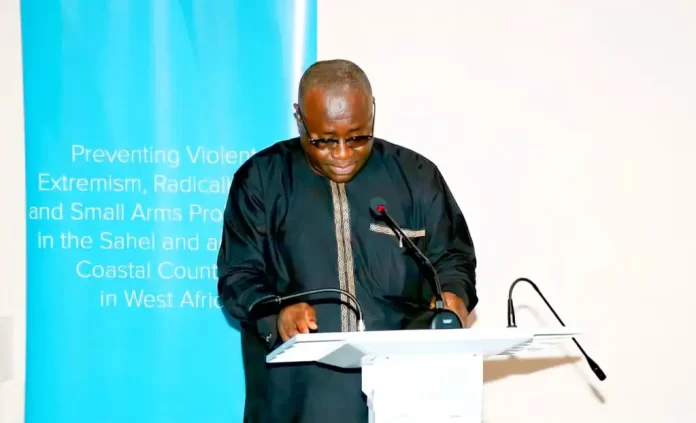
The Commandant of the Kofi Annan International Peacekeeping Training Centre (KAIPTC), Major General Richard Addo Gyane, says the spreading footprint of violent extremism from the Sahel Region is “disturbing” requiring immediate attention and concerted efforts.  

He said statistics from the 2023 Global Terrorism Index provided a sobering and disturbing assessment of the current situation in the Sahel region.  

The Commandant, in a speech read on his behalf by Prof. Kwesi Aning, Director, Faculty of Academic Affairs and Research, KAIPTC at the opening of a course on “Preventing Violent Extremism, Radicalization, and Small Arms Proliferation in the Sahel and Adjoining Coastal States in West Africa” at the Centre, said, “It is quite concerning, that in close to two decades, from 2007 to 2023, we have witnessed an alarming surge in terrorist activities in the Sahel.” 

The Project’s overarching goal is to enhance knowledge and foster information-sharing among security personnel and civil society actors in the fight against terrorism, violent extremism, and the proliferation of small arms in seven West African nations: Benin, Togo, Ghana, Cote d’Ivoire, Niger, Mali, and Burkina Faso.  

 In 2007, the Sahel region accounted for just one per cent of the global death toll due to terrorism but in 2023, the figure increased to a staggering 43 per cent.  

 Major General Gyane said the exponential increase was nothing short of a crisis as the Sahel had now become the epicentre of global terrorism, adding that the shift in the epicenter of terrorism was particularly striking considering the historical hotspots.  

 That, he stated, meant that the Sahel region now experienced a higher concentration of terrorist incidents and resulting casualties.  

“One of the most concerning aspects is the spreading footprint of violent extremism. Burkina Faso has seen a significant increase in attacks, with 58 per cent of all  

incidents in the Sahel occurring within its borders. This expansion of violence from its origins in Mali to neighbouring countries paints a grim picture of the challenges we face.” 

 Maj Gen Gyane said the repercussions of the violent activities were not confined to the Sahel alone as the ripple effects had reached littoral countries, including Cote d’Ivoire, Benin, and Togo.  

 According to him, as the violence spreads, there are growing concerns about its potential to further expand into Ghana, underscoring the urgent need for collaborative, regional efforts to address the root causes and consequences of violent extremism and terrorism.  

 The worrying statistics, he said, compelled countries to recognise the gravity of the situation and to mobilise collective efforts, knowledge, and resolve to tackle the complex issues.  

 Mr Hisanobu Mochizuki, the Japanese Ambassador to Ghana, said the security challenges in the sub-region were causing enormous destruction to human lives and eroding socio-economic gains of affected countries.  

To safeguard civilians and further human and economic progress, he said that substantial efforts were necessary to address the fundamental causes of insecurity in the Sahel and adjoining coastal countries. 

Japan, the Ambassador said, was supporting the project with USD 491,940.00 in partnership with the United Nations Development Programme (UNDP) and the Kofi Annan International Peacekeeping Training Centre (KAIPTC) to prevent and counter terrorism, violent extremism, and small arms proliferation, diversions, and trafficking.  

 Japanese Prime Minister Kishida during his visit to Ghana in May 2023 announced that Japan will provide approximately 500 million US dollars over the next three years to contribute to peace and stability and promote sustainable growth in the Sahel region and the neighbouring coastal countries of the Gulf of Guinea.  

Mr Mochizuki said Japan had provided a cumulative total of about 10 million US dollars to the KAIPTC to date, to support numerous projects including training in small arms control, police capacity building, and border security management. 

 Mr Sukhrob Khoshmukhamedov, United Nations Development Programme (UNDP) Deputy Resident representative, said the UNDP remained committed to building skills of both security forces and non-state actors to promote peace, sustain social cohesion and prevent the spread of violent extremism.  

 “To ensure a stable West African sub-region, we need more effective collaboration and partnerships across borders to effectively deal with root causes and stamp out the double threats of violent extremism and small arms proliferation,” he said.  

Authors’ workshop explores coercion, peacebuilding in Africa   

0

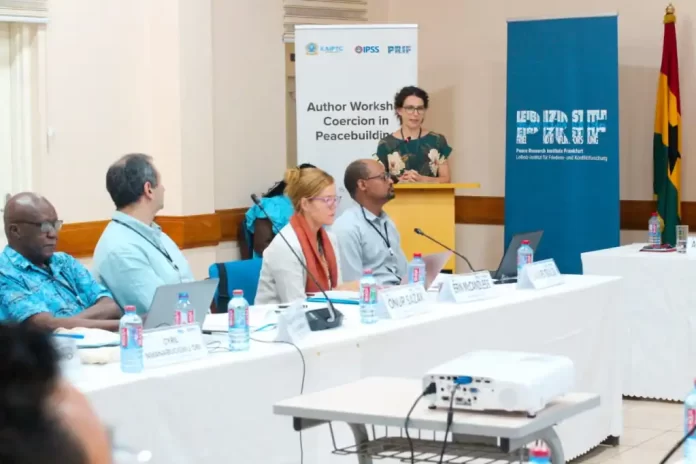
Authors from Africa, Europe and the United States have explored the intricate dynamics of coercion and peacebuilding approaches in Africa at a workshop in Accra, Ghana. 

The workshop was a collaboration between three institutions, the Peace Research Institute in Frankfurt (PRIF), the Kofi Annan International Peacekeeping Training Centre (KAIPTC), and the Institute for Peace and Security Studies (IPSS) in Addis Ababa, Ethiopia. 

As part of the workshop, some broad chapters were developed and revised based on themes around coercion and peacebuilding to be put together into a collective volume in the middle of 2024 and published for policy makers, Scholars and the general populace. 

 Held at the KAPITC, the workshop attracted 30 authors, scholars, researchers, and practitioners who discussed their respective roles in coercion and peacebuilding in the West African sub-region and the Horn of Africa.   

Participants engaged in interactive sessions, exploring case studies and real-world scenarios to better understand the complexities of coercion and its impact on peace initiatives. 

The group of researchers studied the role of coercion in peacebuilding, specifically the role of different actors (new and emerging) involved in building Peace, including countries like Brazil, China, India, Brazil who have become important peacebuilders on the African Continent. 

 They discussed among other topics, the “Coercive Approaches in Peacebuilding: ECOWAS Foray into Sub-Regional Interventions”, “Coercive and Regional Peacebuilding in the Horn of Africa/IGAD Region” and “Physical & Structural Violence: Shifting Notions of Coercion in Peacebuilding Across Time and Geopolitical Space”. 

 Dr Antonia Witt, Senior Researcher and Head of Research Group, PRIF, said the Authors had been working on the project for the past two years with a series of workshops, adding that the current workshop was to consolidate their work and come out with a joint publication. 

She said in recent times, there were a plethora of actors in peacebuilding which raised the question of the best approaches in peacebuilding but importantly the role of cohesion. 

 Dr Witt said, hitherto, there was the assumption that peacebuilding went without coercion and was a naturally noncoercion endeavour. 

 She explained that “Now we increasingly realise that maybe that assumption is wrong. On the one hand, we do see peacebuilding that is very close to coercive practices. We see the difference between peacebuilding, and it increasingly blurs. We see military components as part of peacebuilding, but we also recognise that maybe a certain measure of coercion is also necessary so that the peace that is built holds.” 

 That, the PRIF Senior Researcher said, necessitated the questions, “how much cohesion is necessary for peace to hold, how much coercion is good and is there a flip side where coercion turns into something that produces more conflict and violence and does not move away from the initial agenda of building peace.” 

On the potential spread of violent extremism to coastal states like Ghana, Dr Witt, also a Fellow at the University of Ghana, told the Ghana News Agency that there was a lot of attention being paid to the issue currently. 

She said, as a matter of urgency, it was important to study how local conflicts drove vulnerability as a step to address those conflicts sustainably to avoid marginalisation and stigmatisation since those were ingredients that made radicalisation flourish. 

Major General Richard Addo Gyane, Commandant, KAIPTC, whose speech was read on his behalf by Air Commodore David Anetey Akrong, Deputy Commandant, said the thorough examination of the central role coercion assumed in influencing the strategies employed by regional and emerging actors in the context of peacebuilding was key. 

He said the KAIPTC, being one of the Training Centres of Excellence within ECOWAS, consistently served as a pivotal entity in the provision of comprehensive training programmes for military, police, and civilian personnel on a global scale. 

The Commandant said its academic programmes had a primary focus on the intricate dynamics of gender, conflict, and peace and security. 

“Your dedication to furthering the dialogue on peacebuilding is sincerely commendable,” Maj Gen Gyane applauded PRIF and IPSS for the sustained effort at ensuring peace and security on the African continent. 

Free Zones Authority signs grant agreement with IFE to enhance water, sewage system in

0

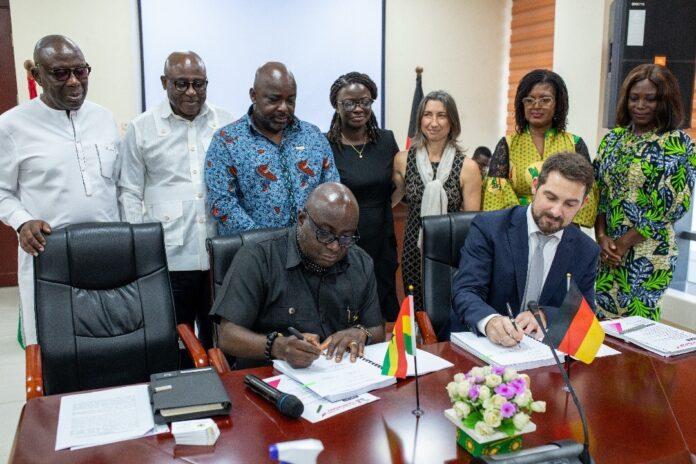
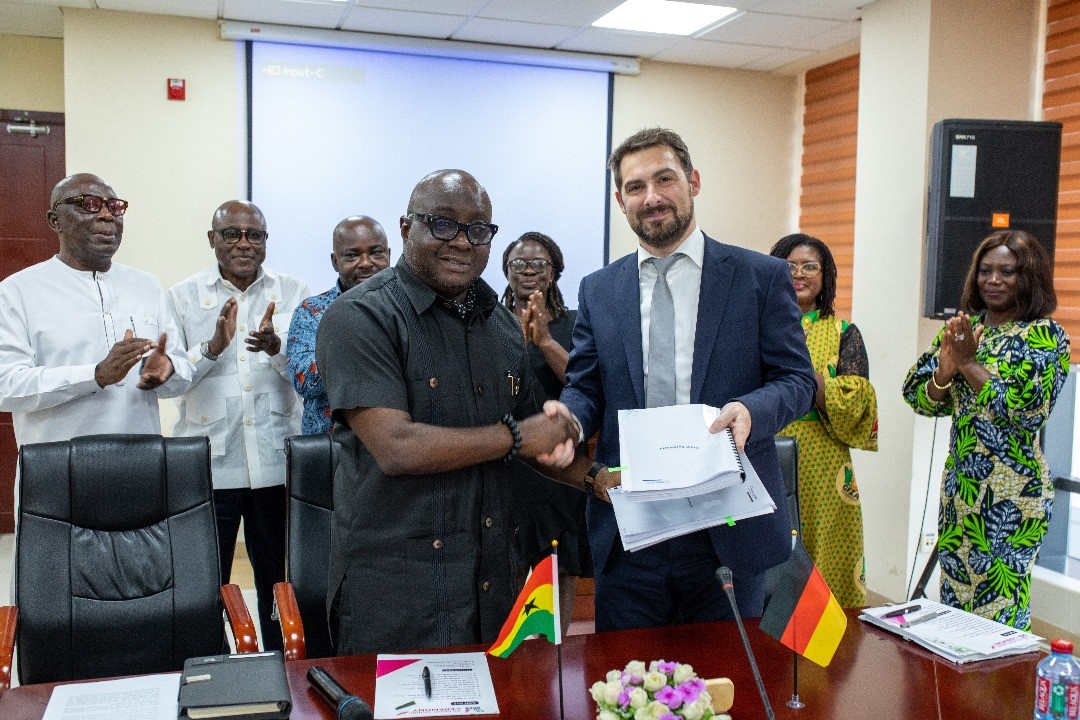
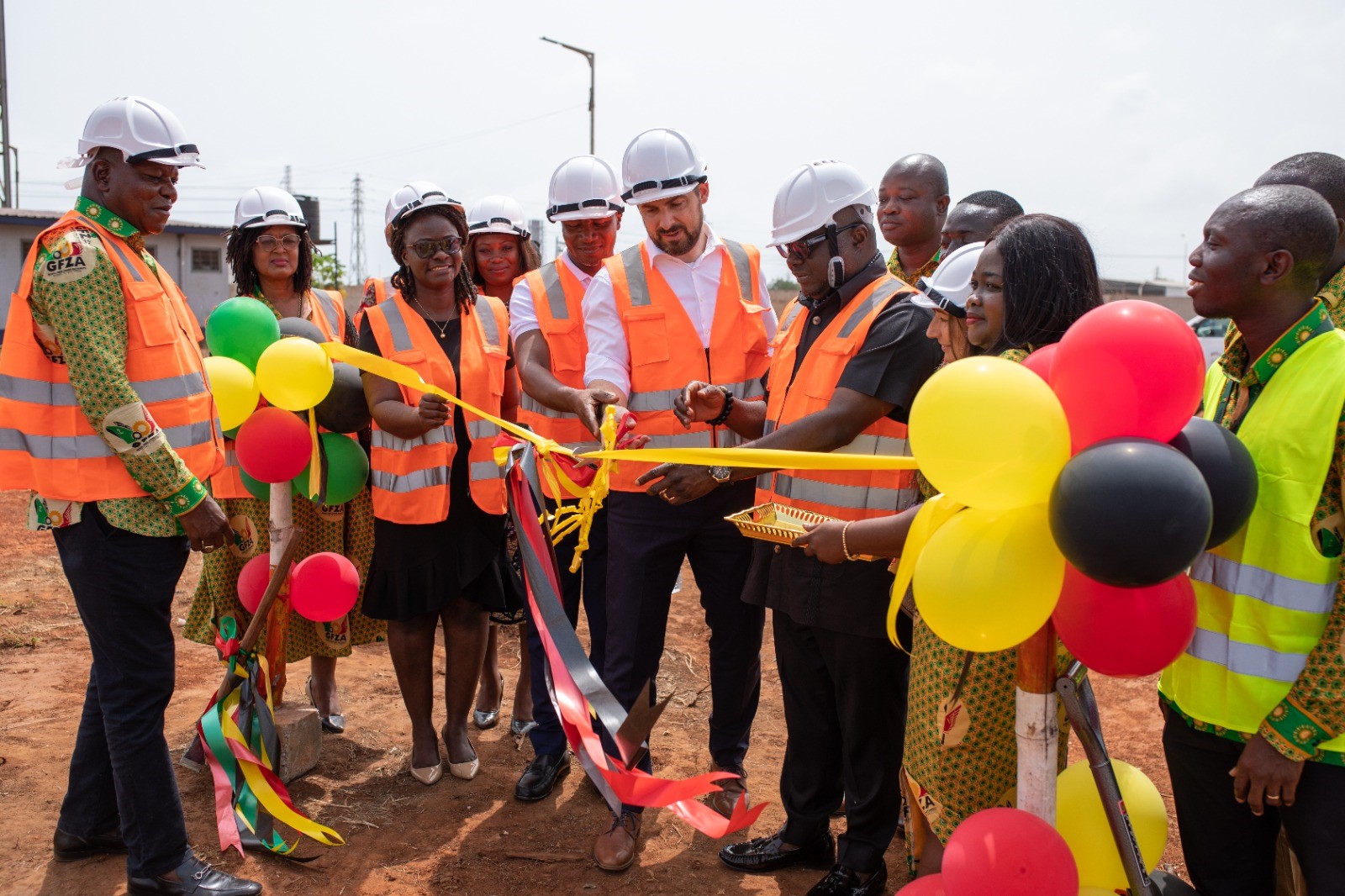
Ghana Free Zones Authority (GFZA) has signed a grant agreement with The Facility Investing for Employment (IFE) to enhance the water and sewage system at the Tema Export Processing Zone (TEPZ).  

The Tema Free Zone is the largest industrial zone in Ghana with a total area of 1,200 acres (480 hectares) and strategically located in Ghana’s major industrial and seaport city of Tema, however, it is faced with developmental challenges including inadequate water supply for business operations. 

The project would help solve the demand and supply gap by meeting the current demand of 7,518 m3 of water per day for industrial companies located in the industrial park.  

Total cost of the project is more than €1. 84 million. 

 The Facility Investing for Employment (IFE) would commit €1.65 million, representing 90 per cent and Ghana Free Zones Authority contributing  a commitment fee of €184, 168, representing 10 per cent.  

The construction of a new water storage facility to augment the old existing one would have a 6, 800 m3 (1.5 million gallons) underground tank and 2, 273 m3 (500, 000) overhead tank with a pumping station.  

The investment would not only improve customer services and productivity of the companies in the Tema enclave but would position resident companies located in the Tema Export Processing Zone to create a total of 1, 500 jobs. 

The Facility Investing for Employment (IFE) is an investment mechanism created by KfW Development Bank on behalf of the German Federal Ministry for Economic Co-operation and Development (BMZ). It would build a sewage system after the construction of the water project.  

Mr Mike Oquaye Jnr, Chief Executive Officer, Ghana Free Zones Authority, who signed the MoU, said though the current water demand per day by the the ninety-one 91 companies operating within the enclave had been 1,653,729 gallons (7,518 m3), the storage capacity at the enclave stood at 6,800m3. 

He said the ground level tank provided a daily supply of 4,090 m3/day and a buffer of 2,710m3 had been reserved to address emergency situations such as the need to fight fire and construction works undertaken by TEPZ 

“The projet will take about 12 months to be completed and will address the demand and supply gap that has led to higher production costs, shortened production cycles, stifled expansion, and slowed production growth, which invariably affects the need for accelerated job creation,” he said.  

Mr Steffen Kuhl, Managing Director, IFE, said the robust, multi purpose export industrial zone was of utmost importance to the economy and country at large, adding there might be eight or nine similar projects signed by the close of the year after this being the sixth project agreement signed.  

“In Germany, it is not Mercedes Benz or Siemens that made our economy strong but the “hidden champions,” the smaller companies that produce things that are only available in one or two companies worldwide. I say this because sometimes we underestimate the importance of small enterprises and things,” he said.  

Mr Michael Okyere Baafi, Deputy Minister for Trade and Industry, said: “We believe that the only way to accelerate our development is through industrialisation and one of the key pillars is the establishment of special economic zones and parks. That’s why we have attached so much importance to the Ghana Free Zones Authority. We don’t take this project for granted.”  

Tax stakeholders to meet in Ghana over domestic resource mobilisation and illicit financial

0

Key stakeholders in Africa’s tax sector are set to meet in Ghana to unpack domestic resource mobilisation and illicit financial flows issues in Africa.  

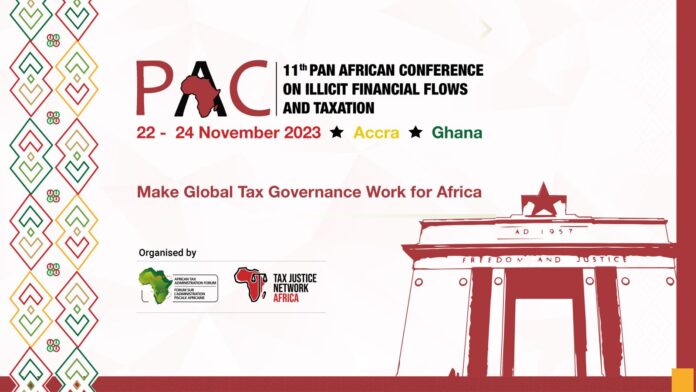
The 11th Pan-African Conference on Illicit Financial Flows and Taxation (PAC) conference provides a platform for tax stakeholders to explore ways in which African countries can take the lead on international conversations that are beginning to have direct implications on domestic resource mobilisation and illicit financial flows.  

According to a statement copied to the Ghana News Agency in Accra the conference is organised by Tax Justice Network Africa (TJNA) and The African Tax Administration Forum (ATAF and would bring together officials working on tax issues from Pan-African Organizations, tax administrations, ministries of Finance, civil society organisations, parliamentarians, and academia/researchers from Africa and beyond, on the  theme “Making Global Tax Governance Work for Africa.  

The conference is a platform that will enable the attendees to contribute to the development of a common African position on key international conversations that affect African countries’ efforts to raise domestic resources.  

It is also a platform to identify actions and solutions for actors such as African governments, parliamentarians, civil society organisations, the private sector and other policy players that are key in mobilising domestic resources within the context and will present the opportunity to grow partnerships and collaborations between the different actors.  

“To meet its development aspirations, Africa will need additional resources to respond to global crises and to realign with the priorities of both the SDGs and Agenda 2063”. According to Africa Economic Outlook 2022, the continent’s additional financial needs for 2020-2022 were estimated at USD 432 billion. Africa’s Annual Sustainable Development Goals financing gap is around USD 190 billion (African Union 2023). This gap can be bridged by developing regional value chains, improving equitable and fair entry to accessible markets through intra-Africa trade and revenue mobilisation through effective and inclusive tax collection and combatting IFFs.  

PAC 2023 explores the aspect of forging partnerships and collaborations to promote and mobilise action amongst tax sector players.  

Strengthening these alliances is essential for African countries to take the lead on international conversations on domestic resource mobilisation and illicit financial flows in the continent.