Home Blog Page 303

Fidelity Bank, FDA forge strategic partnership to strengthen SMEs growth, compliance

0

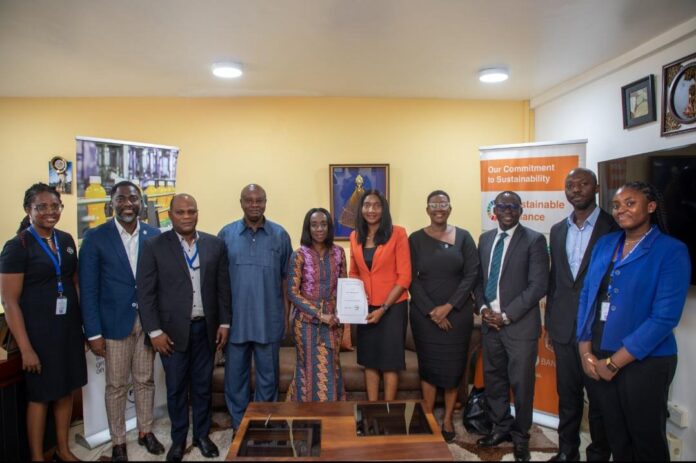
Fidelity Bank Ghana, the largest privately-owned financial institution in the country, and the Food and Drugs Authority (FDA) have formalised their commitment towards promoting an environment conducive to the growth and regulatory compliance of small and medium-sized enterprises (SMEs).  

They have thus signied a Memorandum of Understanding (MoU) in which they have delineated multiple areas of collaboration.  

The agreement has a primary focus on technical support, training, and shared expertise aimed at enhancing the capabilities of SMEs associated with Fidelity Bank.  

The beneficiaries would include youth and women entrepreneurs participating in the Fidelity Young Entrepreneurs Initiative (FYEI), an official release issued to the Ghana News Agency, said Wednesday.  

The partnership encompasses cooperative efforts to exchange technical knowledge, conduct educational workshops, and advocate best practices to ensure adherence to regulatory standards. 

 The FDA would also actively engage with Fidelity Bank’s clientele, providing valuable insights into product safety, quality, and regulatory compliance, the release said.  

“The FDA has committed to training Fidelity Bank staff and SME beneficiaries on regulatory requirements, championing best practices, safeguarding application submissions, and facilitating regulatory compliance through the Progressive Licensing Scheme (PLS),” it said.  

 “Concurrently, Fidelity Bank will lead awareness campaigns, conduct initial screenings of applications, and provide essential support for regulatory compliance, thus ensuring the smooth disbursement of funds to SME clients.”  

In a bid to guarantee the longevity and effectiveness of these collaborative initiatives, both entities will give prominence to meticulous documentation, establish a comprehensive database, and offer consistent support to SMEs affiliated with Fidelity Bank.  

Nana Esi Idun-Arkhurst, Divisional Director, Retail and Business Banking at Fidelity Bank, expressed her enthusiasm about the agreement, stating: “This collaboration signifies a significant milestone in our commitment to empowering SMEs and promoting regulatory compliance. We eagerly anticipate working closely with the FDA to ensure the sustainable growth and success of our clients.”  

Dr. Delese Mimi Darko, Chief Executive Officer of the FDA Ghana, for her part, emphasised the importance of such partnerships, saying: “Our collaboration with Fidelity Bank underscores our shared dedication to fostering a compliant business environment.  

“By combining our strengths, we can create a conducive platform for the growth and success of SMEs in Ghana.”  

“This landmark MoU reinforces the mutual commitment of Fidelity Bank and the FDA to cultivate a supportive business landscape and ensure the sustainable growth and success of SMEs, thereby reaffirming their unwavering dedication to the economic progress and sustainable development of Ghana,” the release said.  

The MoU was signed on Wednesday, November 1.  
Zenith Bank demonstrates resilience with 82.22 per cent growth in pre-tax profit in 2023

0

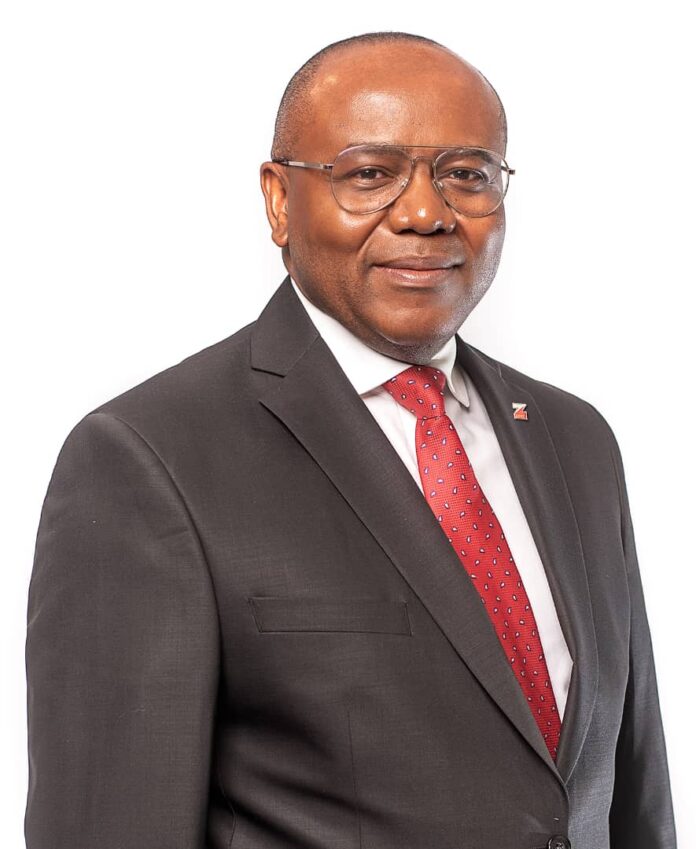
Continuing on its upward trajectory for the year, leading financial services provider, Zenith Bank (Ghana) Limited has posted an outstanding financial performance for the period ending September 30, 2023.  

The results, the Bank said, served as a demonstration of its unwavering commitment to excellence as well as the confidence reposed in the Bank by its loyal customers, especially in light of economic challenges in the preceding fiscal year. 

The Bank witnessed a noteworthy resurgence in income growth, with net interest income, a cornerstone of its operations, soaring to GH¢735.3 million at the close of the period under consideration.  

This represented a substantial 40.83 per cent increase from the GH¢522.1 million recorded in the previous year.  

The development was attributed to Zenith Bank’s steadfast dedication to optimising its lending portfolio and delivering exceptional financial services to its diverse range of clients. 

Mr. Henry Onwuzurigbo, the Managing Director and Chief Executive Officer, in an an interview said, “Our Bank’s strategy has always emphasized the diversification of income streams.”  

He pointed to the mammoth 254.69 per cent rise in net trading and other income from GH¢74.77 million to GH¢265.2 million on a year-on-year basis as a clear indicator. 

“This not only highlights the Bank’s capability to meet a wide spectrum of financial needs but also signifies our commitment to providing holistic financial solutions,” he added. 

He said these combined to push Zenith Bank’s operating income and pre-tax profit to GH¢1.14 billion and GH¢734.6 million respectively – 61.34 per cent and 82.22 per cent above the previous year’s GH¢707.7 million and GH¢403.2 million.  

During the period, Zenith Bank’s total assets grew to GH¢12.03 billion –14.57 per cent higher than the GH¢10.5 billion recorded during the comparable period of 2022.  

This was largely driven majorly by investment securities which increased by GH¢ 634.9 million to GH¢5.6 billion representing a 12.8 percent growth. 

The Bank’s liabilities surged by 19.8 per cent in the third quarter of the latest financial year, primarily driven by growth in deposits from customers, which amounted to GH¢ 10.2 billion, from September 2022 figure of GH¢8.4 billion.  

This surge in customer deposits, a 21.42 per cent growth, demonstrated the trust and confidence the Bank’s clientele has in its financial stability and excellent customer service. 

The Bank said the Liquid Ratio, which reflected a Bank’s ability to meet its short-term obligations, improved from 76 per cent in 2022 to 85 percent in 2023. 

The Managing Director said the Bank’s Capital Adequacy Ratio of 23.28 per cent was higher than the regulatory limit of 10 percent and industry average of 14.2 per cent and signals the Bank’s strength in withstanding shocks.  

The Non-Performing Loan to Gross Loan Ratio of 4.64 per cent is far lower than the industry average of 20 percent and demonstrates the quality of the Bank’s credit portfolio. 

Undeniably, Zenith Bank is a strong and stable financial institution with a very enviable financial track record.  

Its financial performance and achievements over the past 18 years are an assurance to stakeholders that the Bank is well positioned to further enhance its financial performance and deliver even more outstanding results in 2023 and beyond.  

Zenith Bank Ghana is a subsidiary of Zenith Bank Plc, headquartered in Nigeria with presence in other West Africa countries, the Middle East, Asia and Europe. It is a member of the Ghana Deposit Protection Scheme. 

Chief Justice urges public to stop corrupting Court Officers

0

Chief Justice Gertrude Sackey Torkornoo has inaugurated two separate District Courthouses in Kwesimintsim and Mpohor in the Western Region with a call on the public to stop corrupting court officers.

She said it was better to pay monies into the government chest than putting money into the pockets of any Court officer, adding that corruption and corruption-related activities had buried the image of the Service, making it normal to pay monies before a case could be determined.

Justice Torkornoo gave the advice as part of her Community Sensitisation Programme on the theme: “Improving Justice through Community 

Engagement” at two separate events in Kwesimintsim and Mpohor.

The project is part of the nationwide construction of 100 Courthouses programme embarked on by the Government in 2020 to improve judicial infrastructure.

This modern Court facility has adequate office space for the various Court functions, washrooms for Staff and Court Users, Male and Female Cells, Solar power, a standby Generator, a Borehole to provide sustainable water supply for the washroom and electric fencing to boost security.

The facility has a dedicated space for Court connected ADR.

The initiative is to demystify the work of the Judiciary and inspire confidence in the Office she occupies by directly engaging with the people to always assure them of openness and fairness in justice delivery.

It is to strengthen trust and confidence of the participants in the Judiciary by providing information on its functions at the Local and District level.

It is also to educate the people on the existence of the Public Complaints Unit among other interventions by the Service to make justice delivery transparent.

The Chief Justice urged the staff of the Judicial Service, whose work would give meaning to the construction of these courts, to see themselves as ambassadors of the Service and of the very concept of justice itself. 

She said most importantly, they must understand that the Judicial Service was a public service, and they were servants of the public and this should impose on them a responsibility to be honest, fair, and transparent in all their dealings with the citizens, who come here to seek justice.

“Let all who come here feel welcome and reassured that the law is here to work for and with them and let no one feel discouraged or reluctant to use the justice delivery institutions,” she added. 

She urged them to ensure that they were not only fair and just but were seen by all to be so, so that the people, who patronize Court services would feel confident in seeking redress from the Court and so increase the peace and stability of the country. 

“That is the only way in which we can ensure that the justice system operated from this building will achieve the purpose for which the Constitution arranged it,” she said. 

The Chief Justice said citizens needed to understand the concept of jurisdiction of Courts before they filed their cases and they needed to understand the law.

She encouraged Court users to adopt the Courts-Connected ADR process in dealing with the cases, because it was effective in promoting peaceful co-existing and helps to preserve relationships.

She cautioned those interested in the ADR process not to pay money to any of the mediators, since they have been paid by the government.

She urged Bailiffs not to give citizens the extra burden of paying money to them before, saying that if they were not prepared to work, they could leave the job.

“The Nation deserves better, and l will not hesitate to do away with your service,” she said.

She called on the public to stop paying unnecessary monies and allow the judicial service to serve them better.

The Chief Justice said she had directed all judges and Court Registrars to strike out cases if the people were not coming to Court.     

Mr Kwabena Okyere Darko-Mensah, the Western Regional Minister, expressed the optimism that the provision of the facility would offer a more conducive working environment, thereby enhancing the promotion of law, order, peace, and stability.

He urged them to assume the position of responsibility, therefore use the opportunity to demystify the Court system and make it more welcoming to the people by providing quality and swift service.

Public sector workers to enjoy 23% base pay rise from January

0

Public sector workers on the Single Spine Salary Structure will from January 2024 have their basic salaries increased by 23 per cent.

This will, however, go up by two per cent to 25 per cent from July to December.

The announcement follows an agreement reached between the Government and Organised Labour after Series of negotiations.

The basic monthly salary is the fixed amount of money an employee earns each month before the deductions of taxes or additional allowances.

The official statement making the announcement was jointly signed by the Employment and Labour Minister, Ignatius Baffour Awuah, representing the Government side, with the Chief Executive Officer of the Fair Wages and Salaries Commission, Mr Benjamin Arthur.

Organised Labour’s representatives, Dr Anthony Yaw Baah, Secretary-General of the Trades Union Congress and Dr Anthony Bampoe Addo, Chairman of the Forum, signed for their side.

Organised Labour had gone to the negotiations table with a demand for some 70 per cent to reflect the living conditions of the day.

The 2023 base pay was an increment of 30 per cent over the previous year’s level.

The parties also agreed to up the daily minimum wage from GHS14. 88 to GHS18. 15, representing about 22 per cent for next year.

2024 Budget: Govt to raise GH₵11bn in new taxes – Jinapor

0

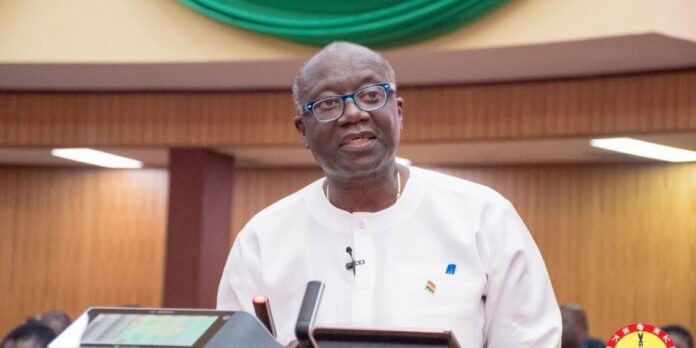
The Member of Parliament for Yapei-Kusawgu, John Jinapor, says the Finance Minister, Ken Ofori-Atta, intends to raise an additional GH₵11 billion through the imposition of new taxes in the 2024 Budget.

“We just met the Minister of Finance at the Finance Committee and the minister indicated that he intends to raise an additional GH₵11 billion which is about 1 percent of GDP but we have told him that we think that the people have been taxed so much so it will be inappropriate to come with new taxes rather the minister should look at cost cutting,” Jinapor said.

He added “I think that it is improper and unacceptable to further come out with new taxes and increase the tax burden on Ghanaians.”

The Finance Minister, Ken Ofori-Atta, is scheduled to present the government’s 2024 Annual Budget Statement and Economic Policy to Parliament on Wednesday, November 15, 2023.

Ahead of the presentation, there have been calls for the government to significantly reduce its expenditures to rescue the ailing economy.

The Chief Executive Officer (CEO) of Dalex Finance and Leasing Company Limited, Kenneth Thompson, issued a warning last week of a looming economic downturn in 2024 if the government continues its current pattern of ever-increasing and large expenditures.

Meanwhile, the Member of Parliament for Dormaa East, Paul Twum Barimah, has hinted at the introduction of an emission tax by the government to deal with the impact of climate change, while the Member of Parliament for Daffeama Bussie Issa, Albert Sandaare, believes that the government must consider scrapping the COVID-19 levy or renaming it.

October’s inflation decreases from 38.1% to 35.2%.

0

For the third consecutive time, inflation has dropped, recording a rate of 35.2% in October.

This represents a 2.9 percentage point decrease from the 38.1% recorded in September.

The Consumer Price Index (CPI) data released by the Ghana Statistical Service on Tuesday, November 14, shows that food inflation stood at 44.8% and non-food inflation at 27.7%.

This release comes at a crucial time as Finance Minister Ken Ofori-Atta heads to Parliament on Wednesday, November 15, to present the 2024 Budget Statement and Economic Policy.

The Government Statistician, Prof. Samuel Kobina Annim, highlighting the rates stated that the decline in inflation was a positive development.

2024 budget: FABAG advises government to implement policies that satisfy the requirements of the private sector.

0

The Food and Beverages Association of Ghana (FABAG) has pushed the government to include measures in the 2024 budget that would address the issues faced by private sector companies.

On Wednesday, November 15, 2023, the government’s 2024 Annual Budget Statement and Economic Policy are expected to be presented to Parliament by Finance Minister Ken Ofori-Atta.

There have been demands for the government to drastically cut back on spending before the presentation in order to save the failing economy.

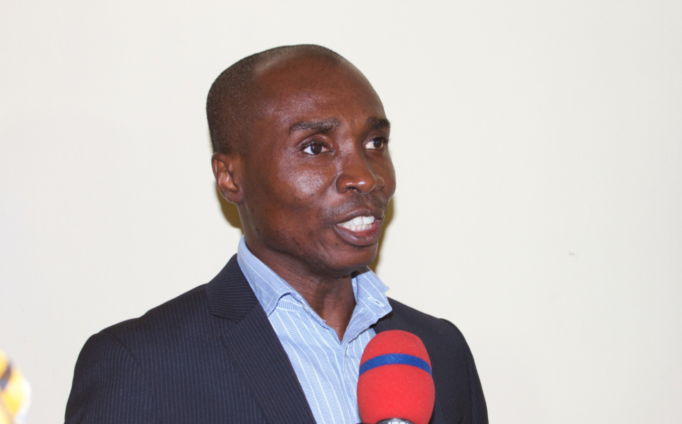
John Awuni, President of FABAG, emphasised that although the private sector was crucial to the nation’s development, high tax and tariff rates were now causing it to function poorly.

Speaking in an interview on The Point of View on Citi TV on Monday, he stated, “Our expectation is that they will come out with policies that will address the private sector’s needs. We have said that the private sector is the engine of growth, but it appears that the private sector is not performing well due to high levels of taxation, due to high levels of tariff reviews.”

“So we are expecting that there will be major policies that will address the manufacturing and agricultural sectors in the country. We are expecting that the COVID-19 levy will be removed. We expect that the growth and sustainability levy will be removed. We expect that taxes that were also imposed on fruit juices, alcoholic beverages, and others will be removed.”

Mr. Awuni further said the government must strategically address the issue of unemployment in the country.

Economist: The 2024 budget should prioritise tax compliance measures above additional levies.

0

According to economist Dr. Patrick Assuming, the 2024 budget shouldn’t include any additional taxes; instead, it should concentrate on tax compliance initiatives.

On Wednesday, November 15, 2023, the government’s 2024 Annual Budget Statement and Economic Policy are expected to be presented to Parliament by Finance Minister Ken Ofori-Atta.

There have been demands for the government to drastically cut back on spending before the presentation in order to save the failing economy.

Dr. Assuming said that rather than adding new taxes in the 2024 budget, the government should find methods to leverage the ones that are already in place to produce income in an interview that aired on Citi TV’s Point of View on Monday.

“You will expect that there might be some revenue measures, whether you will go the traditional way, which more or less is the easy way of bringing new tax lines or not.”

“Personally, I hope that we will move away from that and focus a lot more on compliance, a lot more on other low-hanging fruits that are there that we can use to raise revenue rather than bringing new tax handles,” he stated.

Meanwhile, the Economist said that the removal of taxes in the upcoming budget looked unlikely.

“Overall, the outlook for removing some of the tax measures looks quite unlikely,” he opined.

In the 2024 budget, reinstate road tolls, says the Concerned Drivers Association

0

The government is being urged by the Concerned Drivers Association of Ghana to reinstate road toll collection nationwide in the 2024 budget, which is set to be submitted to Parliament on Wednesday.

Additionally, the group requests that the government give funding for road repairs more priority.

On Wednesday, November 15, 2023, the government’s budget and economic strategy will be presented to Parliament by Finance Minister Ken Ofori-Atta.

The association’s public relations officer, David Agboado, stressed in an interview with Citi News how important it is that the government take the problems with road infrastructure seriously.

He indicated that the reintroduction of road tolls would help the workers, most of whom were persons with disabilities.

Mr. Agboado proposed a thorough reconsideration of the reintroduction of road tolls, suggesting that the generated revenue could be earmarked for much-needed road repairs.

“Our roads are very deplorable, and the government should fix them and bring back the toll service so that our physically challenged brothers and sisters will also get work to do and get proceeds to fix the roads.”

Remove “unnecessary” taxes from the budget for 2024 – Group

0

The Traders Advocacy Group Ghana (TAGG) has called on the government to eliminate pointless levies like the COVID-19 fee and the network service charge ahead of the 2024 budget presentation on Wednesday, November 15, 2023.

“How are you able to bill me for network services?” questioned the President of the Traders Advocacy Group Ghana, David Kojo Amoateng. “We need to get rid of the network charge.”

In addition, Mr. Amoateng proposed renaming the COVID-19 levy to target other issues like cancer, renal disease, or dialysis if it is not going to be eliminated.

“The trading sector anticipates that, even in the event that the COVID levy is not repealed, the name may be changed to dialysis, kidney, or cancer,” he stated on the
Point of View on Monday, November 13.

Meanwhile, Kenneth Thompson, Chief Executive Officer (CEO) of Dalex Finance and Leasing Company Limited, has warned of a looming economic downturn in 2024 if the government continues its current pattern of ever-increasing and large expenditure.

“As a country, what we must focus on now is how to protect the poor,” Mr. Thompson said in an interview with Umaru Sanda Amadu on Face to Face on Citi TV. “If you talk about cutting expenditure, there’s a long list of things we can cut, but we need to protect the poor, and we need to focus on health, education, infrastructure, food, and everything else because we are in a very bad place.”

The Finance Minister, Ken Ofori-Atta, has indicated that long-term relief measures for the victims of the Akosombo Dam spillage will be taken into consideration during the formulation of the 2024 budget.

“We have mobilised a few things that we would like to share but I think we are also in the budget season and therefore it will not just be numbers that we are working on but true feelings in the field and therefore the need to look at these social interventions in a real way,” Mr. Ofori-Atta said after touring the affected communities a few days ago. “We will certainly give this an expression immediately and also in the budget.”