Home Blog Page 308

Antony provided advice on how to break the Man Utd goal and assist drought as the injured £85 million winger keeps complicating things.

0

Dimitar Berbatov has advised Manchester United’s Antony, a winger, to stop doing “stupid tricks” in order to enhance his form.

With Manchester United having a dismal start to the season under Erik ten Hag, Antony has not managed to record a single goal or assist for the Red Devils. The struggling Brazilian has received some advise from former Red Devils attacker Dimitar Berbatov, who advised him to keep things simple.

“Right now, it’s not working well for Antony, so my piece of advice would be to keep it simple, don’t overcomplicate stuff. The moment you start thinking you’re Ronaldinho or Zidane while you’re struggling in games, you’re going to suffer even more. Don’t try to do stupid things like tricks that are not beneficial for the team,” he told Betfair. “You’re so quick, use your pace to get in-behind the defence, get on the ball and start to record assists or shoot to score. That’s how simple it is. Stay disciplined and concentrated – it’s not so difficult.”

Antony’s failure to live up to his lofty $85 million ($104m) price tag has already led to speculation he could be offloaded. The Red Devils are reportedly considering a swap deal with Flamengo that could see Gabriel Barbosa arrive at Old Trafford and Antony move in the opposite direction.

IN THREE PHOTOS:Antony Man Utd 2022-23Getty Images

Rasmus Hojlund AntonyGettyErik ten Hag Manchester United 2023-24Getty Images

WHAT NEXT? Antony will be hoping for more minutes on Wednesday when Manchester United take on FC Copenhagen in a crucial Champions League match.

Oteng-Gyasi: It’s not the IMF or World Bank but pride and indiscipline that are impeding Africa’s progress.

0

Ghanaian businessman Tony Oteng-Gyasi refuted the commonly accepted belief that the World Bank and the International Monetary Fund (IMF) are bad for Africa’s growth in a thought-provoking presentation.

Rather, he claimed that pride and indiscipline are among the intrinsic causes of Africa’s underdevelopment.

Former Association of Ghana Industries (AGI) President Mr. Oteng-Gyasi contended that the IMF and World Bank had the know-how and resources to lead Ghana out of poverty and into a period of economic success.

However, he emphasized that this can only be achieved if African nations diligently adhere to the policy recommendations of these institutions.

Delivering the University of Ghana’s 2023 Alumni Lecture in Accra on Tuesday, Mr Oteng-Gyasi countered the assertion that no country has developed under the IMF and World Bank’s supervision, citing the remarkable growth trajectories of Asian economies, including the so-called Asian Tigers.

These nations, Oteng-Gyasi maintained, followed the IMF and World Bank’s guidance, embracing free trade zones, technology hubs, and sound tax policies.

In contrast, Oteng-Gyasi lamented Africa’s tendency to disregard the IMF and World Bank’s advice, while simultaneously aspiring to achieve the same level of economic success as the Asian Tigers.

He likened this approach to wanting to emulate the lion’s strength without taking the necessary steps to build muscle.

Mr Oteng-Gyasi urged African nations to embrace the IMF and World Bank’s guidance, recognizing that their expertise and resources can be instrumental in propelling the continent towards sustainable economic growth.

He emphasized that shedding pride and embracing discipline are essential prerequisites for Africa’s economic transformation.

“Across Asia, these institutions have given advice and helped nations grow their economies remarkably well. These institutions produced the Asian Tigers,” the former Chairman of the University of Ghana Council said, adding “In Africa, we want to be Lions, but ignore the medicine the Asians took assiduously.

“From the free zones concept as part of the export promotion strategy to the Gratis Technology centres as a foundation for industrial development, and regular tax policy advice, the World Bank and IMF have given good and useful policy advice to our nation,” Dr Oteng-Gyasi said.

Mr Oteng-Gyasi became the 34th speaker and the second person from the private sector at the eminent speaker series instituted by the University of Ghana Alumni Association (UGAA) in 1974 for thought-provoking lectures on issues of national importance.

This year’s event, which coincided with the 75th anniversary of the university, was on the theme: “The Fault Dear Brutus.”

It was chaired by the university’s Vice-Chancellor, Prof. Nana Abba Appiah Amfo.

Next NDC government will combine the Transport, Railways, and Aviation ministries — Mahama

0

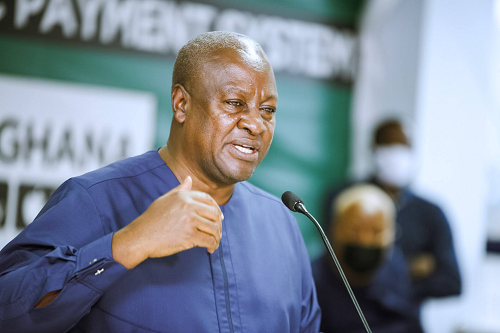
John Dramani Mahama, the opposition National Democratic Congress (NDC) flagbearer, has reaffirmed plans to combine many ministries in the nation in the event that his party wins the 2024 elections.

Under the present New Patriotic Party administration, Mr. Mahama claimed, there are too many ministries performing identical tasks, and these ministries are superfluous and depleting the nation’s coffers.

He underlined that in order to save government spending, these departments needed to be combined.

The NDC flagbearer reaffirmed the party’s belief that these ministries are unnecessary at a meeting with the Trades Union Congress (TUC) leadership in Accra on Tuesday.

“We will merge ministerial portfolios to prune down the number of ministries drastically. For instance, I don’t see why we have Aviation Ministry, Railways Ministry, Transport Ministry, and all the other ministries. Local Government Ministry, Business Development Ministry.

“We will reduce waste and cause overruns, institutional borrowing and breaches in public procurement rules. We will ensure compliance in internal and external control systems,” he stated.

Budget for 2024: Severe spending reductions are required to revive the flagging economy – Ken Thompson

0

Kenneth Thompson, CEO of Dalex Finance and Leasing Company Limited, has recommended that the government slash spending drastically, saying that doing so is essential to the nation’s economic survival.

The financial analyst warns that if the government keeps up its current trend of massive and ever-increasing expenditures, there will be an impending economic downturn in 2024.

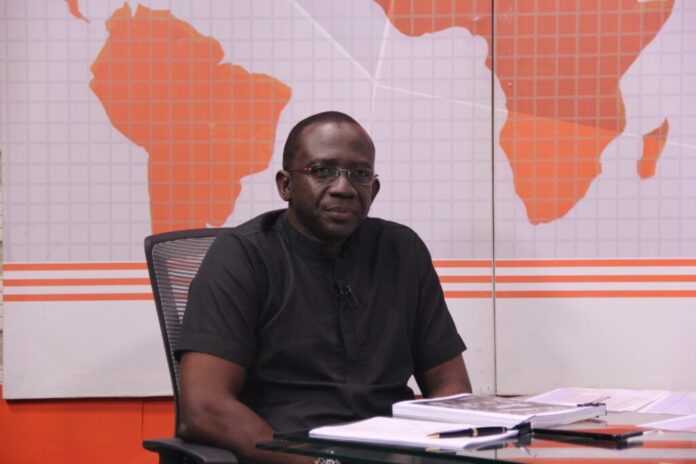
Mr. Thompson attacked Ghana’s $3 billion credit facility with the International Monetary Fund (IMF) in an interview with Umaru Sanda Amadu on Face to Face on Citi TV. He called the facility a pointless diversion that can’t help Ghana develop the fiscal discipline it needs to deal with its economic problems.

He emphasized the need for Ghana to make more significant cuts to its expenditure than it is currently doing.

“The issue is not domestic debt; it’s about spending within your means. The IMF is a red herring, a complete red herring for an economy worth $80 billion. $3 billion is nothing,” he stated.

“Assuming that the IMF brings fiscal discipline with the $3 billion, we still need to work on our expenditure, and that’s the key thing. And when we talk about reducing expenditure, we’re not talking about cutting off these bits of fat from our expenditure. We’re currently cutting bits and pieces of our expenditure. We need to axe off much of our expenditure, and that’s what we need to do.”

Mr. Thompson however urged the government to prioritize the protection of the poor and vulnerable in its efforts to reduce expenditure.

“As a country, what we must focus on now is how to protect the poor. If you talk about cutting expenditure, there’s a long list of things we can cut, but we need to protect the poor, and we need to focus on health, education, infrastructure, food, and everything else because we are in a very bad place.”

The Minister of Finance, Ken Ofori-Atta, is expected to present the government’s 2024 Annual Budget Statement and Economic Policy to Parliament on November 15, 2023.

EC to update Parliament on today’s limited registration campaign

0

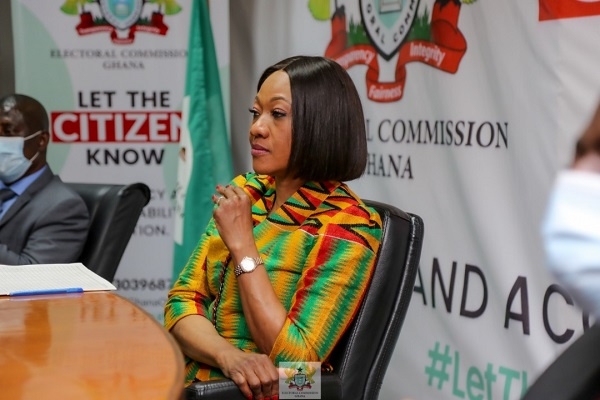
Today, Wednesday, November 8, 2023, the House is scheduled to hear a briefing from Jean Mensa, the Chairperson of the Electoral Commission (EC), regarding the just concluded restricted voter registration campaign.

Beginning on September 12, 2023, the EC conducted a limited voter registration drive that resulted in the registration of almost 600,000 new voters.

The Minority in Parliament claimed that Members of Parliament were financially burdened by the EC’s decision to limit the activity to its district offices.

Osei Kyei-Mensah-Bonsu, the Majority Leader, stated last week at the presentation of the business statement that the head of the EC will give a status report on the election process on Wednesday.

“Mr Speaker, [Alban Bagbin] pursuant to order 44, the leadership of the business committee proposed that the Chairperson of the Electoral Commission, be invited to attend upon the house [on] November 8, 2023, at a close sitting to brief members of the house on matters arising from the recently held limited voter registration exercise undertaken by the commission and other related matters. Of course, it wasn’t necessary to castigate the EC when you have not heard from them, it was unnecessary,” the Majority Leader said.

The Electoral Commission ended its voter register exhibition exercise on Tuesday, November 7, 2023.

The exercise began on November 3.

Low interest, poor attendance mark voter exhibition exercise 

0

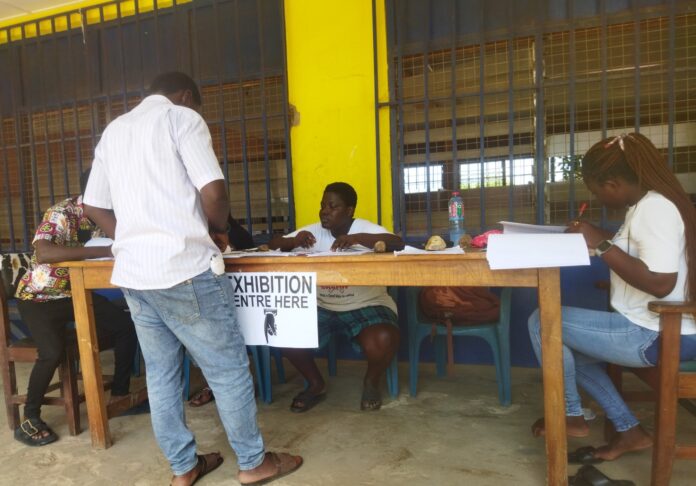
The Electoral Commission’s voter exhibition exercise across the country ended on Tuesday with a low turnout at most centres. 

The exercise, which was intended to identify and correct errors in the new voters’ register, was marked by an obvious lack of enthusiasm and attendance, raising concerns about voter engagement and participation in the upcoming district level election. 

The seven-day exercise, which began on Wednesday, November 1, 2023, provided people with the option, among other things, to request actions such as the inclusion of omitted names and the removal of deceased voters from the registration. 

A visit by the Ghana News Agency (GNA) to several exhibition centres in the Ledzokuku , Krowor and Tema Metropolis revealed widespread lack of interest in the voter exhibition. 

At Ledzokuku and Krowor, the GNA noticed that electoral officers had little to do as turnout was on a low side. 

An EC official who spoke on condition of anonymity attributed the low turnout to the lack of publicity regarding the verification process. 

At Oninku Drive JHS, a total of six exhibition centres saw extremely low turnout, with only sixty-two people out of the 2,777 registered voters successfully verifying their names on the voter’s register. 

A similar pattern emerged in the Oninku Primary Center, where only eighteen of the 857 registered voters attempted to verify their names on the register. 

The Presby Church Community 1, which has five exhibition centres and a total of 2,777 registered voters, also had an extremely low turnout, with only twenty-six potential voters taking the initiative to verify their names, highlighting the general disinterest in the exercise. 

At the TDC Rent Office in Tema, which had five polling centres and a total of 1,761 registered voters, only 69 people took steps to verify their names on the register.  

At Community Five Number One Basic School, which had nine polling centres, just 110 people turned up to verify their names on the register out of a total of 2,895 eligible voters. 

According to several EC officials at the exhibition centres, the trend of poor participation in the exercise, underscored a greater concern about voter apathy in district level elections, which may extend to the general election in 2024. 

The exhibition exercise aimed at enabling eligible voters to verify their personal information, such as name, age, and gender, as acquired during the limited registration process, and to seek amendments or insertions as needed. 

It was also intended to assist voters in locating their polling stations on election day. 

NPP Parliamentary primaries will be the real show down – Lecturer 

0

Dr Jonathan Asante Otchere, a political scientist and lecturer at the University of Cape Coast has stated the New Patriotic Party (NPP) ‘showdown’ will play out in the February 2024 parliamentary primaries. 

He made the statement when he spoke to the media about the recent NPP Presidential primaries which elected Vice President Dr Mahamudu Bawumia as its flagbearer for the 2024 general election.  

Dr Otchere also stated that the February parliamentary primaries could pose a big challenge to the party and the leadership of Dr Bawumia, adding that if things are not handled well, the party could crack further. 

“The governing NPP could face internal cracks if the leadership of Dr Bawumia does not handle affairs well” he said. 

Dr Otchere also argued that the MPs who supported Dr Bawumia whiles their constituents voted for Mr. Kennedy Agyapong, MP for Assin Central, would still have to align themselves to the Vice President to avoid being challenged in the party’s February 2024 parliamentary primaries. 

“So, I have dubbed it the real show-down for unity or disunity in the party in February next year, because the parliamentary position will not be easy.  

“So, if the leadership of Dr. Bawumia is not careful the party will crack even more” he said. 

WHO donates to Ghana in support of Akosombo flood victims 

0

The World Health Organisation (WHO) has donated eight tons of essential medical supplies worth $65,000 to the Ministry of Health to support affected communities of the Akosombo Dam Spillage. 

The supplies include intravenous fluids, antibiotics, pain medications, water sanitation and hygiene kits, consumables, and antihypertensives. 

Dr Matshidiso Moeti, WHO African Regional Director, who made the donation during a courtesy call on the Minister of Health, stated that Ghana and other African countries face a high burden of public health emergencies. 

She stated that while most health emergencies in the region were caused by disease outbreaks, a significant number are brought on by climate change, which lead to severe events such as flooding, drought, and food insecurity. 

Dr. Moeti noted that gaps in health systems make optimal response to health threats difficult. 

 She emphasised that Ghana needed to accelerate efforts for resilient systems, including reinforcing capacities at the primary care level, to provide adequate and quality health care, prepare for, and respond to health emergencies. 

“Through our country office, WHO is committed to continue supporting Ghana in building a strong and resilient health system to effectively respond to health emergencies while ensuring the continuity of essential health services as part of achieving universal health,” she stated. 

Dr Moeti acknowledged the contribution of the entire UN body, multilateral and bilateral agencies, partners, donors, the private sector, and Ghanaians in supporting the government to effectively respond to the plight of the people affected by the floods. 

She is on a two-day official visit to Ghana to attend the WHO Inter-Parliamentary Union African parliament high level conference on strengthening health security preparedness. 

The meeting seeks to provide a forum for parliamentarians from national parliaments in Africa to exchange ideas, build political support, strengthen capacities, and foster coordination in driving sustainable action for global health security and building health system resilience for the future of their countries. 

Mr Kwaku Agyemang Manu, the Minister of Health, thanked the WHO for its unwavering support to the Ministry.   

“Grateful for the support received in the harmonizing health facility assessment survey that assesses the availability of health facilities and the capacities of facilities to provide service at required standards of quality,” he added. 

Mr Agyemang Manu said the recent flood situation in the country was very worrying and that implications for people’s health needed to be addressed promptly. 

The health systems in the affected areas are overwhelmed and, as a result, require some assistance to ensure that essential health services are provided and that capacity for public health emergencies is strengthened.  He said that to achieve Universal Health

Sustaining family businesses not about forcing children to take over

0

Mr Daniel Awuah-Darko, Chairman, Vanguard Assurance, said a sustainable family business was not about forcing children to take over even when they did not have the interest and skills.   

He said rather it was for the business to build a lasting system to keep the enterprise successful for the children to own and benefit as shareholders when it listed on the stock markets.  

Mr Awuah-Darko was speaking at the sixth edition of the Stanford Seed Network Business (SSTN) Conference in Accra.   

The Conference was on the theme:” Balancing the wellness, Growth and Legacy: The Complete Leaders Conversation.”  

The event explores challenges faced by business leaders such as harmonizing health goals, relentless business pursuit, and leaving a legacy.  

The Conference brought together hundreds of business leaders to digest critical issues that can be catalysts for business growth and avoid pitfalls to share invaluable insights and their wealth of experience to help business leaders and their teams bounce back from business setbacks.  

He said once a framework had been developed, anyone after the owner’s retirement would have to follow and ensure its sustainability.  

Mr Awuah-Darko urged businesses to be conscious of ever-evolving changes in their business ecosystem and adopt innovative solutions for business sustainability.  

He said innovation and adoption were the new bedrock ideology on which any business could thrive, and COVID-19 had shown that it was unnegotiable.  

The Chairperson said to ensure sustainability, it was not enough for businesses to only cater to the current needs of clientele but to also anticipate their future needs taking cues from technological advancement and trends in societies around the world.  

“To stay ahead of the game, it is important to regularly evaluate products, services, and customer feedback to identify opportunities for growth and improvement,” he added.  

He noted that the business was as successful as the team of staff so it was important to motivate the team and make them feel part of the business.  

Dr. Charles Yeboah, Chief Executive Officer of International Community School, said business leaders needed to uphold values like humility, honesty, and hard work for growth and sustainability of the business.  

He said some common mistakes young business owners in the country encountered which often cut short a promising business model was the inability to separate their personal lifestyle from the business inflows.  

“One challenge of business owners in the country is the owner’s propensity to show success before the business is successful. Instead of investing in the business to grow, they end up investing in their personality too quickly,” he added.  

Mr Carl F. Richards, President, SSTN Ghana, urged participants to explore the very foundation of peak performance, the vital synergy of physical and mental well-being.   

“Our conversations delved into how wellness can be an unassailable competitive advantage, propelling business to new heights,” he said.  

He said their purpose was to embark on a transformative journey, delving into the theme that deeply resonated with the challenges and opportunities facing them as business leaders.  

He said the network was more than an alumni of graduates of a transformative experience and it was a cornerstone for continuous leadership development and business growth.  

“Our network proudly operates active chapters in West, East, and Southern Africa, as well as in India, offering a vibrant platform for members to connect, learn, and collaborate with like-minded business leaders across the globe,” he said.  

DBG holds workshoponEnvironmental, Social, and Governance for financial institutions  

0

The Development Bank Ghana (DBG) is to  build a centre of excellence to champion the integration of Environmental, Social, and Governance (ESG) systems in the operations of  banks and  Specialised-Deposit Taking Institutions (SDIs). 

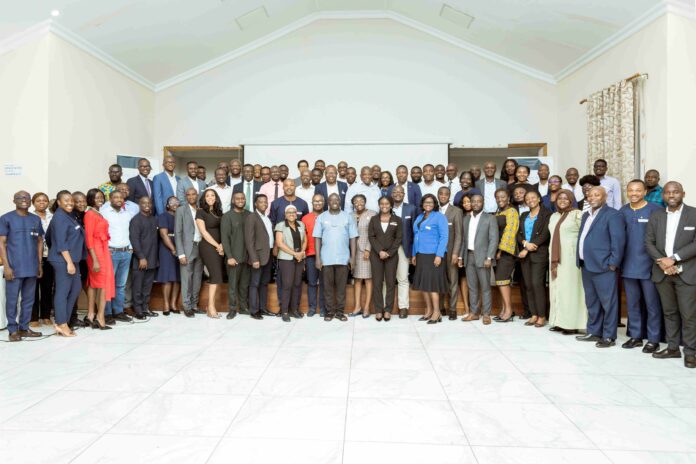
Speaking at a five-day Environmental and Social Risk Management Training of Trainers (ToT) Programme for Banks and Specialised-Deposit Taking Institutions (SDIs) at Koforidua, Mr John Akuoko-Tawiah, Head of ESG, Sustainability & Climate Finance at DBG, said the Centre might be ready early next year. 

The seminar is being spearheaded by the DBG, World Bank and Finance Ministry and would help  identify financial institutions’ challenges in the implementation of Environmental and Social Risk Management systems. 

ESG systems have become essential for financial institutions and SMEs due to the growing recognition of their importance in risk management, compliance, access to capital, reputation, cost savings, innovation, competitiveness, sustainability, stakeholder expectations and due diligence. 

 Integrating ESG into business strategies can lead to long-term sustainability and competitiveness in today’s evolving economic landscape. 

Mr Akuoko-Tawiah said the ESG Centre would have a tailored and overarching special purpose vehicle  to provide training and support to financial institutions. 

 “We see a lot of training and support in silos, but we think that we need to have an overarching centre of excellence that is geared towards ESG as the governance side of the environmental and social management system, and also the opportunity side that is the sustainable finance,” he said. 

He said by building the capacity of the institutions, DBG was making its partners and other financial institutions ready to receive development finance linked investments to bring transformation into the financial sector and the private sector.  

“As part of the training, we will want to understand why banks and SDIs are not able to implement Environmental and Social Risk Management systems correctly per our requirements and also provide solutions to that.” 

We are currently coming up with technical assistance that’s supposed to scale our partner banks who have an Environmental and Social Risk Management system that is kind of nascent so that they can be able to effectively implement them and also integrate into their lending decisions,” he stated further. 

Mr Andrew Ameckson, Deputy Director Financial Sector Division, said the training would help financial institutions to better understand environmental and social risk management, sustainable finance, and explore sustainability-related business opportunities.   

He said Environmental and Social Risk Management was crucial for the Development Bank Ghana (DBG), as it plays a pivotal role in supporting sustainable development projects in the country. 

“The integration of effective risk management practices enables DBG to align its operations with international sustainability standards, mitigate potential negative impacts, while creating and enhancing positive social and environmental outcomes of financed projects,” he said. 

“Through the effective implementation of its environmental and social management system, DBG seeks to align its activities with the Sustainable Development Goals,” Mr Ameckson added. 

He said Environmental risk management would ensure that projects financed by the DBG were  

designed and implemented in a manner that minimized negative impacts on the environment by avoiding or mitigating issues such as deforestation, pollution, and habitat destruction. 

In this direction, the bank helps ensure that projects contribute positively to local development, enhance livelihoods, foster social cohesion and guarantee long-term economic viability. 

“DBG requires existing and potential participating financial institutions to meet minimum environmental and social requirements as set out in DBG’s Environmental and Social Policy.” 

DBG implements this policy using an environmental and social management system which sets out the framework for conducting E&S due diligence and assessing the eligibility of potential Participating Finance Institutions, he added. 

The Board of Directors of DBG approved the bank’s Environmental and Social Management Policy and associated Procedures on December 1, 2021.  

The Policy enables DBG to align itself to best international practices and local legislation governing environmental and social issues and forms the basis of DBG’s Environmental and Social Management System (ESMS). 

The ESMS commits the Bank to implementing effective environmental and social management measures in all its activities, products, and services. DBG has noted that it is committed to ensuring good environmental and social performance through the integration of sustainable development in its financial and non-financial activities and by seeking to address the E&S risks of its financing and lending activities.