Justice Kwaku Gyan, a former Justice of the Court of Appeal, has slammed the Supreme Court for barring the chairperson of the Electoral Commission, Jean Mensa, from testifying during the 2020 presidential election petition.
The petitioners’ attempt to have the EC chair subpoenaed into the witness box, led by former President John Dramani Mahama and the opposition National Democratic Congress (NDC), was unsuccessful, as the Supreme Court ruled unanimously that the Chairperson and Peter Mac Manu could not be forced to testify in the Election Petition case.
John Mahama and the NDC had insisted that the governing New Patriotic Party did not win the 2020 election. They were also not happy with the different election results declared by the electoral management body and demanded accountability. But their efforts were futile.
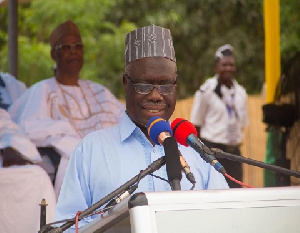
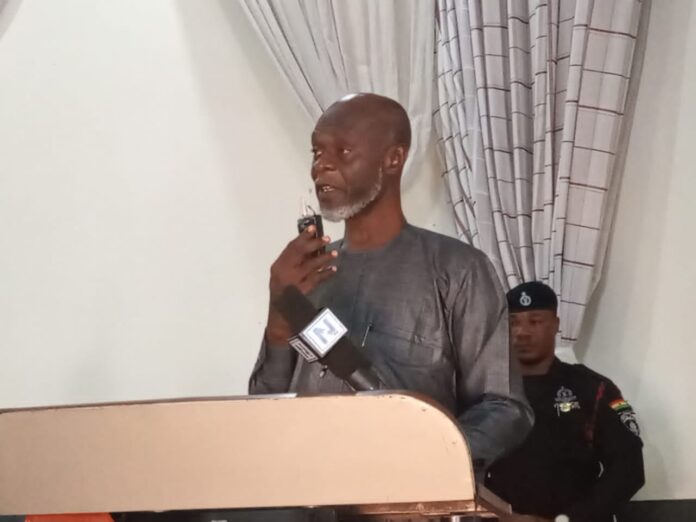
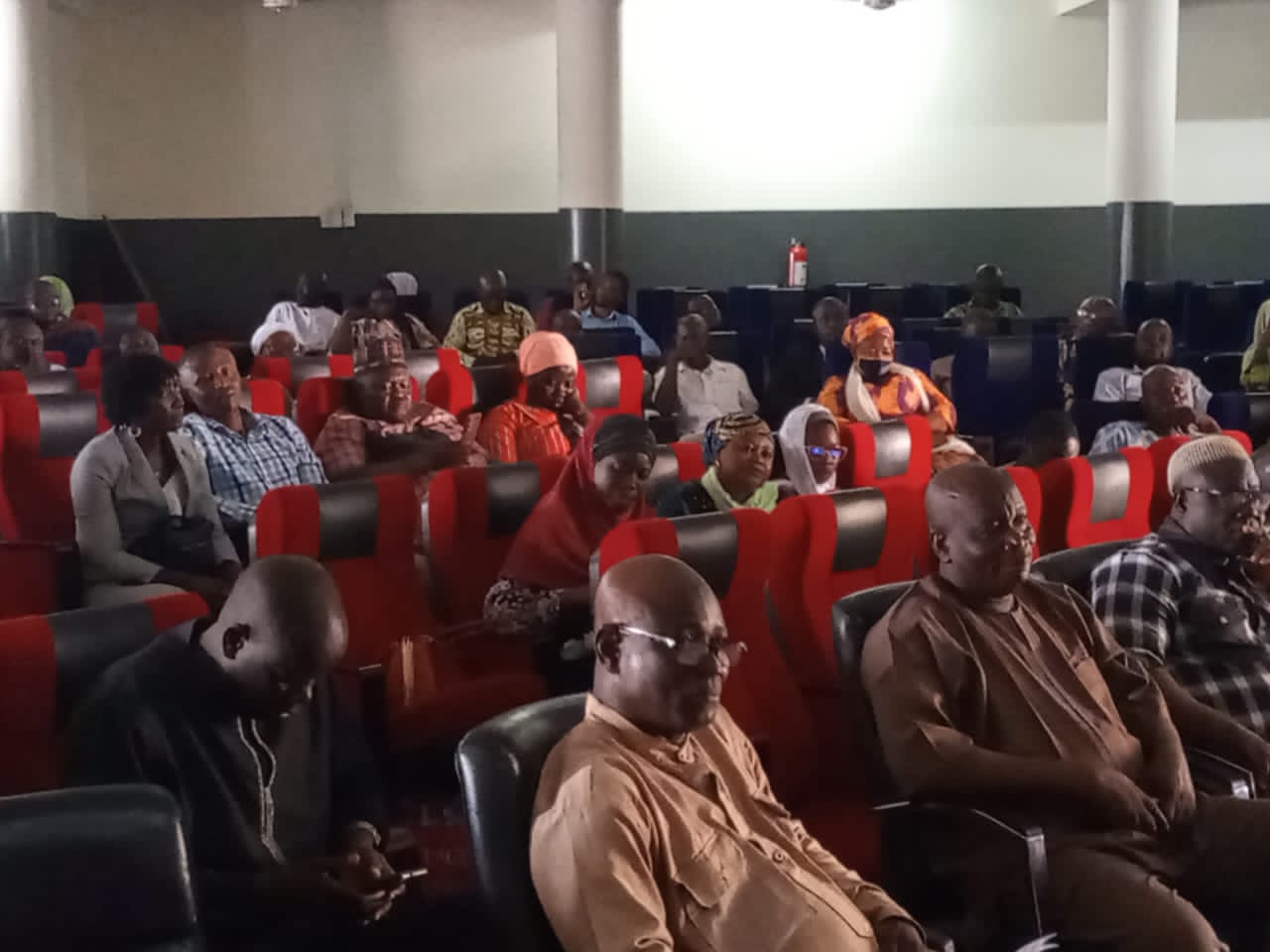
Speaking at a public lecture themed “Protecting Our Democracy: The Role of the Judiciary,” Justice Kwaku Gyan highlighted the key role the judiciary plays in good governance which he said is critical to every democracy.
He described the Apex Court’s decision as shameful underscoring that the ruling prevented the EC from being accountable to the people.
“Article 125 (1) emphasizes that ‘justice emanates from the people and shall be administered in the name of the Republic by the judiciary which shall be independent and subject only to the constitution.’ The import of these stipulations is to underscore the fact that the judiciary and hence judges of our courts are accountable to the people as their servants and not as their masters in the quest to achieve and advance the vision of democratic government and the objective and tangible fruit of democracy in our land.”
“Additionally and more importantly, the judiciary has the bonding duty to hold all other powers, entities, and agencies of the state accountable and ensure transparency in their actions or deeds and in this respect, I felt very agonized when the Supreme Court in the 2020 election petition decided to shield the Electoral Commissioner from giving evidence. The Supreme Court in that trial was a constitutional court not just any court…adversarial court and the Electoral Commission was the Returning Officer.”
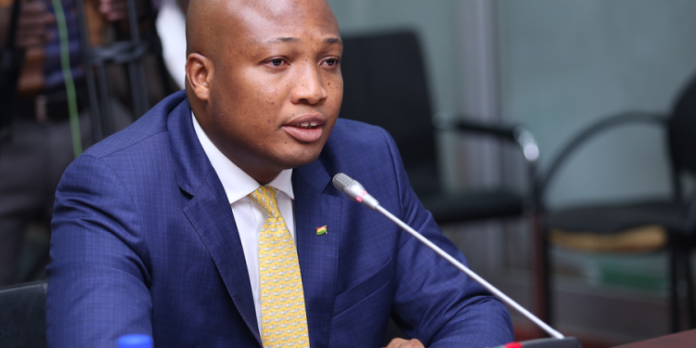
Samuel Okudzato Ablakwa, Member of Parliament for North Tongu, is enraged by recent comments by Sanitation Minister Freda Prempeh that residents of Mepe refused to relocate despite warnings from the Volta River Authority (VRA) and the National Disaster Management Organization (NADMO).
Madam Prempeh blamed residents in the Lower Volta area for failing to move to higher ground as advised at a forum organized by the Ghana Water Company Limited (GWCL) in Accra.
The minister stated that residents in the affected areas were provided with extensive education prior to the Akosombo Dam spillage, which was ignored and has now resulted in the disastrous outcome we are witnessing.
Samuel Okudzato Ablakwa reacted angrily to the remark, stating that the people affected should be treated.
“We are distressed, we are depressed, and we are devastated, and they should stop these things because it is getting on our nerves. We have had enough of their blatant lies. She should tell us when, and she should give us dates when they came here. I mean, does she know what she is talking about? Where did they say the people should move to and they refused? The people were here more than 200 years before the dam was constructed.”
Mr Thomas Ampem Nyarko, Member of Parliament (MP) of Assuogyaman Constituency, has led the leadership of the National Democratic Congress (NDC) to visit displaced persons in Kudikope which were badly affected by the dam spillage.
Mr Nyarko supported with Ghc10,000 at various communities he visited to augment the items presented through the party by the former President.
A statement copied to the Ghana News Agency in Accra said the MP lauded the unity, resilience, communal spirit and oneness shown by the affected communities and called on them to lend a
hand of support to their compatriots in the worst hit surrounding areas.
The Assuogyaman MP reiterated his earlier call for the officials of the Volta River Authority to collaborate with relevant bodies such as his outfit to build a credible database on the affected communities to facilitate the distribution of the necessaries of life.
He appealed to all organisations and Non-governmental organizations (NGOs) to aid the affected constituencies within the enclave to save lives, properties, livelihoods and restore hope.
It said Mr Asiedu Nketia, National Chairman of the NDC expressed the sympathy of former President John Dramani Mahama and implored the communities to be more united in these difficult times.
According to him, the donations were at the behest of the former President who has not relented in his efforts at organising more relief items to support the many Ghanaians whose livelihoods have been shattered by the calamity.
The statement said he further indicated that the gesture is a demonstration of NDC’s unfailing love for all persons in Ghana regardless of their political inclinations.
Kofi Ajaklo, a resident of Kudikope, described the gesture of the former President, the MP and the leadership of the NDC as ‘appropriate’ and worthy of emulation by all well-meaning Ghanaians.
“This is a difficult time for us as Ghanaians so we expect leadership to go beyond politics and see the need to save us from our predicament since we are all Ghanaians”.
Meanwhile, the party’s hefty donations targeted all affected constituencies in the enclave where the Volta Lake takes its course, the statement added.
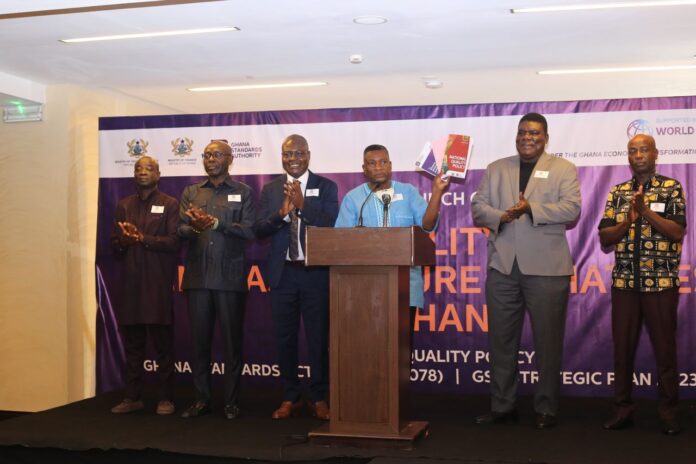
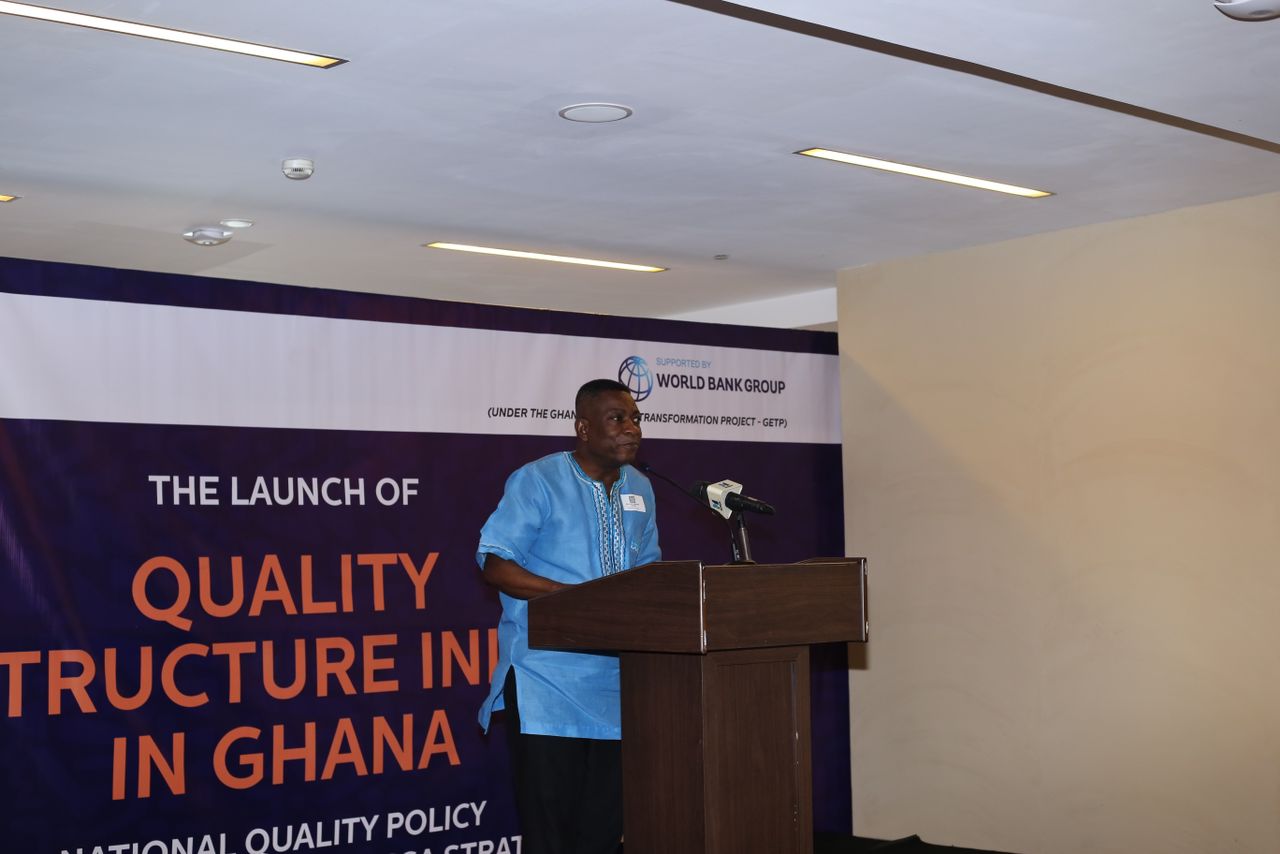
The Ministry of Trade and Industry has launched the Quality Infrastructure Initiatives that will have significant impact on the industrial transformation agenda of Ghana.
The three documents of the Initiatives are the Ghana National Quality Policy, the Ghana Standards Authority (GSA) Act (2022), and the Ghana Standards Authority five-year Strategic Plan Document.
Mr Kobina Tahir Hammond, the Minister of Trade and Industry, said these documents, together with the recently passed Ghana National Accreditation Service Act and the soon-to-be established Ghana National Quality Committee, would drive Ghana’s quest to be recognised as a world- class industrial hub and the home of quality goods and services in Africa.
Mr Hammond was speaking at the launch of the Quality Infrastructure Initiatives in Ghana, under the Ghana Economic Transformation Project (GETP).
He said these quality infrastructure initiatives to succeed in the country’s endeavours of development and growth, however, the country needs a robust quality infrastructure to ensure consistent production and supply of quality goods and services.
He said this was because all goods and services, including hospitality services, in Ghana must meet the highest international standards for the country to obtain premium rates for these goods and services.
“Our factories should produce goods that will be known for quality, durability, and fitness for purpose. Our hotels and restaurants should offer world- class services and our IT firms must come up with software solutions that are interoperable globally and that make life easy,” he added.
He said the country’s mines and extractive industries must apply international standards in health, safety, and the environment. Occupational Health and Safety as well as Environmental Standards must be binding on all extractive industries.
Mr Hammond said by the powers given to the Minister for Trade and Industry under the GSA Act to declare mandatory standards, “I am determined to make it mandatory for every company in the extractive industries to be certified to ISO standards in environmental protection and occupational health and safety.”
This will be the most transparent and sustainable way of demonstrating that firms in the mining industry and the oil and gas sectors are abiding by the highest international standards for protecting health, safety, and the environment.
Ghana’s industrial transformation agenda needed a Quality Infrastructure that is robust and consistent with international best practice.
“This is what the Ministry of Trade and Industry has developed according to international best practice,” he added.
Mr Hammond said it was also important to acknowledge that the establishment of these building blocks of Ghana’s industrial transformation agenda could not have been possible without the support of Ghana’s development partners.
The Minister said the World Bank Group deserved special mention for working with the Ministries of Finance and Trade & Industry to make this happen through the Ghana Economic Transformation Project.
Professor Alex Dodoo, Director-General of GSA, said it was aimed to promote private investments and firm growth in non-resource-based sectors and initiatives were going to shape the future of the country in the coming years.
He said a quality infrastructure System was a combination of initiatives, institutions, organisations, activities, and people and it included a National Quality Policy and institutions to implement it, a regulatory framework, quality service providers, enterprises, customers, and consumers.
He said the Policy was aimed at ensuring that goods traded in the country were designed, manufactured, and supplied to respond to the needs, expectations, and requirements of consumers, the Act establishes the GSA as the Authority responsible for the creation and promulgation of standards and its enforcement in the country.
The Strategic Plan, on the other hand, aims at consolidating gains made in the past to building an advanced QI institution that is competitive, protects consumers and supports the country’s industrialisation drive.
He said the coming into force of the Policy and the GSA Strategic Plan were to ensure the protection of society and lives.
“Without adhering to international standards, Ghana may not be able to enjoy the benefits of the African Continental Free Trade Area (AfCFTA) as products from the country will continue to suffer rejection due to non-conformity with standards,” he added.
Prof Dodoo said the initiatives in Ghana were instrumental in fostering economic growth, ensuring consumer protection, and contributing to a sustainable future.
These initiatives will help the GSA to promote Standardisation, Conformity Assessment and Metrology for the improvement of the quality of goods, services and sound management practices in industries and public institutions in Ghana.
Manufacturers, businesses, traders, and investors aim to unlock infrastructural bottlenecks to actualise the full benefits of the African Continental Free Trade Area (AfCFTA).
This is happening at a three-day Ghana Investment Trade Week, which opened on Monday, October 23, 2023, in Accra.
The summit is being organised by the Ghana Investment Promotion Centre (GIPC) in collaboration with MIE Group, Dubai, and the Ghana Chamber of Construction.
The State Interests and Governance Authority (SIGA) and KGL Group are supporting the summit.
The summit seeks to find lasting solutions to roads, railway, and airlines, Information and Communication Technology (ICT), and energy infrastructural challenges that would make trade on the continent easier and faster.
It is to also create a platform to promote investment, trade and knowledge exchange in Ghana and Africa.
In an interview with the Ghana News Agency after a ceremonial opening, Mr Mike Ocquaye-Jnr, Chief Executive Officer (CEO), Ghana Free Zones Authority (GFZA), said it was critical to overcome those infrastructural difficulties.
“If you for example, want to travel from Ghana to Congo, you may have to fly to Brussels, and then from Brussels, you fly in, which shouldn’t be the case,” he said.
“We want to ensure that we connect Rwanda and Tanzania and all other countries, that’s why we’re finding a holistic solution to these infrastructural problems,” Mr Ocquaye-Jnr said.
He noted that Ghana, for example, had developed undersea cables, which were not common in other countries in Africa, but ultimately aimed at improving connectivity across the continent.
Mr Yofi Grant, CEO, GIPC, said AfCFTA would recreate the Africa economy, and transform many sectors, but requires continent-wide policies and efforts to solve the various infrastructural challenges.
With our young people and mineral resources, we can develop the capacity and produce to trade within ourselves to increase intra continental trade by 30 per cent by adding value for export.
He explained that Ghana holding the summit demonstrated its ability to facilitate trade in Africa with a focus on Sustainable Development Goal (SDG1) – poverty alleviation and SDG17 – partnership for trade and development.
“AfCFTA started as an initiative between countries, but now it needs to percolate down to the private sector; it’s the private sector that’s going to invest its capital, and create the products that we can trade amongst ourselves,” he said.
He referred to Africa’s rich resources, including having 90 per cent of the world’s platinum and cobalt, and significant proportion of the world’s quota not to mention lithium, copper, titanium salts.
“We need as governments to then facilitate our private sector to participate in these larger economies, because that’s the way we’re going to create wealth by supporting the private sector to create jobs and other opportunities for our young people,” Mr Grant said.
Mr Zahoor Ahmed, Vice President, Strategy and Partnerships, MIE Group, said the summit would also capture global market attention, including Asia, the Middle East and Europe.
By so doing, the summit would create a congenial atmosphere to explore opportunities for partnerships, trade and bring in more Foreign Direct Investment into Africa.
The Ghana Union of Traders Association (GUTA) has asked the government to make the economic stability enjoyed in the first two quarters of 2023, to have impact on affordable loans to traders and businesses.
Dr Joseph Obeng, President, GUTA, in an exclusive interview with the Ghana News Agency ahead of the 2024 budget presentation lauded government for ensuring some reduction in inflation and cedi depreciation.
“The stability we’re experiencing now, especially, for the first two quarters of 2023, is good for us; inflation has responded positively and depreciation of the cedi has not been bad,” Dr Obeng said.
“However, these are not at an appreciable level for businesses and industry to thrive, coupled with high interest rate and taxes, as lack of access to affordable credit remains a challenge,” he said.
He attributed the current economic stability to the impact of the US$600 million first tranche of US$3 billion loan-support programme with the International Monetary Fund (IMF).
The GUTA president explained that the Fund programme had helped restore confidence into the banking and financial system and pushing the inflation downwards.
“Nonetheless, we want the government to ensure that we are able to have inflation around 15 per cent in the short term, and monetary policy rate reduced to reflect low interest rate, so we can have access to affordable credit,” he said.
That, when done, together with reduction in taxes, Dr Obeng said would not only help traders, but industry, many of whom had been badly affected by the recent economic challenges.
Meanwhile, he said discussions held with the Finance Ministry in view of the 2024 budget, “showed positive signs of some tax relaxation, though we’re yet to see the figures and how its impact will be on businesses.”
“We’ve sent our proposals, including the COVID-19 levy, which we want to be removed, special import levy, and VAT, which we expect some reductions,” the Association president said.
Ghana is currently implementing its 17th loan-support programme with IMF as a result of economic hardship, borne out of the adverse impact of the COVID-19 pandemic, Russia-Ukraine war, and structural challenges.
However, recent figures from the Ghana Statistical Service (GSS) has shown some signs of recovery.
The country’s Gross Domestic Product (GDP) growth has rebounded, averaging 3.2 per cent in the first two quarters of 2023, compared with the same period in 2022, mainly on the back of growth in Services and Agriculture.
The latest price development in August 2023 also indicated a fall in headline inflation after a consecutive upward trend since May 2023, which dropped to 40.1 per cent in August 2023, with a further drop to 38.1 per cent in September 2023.
In terms of currency depreciation, as of September 2023, the cedi depreciated on year-to-date cumulatively by 23.5 per cent compared to the same period in 2022.
“Notwithstanding uncertainties around global economic recovery, we are confident that we are on the right path, therefore, optimistic about the future,” Mr Ken Ofori-Atta, Finance Minister said.
He said this after Ghana reached a Staff-Level agreement with IMF on economic policies and reforms to conclude the first review of the three-year loan-support programme.
“The economy entered 2023 with a significant growth momentum and the economy has been more resilient than expected,” an IMF Spokesperson said in a mail correspondence with GNA on the back of recent developments in the Ghanaian economy.
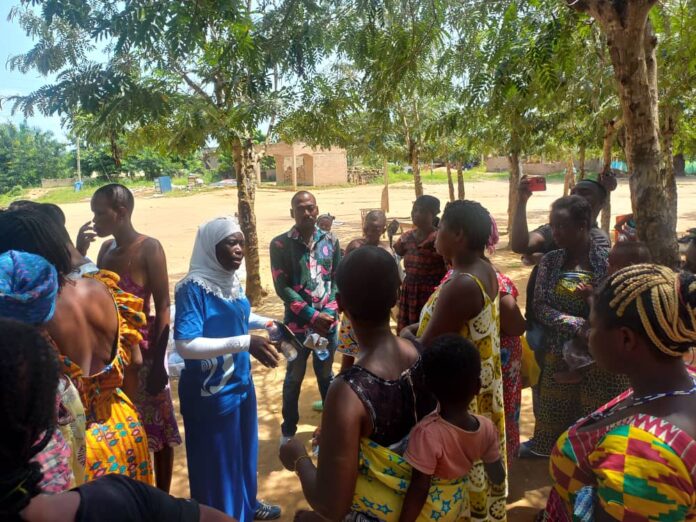
Some members of the Ghana National Association of Certificated Counsellors (GNACC) have visited Mepe, the town affected by the Akosombo Dam spillage, to provide psychological support to the indigenes.
The groups also supported the affected persons with relief items including clothes, oil, rice, foodstuff, and water.
Mr Kingsley Eyram Kuadzi, Chairman of the Volta, Eastern and Greater Accra (VEGA) branch of the association who led the team told the Ghana News Agency that he earlier visited the place and realized there was a humanitarian crisis.
“Flood victims need special services that often need to go far beyond the immediate crisis management stage. Once the flood victims encounter losses, whether a physical loss or psychological loss, it will involve grief.
Grief is considerably more than bereavement: it denotes a response to any significant loss, be it primary or secondary, tangible or intangible, and physical or relational,” he explained and said there was the need to also attend to the affected persons psychologically.
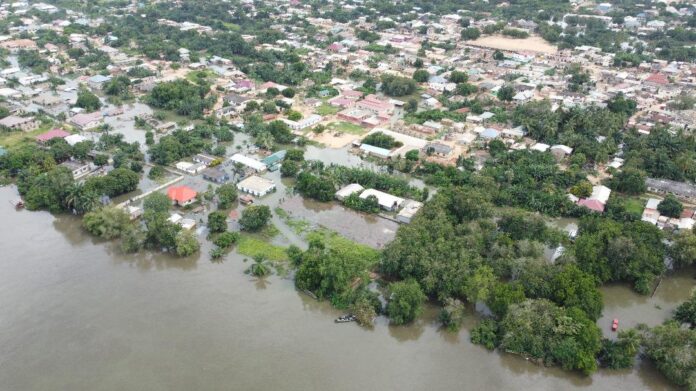
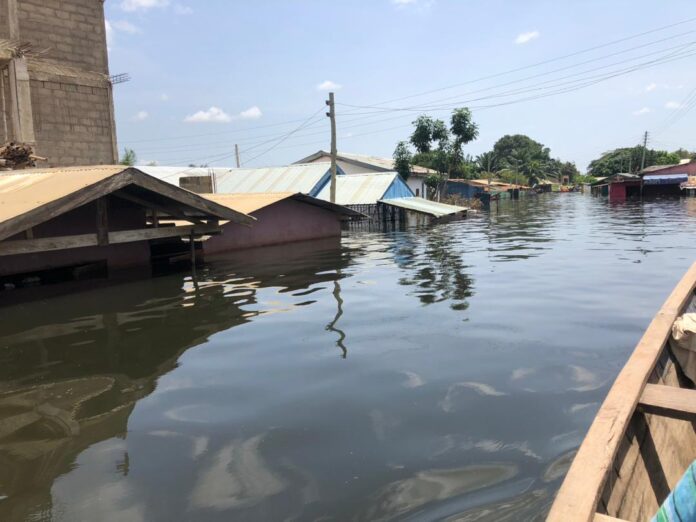
Some Residents of Mepe in the North Tongu district of the Volta Region faced a severe crisis after the Akosombo dam spillage led to the flooding of their homes.
The overflow caused substantial losses, and the community grappled with the disruption of essential services.
Mr Dela Gadzanku, the Volta, Oti, and Eastern Regional Chairman of the Association of Ghana Industries (AGI), has said climate issues would be discussed during this year’s Volta Trade and Investment Fair.
The AGI, who are the main organisers of the upcoming event, slated to commence on November 26, said a day would be dedicated to discussing climate issues to find a lasting solution to them.
Mr Gadzanku disclosed this to press men at Mepe in the North Tongu District of the Volta Region during a visit to assess the extent of damage to Small and Micro Enterprises (SMEs) along the Volta River due to the Akosombo Dam spillage.
“As already planned, the upcoming Volta Fair to be organised by the Association will dedicate a day to discuss climate issues and the Akosombo spillage, bringing together key experts to find lasting solutions to this.”
He indicated that climate change was real and urged all to take its study seriously.
Mr Gadzanku and his team also visited the shelter at Mepe JHS and St Kizito SHS, where he interacted with some displaced persons, especially women and children.
The team, after interacting with other business owners, later moved to inspect Spring Agro Industries, a rice processing factory at Mafi-Adidome in the Central Tongu District, whose farms have been submerged.
Mr Harman Randhawa, Director of Farms at Spring Agro, told the GNA they lost over 200 acres of growing rice farms worth thousands of cedis because of the spillage.
Among the affected business entities is Golden Exotic Limited, the Country’s biggest banana producer and exporter to the European market.
The recent announcement of a visa waiver agreement between Ghana and South Africa has brought into sharp focus the prospects of mutually beneficial tourism promotion between the two countries.
Both Ghana and South Africa have, in the recent past, focused on aggressive destination marketing.
In August 2022, the Ghana Tourism Authority (GTA) signed a revolutionary Memorandum of Understanding (MoU) with the Gauteng Tourism Authority of South Africa.
The MoU seeks to facilitate and strengthen trade, tourism, and investment relations between Ghana and its South African counterparts.
With tourism being a high source of revenue for both countries, the tourism authorities must build on it to cooperate, exchange knowledge, and leverage their learnings to maximise their tourism potential.
The agreement highlights areas of cooperation in various sections of tourism development, including joint destination marketing, leveraging MICE (Meetings, Incentives, Conferences, Exhibitions) markets, and the exchange of best practices in professional event coordination and support for SMMEs.
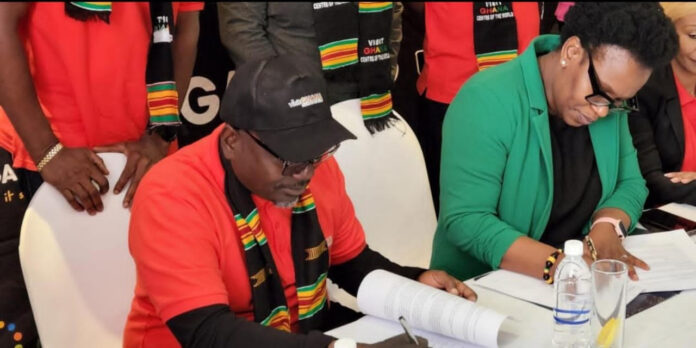
Mr. Akwasi Agyeman, the Chief Executive Officer of the Ghana Tourism Authority (GTA), together with Gauteng Tourism CEO, Sthembiso Dlamini, signed this agreement, charting a new course for the nation’s tourism sector.
In 2019 alone, Ghana recorded over 18,381 South Africans visiting the country, an impressive number that keeps growing annually.
“Ghana is fast becoming the vacation destination for the world, most especially in December.
“With record numbers trooping into the country, it is important to share knowledge with the continent and gain some more insights on how to manage the influx of tourists into Ghana.
“We are optimistic that this agreement will go a long way towards putting Africa and not only Ghana on the global map as the preferred destination for travel. Along with the high number of tourists also come numerous jobs for our nationals, and this is the way to go,” Akwasi Agyeman said.
Ghana and South Africa continually sign agreements and put in place policies to facilitate easy travel and doing business with each other.
The visa waiver agreement allows citizens of both countries to travel visa-free for a cumulative period of up to 90 days without recourse to work.
This agreement will take effect on November 1, 2023. This was made known by Ghana’s Ministry of
Foreign Affairs and Regional Integration in a post made on the social networking platform X, where it said both countries have entered into an “agreement on a visa waiver regime for holders of ordinary passports.”
“Travellers may transit through, depart from, and stay in the territory of both countries for a cumulative period of up to 90 days without recourse to work.”
Mr Ken Ofori-Atta, Minister for Finance, has urged Metropolitan, Municipal and District Assemblies (MMDAs), to prioritise the implementation of the strategies/activities in the Revenue Improvement Action Plan (RIAP) to improve revenue mobilisation and fiscal management.
He said the RIAP served as a valuable tool, and its successful implementation held the potential to significantly enhance revenue mobilisation for the MMDAs, adding “Therefore, I strongly encourage the Budget Committees to explore innovative strategies and corresponding activities that will aid us in attaining our shared objective.”
Mr Ofori-Atta made the call in a speech read on his behalf by Alhaji Shani Alhassan Saibu, Northern Regional Minister, at the Northern Regional Composite Budget hearings in Tamale.
During the exercise, authorities of the MMDAs in the region took turns to present their Composite Budgets for 2024 – 2027.
Mr Ofori-Atta urged the Metropolitan, Municipal and District Coordinating Directors to take the lead in advancing the RIAP for improved revenue mobilisation, emphasising the need for them to ensure that once the General Assembly approved the by-laws and rate imposts, they were gazetted to provide the necessary legal foundation for enforcing compliance and pursuing legal action against defaulters.
He called on the MMDAs to activate and reinforce their sub-structures (Sub-Metros, Urban/Town/Area, and Zonal Councils) ensuring they were fully operational to strengthen revenue mobilisation efforts and effectively carry out their delegated responsibilities.
He emphasised need for them to follow due process to implement their approved budgets, saying “It is crucial to emphasise that the use of GIFMIS Financials is not merely a suggestion, but a legal requirement as stipulated in Section 25 (6) of the Public Financial Management Action 2016, Act 921.”
He called on them to ensure that all budgetary and financial transactions were executed through the GIFMIS system to streamline reporting and enable prompt decision-making, adding compliance with the use of GIFMIS Financials was instrumental in mitigating or even eliminating the audit irregularities.
Mr Ofori-Atta also urged the MMDAs to prioritise ongoing projects and said to avoid expenditure commitments crystallising into judgement debt and huge expenditure arrears, capital expenditure budgeting for projects in 2024 should ensure arrears clearance, outstanding payments, non-accumulation of new arrears as well as speedy completion of such projects as contained in the Public Financial Management (Public Investment Management) Regulations, 2020, L.I. 2411.
He said, “To improve ownership and enhance transparency and accountability, the 2024 Composite Budget to be approved by the General Assembly should be signed off by the Presiding Member and the Coordinating Director prior to submission to the Regional Coordinating Councils for onward submission to the Ministry of Finance by November 03, this year.”