Home Blog Page 328

Ghana gradually positioning to become leading producer of coconut globally-GEPA

0

The Ghana Export Promotion Authority (GEPA) says through various strategic interventions, the country is making significant strides in terms of coconut production and export on the global stage.

Dr Afua Asabea Asare, the Chief Executive Officer of GEPA, said currently, Ghana was ranked 12th in world production of coconut and the number one producer in Africa.

She said: “Our coconut oil, juice and other derivatives are now sought after on international markets, thanks to their quality, taste and authenticity”.

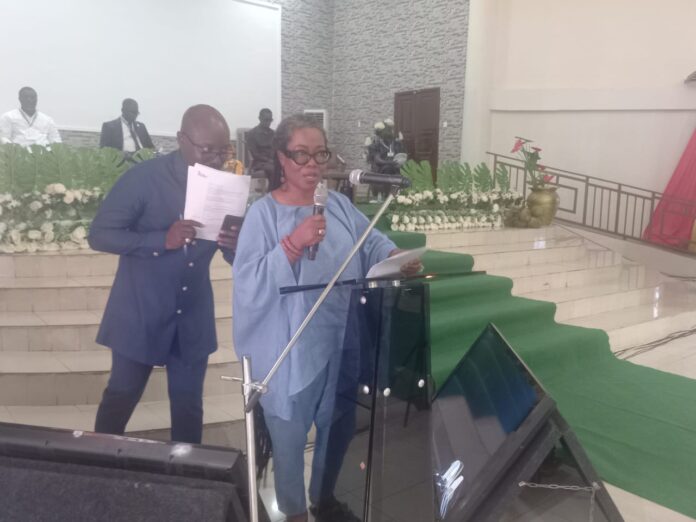
Dr Asare was speaking to at the opening of the third International Coconut Festival, held in Takoradi, on the theme: “Invest in Ghana’s Coconut Sector for an Inclusive Economic Transformation and Improved Climate and Social Resilience”.

The three-day event was jointly organized by the African Coconut Group (ACG), Ghana Export Promotion Authority (GEPA), Tree Crops Development Authority (TCDA) and the Western Regional Coordinating Council (WRCC).

She said producers had embraced sustainable farming practices that not only protect the environment but also ensure the long-term viability of the coconut industry.

According to her, the vision of GEPA’s coconut intervention programme since 2017 was to make Ghana at least fifth globally in the production and export of coconut products.

“It is in this light that we launched the coconut revitalization intervention six years ago with a clear objective of reviving the then ailing coconut industry to improve the supply capacity of the value chain having realized the growing demand trend for coconut globally”, the GEPA CEO noted.

Highlighting some of GEPA’s intervention in the coconut sector, Dr Asare indicated that the Authority had procured and distributed disease-tolerant coconut seedlings to coconut farmers across the major coconut farming Regions in the country.

“So far, we have distributed over a million seedlings covering some 15,200 acres. We are not relenting on our efforts until we get to the point where the industry is mature and can be on its own”, she added.

Mr Kobina Tahir Hammond, Minister for Trade and Industry, in a speech read on his behalf, commended GEPA and its partners including ACG, TCDA and WRCC for driving the coconut sector development agenda for sustainable economic growth in the country.

He said coconut was one of the key tree crops that the government was focusing its attention on to stimulate interventions that would create jobs, increase income, reduce poverty, and improve the overall economic wellbeing of the teeming youth in that sector.

Obrempon Hima Dekyi XIV, Paramount Chief of Upper Dixcove, who chaired the festival, said coconut had the potential to overtake cocoa as Ghana’s highest tree crop export commodity if appropriate strategies were put in place.

He therefore appealed to all traditional authorities and family heads as well as landowners to strive to make land acquisition easier for coconut farmers and investors to help harness the full potential of the coconut sector.

Employment Minister applauds EU, Netherlands Embassy for promoting green businesses in Ghana 

0

Mr Ignatius Baffour-Awuah, Minister for Employment and Labour Relations, has paid glowing tribute to the European Union, the Netherlands Embassy and SNV Netherlands Development Organisation for shaping the entrepreneurial mentality of Ghanaian youth. 

      He said the support being given to young entrepreneurs under the Boosting Green Employment and Enterprise Opportunities in Ghana (GrEEn) Project, was complementing government’s efforts towards addressing youth unemployment in the country. 

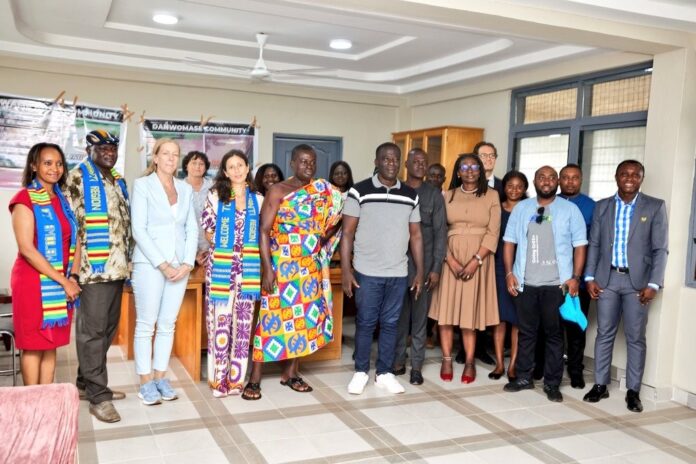
     He was speaking to the media after leading a high-level delegation made up of representatives from the EU, the Embassy of the Kingdom of the Netherlands in Ghana, SNV, United Nations Capital Development Fund (UNCDF) and the Ministry, to visit GrEEn project sites in the Ashanti Region. 

       The GrEEn project is being implemented jointly by SNV in Ghana and the UNCDF with funding from the European Union Emergency Trust Fund for Africa, and the Netherlands Embassy in Ghana. 

      It seeks to contribute to addressing the root causes of irregular migration through green and climate resilient local economic development by creating employment, and enterprise opportunities in the agriculture, water and energy sectors in the Ashanti, and Western Regions. 

      The goal is to create job opportunities for youth, women, and returning migrants as well as facilitate the development of Micro, Small and Medium-sized Enterprises (MSMEs) enabling the transition of local economies to green and climate resilient development. 

      Mr Baffour-Awuah said one of the basic challenges confronting the country was how to handle the teeming number of young persons who were graduating from various universities annually. 

       “Obviously, the public sector doesn’t have enough space to handle them.  

       So, what happens to the rest of them because many of them, with little guidance, can be entrepreneurs of their own,” he pointed out. 

      He said it was for that reason that the Ministry signed an agreement and has been working with SNV to enable not just job creation and entrepreneurship development, but facilitate Ghana’s transition into a green, eco-inclusive circular economy that is able to withstand the dire effects of climate change on livelihoods, especially at the community level. 

        The Minster was happy to see young graduates with the support of the project building sustainable businesses while creating employment opportunities in their local communities. 

      Marta Brignone, Programme Manager on the GrEEn Project at the EU, said the EU supported the implementers of the project to boost green businesses, and support the government of Ghana in climate resilient infrastructure and practices. 

       “It was very important for us to also come to the field and see the impact of this intervention, and we are impressed with what we have seen,” she noted. 

      She explained that apart from working closely with key state institutions in the implementation of the project, the team was also happy to see young people using their business ideas to make impact in their local communities. 

      Sustaining the progress made beyond the project, she said, was very important and urged national institutions responsible for supporting businesses to continue from where the project would end. 

     Wendy van Meel, Deputy Ambassador at the Embassy of the Kingdom of the Netherlands in Ghana, said she was impressed with the results of the GrEEn project with a lot of decent jobs being created. 

     “I was really impressed by the young entrepreneurs, and we see a lot of opportunities in youth employment, and we would really like to commit to that to support promising young people,” she observed. 

AOMC condemns infiltration of foreigners into the petroleum haulage sector  

0

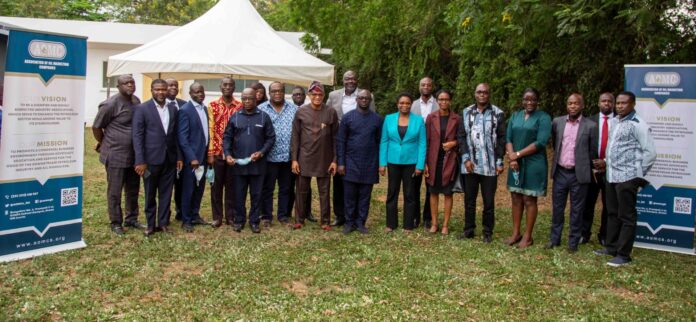
The Association of Oil Marketing Companies (AOMC) has condemned the infiltration of foreigners into the petroleum haulage sector, describing it as a deleterious act with the potential to rape the resources and render the country barren. 

“We, AOMCs, would like to register our protest, consternation, and indignation that such awful thought, despicable and dastardly act with impugn treachery, is allowed to ferment in this era, rumination of the pangs of retrogression,” Mr. Kwaku Agyemang-Duah, AOMC Industry Coordinator, stated. 

Mr. Agyemang-Duah, who was reacting to the influx of Chinese companies in the haulage of petroleum products in the country, told the Ghana News Agency in an interview in Tema that “we are equally incensed and horrified that this should be allowed to fester on at this time of our nation’s development with the full glare of our leaders”. 

Mr. Agyemang-Duah, who is also the AOMC Chief Executive Officer, called on the regulator, the National Petroleum Authority, to make it clear and unambiguous that transportation of petroleum products can only be done by 100 percent Ghanaian-owned businesses. 

“We would also like to understand how, when, and by whose authority these trucks were allowed into the country. Did they enjoy tax breaks? If that is the case, it will also be unfair on existing transporters who must pay fully,” Mr. Agyemang-Duah stated. 

He noted, “As an association, we remain committed to the development and growth of the downstream petroleum sector, and we will painstakingly and consciously protect the gains of the industry. 

“We will not, by any shape, thought, design, orchestrations, machinations, or manoeuvring by forces within or without the country, persuade us to relinquish our sovereignty to a pseudo or masquerading investor. 

“With the abhorrence, vigilance, and support of well-meaning Ghanaians, we shall succeed.”  

He said in a globalised world, attracting foreign investment has become a crucial aspect of economic development; however, it is equally important to protect local interests in certain sectors of the economy by objectively striking a balance between attracting foreign investment and safeguarding local interests, especially in the petroleum downstream sector. 

Mr. Agyemang-Duah said as a country with a burgeoning industry, the association recognised the importance of foreign investments in Ghana’s economic growth and development, which was evidenced in the construction of a Chinese-owned Sentuo refinery, a testament to the country’s attractiveness as an investment destination. 

The AOMC Industry Coordinator stressed that Ghana’s petroleum haulage business was driven by local entrepreneurs, who have invested substantial resources, time, and effort to establish and maintain their businesses. 

He noted that through their own efforts amidst the ever-increasing interest rates on credit facilities, they have played a vital role in the country’s economic development, providing employment opportunities, and contributing to the overall growth of the nation. 

“It is a sad tale to observe, with utmost disdain, the operationalization of foreign trucks, allegedly sanctioned by the Sentuo refinery, which, for all intents and purposes, threaten to unfairly undermine and see to the eventual extinct of the local haulage industry, which has been the backbone of the petroleum downstream sector for years,” he noted. 

China-Ghana trade sees further growth – Ambassador Lu Kun  

0

Bilateral trade volume between Ghana and China reached an unprecedented high at 10.2 billion US dollars, last year, with Ghana’s exports to China surging by 60 per cent . 

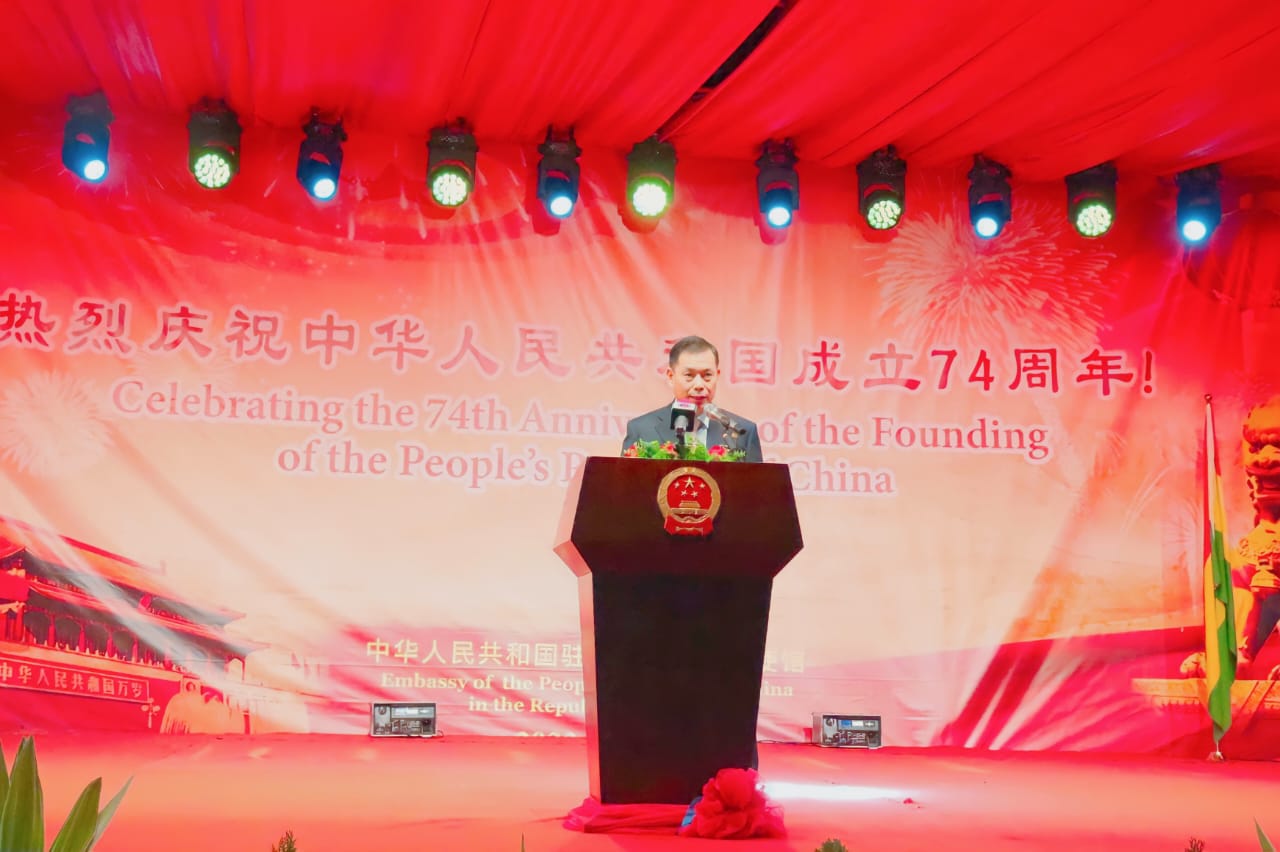
Mr Lu Kun, the Chinese Ambassador to Ghana, who stated this, added that his country remained Ghana’s largest partner and major foreign investment source for years, thus offering significant opportunities for their peoples.  

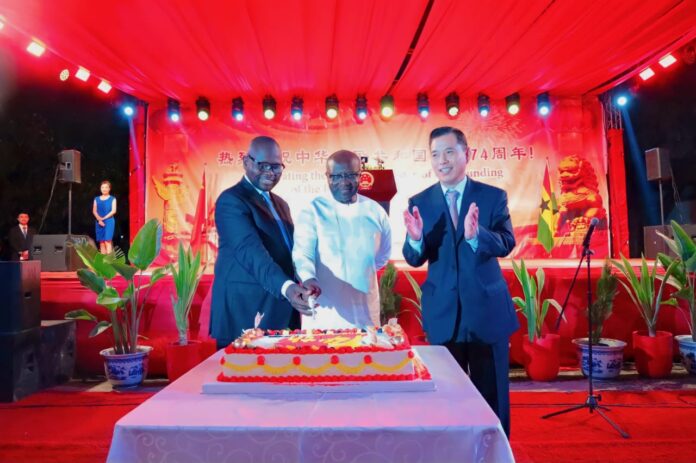
The Ambassador was speaking at a reception to mark the 74th Anniversary of the founding of the People’s Republic of China.  

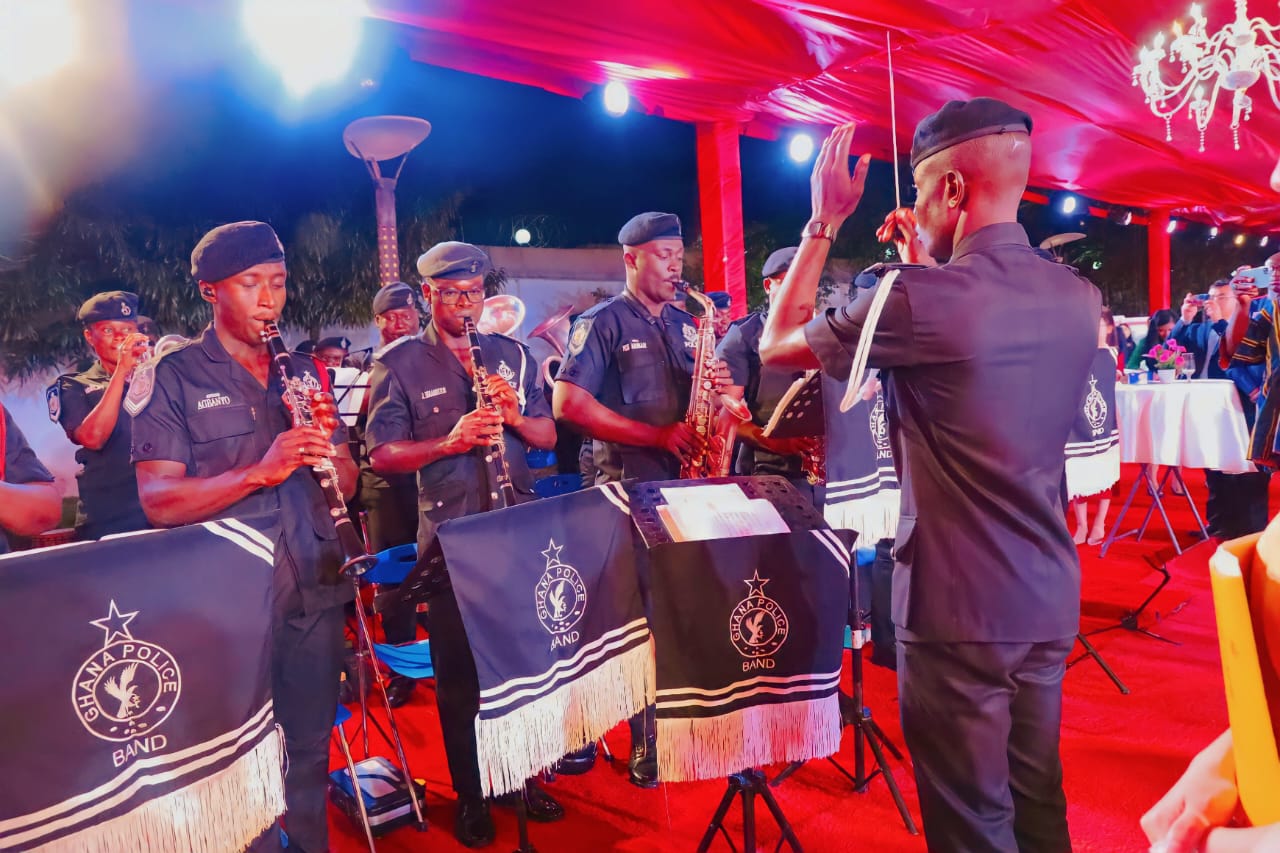
Hosted by Mr Lu at his official residence, in Accra, and attended by high profile dignitaries, including the Second Lady, Mrs Samira Bawumia, the Finance Minister, Mr Ken Ofori-Atta, the Minister for Works and Housing, Mr Francis Asenso- Boakye, members of the Diplomatic Corps, the Chinese business community and residents in Ghana, the grand reception was charaterised by rich Chinese cultural displays.  

In 2021, the bilateral trade volume was US$9.57 billion.   

China mainly imports mineral fuels, oils and distillation products, ore slags and ash, wood and articles of wood, cocoa and cocoa preparations, copper and aluminum from Ghana.  

Ghana’s main imports from China include machinery, iron and steel, electrical and electronic materials.  

This year marks the 63rd anniversary of the diplomatic ties between China and Ghana, a friendship nurtured by Chairman MAO Zedong, Premier ZHOU Enlai and President Kwame Nkrumah. 

Ambassador Lu said: “Over the past 63 years, China and Ghana have always supported each other and worked in solidarity, safeguarding the shared interests of the two countries and the Global South.” 

China, last year, invested in a number of companies, including Sunon Asogli Power (Ghana) Limited Company, African World Airlines, steel, ceramic and cement factories.  

These, he said, had helped to create jobs and boosted industrialisation for Ghana.  

Last month, he noted, the Sentuo Oil Refinery Limited, investment an of a Chinese private company, began operation as the single largest investment in Ghana over the last decade. 

“People to people exchange is among the priorities of China-Ghana cooperation. In April 2022, vocational institutions upgrade project was completed. Last June, a Luban Agriculture Workshop was commissioned, providing vocational skills training for local farmers,” said Ambassador Lu.  

“There have been three Confucius Institute in Ghana, in the University of Ghana, the University of Cape Coast, and the Kwame Nkrumah University of Science and Technology respectively,” he said.  

Additionally, he said, more than 6,500 Ghanaian students studied in China, ranking it the second among all African countries for many consecutive years.  

“Since this year, China-Ghana cooperation has yielded fruitful results, delivering tangible benefits to the Ghanaian people,”the Ambassador emphasised.  

He recounted: “In March, the China-aided Annex Building of the Foreign Ministry began construction. In May, China joined the Official Creditor Committee of Ghana as the Co-Chair and helped Ghana secure the IMF 3 billion US dollars deal in record time. In June, China-aided military building began construction. In July, the 43rd fleet of the Chinese People’s Liberation Army Navy visited Ghana.” 

Additionally, the Ambassador said the Embassy donated relief items to flood victims in Volta Region, while a Chinese medical team was in Ghana to provide free clinical service. 

“ In August, the China Visa Application Center in Accra officially opened and Hon. Botchwey, Minister for Foreign Affairs and Regional Integration came to visit.” 

On developments in his country, the Ambassador said since the 18th National Congress of the Communist Party of China, the country embraced the centenary of the CPC.  

It ushered in a new era of socialism with Chinese characteristics, and eradicated absolute poverty by lifting 100 million rural residents above poverty line, thus meeting the targets of the United Nations SDG 10 years ahead of schedule.  

“In the past 11 years, China has made great efforts to promote high-quality development, contributing more than 30 per cent to global growth on average with per capita GDP exceeding 12,000 US dollars.” 

Those strides, Mr Lu said were achieved because China adhered to the philosophy of people-centered development, creating 13 million new urban jobs on average each year and a middle-income group of over 400 million people. 

He, therefore, urged Ghana to maintain it’s relations with China to surmount the regional and international challenges.  

 “As long as China and Ghana stay together, we will surely bring prosperity for the two peoples. China-Ghana relation will become stronger and closer.” 

For his part, Mr Asenso-Boakye, who represented the President, said, lauded China for being a dependable partner in Ghana’s socio-economic development efforts over the years.  

 Ghana was appreciative of support received in various sectors of the economy notably –  education, health, road infrastructure, defence, agriculture, communication, and fisheries.  

He noted that although trade between the two countries remained stellar, there was still the need for balanced trade and investment.  

It was, therefore, imperative to find new avenues for economic cooperation to enable the commercial partnership to grow further.    

“We, in Ghana, believe that by fostering a win-win cooperation with the People’s Republic of China, Ghana, will have a greater chance of realising its developmental objectives,” the Minister added.  

SNV/EU Job Fair exposes young people to green value chain, TVET opportunities

0

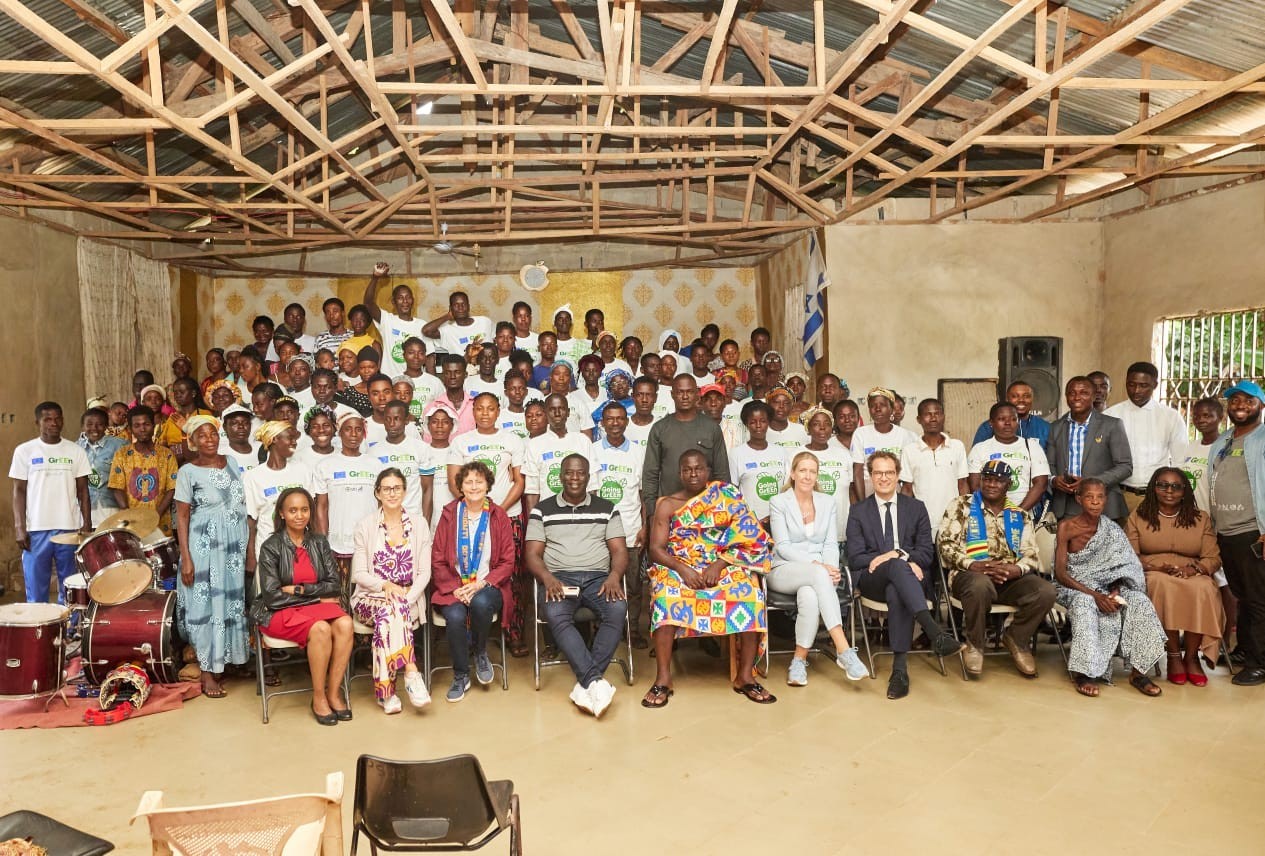
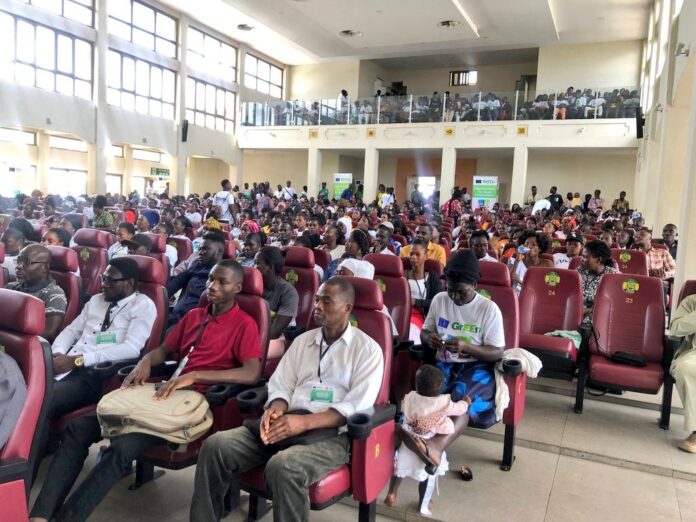
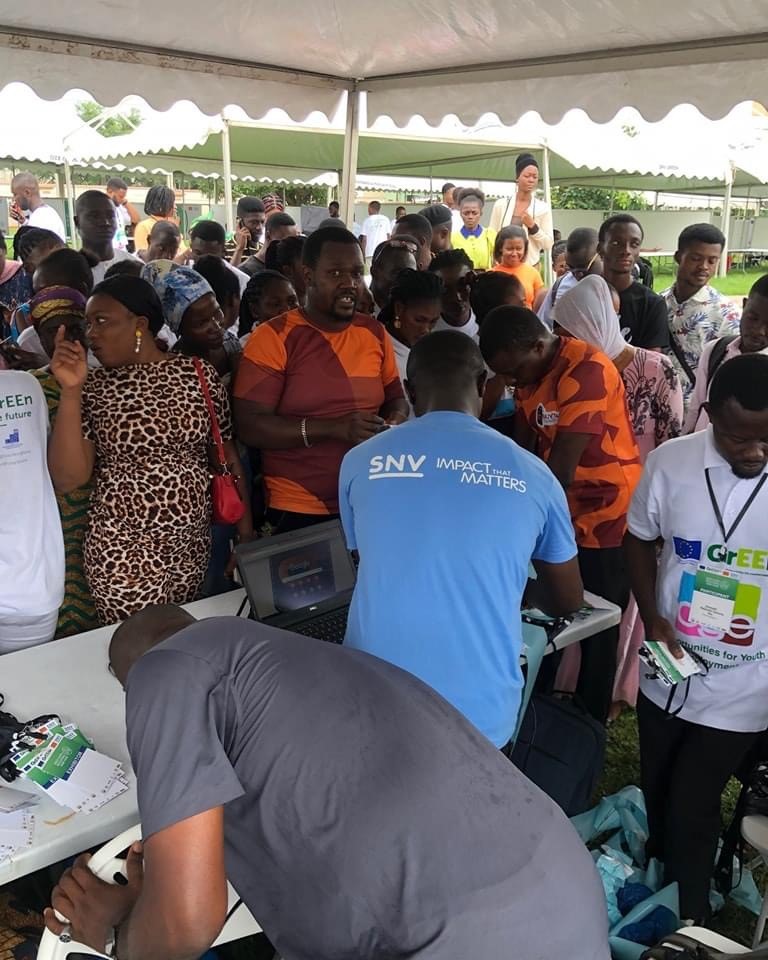
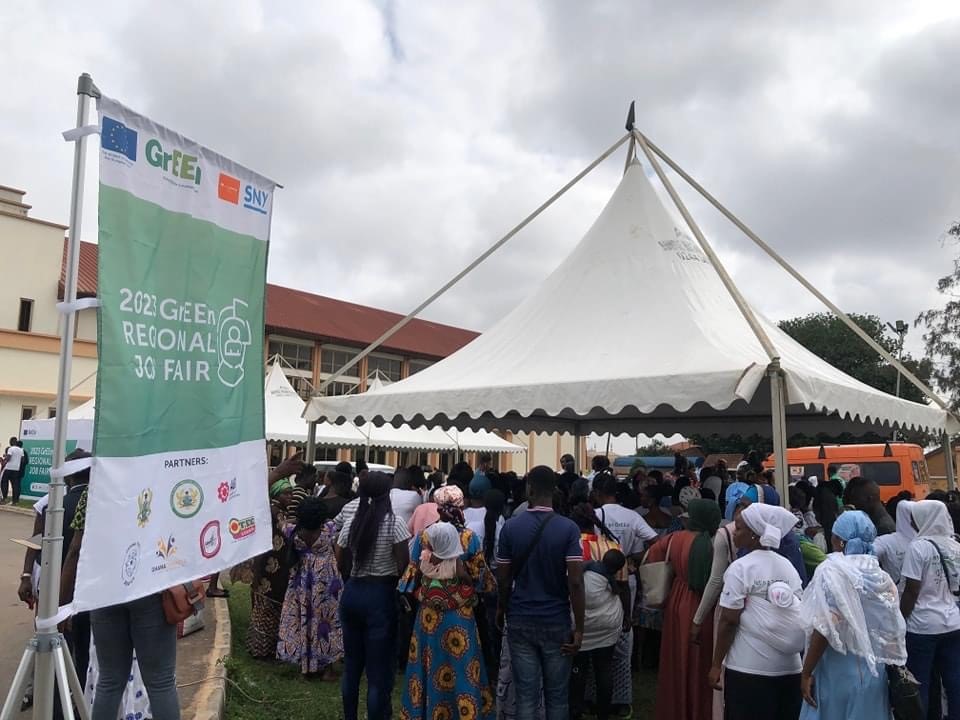
To promote job creation and the growth of local businesses, SNV Netherlands Development Organisation under its European Union (EU) in Ghana-funded, GrEEn Project, has organised the third and last of its GrEEn Regional Job Fair in the Ashanti Region.

       This year’s fair is to inspire young people to seek and explore green job opportunities and solutions in Technical and Vocational Education and Training (TVET), as well as exposing participants to career pathway prospects within the green value chain in Water Sanitation and Hygiene (WASH), agriculture and energy.

      The exercise was in partnership with the Ministry of Employment and Labour Relations, Ghana TVET Service, Association of Ghana Industries (AGI), Labour Department, and the Ghana Chamber of Young Entrepreneurs.

      Over 40 businesses registered to participate in the job fair to offer jobs to youth, women, and returned migrants who participated in the GrEEn Job Fair.

      Mr Laouali Sadda, Project Manager for GrEEn at SNV Ghana at the 2023 Regional Job Fair in Kumasi, said business development support would be provided for entrepreneurs to encourage more youth to kick start green businesses.

       He said the SNV was dedicated to promoting sustainable job creation and commended all partners for supporting in creating more jobs for the teeming unemployed youth.

      This year’s Fair, which was held under the theme, “Career Prospects in TVET: The nexus of green jobs for inclusive transformational development” brought together over 500 job seekers, employers, and exhibitors from the green and circular economy.

      Mr Sadda mentioned that SNV Ghana and the EU, through the GrEEn Project, aside supporting job creation, and skills development, also promoted growth of green local businesses.

      Under the GrEEn Incubation and Acceleration Programmes, a total of 125 SMEs have received business advisory services to help them fine-tune their business models and access financial investment to grow since 2019.

      Businesses with innovative ideas have also received matching grants to scale up and create jobs at the local level.

      Over five million dollars in matching grants have been awarded to 99 micro, small and medium-sized businesses by SNV under the GrEEn Project.

       Under the skills development component of the GrEEn project, over 6,500 people have acquired basic life, business and technical skills through training and internships with over 4,900 receiving internship placements to improve their skills in SNV’s three sectors – energy, agri-food, and water systems.

       The Boosting Green Employment and Enterprise Opportunities in Ghana (GrEEn) project was a four-year (2019-2023) action from the European Union, the Embassy of the Kingdom of the Netherlands in Ghana, SNV Netherlands Development Organisation and the United Nations Capital Development Fund (UNCDF).

      The project aimed at creating greater economic and employment opportunities for youth, women and returning migrants by promoting and supporting sustainable, green businesses in two selected regions in Ghana – Ashanti and Western.

       GrEEn was funded by the European Union Emergency Trust Fund (EUTF) for Africa with an amount of EUR 20,000,000 from the EU and co-funding from SNV and UNCDF and was implemented in collaboration with the Ministry of Local Government, Decentralisation and Rural Development.

Third International Coconut Festival held in Takoradi 

0

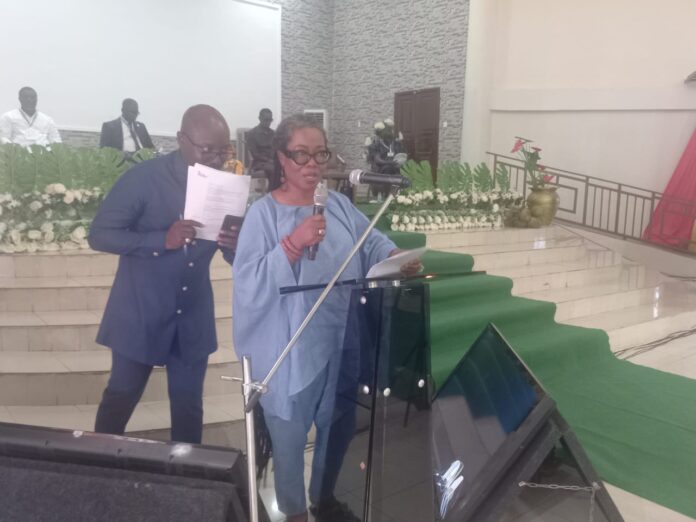
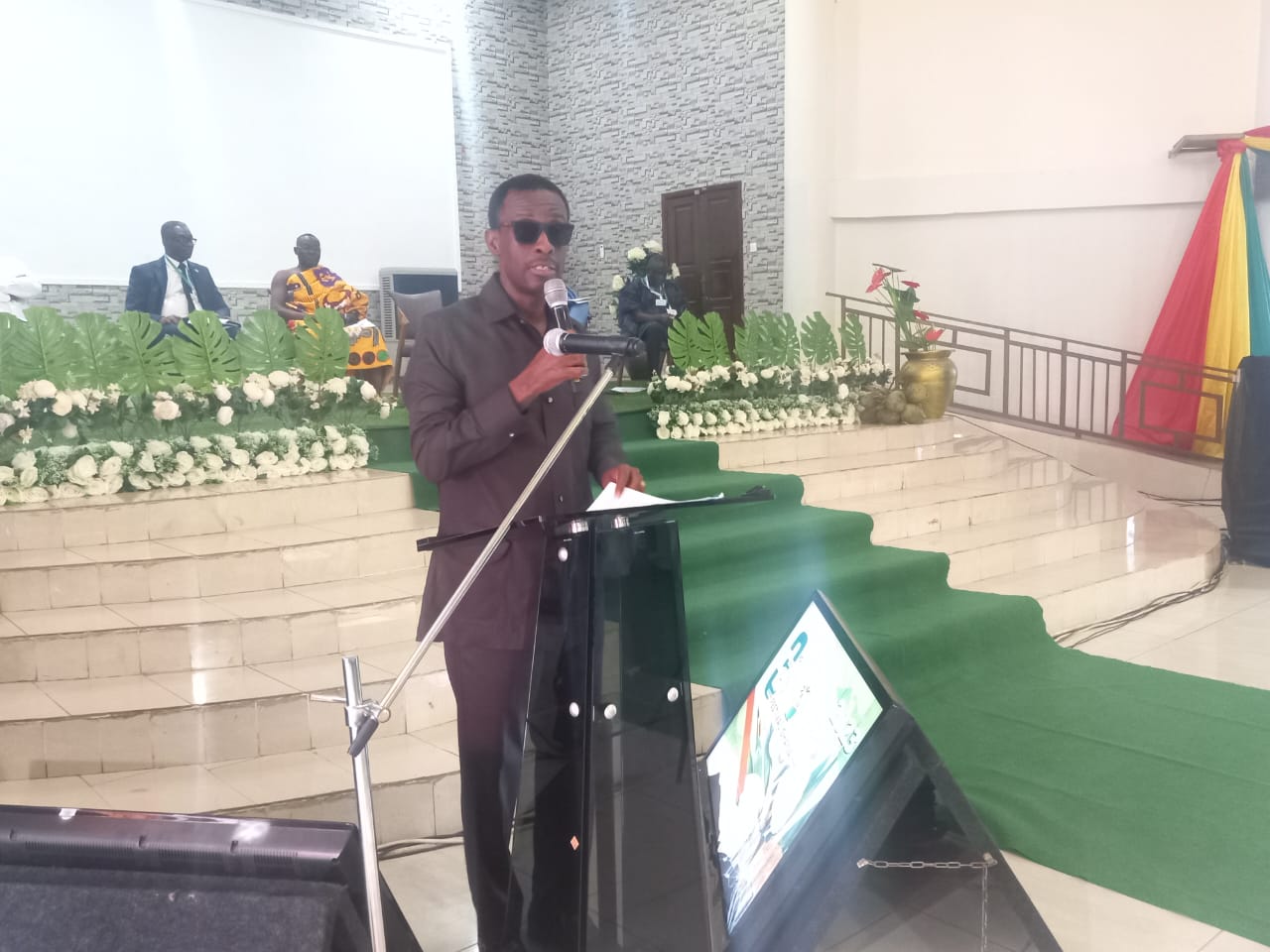
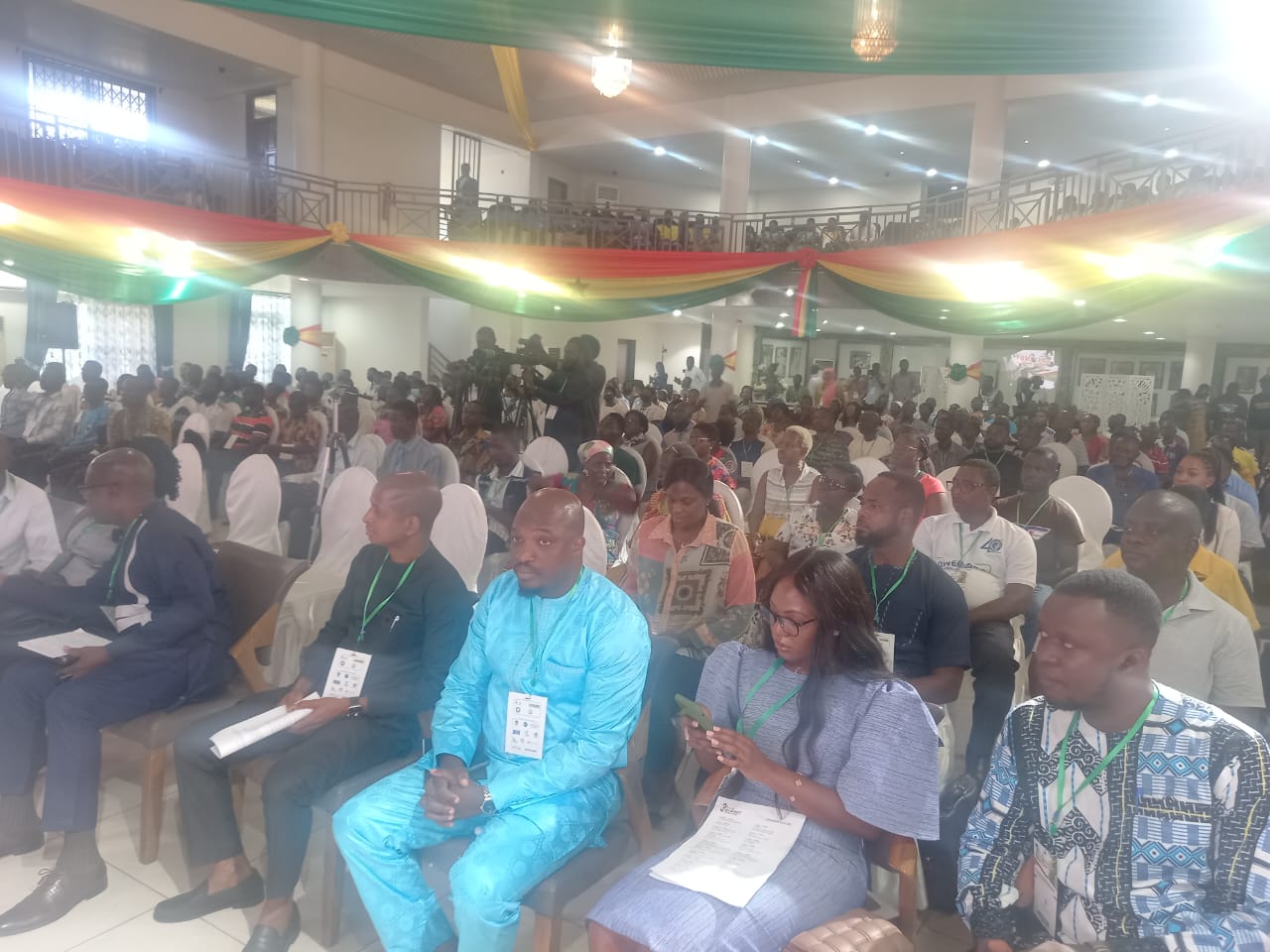
The third edition of the International Coconut Festival has been held in Takoradi to create a platform for key actors in the coconut production value chain to interact and deliberate on sustainable means to grow and expand the sector. 

The three-day event, jointly organized by the African Coconut Group (ACG), Ghana Export Promotion Authority (GEPA), Tree Crops Development Authority (TCDA) and the Western Regional Coordinating Council (WRCC). 

It was on the theme: “Invest in Ghana’s Coconut Sector for an Inclusive Economic Transformation and Improved Climate and Social Resilience.” 

Many activities were held as part of the event including an exhibition session where those in the coconut production value chain displayed their coconut products and derivatives to their prospective clients. 

Aside from the exhibition, participants also attended a policy symposium that brought together stakeholders, policymakers, investors, and experts to examine crucial enabling environments in reshaping the coconut industry’s competitiveness. 

They also deliberated on how to invest in Ghana’s coconut sector to transform the economy through exports for increased foreign exchange. 

Women and youth in the coconut production value chain were also mentored on strategies to promote youth businesses and entrepreneurship in the coconut industry. 

Mr Kwabena Okyere Darko-Mensah, Western Regional Minister, speaking at the opening of the festival said the event provided a platform for participants to display the coconut sector’s potential to both local and international investors to help attract more investments for the growth of the industry. 

He noted that the coconut sector contributed to the country’s economic growth, saying; Western Region produced approximately 80 per cent of Ghana’s total coconut exports, generating a minimum of $400 million annually in revenues. 

He said: “I recall that the non-traditional export figures for last year highlighted the coconut sector’s substantial economic contribution. Notably, earnings from both fresh and processed coconuts reached US$6.3 million and US$6 million respectively. 

“Ghana’s export of desiccated coconut also emerged as a standout performer. Exports in this category rose to US$21.9M in 2021, a significant increment from US$6.3M in 2020, and US$3.8M in 2019, positioning the country to 9th position in global coconut exports”. 

This, Mr Darko-Mensah indicated that, the Ghanaian coconut sector over the past few years had proven to be one of the key commodities that would transform Ghana’s exports agenda and contribute significantly to the achievement of the national export development strategy, and non-traditional export revenue target of $25.3 billion in the next five years. 

He, therefore, called on industry players to invest in the coconut sector to help reposition Ghana as a premier hub for coconuts globally. 

Mr Bryan Acheampong, Minister for Food and Agriculture, in a speech read on his behalf said the theme for the festival aligned with government’s vision to diversify and grow the economy by modernizing agriculture and accelerating industrialization, as well as prioritizing climate resilience and mitigation. 

According to him, to realize the potential of Ghana’s coconut industry, the government was in the process of procuring a $200 million IDA-World Bank facility for a six-year Tree Crop Diversification Project. 

He said the project was aimed at developing four tree crop commodities, namely; cocoa, cashew, rubber, and coconut. 

Mr Acheampong said the project would address systemic challenges in the tree crop industry for an inclusive and sustainable economic transformation. 

Dr Afua Asabea Asare, the Chief Executive Officer of GEPA, said Ghana was currently ranked 12th in world production of coconut and the number one producer in Africa. 

She indicated that the vision of GEPA’s coconut intervention programme since 2017 was to make Ghana at least fifth globally in the production and export of coconut products. 

“It is in this light that we launched the coconut revitalization intervention six years ago with a clear objective of reviving the then ailing coconut industry to improve upon the supply capacity of the value chain having realized the growing demand trend for coconut globally,” she added. 

Mr William A. Quaittoo, Acting Chief Executive Officer (CEO) of TCDA, said the Authority was committed to driving research and innovation to promote investment and scale-up development of improved coconut varieties and modern farming techniques to boost productivity to attract huge investments. 

Mr Davies Narh Korboe, Group Chair of ACG, said this year’s festival sought to boost investments into the coconut sector and scale-up local partnership and business networks for sustainable economic gains, while facilitating local and international markets linkages within the coconut production value chain. 

Alan Kyerematen leaves the NPP effective immediately [full speech]

0

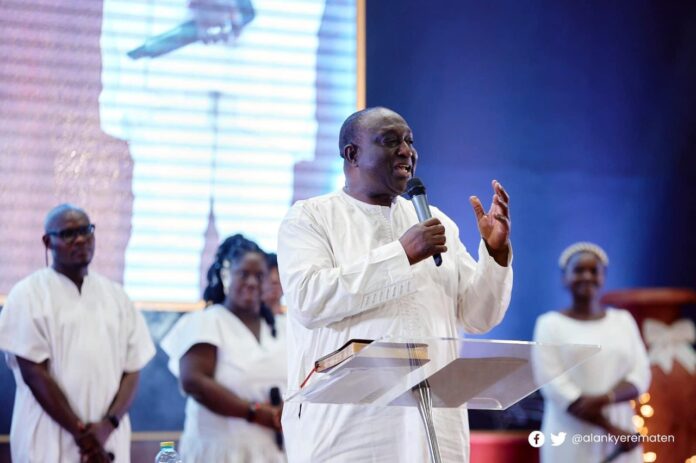
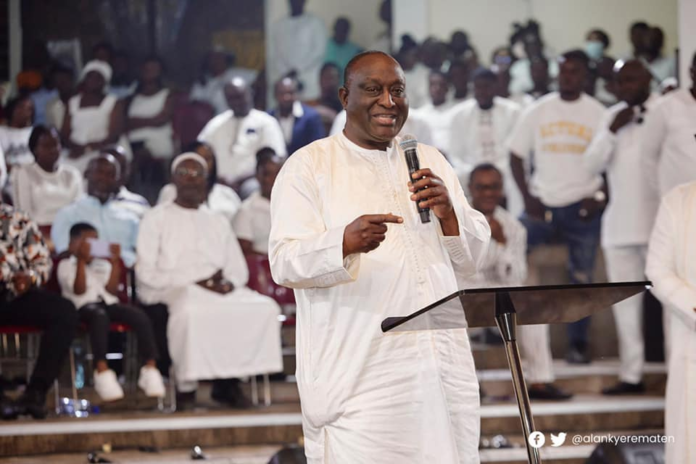
SPEECH BY HON. ALAN JOHN KWADWO KYEREMATEN PRESIDENTIAL CANDIDATE FOR THE DECEMBER 2024 GENERAL ELECTIONS AT MOVENPICK AMBASSADOR HOTEL, ACCRA ON MONDAY, 25TH SEPT. 2023

● FELLOW COUNTRYMEN & WOMEN;
● FRIENDS FROM THE MEDIA;
● DISTINGUISHED INVITED GUESTS;
● LADIES AND GENTLEMEN.

Let me start first by expressing my profound gratitude to you all for accepting my invitation to attend this Press Conference. I give thanks to the Almighty God for His manifold blessings on my life and for His grace and mercy.

I want to use this opportunity to convey my sincere gratitude to each and every one of you, especially the members of the New Patriotic Party (NPP) who have supported me no matter what and who have showed unflinching trust in the prospect of a prosperous future for Ghana. Your devotion to the ideas of growth, togetherness, and prosperity as well as your faith in the potential of our country have been nothing short of inspirational.

It is crucial for me to set the stage right away by outlining the historical background of the events that have led to today’s press conference.

In 1992, when the New Patriotic Party (NPP) was established, a group of young dynamic Business Executives and Professionals came together to establish the Young Executives Forum (YEF) under my Chairmanship. The YEF since 1992, became the financial backbone of the Party and provided significant financial resources to support the Party in all its endeavours, including the seed fund for the purchase of the Party’s first national headquarters building.

As Chairman of the YEF, I had the privilege of serving as a member of the National Executive Committee and the National Council of the Party. In addition to this, I served as a leading member of various Committees of the Party.

In 1996, after the unsuccessful attempt by the first flagbearer of the Party, Professor Albert Adu Boahen to win the general elections, the membership of the Young Executives Forum nominated me to contest the 1996 Presidential Primaries, alongside leading personalities in the Party such as Professor Adu Boahen, Mr. J. A. Kufour, Dr. Dsane-Selby, Dr. Kwame Sarfo Adu, Mr. J.H. Mensah and Dr. Jones Ofori-Attah. I was prevailed upon by some senior members of the Party, in particular, Mr. Akenten Appiah Menka and Mr. Stephen Krakue, both of blessed memory, to sacrifice the opportunity to contest for the leadership of the Party, and rather support my senior colleague aspirants.

From 1996 to 2000, I played a leading role in supporting the bid of the then Candidate J. A. Kufour to win the general elections, and become President of the Republic in 2001.

After refusing appointment as a Cabinet Minister in the aftermath of the elections, the President persuaded me to become NPP’s first Ambassador to the United States, a position I served with distinction. I was subsequently appointed in 2003 as Minister for Trade and Industry and Presidential Special Initiatives, to implement a new economic paradigm which I had introduced in 2001, on the assumption of office by President Kufour. Between 2003 and 2007, I led the Government’s programme for enhancing private sector development and ushering a Golden Age of Business in Ghana.

In 2007, I joined a distinguished group of seventeen (17) Presidential aspirants to contest in the presidential primaries of NPP. In that election, under very strange circumstances, the electoral process was truncated on the day of the election, on account of accusations levelled against me, of influencing the course of the elections. This strategy was designed to create disfavour against me, in an attempt to diminish my popularity and the massive support I enjoyed amongst the grassroot activists of the Party.

In spite of this unfortunate occurrence however, when the votes were finally counted, Nana Addo Dankwa Akufo-Addo came first, and I was the runner-up. According to the rules of the electoral process, the two of us were programmed for a second run ballot. It was in response to this development, that I made my landmark declaration that, to avoid a further deterioration of peace in an already divided Party, I would make the supreme political sacrifice not to contest the run-off but rather support Nana Addo Dankwa Akufo-Addo to contest as the flagbearer for NPP in the 2008 general elections.

Despite the sacrifice that I made to unite the Party as referred to above, there were very serious post-primary attacks on my supporters all over the country, and an open show of hostility. Some of my supporters were victims of brutalities and continue to bear the scars of that treatment. I made several representations to the then leadership of the Party, drawing their attention to the rancorous and divisive behaviour of some elements in the Party.

Regrettably, however, my representations went unheeded. As a consequence, I gave notice of my decision to resign from the Party, in protest against the blatant alienation of my supporters, orchestrated by elements aligned to the leadership of the Party.

The protests and reactions from the rank and file of the Party at that time from all over the country, compelled the then Chairman of the Party to constitute a Reconciliation Committee chaired by the then immediate past Chairman of the Party, Ambassador Samuel Odoi Sykes. The Committee upheld all my submissions and prevailed upon me to rescind my decision to resign, which I did, with the firm promise to address all the contentious issues I had raised in my notice of resignation.

As a loyal member of the Party, I accepted the plea of the party leadership and joined the campaign team of then Candidate Akufo-Addo all over the country, providing exceptional support to his campaign.

Unfortunately, however, all the promises made by the Party leadership were never fulfilled, and indeed the divisive and hostile attacks on my person and my supporters remained for several years thereafter, and have continued to date.

It is common knowledge that any Party member who is associated directly or indirectly with Alan, is treated with disdain and considered an outcast.

Fellow Countrymen and Women,
I have endured all this resentment, and maintained my integrity within the Party throughout the past fifteen years.

On assumption of office of the NPP in 2017, under the leadership of His Excellency Nana Addo Dankwa Akufo-Addo, I was appointed as Minister for Trade and Industry in the first term of the NPP administration, and was retained in the same position by the President in his second term.
During the past six years, I led the introduction and implementation of some of the most innovative and successful programmes of the NPP, including the establishment of the One District One Factory (1D1F) initiative, the establishment of the African Continental Free Trade Area (AfCFTA) with the Headquarters of the Secretariat in Ghana, the development of new strategic anchor industries including the Automobile Assembly and Component Manufacturing, the establishment of Business Resource Centres and Technology Solution Centers all over the country, to provide comprehensive business development solutions to MSMEs, the introduction of the new Integrated Customs Management System (UNIPASS) which has significantly enhanced mobilization of government revenue, the establishment of Industrial Parks including the flagship Greater Kumasi Industrial City and Special Economic Zone, the development of a National Export Strategy with a target of achieving export revenue of $25 Billion by 2030, and last but not the least, the introduction of Business Regulatory Reforms and a Public Private Dialogue mechanism, to facilitate Government’s interaction with the private sector. In spite of the limited budget put at my disposal during my tenure as Cabinet Minister, I was able to deliver significant achievements for the Government and my country.

Fellow Countrymen and Women,
I believe I have served my country well and intend to continue to do so. On the 5th of January, 2023, I resigned honourably from my position as Cabinet Minister and declared my intention in a national broadcast to contest the Presidential primaries of NPP.

On the 26th of August this year, I participated in the Super Delegates Conference to shortlist the ten aspirants who had filed their nominations to contest in the primaries. I was selected as one of the five Candidates to contest for the main Presidential primaries scheduled for 4th November 2023.

Fellow Countrymen and Women,
After carefully analysing the results of the Super Delegates Conference, I issued a Press Statement on the 6th of September 2023, declaring my intention to exit the process leading to the Presidential primaries. In the run up to the Super Delegates Conference, the National Council of the Party made some of the most controversial and contentious decisions in the history of the Party. They rejected a petition signed by nine out of the ten aspirants, requesting for the Super Delegates Conference to be held in one location, as well as allowing each Delegate to the Conference to nominate five persons, instead of one, in line with the provisions in the Party’s Constitution.

In my humble and considered opinion, the decisions of the National Council were both unmeritorious and unconstitutional.

To make matters worse, it was absolutely clear as indicated in my Press Statement of September 6th this year that, the Super Delegates Conference was strategically and tactically skewed in favour of one particular aspirant. The level of intimidation and monetization that characterized the Conference is unprecedented in the history of internal elections of our Party. The subsequent decisions made by the National Council to vary the rules of procedure for the run-off, arising from the Super Delegates Conference, in direct contravention of both the Constitution of the Party and the Guidelines issued by the Presidential Elections Committee, will go down in history as a travesty of justice, and a demonstration of high handedness by the highest decision-making body of the Party, second only to the Annual Delegates Conference.

Fellow Countrymen and Women,
I joined the New Patriotic Party at the very beginning of its establishment as a Founding Member, believing in its core values and the long-standing traditions of its antecedents, predicated on fairness, equity, probity, accountability, and transparency. I have devoted the best part of my professional career to serving the Party, and I still believe in the vision of the founding fathers of the Party. However, the NPP as it exists now has very little resemblance to the Party that I joined in 1992 and helped to nurture. The Party has been hijacked by a selected group of Party leaders and elders, government appointees, “behind the curtain power brokers” and some unscrupulous Party apparatchiks.

It was my fervent wish to use the vehicle of the Party to bring my God given talents, experience, and knowledge acquired both locally and internationally over a period of 46 years, to serve our dear nation, Ghana at the highest level of executive authority.

It is abundantly clear to me, that my services and contributions to the Party are not appreciated, and that my continuous stay in the Party will create further tension and division, which is an exact replay of circumstances that led to my decision to resign from the Party in 2008.

Fellow Countrymen and Women,
Under the circumstances and given the context provided, I wish to use this platform to announce that I am honourably resigning with immediate effect from the New Patriotic Party to contest for the high office of the President of the Republic of Ghana in the 2024 General Elections, as an Independent Presidential Candidate.

To actualise this goal, I will establish and lead a new MOVEMENT FOR CHANGE in Ghana. The brand logo for the MOVEMENT is the Monarch Butterfly, which politically symbolizes change and transformation, hope, and positivity. It also communicates strength, endurance, spirituality, and trust, which are key traits that I cherish as a Political Leader. In Akan, it is known as Afrafranto. The brand motto of the MOVEMENT is “Ghana Will Rise Again,” which symbolizes hope for the future of Ghana.

The new Movement will be led and powered by the youth of Ghana. Out of the over 17 million registered voters in the 2020 general election, the youth aged 18-35, years constituted over 9.4 million voters representing 55% (Fifty five percent) of the total voters.

It is acknowledged without doubt, that the youth represent the future of our country, and yet they constitute the most vulnerable section of our society. From available statistics, 85% (eighty-five percent) of all prison inmates in Ghana are aged between 12 and 35 years. This is profoundly alarming.

Fellow Countrymen and Women,
It is also worth noting that every year over 300,000 (three hundred thousand) graduates from tertiary institutions in Ghana, excluding those from secondary institutions, enter the job market with little or no hope of finding a job. Clearly, public sector employment is not an option, with an already over-bloated public service. This phenomenon of pervasive employment crisis, is gradually becoming a national security threat, as evidenced by the recent “Occupy Julorbi House” demonstrations. The initial reaction of the Police in manhandling some protestors is not the solution to the problem. What Ghana needs now is CHANGE, which will provide long-lasting solutions to the challenges confronting our country.

Fellow Countrymen and Women,
I am using this platform to introduce myself to you, the good people of Ghana and humbly seek your support to become the next President of the Republic of Ghana. I believe, with unwavering conviction, that I am the only leader who, with unmatched integrity, can guarantee the economic and industrial transformation of Ghana, the restoration of confidence in political leadership, and the unification of an increasingly divided nation. My unique selling proposition as a leader is VISION, COMPETENCE, INTEGRITY, and ACTION.

The four dominant themes for the change agenda that will be pursued by the MOVEMENT are as follows:
1. Change the political status quo by moving Ghana beyond the duopoly of the two main political parties in Ghana; the NPP and NDC. This will break divisive partisanship in governance in Ghana, and bring an end to the “winner takes all” political syndrome. In addition, there is the need to promote reforms in the internal democratic processes and procedures of all political parties, such as introducing ‘One Man One Vote’ (OMOV) to ensure inclusiveness, and reduce the effect of monetization in politics. The principles underpinning national elections must be reflected in the electoral process of political parties in Ghana.

2. Promote the establishment of a Government of National Unity, which will include people from all walks of life, irrespective of their political, religious, and ethnic affiliations: rich or poor, abled-bodied or physically challenged, young or old, women and men. This will allow for effective and inclusive participatory governance. The MOVEMENT will lead to the formation of a Government of the people, by the people, and for the people.

3. Build consensus on a National Development Agenda which will introduce a new paradigm shift that moves Ghana from growth and stability to economic transformation. This paradigm shift will be driven by my Great Transformational Plan (GTP) for Ghana, which puts the private sector and the business community at the center of our national development efforts.

4. Inspire behavioral and attitudinal change in the people of Ghana. This will include but not be limited to the following.
a. Enforcement of Discipline: We as a people should appreciate the need for maintaining discipline in all spheres of our national lives, including changing our attitude to work.
b. A War against Corruption: Corruption, particularly from the public purse, denies our country the benefit of utilizing its tax revenue and other resources for the development of our country. All sections of Ghanaian society should wage a vigorous war on corruption, through a combination of legal and institutional reforms, the application of technology including artificial intelligence, blockchain technology and data analytics, as well as maintaining societal pressure against corruption, and leading by example. If elected as the President of the Republic, I will sign a “Citizens Contract” with the people of Ghana, committing to wage a relentless war against corruption.

c. Arrogance of Power: As I have stated on previous occasions, the arrogance of power has been a major obstruction to progress in our country. People in positions of authority must understand that leadership is an opportunity to serve the people, and not to lord over them. In servant leadership, humility is an asset and not a weakness.

d. Passion for Excellence: As a country, we must celebrate competence and excellence and not mediocrity. Advancement in the public sector in particular, must be based on meritocracy and not patronage and protocol. Putting square pegs in round holes has been the biggest challenge for service delivery at every level in our governance structure. A significant shift in this regard, will allow the best talents in our country, particularly the youth, to be deployed to achieve optimum performance in various institutions and organizations.

e. Solution Based Thinking and a Focus on Execution: As a people, we must focus more on ‘getting things done’ and finding solutions to problems, rather than spending time on excessive and needles debates.

f. Making Laws Work in Ghana: The lack of compliance and disrespect for laws, rules, and regulations in Ghana, is a major stumbling block for national development. As a people, we must commit ourselves to the sanctity and rule of law, to ensure peace, law, and order in our society.

g. Patriotism: The pride of being Ghanaian and promoting good citizenship, as well as patronizing goods made in Ghana, is a development imperative.

Fellow Country Men and Women,
Ghana is at a crossroads and the dynamics of our time requires a transformational leader. I believe that I am the leader for this time. I have already put forward for the consideration of our country, the Great Transformational Plan (GTP) which will significantly deal with poverty, and bring prosperity to our nation.

The GTP is anchored on Ten Pillars, namely;
1. Building a strong macroeconomic environment which will be characterized by a stable currency, low inflation, sustainable debt levels, revenue optimization, tight expenditure control, low competitive interest rates, strong external reserves, backed by high levels of liquidity to support the financial sector.
2. Introduce a New Agricultural Revolution (NAR) for Ghana, which will first take advantage of both local, regional and global markets; Secondly, be driven by technology, innovation and cutting-edge research; Thirdly, optimize value for farmers through value chains; and fourthly promote economies of scale through large scale commercial farming.
3. Promoting Industrial Transformation through value addition and the establishment of strategic anchor industries to diversify the Ghanaian economy. This will also involve the establishment of Industrial Parks and Special Economic Zones, as well as the aggressive promotion of Small and Medium Scale enterprise development.
4. Accelerated Infrastructure Development: Promoting Private sector financing for public infrastructure such as Roads, Railways, Ports and Harbours, Water Supply Systems, Public Housing etc. This will reduce Government’s exposure to the financing of such infrastructure projects.
5. Digital Mainstreaming: Mainstreaming digitalization in all Government and Public sector activities, and bringing digital technologies to the doorstep of the ordinary Ghanaian.
6. Energy Security and Diversification: placing greater emphasis on the development of renewable sources of energy, including but not limited to nuclear and hydrogen energy. This will require fast-tracking the execution of Government’s energy transition strategy.
7. Health: Expanding Health infrastructure and services by enhancing private sector participation in health service delivery across the country, as well improving the viability of the National Health Insurance Scheme.
8. Education: Undertaking a comprehensive review of existing reforms in the educational sector, particularly the Free SHS programme to ensure optimum efficiency and effectiveness in its implementation. Government will pay special attention to institutionalizing the link between industry, academia and educational institutions, and reinforce the importance of apprenticeship and internship. Considering the critical importance of early childhood development, a major thrust of Government’s new interventions in the educational sector, will be to improve basic education in all its form and nature, including but not limited to physical infrastructure, learning facilities, teacher training and curriculum development.
9. Tourism: Encouraging private sector investments in the development of world class tourism infrastructure, and also taking steps to leverage the tourism potential in each district and region of Ghana. In addition, my Government will facilitate air travel for tourists coming into the country by providing free visas including Visas on arrival. Finally, the development of the creative industry in Ghana will be the backbone of the new reforms in the tourism industry. This will include but not be limited to impactful reforms in the following creative industries; Film, Dance, Theatre, Music, Literature and Multimedia Arts.
10. Natural Resource Management: Developing and implementing a comprehensive programme for the management of Ghana’s Natural resources. This will include but not be limited to Oil & Gas; Solid Minerals; Water & Marine resources; and Land and Forest resources. As a target, there shall be no export of raw materials from Ghana in any form or nature, without a minimum of 60% value addition by the year 2030. This will usher in Ghana’s decade of industrial transformation, spanning the year 2025 to 2035.
11. Decarbonization and Climate Resilience: Scaling up Government’s current efforts at reducing Ghana’s carbon footprints and facilitating access to the carbon trading markets, as well as establishing mechanisms to strengthen the country’s preparedness against the negative effects of climate change and climate variability.
12. National Security and Defence Optimization: Deploying resources to strengthen National Security and Defence Mechanisms and Infrastructure, to deal substantively with emerging security threats and challenges, particularly in the Sahalian region.
13. Downsizing Government: Overhauling the architecture of the public service in Ghana by consolidating some existing Ministries, Departments, and Agencies. This will lead to a lean Government structure that will ensure operational efficiency and effectiveness in the delivery of Government services, and also reduce cost to the National Budget.
14. Strategic Engagement with the International Community: Restructuring Ghana’s diplomatic and economic relations with the International Community, based on the principle of ‘positive neutrality’, with a focus on promoting the strategic interests of Ghana, as well as our shared commitment to humanity and the preservation of peace around the world.
15. Sports: Investing in world class new generation sports facilities in selected competitive sporting disciplines. In this regard, Government will encourage the participation of the private sector in the development of sports infrastructure around the country, including sports academies.
The Great Transformational Plan will provide “Jobs for the People, Cash for the People.”

CONCLUSION
Fellow Country Men and Women,
The concept of an Independent Candidate becoming the President of the Republic of Ghana though novel, will be the most innovative and revolutionary development in Ghana’s political history. It will indeed be a watershed development in Ghana, although similar examples of this model have been practiced successfully in Benin, in Africa, and other political jurisdictions.

In a country like Ghana, that is currently embroiled in divisive political turmoil, an Independent Candidate who becomes President, will be a bipartisan and honest broker amongst different political parties, and will bring healing and reconciliation to our body politic.

Ministers and other key Government officials will be appointed from all Parties, and shall also include individuals who are apolitical but have a demonstrable and proven track record of performance, in their field of specialization.

Fellow Country Men and Women
What Ghana needs now is a new leader and not a new political party. It is worth noting that the great nations of this world were built on the vision of great leaders and not on the back of political parties. There are multiple examples of such great leaders in political history around the world, including George Washington and Abraham Lincoln of the United States of America, Winston Churchill of Great Britain, Mahatma Gandhi of India, Lee Kuan Yew of Singapore, Deng Xiaoping of China, and Dr. Kwame Nkrumah of Ghana.

In the current political dispensation of Ghana under an Executive Presidency, the President of the Republic represents only one constituency which is Ghana, while different political parties can contest for Parliamentary seats on the ticket of their political parties. Electing an Independent Candidate as President, leading a Government of National Unity, will not only bring harmony to the legislature but also facilitate the approval and execution of Government programmes and projects. Who better can moderate and lead such a political divide than an Independent Candidate, who has no direct ties with any existing political parties!!

Fellow Country Men and Women,
I wish to use this opportunity to assure the rank and file of the New Patriotic Party that I still cherish my relationship with you, and I am committed to the ideals of the founding fathers of the Party. My decision to contest as an Independent Candidate will not destroy the Party, but rather provide the Party an opportunity to participate in a Government of National Unity in the future, and avoid the risk of going into opposition with no dividends, in what arguably will be a difficult general election in 2024. You can vote for your preferred choice of NPP Parliamentary Candidate and vote for Alan John Kwadwo Kyerematen in the Presidential elections in December 2024, to become the sixth President of the fourth Republic of Ghana.

To the rank and file and sympathizers of the National Democratic Congress (NDC) and to my friends in leadership positions in the Party, please note that if elected as President, I will also be President for NDC. You will be better off avoiding the risk of remaining in opposition if you do not win the 2024 General Election, and rather participate in the Government of National Unity by voting for Alan Kyerematen as President in December 2024.

To the rank and file and my friends in the smaller Parties and other political organizations, please let us join hands to unite Ghana for our collective benefit.

Fellow Country Men and Women,
I will in the coming weeks conduct a formal launch of my campaign, and provide further details of my Great Transformational Plan. Subsequent to the launch event and in the coming months, you will see me in our communities around the country, in your lecture halls, at our music concerts, in our churches, in our mosques, on your streets, at the market centers, at the fishing ports, at our trotro and taxi stations, on your farms and in every corner of our society. For I am determined to hear your voice in this MOVEMENT for CHANGE.

I invite every Ghanaian citizen to join me in this Movement. In particular for the youth of Ghana, this is your chance to take control of power and authority in this country and shape the course of your own future.

Together, we will win, and Ghana will rise again!!

Fellow Country Men and Women,
It will be an honour and privilege to serve you as the next President of the Republic of Ghana.

God bless our homeland Ghana and make our nation great and strong.

I thank you for your kind attention.

Alan leaves the NPP once more in order to run for office as an independent in 2024.

0

Alan Kyerematen, a well-known member of the New Patriotic Party (NPP) and the former minister for trade and industry, has unexpectedly decided to run for office as an independent in the impending 2024 elections.

Given that Kyerematen has been a devoted supporter of the NPP for a long time, his choice has shocked the political establishment.

Political veteran Kyerematen is well known for his work with the NPP and his participation in numerous government offices.

However, at a press conference held in Accra on Monday, September 25, Mr Kyerematen noted that “it is abundantly clear to me, that my services and contributions to the Party are not appreciated, and that my continuous stay in the Party will create further tension and division, which is an exact replay of circumstances that led to my decision to resign from the Party in 2008.

“Under the circumstances and given the context provided, I wish to use this platform to announce that I am honourably resigning with immediate effect from the New Patriotic Party to contest for the high office of the President of the Republic of Ghana in the 2024 General Elections, as an Independent Presidential Candidate.”

Kyerematen emphasized his commitment to addressing the pressing issues facing the country, including economic development, job creation, and social welfare. He stated that his decision to run as an independent candidate was driven by his belief that this approach would enable him to better serve the interests of the Ghanaian people.

His candidacy as an independent presents a unique challenge to the established political order in Ghana, with the potential to reshape the political landscape.

This is the second time Mr. Kyerematen has quit from the NPP.

Feeling bitter about the loss in the 2007 presidential primary and what he described subsequently as being sidelined, Alan, in 2008 resigned from the NPP in a similar move but was politically coerced and later rejoined the party.

Kyerematen’s decision to break away from the NPP again and contest the 2024 elections as an independent candidate marks a significant moment in Ghanaian politics.

Bank of Ghana Monetary Policy Committee maintains policy rate at 30.0 per cent

0

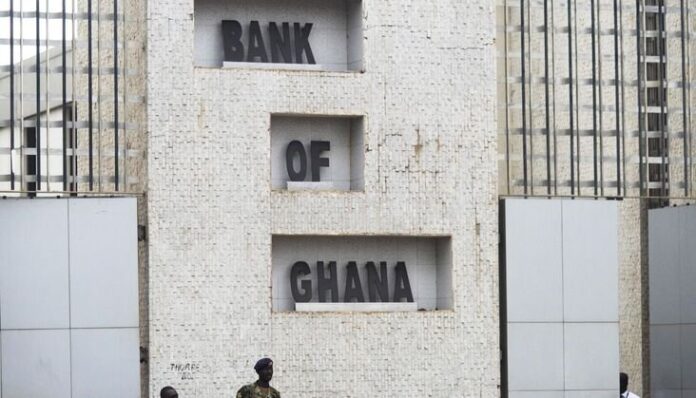
The Monetary Policy Committee (MPC) of the Bank of Ghana on Monday maintained the policy rate at 30.0 per cent, citing lower inflation, a stable exchange rate and relatively strong economic growth.

Dr Ernest Addison, the Governor of the Central Bank, said the Committee observed the overall improving macroeconomic conditions with relatively strong economic growth and a drop-in inflation in August.

The Governor was speaking at a press briefing after the 114th MPC meetings in Accra during which the Committee deliberated on global and domestic macroeconomic developments, including the implementation of the IMF-supported Extended Credit Facility programme for the first six months of 2023 and assessed risks to the inflation outlook.

He said these developments provided evidence that the policy mix under the three-year IMF Extended Credit Facility was beginning to yield results.

The Governor said economic activity was rebounding strongly, the exchange rate was stabilising, inflation was declining, and the level of foreign exchange reserves had improved.

“Sustained improvement in these indicators should result in the restoration of real incomes and purchasing power,” he added.

He said the strong growth outturn observed in the first half of 2023 was expected to continue in the third quarter as indicated by the July 2023 update of the Bank’s CIEA.

Also, he said the country’s PMI lent support to the growth outlook, reflecting improving business conditions.

The Governor said the results from the confidence surveys so far also indicated continued improvement in business and consumer sentiments influenced by the relative stability in the Ghana cedi, and more recently the resumption of the disinflation process.

“The pick-up in confidence is expected to continue for the rest of the year in line with improving macroeconomic conditions,” he said.

Dr Addison said on the implementation of fiscal policy, while policies remained consistent with the IMF- supported programme thus far, challenges associated with revenue mobilization persist and would require additional efforts to safeguard the revenue-led fiscal adjustment programme.

He said the country’s external sector position had continued to improve significantly in the first eight months of the year, supported by a current account surplus, reflecting higher gold export receipts, import compression, and lower outflows from the services and income accounts.

He said the lower balance of payments deficit, the domestic gold purchase programme, as well as inflows from the mining sector and the liquidation of some short-term external liabilities contributed to rebuilding the country’s reserve buffers.

The Governor said in the last quarter of the year, reserve accumulation would be further bolstered by the expected inflows from the cocoa syndicated loan, the second tranche of the IMF ECF programme, and other multilateral inflows.

He said on inflation dynamics, the continued maintenance of a tight monetary policy stance and relative exchange rate stability have contributed significantly to the disinflation process observed in the year thus far.

Headline inflation has declined by a cumulative 14.0 per cent since the peak of 54.1 per cent recorded in December 2022 with non-food inflation has also declined sharply by close to 20 per cent, broadly reflecting the effectiveness of monetary policy.

He said all core inflation measures monitored by the central bank were trending downwards, indicating continued easing of underlying inflationary pressures and in addition, one-year ahead survey-based inflation expectations seem well anchored.

The Governor said while the disinflation process had resumed, which should result in a gradual return towards the target band over the medium-term barring unanticipated shocks, rising international crude oil prices and adjustments to utility tariffs remain a risk to the inflation outlook which would have to be managed through monetary policy vigilance.

The Committee also noted the moderation in global economic activity, arising from the high inflation, tighter financing conditions, weak demand weighing down on manufacturing output, as well as the moderation in China’s recovery after the sharp rebound in the first quarter.

It said the slowdown in global growth momentum is however concentrated in advanced economies with the Euro area a key downside risk, but emerging market and developing economies are expected to post some strong growth at 4.0 per cent in 2023.

The Committee said global inflation was expected to remain above central bank targets for an extended period due to strong labour markets and pass-through of energy price shocks.

The Committee indicated that while the expectation is for continued disinflation, it was ready to respond appropriately should inflation deviate from these broad expectations.

STMA launches two new digital platforms to shore up revenues

0

The Sekondi Takoradi Metropolitan Assembly (STMA) has introduced two new digital platforms to make revenue collection seamless for both businesses and the assembly.

The intervention, under the urban Governance project of the Twin Cities in Sustainable Partnership Project (TCSPP), would not only curb the human interface, revenue leakages, and unreliable data on clients, but also contribute significantly to the overall realization of projected Internally Generated Funds (IGF) to commiserate with the development aspirations of the assembly.

The Two tools with USSD Code: *422*500# and *222*2115# would allow for easy payment by any business owner by following the “PROMPT” initiated by the process.

Mr. John Laste, the Twin Cities in Sustainable Partnership Project Visibility Officer at a media briefing said the deficit in the assembly’s IGF over the years had become a matter of concern which called for urgent steps to address it.

“This Municipal revenue campaign would therefore build the capacity of authorities and right holders, improve accountability and good governance”, he added.

He said the Digital platforms would also help in building credible database of businesses within the Metropolis.

“We are also developing an E-governance Policy to guide the operations of the platform”, he said.

Mr. Fred Nyantakyi, the Senior Budget Analyst of the Assembly said, the digital platforms would complement existing mode of payment, including the bank and cheques transfers.

He prayed that businesses would actively sign on to the platforms to promote more accountability in the collection of revenue, block leakages and advance governance.