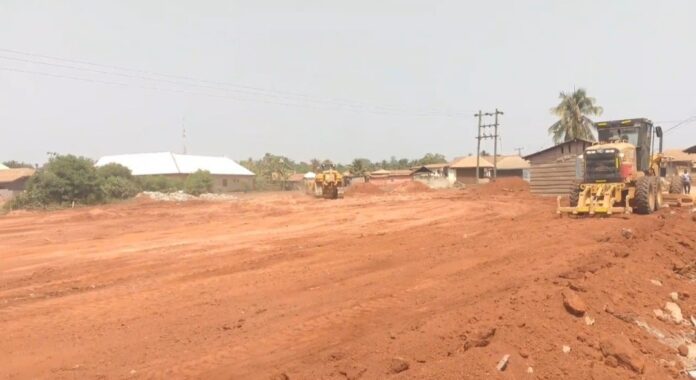
Aggass Company Limited, a sub-contractor under the Ahafo North Mine of Newmont Ghana Gold Limited, has begun the construction of a GH¢700,000 modern market square for market women and petty traders at Ntotroso, a mining community in the Asutifi North District of the Ahafo Region.
During an inspection of the project, Mr Yakubu Garson, Chief Executive Officer of Aggass Company Limited, told the Ghana News Agency (GNA) that the initiative followed an appeal by the chiefs and residents of the community.
He said work on the project commenced after Nana Barima Twereku Ampem III, Paramount Chief of the Ntotroso Traditional Area, approached the company for assistance. According to him, the support forms part of Aggass Company Limited’s Corporate Social Responsibility (CSR) efforts to give back to the host communities in which it operates.
Mr Bright Agyenim Boateng, Assembly Member for the Apentuase Electoral Area, expressed appreciation to the company for the intervention.
He stated that the old market, which was located along the roadside, posed safety risks to market women, traders, and buyers.
He noted that the new market, when completed, would help open up the area, stimulate socio-economic growth and development, and improve livelihoods.
He also appealed to Newmont to award additional contracts to the company in recognition of its commitment to community development.
The United Nations Industrial Development Organisation (UNIDO) has urged African countries to accelerate industrialisation and value addition to realise the full benefits of the African Continental Free Trade Area (AfCFTA).
The Organisation warned that AfCFTA would fall short of its promise if trade integration was not matched by strong productive capacity.
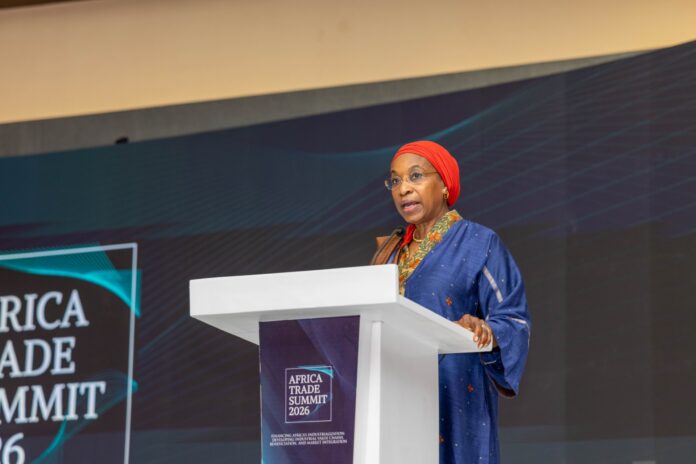
Madam Fatou Haidara, Deputy Director General of UNIDO, made the call at the opening of the 2026 Africa Trade Summit, underway in Accra.
She said Africa must move decisively from exporting raw commodities to producing, processing and trading value-added goods within the continent.
The two-day summit has brought together policymakers, business leaders, investors and development partners to advance intra-African trade and industrialisation.
Madam Haidara said “AfCFTA should not be seen only as a trade agreement; it is also an industrial agreement,” adding that Africa’s competitiveness depended on its ability to produce at scale, process locally and trade regionally.
She said although Africa had a clear vision and abundant natural and human resources, progress had been constrained by weak execution, fragmented national approaches and limited value retention from trade.
Madam Haidara said much of Africa’s trade remained commodity-based, while many industrial ambitions struggled to move from policy statements to actual production.
She called for a deliberate shift from extraction to beneficiation, from primary production to manufacturing, and from isolated national efforts to integrated regional value chains anchored in shared infrastructure and harmonised policies.
“Comparative advantage is not destiny,” she said, stressing the need to transform minerals into refined materials, agricultural output into processed and branded products, and energy potential into reliable power for industry.
Madam Haidara called for stronger focus on project preparation, risk-sharing mechanisms, demand guarantees and partnerships that could attract long-term finance from development finance institutions and the private sector.
At a ministerial panel discussion later in the day, she underscored the importance of regional industrial corridors and harmonised policies to enable cross-border investment and scale.
She said industrialisation required deliberate and predictable policy choices, noting that an enabling environment for private sector investment was a stronger incentive than tariff reductions.
Madam Haidara called on governments to agree on shared priority value chains and align policies, incentives and trade measures around those sectors.
She said UNIDO was supporting African countries through its Programme for Country Partnership, which brings governments, the private sector, research institutions and development partners together around nationally defined industrial priorities and pipelines of bankable projects.
Madam Haidara said UNIDO would continue to support value-chain development, corridor-based industrialisation, industrial policy advisory services and investment-ready programmes as Africa moved towards the Fourth Industrial Development Decade.
The Africa Trade Summit, organised by the Africa Trade Chamber and its partners, is a private sector-led continental platform aimed at translating AfCFTA ambitions into concrete industrial and trade outcomes.
UNIDO is a specialised agency of the United Nations mandated to promote inclusive and sustainable industrial development.
It works with governments and partners to strengthen industrial policy, build productive capacity, develop value chains, mobilise investment and support industrial projects that create jobs, boost trade competitiveness and support sustainable growth.
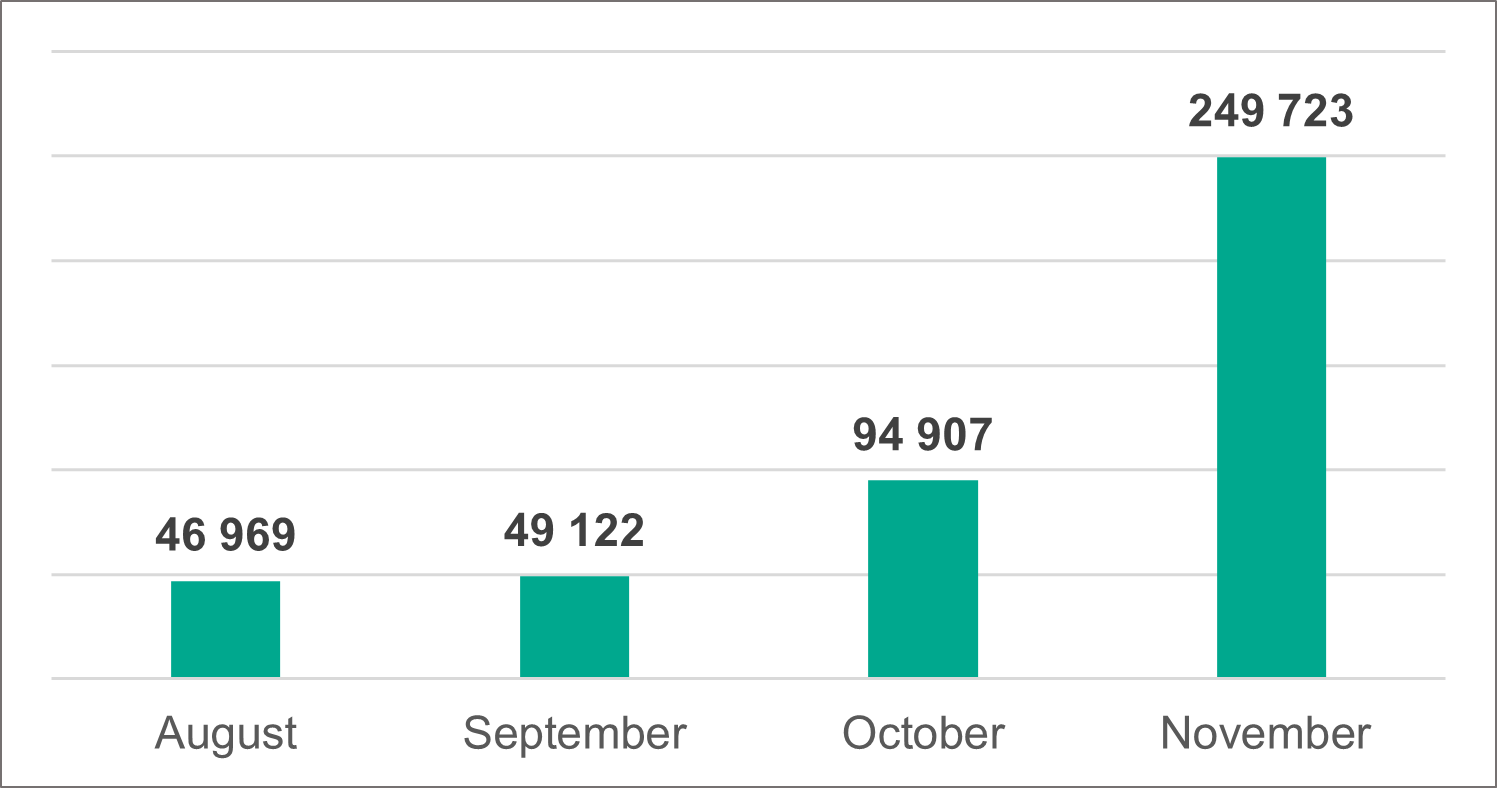
JOHANNESBURG, South Africa, January 22, 2026/APO Group/ — Kaspersky (www.Kaspersky.co.za) has reported a spike in phishing emails containing malicious QR codes. Detections for these jumped from 46,969 in August 2025 to 249,723 in November 2025 – a more than fivefold growth – as cybercriminals increasingly exploit QR codes, a trend that will likely continue in 2026. Attackers use QR codes in emails more frequently because they provide a simple and cost-effective way to conceal malicious URLs, evading detection by many protective solutions.
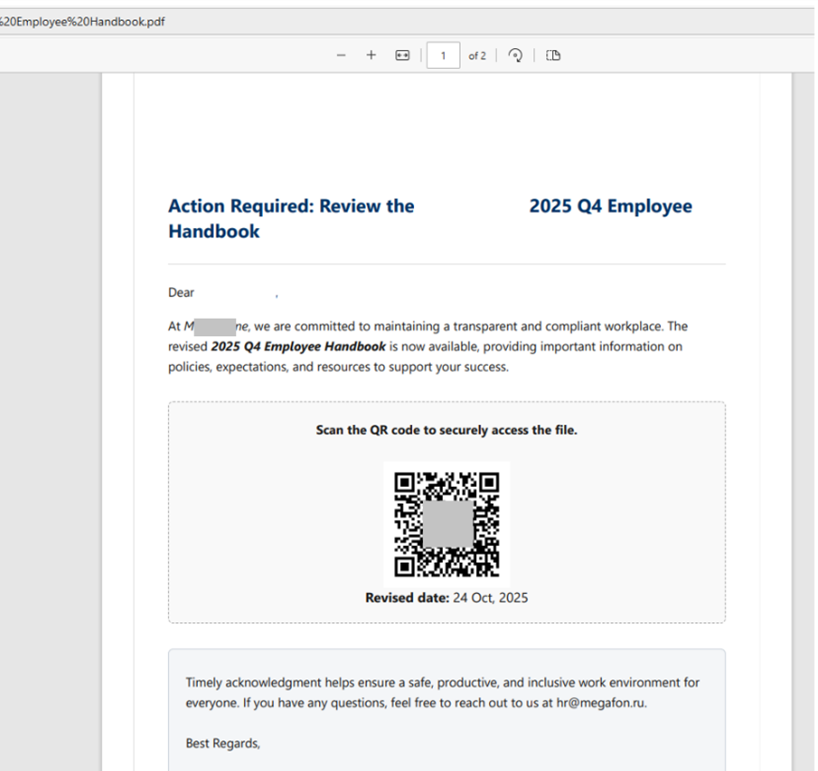
These QR codes are often embedded directly in email bodies or, even more commonly, within PDF attachments – an evolution that both masks phishing links and encourages users to scan them on mobile phones, which may have weaker security than work PCs.
Malicious QR codes have evolved into one of the most effective phishing tools, particularly when hidden in PDF attachments or disguised as legitimate business communications
Malicious QR codes commonly appear in mass phishing campaigns as well as targeted ones. Links embedded within them may lead to:
Phishing forms impersonating login pages for services like Microsoft accounts or internal corporate portals, designed to steal usernames, passwords, and other credentials.
Fake HR notifications urging employees to review or sign documents, such as vacation schedules, or even view lists of terminated staff, ultimately directing to credential-stealing sites.
Fraudulent invoices or purchase confirmations in PDF attachments, often combined with vishing (voice phishing) tactics that prompt victims to call provided phone numbers to “cancel” or clarify the transaction, enabling further social engineering attacks.
These tactics exploit trust in routine business communications, leading to credential theft, account takeovers, data breaches, and financial fraud.
“Malicious QR codes have evolved into one of the most effective phishing tools, particularly when hidden in PDF attachments or disguised as legitimate business communications like HR updates. The explosive growth in November 2025 highlights how attackers are capitalising on this low-cost evasion technique to target employees on mobile devices, where protection is often minimal. Without advanced image analysis at the email gateway and safe scanning practices, organisations are left vulnerable to credential compromise and downstream breaches,” comments Roman Dedenok, Anti-Spam Expert at Kaspersky.
To defend against this escalating threat, Kaspersky recommends educating employees on cybersecurity and deploying a mail server security solution such as Kaspersky Security for Mail Server (https://apo-opa.co/3YScvl5) that provides trusted and secure corporate email exchange, countering spam, email-borne infections, all forms of phishing, business email compromise (BEC), QR code attacks, and other threats.
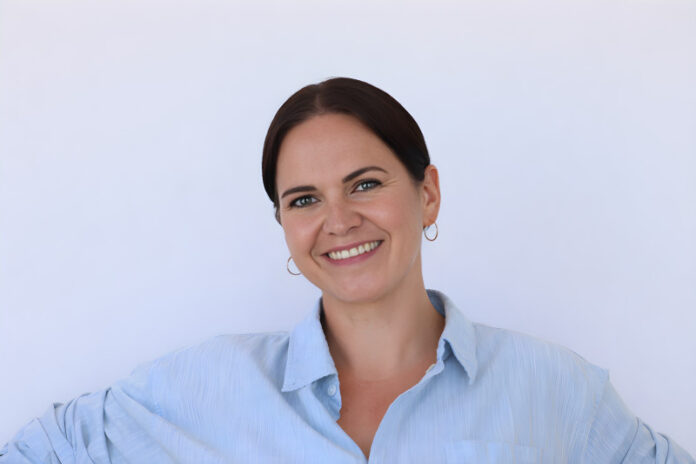
JOHANNESBURG, South Africa, January 22, 2026/APO Group/ — APO Group (https://APO-OPA.com), the leading pan-African communications consultancy and press release distribution service, has appointed Libby Allen as Vice President: Brand & Creative. The newly created role forms part of APO Group’s Senior Leadership Team and reflects a strategic investment in strengthening brand and creative capability as the business enters its next phase of growth.
As APO Group continues to scale its integrated communications offering across Africa and internationally, the appointment signals a deliberate move to bring brand, positioning, and creative leadership closer to executive decision-making – recognising brand as a critical enabler of commercial credibility, differentiation, and long-term performance.
In her role, Allen will lead APO Group’s brand strategy and creative direction across marketing, digital, content, and visual identity. Her mandate includes evolving how the Group presents itself across markets, building greater coherence and consistency at scale, and developing the Brand & Creative function to support APO Group’s expanding services, footprint, and ambition. She will work closely with public relations, commercial, and senior leadership teams to ensure brand decisions reinforce strategic priorities and support effective execution across the business.
As APO Group grows in scale and complexity, brand and creative leadership become increasingly central to how we operate and compete
Commenting on the appointment, Bas Wijne, CEO of APO Group, said: “As APO Group grows in scale and complexity, brand and creative leadership become increasingly central to how we operate and compete. Elevating this function to senior leadership level ensures stronger alignment between strategy, execution, and market perception, and positions the business for its next stage of development.”
Allen joined APO Group during a period of rapid expansion and has been instrumental in laying the foundations for a more structured and deliberate approach to brand and marketing. Her work to date has focused on clarifying positioning, establishing standards and systems, and building a dedicated Brand & Creative team to support a truly pan-African organisation operating across multiple sectors and markets.
She brings experience spanning private-sector brand leadership and high-stakes environments, including commercial, sustainability, social impact, and regulated sectors, as well as work linked to multilateral institutions. Her background reflects a balance of commercial discipline and strategic judgement, with experience operating across African, European, and global contexts.
“Brand is a strategic business asset – not a layer applied at the end,” said Allen. “As APO Group continues to grow, the way we present ourselves to markets must reflect the scale, substance, and performance of our work. This role is about building a brand platform that supports commercial growth, enables clarity, and evolves in step with the business.”
The appointment reinforces APO Group’s position as a trusted communications partner for global and African organisations operating across the continent, combining strategic advisory, disciplined execution, and guaranteed visibility through its proprietary distribution infrastructure.
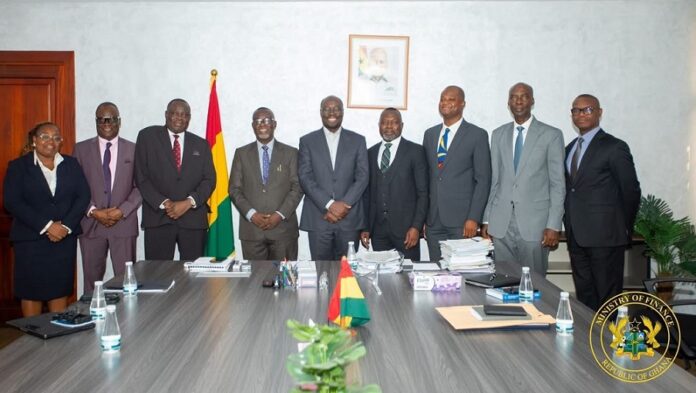
The Chief Justice, Justice Paul Baffoe Bonnie, on Wednesday paid a courtesy call on the Minister for Finance, Dr. Cassiel Ato Forson, as part of efforts to strengthen collaboration between the Judiciary and the Executive arm of government.
The Chief Justice explained that the visit was to formally express the Judiciary’s appreciation to the Ministry of Finance for its continued support.
He identified congestion in the courts as a major impediment to effective justice delivery in Ghana and noted that a number of interventions are currently being developed to address the challenge.
Justice Baffoe Bonnie further raised concerns about working conditions within the Judiciary, stressing the need for sustained institutional support to improve efficiency and outcomes across the justice delivery system.
On his part, the Finance Minister, Dr. Cassiel Ato Forson, reaffirmed his commitment to working closely with the Judiciary and the Ministry of Justice to address the challenges confronting the courts.
He disclosed that, as part of measures under consideration, the Ministry of Finance is examining the possibility of allowing the Judiciary to utilise 100 percent of its Internally Generated Funds (IGF) to respond to urgent operational needs.
Present at the meeting were Supreme Court Judge Justice Gabriel Scott Pwamang, the Acting Director of the Ghana School of Law, Prof. Raymond Atuguba, and the Judicial Secretary, Ahmed Musah.
The Attorney-General and Minister for Justice, Dr. Dominic Ayine, was also present.
Distributed by APO Group on behalf of Ministry of Finance – Republic of Ghana.
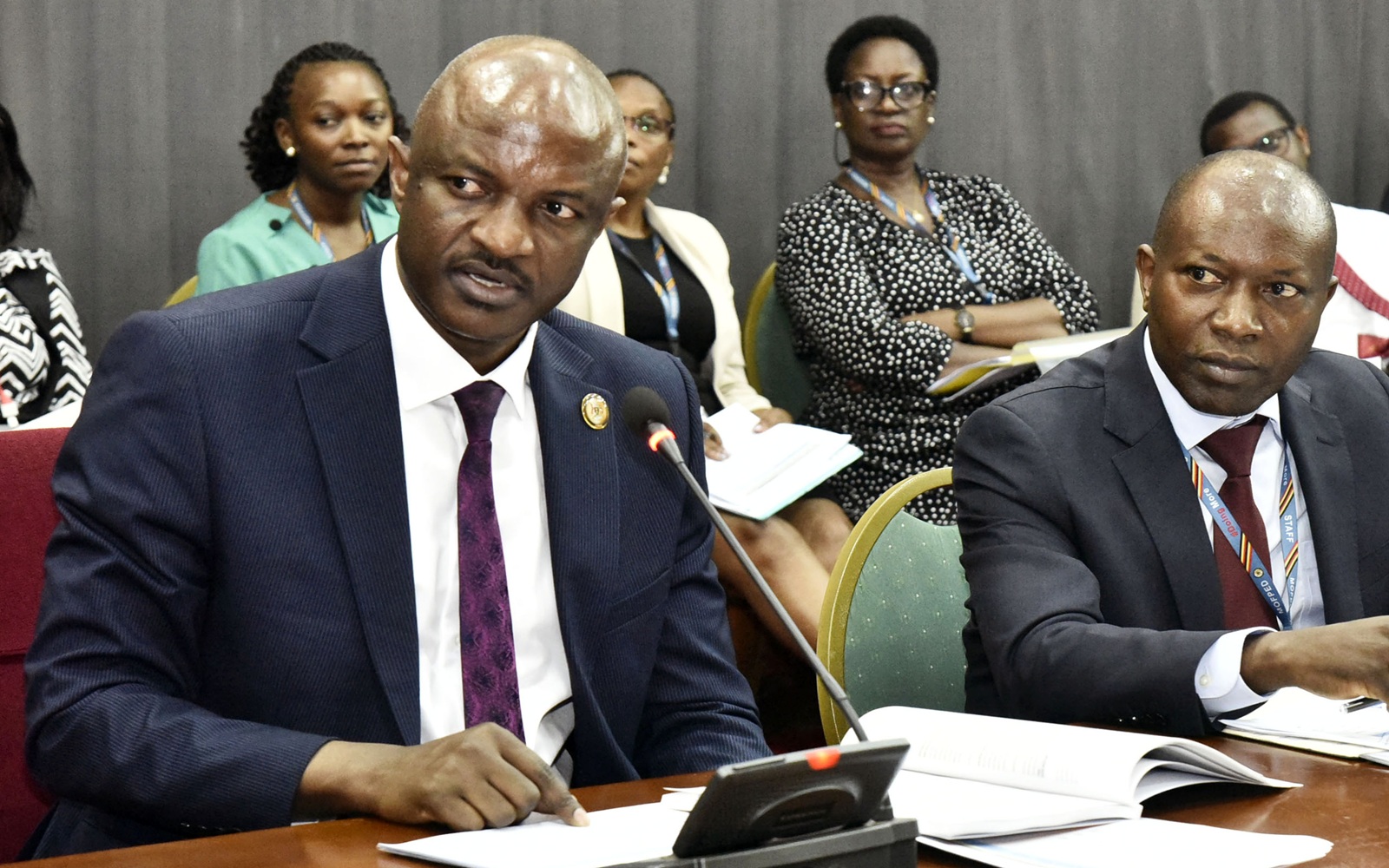
KAMPALA, Uganda, January 22, 2026/APO Group/ — Uganda’s revenue projection for the coming financial year 2026/2027 is estimated at over Shs40 trillion, according to State Minister for Finance, Planning and Economic Development (General Duties), Hon. Henry Musasizi.
The minister made the revelation while appearing before the Committee on Finance, Planning and Economic Development chaired by Hon. Amos Kankunda.
“This is an increment of Shs3.35 trillion compared to the projection of the current financial year 2025/2026 target of Shs36.73 trillion. This is in line with Uganda Revenue Authority’s (URA) mission of mobilising revenue for national development,” Musasizi said.
The minister also presented URA’s budget estimates for financial year 2026/2027 that stand at Shs877.296 billion for activities that will support increased domestic revenue and improved institutional coordination, management and reporting.
Sheema Municipality Member of Parliament, Hon. Dicksons Kateshumbwa wondered whether the support given to the authority is sufficient to enable its achievement of the projected revenue for 2026/2027.
He also raised queries on the workings of government-owned banks like Pearl Bank Uganda and Uganda Development Bank (UDB).
“What is the role of such banks? Are they able to operate in a manner different from the privately-owned banking institutions? Some of these banks have given loans to individuals who end up defaulting on payments saying it is a government-owned bank,” Kateshumbwa said.
Hon. Paul Omara (Indep., Otuke County) tasked the minister on how the revenue projection is expected to be achieved, particularly with the increment from the current financial year.
The Permanent Secretary and Secretary to the Treasury (PSST), Ramathan Ggoobi noted that the Finance Ministry supports URA in revenue collection, albeit with a clearly spelt out return on investment strategy.
“The ministry has clear return on investment metrics with URA. When we invest a certain amount of money in improving their capabilities to collect revenue, they must account in terms of the revenue collection and that is why they are also improving,” he said.
Ggoobi added that the projected revenue of Shs40 trillion in the next financial year will be attributed to faster economic growth and a new tax policy that will initiate reforms to support revenue generation.
“The Shs40 trillion is still very small in an economy which has Shs284 trillion. Our target is 20 per cent within the medium term, which we should attain in the next five years. We are currently at slightly less than 14 per cent,” Ggoobi noted.
He also clarified on the role of government-owned banks noting that that they do not play from any rules different from those governing privately-owned banks.“Their role is clear – to distort the financial market in such a way that it fulfils our objective of reducing the cost of doing business for the critical strategic sectors without necessarily distorting the financial stability,” the PSST said.
Ggoobi added that strict protocols at the Central Bank ensure that every financial institution plays by the rulebook, and noted that such entities that default on the rules risk being closed.
In its budget interventions for financial year 2026/2027, the Finance Ministry plans to capitalise government-owned banks and financing schemes including UDB, Pearl Bank, the Agricultural Credit Facility (ACF), the Uganda Agriculture Insurance Scheme (UAIS), the Small Business Recovery Fund (SBRF) and the Large Farmers Scheme.
Distributed by APO Group on behalf of Parliament of the Republic of Uganda.
MOGADISHU, Somalia, January 22, 2026/APO Group/ — More than a year after conflict broke out in the Cal Miskaad mountain range of Somalia’s Puntland region, fighting continues to take a heavy toll on the lives of thousands of families. Many have been forced to flee their homes, leaving behind land and livelihoods they depend on. As communities struggle to cope with the long-term consequences of violence, severe drought conditions gripping much of the country are deepening needs, placing additional pressure on communities already stretched to their limits.
In 2025, for the second year running, conflict was the main driver of displacement in Somalia, uprooting more than 200,000 people from their homes, according to humanitarian data tracking population movements. Military operations, including sustained air and drone strikes, escalated throughout the year.
Now in its second year, the conflict in the northern part of the country between Puntland Defence Forces and the Islamic State Group-Somalia (ISg-S) has displaced tens of thousands of people, disrupting a nomadic way of life that communities have relied on for generations. As a result, Bari region, where the fighting continues, ranks as among the regions hosting the highest number of people displaced by conflict in Somalia.
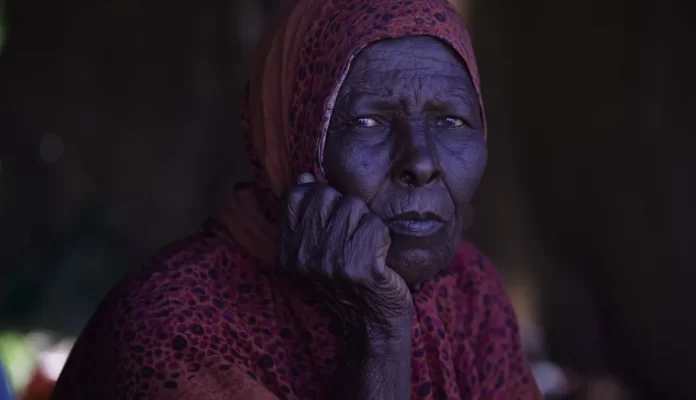
“We left in a hurry. We abandoned a house with four rooms, three water reservoirs and two farms. I had lived there for about 30 years,” said Sudci Ismail, 70, who now stays in a temporary house made of plastic tarps on the outskirts of a small village in Barookhle, Bari region.
Sudci Ismail and her extended family outside their temporary shelter in a small village in Barookhle, Bari region. Like thousands of others, they have been displaced by fighting between Puntland forces and Islamic State in Somalia (IS-Somalia) in northern Somalia.
A severe drought, declared a national emergency in November, has also affected millions of people across Somalia. The northern parts of the country have been hit particularly hard due to their arid landscape. For those who were displaced, the area’s scorching temperatures add further strain to an already vulnerable population.
“Some of these families are pushed to remote areas where access to essential services such as food, water and health care is extremely limited,” said Antoine Grand, head of the International Committee of the Red Cross (ICRC) in Somalia. “Combined with persistent drought conditions, the traditional lifestyle of these nomadic pastoralists is profoundly disrupted.”
To support communities affected by the ongoing fighting and drought, the ICRC has maintained an operational presence in the region and has carried out the following activities since the start of the conflict:
The ICRC supplied Bosaso General Hospital and Balidhidhin Hospital with three weapon-wounded medical kits, along with additional complementary supplies. The items included anaesthetics, surgical materials, dressings, sterilization sets, infusions, splints, sutures and gloves. This enabled the treatment of 485 injured patients.
A total of 200 body bags were provided to the Ministry of Health to support the proper and respectful handling of the dead.
The ICRC rebuilt the Iskushuban Somali Red Crescent Society (SRCS) clinic, expanding its services to the host community and nearby villages. In 2025, the facility served 7,534 patients, including displaced people. The ICRC has been supporting the clinic since 2023 with staff salaries, capacity building, and medical supplies.
The main water source in Ufayn was rehabilitated, improving access to safe water for more than 54,000 people, including displaced families.
A total of 5,027 displaced families in 30 hard-to-reach villages in Bari region received two rounds of cash assistance $220 each. Following deteriorating drought conditions in December, families received an additional $120 in support.
Cash assistance was provided to 4,285 families displaced from the Cal Miskaad hills to Bosaso and Carmo towns, with each family receiving $330 over three rounds.
In Kalabayr and Waciye, 300 families received 1,500 goats (five per family) to help them restore livelihoods and strengthen self-reliance.
Three visits were conducted to Bosaso Police Station and Bosaso Central Prison to assess the condition of detainees held in connection with the fighting.
A total of 120 Puntland Defence officers in Galkayo and Garowe bases and 50 frontline personnel of Puntland Maritime Police Force received international humanitarian law (IHL) training, with a focus on the protection of civilians and the rules of armed conflict.
The SRCS volunteers in Bosaso are providing free phone call services to help families restore contact with missing or separated relatives.
Distributed by APO Group on behalf of International Committee of the Red Cross (ICRC).
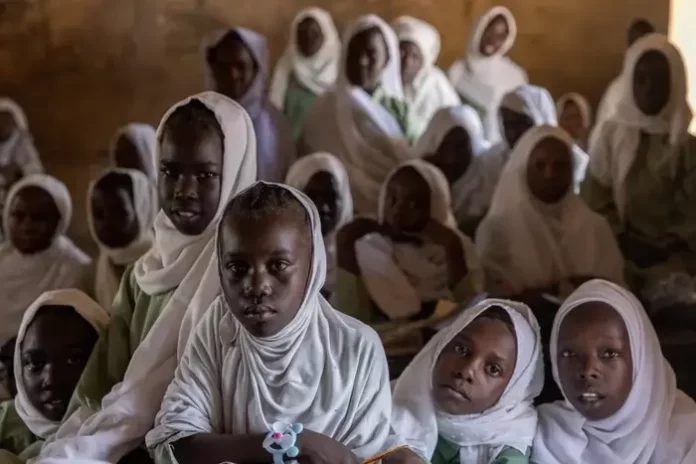
PORT SUDAN, Sudan, January 22, 2026/APO Group/ — Millions of children in Sudan have missed nearly 500 days of learning since the war started in April 2023 in what has become one of the world’s longest school closures, surpassing the worst shutdowns during the COVID-19 pandemic, Save the Children said.
New analysis by Save the Children on the scale of the emergency crisis in Sudan comes ahead of the 8th International Day of Education, that was set up to mark the role education plays in peace, development and breaking the cycle of poverty.
Across Sudan more than 8 million children – nearly half of Sudan’s 17 million school-aged children – have spent about 484 days without entering a classroom [1]. This is 10% longer than the approximate 440 classroom days lost to the COVID-19 pandemic in the Philippines [2] which was the last country to resume regular face-to-face schooling after COVID.[3] Few modern conflicts have closed schools this long.
Unlike during the pandemic, remote learning is not an option for most children in Sudan where more than 1,000 days of fighting have disrupted education across the country, shattered families, and destroyed communities.
Sudan is now facing one of the worst education crises in the world with many schools closed while others have been damaged in the conflict or are being used as shelters for displaced families, leaving children without safe places to learn and millions of children increasingly unlikely to ever complete their studies.
North Darfur state, where conflict is ongoing, is the most affected region with only 3% of over 1,100 schools open. West Kordofan, South Darfur and West Darfur are next in terms of the least number of schools operating at 15%, 13% and 27% respectively, according to data from Sudan’s education cluster due to be released this week. [4]
Additionally, many teachers have not received salaries for months, severely affecting morale and forcing some to abandon their jobs. Without immediate funding to pay and train teachers, restore learning spaces, and provide essential learning supplies, the education system risks total breakdown, Save the Children warned.
Education in crisis settings is lifesaving, it protects children from violence, sexual and gender-based abuse, exploitation, and recruitment into armed groups.
Save the Children International CEO Inger Ashing travelled through Sudan this month, visiting schools and learning centres in Port Sudan, River Nile and Khartoum. She said:
“Children who have fled unimaginable violence in Sudan deserve more than just safety – they deserve the chance to learn, to hope, and to rebuild their lives. Education is not a luxury for children; it is a lifeline that protects children from exploitation, early marriage, and recruitment into armed groups. It provides safety, stability, and hope for the future.
“Everywhere I went during my visit, I heard the same message from children: they want to be in school – safe, supported, and learning.
“I met Amina*, a 9-year-old girl who was living in Khartoum when the conflict began and was forced to flee. She missed nearly a year of school. Today, like other children I spoke to, she walks several kilometres every day on her own to attend class, even though she said the journey can be lonely and at times frightening. Amina told me how happy she is to be back with her friends and learning from her teachers. Her favourite activity is writing in English.
“To reach every child, we must listen to them and find the ways – and the funding – to expand this support and close the learning gaps. Every child in Sudan has the right to an education and the chance to pursue their dreams – to become doctors, nurses, teachers, and engineers, as children told me this week. We must not fail them.
“We urgently need more funds to restore and expand safe and quality educational services, rehabilitate damaged schools, and provide teachers with fair working conditions. If we fail to invest in education today, we risk condemning an entire generation to a future defined by conflict rather than by opportunity.”
Save the Children runs inclusive education programmes in nine of the 18 states across Sudan, supporting over 400 schools to support children’s learning and well-being despite the crisis.
Programmes include school meals, school gardens and providing essential items like school supplies, and uniforms. Schools are also being rehabilitated and equipped with safe water and sanitation facilities. Teachers receive monthly incentives and training, including technical and psychosocial support, to support children’s well-being and help them deal with the psychological impacts of conflict and displacement.
Save the Children has been working in Sudan since 1983 and is currently supporting children and their families across the country, providing health, nutrition, education, child protection, and food security and livelihoods support.
[1] Calculated by Save the Children. While semester dates have varied in Sudan even prior to the conflict, the estimate is based on teaching days missed between 15 April 2023 and end of January 2026, using the 2021/22 academic calendar as a guide (excluding weekends). Academic calendar citing a Ministry of Education announcement published here.
[2] Calculation based on UNESCO’s school closure database which covers March 2020 to March 2022, and extended to take into account face-to-face schooling in the Philippines resumed in August 2022. Excludes weekends and academic holidays. https://covid19.uis.unesco.org/global-monitoring-school-closures-covid19/
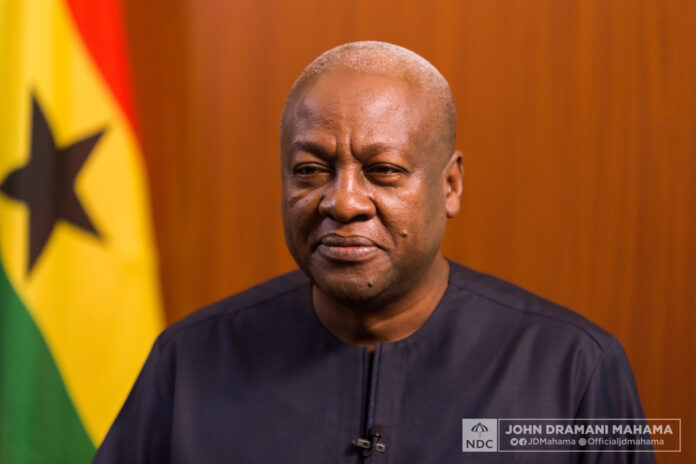
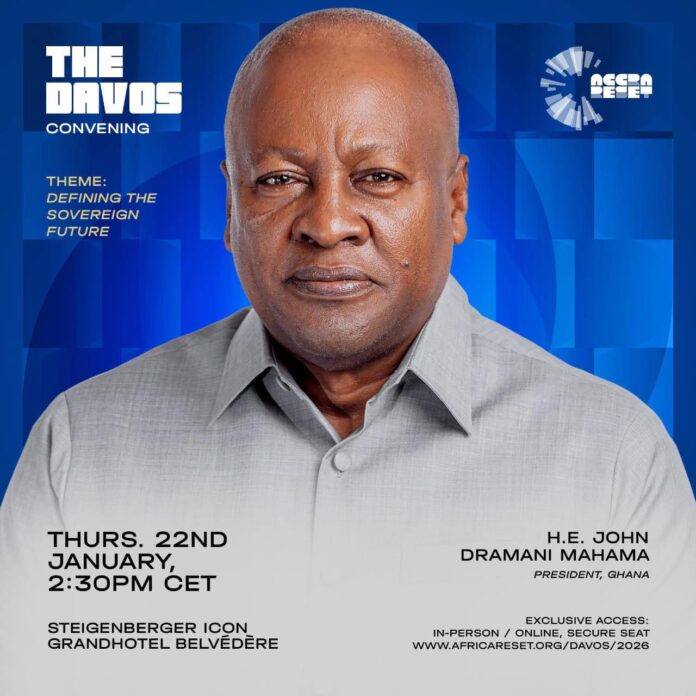
President John Dramani Mahama is set to lead a high-level convening of the ‘Accra Reset’ initiative today, 22nd January 2026, on the sidelines of the World Economic Forum (WEF) Annual Meeting in Davos, Switzerland.
The ‘Accra Reset’ is a Global South initiative dedicated to strengthening sovereign capacity and reimagining international cooperation in the face of modern global challenges. As the head of the initiative’s Presidential Council, President Mahama will join other African and global leaders to launch priority programs designed to foster more equitable international systems.
A Unified Voice for the Global South
The Davos meeting marks a significant milestone for the initiative, following its introduction at the 2025 UN General Assembly and its endorsement at the G20 Leaders’ Summit in Johannesburg. Joining President Mahama on the Presidential Council are several key leaders, including:
President Abdel Fattah El-Sisi of Egypt
President William Samoei Ruto of Kenya
President Felix Tshisekedi of the Democratic Republic of Congo
Vice President Kashim Shettima of Nigeria
Prime Minister James Marape of Papua New Guinea
The initiative is further supported by a “Guardians Circle” of former Heads of State, including Olusegun Obasanjo, Helen Clark, Ameenah Gurib-Fakim, and Ellen Johnson-Sirleaf.
Reimagining Sovereignty and Cooperation
The ‘Accra Reset’ arrives at a critical time of global uncertainty, characterized by trade tensions, climate shocks, and the rising cost of living. For President Mahama, the initiative serves as an international extension of his domestic “Resetting Ghana Agenda,” emphasizing that true sovereignty involves the ability to execute national visions while building strategic partnerships.
The initiative argues that for national governance to be effective, internal reforms must be met with a global system that respects the agency and interests of developing nations, particularly across Africa and the Global South.
Focusing on Mutual Interests
By leading this conversation in Davos, Ghana continues to position itself as a champion for collective growth and strategic partnership. The ‘Accra Reset’ seeks to move beyond traditional aid narratives, focusing instead on mutual interests and the shared development of Africa’s potential.
At Sweet Melodies, we remain committed to tracking these global milestones that reflect our nation’s leadership on the world stage. We look forward to the positive impact these international dialogues will have on the daily lives of Ghanaians.
Sweet Melodies 94.3 FM: Keeping you sanctified morning, noon and night!