Home Blog Page 43

Businesses urged to embed risk management into operations to navigate challenges

0

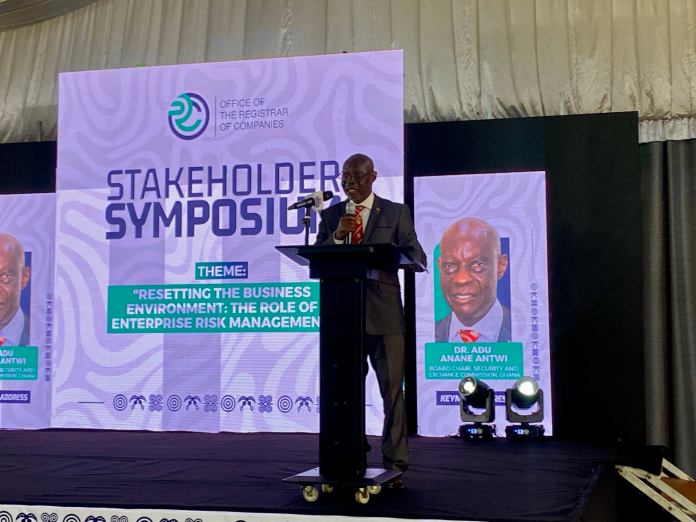
Dr Adu Anane Antwi, the Board Chair of Securities and Exchange Commission (SEC), has urged businesses to embed enterprise risk management into their operations to navigate challenges and unlock future opportunities.

Adopting the practice would serve as a “game changer” to improve service delivery and ensure stronger regulatory compliance as Ghana reset its business environment, he said.

Dr Antwi made the call at a stakeholder symposium in Accra on Tuesday, organised by the Office of the Registrar of Companies (ORC), on the theme: “Resetting the Business Environment: The Role of Enterprise Risk Management.”

He said Ghana’s business environment remained plagued by weak governance structures and sustainability issues, which had led to substandard service delivery, limited accountability, inadequate transparency and ineffective oversight.

If left unchecked, those challenges could cause financial mismanagement, loss of investor trust and reputational damage, he noted.

Citing the Allianz Risk Barometer 2025 survey, he said cyber incidents and business interruptions remained among the top global risks confronting organisations.

Ghanaian businesses must, therefore, embrace Enterprise Risk Management (ERM) as a strategic tool to identify, assess and mitigate risks.

“Enterprise risk management goes beyond traditional siloed risk management as we know it. Unlike traditional risk management, enterprise risk management can serve as a powerful framework for achieving business sustainability by holistically identifying, assessing and managing risks and opportunities,” he said.

He explained that integrating ERM into strategies would enable businesses to better respond to economic downturns, natural disasters and global competition.

It would also align risk appetite with strategic objectives, optimise resource allocation and strengthen business continuity.

Dr Antwi noted that ERM was not only about avoiding failure but also about building resilient, adaptable, and forward-thinking organisations.

He called on businesses to strengthen their ERM frameworks by cultivating a risk-aware culture, moving up the risk maturity ladder, and leveraging technology such as artificial intelligence.

He urged stakeholders to avoid treating risk management as a “box-ticking exercise” and instead embed it into strategic decision-making to enhance service delivery and business sustainability.

Mr David Kudoadzi, Lawyer and Chair of the ORC Governing Board, said the theme of the symposium spoke directly to the realities facing businesses today and underscored the need to build systems that could withstand uncertainty while creating confidence for investors and entrepreneurs.

He said while Ghana had made progress in registration reforms, corporate governance and insolvency laws, those gains continued to be tested by global economic shocks, technological disruptions, pandemics, climate-related risks and governance challenges.

“The question is no longer whether risks will arise, but how prepared we are to manage them when they do,” he said.

Mr Kudoadzi said ERM should not be viewed as the preserve of compliance departments but as a shared responsibility across businesses, regulators and society.

“ERM is about more than minimising losses; it is about building resilience, trust, and confidence in Ghana’s economy,” he said.

Touching on the ORC‘s role, Mr Kudoadzi said it went beyond enforcement to guiding businesses toward stronger foundations, emphasising that effective risk management was key to economic transformation.

The symposium brought together regulators, private sector leaders, professional associations and civil society actors to deliberate on practical strategies for embedding risk management in Ghana’s business environment.

Mahama returns home after participating in UNGA80 in New York

0

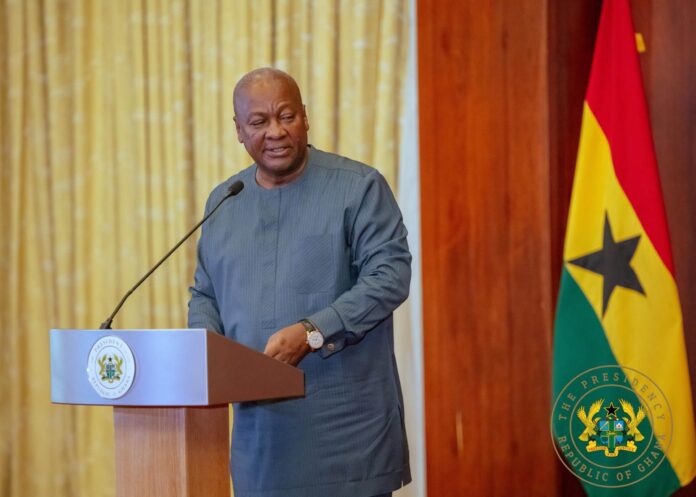
President John Dramani Mahama on Tuesday evening returned to Accra after participating in the 80th Session of the United Nations General Assembly (UNGA80) Meeting in New York.

The President was met on arrival at the Kotoka International Airport by Vice President Professor Naana Jane Opoku-Agyemang.

Briefing the media on the President’s UNGA trip, Mr Felix Kwakye Ofosu, the Presidential Spokesperson and Minister of State in-charge of Government Communications, described the trip as a historic and highly successful participation in the 80th United Nations General Assembly in New York, United States.

He said the President had rounded off a visit which had placed Ghana right back at the centre of the international community and restored the nation’s role as a respected member of the international community.

Mr Ofosu said while away, President Mahama delivered an address to the UNGA, which was the highlight of his visits.

He noted that the address touched on important themes, such as amplifying Africa’s voice in international affairs through membership and active participation as one of the permanent members of the United Nations Security Council.

The Spokesman said the President reiterated longstanding calls from the continent of Africa for inclusion at the seat of the United Nations Security Council.

He noted that this was a call which was very well received across the continent and beyond.

He said the President’s address received wave reviews and many appreciated the dexterity and candor with which he delivered that address.

He noted in that address, President Mahama also reiterated his call for some attention to be paid to the issue of reparations arising from historical injustices perpetrated against Africa through slavery and colonialism.

“This is also a long running theme. And His Excellency the President added his voice in a manner that resonated across the continent and beyond,” Mr Ofosu said.

The Spokesman said the President also touched on the protracted conflicts between Israel and Palestine and demanded an end to hostilities, preservation of lives and property, and the restoration of normalcy.

He said the President drew attention to the horrors being suffered and called on international community to rally behind efforts to restore peace.

Mr Ofosu said the President also touched on the issue of migration, climate change, and water.

In all, it had been dubbed as one of the most remarkable standout speeches of the 80th United Nations General Assembly.

He said aside from delivering the address, President Mahama also engaged in a number of high level bilateral meetings.

Mr Ofosu said the President had bilateral discussions with Mr Emmanuel Macron, the President of France on a wide range of issues bordering on relations between the two countries.

He said President Mahama also held bilateral discussions with Antonio Guterres, the Secretary-General of the United Nations, on a number of important subjects.

He said President Mahama also met other heads of state in a marathon bilateral session and the heads of other international organizations.

Mr Ofosu said the President also launched what was known as the Accra Reset, as a side event.

He said the Accra Reset essentially envisioned agreement where Africa clawed back sovereignty in terms of financing healthcare and its own development.

This, he said was an initiative that had been subscribed to by prominent global figures like the former Nigerian President Olusegun Obasanjo, former British Prime Minister, Gordon Brown, and many other notable personalities from around the world.

Mr Ofosu said it created a platform for a frank discussion of Africa’s financing needs and what homegrown approaches could be used to ensure that this was met.

He said the President also participated in the signing of a compact on the future of Africa’s energy security.

He said there were also side events on climate change and many other such events.

“So if I were to sum up, I would say that this has been a highly, highly successful trip to the United Nations General Assembly,” Mr Ofosu said.

It is one that will go down in history and place Ghana at the center of important discussions around the world.

He said in addition to all the diplomatic efforts, the President, did not miss the opportunity to showcase Ghana as an investment destination.

Mr Ofosu said President held a roundtable meeting with various investors at the headquarters of NASDAQ right in the middle of Times Square; stating that discussions were highly fruitful.

“There were numerous companies, some of whom have already invested in Ghana and others who were interested in exploring investment opportunities.”

He said the President made an important pitch to them and sold Ghana as a credible investment destination and gave reasons why investments here would be safe and will yield dividends.

The Spokesman said President also took time to meet members of the Ghanaian community who also put across concerns they had and how they believed the Government could help address them.

President Mahama, global leaders launch Accra Reset at UNGA

0

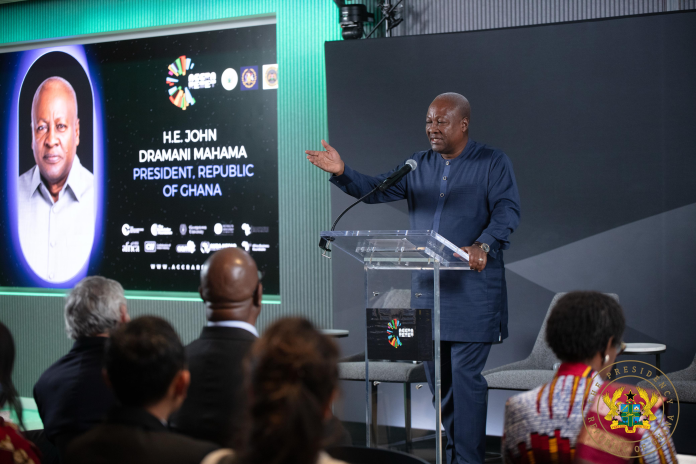
At a high-level side event during the 80 Session of the United Nations General Assembly (UNGA80), President John Dramani Mahama, the African Union Champion for African Financial Institutions, led heads of state, multilateral leaders, and private sector partners in launching the Accra Reset.

The Accra Reset is a bold framework for re-engineering global development institutions, financing, and partnerships as the Sustainable Development Goals era nears its close.

A statement issued by Ghana’s Presidency in Accra, said opening the event, President Mahama stated that the current development architecture is fraying.

He noted that COVID-19 had erased two decades of progress in less than two years, extreme climate shocks now threaten nearly 735 million people with hunger, and many developing countries spend more servicing debt than on health and education.

With fewer than half of the 169 SDG targets on track, Mahama argued that “development-as-usual” must end.

“The world is only five years from 2030,” President Mahama said.

He added: “The question is not simply what new targets should replace the SDGs, but how we design institutions and financing systems that actually work. Workability’ is the name of the game now—innovative financing instruments, new business models and smarter coalitions that multiply resources rather than ration them.”

The Accra Reset, led by President Mahama and his co-convenor, former Nigerian President Olusegun Obasanjo, proposes a new architecture anchored in sovereignty, workability and shared value.

Health will serve as an entry point and proof of concept, transitioning from aid dependency to health sovereignty, building on commitments made at the Africa Health Sovereignty Summit in Accra in August 2025.

A Club of Accra coalition will initiate work to pilot financing innovations and “geostrategic dealrooms” for investment in health, climate, food security, and job creation.

The launch also saw the unveiling of the Global Presidential Council, which will unite a coalition of Heads of State and Government from Africa, Asia, Latin America, and beyond to provide political leadership and accountability.

A Global College of Advisors, comprising eminent experts from health, finance, innovation, and business, will also be assembled to design and oversee pilots and financing mechanisms.

DSTV subscribers to enjoy between 33 and 50 per cent improved offer effective October 1

0

Subscribers of DSTV in Ghana will from Wednesday, October 1, 2025, enjoy an increased value offer following an agreement between government and MultiChoice Africa, operators of the platform.

This comes after months of tussel between the government and MultiChoice for a fair pricing regime in Ghana vis-a-vis what pertains in other African countries where DSTV operates the new agreement, subscribers would enjoy between 33 to 50 per cent more value depending on the DStv package or bouquet one uses for the next three months after which it would be reviewed.

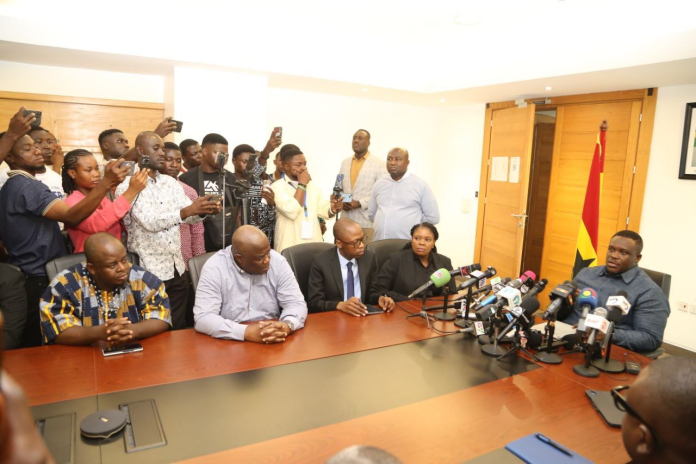
Announcing the new offer at a news conference, in Accra, on Monday, Mr. Samuel Nartey George, the Minister of Communications Digital Technology and Innovation, said the new agreement was an “unprecedented increase in value offer only in Ghana, which will result in Ghanaian DStv subscribers getting more services for less.”

Under the new arrangement, he said, subscribers on the Paddy bouquet would be upgraded to Access, enjoying 35 more channels, while saving 40 per cent on subscription fees.

Additionally, subscribers on Access bouquet will automatically be upgraded to Family, with additional 19 channels, and 48 per cent in savings, while those on the Family bouquet will move up to Compact, enjoying 22 more channels and saving 50 per cent on subscription charges.

Subscribers on Compact will be upgraded to Compact Plus, and those on Compact Plus will enjoy access to the Premium bouquet.

The Minister further explained that subscribers already on the Premium bouquet will not be left out — they will automatically be entered into a draw for a chance to win a fully paid trip to Dubai.

“Compact, currently going at GH¢380, gets bumped up automatically to Compact Plus, which is priced at GH¢570. You get 12 more channels in addition, and the value savings, 33 per cent,” he said, adding that Compact Plus subscribers would be moved up to Premium bouquet with additional 18 channels while saving 34 per cent on subscription charges.

“For those who remain on their premium bouquet, which is priced at 865 Ghana Cedis, you will still get all the content on the flagship premium bouquet, but you also get an automatic entry into the competition for the chance to win a fully paid trip to watch selected English Premiership Games.

“But this is, as well as you know, subject to terms and conditions,” the Minister added.

Government and MultiChoice have been at loggerhead for months now over what the government considered “unfair” pricing regime vis-a-vis in other African countries.

In August this year, the Minister in charge of the sector threatened to revoke the broadcasting licence of MultiChoice Ghana if it failed to heed to calls for a review of its prices, but that was deferred after engagement between the two parties.

However, the Minister, through the National Communications Authority (NCA), set up a committee in September to look at the pricing of DSTV services in the country as well as cross-border piracy on DTSV decoders and services in Ghana.

Mr. George said aside from the new subscription offer, MultiChoice Africa had also agreed to a GH¢555 subsidy for the Zappa decoder and dish kit, adding that new customers could obtain the decoder and dish kit at 50 per cent of it’s current price.

The Minister cautioned Ghanaians against using DSTV decoders imported from Nigeria, warning that the government would deal ruthlessly with anyone found culpable.

He explained that such act was robbing the state of huge sums of revenue, urging Ghanaians to purchase and use decoders from MultiChoice Ghana.

“If you are a Ghanaian and you use, what I call, ghost boxes – the boxes from Nigeria, you do two things – you deprive the Ghanaian shareholders and owners of MultiChoice Ghana of revenue because you are paying to the Nigerian owners or MultiChoice Nigeria.

“But more importantly, you deprive your own homeland of tax revenue because in what you pay to the Nigerian for their Nigerian subscription is taxed to the Nigerian Government,” he said.

Guzakuza WAW Ghana 2025 calls for Gender Equity in Agribusiness

0

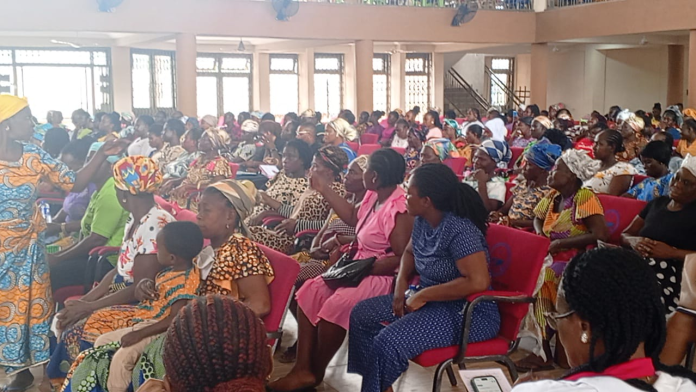
Stakeholders at the launch of Women in Agribusiness Week 2025, have urged bold action to address gender disparities in agriculture, stressing that women’s empowerment is critical to food security, rural development, and inclusive economic growth.
The Women in Agribusiness Week (WAW) Ghana 2025, organised by Guzakuza—a leading organisation committed to empowering women in agribusiness across Africa—was launched in Koforidua in the Eastern Region, bringing together policymakers, entrepreneurs, and advocates.
Addressing this year’s Women in Agribusiness Week theme: “Innovating for a Resilient Agribusiness: Finance, Technology and Market Access for Growth”, stakeholders took turns to highlight the need for innovation, equity, and investment to unlock the full potential of Ghanaian women in agribusiness.
Hajia Habiba Yusifu, Eastern Regional Director of Agriculture, described women as “the lifeline of rural and national economies,” but noted that they continue to face systemic barriers.
“For decades, African women have been trapped in poverty cycles due to unequal access to education, resources, and technology,” she said.
Adding, “Empowering women in agriculture is not only a moral imperative but also an economic necessity.”
She cited research indicating that closing the gender gap could significantly boost agricultural productivity, reduce hunger, and stimulate economic growth.
“We must provide women with equal access to land, finance, and modern technologies to enable them to become catalysts for innovation, productivity, and sustainable development,” she added.
Hajia Yusifu also called for increased representation of women in farmer cooperatives and decision-making platforms.
“Women’s voices must be heard and their perspectives considered when designing programmes that affect their livelihoods,” she said.
In a speech read on her behalf, Eastern Regional Minister Mrs. Rita Akosua Adjei Awatey echoed the appeal, noting that women constitute 70 per cent of Ghana’s agricultural workforce but face challenges in scaling their businesses.
“Access to affordable credit and investment is vital for women to transition from subsistence farming to commercial agribusiness,” she said.
She highlighted government interventions under the Agriculture for Economic Transformation Agenda, including the Feed Ghana Programme and the Grains and Legumes Development Programme, which aim to enhance resilience and productivity.
“Our efforts in agriculture are not only about producing more food, but also about building resilience and ensuring that farmers, particularly women, can withstand climate change and market fluctuations,” she said.
Ms. Vida Akuamoah Boateng, Project Officer at Guzakuza, said the conference provided a platform for product marketing, networking, and knowledge exchange.
“Industry experts add knowledge that enhances creativity, and through networking, women can support each other long after the event,” she said.
She acknowledged persistent challenges such as limited access to finance, land ownership, and fragile market access.
“That is why we organize exhibitions—to encourage women to add value to their produce and connect them with buyers,” she said.
She also emphasized the importance of agro-processing, noting, “We are still in the early stages of value addition. We encourage women to go into processing to make their products competitive locally and internationally.”
Mrs. Perpetual Kyei, Executive Director of Guzakuza, said her organization has built a pan-African ecosystem for women entrepreneurs in agribusiness.
“Our flagship Ignite programme has trained over 5,000 women from 36 countries since 2015,” she said. “We continue to connect alumni to collaborate and grow.”
Since 2015, Guzakuza has launched programmes such as Ignite, SheFarms, and the continental Women in Agribusiness Week (WAW Africa).
While WAW Africa 2025 will be hosted in Uganda, the Ghana edition marks the first national platform of its kind dedicated to women in agribusiness.
This year’s WAW Ghana was held in partnership with MTN Momo, Ghana Standards Authority, Ghana Export Promotion Authority, Environmental Protection Agency, Ministry of Trade, Agribusiness and Industry, and the Association of Ghana Industries.
Exhibitors showcased processed foods, packaged staples, cosmetics, and beverages produced by women-led enterprises.
Organizers said the programme rotates annually across Ghana to ensure broad participation.
A continental edition, WAW Africa, is scheduled for November, bringing together women entrepreneurs from across Africa to share innovations and expand market access.

Cabinet approves reformation of national nuclear energy programme

0

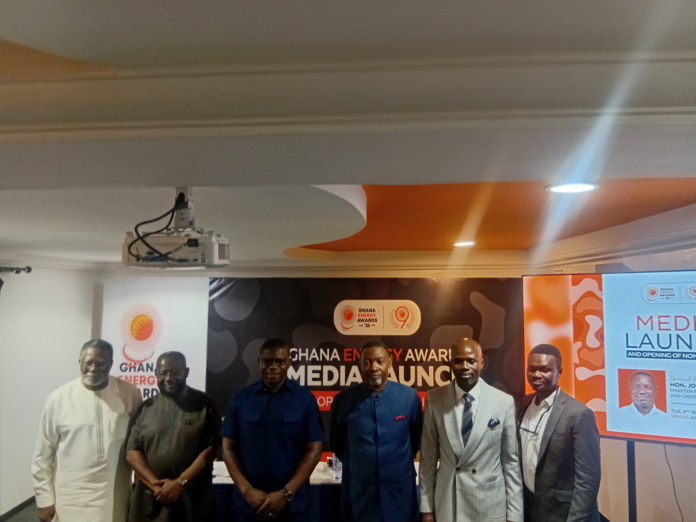
Cabinet has approved the reformation of Ghana’s National Nuclear Energy Programme, Mr Richard Gyan-Mensah, the Deputy Minister of Energy and Green Transition, has announced.
Speaking at the launch of the ninth edition of the Ghana Energy Awards, he said the approval positioned Ghana to harness nuclear energy as a reliable and sustainable power source.
Mr. Gyan-Mensah emphasised the role of nuclear energy in meeting the country’s growing power demands and enhancing energy security.
He noted that energy is about human lives at the most basic level and underscored the government’s commitment to providing stable and reliable electricity for all Ghanaians.
The event, which will be held on the themed “Repositioning the Energy Sector as a Pillar of National Development,” aims to inspire bold innovation and reform across the energy sector.
Awards will be presented in categories such as Energy Personality of the Year, Emerging Female Leader in Energy, and the Energy Signature Award.
A panel chaired by Mr Kwame Jantuah and including Dr Lawrence Tetteh and Dr Kwame Ampofo will assess nominations.
Mr Gyan-Mensah noted that the approval marked a new phase in Ghana’s nuclear ambitions, a long-standing goal of successive governments.
He revealed that the country has progressed to Phase Two of the International Atomic Energy Agency (IAEA) programme, with 60 per cent of the site acquisition process completed.
“This development is a core component of the government’s broader energy transition framework, which seeks to strategically diversify energy sources and promote clean, affordable energy,” he said.
He added that the recent renaming of the ministry to the Ministry of Energy and Green Transition reflected that commitment, extending beyond solar and hydro to include nuclear power.
The Deputy Minister also disclosed the establishment of a Renewable Energy and Green Transition Fund to attract sustainable investments and support green initiatives.
“This complements the nuclear energy programme, which is seen as a crucial pillar for industrialisation, job creation, and sustainable development,” he said.
Highlighting other achievements, Mr. Gyan-Mensah cited the rollout of over 200 megawatts of solar power projects and a 25-megawatt floating solar plant at the Bui Hydropower Station, developed in collaboration with the German KfW Bank.
He also noted the successful commissioning of grid systems in several communities, bringing electricity to over 3,700 residents.
Mr Gyan-Mensah said the government was reinforcing reforms in the electricity value chain, modernising infrastructure to reduce losses and reintroducing private sector participation to improve efficiency.
These reforms, he said, aim to enhance regulatory compliance and ensure quality and price stability across the energy sector.
He urged stakeholders to embrace the Ghana Energy Awards theme, which aligned with the strategic repositioning of the energy sector as a cornerstone of national development.

Government vows full funding for anti-graft agencies and initiatives

0

Mr. Julius Debrah, the Chief of Staff at the Presidency, has reaffirmed government’s commitment to fund and support anti-graft agencies and initiatives.
Mr. Debrah stated that the previous National Anti-Corruption Action Plan (NACAP) from 2015 to 2024, was hampered by underfunding and weak political commitment.
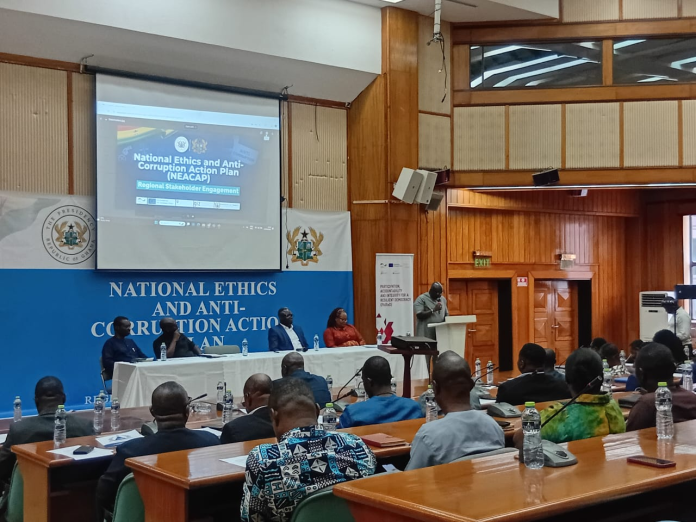
The Chief of Staff said this at a regional stakeholder engagement in Accra to finalize the new National Ethics and Anti-Corruption Strategy and Implementation Plan (NEACASIP).
The event brought together various formal and informal stakeholders to craft a blueprint for Ghana’s ethical future.
Mr. Debrah highlighted the severity of corruption, stating that it posed the single greatest threat to President John Dramani Mahama’s vision of a resilient economy.
He cited data from the Ghana Anti-Corruption Coalition, which estimates that the nation loses an astounding $3 billion USD annually to corruption, a figure twice the country’s foreign direct investment (FDI) inflow of approximately $1.5 billion USD.
“This staggering loss deprives us of the very resources we need to build schools, hospitals, roads, and create decent jobs for our youth.” Mr. Debrah stated.
Mr. Debrah stated that combating corruption is not a competing priority but a fundamental investment for the nation’s future.
He added that corruption also eroded investor confidence, bred inefficiency in institutions, and undermined the trust that held Ghana’s democracy together.
The new NEACASIP, he explained, had been placed directly under the Office of the President to ensure its implementation is not merely monitored but actively prioritized and resourced.
“Yes, government resources are limited. We face daily demands to fund health, education, roads, housing and other critical sectors, but we must recognize that corruption prevention is not a competing priority. It is a fundamental one that ought to be achieved, “he said.
Mr. Debrah emphatically stated that funding anti-corruption initiatives is not a cost but an investment. “It is the surest way to safeguard our limited resources and optimize them for development,” he said
It is the only way to ensure that Ghana’s transformation is a delivered reality and not just a promise.
He also stressed the importance of ethics as a national culture, not just a policy, citing recent media exposures that show “ethical decay is not confined to our institutions only.”
Mr. Debrah urged the stakeholders to be “candid, practical, and bold,” in their contributions, encouraging them to “disagree to agree” to ensure the final plan on anti-corruption is a “living tool that transforms governance and resource integrity to our nation,” and not just another document on a shelf.

President Mahama breaks ground for Atimpoku to Aflao road under Big Push

0

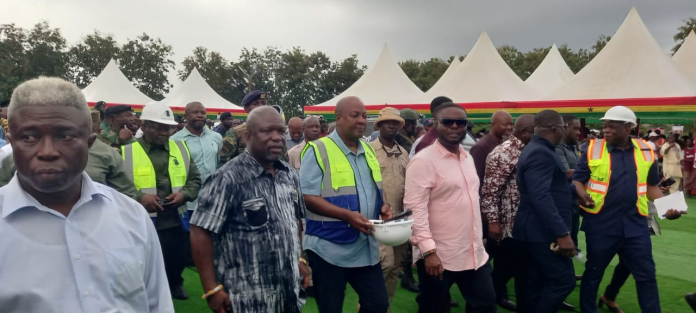
Ho, Sept. 16, GNA – President John Dramani Mahama, has broken grounds for the redevelopment of the Atimpoku to Aflao road under the Big Push Project.

The 117 kilometre road will be from Atimpoku to Asikuma to Anyrawase to Ho to Denu to Aflao.

President Mahama said the Big Push Project was a USD$10 billion project and there would not be a delay in the project which would start in 2025 since contractors would be paid timely.

He said a Big Push Secretariat would be set up at the Presidency to monitor the projects regularly.

Mr Mahama asked the citizenry to bear with the inconveniences that would come with the nationwide construction works under the Project.

He said contractors were strategically positioned to ensure that there was no workload on them to enable them finish timely.

Mr Mahama asked the contractors to engage Ghanaian workforce in all they would need for the success of the project.

He said the Big Push Programme was a great solution to the decayed roads seen across the country adding that “Volta region has had some of the most neglected roads in Ghana over the years”.

Mr Mahama said some town roads would also be worked on within the region aside the major roads when construction began.

Mr Kwame Governs Agbodza, Minister for Roads and Highways, said the past government’s commitments to the road sector had not been fulfilled.

He said government would implement the Programme to its successful end.

Mr Agbodza said Ghanaian contractors were capable of working on the Big Push Project and would complete it within schedule.

He said the roads would be completed to give comfort to the people of the Volta Region.

Mr Agbodza said all contractors and consultants must take a very fit for purpose insurance cover for their work.

He said all projects under the Big Push Programme would be undertaken in the scope of government’s 24-Hour Economy Policy where construction is done day and night.

Some other roads under the Big Push include rehabilitation of Dodo Pepesu – Nkwanta Road, Atimpoku – Asikuma Junction Road, Asikuma Junction – Anyirawasi Road, reconstruction of Anyirawasi – Ho Tritrinu Road, rehabilitation of Ho – Kpetoe Road, Kpetoe-Afiadenyigba Road Afiadenyigba – Penyi Road and Penyi – Aflao Road.

Togbe Afede XIV, Agbogbomefia of the Asogli State, said there was the need for support for the government to deliver the promise of more jobs.

“Certainly, this is not a problem for the government alone to carry.”

He thanked the President for supporting the private sector in delivering its share of the solution.

Messrs. First Sky Ltd, a Ghanaian contractor would work on the dualisation of Anyrawase-Ho section, dualisation of Ho UHAS by-pass road and dualisation of Ho-Denu road section.

Zenith@20: Past, present and the promise of tomorrow

0

Two decades on, Zenith Bank (Ghana) Limited is celebrating more than survival.
It is marking 20 Years of Impact, a Lifetime of Shared Growth; a journey shaped not only by its balance sheet but also by the people, businesses, and communities whose progress it has shared.
The rise and rise of Zenith Bank 
On that bright September morning in 2005, few in the nation’s banking industry gave the new entrant much chance. 
Zenith Bank, freshly licensed, opened shop with only one branch and fewer than 50 staff. 
It was the latest Nigerian bank to cross the border, following in the footsteps of national peers. 
At the time, the domestic financial ecosystem boasted an array of heavyweights including indigenous champions. 
A continental powerhouse was already entrenching its pan-African credentials. Zenith Bank’s arrival raised eyebrows.
By the end of its first year, Zenith Bank had made clear it was not here to play.
Customer service queues were shorter, turnaround times were faster, and its staff, carried themselves with a confidence that set them apart. Zenith Bank meant business.
Speed, service and structure
From the very beginning, Zenith distinguished itself as the Bank that viewed technology not as a mere accessory, but as a critical infrastructure driving excellence and growth. 
This vision was implemented across the entire bank, establishing a new standard for efficiency and excellence in the industry.
Corporate customers, in fast-growing sectors, were early adopters, recognising the Bank’s ability to deliver efficient and technology-driven solutions. 
Retail customers were quick to follow, drawn by the blend of a solid structure and reliability but also by the warmth and personal touch of exceptional customer service.
Two decades of resilience
Fast-forward twenty years, and Zenith Bank has grown into a bonafide market heavyweight. Its balance sheet tells its story. 
From under GH¢1 billion in assets at the start, it has climbed past GH¢22.5 billion by the second quarter of 2025. 
Customer accounts have surged, with profit for the period alone at more than GH¢722 million.
Behind these numbers is a story of consistency as Ghana’s banking sector has seen it all; the 2008 global financial crisis, currency shocks, the oil price crash, the 2014 energy crisis, the banking sector clean-up of 2017–19, the COVID-19 pandemic and the 2022 – 24 debt restructurings. At each turn, banks folded, merged, or required bailouts.
Zenith Bank stayed solid.Its capital adequacy ratio stands above regulatory minimums. Its non-performing loan ratio remains one of the lowest in the industry. 
Commentators are unanimous that it is one of the few banks that maintained discipline even during Ghana’s recent debt restructuring, a period that shook confidence in the entire sector.
Building on the years
Zenith Bank’s growth cannot be separated from Ghana’s broader economic transformation. 
The mid-2000s saw a surge of optimism as Telcos expanded, real estate boomed and in 2007, Ghana discovered oil. 
Businesses needed capital. Governments needed banks to handle payrolls, projects and foreign inflows. SMEs needed trade finance. Zenith Bank inserted itself at every level.
At every turn, the Bank focused on being reliable. For customers, the experience was a bank that felt modern, efficient, and trustworthy.
Digital dominance
Zenith Bank’s continued investment in technology produced for the bank a robust digital banking infrastructure.
In 2009, when mobile money entered the scene, Zenith Bank saw opportunity. It positioned itself as an enabler.
Its mobile banking solutions (ZMobile App and SMS Banking service) became popular among customers who wanted banking on the go.  
Internet Banking (i-banking) allowed individuals to view real-time online account balances, view and download account statements, etc, whilst Corporate Internet Banking simplified payrolls, vendor payments, and more. 
Keeping fintechs and Payment and Settlement Systems close
The rise of fintechs has reshaped finance across the globe and Ghana was no exception. 
Reactions were varied but instead of resisting, Zenith Bank partnered with them. Its API offerings integrate seamlessly with payment apps and online businesses 
The Bank forged strong collaborations with key players such as the Ghana Interbank Payment and Settlement Systems (GhIPSS), I.T Consortium, ExpressPay, and Hubtel, strengthening its role in advancing Ghana’s digital financial ecosystem. 
Zenith Bank’s involvement in the Pan-African Payment and Settlement System (PAPSS) puts it at the heart of cross-border digital trade. By choosing collaboration, Zenith Bank kept itself relevant in a fintech-driven economy.
Loans that built industries
Zenith Bank’s loan portfolio is evidence that it is truly in the business of banking. 
By mid-2025, its loan book stood at more than GH¢4 billion, with SME lending growing four-fold over the preceding 18 months. But these are not just numbers on a balance sheet, they are new factories, expanded schools, and trucks on the road. From agribusinesses in the north to logistics companies in the ports. Zenith Bank’s credit has powered growth.
SMEs, often ignored by larger banks, have benefited from partnerships that reduce risk and open doors. For Ghana’s economy, where small and medium enterprises account for over 70 percent of jobs, this has been significant. 
In a year and a half, 135 businesses nationwide had received over GH¢156 million from the bank. 
Beyond the balance sheet
20 Years of Transforming Lives and Communities
For two decades, Zenith Bank’s CSR efforts have touched vital sectors including education, health, ICT, youth empowerment, human capital development, and sports.
The Bank offered scholarships to underprivileged children, donated computers and textbooks, established computer labs, constructed and refurbished public schools, and supported academic excellence through long-standing award sponsorships at secondary and tertiary levels. 
The Bank has funded life-saving surgeries and treatments for individuals with life-threatening conditions, contributed to maternal and child health initiatives, and distributed footwear to children in need.
Its flagship Zenith Health Walk encourages nationwide wellness through accessible fitness.
The Bank has also supported entrepreneurship and capacity-building workshops to boost employability and self-development. 
The Bank’s sponsorships – from junior tennis and golf tournaments to the national Black Stars participation in the AFCON and FIFA World Cup demonstrate its belief in the power of sports to unite, uplift, and inspire communities.
Sustainability stakes
As climate change and environmental concerns take centre stage globally, Zenith Bank has embraced its role as a responsible corporate citizen, taking meaningful steps to secure a greener, more sustainable future.
The Bank’s Environmental, Social, and Governance (ESG) unit drives its green finance agenda and implements environmentally conscious initiatives across its operations. 
Several branches operate with solar power and energy-efficient systems, reflecting a deliberate effort to reduce the Bank’s carbon footprint. 
The Bank’s investments include a 50MWp Solar Photovoltaic Project, the roll-out of the Zenith Visa Fleet Card, made from Polylactic Acid (PLA) – a biodegradable, bio-sourced plastic derived from renewable resources among others. 
Empowering Women, Expanding Opportunity 
Over the past years, Zenith Bank has supported female entrepreneurs and enabled women-led businesses achieve success. 
Through its Z-Woman lifestyle initiative, the Bank offers tailored financial solutions, trainings in entrepreneurship and financial planning, etc to empower women.
Collaborations with the African Guarantee Fund, Mastercard Foundation (BRIDGE in Agriculture), and Development Bank Ghana (DBG) have improved access to affordable financing, particularly for women-owned MSMEs, agribusinesses, and small corporates.
These efforts have significantly narrowed the gender finance gap, strengthened entrepreneurial capacity, and enhanced financial inclusion, reinforcing Zenith Bank’s enduring commitment to inclusive, sustainable development.
Corporate Governance: The Backbone of 20 Years of Excellence
At the heart of Zenith Bank’s 20-year journey of banking excellence lies a strong foundation of sound corporate governance.
The Bank’s Board of Directors has consistently demonstrated visionary leadership, accountability, and a commitment to ethical business practices.
Through well-structured oversight, strategic decision-making, and a firm adherence to regulatory standards the Board has been instrumental in shaping Zenith Bank into one of the most trusted and resilient financial institutions in the country.
People Power
Complementing the leadership is Zenith Bank’s exceptional workforce, which has grown from just 45 employees in 2005 to over 1,400 staff members today. 
This growth reflects Zenith Bank’s deliberate investment in human capital through ongoing training, leadership development, and a performance-driven culture. 
Whether in front-line customer facing roles or behind-the-scenes operations, each team member has played a vital role in building the Bank’s reputation as one of the most trusted and service-oriented institutions in Ghana. 
Customers: The Driving Force Behind 20 Years of Excellence
For two decades, customers – from individuals and SMEs to large corporations – have been at the heart of Zenith Bank’s operations. 
Their continued confidence and patronage have powered the Bank’s growth, expansion, and innovation. 
The Bank’s customers have actively shaped Zenith Bank’s journey by providing invaluable feedback and setting high expectations for service delivery.
Excellence noticed
In two decades, Zenith Bank Ghana has not only built numbers but also won the respect of peers, regulators, and industry watchers. This commitment has been recognised both at home and abroad, with the Bank receiving over 250 prestigious local and international awards.
Some of the dearest include Bank of the Year – Ghana Banking Awards 2008, Best Bank – Most Socially Responsible Bank – Ghana Banking Awards 2011, Best Bank – Corporate Banking – Ghana Banking Awards 2012, Best Bank – Customer Care – Ghana Banking Awards 2013, Most Corporate Governance Compliant: Universal Banks Category – 4th IoD-Gh Corporate Governance Excellence
Awards 2021, Best Retail Bank for Customer Service, Ghana 2023 – Global Brand Awards and the coveted Bank of the Year Ghana Award (won five times – 2014, 2015, 2017, 2018, 2024) – The Banker Awards.
Voice of gratitude
Milestones are not achieved in a vacuum. 
To our shareholders and Board members, who have supplied capital and provided strategic oversight. 
Our regulator, the Bank of Ghana, which has provided a framework that was at times taxing but ultimately stabilizing. 
Our customers – individuals, corporates, SMEs, whether multinationals, you have been the bedrock of Zenith Bank’s growth. 
Our staff, Team Zenith, growing from dozens to thousands, carrying the culture of professionalism forward and flying high the Zenith flag. 
Our technology partners, auditors, and correspondent banks, who fill in critical gaps. Our vendors, suppliers and partners
The story of Zenith Bank is the story of a web of stakeholders whose contributions have been indispensable. 
To our shareholders and Directors, our regulator, the Bank of Ghana, Customers, Staff, Technology Partners, Auditors, Correspondent Banks, Vendors, Suppliers and Partners, “We say thank you for your trust, loyalty and support” – Mr. Henry Chinedu Onwuzurigbo, MD/CEO.
The next chapter
In the words of Mr. Onwuzurigbo, as the Bank steps into its next chapter, its anniversary theme – 20 Years of Impact, a Lifetime of Shared Growth, captures both gratitude for the past and ambition for the future.
“Our future will depend on balancing prudence with boldness, managing risk while financing growth, embedding CSR and ESG further in practice, ensuring innovation does not outpace security, and keeping our valued customers at the heart of our business,” he said.
The Managing Director said “Our two-decade record is evidence that we have the capacity to adapt and the agility to remain ahead for the next 20 years and beyond.” 

Akan NPP urges calm in the constituency.

0

Mr. Frank Adjei-Worlanyo, the Communications Officer of the New Patriotic Party (NPP) in the Akan Constituency, has called on supporters of the National Democratic Congress (NDC) to give peace a chance amid recent tensions.

His appeal follows the barricading of the offices of the National Health Insurance Scheme (NHIS) Manager and the District Director of the National Disaster Management Organisation (NADMO) on Monday, September 15.

The action was reportedly carried out by a group believed to be affiliated with the NDC.

The group, led by Mr. Sampson Quarshiga, the NDC Youth Organizer for Akan, claimed the appointments to those positions were made without consulting the party hierarchy.

Mr. Adjei-Worlanyo described the barricading as unwarranted and unnecessary and urged the aggrieved parties to opt for peaceful dialogue to address their concerns and avoid actions that could disrupt harmony in the Constituency.