
Home Blog Page 464

Government establishes a GH₵ 15 billion Ghana Financial Stability Fund

0

Government has established the Ghana Financial Stability Fund (GFSF) with a target size of GH₵ 15 billion to be provided by the government and its development partners.

The Fund will provide liquidity to financial institutions that participate fully in the Domestic Debt Exchange.

A statement issued in Accra by the Financial Stability Council said all financial institutions (banks, SDIs, pension schemes, collective investment schemes, fund managers, broker/dealers, insurance firms) that fully participated in the Debt Exchange could access the Fund for augmented liquidity support, with effect from the date of completion of the Exchange.

It said the Fund would be managed by the Bank of Ghana under unique operational guidelines being developed by the Council.

The statement said the Council would provide ongoing advice and oversight for the use of the GFSF, including accounting treatment and regulatory Tools to Mitigate Financial Stability Risks from the Debt Operation  It said the regulators were already in discussions with external auditors of financial institutions and would provide guidance to ensure a standardized approach to the accounting treatment applied to the Debt Exchange.

The statement said potential impacts on Debt Exchange on Financial Sector Stress tests have been conducted by the relevant financial sector regulators to estimate the potential impact of the Debt Exchange for banks, specialised deposit-taking institutions (SDIs), insurance firms, asset managers, collective investment schemes, pension fund trustees, and regulated pension schemes, that could result from their participation in the debt exchange.

It said to help manage the potential impacts of the Debt Exchange on the financial sector, financial sector regulators would deploy all regulatory and supervisory tools to mitigate risks to financial stability.

“Regulators will assess impacts on a regular basis, and quickly address evolving risks in order to safeguard financial stability,” it said.

The statement said in keeping with its mandate, the Council would continue to closely monitor the impacts of the Debt Exchange on financial institutions and on the financial system, as well as the effectiveness of the measures outlined above.

These measures will be reviewed continuously and recalibrated as needed to ensure maximum effectiveness to safeguard the stability of our financial system and the protection of deposits, pensions, policyholders’ funds, and investor funds/assets.

On December 5, 2022, the Government of Ghana launched Ghana’s Domestic Debt Exchange programme, an invitation for the voluntary exchange of approximately GH ₵ 137 billion of the domestic notes and bonds of the Republic, including E.S.L.A. and Daakye bonds, for a package of New Bonds to be issued by the Republic.

The Exchange excludes Treasury Bills in totality, and notes and bonds held by individuals.

The Council was established in December 2018 Regulatory Forbearance on Liquidity and Solvency Financial sector regulators will temporarily reduce regulatory capital and liquidity requirements for regulated firms and schemes that voluntarily participate in the debt operation.

Regulators will also suspend or delay any new rules that will have an adverse impact on liquidity or solvency. Each regulator will communicate more specific reliefs to its regulated firms/schemes in due course.
Govt’s flagship programmes provide wide range of opportunities for the youth – MCE

0

Mr Simmons Sekyim, the Ga North Municipal Chief Executive (MCE), said the government’s flagship programmes provide a wide array of opportunities for the youth to satisfy their interests in agriculture.

These programmes, geared towards improving food security and economic growth, include the planting and rearing for food and jobs, planting for food and export, One-District-One-Factory, and the greenhouse technology villages.

He said the Assembly was ready to provide the technical and material support to the youth who would approach it for assistance to venture into farming and animal rearing adding that those already in the business were reaping the dividends.

Mr Sekyim was speaking with the Ghana News Agency after the Ga North Municipal Farmers Day celebration on the general theme:  “Accelerating Agriculture through Value Addition”.

He called on the youth to make a firm decision to start a simple farming activity or animal husbandry and said those already employed could engage in farming as an aside job to get extra income.

“With a minimal start-up capital and technical support from the Assembly they were good to go,” he said.

“It is always better for the youth to explore other income generation options  than to be fixated on only formal employment”.

Mr Sekyim commended all award winners and urged them to work harder for bigger awards and recognition in subsequent celebrations.

Mr Solomon Bawah won the Municipal Best Farmer and received a refrigerator, TV set, and variety of farm implements.

He called on the local authorities to support farmers with irrigation  equipment as the irregular rainfall pattern affected the growth and harvesting periods of crops.

Mr Bawah urged all citizens to start some backyard farming to ensure food security in addition to maximising income.

National Statistical Advisory Committee Inaugurated

0

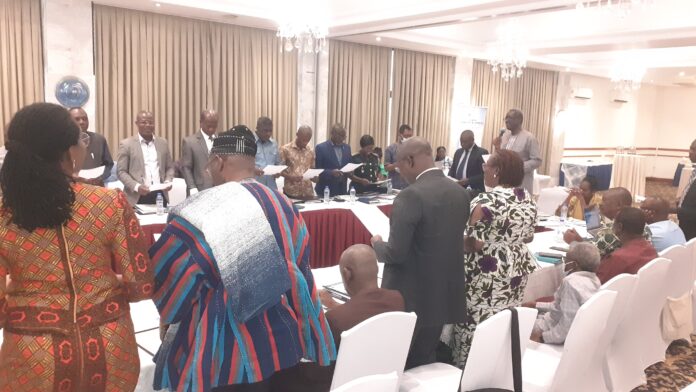
The National Statistical Advisory Committee (NSAC) has been inaugurated with a call on members to work towards a systematic improvement of quality data.

The statutory committee established under the Statistical Service Act, 2019, (Act 1003), is tasked with strengthening the production of harmonised and quality statistics and facilitating the coordination of statistical activities within the National Statistical System (NSS) .

The 25-member committee, with a two-year mandate, comprises representatives from key users of statistics in public institutions.

 Nana Agyekum Dwamena, the Head of Civil Service, administered the oath of office and oath of secrecy to the committee members.

He highlighted the important role that the NSAC needed to play in strengthening the national statistics, which need invigoration.

That, he stated, was based on the findings from the 2018 National Statistical Assessment and the 2022 User Satisfaction Survey.

“The assessment also found statistics production by MDAs, Regional Coordinating Councils, and Metropolitan, Municipal, and District Assemblies to be generally weak and uncoordinated, making it difficult for the national statistical system to cope with emerging internal and external demands,” he said.

“Just about one-third (34.6 per cent) of institutions are of the view that policymakers use official statistics for evidence-based decision-making.”

He urged NSAC members to bring their expertise and varied experiences to bear and help put in place the requisite systems and structures to strengthen the statistical ecosystem.

 Professor Samuel Kobina Annim,
the Government Statistician, said the specific objectives for the establishment of the committee were to establish an effective national statistical system, advance the integration of both experimental and official statistics with practice, policy, and research.

He added that the committee was also tasked with pursuing the attainment of methodological rigour and integrity of data systems, analysis, and interpretation for both the private and public sectors and to harness the resourcefulness of the global data revolution agenda.

Prof Annim said among the functions of the committee were providing guidance on the harmonization, compilation, and dissemination of high quality data and supporting the attainment of data and statistical credibility.

Take a healthy interest in the public affairs of the country, doctors urged

0

Professor Clifford Nii Boi Tagoe, a Consultant on Tertiary Education Systems, has advised young doctors to take a healthy interest in the public affairs of the country.

He said this was critical as scientists had left public affairs in the hands of people on the non-scientific side.

Prof Tagoe said this at the third Graduation Ceremony of the Accra College of Medicine (ACM) at the weekend on the theme: “Building Resilience in Medical Education Post COVID-19.”

He said, “our society, its education system, and its intellectual life, is characterized by a split between two cultures—the arts or humanities on one hand, and the sciences on the other.”

I urge that doctors balance this equation with more of a scientific turn of mind, he stated.

Prof Tagoe said doctors rendered public service, whether in a private hospital or a public facility, and as such must remained principled in their line of duty.

He said doctors must be selfless, and show integrity, objectivity, accountability, openness, honesty, and leadership in discharging their duty.

In the course of medical practice, quite occasionally, things do go wrong. But in such circumstances, let the principles I have recommended be your guide and always ensure that you get your procedures right,” he advised.

Prof Tagoe explained that the public affairs of the country were in a topsy-turvy situation with the present economic situation, increasing prices of drugs, laboratory investigations, and medical treatment generally have all become expensive and barely affordable.

“Nonetheless, it is my earnest hope that when your spirit of Heart-Power is called for, you shall not be found wanting,” he added.

Prof Afua A.J. Hesse, the President of the ACM, urged the graduating class to persevere and have a growth mindset to be able to adapt faster to things evolving around them and make an impact on the medical profession wherever they found themselves.

“Do not take networking for granted, be open-minded and accept wrong and criticisms and contribute significantly to your world of practice,” she advised.

Prof Hesse again encouraged the doctors to be innovative, determined, excellent, demonstrate integrity and above all be resilient when life throws hard at them.

Emeritus Professor Stephen Adei, the ACM Council Chairman, in a message read on his behalf, advised the class to show unconditional love and care to vulnerable patients who would come to them in their hour of need.

Eight doctors graduated with a Bachelor of Medicine.

Dr Nana Afua Owusu-Sekyere won the Overall Best Female Student with four laurels, including the overall Best Student in Children’s Health, MDS-Lancet Laboratories Ghana Limited’s Overall Best Student in Anesthesia, Yeboah Hospital’s prize for Overall Best student in Community Health and Focos Orthopaedic Hospital’s prize for the Overall Best student in Orthopedics.

Dr Joshua Osei-Bonsu also won five awards, including the overall best male student, Medifem Multi-Specialist Hospital and Fertility Centre’s Prize for the overall best student in Women’s Health, Teddy Konu’s prize for the overall best student in medicine, Kwaku Mensah-Bonsu’s Prize for the Overall Best Student in Surgery, and Rabito Clinic prize for the overall best student in Dermatology.

The Accra College of Medicine, established in 2015, seeks to provide world-class medical education that is relevant, research-oriented and tailored toward solving Ghana and Africa’s health problems.

MLNR creates common platform for stakeholder dialogue on land sector transformation

0

The Ministry of Lands and Natural Resources (MLNR) is set to hold the National Land Conference 2022, to create a common platform for state and non-state actors to dialogue on effective ways of transforming the country’s land sector.

The conference, slated for Tuesday December 6 to Friday, December 2022, would build on the efforts of government and development partners to reform  the land sector.

The conference on the theme: “Leveraging National Land Policy, Legislation and Institutional Capacity Towards Sustainable Socio-Economic Development”, would also institutionalise a structured arrangement for multi-stakeholder participation in land administration.

Speaking in an interview with the Ghana News Agency (GNA) in Accra, the Technical Director, Lands at the Ministry of Lands and Natural Resources, Mr Maxwell Adu Nsafoah, said president Nana Akufo-Addo would grace the occasion.

He said successive governments had sought to improve the country’s land administration regime through the introduction of various initiatives.

“The major interventions in land administration have been through the Land Administration Project (LAP) – phases 1 and 2, which sought to lay the foundation and consolidate urban and rural land administration and management systems for efficient and transparent land service delivery”, he explained.

He also acknowledged the contribution of non-state actors in complementing the government’s efforts of addressing the challenges in the country’s land administration.

Mr Nsafoah cited projects implemented by Non-governmental Organisations (NGOs) such as Solidaridad, GIZ, USAID, Rights and Resources Initiative (RRI), and COLANDEF, which had yielded some positive results and had contributed to improvements in the land sector.

Such results she identified included the development of a Handbook for Customary Land Rights Documentation, piloting of customary land rights documentation, organization of an Africa Regional Consultative Workshop on Securing Land Tenure in Africa, and Analysis of the Social Inclusion Dimensions of Large Scale Land Acquisition, among many others.

He, however, observed some challenges in the land sector to include: weak land administration and management systems, multiple land sales, and compulsory acquisition by the government of large tracts of land unutilized and compensation unpaid, among others, which needed concerted efforts to be addressed.

“The management of other natural resources including timber, minerals, and water add to the challenges of securing land rights for sustainable socio-economic development”, he added.

Mr Nsafoah therefore, stressed the need for a more inclusive, strategic, and sustained multi-stakeholder approach to improve the administration of land and other natural resources as well as to restore many of the degraded lands in the country.

He explained that the success of the conference would also help advance the attainment of the United Nation’s Sustainable Development Goals (SDGs), including goal 15, which sought to “Protect, restore, and promote sustainable use of terrestrial ecosystems, sustainable forest management, combat desertification, and halt and reverse land degradation and halt biodiversity loss.”

He said the conference would also provide opportunity for the stakeholders to discuss and adopt innovative approaches and enabling technologies for improving land governance and land administration in the country.

He said it would also help increase public awareness and the potential benefits of the Land Act, 2020 (Act 1036) and the Land Use and Spatial Planning Act, 2016 (Act 925).

Government should use data to drive Agriculture sector development

0

The Government has been called on to use data as a guide in the drafting and implementation of agriculture policies to bring about the needed development and impact on the livelihoods of Ghanaians.

This comes as policy advocates and researchers argue that policies in the Agric sector spearheaded by the Government lacked the needed evidence-based information.

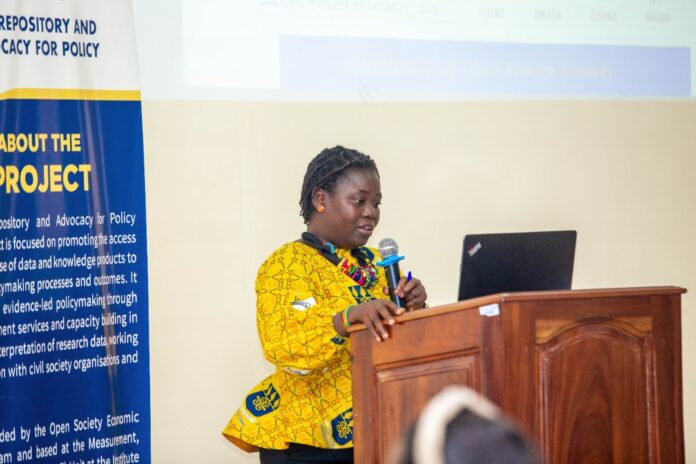
Dr Fred Dzanku, the Coordinator for the Data Repository and Advocacy for Policy (DARAP) project, said data was important for decision-making, adding that without data there could not be any proper planning.

He said this in an interview with the Ghana News Agency on the sidelines of a stakeholder engagement on how data could be used to drive development in Ghana’s agriculture sector, in Accra.

He said: “If you implement policies that are based on research, those policies are most likely to be impactful,” and called for a stronger linkage between research, policy and implementation to drive Ghana’s agriculture development.

“Agriculture is perhaps the single most important sector that we think that, if we’re focused on, can drive our economic transformation and be able to dampen our inflationary pressures.” Dr Dzanku, added.

The forum, which brought together researchers, civil society actors and policymakers, also discussed the use of science communication for policy through a data repository and advocacy system.

He called for the need to address the gap that existed in the way scientists and researchers communicated their findings to end users particularly, Civil Society Organisations (CSOs), to engender policy influence in the sector

Dr Gertrude Dzifa Torvikey, a Researcher with ISSER, heightened the call for Ghana to have a structural change in its agriculture policies to help address the inflationary pressures and economic challenges the country often faced.

She said though the sector was still the top employer, its contribution to the national employment and economic growth in terms of Gross Domestic Product (GDP), had been declining since the 1960s, mainly due to its input-driven nature.

Citing the Planting for Food and Jobs as an example, Dr Torvikey, noted that the Government had given 60.1 per cent to fertilizer, 20 per cent, seeds, with extension services having 9.6 per cent, while 1.3 per cent goes into marketing.

She said: “We have focused more on fertilizers, which are import driven. What it means is that we spend a chunk of our budget importing these fertilizers, so, our monies do not remain in the country.”

She, therefore, called for a stronger collaboration between the Government and stakeholders in the agriculture value chain to drive investment into the distribution, storage and processing sectors.

Dr Kofi Asante, a Senior Research Fellow at the Institute of Statistical, Social and Economic Research (ISSER), also bemoaned the political economy of the agri-food systems in Ghana that had not supported smallholder farmers enough.

He said though smallholder farmers dominated the sector, they continued to face constraints to upscale due to the low use of improved inputs and mechanisation, and called for an integrated system, backed by evidence to inform policy implementation.”


Continue to educate public on the impact of HIV/AIDS -HIV Focal Person

0

The Sekondi-Takoradi Metropolitan Assembly (STMA) HIV focal Person, Mr Isaac Aidoo, has called on stakeholders, especially Christians and Moslems, to encourage young people to abstain from unprotected sexual activities and married couples to be faithful to one another. 

He said, “to us and to those around us, each of us has a duty, our personal health is something that each of us is accountable for, every one of us should get tested for HIV, and if the result is negative, ensure that you maintain your status for the rest of your life.  

“Alternatively, if you are diagnosed with HIV, it is not the end of your life. You will be initiated onto anti-retroviral therapy right away and stick with it”. 

Mr Aidoo said this in a statement to commemorate the 20th anniversary of Ghana Aids Commission and to observe World Aids Day, which was on the Global theme: “Equalize”.  

 The day, he noted, coincided with the commemoration of the 20th Anniversary of the Ghana AIDS Commission of which Ghana has adopted the National theme: “Twenty Years of Multi-Sectoral Response to HIV & AIDS in Ghana: Accelerating progress to end AIDS”, provides stakeholders the opportunity to come together in response to the HIV and AIDS epidemic and evaluate management efforts.  

According to him, it also offered the chance to remember those who have passed away from AIDS-related causes and to show support for those who are living with and affected by HIV. 

Mr Aidoo said the global theme of “Equalize”, called for action to address the numerous inequalities that deny at-risk and vulnerable populations access to essential HIV services and severely undermine the progress toward ending AIDS by 2030. 

He said the subject offered a solid framework for all participants in the HIV and AIDS response to critically assess the progress made through the combined efforts to carry out the country’s “Elimination Agenda.” 

The HIV Focal Person explained that over the last five years, there had been a fluctuating HIV prevalence in the Sekondi-Takoradi Metropolis with an HIV prevalence of 1.9 per cent, which according to him was higher than the regional prevalence of 1.7 per cent and the national average of 1.68 per cent.  

He announced that there were more than 1,200 new HIV infections as projected in 2020 and an estimated 25,620 persons living with the virus in the region, thereby making the Western Region one of Ghana’s top five Regions for new HIV infections. 

 He gave a special recognition to the community of people living with or impacted by HIV and AIDS for their vital contributions to reduce the rate of new infections and commended HIV-positive people known as the ‘Model of Hope’ who act as inspirations for others by offering newly diagnosed patients counseling on their psychosocial needs and how to stick with their anti-retroviral therapy.  

“Indeed, your committed service is still essential for the early start and continuation of anti-retroviral therapy for the newly diagnosed patients who might otherwise have been lost to follow-up”, he added. 

“It is important to note that, HIV is primarily transmitted from mother to child and through unprotected sex with an infected person, if you are currently in default, it is time to start your anti-retroviral therapy again. None of these things can be done on your behalf by anyone. You are accountable for it on your own”. 

He called on the media to dedicate at least five minutes of their airtime each day to educate and preach the ABC messages (A=Abstinence, B=Be faithful and C=Use condom if you are not married and cannot abstain). 

He further asked the media to provide the platform for resource persons from the health sector, who are always available to discuss, update and educate the public on HIV & AIDS issues in the Metropolis, adding “HIV is real and is not a respecter of any person. We should all work together to eliminate HIV in the Metropolis”. 

Western Region health authorities targets 18,000 unvaccinated Covid-19 persons

0

The Western Regional Directorate of the Ghana Health Service is targeting more than 20 per cent of the unvaccinated persons under the routine vaccination exercise slated between November 30 and December 5. 

The Region currently has over nine million unvaccinated individuals and the Service hopes to vaccinate at least 18,000 out of the number to achieve some milestone in the fight against the deadly virus. 

 Dr Gifty Amugi, the Deputy Director of Public Health, told stakeholders during a meeting that getting a herd immunity as the yuletide approached had become a matter of concern and stakeholders needed to fully participate in the campaign to ensure that the target was achieved.  

The Vaccination exercise is being organised with support from the USAID/JSI VAX project. 

Dr Amugi said since April 2020, various interventions made by the region had resulted in minimal death toll from the COVID-19, adding out of 8,807 cases recorded, 8,732 of them recovered. 

The Region has fully vaccinated 497,491 (30.6%) of people with 720,023 (44.3%) receiving only one dose. 

The Reverend Father Gabriel Sampson, of the Anglican Church in Sekondi assured the Directorate of massive campaign among the churches under his jurisdiction to fully participate.  

Similar pledges of support were given by the media, Population Council, Red Cross, market women and the NCCE.  

Minority to resist approval of budget estimates over Sector Ministers’ absence

0

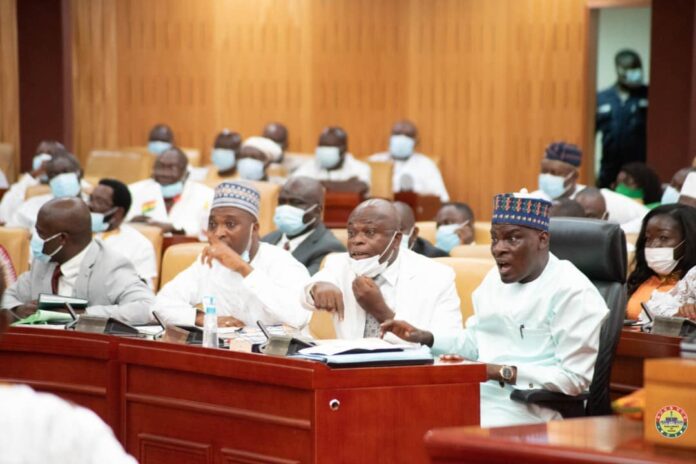
Mr Haruna Iddrisu, Minority Leader, says the group will resist the approval of budget estimates for ministers who fail to move the motion of the ongoing debate of the 2023 Budget Statement and Economic Policy of their respective ministries in the House. 

He expressed concern about how ministers of the various ministries were not taking the business of the House seriously. 

“Mr Speaker, going forward, we will resist the approval of any estimates coming from ministers who absent themselves from such exercises,” he said. 

Mr Iddirsu said this on the floor of Parliament on Thursday. 

Parliament is expected to conclude a debate on the 2023 Budget Statement and Economic Policy presented by Mr Ken Ofori-Atta, Finance Minister, Tuesday, December 6, 2022. 

The House is thus expected to subsequently approve the Appropriation Bill. 

Mr Iddrisu, the Member of Parliament for Tamale South on the ticket of the National Democratic Congress, further cautioned sector ministers to avail themselves to the House for the approval of their budgets. 

“When we get to the approval of budget estimates and ministers don’t appear in person in Parliament by themselves, we will not support the approval of the budget allocations to those ministries. 

“Ministers must take this House very seriously, and only ministers so appointed by the President to oversee the sectors of those ministries must rise from their seats to move motions to ask for budget allocations and approval by this House. Failure to do so will mean that we will stump down a number of those motions,” Mr Iddrisu said. 

He noted that  Parliament and the minority would hold the government accountable, adding that “we intend to strengthen oversight, and it begins with this our decision. If ministers don’t appear in person to move motions for budget allocations, then they should expect the fiercest resistance from this side of the House.” 

Since the debate on the 2023 Budget Statement and Economic Policy began on Tuesday, November 29, the MPs on the Majority side have silently protested without showing up to contribute to the debate compared to the Minority side of the House. 

The group had also called for the timely debate of the censure motion against Mr Ofori-Atta since it was not captured in the Business Statement for the following week. 

“On the motion of censure against the Finance Minister, the words in Article 82 do not give Parliament perpetuity to discuss the matter, we are within defined time limits to consider the motion and take decisions as appropriate so whatever committee has been set up, we need to bring closure to it,” he said. 

CDD-Ghana lauds Africa for consolidating the continent’s democratic gains    

0

The Ghana Centre for Democratic Development (CDD-Ghana) has lauded Africa governments for embracing, strengthening and consolidating the gains of democracy on the continent. 

The civil society organisation, however, noted the resurfacing of some negative democratic tendencies remained problematic on the continent and needed to be tackled proactively. 

 Mr Paul Osei-Kuffour, Programmes Manager, CDD Ghana, who gave the commendation, said it was unfortunate some governments on the continent had abused political power by extending their terms of office, a situation which threatened Africa’s democracy. 

 He was speaking at the opening session of a two-day media workshop on the “I Am Aware (IAA)” Project, underway in Accra, and organised by the CDD-Ghana. 

The William and Flora Hewlett Foundation is supporting the CDD-Ghana to implement the IAA project, a social accountability initiative to strengthen citizens’ access to government service delivery performance, planning and resource allocation information. 

It creates further opportunities for engagement and dialogue with policy bureaucrats and frontline service providers, thereby strengthening accountability and governmental responsiveness to service delivery. 

Selected Journalists and media practitioners drawn from the Bono, Ashanti, Eastern, Upper East, Northern and Upper West regions are attending the workshop on the theme: “Strengthening Civic Participation at the Local Level; The Role of the Media in Improving Civic Space and Fostering Civic Engagement at the District Level.” 

Mr Osei-Kuffour said, “CDD survey confirms the capture of democracy by private individuals in parts of the continent”, saying the extension of terms of offices of Presidents in Cameroon and Equatorial Guinea did not augur well for Africa democracy. 

He said although Ghana had made significant progress in her democratic governance system with some liberal media environment, the media in the country was confronted with challenges of continuous government control of the state-owned media. 

Mr. Osei-Kuffour said challenges of delays in the disbursement of the District Assembly Common Fund, rising level of inequality, corruption in the management of national resources, as well as lack of transparency in the distribution of royalties, were inimical to the growth and development of the nation’s fledgling democracy. 

He, therefore, urged the media and civil society to reflect and re-orient their programmes to well inform and inspire citizens to be interested and actively engage in decision making processes to deepen local government. 

Mr Mohammed Awal, the Team Lead for Social Accountability, CDD-Ghana, highlighted the role of the media, and called on journalists to develop interest and put a spotlight on local government and accountability. 

He also entreated the media to develop interest in highlighting the voices of the vulnerable and minority groups, especially People Living with Disabilities, and youth to inform policy formulation and implementation.