Home Blog Page 463

Google says the Maps and Waze teams will remain separate despite the merger.

0

It’s another cost-cutting measure by Google, but no layoffs are planned.

The Wall Street Journal has claimed that Google plans to combine its Waze and Maps operations as part of recent cost-cutting initiatives. Google said it will continue to keep the Waze and Maps applications distinct, but the change is intended to lessen duplication of effort across the products.

According to a spokeswoman, “Google is highly dedicated to Waze’s distinctive brand, its well-liked app, and its thriving network of volunteers and users.” After a transitional time, Waze CEO Neha Parikh will step down, but there won’t, according to reports, be any job cuts. The 500-person Waze team will join Google’s Geo division, which is in charge of Maps, Earth, and Street View, as of this Friday.

Waze and Maps have been sharing features ever since Google acquired Waze for $1.1 billion back in 2013. Waze’s traffic data started appearing in Maps shortly after the acquisition, with speed limits, radar locations and other features arriving later. In return, Waze has benefited from Google’s know-how in search. The FTC launched an antitrust investigation shortly after the acquisition, and at the time, Google said it was keeping Waze as a separate unit “for now.”

It’s been nine years since then, but according to former CEO Noam Bardin, Waze hasn’t enjoyed complete independence. “All of our growth at Waze post acquisition was from work we did, not support from the mothership. Looking back, we could have probably grown faster and much more efficiently had we stayed independent,” he said in a LinkedIn post last year.

Waze has 151 million monthly active users, compared to one billion for Google Maps services. Still, Waze is a highly popular navigation app (particularly in Europe), thanks to its crowd-sourced nature. Individual users can easily report traffic, police, crashes, map problems, radar cameras and more with the touch of a button. Google Maps added the ability to report driving incidents back in 2019, but is less geared around crowdsourcing.

With ad revenue slowing down at Google, CEO Sundar Pichai said in September that he hoped to make the company 20 percent more efficient. Part of that, he said, could be achieved via layoffs and merging multiple products.


The 100-year-old French-built railway in Ethiopia is still essential for locals.

0

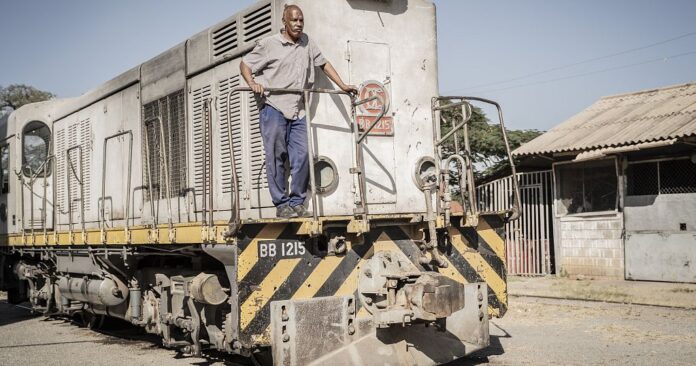
The lights that formerly lighted the train’s aging carriages have long since stopped working. The train left Dire Dawa station with a creak and vanished into the early morning darkness.

Even with the recent advent of a modern, Chinese-built line, the old track is still necessary for trade and transportation in eastern Ethiopia more than a century after the French first erected a railroad there.

To travel the 12-hour, 200-kilometer (125-mile) distance by diesel locomotive from Dire Dawa to Dewele, on the border of Djibouti, passengers and cargo cram into carriages from the 1950s.

In exchange for food and other items, they trade vegetables and the mildly narcotic shrub khat.

“We use it as transport,” said a young shopkeeper who declined to give her name, and said she exchanged goods for rice, sugar, pasta, spices, tomato sauce and oil.

The journey today spans the only functioning part of the original 784-kilometre line, which once ran between Addis Ababa, the capital of landlocked Ethiopia, and Djibouti City on the Gulf of Aden.

Since 2016, a modern, electrified railway line built by China connects the two capitals in anywhere between 12 hours and 18 hours.

But in Dire Dawa, which was built by the French to accommodate rail workers with the advent of the “Franco-Ethiopian Railway”, the “Chinese train” as it is locally known does not suit everyone.

– ‘A blessing’ –

Stops along the Chinese line are outside city lines, and the ticket price is higher.

Crucially, it only makes three stops between Dire Dawa and Dewele, compared to eight along the French line.

“The (Chinese) train doesn’t stop at any station near us,” said the young shopkeeper.

“The railway was built along small towns and districts, and people settled near the stations,” said Mulugeta Kebede, 70, a driver on the old train for four decades.

“There are places that cars can’t go, and the only means of transportation is the train.”

Ismail Khayad, deputy general manager of the ‘Dire Dawa-Dewele Railway’, said the new route did not service the region in the same way the French-built line did.

“People say the old railway is a blessing; the other one is… useless for us,” he said.

People have come to depend on the train as a bringer of food and other essentials, said Ayoub Asofa, 62, who mans the first stop after Dire Dawa, a shack about 10 kilometres from the city.

“This train is tied to the existence of the people,” he said.

“It will affect people’s daily lives if this train stops.”

– Slow decline –

Nostalgia and bitterness is evident among the railway workers of Dire Dawa, a pretty town with tree-shaded streets.

At the old train station, signs in Amharic and French — a language still spoken by some of the older railway workers — are a reminder of its storied past.

Ordered by Emperor Menelik, work on the line began in 1897 in modern-day Djibouti, then a French colony. The line reached Dire Dawa, 311 kilometres to the south, by Christmas 1902, and Addis Ababa by the summer of 1917.

Sitting at an economic crossroads, Dire Dawa was for a long time Ethiopia’s second-most populated city.

“It was the railroad that founded this city,” said Ismail.

But the railway went into decline in the 1970s with the rise of road transport and greater access to the sea via Eritrea, then part of Ethiopia.

Neglect, frequent derailments and a plodding pace saw the line fall into disuse. The Addis-Dire Dawa line was abandoned in the early 2000s, followed by the Djibouti leg.

Just 300 of its 2,500 employees remain, and the luxury sleeping cars that once ferried guests in style now lie rusting by the station.

The city, too, has deteriorated economically and socially over the years, said Ismail, who accused the Ethiopian government of having “abandoned” the railroad and its workers.

– Century-old trade –

To keep these historic trains running, the original rail workshops are kept operational, manned by a few dozen technicians.

Some of the machinery is as old as the railroad itself.

“Elwell&Seyrig, Plaine St-Denis, 1903”, reads a steel plate on a particularly vintage machine operated by veteran technician Belay Mulu, who switches it on to prove it still works.

Today he relies on a newer model, but all parts are repaired and repurposed on site because they don’t buy spares, the 53-year-old said.

“We don’t have much work now, because there’s not much traffic,” says Berhanou Bekele, 60, who heads the “Towed Equipment Repair” department at the station.

Beyond keeping trains on the tracks, these workshops are a crucial service for the region, their tradesmen turning their skills to repairing equipment at hospitals and factories.

“There is no workshop like it” within 500 kilometres, said Woubest Arefe, who relies on technicians at the railyard to build crucial parts for the detergent factory he manages.

“If it’s not here, either we have to bring it from China, which is very costly… otherwise we have to go to Addis Ababa,” he said, adding that would increase the overall cost.

The railway workers refuse to let their century-old know-how disappear.

“We have received it from our elders and we need to pass it to the next generation to preserve it,” said Ahmed Abdallah, a 53-year-old train driver. “People get old, but knowledge never gets old.”


 

States from the Pacific, Caribbean, and Africa will collaborate to improve road safety

0

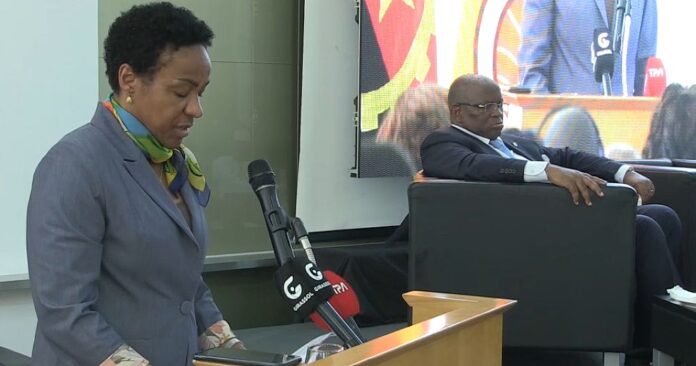
The second day of the Organization of African, Caribbean, and Pacific States (OACP) summit, which will bring together heads of state next Friday and Saturday in the capital of Angola, was spent at work in Luanda.

The Young Forum, which was held to commemorate the day, featured discussions on youth involvement in road safety. According to the WHO, road traffic accidents claim the lives of about 1.25 million people annually, with 90% of the fatalities taking place in low- and middle-income nations.

The OACP Secretary General Georges Chikoti said that the approach of the governments of the organisation’s member states, with regard to Road Safety, must be “inclusive and involve the private sector”, universities, civil society and young people in general.

“It is essential to forge inclusive and effective alliances and implement programmes at the national level to overcome the challenges in terms of Road Safety,” Chikoti said.

Road traffic crashes cost most countries 3% of their gross domestic product. The newly adopted 2030 Agenda for Sustainable Development has set an ambitious target of halving the global number of deaths and injuries from road traffic crashes by 2020.

The Angolan Ministry of Youth and Sports vowed to continue implementing road safety awareness programmes in schools and religious centres, in a country where road safety is still a struggle.


Fifa is “deeply saddened” by the death of a migrant worker ahead of the 2022 World Cup.

0

Following the death of a migrant worker at a World Cup site in Qatar, Fifa expresses its “deep sadness.”

The Filipino national died after collapsing while performing maintenance at a resort that served as the Saudi Arabian team’s center of operations, according to The Athletic.

The employee was “not working within its remit,” according to the tournament’s supreme committee, and the incident happened “on land not under its jurisdiction.”

The Qatari authorities are currently looking into the situation.

Fifa reported receiving information about an accident and contacting the local authorities to get more information.

“Fifa is deeply saddened by this tragedy and our thoughts and sympathies are with the worker’s family,” said football’s world governing body.

“Fifa will be in a position to comment further once the relevant processes in relation to the worker’s passing have been completed.”

Qatar’s treatment of migrant workers has been one of the main controversies overshadowing the build-up to the World Cup.

A statement on behalf of the supreme committee read: “Due to the incident referred to having taken place on property not under the jurisdiction of the SC, and the deceased working as a contractor not under the remit of the SC, this matter is being handled by the relevant government authorities.

“The SC is following up with the same relevant authorities to ensure we are updated with developments pertaining to the investigation on a regular basis and has established contact with the family of the deceased to ensure relevant information is conveyed.”

A report by the Guardian newspaper last year said 6,500 migrant workers had died in Qatar since the country was awarded the World Cup in 2010.

That figure has been denied by the Qatari authorities, who say there have been three work-related deaths in construction related directly to the tournament, and a further 37 non work-related deaths.

World Cup officials say a number of reforms to improve the health and safety standards for migrant workers have been implemented in recent years, and that they are “committed” to making more improvements as a legacy of the tournament.

Human rights organisations and a number of football associations whose countries are involved in the tournament say they will “continue to press” Qatar and Fifa to establish a compensation fund for migrant workers and their families, as well as the establishment of a migrant worker centre in Doha.

Source: BBC


Sterling will re-join the England team for the World Cup

0

Raheem Sterling, a winger for England, will return to Qatar prior to Saturday’s World Cup quarterfinal matchup against France.

The Chelsea player, 28, took a flight back to England on Sunday after his Surrey family home was broken into.

The spokesperson for Sterling claimed that the reason the player left the England camp was to “prioritize the wellbeing” of his three young children.

He was not present for England’s 3-0 victory over Senegal in the round of 16, but he is anticipated to re-join the group on December 9 in Al Wakrah.

Sterling’s family was at home on Saturday, according to his representative, when there were “armed intruders.” The former Manchester City and Liverpool forward was reportedly “shaken” and worried about the welfare of his kids.

In a statement Surrey police said they were investigating a report of a burglary after the occupants of the house returned to find jewellery and watches had been taken, but that no threats of violence were involved.

On Wednesday, the police said they are not linking the case to another attempted burglary in the same village.

No arrests have been made yet in relation to the break-in at Sterling’s home.

The Football Association is yet to reveal exactly what it was told about the incident before Sterling’s departure.


Rethink the Debt Exchange Program, UTAG urges the government.

0

In response to the concerns voiced by stakeholders, the University Teachers Association of Ghana (UTAG) has requested that the government take another look at the Debt Exchange Program.

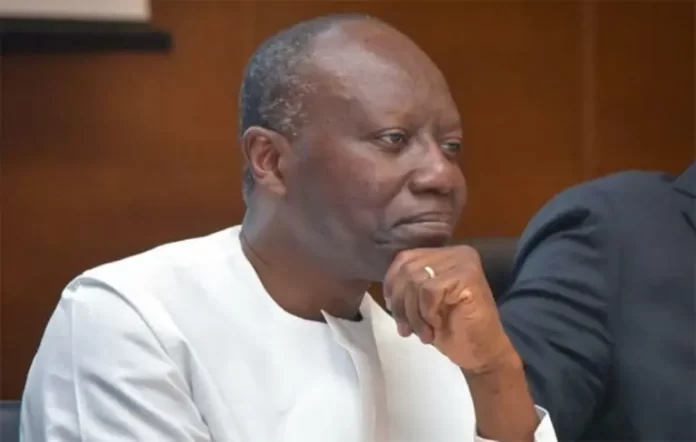
Stakeholders have rejected the program that was introduced by the finance minister Ken Ofori-Atta on Monday, December 6. These groups include the Ghana Medical Association (GMA), the Ghana National Union of Traders Association (GUTA), and the Trades Union Congress (TUC).

Additionally, UTAG stated that they would strongly disagree with any action that would make the predicament of the already struggling university lecturer worse.

They issued a statement saying, “In particular, we reject the wholesale implementation of the recently announced debt exchange programme.”

It added “We are convinced that the debt exchange programme may negatively affect the Ghana Universities Salary Superannuation Scheme (GUSSS) as well as Tiers Two and Three Pension Funds of our members. It would also result in significant reduction in the principal and/or interest payments due members who have invested in mutual funds and may need resources to meet emergency needs.

“Again, given that the individual savings of many of our members are lodged with the various Credit Unions on our campuses, part of which have been invested in bonds, any attempt at wholesale implementation of the announced debt exchange programme would ultimately harm the savings of our members.

“We, therefore, reiterate our vehement opposition to any straight-jacket implementation of the announced debt exchange programme. It should not, in any way, affect the pensions and other investment returns of the hardworking Ghanaian.

“Government should consider the genuine concerns raised by various stakeholders and rethink the debt exchange programme. UTAG is willing to brainstorm and support Government to find lasting solutions to address the current economic challenges.”

The Minister of Finance, Ken Ofori-Atta launched the Debt Exchange Programme as part of efforts to save the ailing economy.

Under the Programme, domestic bondholders will be asked to exchange their instruments for new ones.


Jamaica’s debt exchange program was successful because it involved public consultation- Acheampong Theo

0

According to economist Dr. Theo Acheampong, in Jamaica, where the Debt Exchange program was successful, the government supported the afflicted individuals from the beginning.

He pointed out that there haven’t been enough interactions in Ghana with those who will be impacted by the program.

While introducing the program on Monday, December 6, Finance Minister Ken Ofori-Atta noted that Ghana was not the first country to carry out such a domestic debt operation.

“Let me use the examples of just two nations among many others over the past ten years to illustrate my point. Such operations have previously been used by Jamaica, most notably in 2010 and 2013.

“In both cases, it chose to trust the sense of responsibility of the Jamaican people
and proceeded through a voluntary approach. This approach was highly successful, as more than 99% of holders of domestic bonds participated in the exchange.

“On the contrary, in the case of Greece, the Authorities chose to undertake a coercive approach, whereby a law was passed to force people into participating,” he said.

He added “We intend to avoid as much as possible the Greek approach, as we strive to reach a consensual solution with our bondholders, which the is Ghanaian way. In any case, the good news is that the Domestic Debt Exchange has yielded positive results both in Greece and Jamaica, and many others, and will certainly put our economy on a much stronger footing. Greece has now recovered full market access. We certainly anticipate a similar success story in Ghana. I want to assure you about the Government’s commitment to do what is necessary to succeed.”

But the programme is facing massive rejection from stakeholders including the Ghana Medical Association (GMA), The Ghana National Association of Teachers (GNAT) Trades Union Congress (TUC) and The University Teachers Association of Ghana (UTAG).

Speaking during the thought leadership forum organized by Media General on the theme “Debt Restructuring: What it means for your investment,” on Thursday December 8, Dr Acheampong said “There has not been as much of engagements with the people who will be affected by this domestics exchange programme.

“It is worrying that decision are made sometimes in silos  without carrying on board the people who these decisions are affected.

“The reason why in Jamaica it was successful was that they carried the people who will be affected along from day one.”

The Director of the Institute of Statistical, Social and and Economic Research (ISSER) of the University of Ghana, Professor Peter Quartey also said earlier that there was the need for a broader consultation on the Debt Exchange programme.

He said that consensus building was needed because the progamme seeks to touch the funds of the people.

There needed to be agreement on the terms and conditions for the proposal, he said.

Speaking on the Ghana Tonight show with Alfred Ocansey on TV3 Monday December 5, he said “I think in all of these there is the need for consultation or consensus building. It is very critical because you are going to touch people’s funds and certainly, they have to agree to the terms or whatever you want to propose.

“I know that there has been some initial consultations but I don’t think that has been wide enough, that has been deepened enough and therefore, going forward, I think government should consult labour, consult pension fund holders, etc so that there is some consensus building in this because we are in this together, without consultations you cannot move forward.

“We cannot also signed onto an IMF programme if we do not agree to a debt restructuring exercise.”


Debt Exchange: Currently, membership is not required – Theo Acehampong

0

According to economist and political risk analyst Dr. Theo Acheampong, participation in the debt exchange scheme that the government of Ghana has started is not required.

On Thursday, December 8, Dr. Acheampong made this statement while addressing the Media General thought leadership conference with the topic “Debt Restructuring: What it Means for Your Investment.”

At the moment, he said, participation is not required.

He continued by saying that while some investor categories, such as individual bond holders, will “do okay,” institutions like banks and fund managers will experience a decline in the value of their investments.

Per the debt exchange programme launched by the Finance Minister on Monday December 6, holders of domestic debt are invited to voluntarily exchange approximately GHS137 billion of the domestic notes and bonds of the Republic, including E.S.L.A. and Daakye bonds, for a package of New Bonds to be issued by the Republic.

The Debt Sustainability Analysis (DSA), according to the Finance Minister demonstrated unequivocally that Ghana’s public debt is unsustainable, and that the Government may not be able to fully service its debt down the road if no action is taken.

“Indeed, debt servicing is now absorbing more than half of total government revenues and almost 70% of tax revenues, while our total public debt stock, including that of State-Owned Enterprises and all, exceeds 100% of our GDP. This is why we are today announcing the debt exchange which will help in restoring our capacity to service debt,” he said.

This is the path towards resetting the economy to a more stable one capable of addressing the development challenges of the country.

The reasons are quite clear. Covid-19 pandemic, rising global food prices, rising crude oil and energy prices; and the Russia-Ukraine war adversely affected Ghana’s macroeconomy, with spillovers to the financial sector.

The combination of adverse external shocks have exposed Ghana to a surge in inflation, a large exchange rate depreciation and stress on the financing of the budget, which taken together have put our public debt on an unsustainable
path.

To address the ongoing economic crisis, the Government has requested financial support from the International Monetary Fund.

“We expect to reach a Staff-Level Agreement soon on an IMF programme aimed at restoring macroeconomic stability and protecting the most vulnerable. To this end, as a Government, we are determined to implement wide-ranging
structural and fiscal reforms to restore fiscal and debt sustainability and support growth.

“Consistent with all of the above, I announced during the Budget Statement presented to Parliament on November 24th, that Government will undertake a debt operation programme. We presented to you the contours of the Domestic Debt Exchange programme yesterday. As you are aware we established a consultative committee to work with the financial sector and incorporated their advice in our decisions.”


Resource NCCE to help fight violent extremism— Chairperson to Government

0

Ms Kathleen Addy, Chairperson of the National Commission for Civic Education (NCCE) has asked Government to retool the Commission to enable it to ramp up projects on violent extremism across the country.

This she said was critical if the country was to combat threats of insurgent groups in the country and maintain the peace and security.

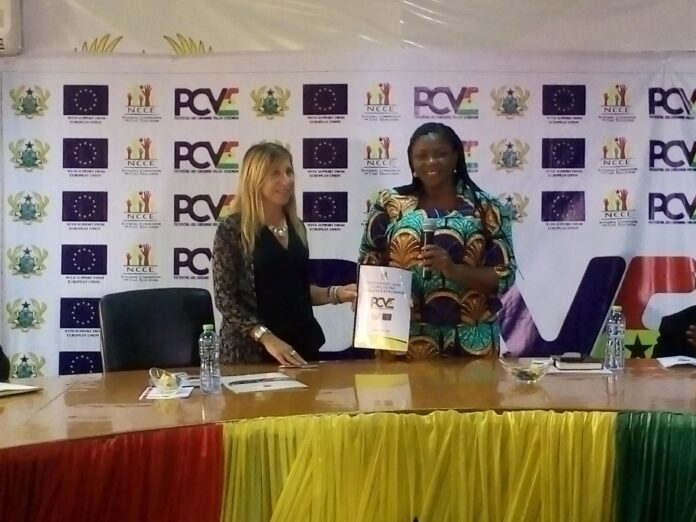
The NCCE Chairperson made the call when the Commission together with the European Union signed and launched an 18-month project on preventing violent extremism and terrorism, in Accra on Wednesday.

The project, Preventing and Containing Violent Extremism (PCVE), sought to help prevent and contain violent extremism and terrorism and promote social cohesion, peace and tolerance in the country.

It would be implemented in 63 districts across the five regions of the north including Upper West, Savannah, North East and Northern regions, and other three border regions namely Oti, Bono East and Bono.

Funded by a €1.7 million EU grant, the project would see the NCCE undertake intensive public education, awareness creation, community support and other interventions to help combat threats of violent extremism.

Ms Addy said the PCVE project was a critical move to ensure the safety and security of the country, adding that the project would strengthen state and non-state actors at the national, regional and community levels in the fight against violent extremism and terrorism.

“This will also prevent individuals identified to be at risk of joining violent groups and work with them to adopt more desirable attitudes and behaviours,” she added.

She said the Commission considered the project a national assignment and would execute it to achieve the set out objective.

She said: “Our ultimate objective is that we will not cede one heart, one mind or support from any Ghanaian or person resident in Ghana to terrorists.”

The Chairperson of the NCCE called on Ghanaians to support efforts in preventing elements that derailed national security.

She also urged traditional leaders and faith-based groups, specifically Imams and clergy to support the work of the NCCE to create the enabling environment for businesses to thrive.

Mr Irchad Razaly, the EU Ambassador to Ghana, emphasized the importance of education in prevention and containment of violent extremism in any country.

He said, “a well-educated and empowered society, immune to destructive narratives and capable of resolving its internal differences in amicable and peaceful manner, can move itself away from the dangers of radicalisation and of rise of violence.”

Mr Razaly, while commending the NCCE for a successful implementation of previous projects such as the Novprevsec programme, said the grant would further enhance the Commission’s capabilities to deliver on its constitutional mandate, especially in helping to prevent violent extremism in the country.

He assured of continuous EU support to ensure the maintenance of peace in the country.

Colonel Tim Ba-Taa-Banah, Director, Counter Terrorism and Fusion Center, Ministry of National Security assured Ghanaians that the Ministry would continue to work to negate the vulnerability of the country.

“We will not allow complacency to take over us,” he emphasised.

Mr Samuel Asare Akuamuah, the Project Director, PCVE, entreated Ghanaians to be curious and ask question unknown projects in their communities to help prevent any possible radicalisation.


COVID-19: Three institutions partner to produce ventilator

0

The Academic City University College on Monday held a medical technology fair to provide updates to stakeholders on the progress of a local ventilator developed by the school.

The development of the ventilator is being funded by the German Federal Ministry of Economic Cooperation and Development.

The fair, which was attended by medical device manufacturers, researchers, academia, students, health practitioners, policymakers, health service providers, regulators, and vendors was supported by iSTEAM Academy Limited and the Deutsche Gesellschaft für Internationale Zusammenarbeit (GIZ) GmbH

It was on the theme “Building Local Capacity in Medical Technology,” and provided a platform for the exhibition of products and services offered by the healthcare industry while highlighting Ghana’s innovation in medical technology.

Prof. Fred McBagonluri, Founding President of Academic City University College and Co-Founder of iSTEAM, said ventilators became an essential commodity when the COVID-19 pandemic ravaged the world.

“Ventilators became an essential commodity that saved many lives. Unfortunately, Ghana did not have enough of these lifesavers because, while some were available, they were prohibitively expensive,” he said.

Prof McBagonluri said the situation necessitated him to collaborate with GIZ and to secure funding to develop a low-cost ventilator in Ghana.

“The plan was for Ghana and Africa to develop their own version of low-cost ventilators tailored to its terrain, using off-the-shelf and locally available material under a project dubbed Locovent4Africa,” he said.

The project, he said, aims to develop, manufacture, and distribute low-cost ventilators using locally available and off-the-shelf materials in developing countries to assist healthcare professionals in treating patients suffering from acute respiratory diseases because of COVID-19, as well as other respiratory infections.

Prof McBagonluri said iSTEAM, an innovative STEAM-based education enterprise undertook the task to establish local production capabilities for the low-cost, locally adaptive, and non-invasive medical ventilator to serve, treat and save patients’ lives.

Stakeholders who attended the fair stressed the need to scale up local inventions to meet the healthcare needs of the public.