Home Blog Page 466

If previous leaders had followed Akufo-1D1F Addo’s strategy, Ghana could boast 1,500 factories, according to Carlos Ahenkorah.

0

According to Carlos Kingsley Ahenkorah, a former member of parliament for Tema West, Ghana should have 1,500 factories by now if previous presidents had implemented the One District One Factory (ID1F) project as planned.

He claimed that while Akufo-Addo has so far constructed 126 factories that are fully operational and 143 that are in various stages of completion, the main opposition National Democratic Congress (NDC) can boast of just one factory, the Komenda Sugar Factory.

On Wednesday, November 30, he made this statement while participating in a discussion in Parliament about the budget for 2023.

The former Deputy Minister of Trade said “Today, as I speak to you we have close to 300 factories under the Akufo-Addo government. Mr Speaker, out of this 296 or so factories, about 126 of them are operational, 143 are at various stages of construction and 43 pipeline projects.

“Let us assume Mr Speaker, if since 1992, all the presidents that have come to stay on for 8 years, now Akufo-Addo is the 5th President, if every president was bringing or churning out 300 factories in Ghana we will be having 1,500 companies as at today.

“Unfortunately, from 2009 to 2026 the Komenda Sugar factory is the only one that we heard off from the other side (NDC) and yet they have the effrontery to speak to us as if we have not done anything in this country.

“But fortunately for them those who have 1D1F in their constituencies or municipality their own siblings, their own children are working in these factories. I want to point out to them that if they provoke us we will mention names.

“When some president had the opportunity in this fourth republic to ensure that they provide workforce for the youth they rather sold the factories or companies that we had in Ghana.”


Today is the day for the court to rule on Ato Essien.

0

Today, Thursday December 1, the High Court, presided over by Eric Kyei Baffour of the Court of Appeal sitting as an additional High Court Judge, will deliver its verdict in the case involving the Founder of the defunct Capital Bank, William Ato Esien, for his alleged role in the collapse of the ban.

Mr. Ato Essien and two others were accused of siphoning liquidity support from the Bank of Ghana’s 620 million bailouts (BoG).

According to the prosecution, the accused persons opened various bank accounts with Capital Bank through which the ¢620 millionliquidity support was transferred while others were carried in jute bags to Ato Essien.

They pleaded not guilty to the charges.

The Nigerian police chief was sentenced to three months in prison.

0

Nigeria’s Supreme Court sentenced the country’s police chief to three months in prison for disobeying a court order.

The decision followed the dismissal of a police officer’s lawsuit in 1992.

The officer challenged his forced retirement in court, and his dismissal was later reversed.

Inspector General Usman Alkali Baba was sentenced to three months in prison by the court unless he reinstated the police officer.

So far, the police force has refused to cooperate.

Police spokesman Olumuyiwa Adejobi called the decision “astonishing” in a statement.

He said the police force was studying the ruling to know what action to take.

“It is instructive to note that the case in point concerns an officer who was dismissed as far back as 1992, a few years after the current IGP joined the Nigeria Police Force,” Mr he said.

He added that “the most recent judgement on the matter was given in 2011 which should ordinarily not fall under the direct purview of the current administration of the force”.

Source: BBC

Junior doctors support embattled Manhyia District Hospital physician

0

The Ghana Junior Doctors’ Association has backed the doctor at Manhyia District Hospital, whose father had a heated phone conversation with a nurse at the facility.

The doctor’s father, Alex Opoku-Mensah, who also serves as the Ashanti Region Director of the National Service Scheme (NSS), is heard insulting the nurse during the phone call, which has since been leaked.

On Tuesday, November 29, the Ashanti Region branch of the Ghana Registered Nurses and Midwives Association (GRNMA) issued a statement calling for the dismissal of Mr Opoku-Mensah, who has since apologized for the altercation.

But weighing into the issues, junior doctors insist there was no wrongdoing on the part of the doctor.

“While we do not condone the actions of the father, it is imperative to set the records straight on the falsehood being peddled to bring the professional competence of the doctor into disrepute,” a statement issued on Tuesday said.

Jointly signed by President of the Junior Doctors’ Association, Ghana Dr Louisa A. Nkrumah and Secretary Dr Norbert Kipo, the statement said the information put out there about the doctor and her alleged wrong prescription “is untrue, according to the hospital management  and records available”.

“We, therefore, entreat all media houses to pull down their broadcast concerning the alleged wrong prescription of medication and entreat the general public to disregard such allegations against the doctor.”

It insists doctors and nurses have had a cordial working relationship and “we will continue to work as a team to provide quality healthcare to our cherished clients and the people of Ghana at large”.


The gold-for-crude scheme is a sham, and Bawumia is grabbing at straws, according to a Johns Hopkins professor.

0

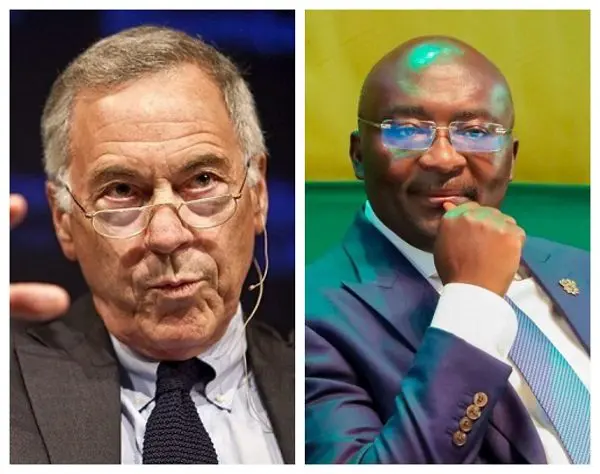
Steve Hanke, an economist at Johns Hopkins University, has called the Ghanaian government’s plan to buy crude oil with gold “false.”

He claims that the Vice President, who made the statement, is grabbing at straws with this maneuver.

Prof Hanke stated in a tweet, “VP of Ghana Mahamudu Bawumia unveiled a plan to buy oil with gold instead of USD.” Bawumia claims that his gold-for-oil scheme will’reduce our currency’s persistent depreciation.’ Bawumia is clutching at straws. His strategy is WRONG.”

In respect of this arrangement, Governor of the Bank of Ghana, Dr Ernest Addison has said the Precious Minerals Marketing Company (PMMC) would play a key role in the move.

The PMMC, he said, would be buying a lot of the gold from licensed gold exporters who he indicated, have significant amount of gold.

“The PMMC will be providing most of the gold to be used for crude oil swap,” he said during the Monetary Policy Committee (MPC) press conference in Accra on Monday, November 28.

He further said that the major mining companies operating in Ghana were consulted on the move.

Dr Addison said that in the meeting where this idea came up, the major mining companies including Newmont and AngloGold were all present.

They all cooperated with this idea, Dr Addison added.

He said “the major mines were consulted, Newmont and the AngloGold were all part of the meeting that we had together with the Vice President when the decision was taken that they will, from 2023, sell at least 20 per cent of their production of gold to the central bank.

“In fact, most of the mining companies who were at that meeting were very cooperative, it was not something which was forced on them, they were ready to contribute their quota to support Ghana during these difficult times.”

Meanwhile, Vice President Dr Mahamudu Bawumia has stated that some analysts and commentators have misinterpreted Ghana’s stated policy of using gold reserves to pay for oil as an attempt by the country to move away from the US dollar for international transactions.

Speaking at the 2022 AGI Awards in Accra, Dr Bawumia noted that to the contrary, Ghana’s gold-for-oil programme will give Ghana the space to accumulate more international reserves as the country will save the $3 billion it spends on oil imports.

He further stated that the use of gold was specifically for oil imports in the face of declining foreign exchange reserves.

Unfortunately, some people have misinterpreted this as Ghana being against the use of the US dollar in international transactions,” he stated.

“Far from it. We want to accumulate more US dollar reserves in the future.”

Vice President Bawumia noted that a major source of Cedi depreciation has been the demand for forex to finance imports of oil products and to address this challenge, government is negotiating a new policy regime where sustainably mined gold will be used to buy oil products.

we implement the gold-for-oil policy as it is envisioned, it will fundamentally change our balance of payments and significantly reduce the persistent depreciation of our currency with its associated increases in fuel, electricity, water, transport and food prices.”

This, he noted, is because the exchange rate will no longer directly enter the formula for the determination of fuel or utility prices since all the domestic sellers of fuel will no longer need foreign exchange to import oil products


Ghana is compared to Sri Lanka by Moody’s in terms of its restructuring plan.

0

Moody’s Investors Service has lowered Ghana’s credit rating even further into junk territory due to the growing likelihood that private lenders will sustain significant losses as a result of the government’s proposed debt restructuring.

The nation’s rating was lowered by two levels to Ca, the second-worst possible score, by Moody’s.

According to the most recent score, Ghana is placed in the same group as Sri Lanka, which is in default.

According to a statement from Moody’s, the downgrading follows government measures to restructure domestic and international loans that were included in the budget for 2023.

“Given Ghana’s high government debt burden and the debt structure, it is likely there will be substantial losses on both categories of debt in order for the government to meaningfully improve debt sustainability,” analysts Lucie Villa and Marie Diron wrote in the statement.

Moody’s also changed the country’s outlook to stable on the expectation that the planned debt restructuring will be done in coordination with lenders under a programme with the International Monetary Fund.

Ghana will ask holders of its international bonds to accept losses of as much as 30% on the principal and forgo some interest payments as it hammers out a debt-sustainability plan to qualify for a loan from the IMF, Deputy Minister of Finance John Kumah said last week.

The West African country formed a committee last month to start talks with domestic bondholders to restructure its local-currency debt.

Ghana’s Eurobonds have been among the worst performers in emerging markets since Bloomberg reported the plans for the local debt recast in September, handing investors losses of almost 12% in that period, according to data compiled from a Bloomberg index.

The nation’s debt-exchange program will replace existing terms and exchange debts with longer tenors at cheaper rates, said Abena Osei Asare, a deputy minister of finance. The plans come after an analysis of debt sustainability showed the nation faces high risk of distress.

Fitch Ratings scores the nation at CC, two notches above default. S&P Global Ratings assigns it CCC+, seven levels into junk.

Moody’s downgraded Logan’s corporate family rating two notches to B2 from Ba3, and the builder’s senior unsecured rating to B3 from B1. “Logan’s refinancing risks will be elevated, driven by its weakening liquidity due to its tight access to funding,” analyst Cedric Lai said in a statement.

Ratings Agency Moody’s Investors Service has downgraded Ghana deeper into junk territory on the likelihood that private creditors will incur steep losses during the government’s planned debt restructuring.

The country’s credit rating was slashed by two levels to Ca, the second- lowest score at Moody’s, according to a Tuesday statement. That puts Ghana on par with Sri Lanka, which is in default. The downgrade follows plans in Ghana’s proposed 2023 government budget to restructure both local and foreign debts.

“Given Ghana’s high government debt burden and the debt structure, it is likely there will be substantial losses on both categories of debt in order for the government to meaningfully improve debt sustainability,” analysts Lucie Villa and Marie Diron wrote in the statement.

At the same time, Ghana’s outlook was changed to stable as the restructuring will likely happen in coordination with creditors and under a program with the International Monetary Fund, according to Moody’s.

The nation is expected to ask holders of its international bonds to accept losses of as much as 30% on the principal and forgo some interest payments as it hammers out a debt-sustainability plan to qualify for a loan from the IMF, Deputy Minister of Finance John Kumah said last week.

The West African country formed a committee last month to start talks with domestic bondholders to restructure its local-currency debt.

Ghana’s Eurobonds have been among the worst performers in emerging markets since Bloomberg reported the plans for the local debt recast in September, handing investors losses of almost 12% in that period, according to data compiled from a Bloomberg index.

The nation’s debt-exchange program will replace existing terms and exchange debts with longer tenors at cheaper rates, said Abena Osei Asare, a deputy minister of finance. The plans come after an analysis of debt sustainability showed the nation faces high risk of distress.

Fitch Ratings scores the nation at CC, two notches above default. S&P Global Ratings assigns it CCC+, seven levels into junk.

© 2022 Bloomberg


Broadcast media monitoring has improved compliance-NCA

0

The National Communications Authority (NCA) says there has been improvement in compliance to broadcasting regulations in the country over the past four years.

Mr Edmund Y. Fianko, Acting Director of Engineering, NCA who said this, attributed it to the establishment of broadcasting monitoring systems by the Authority to monitor radio and television broadcasting in the country over the last few years.

He said this when the Authority commissioned a new Broadcasting Monitoring Centre (BMC), in Accra, on Tuesday.

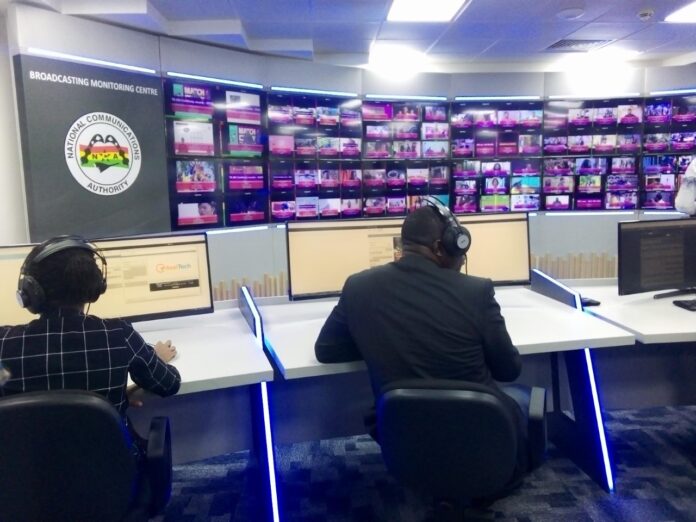
The BMC, an expansion and upgrade of the NCA’s Broadcasting Monitoring System (BMS), would monitor and record broadcast media contents.

The aim of the BMC is to, among other things, sanitize the broadcasting landscape, protect consumers of broadcasting services, and ensure broadcasters operated within allocated bandwidth.

Section 2 of the Electronic Communications Act of 2008, Act 775 mandates the NCA to regulate the radio spectrum designated or allocated for use by broadcasting organisations and providers of broadcasting services.

Mr Fianko said the monitoring system had improved compliance and sanitized the broadcasting space.

He said: “…….once people know that you are checking, they are more careful. So, compliance has improved since we have the system and we expect it to continue to improve.”

The NCA, in 2018, established the BMS for the monitoring of television and FM radio broadcasting services in the country.

Giving details on the newly established BMC, Mr Fianko indicated that unlike the BMS, the new BMC could record up to over 50 FM radio stations and 100 television stations.

He assured that the Authority would engage broadcasters on the violations that were worthy of punishment.

Mr Joe Anokye, Director General, NCA said, with the increase in the number of FM radio and television broadcasting stations, there was the need to automate the regulatory compliance administration.

He said the establishment of monitoring systems such as the BMC was necessary because it could no longer rely exclusively on periodic spectrum monitoring to verify compliance.

He said the BMC had the capacity to record about 100 video channels (terrestrial/satellite), record FM radio in Accra and monitor about 13 satellites.

Mr Anokye added that with continuous support of the Board of the NCA, the project would be scaled up to cover more stations.

Mrs Ursula Owusu-Ekuful, Minister of Communications and Digitalisation, in a speech read on her behalf by Mr Isaac Osei-Bonsu Jnr, Board Chairman, NCA said broadcast media monitoring played a key role, not only in ensuring media sanity but enhancing the security of a nation.
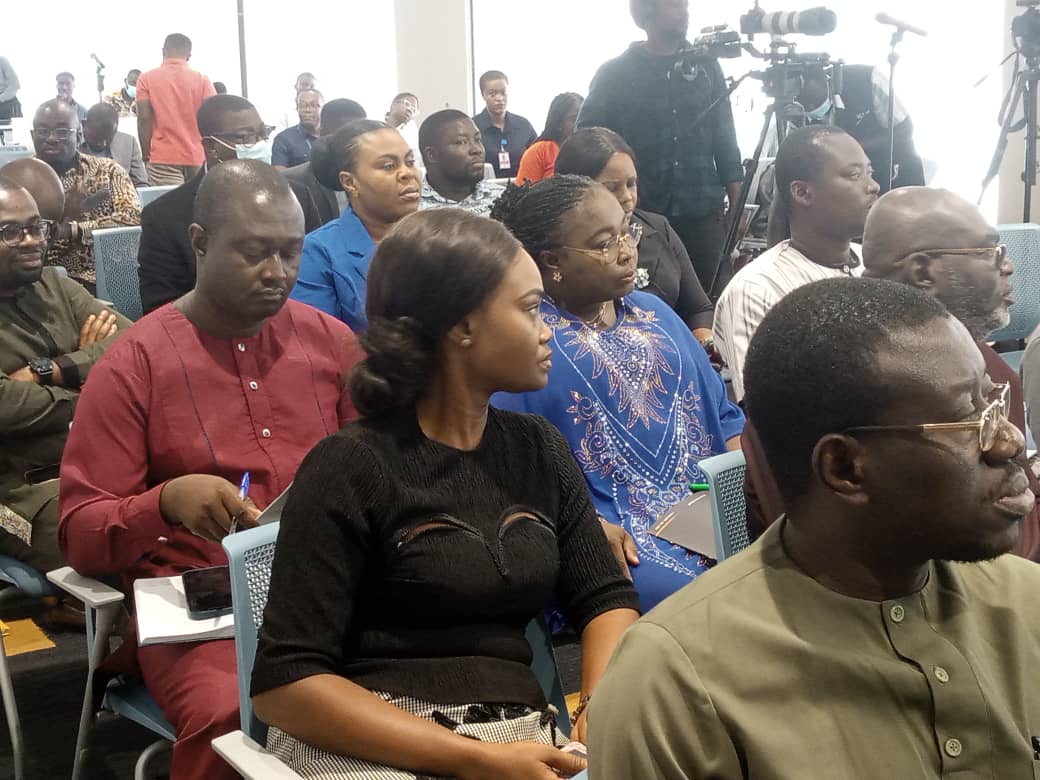
She said with the rapid development of the radio and TV industry and the convergence with telecommunications, it had become important to ensure the quality of broadcasting services and explained that the technical parameters monitored by the Authority would enable it to have evidence of the happenings in the broadcasting landscape.

“This, I am sure will bring some sanity to the media landscape,” she said.

The Minister added that the broadcast monitoring would compel broadcasters to operate within allocated bandwidth to avoid interruptions and observe the media without interruptions.

“The main purpose of this initiative is to protect consumers of broadcasting services. This is in accordance with Section 5C of the NCA Act 769,” she added.
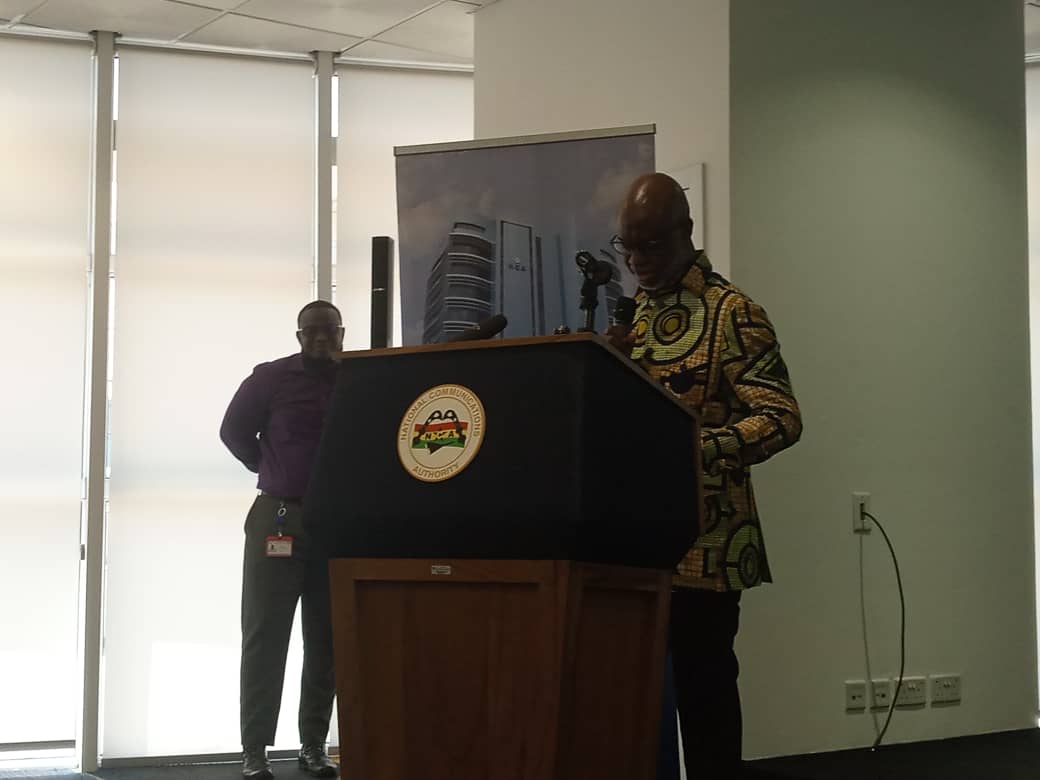
Dr George Sarpong, Executive Secretary, National Media Commission (NMC) said the establishment of the BMC would give the country the opportunity to address the ills that affect society.

“What the NCA has established for all of us is going to permit us at the NMC, as I have already demonstrated to you, to see the trends in media coverage and the implications for peacebuilding and national development,” he said.

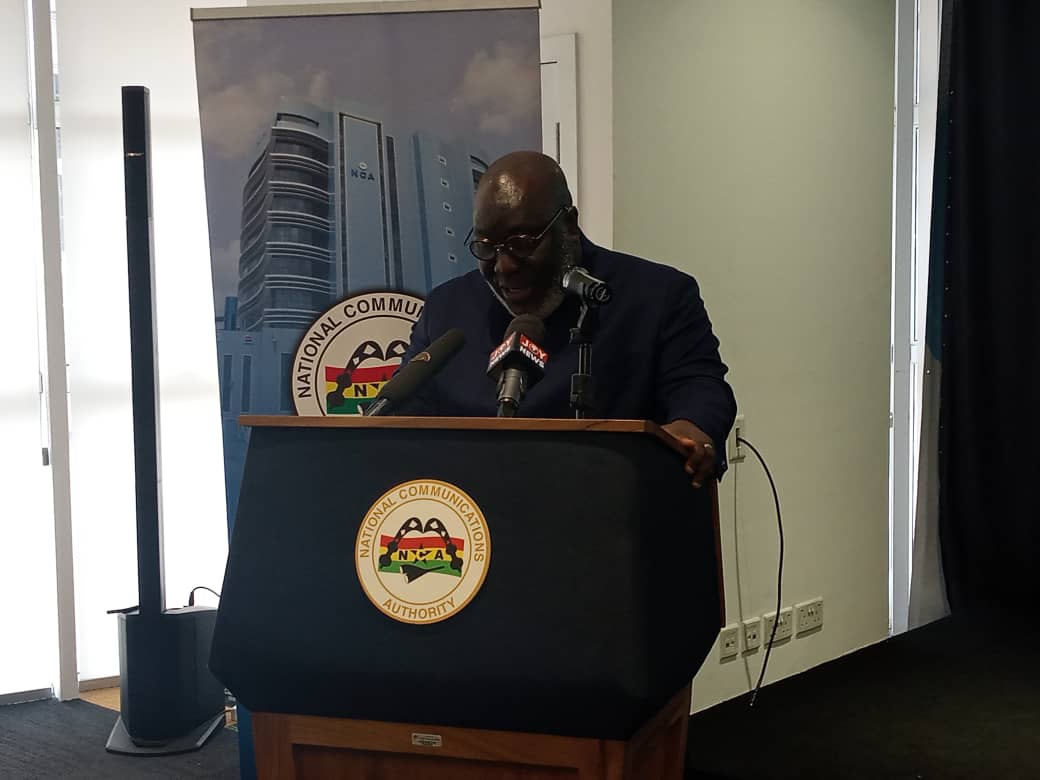
Ms Fatimatu Abubakari, Deputy Minister of Information commended the NCA and the NMC for the initiative indicating that, the BMC would keep all broadcasting media organisations in their toes.

Youth must acquire soft skills for career development – ECG Manager

0

Mr Emmanuel Akinie, the Tema Regional General Manager, Electricity Company of Ghana (ECG), has advised the youth to acquire soft skills such as interpersonal and behavioural skills in addition to their chosen careers.

Mr Akinie, who was a guest speaker at the eighth certification and exhibition ceremony of Don Bosco Technical Institute, said it was not enough to have the hard skills, adding that the soft skills provided an added advantage in developing one’s career.

Speaking on the theme; “Development of Soft Skills and Vocational Technical Skills, A prior requirement to the labour market entry,” Mr Akinie said while hard skills are job-specific, soft skills help the individual to work well with other people and develop one’s career.

Citing a personal example, the Tema Regional ECG General Manager said “as an engineer, I have come to appreciate the major role soft skill has played in my growth and advancement in my chosen field”.

He reminded the students that despite their technical competence, they could progress further with the soft skills they develop as they would need others’ input in order to propel themselves up.

He mentioned that to develop soft skills, there was the need to have effective and clear communication, problem-solving skills, empathy, and the ability to work in a team environment.

He said due to the constant advancement in all fields of work, adaptability and continuous acquisition of knowledge were very important for one to stay relevant.

Mr Akinie admonished the students to ensure cordial working relationships wherever they find themselves and to live in harmony with their colleagues and seniors in the working environment.

He said in Ghanaian cultural settings, a greeting is considered a very important cultural and social issue, such that if one decides not to greet whomever they are working with, it could be seen as ignoring their bosses and colleagues, adding that such behaviors would go to their disadvantage.

He urged the students to “be humble, honest, and to be ready to serve mankind with all humility”.

Presiding Member organises free health screening for Tema Residents

0

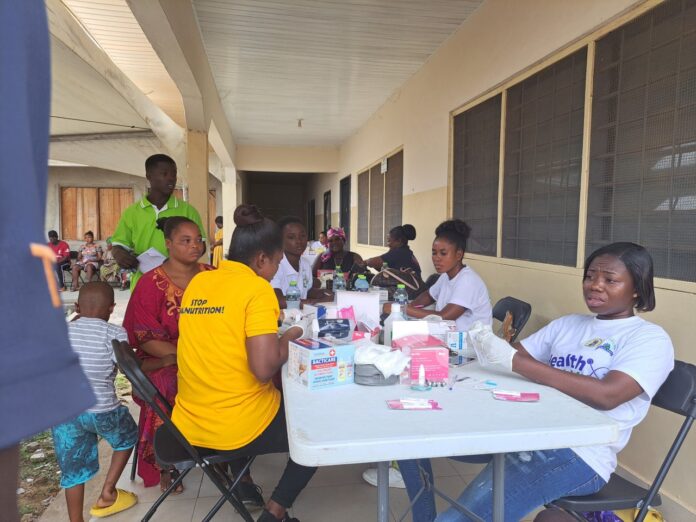
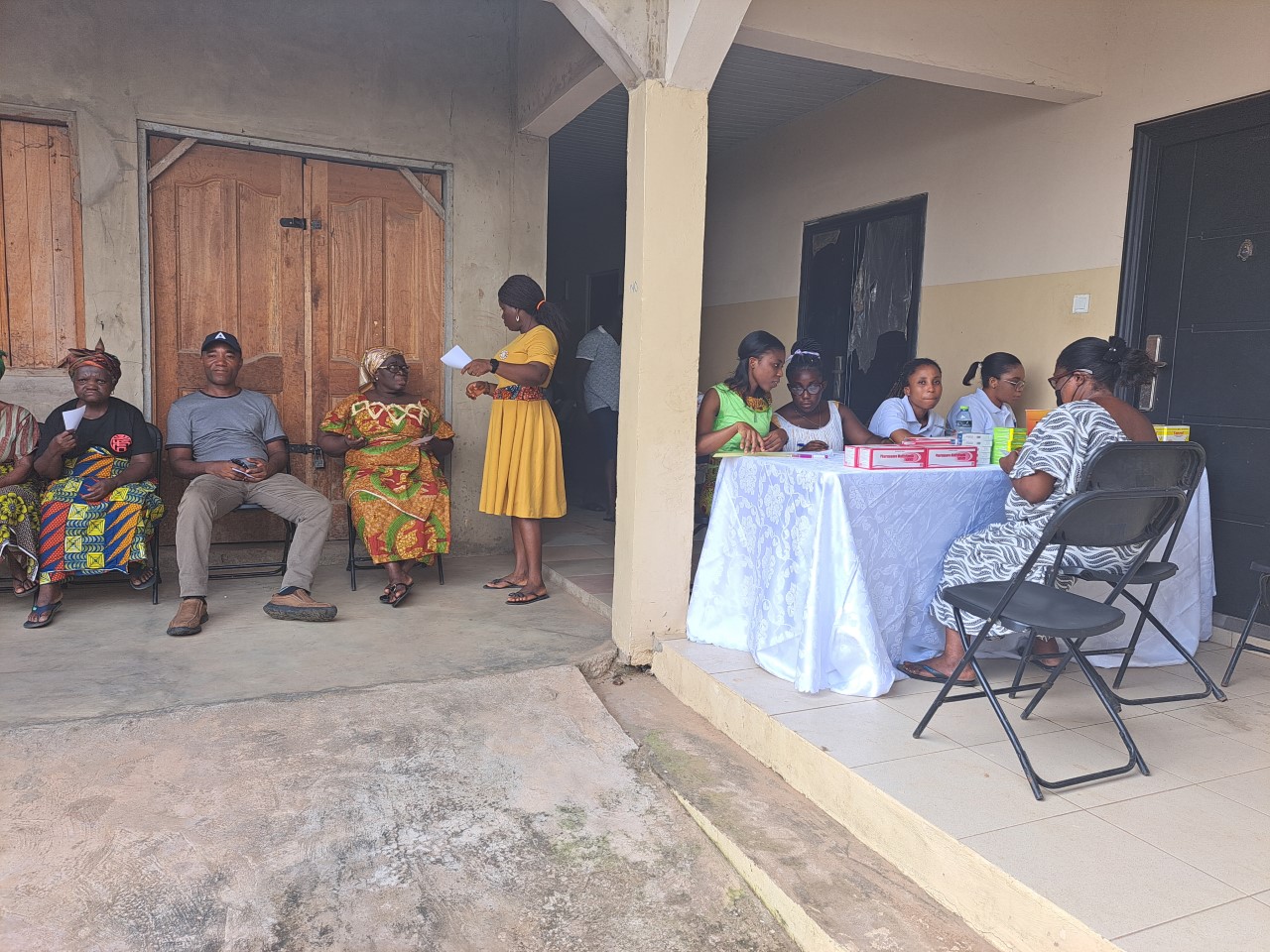
Hundreds of residents at the Lowcost Electoral Area in Tema Community Nine have benefitted from a free health screening organised by Mr. Joseph Korto, Presiding Member for the Tema Metropolitan Assembly (TMA). 


Mr. Korto, who is also the Assemblyman for the area, organised the free health screening in collaboration with the Unit Committee Members, Chasca Pharmacy and Topup Pharmacy, and other stakeholders. 


The Presiding Member told the Ghana News Agency in Tema after the exercise that medical professionals from the Tema General Hospital provided the free screening for the residents. 


The two pharmacies located in the electoral area provided medications to those who after the health screening needed drugs. 


The screening covered hypertension, blood sugar level, malaria, body mass index, hepatitis B, and cholesterol. 


Mr Korto said as Christmas festivity was approaching they found it important to help the residents to know their health status to guide them on what to consume during the period to avoid health issues. 


He expressed hope to change the annual health screening to a bi-annual event which would also include breast screening among other diseases. 


The PM urged residents to adhere to the advice of the health officials and to take their medications as prescribed. 


Mr Korto also stressed the need for residents to engage in regular exercise and consume more water, as well as avoid bad health habits. 


He added that there was also the need to practice proper handwashing among others as the covid was still around. 

Watch Nigeria’s Bassey laud Kudus as a “star boy on fire” following Ghana’s World Cup victories.

0
  • Kudus scored the second and third goals
  • He was impressive against South Korea
  • Bassey hails Kudus’ performance for Ghana

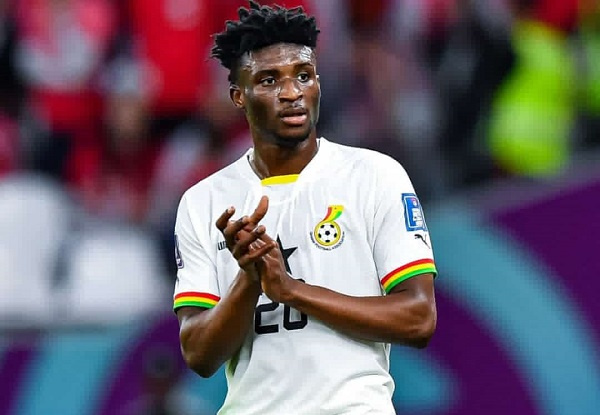
WHAT HAPPENED? In the Group H fixture at Education City Stadium on Monday, the 22-year-old Kudus turned hero for the Black Stars after notching a brace.

After defender Mohammed Salisu put Ghana ahead, Kudus, who plays for Ajax made it 2-0 before Cho Gue-sung hit a quick double to put South Korea level. However, Kudus had the last laugh after he banged home the third to hand the Black Stars their first victory in Qatar.

WHAT HE SAID: Despite the rivalry between Ghana and Nigeria, the 22-year-old Bassey has taken to social media to praise his club teammate Kudus.

“Star boy. He’s on fire. He’s on fire. Good player. Crazy, right? I’m happy for him,” Bassey said in the video posted on the Ajax Twitter handle.

THE BIGGER PICTURE: Ghana earned the ticket to represent Africa at the global competition after defeating the Super Eagles on the away goals rule.

WHAT NEXT FOR KUDUS? He will hope to add to his tally of goals when Ghana take on Uruguay in their final group fixture at Al Janoub Stadium on Friday.