Home Blog Page 470

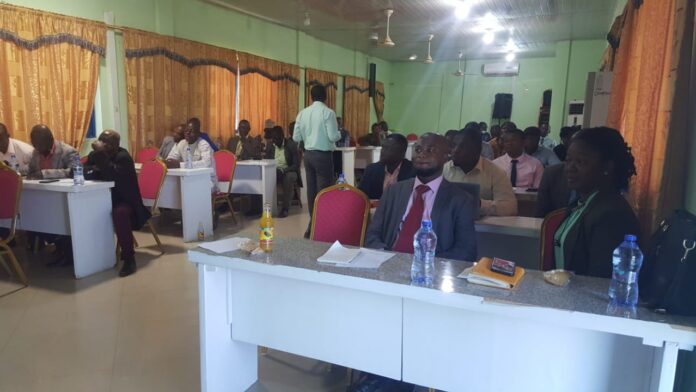
Community Health Management Committee members receive training

0

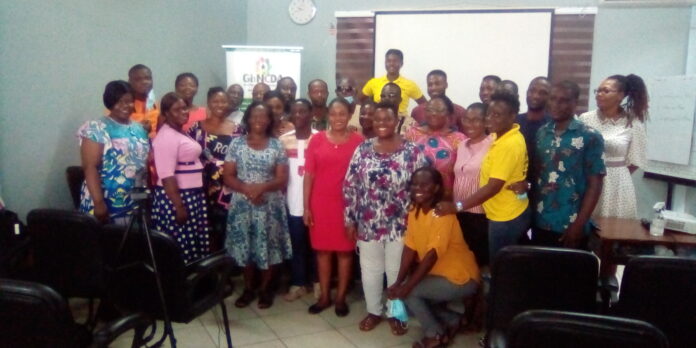
The Ghana NCD Alliance (GhNCDA) in collaboration with the Ghana Health Service has held a two-day training and fieldwork on Community Scorecard for Community Health Management Committee (CHMC) members from Avenor Electoral Area in Accra.

The training is under a programme dubbed: “Our View Our Voices Project,” being implemented by the GhNCDA to empower the CHMC members to use the Scorecard to assess health delivery, with particular focus on non-communicable diseases (NCDs) in their communities.

The Community Scorecard (CSC) is an initiative to engage communities to identify system gaps and provides an opportunity to close the gaps, especially in the CHPS compounds and health centres.

The training and the fieldwork were facilitated by officials from the Ghana Health Service who took the participants through the CSC processes, the concept of the CHPS compound and the role of the CHMC members.

Mr Labram Musah, the National Coordinator of the GhNCDA in an interview with the Ghana News Agency said the CHPS compound model of health delivery service was a good initiative and urged the communities to own it.

He said the project would help in empowering the people to mobilise themselves to solicit support for their health facilities instead of always depending on government for the provision of logistics and other materials.

Mr Musah, who is also the Programmes Director of the Vision for Alternative Development said the increase in NCDs, the high cost of treatment and death was alarming and that there was the need for all hands to be on deck to help in the reduction and prevention of the diseases.

Ms Juliet A. Boateng, the Policy and Advocacy Officer of GhNCDA, said cardiovascular diseases, diabetes, strokes and other NCDs were trending, adding that; “Currently in Ghana over 94,00 people die annually due to NCDs and globally one third of the adult population are dying of the diseases.”

She said the ‘Our View Our Voices Project’ was to redirect the energies of the CHMC members to compliment the efforts of policymakers so that it would not always be like health issues were for the people at the top affair but to help meet each other in between.

“We are targeting the community members, empower them with the Scorecard to be able to tell that these things in the health facilities are contributing to the NCDs burden or even all other health challenges, like maternal deaths, neonatal deaths, cleanliness in the facilities, care and respect to patients, availability of diagnostic services and all of that.

Ms Boateng said: “From these assessments we can suggest ways by which these challenges can be improved through community health action plan.”

She said the training were being held for two selected districts, namely the Accra Metro and the Ga South District.

The trainees under the fieldwork at the Kaneshie Polyclinic in the Avenor Electoral where they interviewed some patients and staff on the performance and the challenges of the facility and later met with the authorities of Polyclinic.
 

NHIA goes digital to facilitate access to its services

0

The National Health Insurance Authority (NHIA) is maximizing technology through the development of Mobile Application (MyNHIS APP) to ensure easy access to Scheme’s (NHIS) services by members right in the comfort of their homes.

With the MyNHIS APP, clients could access NHIS services including self-registration and renewal, registration, and renewal for third party, NHIS Frequently Asked Questions (FAQs), and linking one’s Ghana Card to the NHIS card among others without having to travel to the NHIA office.

Mr Oswald Essuah-Mensah, the Acting Director of Corporate Affairs of the NHIA, said this in Wa during a sensitisation workshop for staff of the NHIA in the Upper West Region on its digitization process.

The nationwide sensitisation was to equip the staff with the requisite knowledge of the  process to enable them engage key stakeholders and the public.

Mr Essuah-Mensah explained that the NHIA was leveraging technology to enable it meet its goal of helping the country attain Universal Health Coverage (UHC) by making health services accessible to all irrespective of one’s financial status.

He said as at the end of 2021, the NHIS active membership was about 16.7 million people, representing about 54 per cent of the country’s population.

“We are on a mission to ensure that as a country we can give at minimum, 80 per cent of access to healthcare to all Ghanaians if not a 100 per cent by the year 2030.

So, NHIA is strategising and leveraging technology to help us to be able to achieve this target we have set for ourselves,” he explained.

The NHIA launched the *929# short code in 2018, which allows members to renew their membership as well as link their Ghana Card to the NHIS Card.

Mr Essuah-Mensah said that initiative had seen a meaningful change in the NHIS renewal rate with about 80 per cent of all renewals done through the USSD code.

He explained that the development of the Mobile Application started about a year ago and was expected to be launched in December 2022.

He said: “The application is free to download, very convenient to use and you don’t need to pay anybody any money to be able to access the service.”

Mr Orison Afflu, the Business System Manager of the NHIA, explained that the “MyNHIS APP” would help improve the cooperate image of the Authority, provide more value to the members, connect with members, and improve member loyalty and feedback.

“Once we introduce the mobile app, we are now going to have a secure way of authenticating our members,” he added.

Mr Afflu indicated that the innovation would also lead to the NHIA issuing digital cards to members to be generated on mobile phones.

He indicated that currently, children under 15 years would not be able to register for the NHIS membership using the MyNHIS APP because they did not have the Ghana Card, but said they were exploring ways to bridge that gap.

Mr Samuel Lobber Lekamwe, the Upper West Regional Director of the NHIA, observed that the digitsation of the operations of the authority would lead to convenience in service delivery and access, reduced cost of operation, and job efficiency and effectiveness of the authority.

In a presentation on the active membership in the region, he said as at October 2022,  membership was 680,924 out of a target of 742,790, representing 97.1 per cent.

He expressed hope that the launch of the “MyNHIS APP, ”, to be complemented by the *929# short code would further boost membership registration and renewal in the region.

Elon Musk orders Twitter employees to put in excessive hours or quit.

0
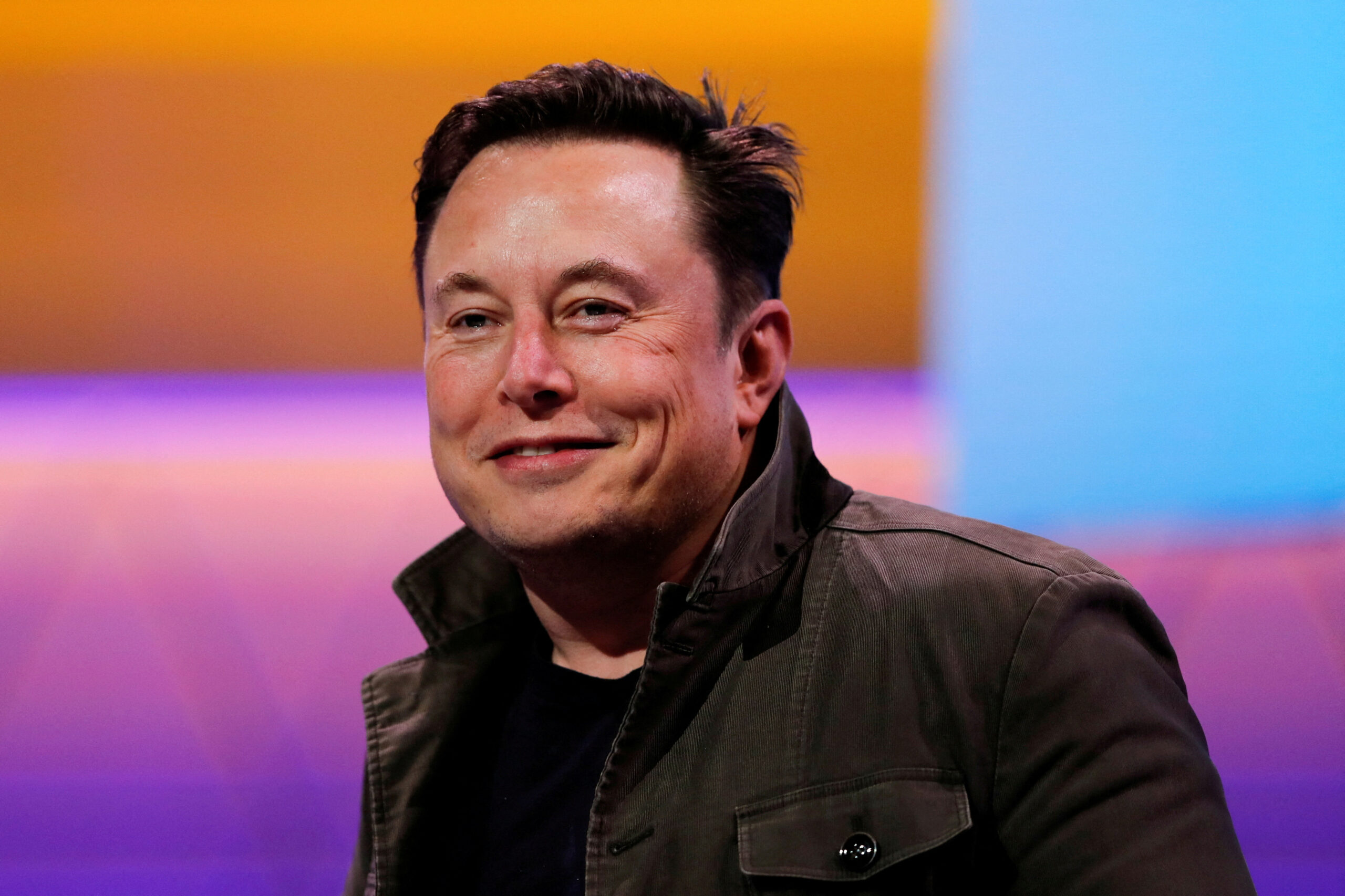
FILE PHOTO: SpaceX owner and Tesla CEO Elon Musk smiles at the E3 gaming convention in Los Angeles, California, U.S., June 13, 2019. REUTERS/Mike Blake/File Photo

Elon Musk reportedly threatened to fire Twitter employees unless they agreed to put in “long hours at high intensity.”

The new owner of the social media company advised employees to accept the promise in an email if they wished to remain, according to the Washington Post.

According to Mr. Musk, those who don’t sign up by Thursday will receive three months’ worth of severance money.

Twitter has been contacted by the BBC for comment.

The Guardian was also given access to Mr. Musk’s email to the staff in which he stated that Twitter “will need to be extremely hardcore” to succeed.

Elon Musk reportedly threatened to fire Twitter employees unless they agreed to put in “long hours at high intensity.”

The new owner of the social media company advised employees to accept the promise in an email if they wished to remain, according to the Washington Post.

According to Mr. Musk, those who don’t sign up by Thursday will receive three months’ worth of severance money.

Twitter has been contacted by the BBC for comment.

The Guardian was also given access to Mr. Musk’s communication to the team in which he stated that Twitter “would need to be pretty hardline” to thrive.

Mr Musk added that there was “no way to sugar-coat the message” that the slowing global economy was going to hit Twitter’s advertising revenues.

But tech investor Sarah Kunst said the real reason Twitter is facing difficulties is because Mr Musk’s takeover has saddled the company with debt.

His behaviour since the takeover has also led some advertisers to pause their spending, she said.

“He’s now trying to inflict that pain and uncertainty on the employees,” she said.

She added that there was a question mark over how enforceable Mr Musk’s email about hours to staff really was.

“Can you just send an email to staff who already work for you and just unilaterally change their working contract? That remains to be seen.”

Mr Musk himself has been sleeping at Twitter in recent weeks, even while leading electric carmaker Tesla and rocket company SpaceX.

He described his work habits in a US court on Wednesday, where he appeared to defend the eye-popping $56bn pay package he received from electric carmaker Tesla in 2018.

“I pretty much work all the time, with rare exceptions.” he said.

In response to questioning, he later added that the “fundamental organisational restructuring” at Twitter would be complete by the end of this week.

One way Mr Musk could lighten his workload is by sharing the leadership of his other companies.

At the hearing, James Murdoch, a Tesla director and the son of media tycoon Rupert Murdoch, said that Mr Musk had identified a potential successor to head the car maker.

Asked to confirm that Mr Musk had never identified a potential new Tesla chief executive, Mr Murdoch said “he actually has”, adding that it had happened in the “last few months”. He didn’t identify who the potential successor was.

Dan Ives, a senior equity analyst at Wedbush Securities, said that Twitter’s culture had “dramatically changed” with Mr Musk at the helm.

“Elon Musk is not going to be doing candlelight dinners and playing ping pong in Twitter’s cafeteria and this is a shock to the system,” he said.

“But he also needs to play nice in the sandbox because if key Twitter engineers and developers leave, this will be a major void in the Twitter ecosystem,” he warned. “There’s a careful balance ahead for him, in this tightrope act.”

Source: BBC


The key is tolerance, says the UN Peace Ambassador

0

The United Nations (UN) Eminent Peace Ambassador to Ghana and the Country Director for International Association of World Peace Advocates (IAWPA) Ghana Chapter, Dr Samuel Ben Owusu has urged all to learn to tolerate each other and live with others in peace and respect.

That, he said, will continue to promote the existing peace the nation has.

Mr Owusu gave the advice at the Commemoration of the International Day of Tolerance 2022 at the University of Ghana Business School.

The International Day for Tolerance is marked every year worldwide on November 16th. The day aims at creating public awareness of the dangers of intolerance.

The goal of International Day for Tolerance is to get people to appreciate the beauty of many viewpoints, ethnicity, faiths, and ideologies while also recognising the cultural diversity that exists.

Hosted by Ambassador Ben Owusu, the event brought together organisations, religious and or traditional leaders, stakeholders who spoke about tolerance and the need for everyone to understand it and practice it.

Speaking at the event dubbed, “Tolerance For Progress”, Ambassador Ben Owusu observed that over the years, nations, people, marriages and political parties have become intolerant and this has led to many distractions on the continents, especially in Africa.

He noticed that positions, titles and leadership with self interest has rather become the people’s focus while intolerance has taken over.

Even in Ghana, Ambassador Ben Owusu observed that journalists are not free to talk because of intolerance, there is not enough advocacies, pastors are unable to talk, there is fear and panic in the society to the extent that those who decide to speak become the targets of some political parties.

He described the situation as a very sad one, adding that many people cannot express themselves unlike the developed world that accepts criticism.

He therefore underscored the need for all, including the leaders and the youth to learn to tolerate each other for the progress of the country.

“The International Day for Tolerance is a very special day in the history of the United Nation that we all come together to have a concensus of respect, an acceptance and appreciation of our rich destinies as human beings, our culture, our forms of expression, psychologically and philosophically that that we are all one and that we can only progress when we learn, when we accept and when we come to the knowledge of a deep tolerance mentality,” he said.

He continued that ”If we must progress and if we must see our wellbeing developed, if we must see the future of our own children, then it must be the centre of our being that we all come together as one society, irrespective of where we are coming from, to understand the Rule of Law, to understand diversities of culture, to understand that either you are black or white, to understand that whether you are coming from a rich home or a poor home, we all have a common place to understand each other so that we can progress together.”

Ambassador Ben Owusu also urged the political parties to also learn to be tolerant of each other, as well as the people so that elections can be held peacefully without casualties.

He commended the security agencies for their commitment to the nation, and also urged them to put Ghana first and ensure the people are safe no matter what happens.

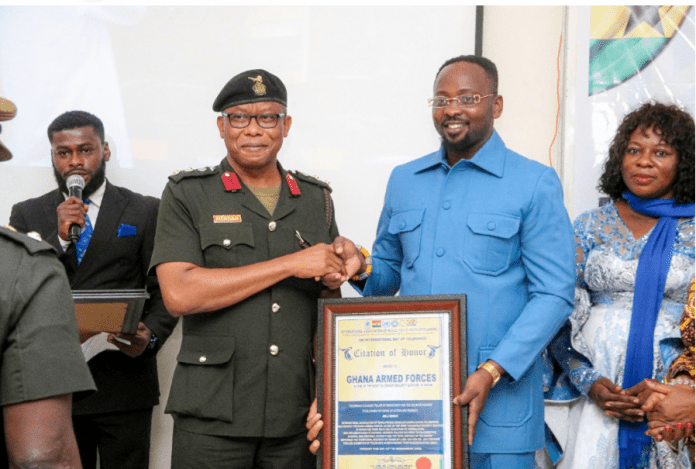
Citations were also presented to organisations that has contributed to the growth of the country and supported the works of IAWPA.


Tough debate is sparked by a proposed language in troubled Mali.

0

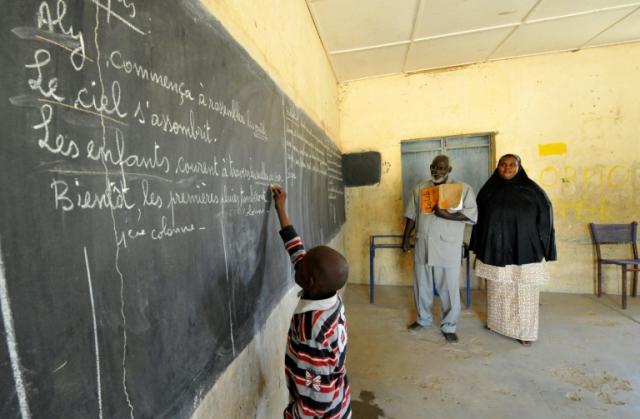
Although Mali earned independence from France in 1960, French continues to be the official language of the country and is still used on road signs and in official television broadcasts.

French isn’t often used on the streets of Bamako, and it’s even less common in the wild.

Many people find it offensive that the language of the former colonial power is the only official language in Mali because the country contains dozens of indigenous languages.

However, by bringing up some of the nation’s many problems, a few phrases in the country’s draft constitution are now fueling calls for change.

Has it always been the case that French is the only official language of Canada, 60 years after our independence? asked Ali Guindo, a local of Bamako, the nation’s capital.

“We have lots of languages here in Mali,” he said outside his home in Torokorobougou district. “It would be good to cement them in our official culture.”

The debate has been sparked by the unveiling last month of a draft constitution, billed by the ruling junta as crucial for saving Mali from jihadist insurgents.

As in the 1992 constitution it is designed to replace, the charter identifies French as the “language of official expression.”

But, in a change, it also says local languages are “intended to become official languages.”

More than 70 languages are spoken in Mali, a deeply poor Sahel nation with a fast-growing population of some 21 million.

Of these 13 are recognised as “national” languages but French is the only official one, meaning that it is used for government and regulatory business, said Amadou Salifou Guindo, a specialist in sociolinguistics.

Among the major local languages, Songhay and Tamashek are widely spoken in the north; Fulfulde in central areas by the Fulani, an ethnic group also known as Peul; Bambara predominates in Bamako; and in the country’s far south, Senufo and Soninke prevail.

– Difficult debate –

The few words in the proposed Article 31 have now fired up discussion, from TV talk shows to chats over tea in informal get-togethers known as grins.

Among the questions: is it time to elevate vernacular languages to the status of official tongues? If so, which ones? And how can this be achieved?

But these questions also have swirling undercurrents.

One is Mali’s relationship with France, the country’s traditional ally, which has hit rock-bottom since the junta came to power in August 2020.

Some have used the bust-up to seize on Article 31 as a means to phase out French and make Bambara, the most-used language in Bamako, the official one instead.

But to do so touches on the sensitive question of national identity, potentially alienating speakers of other languages.

“Malians are afraid of an official language being imposed to the detriment of others,” said Guindo the linguist.

Another problem is rather more basic: teaching children to read and write in their local languages, which are rooted in oral traditions.

Tech support: A woman uses a dictionary app to help her type a message in Bambara on her smartphone

Under former president Moussa Traore who was ousted in 1991, experimental schools were set up that taught in vernacular languages.

The “revolutionary” idea foundered on a lack of state investment, and the schools came to be seen by parents and teachers as second class, writer and publisher Ismaila Samba Traore said.

– French dominates –

Local languages are still being taught, but on a small scale.

At the languages faculty at the University of Bamako, department head Mahamadou Kounta teaches Bambara to around 20 students.

The work, he says, is akin to sowing seed.

“When our students graduate, they will be able to read and write in the national languages and they in turn will be able to work to perpetuate them.”

Traore, who runs a publishing company called La Sahelienne, has been in business for 30 years.

He is one of the few publishers in Mali to bring out books in local languages — typically educational works ordered by international NGOs.

Other than that, publishing remains overwhelmingly in French.

Changing the constitution will not by itself alter habits that have been entrenched for decades, Traore admitted.

“Certain processes cannot be achieved from one day to the other — you have to let things incubate,” he said.


African students fighting for Canada visas must contend with discrimination.

0

Long seen as a multicultural and welcoming country, Canada recently acknowledged that racism exists in its immigration process, and concern has grown over the high rejection rates for African students.

Serge Nouemssi, wearing a white lab coat and holding a pipette, declares, “I have met people whose visas have been denied more than five times.”

The 33-year-old biology student, who is originally from Cameroon, has spent more than three years in a lab at the University of Quebec at Trois-Rivieres working on his doctorate.

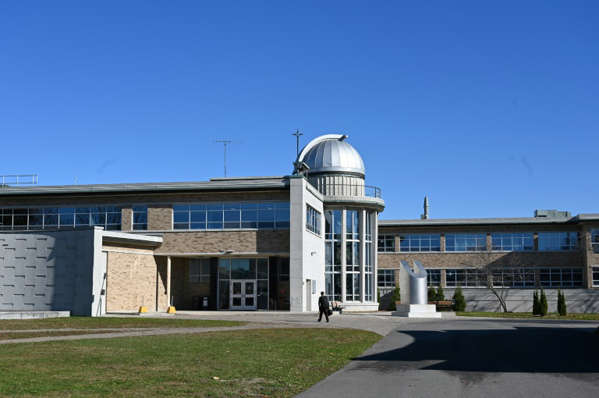
The campus, which is surrounded by vegetation and is halfway between Montreal and Quebec City, is home to more than 15,000 students, including 65 percent of international students who are from Africa, the largest percentage in the province.

But “we have seen rejections of up to 80 percent of applicants coming from Africa,” says the school’s rector, Christian Blanchette, who noted it has been an ongoing problem “for several years.”

In a report quietly released at the end of September, the national immigration department said it “recognizes the presence of racism in Canada and within our own organization.”

According to federal data, Quebec is the Canadian province with the highest rejection rate of African students — around 70 percent from French-speaking African nations between 2017 and 2021.

The data says applications from France, Britain or Germany to study in Quebec are almost always accepted — approximately a 90 percent approval rate.

‘Absurd’ refusals

As well as having to pay tuition ranging on average from Can$17,000 (US$12,750) to Can$19,000 per academic year to study in Quebec and rising up to Can$50,000, African students must also provide financial guarantees.

“For us Africans, generally they (immigration officials) insist on proof of financial means” to be able to afford to live and study in Canada, explains Nouemssi.

“There are cases where we have demonstrated financial resources that were close to one million dollars,” explains Caroline Turcotte-Brule, an immigration lawyer. “The agent replied that our client did not have enough financial resources.”

“I have the impression that it’s a bit random,” she adds, specifying that the reason for refusal is often the same: “a fear that the person will not return to his country of origin after” his studies.

“It’s a bit of hypocrisy,” said Krishna Gagne, another lawyer who notes that students have the legal right to consider staying in Canada after their studies.

Ottawa has even been encouraging foreign students to do so as it rolled out incentives in recent months in order to help deal with a labor shortage.

Sitting at her desk in a small laboratory at the end of a maze of underground corridors, Imene Fahmi says that she had to try twice before being able to come and study in Quebec.

“I encountered a lot of difficulties”, explains the Algerian-born doctor, who was refused the first time because the program she’d chosen was “not related to her previous studies,” even though she had been aggressively recruited by her future research director.

She had to apply a second time and wait eight months before finally getting approvals.

“In regards to immigration, there doesn’t seem to be an understanding of the nuances and backgrounds of certain students, so we have refusals which are a bit absurd,” her research supervisor Mathieu Piche says, unable to hide his frustrations.

Refusals and delays have consequences on the students but also “on the work of the teachers,” he adds.

‘Systemic racism’?

The problem does not only affect students. In July, Canada faced a backlash over its denials of visas for hundreds of delegates, including Africans, that were to attend the AIDS 2022 conference in Montreal.

In its September report, the government promised better training for its immigration agents, consider creating an ombudsman post to manage disputes and review its much maligned case processing software.

Those efforts are welcomed by Turcotte-Brule, but she underscores that there has been “a problem of systemic racism for a long time” in Canada and that “it will not be resolved overnight.”

Floods in Nigeria are the result of climate change brought on by human activity

0

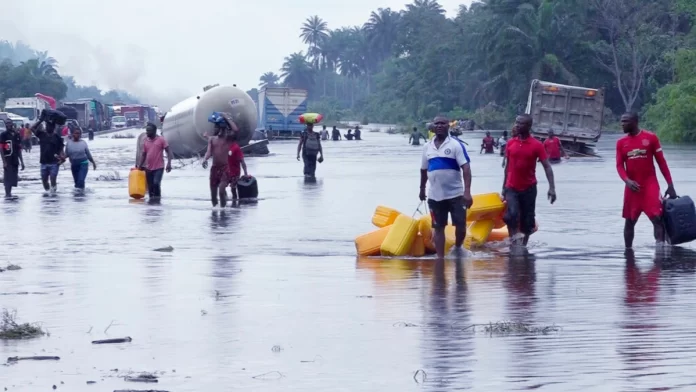
According to scientists, the floods that killed over 600 people in Nigeria this year were primarily caused by climate change.

According to a research released on Wednesday, human activity was directly responsible for the floods that hit not just Nigeria but also Niger, Chad, and neighboring nations.

Experts claim that between June and October of this year, there were more than 1.4 million people displaced by floods, which were 80 times more likely to occur due to human activity.

The report comes as COP27 climate talks continue in Egypt’s Sharm el-Sheikh, where developing nations are demanding rich polluters pay for climate-change-linked calamities.

Africa is home to some of the countries least responsible for carbon emissions but hardest hit by weather extremes, with the Horn of Africa currently in the grips of a severe drought.


WHO announces Ebola vaccine clinical trials in Uganda

0

Three trial Ebola vaccinations will arrive in Uganda the next week, according to a statement made on Wednesday by the World Health Organization (WHO).

The declaration was made at the G20 summit in Indonesia.

“I’m happy to report that the WHO panel of outside experts has examined three potential vaccinations and has decided that all three should be used in the study that will be conducted in Uganda. The recommendation of the committee has been consented to and accepted by WHO and the ministry of health of Uganda. We anticipate sending Uganda’s first supply of vaccines next week “said Tedros Adhanom Ghebreyesus, director-general of the WHO.

An Ebola outbreak in Uganda was declared in late September. Since then, Ebola claimed at least 55 deaths.

“We hope – I dearly hope – that this epidemic goes away. And this epidemic is controllable without vaccines, it’s clear that we can get containment without vaccines. But it’s also clear from the Congo experience that you can get to control much quicker using effective vaccines and that’s where the answers we need to get”, said Michael Ryan, WHO health emergencies director.

Two of the three trial vaccines were developed in the UK, the third trial vaccine comes from the US.


Following the United star’s Piers Morgan interview, Manchester City denied that a Ronaldo deal was “near.”

0
  • Ronaldo’s TalkTV interview part-aired Wednesday
  • Forward claimed move to City was ‘close’
  • Club have labelled these comments ‘false’

WHAT’S HAPPENING? In a now infamous interview with Piers Morgan on TalkTV that has made a lot of noise, City have responded to one of the claims of the Portugal international. Ronaldo argued that a move to the blue side of Manchester in the summer of 2021 was ”close”, however, the club itself has gone on to refute such statements.

THE BIGGER PICTURE: ESPN has reported that City have dismissed Ronaldo’s claim as “false”, insisting that his comments are “not reflective” of the club’s interest during the summer window, which they describe as being “mild”. City are the second club in quick succession to play down links to the forward, after Sporting’s director Frederico Varandas insisted that his transfer return has ”never been on the table”.

AND WHAT’S MORE: It’s not just potential suitors that are looking to distance themselves from the 37-year-old. While his current employers Manchester United are reportedly looking into legal action against the player, the effect on the dressing room has been devastating too, with the United squad allegedly calling for him to go before the end of the World Cup.

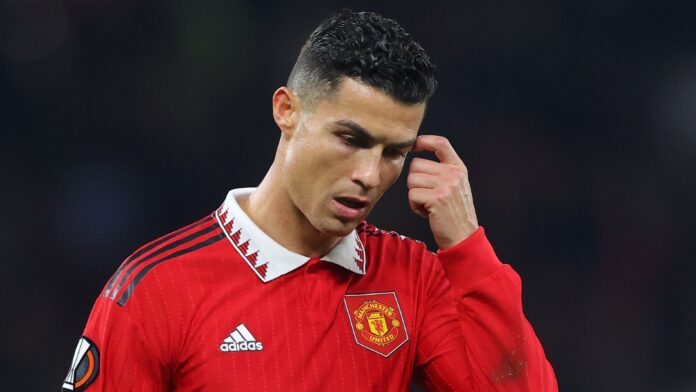
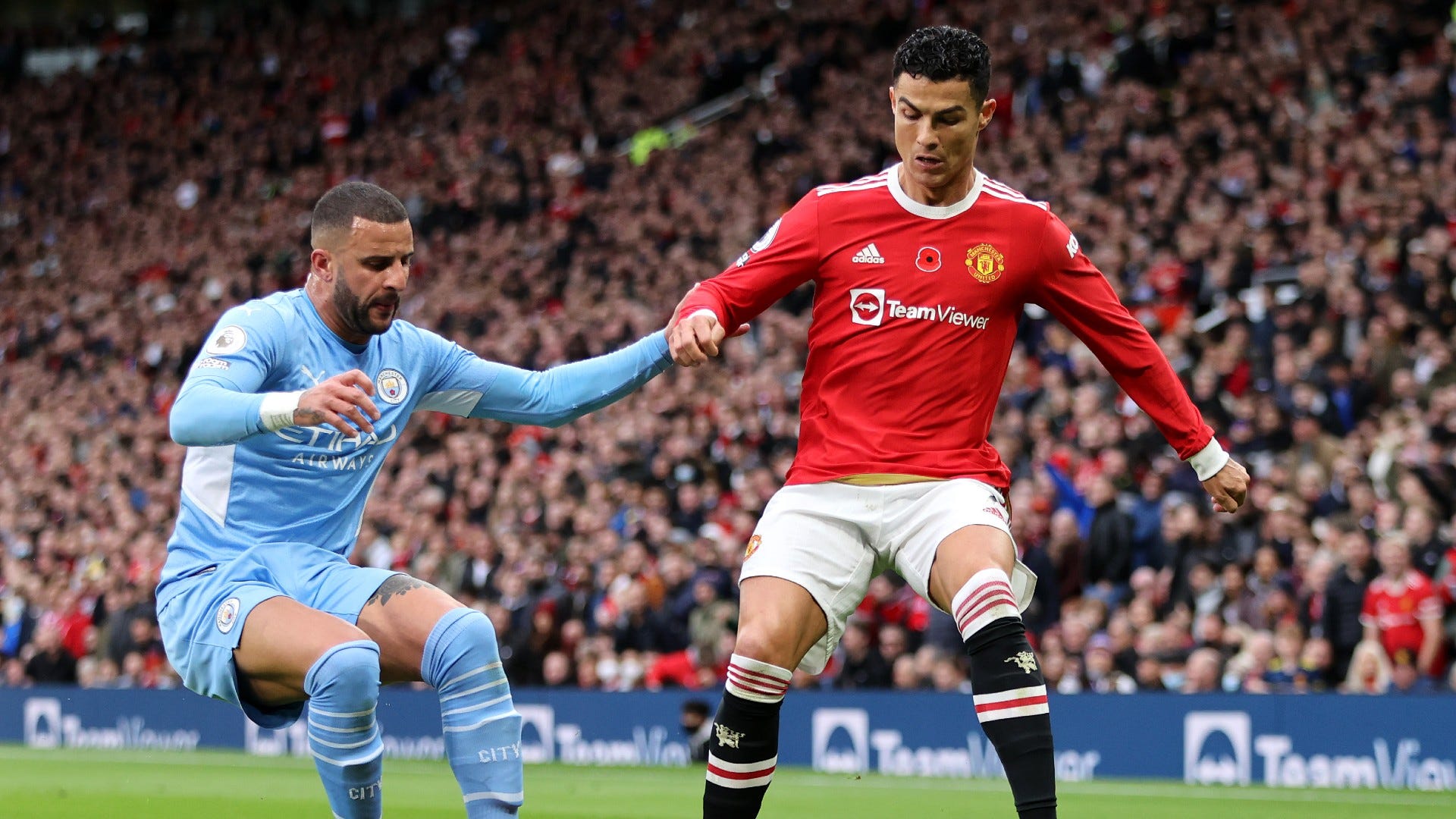
STORY IN TWO PHOTOS:


Cristiano Ronaldo Manchester United 2021-22Getty Images


Cristiano Ronaldo 2022-23Getty

WHAT NEXT FOR RONALDO? While he recovers from a stomach bug that has ruled him out of Portugal’s warm-up match against Nigeria, Ronaldo will look to feature in their World Cup opener against Ghana next Thursday.


Ghana silences Switzerland in Abu Dhabi with goals from Salisu and Semenyo in their World Cup 2022 debuts.

0

In their final pre-World Cup friendly match, Ghana defeated Switzerland 2-0 behind goals from Antoine Semenyo and Mohammed Salisu.

The Black Stars will go to Qatar with a lot of confidence thanks to Semenyo’s half-volley and Southampton defender Salisu’s header in the second half.

After meeting a cross from the right by Breel Embolo in the sixth minute, Ruben Vargas nearly scored for the Europeans.

But shortly after Baba Rahman put in a through ball that was blasted by Daniel Afriyie Barnieh but did not trouble Switzerland goalkeeper Yann Sommer, the Black Stars reacted.

Halfway through the first half Jordan Ayew also tried his luck from long range but it was calmly collected by Sommer before Mohammed Salisu had a golden opportunity to break the deadlock but his effort went wide. The Southampton defender met a cross from Jordan Ayew.

Just before half time Embolo missed the Swiss’ best chance after failing to score from close range.

After the break, Inaki Williams created Ghana’s first opportunity after outwitting his marker on the right before sending in a cross which was missed by Barnieh and the Ayew brothers after getting into the box late.

Otto Addo made some changes bringing on Antoine Semenyo, Kofi Kyereh, Kamal Sowah and Kamaldeen Sulemana to replace Elisha Owusu, Afriyie Barnieh, Iñaki Williams and Jordan Ayew.

Moments later Ghana won a corner kick which was taken by Kyereh and after the Switzerland defenders failed to clear Salisu rose high to head home the opener.

Two minutes later Semenyo doubled the lead after an electric run on the left from Kamaldeen Sulemana saw the Stade Rennais attacker evade his markers leading to the ball falling perfectly for the Bristol City striker.

Goal scorer Salisu made way for Joseph Aidoo with Alidu Seidu replacing Tariq Lamptey.

The Black Stars will open their World Cup campaign on November 24 against Portugal in Group H.