Home Blog Page 474

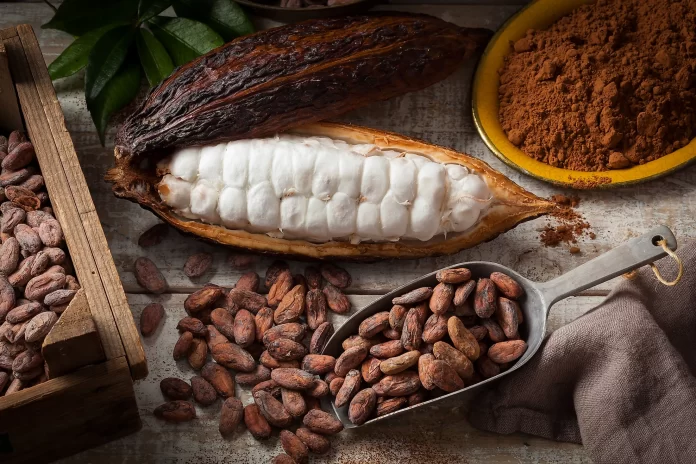
Low cocoa prices constitute a violation of human rights-SEND TO GHANA

0

Siapha Kamara, Chief Executive Officer of SEND Ghana, claims that the low prices paid to cocoa farmers amount to human rights violations.

According to Siapha Kamara, the condition of cocoa farmers is deteriorating, while market forces determine cocoa farmer prices.

On Wednesday, he was speaking to journalists at a high-level “Conference on Living Income and Human Rights in Ghana’s Cocoa Sector.”

According to the forum of civil society organizations in the cocoa sector, the six largest chocolate companies in the cocoa sector alone made $11.6 billion in profit in 2021, a 21.1 percent increase from the previous year.

On the other hand, income coming to cocoa farmers decreased by 16.4 percent.

According to Siapha Kamara, the Civil society platform noticed that during the COVID-19 period consumption of cocoa products went up and the dividends paid to shareholders in the companies buying cocoa from Ghana and Cote D’Ivoire went up but the condition of cocoa farmers worsened.

“We can see it in the expansion of galamsey in the sector. We want to highlights the abuses in the sector especially in pricing and abuses against children and women.

“We are also saying that farmers in the cocoa sector should be supported to be self organised. Gone were those days when COCOBOD determined things for the farmers. Farmers should be left alone to be independent. The CSOs in cocoa sector is helping farmers to be independent and self organised.

“Gone are the days when children in the developed countries are chewing our cocoa and getting fat whiles children here are working and not going to school and dying, that dichotomy must not exist,” he stated.

A monitoring report released by German platform for sustainable Cocoa, (GISCO) which comprises 67 members including CSOs and government etc. noted that on average premium on cocoa ranged from 133 dollars metric tonnes in Cote D’Ivoire and $183 per metric tonnes in Ghana, however premiums are being paid on only about 50 percent of cocoa purchased in the two countries. The Cote d’Ivoire- Ghana Cocoa Initiative, CIGCI called for an average Free On Board (FOB) price of about 70 percent which translates into $1,820 per metric tonne to the farmer.

Ghana and Cote d’Ivoire alone contribute to about 60 percent of the world’s cocoa production.

The two countries recently boycotted a two day global conference on cocoa sustainability in Brussels, Belgium in protest over low support and resistance from the international chocolate market.

Assistant Executive Secretary, of the Cote D’Ivoire – Ghana Cocoa Initiative, Tawiah Agyarko- Kwarteng said.

“If we want to ensure the sustainability of the sector, the cocoa trade cannot be subjected to merely market fundamental is aligned to sustainability”.

According to her, In July this year, governments of the two countries invited 16 of the leading companies in cocoa to sign statements of intent towards the development of an economic pact for sustainable cocoa to take concrete steps to achieve higher prices for cocoa farmers.

Meanwhile, Chairman of the Parliament’s Committee on Food and Agriculture, and MP for Abirem Constituency, John Osei Frimpong said parliament will continue to play oversight responsibility on the sector and ensure fair treatment to farmers.

“COCOBOD leadership and the government are in talks with the European Union where we send most of our cocoa. Recently we visited Brussels and even addressed their parliament and they are taking the matter up. We spoke about it. We told them the cocoa farmers are struggling in the producing countries. So this is something we are working hard to make sure the right thing is done. You see the challenge here is that they are into business and they take advantage of the situation and dictate the pace and take the chunk of our cocoa. It is only by this union with Cote d’Ivoire that we can fight this”.

 

Genser Energy is the best at encouraging local participation.

0

Genser Energy has been praised for providing more opportunities for Ghanaians to work in the industrial and mining sectors of Ghana and other parts of Africa.

The independent power producer, which serves multinational clients in the industrial and mining sectors, takes pride in its people and hires locally – more than 80% of its workforce is Ghanaian.

Members of Ghana’s Parliament’s Energy and Mines Committee gave Genser Energy high marks during a tour of the company’s natural gas power plant, which supplies energy to Gold Fields Ghana Limited’s Tarkwa Mines in the Western Region and the Ejisu Plant Metering Station in the Ashanti Region.

“As one of the key drivers of local content policy, I am very proud of your participation in the midstream oil and gas sector,” said Dr. Kwabena Donkor, MP for Pru East and a member of the committee. You are most likely the best example of Ghanaian involvement in the midstream sector.”

“Genser is the company of the future,” said Emmanuel Armah-Kofi Buah, another member of the committee and a former Energy Minister. “If you are familiar with the Gas Master Plan of Ghana, it’s as if everything that has been envisioned by Ghana, Genser has just picked up and running ahead of everybody.”

In its 15 years of operation, Genser Energy provides summer internship opportunities for undergraduate students from Ghanaian universities, where selected interns have the opportunity to work alongside project engineers and managers in developing existing and new projects. Genser also has a partnership arrangement with the Sponsors for Educational Opportunity (SEO), a non-profit leadership development organization, to recruit National Service Personnel as part of measures to harness their soft and technical skills while building a career.

“It has been a wonderful and admirable journey with Genser. Every now and then there are new opportunities and new things to learn,” Nathaniel Nortey Tetteh, who joined Genser Energy as an intern in 2010 from the Kwame Nkrumah University of Science and Technology (KNUST) and now acting as project manager at the company’s Prestea Gas Plant, said.

“The love for co-workers is admirable and everyone is willing to help, especially the young ones. You’ll never want to miss such an environment because it’s been very great working at Genser. If you want to learn more, the best place for you is Genser because the opportunities are many. The people are loving and very accommodating,” Tetteh said.

For his part, Daniel Ayi, Vice President in charge of Operations at Genser Energy said their aim is to empower indigenous Ghanaians, especially the young ones, in the energy sector.

“Genser is a multinational company with a few foreigners and the rest between 85% to 90% are local engineers. We take the engineers from the universities and train them. Most of our workforce is made up of the youth. We’ve been able to train them to take up certain key positions and with time most of them will graduate to management level,” Ayi said.

“Genser has come to stay and we want to conquer, especially West Africa to push our power to the neighbouring countries. Genser has training opportunities and plans for the youth in particular. We’re aiming to put the image of Ghana on the world map,” he added.

Nana Osae Nyampong VI, the Board Chairman of Genser Energy, said the company is more interested in creating opportunities for young indigenous locals to blaze the trail in a sector dominated by ex-pats. He said once Ghanaians are empowered it holds the key to turning the economic fortunes of the country.

“We are a Ghanaian company, so we look to Ghana for our staff. It’s only when we cannot get, then we look elsewhere for it,” Nana Nyampong VI said.

Genser Energy focuses on providing affordable and reliable energy, and moving toward cleaner sources. It works closely with the government to advance the transition responsibly. The Ghana-based company provides direct and indirect jobs, and also brings in foreign direct investment into the country.

Genser Energy is an energy solutions provider. The company builds, owns and operates distributed generation installations and natural gas distribution infrastructure, selling power and natural gas to mines, industries and utilities. Over the past fifteen years, Genser has commissioned seven power plants with current installed capacity of over 160MW. In addition, Genser has developed its own fuel midstream facilities for its thermal plants and is the largest and only private owner of natural gas pipelines in Ghana with a network of 315km of 12-20” natural gas pipelines and a Liquified Petroleum Gas port terminal at Takoradi. Genser’s operations reflect a firm commitment to increase access to reliable, sustainable and cost-effective electricity and natural gas in Africa with a long-term ambition to deliver energy solutions exclusively from low carbon resources.


We hold Ofori-Atta solely accountable for the ‘trash’ economy – Haruna Iddrisu

0

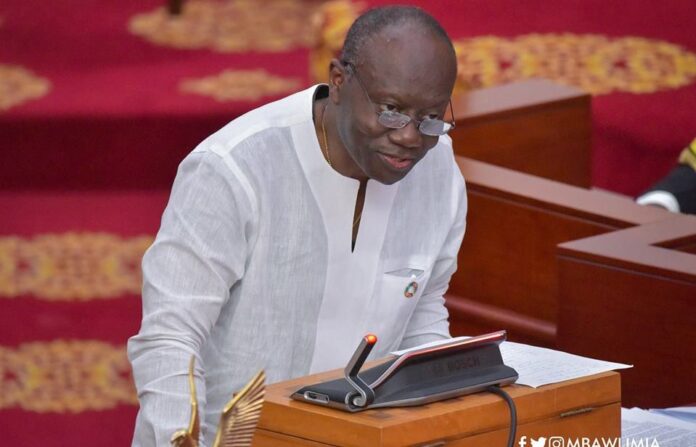
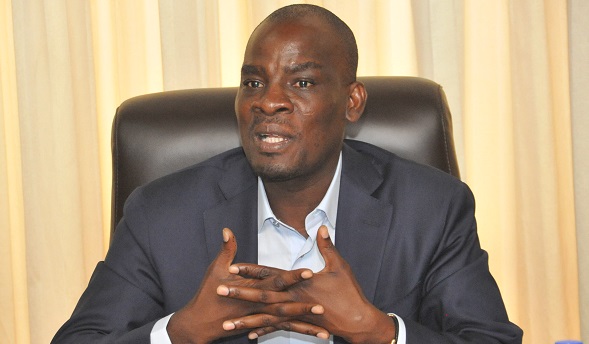
Minority Leader Haruna Iddrisu has stated that Finance Minister Ken Ofori-Atta is solely responsible for the economy’s problems.

He called the current economy “trash.”

“We hold him solely responsible for Ghana’s thrash economy; Ghana’s economy is trash, and he is to blame.” “You are witnessing the epileptic fall of the Cedi in Ghana,” he said.

The censure vote against Finance Minister Ken Ofori-Atta is scheduled for today, Thursday, November 10.

Mr Iddrisu explained that in order to remove the Minister, the Minority will need the support of New Patriotic Party (NPP) Members of Parliament.

The Tamale South lawmaker said any move by the NPP lawmakers to rescind their quest to get Mr Ofori-Atta removed will hurt Ghana’s democracy by weakening the oversight role of Parliament.

Admittedly, he said, the National Democratic Congress Lawmakers do not have the required number, two thirds, to push their motion through hence, will need the support of the NPP MPs who earlier called for the sacking of Mr Ofori-Atta, to achieve that.

“I’m determined to move the motion of censure,” he said while speaking at the political dialogue series organized by Media General on Wednesday November 8.

He added “Admittedly, the Minority MPs, standing alone, may not achieve the two thirds number and so when the Majority said they will support us, it was comforting. If they chicken out, it will weaken Parliament, it will weaken oversight role of Parliament and the minister will run riot.”

He added “Anywhere in the world, Mr Ofori-Atta should have been gone by now, taking full responsibility for what has happened.”

The Speaker admitted the motion which was filed by Asawase Member of Parliament Muntaka Mubarak and dated October 24, 2022.

The opposition lawmakers believe the Finance Minister has failed in managing the economy.

READ ALSO:  Jane breaks silence on ‘Montie 3’

In tweet, North Tongu Member of Parliament Samuel Okudzeto Ablakwa said ” In compliance with Article 82 of the 1992 Constitution of Ghana, the NDC Caucus in Parliament has successfully filed a motion for his immediate removal.

Mr Haruna Iddrisu earlier said in Parliament after the Speaker’s ruling was challenged by Deputy Majority Leader Alexander Afenyo-Markin that “The Speaker has ruled, and we must show respect to the Speaker. If there are any disagreements with the ruling, they know what to do.

“Ordinarily, any civilized democracy in the world, you don’t even need a motion for the Minister of Finance to go home.

“He, upon self-appraisal of where he has led the country and economy to, in all conscience, will bow out and save the nation. So, we have brought a competent motion.”


COP27: West must “move beyond rhetorics”, honour pledges-ActionAid

0

West must “move beyond rhetorics”, honour pledges-ActionAid

Accra, Nov. 10, GNA- Smallholder farmers in the Northern part of Ghana, West Africa, are experiencing unpredictable rainfall pattern.

The downpour occasionally becomes intense and causes floods, with smallholder farmers, especially women continuing to lose their livelihoods.

A latest report by ActionAid Ghana on farmer-led research into climate resilient strategies in 15 Districts of the Northern Ghana Integrated Development Project shows that a majority of farmers (89 per cent) affirmed having noticed changes in climate with 78 per cent of respondents holding the opinion that the rains come late.

The Report mentions “decreased income” and “water scarcity” as the most important effects of climate vulnerability on smallholder farmers, especially women.

Meanwhile, a majority of respondents (39.7 per cent) say they are “doing nothing” to adapt to the change.

“The general trend of late onset and early cessation of rains across the project districts points to the need for a complex basket of coping strategies to deal with the extreme events that are occasioned by the shortness of the growing season,” the Report said.

Agriculture remains an important sector of Ghana’s economy, contributing 20.6 per cent of the country’s Gross Domestic Product (GDP) in 2021.

About 90 per cent of the sector is dominated by smallholder farmers dependent on rain-fed agriculture.

Due to the nature of the agriculture practices adopted by smallholder famers in Ghana, they are vulnerable to climate change extreme events such as floods, droughts, and windstorms.

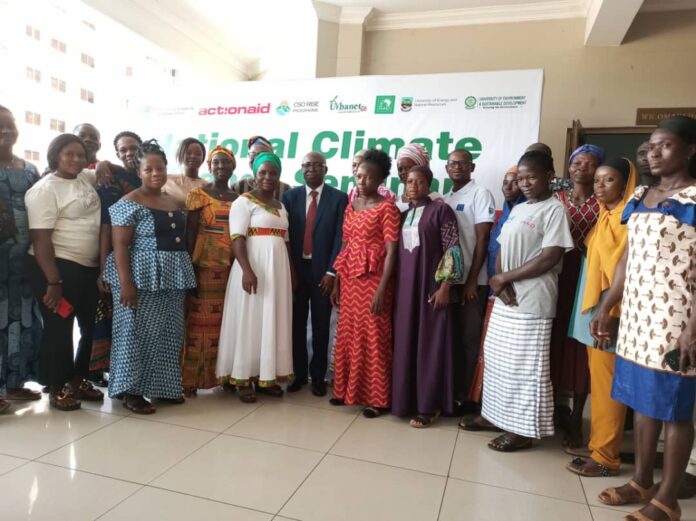
At a National Climate Change Seminar organised by the ActionAid Ghana in Accra, some smallholder farmers mainly women, who relied solely on farming to fend for their families decried the impact of erratic rainfall patterns and extreme weather conditions on their livelihoods.

Patience Bogkur, Leader of Women Farmers’ Movement, says most women in the Northern Region are unable to cultivate crops due to extreme weather conditions coupled with lack of climate-smart agricultural systems.

As world leaders, climate change negotiators and activists gather at the 27th UN Climate talks in Egypt,  ActionAid Ghana is demanding developed countries to honour their pledge to support developing countries, which continue to bear the brunt of climate change, to build climate resilience.

In 2009, developed countries committed to jointly mobilise $100 billion annually in climate finance by 2020 to support developing countries in reducing emissions and adapting to climate change – but that pledge is yet to be honoured.

According to the UN, the world’s 46 least developed countries are home to more than one billion people but account for just four per cent of global greenhouse gas emissions yet, suffering the most of climate change.

The latest Intergovernmental Panel on Climate Change (IPCC) Working Group report on Impacts, Adaptation and Vulnerability, highlights the annual cost of adaptation in developing countries from $140 billion to $300 billion by 2030.

In an interview, Dr John Nkaw, Country Director, ActionAid Ghana, urges developed countries to “move beyond the rhetoric” and meet their obligations.

“We are full of praise of COP27 for accepting that loss and damage will be on the agenda. We are calling on the Conference of Parties for this year to move beyond the rhetoric to ensure that the polluter nations, industrialised countries of the West contribute significantly into the Climate Fund.

“There is the initial commitment to contribute the $100bn to help developing nations particularly those in Africa to effectively undertake adaption methodologies that will contribute towards building resilience and ensure that development projects are carried out,” he said.

Professor Elvis Asare-Bediako, Vice-Chancellor of the University of Energy and Natural Resources, calls for the deployment of climate-smart crops, including those that are temperature and drought resistant to help mitigate the vulnerability of smallholder farmers to climate change.

“When it is not raining, the crops should be able to yield enough fruits to support the farmers,” he says.

World leaders are discussing action to tackle climate change and fully implement the Paris Agreement at the COP27 climate summit at Sharm el-Sheikh, Egypt.

This year’s climate change discussions are crucial as the world battles with devastating floods and unprecedented heat waves, severe droughts and formidable storms. Millions of people are also facing economic, energy, and food crisis.

A report published by UN Climate Change ahead of COP27 shows that efforts remain insufficient to limit global temperature rise to 1.5 degrees Celsius by the end of the century.

At the opening of the Conference on Sunday, the UN Climate Change Executive Secretary Simon Stiell, asks governments to focus on transformational shift to implementation of the Paris Agreement and putting negotiations into concrete actions.

This article was produced with the support of Climate Tracker.

Ghana, United Kingdom launch standards Partnership Pilot to boost trade

0

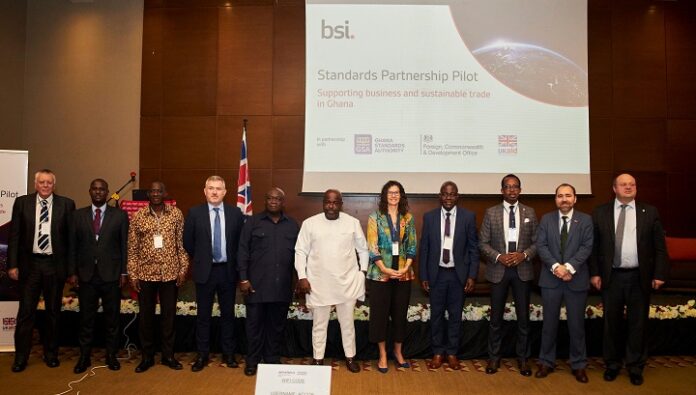
Ghana and the United Kingdom have launched the Standards Partnership Pilot aimed to use global standards to boost trade opportunities between Ghanaian and UK businesses.

Under the initiative, the British Standards Institution (BSI) will collaborate and support the Ghana Standards Authority (GSA) to strengthen the national quality infrastructure and systems in line with international recommended practices.

The pilot will also help deliver secondary benefits by enabling businesses to build resilient, diversified supply chains with high-quality products and services – resulting in greater choice and lower prices of goods for consumers.

Speaking at the launch, Harriet Thompson, British High Commissioner to Ghana, said the partnership “is absolutely fundamental to boosting Ghana’s trade, not only with the UK, but with other countries on this continent and with the rest of the world.”

“This programme will help put Ghanaian businesses on the global stage. By adopting and working within international trading standards, this new partnership will build greater capacity in Ghana’s Standard Authority, and better position companies to export Ghanaian products to the UK.

“Our goal is to increase trade between our two countries and importantly, that is in both directions. So yes, we want to see more British goods coming to Ghana to benefit the consumers here. But also, we want to see more products coming from Ghana to the UK. And that’s where this partnership becomes so important. If we can support Ghanaian exporters to meet the standards that the UK market look at, then that removes one of the barriers that’s currently stopping Ghanaian goods coming to the UK,” she said.

Professor Alex Dodoo, Director-General of the Ghana Standards Authority, said the launch would boost Ghana’s hopes of becoming a major business hub in Africa and the implementation of the African Continental Free Trade Area (AfCFTA).

“We’re delighted to be launching the pilot today in Ghana and be spearheading the Standards Partnership, partnering with FCDO and BSI. It’s an exciting and pivotal time – using and adopting international standards will help transform our country and continent, and improve trade locally, regionally and also globally. The Standards Partnership Programme is one of the critical tools that will make our vision of Ghana Beyond Aid a reality.”

David Bell, Director of Standards Policy at BSI, said: “Complying with standards builds trust and confidence. Ghanaian organizations will benefit from that trust and confidence in being able to build resilience, accelerate progress and create prosperity for their country.

“We are immensely proud to be leading this pilot – building on the achievements of The Commonwealth Standards Network programme we delivered from 2018 to 2021. We look forward to continuing to support the FCDO and partnering with the GSA to enable future trade opportunities between the UK and Africa.”

The project is the first step towards the Standards Partnership programme – a Foreign, Commonwealth and Development Office (FCDO) funded initiative to unlock sustainable economic development by increasing the capacity of developing countries to use and comply with standards and regulatory measures – enabling them to access new markets and benefit from global supply chains.

Agri Minister assures nation of food security

0

Dr Owusu Afriyie Akoto, the Minister of Food and Agriculture, has assured the nation of food security, saying, “there’s no question that Ghana is more than food secured.”

Making a presentation on the floor of Parliament in Accra on Wednesday, the Minister said government’s investment towards national food security in the past five years was unparalleled in the history of Ghana.

He gave the assurance that the solid foundations laid by the government would ensure food availability, accessibility, utilisation and stability.

Dr Afriyie Akoto was responding to an urgent question by Mr Desmond De-Graft Paitoo, the Member of Parliament (MP) for Gomoa East, who wanted to know measures the Ministry had adopted to improve on food security for Ghanaians.

The Minister said the Food and Agriculture Organisation (FAO) established four pillars of food security: availability, accessibility, utilisation and stability.

Using these pillars as the basis for assessing the status of Ghana’s food security, there was no question that the country was more than food secured.

He said since the role-out of the Government’s flagship programme, Planting for Food and Jobs (PFJ) in April, 2017, data and physical evidence attested to the consistent and enhanced food security.

“At the very onset, the PFJ Campaign signaled a very high premium placed on food security by the government. This explains why the food crop module for the PFJ was the first to be out-doored.”

Strategically, the module was targeted at addressing the issue of low productivity and growth that had characterised the food sector, he said.

Dr Akoto said an objective diagnosis of the sector revealed that yields of staples such as maize and root tuber was between 40 and 45 per cent of potential yields in 2016.

Equally distressing was the fact that only 11 to 15 per cent of food crop farmers used improved seeds and fertilizers; and the fertilizer application was at the low – 8kg per hectare, which was compounded by poor extension service delivery due to a low extension farmer ratio of 1:1,908 farmers in 2016, compared to the FAO recommended ratio of 1:100.

“Mr Speaker, it was to address this problem that the Government introduced the Input Subsidy Programme for farmers in 2017 under food crops modules of Planting for Food and Jobs. The outcome of that intervention has been remarkable,” Dr Akoto said.

From an initial 202,000 plus farmers in 2017, a total of 1.65 million were currently participating in the PFJ Campaign and benefitting from subsidised inputs of improved seeds and fertilizers, which had accounted for increases in yields of staples since 2017 to date, he said.

“For the food crop sub-sector for 2016, the growth was 2.6 per cent, when the government took over, which had increased in 2017 to 7.2 per cent, and then in 2018 to 5.8 per cent, 2019 it was 5.3 per cent, in 2020 it went up to 8.6 per cent and 2021 it recorded 8.9 per cent compared to the national growth of the economy.”

The Minister said the national average yield of maize in 2016 was 1.7 metric tonnes per hectare but jumped to 4.0 metric tonnes per hectare in 2021.

He said he had just returned from a tour of some regions of the country and food prices in urban centres, especially in Accra, were  high compared to what pertains in the rural areas.

He cited a tuber of yam going for GHS6.00 in Bamboi in the Oti Region and the same tuber went for GHS24.00 in Accra.

He said many attributed the high cost of food in the urban centres to the increase in fuel prices and the cost of transportation.

“Whereas this may be true to some extent, our analysis at the Ministry revealed that this was over exaggerated. Accordingly, Government and the Ministry is arranging to transport food from the production centres directly to Accra to provide food at reasonable prices to the public,” he said.

Ghana Chapter of African Women Leaders Network launched

0

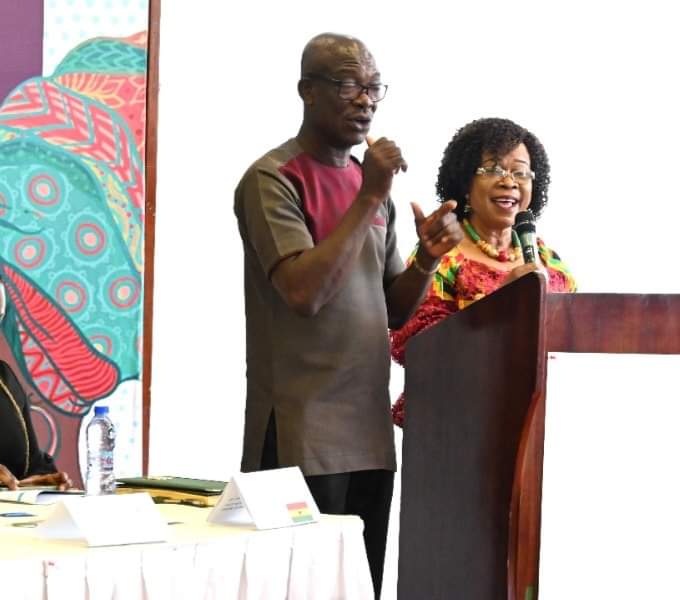
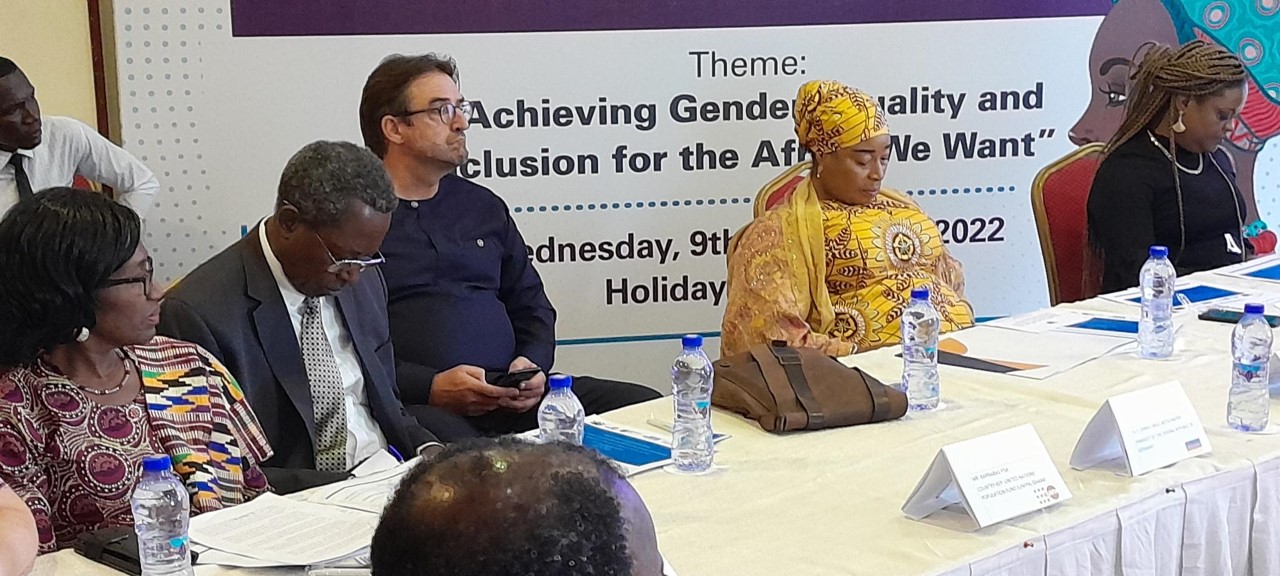
The Ghana Chapter of the African Women Leaders Network (AWLN) was launched on Wednesday to drive women’s leadership in all spheres of society to propel the nation’s inclusive and sustainable development in peace and security.

Hajia Lariba Zuweira Abudu, the Minister Designate of Gender, Children and Social Protection, launched the Network in Accra on the theme: “Achieving Gender Equality and Inclusion for the Africa We Want”, making Ghana the 31st country to join the continental movement.

The network, open to women from all sectors of society, aims to achieve its goals by executing action plans and strategies in six key areas namely: Political Participation; Peace and Security; Financial Inclusion; Young Women’s Leadership; Empowering Rural Women and Social Mobilisation.

These are grounded in the objectives of Africa Union’s Agenda 2063 and the UN Sustainable Development Goal 5 on the empowerment of women and girls to fully participate in the advancement of society.

Dr Charity Binka, the Chairperson, Interim Steering Committee, AWLN Ghana Chapter, said when women thrived, the entire society and succeeding generations benefitted from it.

“Women need to sit at the table of decision making and if this is not possible, we need to create our own table. The time has come for women in Ghana to be seen and heard at all levels,” she said.

AWLN Ghana would, therefore, mobilise Ghanaian leaders and women to play significant roles in the transformation of Ghana, and Africa as a whole.

It would also influence dialogue and thought-leadership on issues affecting women across Ghana and the continent.

It would also support Ghanaian women political leaders and leadership at the national and local levels to enable women to pursue their leadership goals.

There would be capacity building programmes for women candidates for electoral position, while a strategy would be developed to address social challenges that inhibit their progress.

Hajia Lariba, for her part, noted that women were lagging behind in the participation of peace and security, economic and political governance.

The Ministry was, therefore, ready to fully embrace and support AWLN to achieve its objectives, she said.

Hajia Lariba lauded the Network for prioritising economic inclusion among its pillars, saying economic empowerment was key to achieving gender equality and propelling national growth.

The Minister-designate entreated the Network to engage in inter-sectorial and intergenerational dialogues, which positioned civil society organisations as important stakeholders to unearth discriminations against women and girls for the promotion of gender inclusion and equality.

To bridge the decision-making gap in Ghana’s governance processes, Hajia Lariba encouraged more women to venture into politics at the district, regional and national levels.

She appealed to queen mothers and female chiefs to support women interested in politics and local government in their localities to win and thereafter to ensure their success.

Mr Charles Abani, the UN Resident Coordinator, said promoting women’s participation in decision making processes and leadership positions was a priority of the UN as reflected in the UN Sustainable Development Goals.

It was also important to promote the participation of women in peace protection and humanitarian processes to ensure a safer world.

“During peace keeping time, women contribute to building the foundation but bear the hardest consequences of conflicts. Women need to be highly recognised for their roles in conflict management and national development,” he added.

Mr Abani expressed concern about the low representation of women in Parliament and at the district level assemblies, saying, unfortunately, the 2021 Board Index Report also indicated that women were less represented on the Boards of the Ghana Stock Exchange.

Ms Martha Ama Akyaa Pobee, Assistant Secretary-General for Africa, Department of Political and Peacebuilding Affairs and Peace Operations, said climate change had undermined and internally displaced women and girls together with other minority groups.

It had also exposed them to sexual and gender-based violence among other inhuman treatments, she said.

She admonished the Network to ensure that discriminatory actions and policies against women regarding leadership at the grassroot levels and political positions were eliminated.

“The next electoral cycle in Ghana offers opportunity for the Network to promote equal opportunities for men and women to exercise their franchise and contest national and regional positions,” she added.

Madam Hannah Tetteh, UN under Secretary-General and Special Envoy to the Horn of Africa, in a virtual solidarity message, encouraged the AWLN to groom young women to play key roles in addressing the issues and preparing them to lead.

There were solidarity messages that invariably extolled the resilience and resourcefulness of women and how their marginalisation had impeded the holistic development of nations from members of the Diplomatic Corps, the Ministry of Foreign Affairs, the Office of the President of Ghana, among others.

They include the German Ambassador, Daniel Krull, Kathleen Flynn-Dapaah, Counsellor- Director, Head of Cooperation, Canadian High Commission, Ambassador Hannah Nyarko, Coordinating Director, Political and Economic, Ministry of Foreign Affairs, Dr Angela Asante-Essah, Gender Advisor to the President and Dean of the Diplomatic Corps.

The impressive ceremony was attended by women in leadership and youth groups from the private and business sector, civil society organisations and women-led networks, the entertainment industry, traditional leaders, media and legal fields, among others.

AGI signs MoU with Ho Technical University for industrial collaboration

0

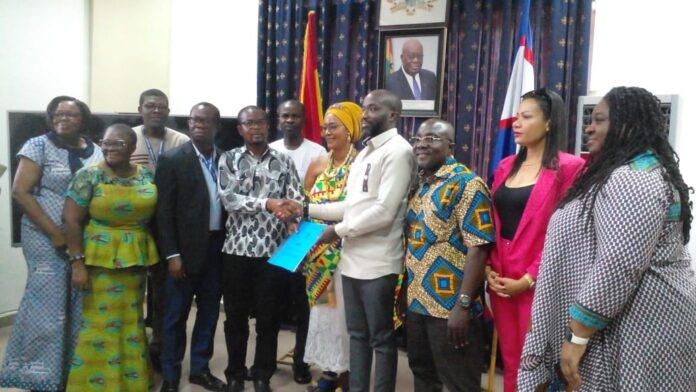
The Association of Ghana Industries (AGI) has signed a Memorandum of Understanding (MoU) with the Ho Technical University to deepen partnerships for industrial co-existence.

The MoU binds the nation’s main industrial association to the Technical University’s Department of Hospitality and Tourism Management, and would, among other things, enhance the channels of industrial exposure for students.

Mr Dela Gadzanku, the Chairman of the AGI in the Eastern, Volta and Oti Regions, said at the event that the memorandum affirmed the recognition of the pivotal roles of industry and academia in economic transformation.

He said the collaboration had become important considering the criticality of local production enhancement towards addressing the nation’s current economic situation.

“That particular department is important in our drive to promote the Volta Regional agenda of tourism and hospitality….,” he said.

Mr Gadzanku expressed the hope that the MoU would deepen relationship with the University, beginning with the Tourism and Hospitality Department, and expanded to other departments to enhance industrial linkages.

He mentioned the possibility of partnering the University to set up a factory under the wings of the IDIF Policy, saying the region’s natural resources and talents made it ready for an industrial revolution.

You must note that we are going through economic challenges, but the silver lining to it is that the Government has asked us to boost local production for us to be able to shore up our currency,” he said.

“The Volta Region has enormous potential – tourism, agribusiness, ICT. Let’s work with the University to make that happen.”

Mr Christopher Mensah, the Pro-Vice Chancellor of the University, said the agreement was an opportunity to work closely with the AGI to ensure that the fashion and agribusinesses departments, which had lots of potentials, would realise their vision.

Madam Judith Agboka, the Head of the Hospitality and Tourism Management Department, said it was a historic industrial partnership never witnessed since the Department was stabilised in 1968 and was sure it would boost its visibility.

The MOU also marks the opening of the 2022 Functions for final year students of the Hotel Catering and Institutional Management course, providing a practical component for their training.

Fafa Amematekpor, an Entrepreneur and Board Member of the Ghana Enterprises Agency (GEA), who chaired the function, said the hospitality and tourism sector remained important to national growth and had become the node for major initiatives such as the “year of return.”

The entrepreneur said innovation would be required in enhancing the sector and charged players to think up creative ways of providing “wholesome” service.

“This will help put the nation in the limelight that would attract more tourists,” she said, calling for the consideration of the AGI, Ghana Exim Bank, the GEA and other stakeholders as key partners.

Dr Eddie Awetey, Chairman of the AGI, Tema, urged students to work hard and engage industry players as mentors adding that they should be honest and dedicated, which were keys to success.

Mama Blemeali Afeanyetornye III, Queen of Afife, who was the Special Guest of Honour, urged parents to support students in the hospitality course, while upholding its ethics.

Mr Emmanuel Agbaxode, Chairman of the Ghana Journalists Association, Volta and Oti regions, said the Association trusted the AGI and expressed the hop that the partnership would write the success story.

NPP bars Majority caucus from participating in vote of censure against Ofori-Atta

0

The New Patriotic Party (NPP) has directed the Party’s Members of Parliament to abstain from a vote of censure moved by the Minority in Parliament against the Finance Minister, Ken Ofori-Atta.

In a statement signed by the Mr Justin Kodua Frimpong, General Secretary, NPP, the Party asked the leadership of the Majority Caucus  to ensure that no member of the Caucus partook in the exercise.

The Minority has served notice that it would move the vote of censure against Mr Ofori-Atta on Thursday, November 10, 2022 after filing a motion to that effect last week.

The Minority cited poor economic management, non-performance as among the basis for the move.

However, the motion requires two-thirds majority to pass, which means that the Minority would require the support of MPs on the majority side to become successful.

Currently, both the NPP and NDC have 137 seats each in Parliament.

The NPP described the move by the Minority as “ill-motivated” and “mischievous”.

The Party said the removal of Mr Ken Ofori-Atta, who was spearheading Ghana’s negotiations with the International Monetary Fund “may adversely impact the progress made thus far”.

“…Neither the NPP nor its Members of Parliament will lend support to this mischievous move by the NDC legislators as it is one of their many ill-motivated and self-serving but unpatriotic moves to sabotage the NPP government and frustrate the administration of the country,” it said.

“The leadership of the NPP wishes to assure our Members of Parliament and the Ghanaian populace that there are ongoing internal engagements aimed at addressing legitimate concerns expressed by various stakeholders regarding the management of the economy, including calls for the resignation or dismissal of the Minister for Finance,” the Party added.

A group of Members of the Majority in Parliament earlier called for the removal of the Finance Minister, saying the move would help to restore hope in the financial sector and reverse the downward trend of the economy.

The group, however, ‘rescinded’ its call after meeting with President Nana Addo Dankwa Akufo-Addo over the matter.

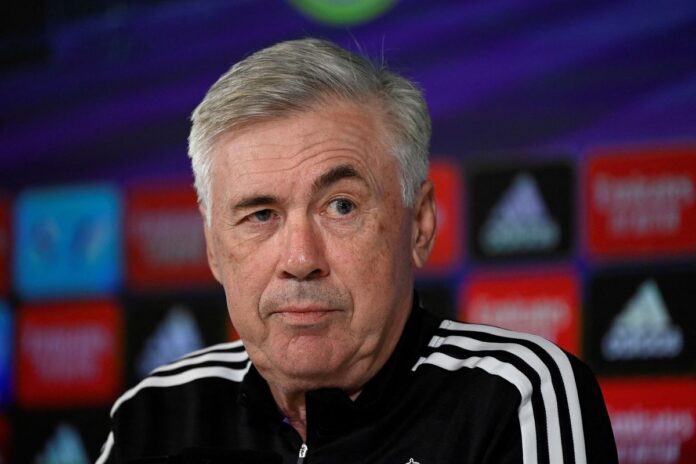
‘Let’s shoot for 200!’ – Real Madrid manager Carlo Ancelotti reacts to his team matching Sir Alex Ferguson’s all-time Champions League record.

0
  • Madrid smashed Celtic 5-1 in UCL
  • Ancelotti reached career milestone
  • Matched Man Utd legend Ferguson’s tally

WHAT HAPPENED? The Italian manager guided Los Blancos to a comprehensive 5-1 victory over Celtic in the Champions League and with that win, he reached a personal milestone of 102 triumphs in the continental competition. That saw him equal former Manchester United manager Sir Alex Ferguson’s record of most UCL victories as he joked he’s now gunning for 200.

WHAT THEY SAID: “Let’s go for the 200. Happy to do it here at Madrid! It’s been a lot of games on the bench. I think I’ve done pretty well,” Ancelotti told reporters after the Celtic win.

THE BIGGER PICTURE: The 63-year-old has been immensely successful in the competition and holds the distinction of winning it a record four times. He is also the first and only coach to have managed in five Champions League finals (three times with AC Milan and twice with Real Madrid).

IN TWO PHOTOS:

Real Madrid Carlo Ancelotti Champions LeagueGetty ImagesFerguson with Champions League (Embed Only)Getty Images

WHAT NEXT FOR ANCELOTTI? The Italian will next take his Madrid side to Rayo Vallecano on November 7, their penultimate fixture before the World Cup break.