Home Blog Page 478

Economic Crisis: Gov’t to boost domestic foreign exchange market with new legal, regulatory framework

0
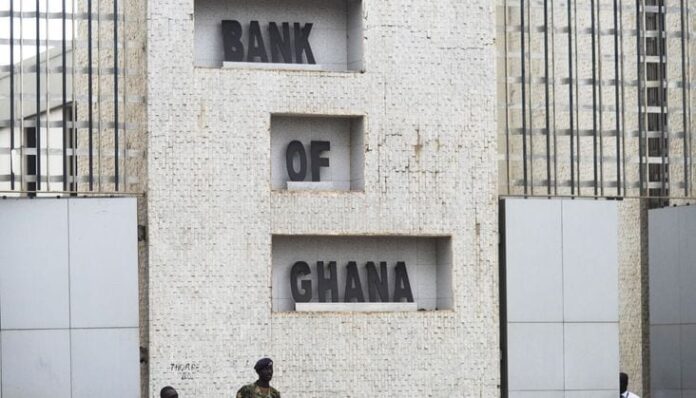
IMAGE COPYRIGHT / AFP/ Bank of Ghana (BoG)

Government is working with the Bank of Ghana and oil-producing and mining companies to introduce a new legal and regulatory framework to ensure that all foreign exchange earned from operations in Ghana is initially paid to local banks.

This is to help boost the domestic foreign exchange market and prevent forex fluctuations.

President Nana Addo Dankwa Akufo-Addo announced this in a televised address on Sunday night on measures the government is putting in place to rescue the nation from the throes of economic crisis.

The President indicated that the recent turbulences in the financial markets were caused by low inflows of foreign exchange, and made worse in the last two to three weeks by the activities of speculators and the black market.

He cited an anonymous two-minute audio message on a WhatsApp platform predicting a so-called “haircut” on Government bonds, which made many Ghanaians, businesses, banks and forex bureaus to dump the Cedi.

That unnecessary speculations on the forex market, he said, caused further depreciation of the Cedi.

“All of us can play a part in helping to strengthen the Cedi by having confidence in the currency, and avoiding speculation,” the President stated.

“Let us keep our Cedi as the good store of value it is. To those who make it a habit of publishing falsehoods, which result in panic in the system, I say to them that the relevant State agencies will act against such persons,” the President warned.

He assured that some steps had been taken to restore order in the forex markets and “we are already beginning to see some calm returning”.

He said government would not relent until order was completely restored and that it was enhancing the supervisory action by the Bank of Ghana in the forex bureau markets and the black market to flush out illegal operators.

He noted that some forex bureaus had had their licenses revoked already, and that, that exercise would continue until complete order was restored in the sector.

More so, fresh inflows of dollars were providing liquidity to the foreign exchange market and addressing the pipeline demand.

The Bank of Ghana, he said, had given its full commitment to the commercial banks to provide liquidity to ensure the wheels of the economy continued to run in a stabilised manner till the IMF Programme kicked in alongside the financing assurances expected from other partners.

The President expressed optimism that those immediate measures would go a long way to sanitise the foreign exchange market.
Government securing affordable petroleum products to stabilise fuel prices

0
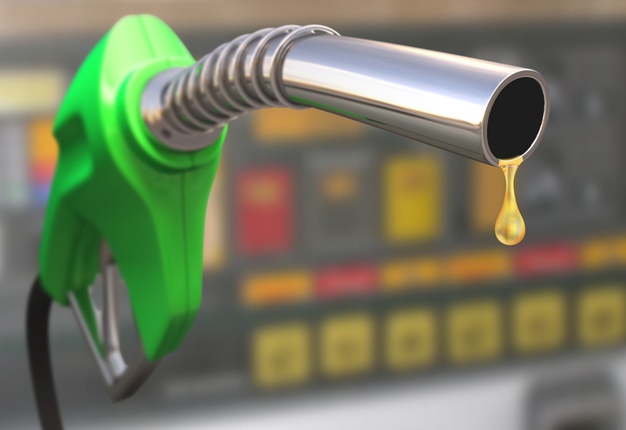
Gas pump with a drop of gasoline fuel.

The Government is working to secure reliable and regular sources of affordable petroleum products for the Ghanaian market to stabilise fuel prices, President Nana Addo Dankwa Akufo-Addo, has said.

Addressing the nation on the economy on Sunday night, the President said the move, in addition to a stable currency, would, “halt the escalation of fuel prices and bring relief to us all.”

There has been a continuous rise in prices of petrol and diesel at the pumps since the beginning of year.

Currently, petrol and diesel are selling at an average GHS13.10 and GHS15.99 respectively.

In the beginning of the year, petrol and diesel was trading at an average GHS 6.8 and GHS7.0 respectively.

President Akufo-Addo said he was aware of the economic challenges occasioned by the rising cost of petroleum products, leading to increment in transport fares and price of goods and services.

“I know that the increasing cost of living is the number one concern for all of us. It is driven by fast escalating fuel prices at the pumps, which is caused by high crude oil prices on the world market and our depreciated currency. I know that this is putting intolerable pressure on families and businesses,” he said.

Meanwhile, the Institute for Energy Security (IES) has projected that the price of diesel may cross the 20 Cedis mark in the next pricing window, which will commence on Tuesday, November 1, 2022.

“In IES’ estimation, Gasoil’s price per litre is set to break the GHS20.00 mark, with a gallon price possibly going for GHS90.00 on the market. Gasoline price may also inch close to GHS18 per litre by mid-November 2022,” it said in its review of the October 2022 Second Pricing Window.

The IES blamed the projected increment on the “significant” depreciation of the Cedi and the “appreciable” increase in the price of diesel on the international market.

“The Ghana Cedi depreciated by a whopping 32 per cent from the previous rate of GHS10.89 to the current rate of GHS14.42, to the US Dollar,” it said.

KCB commits KShs.250b to fund women entrepreneurs in Kenya

0

KCB Bank Kenya has set aside KShs. 250 billion to fund women entrepreneurs in the next five years, cementing the Bank’s role in catalyzing economic growth. In a newly revamped women offering, the Bank will extend the funding to women-led and owned Small and Medium Enterprises (SMEs) across the country.

To unlock this, KCB Bank has already eased credit requirements and documentation such as security to support businesses in a transformation that will guarantee faster loan processing periods. Additionally, women entrepreneurs will be able to get non-financial support extended by partner organizations. Under the KShs.50 billion a year platform, Female-Led and Made Enterprises- FLME, KCB Bank seeks to support entrepreneurship, job creation, and strengthen its outreach towards unique market segments like businesses owned or run by women.

Paul Russo, CEO, KCB Group: ”KCB believes that the MSME sector bears the biggest influence on the economic trajectory of East Africa. We consider this sub-sector as a promising development frontier. We are reimagining the way we engage with women entrepreneurs to enable them better overcome business challenges by providing working capital and other critical non-financial needs to sustain their growth. Women are running some of the most transformative business enterprises in Kenya which we see as the conglomerates of the future. At the same time, they face a lot of obstacles, like limited access to credit facilities, labor and skill gaps, exclusion from key networks, as well as social and legal constraints. What we are now doing is mainstreaming this agenda by widening the net to enable more women entrepreneurs to get access to the critical business support touchpoints.”

Data shows that almost 80% of women-owned businesses have limited or no access to credit. They lack collateral or proper documentation to access credit facilities.

”When a woman wants to start or grow her own business, the odds of securing a business loan are heavily stacked against her. We are relaxing some of the requirements as a solution to addressing inequality in accessing credit finance,” he added.

KCB has been intentional in ensuring diversity and inclusion by focusing on internal and external programmes, in this case to support the women agenda. To affirm this commitment, KCB is deliberate on its women proposition journey that is aligned with the UN Global Sustainable Development Goals (SDGs), specifically Goals No 1, 8, 10 and 17 which focus on No Poverty, Decent Work & Economic Growth, Reduced Inequality and Partnerships respectively.

”We see these four goals as critical in fostering an enabling environment in which women can meaningfully participate and thrive in the economy,” said Russo.

The Bank’s key commitment is on increasing the value of loans disbursed to women and increasing the spend targeting special groups such as persons living with disabilities. The Bank targets to achieve gender parity in staff composition across all management and Board levels. In the long run, FLME will play a critical role in creating local and international market linkages that will go a long way in empowering and catalyzing women entrepreneurship both locally and regionally.

www..kcbgroup.com

Foreign Secretary Statement on attack in Mogadishu

0

The Foreign Secretary has issued a statement strongly condemning the attack in Mogadishu

We continue to stand with the government and people of Somalia in their fight against terrorism


Foreign Secretary James Cleverly said:

“I condemn in the strongest possible terms yesterday’s cowardly and horrific attack in Mogadishu. My thoughts are with the families and friends of those who were tragically killed and hurt. We continue to stand with the government and people of Somalia in their fight against terrorism. The UK condemns terrorism in all its forms.”

Distributed by APO Group on behalf of Government of UK.

ACWA Power and Industrial Development Corporation of South Africa set to explore green hydrogen projects

0

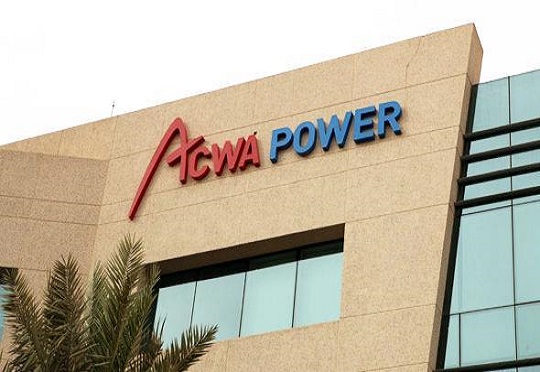
ACWA Power, a leading Saudi developer, investor, and operator of power generation, water desalination and green hydrogen plants worldwide, and the Industrial Development Corporation of South Africa (IDC), a government-owned Development Finance Institution, today signed an extensive memorandum of understanding (MoU) exploring a partnership in the development of green hydrogen and its derivatives in the Republic of South Africa.

This partnership coincides with the state visit of South African President Cyril Ramaphosa to the Kingdom of Saudi Arabia. The agreement was digitally signed by Paddy Padmanathan, Vice Chairman and Chief Executive Officer of ACWA Power; Clive Turton, Chief Investment Officer of ACWA Power; Rian Coetzee, Head of Industry Planning and Project Development at IDC; and Russell Wallace, Manager of Legal Services at IDC, with agreement copies exchanged at a gathering attended by executive dignitaries.

This is the first agreement of its kind between ACWA Power and the IDC, but the parties have previously collaborated for equity in a renewable energy plant in South Africa. The potential value of this MoU is estimated at US$10 billion. ACWA Power will function as the developer for green hydrogen and its derivatives in South Africa, with the IDC acting as co-developer and equity partner in the proposed projects.

Paddy Padmanathan, Chief Executive Officer and Vice Chairman of ACWA Power commented: ”With tangible renewable energy development commitments in South Africa already contributing to the country’s clean energy goals, the signing of the MOU with the IDC for the development of green hydrogen is a significant step towards further investing in diversifying the country’s energy mix and accelerating its green economy”

As a company that is driving energy transition, ACWA Power is proud to work closely with the IDC with whom we share a robust working history, and today we are delighted to take our collaboration further. I am confident that our expertise in developing mega-scale green hydrogen projects in other geographies will enable us to successfully create a new avenue of sustainable energy generation, one that will pave the path to further progress” he added.

South Africa has a net zero target for 2050 and plans to become a significant producer and exporter of green hydrogen and its derivatives. Accordingly, the government has mandated the IDC to lead the development and commercialisation of the green hydrogen economy.  The IDC, in partnership with the Green Hydrogen Panel, is in the process of finalising the South African Green Hydrogen Commercialisation Strategy (GHCS).

“The IDC recognises the substantial value and benefits that the green hydrogen economy will bring to South Africa. The green hydrogen economy presents new economic, skills, employment and community opportunities for the country. We are pleased to explore potential partnership opportunities with ACWA Power, given its pedigree and expertise in this industry„ : said Joanne Bate, Chief Operating Officer, IDC
 The IDC is currently supporting the development of several catalytic projects in the green hydrogen value chain including green hydrogen and ammonia production, mobility projects and decarbonisation of hard-to-abate sectors using green hydrogen.  IDC is also exploring bespoke funding solutions with co-funders for green hydrogen projects and supporting the required regulatory and policy changes to foster a conducive environment for the development of this new green hydrogen industry for South Africa.

Given ACWA Power’s experience in the South African renewable energy industry and in green hydrogen projects abroad, the company can play a meaningful role in supporting the objectives of the GHCS. Both parties will carry out a feasibility study, potentially cooperate, jointly develop and co-invest in projects in the green hydrogen value chain in South Africa. This MOU with ACWA Power will support the implementation of the GHCS and will contribute towards the country’s green hydrogen production targets.

ACWA Power has had a footprint in South Africa since 2016, and currently has two solar energy plants—Bokpoort and Redstone—in the country. Both projects utilise concentrated solar power technology.

With key projects in Saudi Arabia and Oman, the company is ramping up green hydrogen projects at scale in different locations globally.

The NEOM Green Hydrogen Company, a joint venture with ACWA Power, NEOM and Air Products, is developing the world’s largest green hydrogen project in Saudi Arabia. When commissioned in 2026, it will produce up to 650 tonnes per day of green hydrogen. By that date, the project will mitigate the impact of 3 million tonnes of carbon dioxide per year.

In addition, ACWA Power, as part of a joint venture, also recently signed a Joint Development Agreement towards a multi-billion-dollar investment in a world-scale green hydrogen-based ammonia production facility powered by renewable energy in Oman; as well as two Memoranda of Understanding in South Korea with different industrial partners.

www.acwapower.com

Ghana to face DR Congo in final round of U23 AFCON qualifiers

0

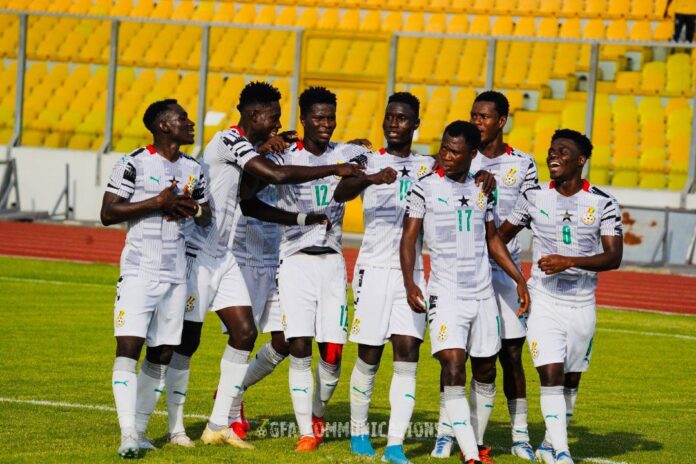
Ghana and DR Congo will clash in the final round of U23 Africa Cup of Nations (AFCON) qualifiers.

The winner of the tie will advance to the tournament’s 2023 edition, which will also serve as a qualifier for the 2024 Olympic Games in Paris.

The games will be played in March 2023, with the tournament set to place in Morocco in June.

Black Meteors reached this stage after a 4-1 aggregate victory over Mozambique. Hearts of Oak striker Daniel Afriyie Barnieh scored three penalties in the two legs as Ghana progressed.

Meanwhile, DR Congo battled hard to defeat Algeria. They won the first leg 4-1 at home but lost the second leg 3-1 to advance 5-4 on aggregate.

Ghana finished fourth in the 2019 tournament, narrowly missing out on an Olympic Games spot, while DR Congo did not qualify for Egypt.

EIB backs MTN Nigeria with €100m for high-speed network expansion

0

The European Investment Bank (EIB) has agreed to €100 million financing with MTN Nigeria to support the telecommunications company’s network expansion programme. The investment will aid the acceleration of 4G coverage in Nigeria and expand broadband access in line with MTN’s Ambition 2025 strategy.

This transaction represents EIB’s largest financing for mobile telecoms network expansion in Africa and is consistent with MTN Nigeria’s digital transformation and inclusion efforts. It will improve network capacity across the country to accommodate rising data traffic, and enhance coverage in Lagos and Ogun States.

Karl Toriola, Chief Executive Officer, MTN Nigeria: ”We are committed to leading digital solutions for Nigeria’s progress. This requires the continuous upgrade and expansion of our infrastructure to enable us to deliver superior service. The €100 million financing agreed with the EIB will accelerate 4G coverage, enhance network capacity and drive innovation that will benefit our customers.”

Ambroise Fayolle, Vice President, EIB: ”Accelerating large scale investment in telecom networks is essential to ensuring reliable access and enabling daily living and economic activity. The EIB is committed to unlocking transformational digital investment across Africa and is pleased to provide €100 million backing for MTN Nigeria’s ambitious network expansion programme.”

Over the last five years, the EIB’s support for digitalisation across Africa has reached more than €2.5 billion of transformational investment.

www.eib.org
www.mtn.ng


Aptech Africa installs a solar residential hybrid system in Buddo-Kampala

0

Aptech recently supplied, installed and commissioned a residential solar hybrid PV system in Kisozi-Buddo in Kampala.

This system has a roof-mounted 5.44kWp of solar PV with 28.8kWh of 200Ah Soleil Power lead acid battery storage. The system is integrated with the main grid/UMEME/hydro-power.

The system has a 5kW Growatt inverter that has a remote monitoring system and collects information that includes total energy being generated, battery voltage, load power, grid power in case it is connected as well as fault detection and alarm incase anything abnormal happens.

Our client wanted a solution to reduce high electricity bills.  The solar system will ensure a reliable supply of power and benefit over 7 people within the residence.

Positive social-economic and environmental benefits of residential systems:

  • Reduced monthly bills
  • Uninterrupted power supply to the home
  • The system has security lights as well which will benefit the neighborhood in terms of movement during power blackouts since the solar system will be powering the outside lights.
  • Contribution to climate change mitigation through reduced green house gases that would otherwise come from using diesel generator back up

aptechafrica.com

President Ramaphosa sends message of condolences to South Korea following Seoul tragedy

0

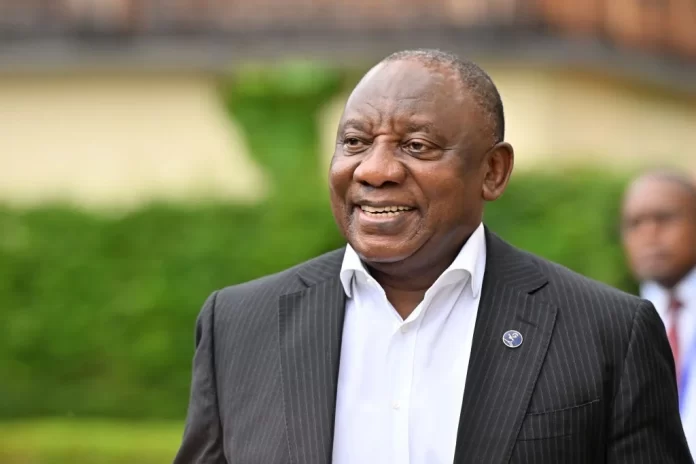
President Cyril Ramaphosa, has, on behalf of the government and the people of South Africa, sent his heartfelt condolences to the government and the people of South Korea following the tragic loss of life suffered in the capital, Seoul, during Halloween activities.


President Ramaphosa said the people of South Africa join the people of South Korea in mourning the lives lost in the tragic incident

President Yoon Suk-yeol has declared a period for national mourning following the untimely demise of the more than 150 people in a stampede.

President Ramaphosa said the people of South Africa join the people of South Korea in mourning the lives lost in the tragic incident. President Ramaphosa wished all those injured speedy recoveries.

President Ramaphosa recalled the excellent bilateral political, economic, trade and people-to-people relations that exist between South Africa and South Korea.

Distributed by APO Group on behalf of The Presidency: Republic of South Africa.

Peacekeepers turn ground-breakers in the Central African Republic

0

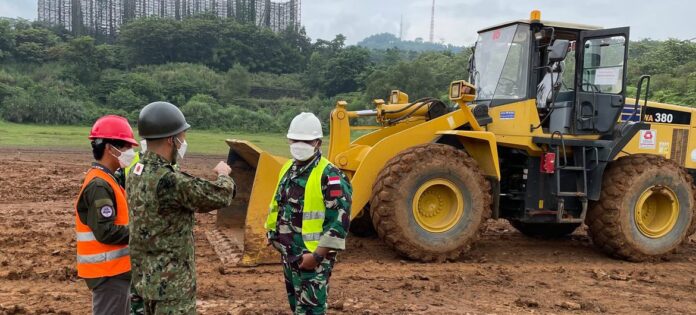
Handling heavy machinery is not one of the first skills that comes to mind when we think of UN peacekeepers, but construction skills are an important component of the blue helmets’ competency toolkit.Operating an excavator, a bulldozer or a wheel loader did not come naturally to Chief Private Ryan Herdhika, an avid motorcyclist and soldier in the Indonesian Army’s 3rd Combat Engineering Battalion. But he has just passed his heavy engineering equipment test and will next month be deployed to the United Nations Multidimensional Integrated Stabilization Mission in the Central African Republic (MINUSCA) as part of the Indonesian peacekeeping force there.


“It will be the first time in my life I will go abroad, and I am proud that my first trip is as a UN peacekeeper, not a tourist,” said Chief Private Herdhika, while getting on a motor grader to practice how to level the ground in a training field in Sentul, at the Indonesian military’s vast peacekeeping centre.

With close to 2,700 soldiers on active duty in seven UN peace missions, Indonesia is the eighth largest contributor to global peacekeeping operations.

Solid foundations for a fragile peace process

Under the UN’s Triangular Partnership Programme (TPP) – which brings together countries that provide trainers and resources, and troop contributing countries that deploy to peacekeeping missions – military engineers with extensive experience in operating heavy engineering equipment in peacekeeping missions from the Japan Ground Self-Defense Force (JGSDF) trained 20 Indonesian soldiers.

The personnel of the Indonesian Armed Forces who completed the training will use their skills to help build and repair UN mission and host country infrastructure including supply routes and camp grounds, and support national recovery efforts following natural disasters in the Central African Republic. MINUSCA has been present in the country since 2014, with a mandate to protect civilians and support the fragile peace process and the transitional government.

“This is a very hard course, having to learn to use a diverse set of equipment in just nine weeks,” said Lieutenant Colonel Tsuyoshi Toyoda, Commander of the JGSDF Training Team. “The trainees worked hard, passed the test and are ready to deploy.”

In a normal construction site, operators specialize in a single kind of equipment, but here we need the soldiers to learn and operate six types of machines

While there are commercial instructors available to teach these skills in a civilian setting, the complexities of UN peacekeeping operations require trainers with peacekeeping experience.

“In a normal construction site, operators specialize in a single kind of equipment, but here we need the soldiers to learn and operate six types of machines,” said Colonel Herman Harnas, Director of International Cooperation at the Indonesian Armed Forces Peacekeeping Centre. “In a peacekeeping situation, you also do not have the luxury to have separate staff for maintaining the vehicles – so the soldiers need to learn that as well.”

This is the first time such a training course is taking place in Indonesia, though similar courses have been held in Brazil, Kenya, Morocco, Rwanda, Uganda and Viet Nam, countries that are also important contributors to the UN’s peacekeeping efforts.

Enhancing the preparedness and effectiveness of peacekeeping missions is at the core of the TPP’s raison d’être. But the work of a peacekeeping engineer serving in UN missions requires more than specialized technical knowledge, and the TPP reflects the harsh reality of the peacekeeping environment.

“Our soldiers also learn discipline and the importance of following protocols, which is particularly key in emergency situations, when they need to act quickly,” says Colonel Harnas. “The soldiers are now able to deploy to MINUSCA, one of the UN’s most complex peace operations.”

A particular set of skills

The UN is committed to continue strengthening engineering, medical and technological capacities of uniformed peacekeepers, says Rick Martin, Director of Special Activities at the UN’s Department of Operational Support in New York.

“As we face new operational challenges within UN peacekeeping operations, high-quality enabling units in engineering and other key capability areas will need to continue to be a priority area if we are to close capability gaps and improve the performance of UN peacekeeping operations,” he adds.

Next year, the UN and Japanese trainers will be back in Sentul to hold a training-of-trainers course, this time teaching future equipment instructors from armies from across the region who contribute to peacekeeping. By then, Chief Private Herdhika will be operating engineering equipment in the Central African Republic. “But after I come back, I hope to be able to pass on my knowledge and experience to my future peacekeepers colleagues as well,” he says.

Distributed by APO Group on behalf of UN News.