Home Blog Page 479

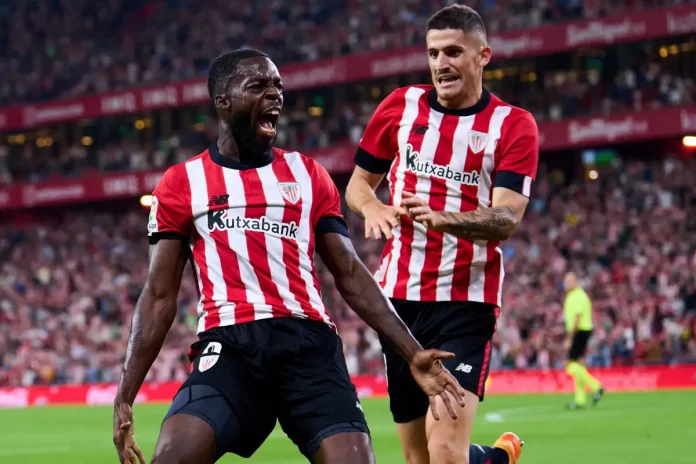
Inaki Williams scores winner as Athletic beat Villarreal

0

Athletic Bilbao beat Villareal 1-0 in the second half thanks to a second-half goal from Inaki Williams.

The Ghana striker’s fifth goal of the season ensured that Athletic ended a run of four matches without victory in the Spanish La Liga on Sunday.

Williams scored in the 59th minute, slotting the ball past the onrushing goalkeeper after latching onto Raul Garcia’s defence-splitting pass.

The 28-year-old was a threat to Villarreal defenders Pau Torres and Aissa Mandi, who struggled to keep up with his pace, with only poor finishing denying him at least a brace at San Mames.

Williams extended his incredible streak of consecutive La Liga appearances for his club to 245 in his 352nd game for the Basque club.

The former Spain international has been named to Ghana’s provisional squad for the World Cup in Qatar, where the Black Stars will face Portugal, South Korea, and Uruguay in the group stages.

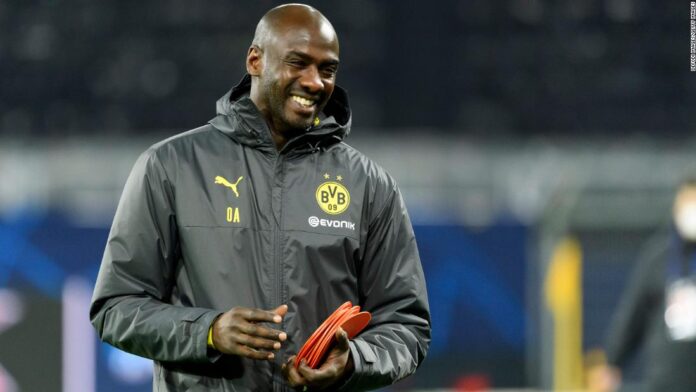
World Cup 2022: Kwesi Nyantakyi urges Black Stars coach Otto Addo to produce desired results in Qatar

0

Former Ghana Football Association President Kwesi Nyantakyi believes Black Stars “have some of the best players” and it is up to coach Otto Addo to manage them properly and ensure that the team achieves the desired results in Qatar.

According to Nyantakyi, players at the top of their game like Mohammed Kudus, Inaki Williams, Thomas Partey, and Mohammed Salisu can make a big difference for the Black Stars.

Despite being the lowest-ranked team entering the World Cup, Nyantakyi believes the Black Stars can succeed with the right management, something he has tasked Otto Addo and GFA President Kurt Okraku with ensuring.

“I think we have some of the best players; you can’t take anything away from [Mohammed] Kudus. Kudus can play in any team in the world, you can’t take anything from Thomas Partey, and you can’t take anything away from Inaki Williams who’s now in the team,” Nyantakyi told Joy Sports.

“[Mohammed] Salisu is at the prime of his career. We have some of the best players, the rest of the work now is to manage these players, blend them and ensure that they produce the desired results for us. That is the responsibility of Otto Addo and the management of the FA led by my good friend, Kurt Okraku.”

The World Cup begins on November 20, with the Black Stars’ first game against Portugal on November 24. Following that, the four-time African champions will face South Korea and Uruguay to round out their group stage campaign.

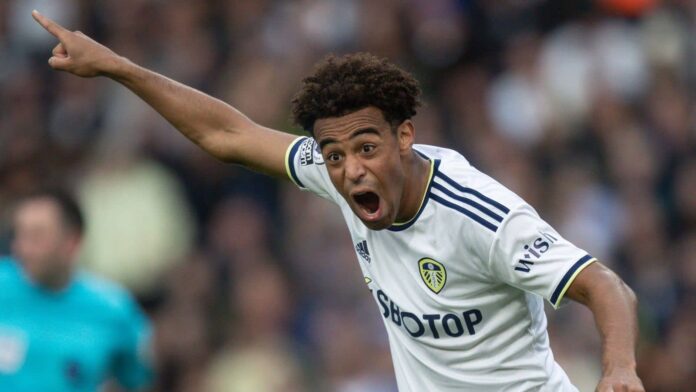
Tyler Adams to Man Utd truths emerge as Leeds Utd are told they may have to sacrifice big name in January

0

The Red Devils’ new coach Ten Hag has already overseen a noticeable upturn in their results. Having been allowed to spend well over £200m over the summer, they are currently fifth in the table, having chalked up some noticeable scalps. Indeed, they have already beaten

and Arsenal this season, having also earned a deserved draw at Chelsea.

That said, their 6-3 mauling by Manchester City illustrates there remains a huge chasm between them and Pep Guardiola’s side.

Despite that, hopes are growing that Ten Hag can enjoy a successful debut season at Old Trafford.

And the next phase of his rebuilding work has seen a number of top stars linked with moves.

Indeed, he is reportedly keen to sign a £52m-rated goalkeeper as a potential successor to David Ge Gea.

However, Ten Hag is also looking at new arrivals in attack amid ongoing uncertainty surrounding Cristiano Ronaldo.

And he’s reportedly also eyeing a new right-back too, despite the excellent form of Diogo Dalot so far this season.

But the Manchester United boss is also reportedly keen to strengthen his midfield options.

They brought in Casemiro from Real Madrid over the summer for a fee which could ultimately top £70m.

But Frenkie de Jong was another top target and he’s a player they are reportedly still monitoring ahead of future windows.

And with a new midfielder seemingly on the agenda, reports earlier this week suggested Leeds star Adams is also attracting attention.

Tyler Adams will not be sold by Leeds

The USA star only moved to Elland Road over the summer in a £20m deal from RB Leipzig. And the 23-year-old New Yorker has quickly made himself a popular figure in West Yorkshire with some tenacious displays in midfield.

As such, Football Insider claims Adams’ performances have not gone unnoticed by Ten Hag and his staff.

The claim the Dutch boss is a long-term admirer of the midfielder and could look to bring him across the Pennines in 2023 in a controversial deal.

However, TEAMtalk’s transfer expert Graeme Bailey insists that while they do admire the player, Manchester United’s priorities currently lie elsewhere.

“I don’t believe another holding midfielder is that high on Man United’s wanted list in January,” Bailey said. “They will do business but this deal is highly unlikely at best.”

He added: “I think Adams and [fellow summer signing, Marc] Roca, have been pretty good since coming in. They look a really nice partnership in the middle. And Adams has been good enough to attract attention for a move in January from Manchester United.

“But I am told this will not happen. Leeds could do business in January, and they are potentially in danger of losing a big name. But that will not be Adams.”

Star could have future decision to make

Bailey continued: “Leeds are battling at the wrong end of the table and face another fight for survival. They can’t afford to lose a player like Tyler Adams and I don’t see this happening at all.”

Adams, and his Leeds teammate Brenden Aaronson, are likely to come up against England in their World Cup clash on November 25.

As such, there will be plenty of people keeping an eye on the Leeds’ performances before then. And not least Gareth Southgate.

Further down the line, Adams may well find himself in even greater demand. And Bailey also reckons Adams’ outlook could change were Leeds to ever part company with Marsch, who was a big factor behind his move.

“One potential caveat to Adams’ future could be whether he is happy to play on at Leeds under someone other than Jesse Marsch. That is a question he may need to ask himself one time in the future.”

Source

TeamTalk/Graeme Bailey 

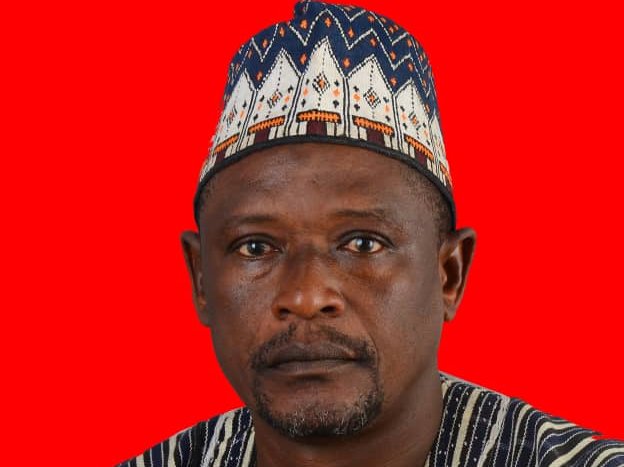
Don’t shy away from NDC ideals – Alhaji Ali Futa

0

Candidates vying for positions at the regional and national level elections of the National Democratic Congress (NDC) have been told to uphold the party’s ideals in their campaign activities.

They should set good standards by telling the party activists of their capabilities and vision when given the mandate, and not engage in unnecessary ‘dirty politics’, Alhaji Sumaila Ali Futa, an Executive Member of the NDC Zongo Caucus said.

“Those billed to lead the party have the responsibility of conducting their campaigns decently – devoid of insults and derogatory remarks,” he told the Ghana News Agency (GNA), in Accra.

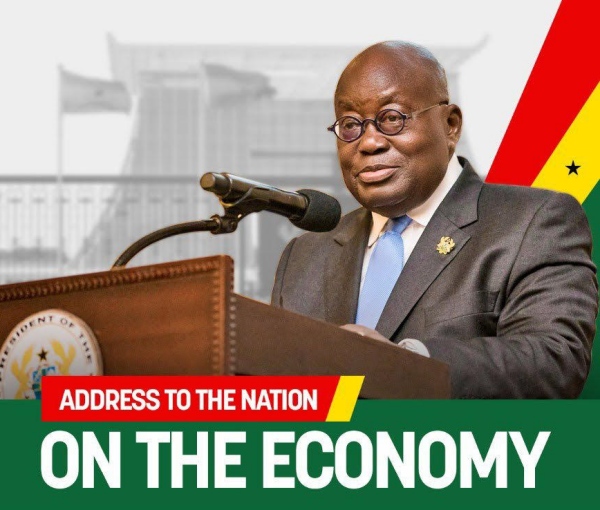
Read also: Address To The Nation By President Nana Addo Dankwa Akufo-Addo On The Economy

Alhaji Ali Futa said the difficult socio-economic trends in the country suggested that the NDC was the only alternative party with the proven records to salvage Ghana from its current predicament.

“The people are yearning for our comeback, because they can no longer endure the high utility bills, food prices, fuel cost and depreciation of the Ghana Cedi,” he argued.

According to him, politics was about addressing the needs of the people.

Therefore, the leadership and well-meaning activists of the NDC were obliged to echo the party’s position and vision pertaining to the management of the economy and national resources when given the platform.

Alhaji Ali Futa, who is currently the Ashanti Regional Zongo Caucus Coordinator, and also vying for another term, appealed to the delegates to justify their confidence in him by voting massively when the party regional elections are due.

“My simple message to the voters is that the NDC needs hardworking, dedicated and committed executives at the regional level to be able to efficiently execute the party’s overall agenda at the national stage,” he noted.

He congratulated the newly-elected constituency executives, urging them to work with the losing candidates to foster peace, unity and harmony in the party.

Address To The Nation On The Economy

0

Address To The Nation By The President Of The Republic, Nana Addo Dankwa Akufo-Addo, On The Economy, On Sunday, 30th October 2022.

Address To The Nation By President Nana Addo Dankwa Akufo-Addo On The Economy

0

Address To The Nation By The President Of The Republic, Nana Addo Dankwa Akufo-Addo, On The Economy, On Sunday, 30th October 2022.

Fellow Ghanaians, good evening.

Back in 2020, at the outbreak of the Coronavirus pandemic, I started a regular conversation with you that came to be popularly known as Fellow Ghanaians.

It was a time of great fear of the unknown, and the entire world felt at risk. I came into your homes regularly to tell you what the experts were discovering about the virus, and what we should do.

Now that we have seen the worst of the COVID-19, I can tell you that there were moments during those times when I was distraught, there were moments when I was in despair about the apparent inadequacy of our health facilities, and there were moments when I wondered if the dire predictions made about dead bodies on our streets would truly happen.

But I knew that I owed it to all of us that, as your president, I had to hold my nerve, show leadership and take us out of the crisis. With your help and support, and the great mercies of the Almighty, we can say that we emerged from the ravages of the pandemic with one of the lowest mortality rates globally. In fact, Ghana’s handling of the pandemic won universal acclaim.

We could all see in real time the devastation that was being wreaked on economies during the pandemic, but I doubt that anyone imagined the extent of the damage. Our economy, here in Ghana, like many, many others around the globe, was thrown into turmoil.

When I said, at the height of the COVID pandemic, that we knew what to do to bring the economy back to life, but not how to bring people back to life, it was not said in jest. We had done it before, and we were on course to doing it again. Ghana’s economy grew by a remarkable 5.4% in 2021, signifying a strong recovery from the 0.5% growth recorded the previous year due to the COVID-19 pandemic. In fact, in the last quarter of 2021, our economy grew at seven percent (7%), only for the Russian invasion of Ukraine in the first quarter of this year to aggravate the effects of COVID-19, and plunge the global economy into even greater turmoil from which it has not yet recovered.

The whole world has been taken aback by the speed with which inflation has eaten away people’s incomes. Economies, big and small, have experienced, over this year alone, the highest rise in cost of living over a generation; the highest rise in government borrowing in over fifty (50) years; the highest rise in inflation for forty (40) years; the steepest depreciation in their currencies to the US dollar over the last thirty (30) years; the fastest peak in interest rates for over twenty (20) years; and the greatest threat of unemployment in peace time; with over a hundred million people being pushed into extreme poverty.

Between the end of 2019 and now, inflation in Ghana has increased by five-fold, in Togo by sixteen-fold, by eleven-fold in Senegal, and by seven-fold in Cote d’Ivoire. In truth, however, the fact that there are petrol queues in France does not make it more tolerable that the trotro price from Kasoa to Circle has doubled in the past one year, nor does it make it any more tolerable that the price of cooking oil goes up every other week.

It is important to state that mentioning the increases in prices worldwide is not meant to belittle the scope of suffering here, but simply to help us put things into some perspective, and, hopefully, learn some useful lessons about how other people are coping.

Fellow Ghanaians, this is why I am back in your homes this evening to ask for your support, as we work together to get our economy back into good shape.

In April, after the Cabinet retreat of the first quarter, and recognising the deteriorating macroeconomy, my government announced a thirty percent (30%) cut in budgetted discretionary expenditures, and a thirty percent (30%) cut in salaries of the President, Vice President, Ministers, Deputy Ministers, MMDCEs and political office holders, amongst other measures.

And, since July, when the Government took the difficult decision to go to the IMF to seek support, I have been speaking publicly at different fora on the subject of the economic difficulties we face, especially during my recent tours, so far, of nine (9) regions, and interacting directly with you, the Ghanaian people. It is also true that many of you have felt the need for me to come back to the Fellow Ghanaians format, that brings us all together.

For us, in Ghana, our reality is that our economy is in great difficulty. The budget drawn for the 2022 fiscal year has been thrown out of gear, disrupting our balance of payments and debt sustainability, and further exposing the structural weaknesses of our economy.

We are in a crisis, I do not exaggerate when I say so. I cannot find an example in history when so many malevolent forces have come together at the same time. But, as we have shown in other circumstances, we shall turn this crisis into an opportunity to resolve not just the short-term, urgent problems, but the long-term structural problems that have bedeviled our economy.

I urge us all to see the decision to go to the International Monetary Fund in this light.  We have gone to the Fund to repair, in the short term, our public finances, and restore our balance of payments, whilst we continue to work on the medium to long-term structural changes that are at the heart of our goal of constructing a resilient, robust Ghanaian economy, and building a Ghana Beyond Aid.

I am able to report to you, my fellow Ghanaians, that the negotiations to secure a strong IMF Programme, which will support the implementation of our Post COVID-19 Programme for Economic Growth and additional funding to support the 2023 Budget and development programme, are at advanced stages, and are going well.

We are determined to secure these arrangements quickly to bring back confidence and relief to Ghanaians. We are working towards reaching a deal with the IMF by the end of the year. This will give further credence to the measures Government is taking to stabilize and grow the economy, as well as shore up our currency.

I know that the increasing cost of living is the number one concern for all of us. It is driven by fast escalating fuel prices at the pumps, which is caused by high crude oil prices on the world market and our depreciated currency. I know that this is putting intolerable pressure on families and businesses. I know that people are being driven to make choices they should not have to make, and I know that it has led to the devaluation of capital of traders and painfully accumulated savings. Furthermore, Government is working to secure reliable and regular sources of affordable petroleum products for the Ghanaian market. It is expected that this arrangement, when successful, coupled with a stable currency will halt the escalation of fuel prices and bring relief to us all.

I hear from the market queens also that another factor fueling the high prices is the high margins that some traders are slapping on goods, for fear of future higher costs. I say to our traders, we are all in this together. Please let us be measured in the margins we seek. I have great respect and admiration for the ingenuity and hard work of our traders, especially those that take on the distribution of foodstuffs around the country, and I would hesitate to join in calling them names. I do make a heartfelt appeal that we all keep an eye out for the greater good, and not try to make the utmost profits out of the current difficulties.

In language that every market woman and, indeed, every trader in our country understands, let me say that the basic problem we face is that we are not making as much money as we need to spend, and what little money we do make is going to pay for the debts we have contracted to fund the development projects we must have. Not enough of us are paying our taxes, not enough of us are producing to generate the revenues that we need.

Nevertheless, my ambitions for Ghana remain high. All our children should be educated and trained with skills that will enable us be competitive in the world. We need to close rapidly the infrastructure gap, we need to build a world-class healthcare system, and we need to build confidence in ourselves to make ours the happy and prosperous place it deserves to be.

I believe we can and we will find the means to achieve these goals, even if the immediate measures we have to take are painful.

At the just ended Cabinet Retreat at Peduase Lodge, my government agreed on the framework for the Post COVID-19 Programme for Economic Growth and the IMF support for its implementation, as well as the work being done by the Ministry of Finance in preparation for the 2023 budget. At the Cabinet Retreat, we took some firm decisions that should put us on the path that will take our nation out of the current economic difficulties. Let me try and give you an outline of the main decisions without getting into the technical language that baffles many of us.

To restore and sustain debt sustainability, we plan to reduce our total public debt to GDP ratio to some fifty-five percent (55%) in present value terms by 2028, with the servicing of our external debt pegged at not more than eighteen percent (18%) of our annual revenue also by 2028.

We are committed to improving the revenue collection effort, from the current tax-revenue to GDP ratio of thirteen (13%) to between eighteen and twenty percent (18-20%), to be competitive with our peers in the West Africa Region. The GRA is rolling out an extensive set of measures to support this enhanced revenue mobilisation. All of us must do our patriotic duty, and support the GRA in this exercise.

We are aiming to restore and sustain macroeconomic stability within the next three (3) to six (6) years, with a focus on ensuring debt sustainability to promote durable and inclusive growth while protecting the poor.

We have decided to review the reforms in the energy sector, capping of statutory funds, implementation of the exemptions Act and a new property rate regime. We have decided also to continue with the policy of thirty percent (30%) cut in the salaries of political office holders including the President, Vice President, Ministers, Deputy Ministers, MMDCEs, and SOE appointees in 2023, just as we will continue with the thirty percent (30%) cut in discretionary expenditures of Ministries, Departments and Agencies.

My fellow Ghanaians, the success of our efforts at diversifying the structure of the Ghanaian economy from an import-based one to a value-added exporting one is what will, in the long term, help strengthen our economy. We are making some progress with the 1D1F but our current situation requires that we take some more stringent measures to discourage the importation of goods that we can and do produce here.

To this end, we will review the standards required for imports into the country, prioritise the imports, as well as review the management of our foreign exchange reserves, in relation to imports of products such as rice, poultry, vegetable oil, tooth picks, pasta, fruit juice, bottled water and ceramic tiles, and others which, with intensified government support and that of the banking sector, can be manufactured and produced in sufficient quantities in Ghana. Government will, in May 2023, that is six (6) months from now, review the situation. We must, as a matter of urgent national security, reduce our dependence on imported goods, and enhance our self-reliance, as demanded by our overarching goal of creating a Ghana Beyond Aid.

Much as we believe in free trade, we must work to ensure that the majority of goods in our shops and market places are those we produce and grow here in Ghana. That is why we have to support our farmers and domestic industries, including those created under the 1-District-1-Factory initiative, to help reduce our dependence on imports, and allow us the opportunity to export more and more of our products, and guarantee a stable currency that will present a high level of predictability for citizens and the business community. Exports, not imports, must be our mantra! Accra, after all, hosts the headquarters of the Secretariat of the African Continental Free Trade Area.

Fellow Ghanaians, as the French would say, l’argent n’aime pas le bruit, to wit, money does not like noise, sika mpɛ dede. Where there is chaos, where there is noise, where there is unrest, you will not find money. If you talk down your money, it will go down. If you allow some unidentifiable person to talk down your money, it will go down.

The recent turbulence on the financial markets was caused by low inflows of foreign exchange, and was made worse in the last two to three weeks, in particular, by the activities of speculators and the Black Market. An anonymous two-minute audio message on a WhatsApp platform predicting a so-called haircut on Government bonds sent all of us into banks and forex bureaus to dump our cedis, and, before we knew it, the cedi had depreciated further. All of us can play a part in helping to strengthen the cedi by having confidence in the currency, and avoiding speculation. Let us keep our cedi as the good store of value it is. To those who make it a habit of publishing falsehoods, which result in panic in the system, I say to them that the relevant state agencies will act against such persons.

Indeed, some steps have been taken to restore order in the forex markets and we are already beginning to see some calm returning. We will not relent until order is completely restored. The following actions have been taken thus far:

1)  enhanced supervisory action by the Bank of Ghana in the forex bureau markets and the black market to flush out illegal operators, as well as ensuring that those permitted to operate legally abide by the market rules. Already some forex bureaus have had their licenses revoked, and this exercise will continue until complete order is restored in the sector;

2)  Fresh inflows of dollars are providing liquidity to the foreign exchange market, and addressing the pipeline demand;

3)  the Bank of Ghana has given its full commitment to the commercial banks to provide liquidity to ensure the wheels of the economy continue to run in a stabilized manner, till the IMF Programme kicks in and the financing assurances expected from other partners also come in;

4)  Government is working with the Bank of Ghana and the oil producing and mining companies to introduce a new legal and regulatory framework to ensure that all foreign exchange earned from operations in Ghana are, initially, paid to banks domiciled in Ghana to help boost the domestic foreign exchange market; and

5)  the Bank of Ghana will enhance its gold purchase programme.

I am confident that these immediate measures designed to change the structure of our balance of payment flows, sanitise the foreign exchange market to ensure that the banks and forex bureaus operate along international best practices, together with strengthened supervision, will go a long way to sanitize our foreign exchange market, and make it more resilient against external vulnerabilities going forward.

Over the course of this week, I have held several fruitful engagements with the Trades Union Congress and Organised Labour, the Ghana Employers’ Association, the Association of Ghana Industries, the Ghana Association of Banks, the Private Enterprise Federation, the Association of Forex Bureau Operators, the Association of Market Queens and Women, all of whom represent important stakeholders of the Ghanaian economy. They expressed their concerns and proposed solutions on how best to solve our problems. I have been encouraged by the enthusiasm of these interest groups to help Government address these challenges, and I intend to continue these engagements with other groups.

I also want to assure all Ghanaians that no individual or institutional investor, including pension funds, in Government treasury bills or instruments will lose their money, as a result of our ongoing IMF negotiations. There will be no “haircuts”, so I urge all of you to ignore the false rumours, just as, in the banking sector clean-up, Government ensured that the 4.6 million depositors affected by the exercise did not lose their deposits.

My government has always been cognisant of the importance of implementing policies and social interventions to relieve Ghanaians of hardships. It is for this reason that over the first five (5) years in office government reduced electricity tariffs cumulatively by 10.9%, we provided free water and electricity as well as reduced tariffs for the entire population during a whole year of the COVID-19 pandemic; we  increased the share of the District Assemblies Common Fund to persons with disabilities by 50%; we exempted Kayayei from market tolls; we expanded the LEAP by one hundred and fifty thousand (150,000) beneficiaries; we expanded School Feeding from 1.6 million children to 2.1 million children; we restored teacher and nursing training allowances; we absorbed the cost of BECE and WASSCE exam registrations for parents; no guarantor is now required to obtain student loans. The Ghana card is sufficient; and we have implemented free TVET as well as free senior high school education.

It is obvious, fellow Ghanaians, that you have a government that cares. We are determined to restore stability to the economy, and provide relief. We are all in this together, and I am asking for your support to rescue Ghana from the throes of this economic crisis.

I have total confidence in our ability to work our way out of our current difficulties. We are not afraid of hard work.  We will triumph, as we have triumphed many times before. Let us unite, and rally around our Republic, its institutions and its democratic values, and insist that, under God, we will emerge victorious from our current difficulties. For this too shall pass, as the Battle is the Lord’s.

I will be coming regularly to keep you updated about the measures your government is making to move our country forward, and tackle our economic challenges.

God bless us all and our homeland Ghana, and make her great and strong.

I thank you for your attention, and have a good evening.

Sim cards to be disconnected on 1st November 2022

0

MTN Ghana is urging customers who have not completed their SIM card registration with the Ghana card to do so by 31st October 2022 to avoid their services being disconnected.

In line with the press release from the Ministry of Communications and Digitization, MTN may be required to disconnect the services of customers who have not completed their registration by capturing their biometrics by 1st November 2022.  MTN Ghana is urging its customers to complete their registration by visiting any MTN Agent Point, Service Center, Connect Store, or download the self-service app from play store and capture their biometrics.

Commenting on this, the Chief Sales and Distribution Officer of MTN Ghana, Shaibu Haruna said, “We still have a significant number of customers who have either not linked their cards or have not completed registration. We are encouraging every customer to use any of our channels, including the self-service app to complete their registration”.

Customers can check the status of their registration by dialling *400# to confirm if their SIM cards have been linked ahead of the biometric capture. A “B-Cap Yes” response or feedback means a customer is fully registered.

The Ministry of Communications and Digitalization announced the mandatory registration of all SIM cards in Ghana in October 2021. The exercise is scheduled to end on October 31, 2022.

BoG revokes licences of two forex bureaus in Accra

0

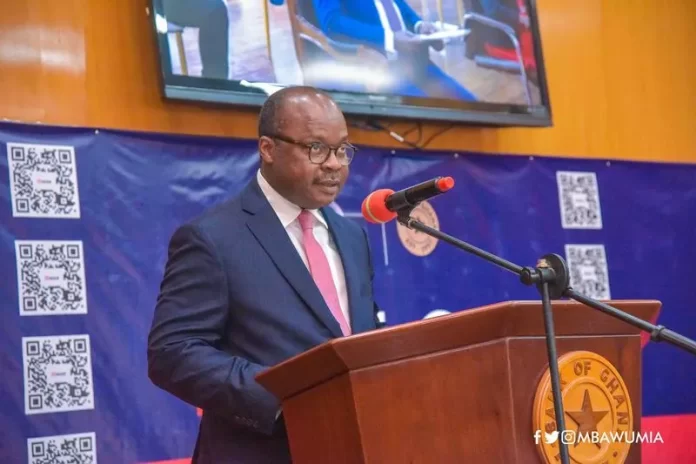
The Bank of Ghana has revoked the licences of two forex bureaus operating in Accra for several breaches of the Forex Bureau Act.

The two companies – Trade House Forex Bureau Ltd. and Airport City Forex Bureau Ltd. – are under the same ownership, according to the Head of Other Financial Institutions Supervision Department at the Bank of Ghana, Yaw Sapong; and they are not complying with some provisions under the law within which they operate.

Mr. Sapong mentioned that the two forex bureaus which operate at Airport City in Accra were not issuing electronic receipts, and not taking identity cards of customers.

“There are several rules under the Act. We know that you have to issue electronic receipts, you have to take IDs; and these two forex bureaus on several occasions have been found not to be complying. And the way they operate and set their prices is detrimental, so we think the two bureaus’ licences must be revoked,” he said in an interview with media during the clampdown exercise.

Asked whether the two forex bureaus can have their licences back after correcting their mistake, Mr. Sapong said that may be difficult as the company’s directors and owners, per their actions, have proven themselves not to be fit and proper to qualify for operating in the forex space.

He further cautioned that the regulator will not relent in its efforts to carry out any action that will help address the cedi’s rapid depreciation.

“We are confronting the issues from all angles. There are licenced forex bureaus which are not operating according to the law. So, for licenced institutions which are not complying with the rules, the Bank of Ghana will deal with them. In addition, we are going after the black market as well; and as you are aware, we recently did a swoop and several more have been planned.

“So, I want to use this opportunity to sound a warning to those who are engaged in illegal forex business. It is an offence to buy or sell foreign currency in this country without a licence,” he said.

Asked whether this is just a panic-reaction in response to the cedi’s rapid depreciation against the dollar – which hit more than 50 percent this week, Mr. Sapong answered in the contrary: saying the regulator cannot watch on for the black market to set the rules in the forex industry. “We cannot allow the black market operators to set the value of currency in this country. And that is why we are fighting them really hard,” he said.

The position of the law

Section 3. (1) of the Foreign Exchange Act, 2006 (Act 723) states that: “A person shall not engage in the business of dealing in foreign exchange without a licence”. And Section 29 (1a) says: “A person who engages in the business of dealing in foreign exchange without a licence commits an offence, and is liable on summary conviction to a fine of not more than seven hundred penalty units or a term of imprisonment of not more than eighteen months, or both”.

Also, Section 1 (i & ii) of the Revised Forex Bureau Regulations, 2003 (BoG NOTICE NO. BG/GOV/SEC/2003/2) states that: “No person shall carry on any forex bureau business unless he/she is in possession of a valid forex bureau licence. A person who contravenes or fails to comply shall be guilty of an offence, and shall be dealt with in accordance with the law”.

Minister Bono stresses the need for policy to make breast screening accessible

0

Madam Justina Owusu-Banahene, the Bono Regional Minister has suggested the need for Ghana Health Service (GHS) to formulate a policy to facilitate easy access to health facilities for breast screening by the public.

”This can help for timely diagnosis of breast cancer to ensure its prevention, comprehensive treatment and supportive care”, she said.

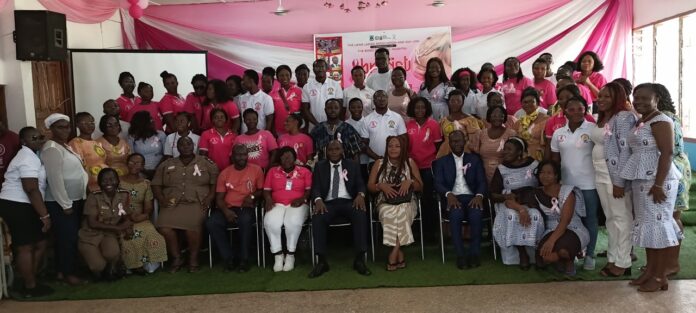
Mad. Owusu-Banahene made the call in a speech read on her behalf at a day’s Multi-Stakeholders Breast Cancer Awareness Creation with Impact durbar on the theme ”Creating Breast Cancer Awareness and Early Detection: Stakeholders Roles and Responsibilities” at the University of Energy and Natural Resources (UENR) in Sunyani.

It was organised by the UENR Ladies Association in collaboration with the Sunyani Regional Hospital (SRH) and participants included Ladies’ Associations of UENR, Police, Prison and Fire Services, nurses and other stakeholders.

She said it had become essential as a region to raise awareness through intensive education about breast cancer to prevent the rate of affecting family members, since the Regional Minister added the disease was becoming a great public health challenge among women in the country.

”With about 2,900 cases occurring annually and one-eighth of victims dying from it, the disease has become the most common cancer-related death among Ghanaian women”, Mad. Owusu-Banahene stated.

She therefore encouraged stakeholders to make a difference by rising above the challenge of buying a mammogram machine for the SRH because “it is a private health facility that has the machine in the entire Bono Region”.

Mad. Owusu-Banahene said the initiative to raise funds in support of buying a mammogram machine was timely because it would support many women within the age bracket of 45-55 years to get an early detection, diagnosis and early treatment.

Giving data on breast cancer cases at SRH, Dr. Frank Owusu, Senior Specialist Head of Accident and Emergency Department at the hospital said from 2017 till date 539 breast lump cases had been reported, but 115 of those cases were confirmed breast cancer, representing 21 per cent.

He said 89 cases of breast lumps were reported in 2017 and 13 representing 14 per cent were confirmed breast cancer whereas 64 cases were reported in 2018 and seven signifying 10 per cent were breast cancer.

In 2019, he continued 122 lump cases with 53 confirmed breast cancer, representing 43 per cent were reported, while 69 lump cases with nine indicating 13 per cent were reported in 2020.

Dr. Owusu said 86 cases were recorded in 2021 with 11 confirmed breast cancers that represented 13 per cent, adding that 109 cases had been reported now this year with 22 cases of breast cancers forming 20 per cent of those cases.

Ghanaians urged to reduce intake of sugar sweetened beverages

0

Professor Francis B. Zotor, Professor in Public Health Nutrition at the Fred Binka School of Public Health, University of Health and Allied Sciences (UHAS), Hohoe, has called on citizens to reduce their consumption of sugar sweetened beverages (SSBs).

He said research has shown that these sugar sweetened beverages were associated with dental caries, obesity, diabetes, stroke and several other non-communicable diseases (NCDs).

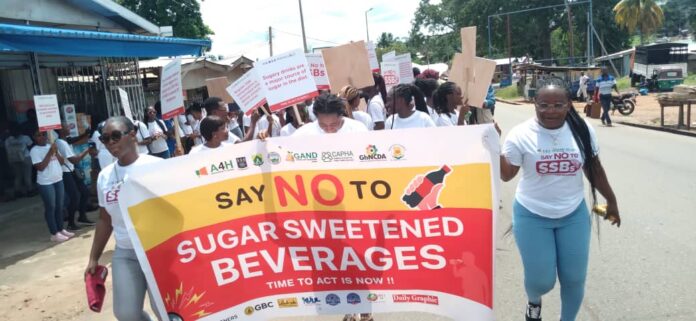
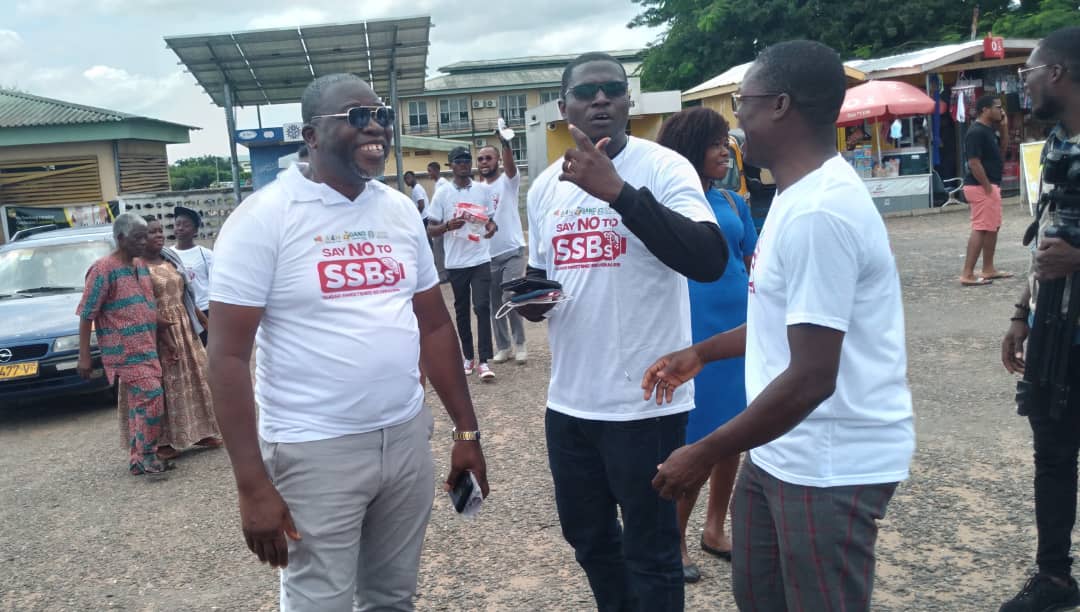
Professor Zotor said these in an interview with the Ghana News Agency during a float dubbed: “Say No to Sugar Sweetened Beverages,” a campaign aimed at creating awareness of the health dangers of consuming these products.

The float was organised as part of the activities of the Advocating Health (A4H) Project by Prof Francis Zotor in collaboration with the Volta-Oti-Eastern Zone of the Ghana Academy of Nutrition and Dietetics (GAND), the Department of Family and Community Health and the Department of Nutrition and Dietetic, UHAS.

Other collaborating partners include the School of Public Health of University of Ghana, the Coalition of Actors for Public Health Advocacy, the Ghana NCD Alliance, the Ghana Public Health Association and the Volta Regional Nutrition Office of the Ghana Health Service.

The four-hour float started from the Ho Teaching Hospital through Housing, Central Market, OLA traffic, Civic Center, the municipal assembly, KK House and back to the starting point.

The Lecturer lamented that these products were on display at everywhere including shops, schools, churches, markets around banks and in hospitals, and they were killing the populace slowly and silently.

He said children also consumed these products on daily basis, putting their future and that of the country at high risk, thus there was the need for drastic and pragmatic mechanisms to deal with the situation.

Professor Zotor who is also the Lead Organiser for “Say No to SSBs” campaign in the Eastern Corridor for the Advocating for Health Project underscored the need for a concerted effort to increase the awareness to stop the menace caused by continuous consumption of SSBs.

The Lecturer said there was an increase in non-communicable diseases and that has implications for the next generation, the reason it was important to wake up and make conscious efforts to address the challenges.

He said Ghana cannot afford the epidemic proportions of the NCDs levels as the health care system cannot take care of people who were sick, urging public health nutritionist to intensify the campaign to protect the health of the citizens.

Mr Percival Agordoh, Vice President of the Ghana Academy of Nutrition and Dietetics (GAND) told GNA government should consider putting heavy taxes on these products to make them expensive.

He said people continuously consume these sugar sweetened beverages because they were not expensive, so putting taxes on them would increase their prices and that would deter people from consuming them in large quantity.

Mr Agordoh said the campaign would be extended to producers of these products to appeal to them to reduce the sugar content to make the products safe for consumption.

The Vice President called on the citizens to adhere to health safety protocols and heed to the call to avoid intake of sugar sweetened beverages to remain healthy and productive.