Home Blog Page 481

SIM registration to improve delivery of financial services free of fraud and theft – First Deputy Governor

0

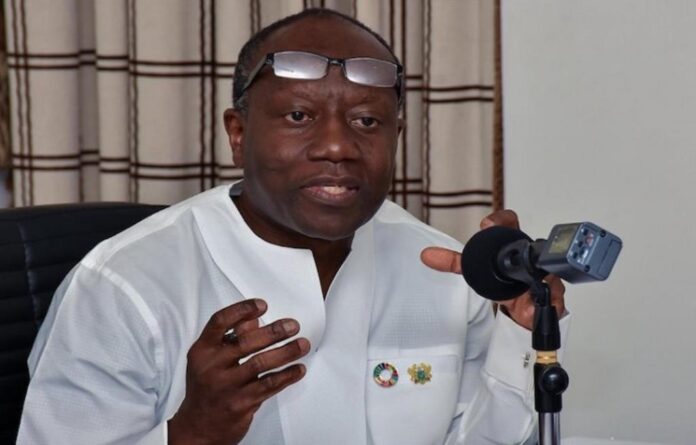
According to Dr Maxwell Opoku-Afari, First Deputy Governor of the Bank of Ghana (BoG), the Bank has since developed a comprehensive licensing regime that has carefully examined and calibrated the requirements of each license category to be commensurate with the risks presented by their permissible activities.

He added that it also sought to address the reality that some accommodations for smaller entities and indigenous Ghanaian service providers were required.

To fulfill the mandate in the National Payments Infrastructure Roadmap, he said, the central bank in collaboration with the Ministry of Finance, Ministry of Communications and other relevant stakeholders have been working rigorously together to set the foundational digital infrastructure base of the economy in place.

He said the ongoing sim-card registration exercise being championed by the National Communication Authority (NCA) which has the BoG’s full support, will ensure the centralization of Know Your Customer (KYC) data to boost delivery of financial services devoid of fraud, theft and opportunities for money laundering and financing of terrorism.

The consumer, he explained,  should be at the center of our collective efforts. As such, the Bank will not relent on its effort to protect them.

“It is in this vain that the Bank of Ghana has developed an artificial intelligence powered automated customer complaint system, I believe this community refers to it as a chatbot; dubbed ‘Akushika’,” he said during the Standard Chartered Digital Banking, Innovation and Fintech Festival 2022, in Accra on Tuesday October 25.

“This customer experience solution is being deployed as an additional mechanism, to manage consumer complaints and promote consumer protection. The chatbot is currently in its pilot phase and I would like to use this opportunity to encourage you all to interact with it to ensure that it becomes fit for its purpose.

“In anticipation of our future role as a central bank within a digital economy, we set out to explore the possibility of introducing a central bank digital currency called the eCedi through a comprehensive pilot testing process that has just ended,” he added.

Dr Opoku-Afari further indicated that the pilot saw the testing of online and offline versions of the eCedi in Accra, Tarkwa and Sefwi Asafo.

The pilot has unearthed useful insights on the impact of the initiative of the Bank which will prove instrumental in the event of a full-scale deployment of the eCedi.

“Further to building a safe payments ecosystem as well as promoting innovation, the Bank of Ghana launched the Regulatory Sandbox on the 19th of August 2022, to support responsible innovation, innovations currently unregulated and immature, and nurture new business models.

“The design of the sandbox framework enables small scale, live testing of innovative financial products, services and business models by eligible financial service providers and start-ups in a controlled environment under the supervision of the Bank of
Ghana.

“The sandbox will among others, enable the Bank to understand the risks these innovations pose to the digital payments ecosystem to better mitigate them.

“It also has the added advantage of potentially reducing the go to market time frame for innovators,” he said.
 

Planting GRA officials in shops is inconvenient; don’t irritate the public by doing so – Pianim

0

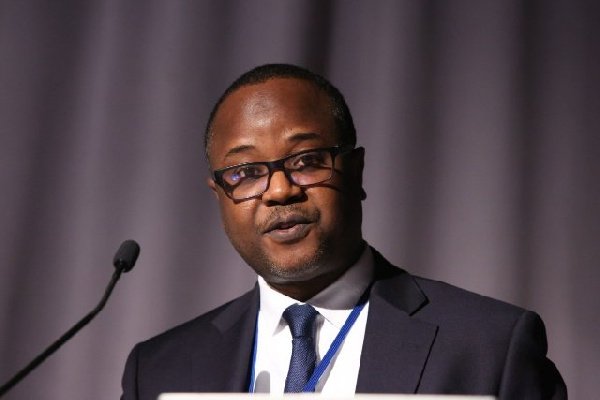
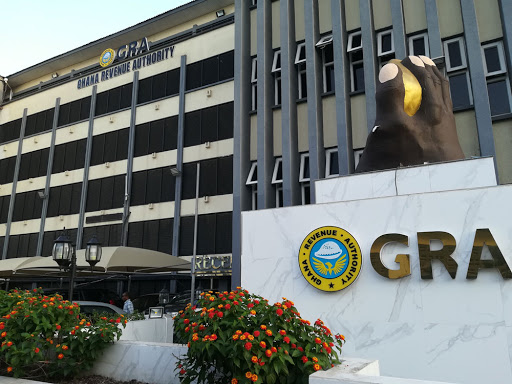
Mr Kwame Pianim, an economist, has criticized the Ghana Revenue Authority (GRA) for stationing officers in stores to collect taxes.

This approach was condemned by him, and he called it ‘irritating.’

In an interview with TV3’s Paa Kwesi Asare on Wednesday, October 26, he explained that the decision came at a time when Ghanaians were facing unimaginable hardships.

“Cut expenditure, don’t plant GRA officers in shops, people are suffering, and when people are suffering, that’s not when you irritate them,” he said.

“Things are not going well and we are looking for the President to come up the way he did during Covid, we need a credible message from him that ‘I am going to cut expenditure to stabilize the economy’.”

The GRA recently positioned its officers at shops, restaurants, and other businesses in some parts of the country including the Ashanti region.

The officers were tasked to take details of sales for tax purposes.

This infuriated the shop owners leading to the shut down to protest against the GRA’s action.

This attracted flak from some quarters including a Deputy Communications of the governing New Patriotic Party (NPP) Ernest Owusu Bempah.

Mr Owusu Bempah called for the sacking of the GRA boss for what he believed was a poor approach to collecting taxes.

“What is his motivation for doing this in the Ashanti Region which is the stronghold of the NPP? Who is behind him?

“You don’t put system in place, no consultation done before you roll out this, the man should be sacked,” he said in a statement.


Pianim advises the government to cut spending in order to stabilize the economy.

0

Kwame Pianim, an economist, has asked the government to cut spending in light of the economic crisis.

He believes that the government must show that it cares by cutting spending.

On Wednesday, October 26, he told TV3’s Paa Kwesi Asare that “people are suffering, and when people are suffering, that is not when you irritate them.”

“Reduce spending by not stationing GRA officers in stores.” Things aren’t going well, and we’re expecting the President to rise to the occasion like he did during Covid; we need a credible message from him saying, ‘I’m going to cut spending to stabilize the economy.'”

Ghana’s economy has been going through severe challenges, a situation the government has consistently blamed on the 0ngoing Russia-Ukraine war.

The local currency is not performing well against the major trading currencies especially the Dollar.

The Vice President Dr Mahama Bawumia who is also head of the Economic Management team said bold and firm decisions ought to be taken to tackle this situation.

He admitted that achieving fiscal and debt sustainability is not going to be an easy task.

Speaking at the opening of the StanChart Fintech festival, an annual event to assemble experts to discuss how to use technology to propel growth the financial sector on Wednesday October 26, he said this part of the discussions the government is having with the International Monetary Fund (IMF) for a programme.

“Restoring fiscal and debt sustainability is not going to be easy, it will require very bold, difficult but firm decisions. I think these are part of the discussions that we are having with the IMF and I am sure once these are concluded it will be clear that it will not be and it should not be business as usual, because we have to adjust to the new global and domestics realities.

“What we are also seeing is that, the nature of production needs to change. Why do I say that?

“You are seeing Ghana consistently, over the last five years, having more and more trade surpluses but at the same time we have had these trade surpluses on our balance of payments.

“This is like the first time in about twenty years that we have had consistently, about five years of trade surpluses on our balance of payment, at the same time we are having a lot of current account deficits, which means that a lot of the foreign exchange that we are earning from our trade doesn’t stay in Ghana,” he said.

He added “One of the areas where we have to address this is to reduce the import dependency that we have as a country. There is soo much when you look at the broad spectrum, from toothpick to tomatoes to rice and maze, and so there is a very high dependency but as the global economy is going to realign to the new reality with more self-reliance Ghana cannot be left behind.

“We also have to look very closely at how we enhance domestic production  and reduce dependency on imports for commodities that we can very easily produce here in Ghana.

“We also have to look very clearly at our foreign exchange regime. It is very clear that it is quite loose and this is why we are going to be working to see how we can tighten the foreign exchange regime.

“Of course, I think that some of the details around some of these pillars I am talking about, when the president addresses the nation hopefully by the end of the year, some of these details will be fleshed out in more specifics.

“In broad terms, you cannot address the current economic crisis without addressing the fiscal and debt sustainability, without addressing the production side, without addressing  the foreign exchange regime and what allows us to lose a lot of foreign exchange. But, more importantly, if we are going to address this, the economy must be digitalized and that is something we have started since 2017.”


Canoe owner suggests raising the price of premix fuel and selling it at filling stations.

0

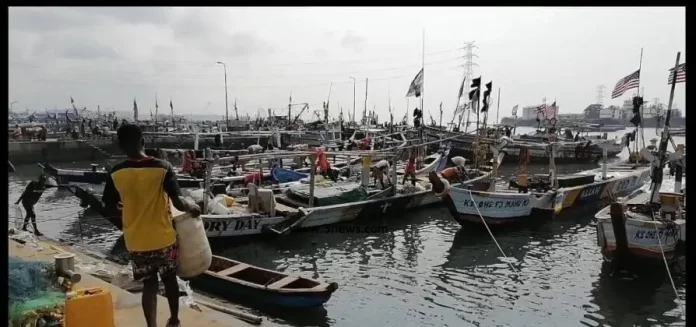
Paa Solomon, Vice President of the Canoe Owners Association at Sekondi Landing Beach in the Western Region, has urged the government to raise the price of pre-mix fuel to the same level as regular fuel at fuel stations.

He believes that this will ensure the product’s availability, thereby saving the fishing industry.

Fishermen at Sekondi Landing Beach say they have been without supplies for about two months.

This, he claims, is interfering with their work.

He was speaking at the third installment of Connect FM’s Dialogue Series, which took place at Sekondi Landing Beach.

The Connect FM Dialogue Series brings together stakeholders to dialogue on pertinent issues to inform policy.

The Vice President of the Canoe Owners Association, Sekondi, Paa Solomon called on government to rather stop the subventions and make it available.

“Increase the price and make it available just like how fuel is available at the fuel stations.

“Remove the premix taxes on regular fuel and add it to the current prices so that premix will be available at the fuel stations. This will clear off the middle men who end up making it expensive.”

The price of premix, as fixed by the Energy Ministry is GH¢10.40 per gallon.

However, because of middle men, the cheapest on the market is GH¢30 per gallon.

The fishermen complain that apart from the cost, it is also not easily accessible.

An Executive Member of the Canoe Fishermen Council, Dominic Dadzie, insisted that the major challenge to the supply of premix fuel is premix debt.

According to him, this is all due to the non-payment of government’s subsidies.

He lamented that in neighbouring countries like Cote d’Ivoire, premix fuel is not subsidized.

It is sold on the market just like regular fuel. This ensures there is no hoarding.

“It is only in Ghana that premix is subsidized. Even in neighboring Côte d’Ivoire, premix is more expensive than regular fuel,” he stated.

He, however, disclosed that there is currently a premix crises meeting ongoing with the Fisheries Minister m in Accra after which the intention is to meet the Finance Minister and the President on the issue.

According to him, the sector minister is overwhelmed with the current happenings in the fisheries sector.

Mr. Dadzie, however, called for calm even as the sector minister engages the presidency and Finance Ministry to resolve the issues.


PRESEC is 2022 NSMQ Champions; seventh-time winners

0

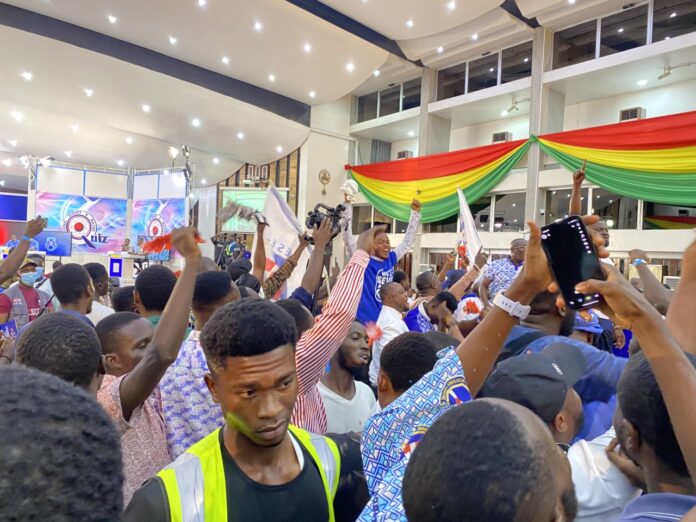
The Presbyterian Boys’ Senior High School (PRESEC) has emerged winners of the 2022 National Science and Maths Quiz (NMSQ), making the school the seventh-time winner.

They pulled the surprise in the final round five when they overtook Prempeh College who had led in the earlier rounds.

PRESEC ended the final round with 50 points to beat Prempeh College, which had 41 points, and Adisadel College with 32 points, taking the second and third positions, respectively.

PRESEC now boasts of the highest number of NMSQ championship titles, and are also the only school to have won the title two consecutive times.

The team was presented with a custom-made trophy and gold medals.

The winners also took home a cash prize of GH₵30,000.00.

The second-placed school, Prempeh College, took a cash prize of GH₵20,000.00, and seven silver medals.

Adisadel College received GH₵15,000.00 cash prize and bronze medals.

Apart from the main prizes, the NMSQ also rewarded the students who proved  to be the most outstanding at the end of the competition.

For this reason, the Primetime Limited, producers of the programme, said special prizes were awarded to individuals and teams who made an impression in the competition.

Mrs Nana Akua Ankomah-Asare, the Managing Director, Primetime Limited, congratulated PRESEC for the “indelible mark made over the years” and urged the other contesting schools to work hard in any competition to uphold the images of their schools.

She said year after year, it had been Primetime’s fervent desire to see girls excel in the competition and ultimately lift the championship trophy.

“Unfortunately, this year was the poorest year for girls’ schools, since the competition came back to life in 2012, as none of them qualified to compete at the Quarter-finals,” she observed.

Mrs Ankomah-Asare, therefore, requested that heads of girls’ schools took another look at giving young female scientists the support to excel.

That would help them to make names for themselves and their schools, she said.

Government is working hard to stabilise Ghana’s economy – President assures

0

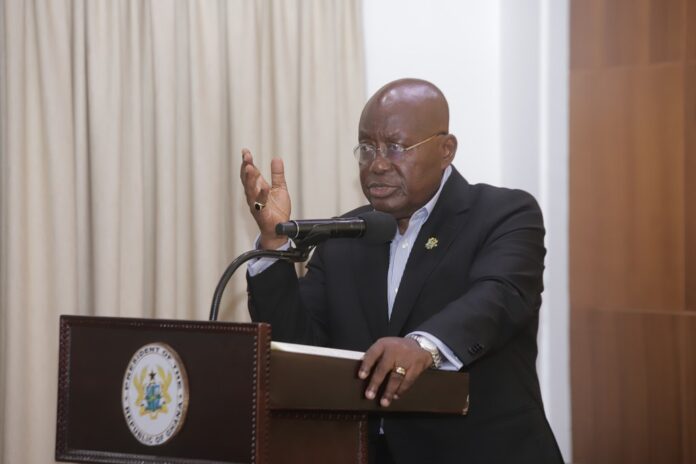
President Nana Addo Dankwa Akufo-Addo has given the assurance that his Administration remains committed to fostering appropriate measures and policies to stabilise Ghana’s economy. 

The agenda is to engage key stakeholders and identifiable groups, share experiences and analyse the current challenges confronting the nation, and work together to find the antidote to these problems. 

Interacting with members of the Ghana Employers Association, at the Jubilee House, Accra, the President was optimistic that the country would surmount the prevailing economic challenges. 

The meeting was in line with the government’s wider consultation with key players to find a solution to the difficulties the country is going through. 

At the heart of the discussion was the depreciation of the Ghana cedi and how it could be stabilised to engender investor confidence and business activities. 

According to the World Bank, fiscal pressures in the country remained high.  

Over the first half of 2022, the fiscal deficit reached 5.6 per cent of Gross Domestic Product (GDP), way above the 3.9 per cent target for the same period. 

“As of the end of June, this year, public debt reached 78.3 per cent of GDP, and interest payments reached 54.4 per cent of revenues over the first half of the year,” says the world’s financial body. 

Additionally, inflation rose to 31.7 per cent year-on-year in July, 2022, from 12.6 per cent at the end of 2021. 

The Bank of Ghana says the impact of soaring global commodity prices (Ghana imports 40 per cent of its fertilizers from Russia) has been compounded by the depreciation of the cedi, which has, so far, lost 24 per cent against the US Dollar this year. 

President Akufo-Addo said despite those macroeconomic headwinds, the government was working assiduously to change the narrative. 

He lauded the Ghana Employers Association for engaging the government to share experiences to bring sanity into the management of the economy. 

Mr Daniel Acheampong, the Association’s President, said the members were worried of the mounting fiscal and debt levels. 

“Our aim is to work with the government to stem the tide,” he said. 

Birth Asphyxia: Pregnant women encouraged to patronise antenatal services

0

The Paediatric Society of Ghana (PSG) has encouraged pregnant women to patronise antenatal care services to ensure that babies with birth asphyxia are managed on time.

Dr Emmanuel Oppong, Paediatrician & Child Health Advocate, said this was crucial because birth asphyxia contributed to 34 per cent of neonatal deaths, making it the second leading cause of neonatal mortality in Sub-Saharan Africa.

Birth asphyxia is the inability to initiate and sustain breathing at birth.

It is a potentially preventable cause of childhood morbidity and mortality.

Some risk factors of birth Asphyxia are poor or non-attendance of antenatal clinic, birth asphyxia history in previous delivery, young maternal age, low socioeconomic status, prolonged labour, prolonged rupture of the foetal sac before onset of labour and wrong presentation of the baby during labour.

Medical experts also say in some cases high blood pressure or high blood sugar level in pregnancy, multiple gestation and other chronic illness contribute to the menace.

Dr Oppong said survivors of birth asphyxia often faced long-term neurologic effects such as learning disabilities, cerebral palsy, seizures as well as visual and hearing defects.

The Paediatrician, also the Co-Chairperson of the PSG Committee for Birth Asphyxia, said this at a public engagement to create awareness among the public and improve knowledge among healthcare workers on perinatal asphyxia.

The Birth Asphyxia Awareness Month (BAAM!) held throughout the month of September is to give direction on how healthcare providers can take up their roles in the fight.

Dr Oppong emphasised that prevention, early detection, timely and appropriate management of the risk factors could significantly reduce the chances of delivering an asphyxiated baby and urged pregnant mothers to take antenatal seriously.

He hinted that the National Executive Council of the PSG, would soon roll out the Helping Babies Breath train, aimed at providing hands-on training for healthcare workers in all the 16 regions.

“I hope that the BAAM activities, including the public forum would trigger a domino effect, which will culminate into overall reduction in morbidity and mortality of newborns and lead to practical support systems for children with such special needs as a result of birth asphyxia,” Dr Oppong stated.

 Mr Hamza Adam, the Member of Parliament for Kumbungu, representing the Chairperson of the Parliamentary Select Committee on Gender and Children, commended the Paediatric Society of Ghana for the initiative, saying, it would contribute to concerted efforts at achieving Ghana’s targets for Sustainable Development Goal 3.

The month-long awareness campaign was characterised by activities such as stakeholders meeting, public forum, panel discussions, and training workshops.

Deputy Attorney General commends IoD-Gh for championing good corporate governance

0

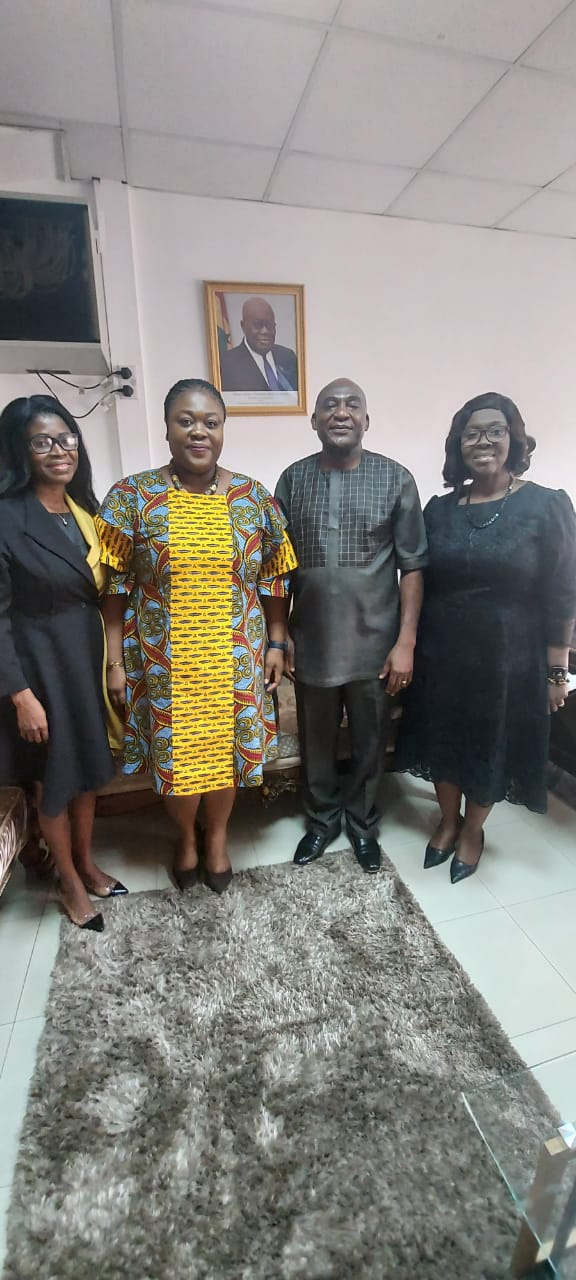
Madam Diana Asonaba Dapaah, the Deputy Attorney General has commended the Institute of Directors Ghana (IoD-Gh) for championing good  corporate governance system in the country’s public administration.

She assured them of her support and said the push for good corporate governance was serving, “as a compass for stakeholders”.

The Deputy Attorney General, who is also the Deputy Minister of Justice, made the remarks when the Institute, represented by Mr Rockson Dogbegah,  President of IoD-Gh, and  Dr. Rejoice Foli, Project Manager for the National Corporate Governance Code (NCGC), called on her to discuss the draft national code and related matters.

The meeting also requested for a strategic collaboration with the Attorney Generals Department.

Madam Dapaah emphasised that Ghana needed a sound corporate governance culture to avert a repeat of the banking crisis.

“We hope to invite IoD-Gh for some of our retreats to facilitate capacity building on the issue of conduct within the broader space.”

The Deputy AG praised IoD-Gh highly for its relations with other regulatory bodies such as the State Interest and Governance Authority and the Bank of Ghana and hopeful the concept of good corporate governance would soon ‘catch up’ with all.

The two parties agreed to continue to strengthen the institutional relationship through memorandum of understanding to promote good corporate governance culture.

The Institute of Directors Ghana is a professional organisation committed to the professional practice of corporate directorship through good corporate governance for the benefit of organisations, stakeholders and the prosperity of Ghana.

Citizens Coalition endorses call for Finance Minister’s sack

0

The Coalition for Democratic Accountability and Inclusive Governance, also known as Citizens’ Coalition, says it endorses the call by 80 Members of Parliament (MP) on the majority side, for the sacking of the Finance Minister, Mr Ken Ofori-Atta.

According to the Group, the resignation or sacking of the Finance Minister would help in rebuilding the trust of citizens towards better management of the economy.

“We commend the Majority MPs for taking this important step as his dismissal or resignation would restore some confidence in Ghana’s financial market. This should be done without delay” said Dr. Kojo Pumpuni Asante at a press briefing in Accra.

He said: “At this moment the right signals must be sent to appease citizens and assuage their fears. The President must listen to Ghanaians and lead the nation.”

On Tuesday, October 25, 2022, 80 out of the 137 majority MPs with Mr Andy Kwame Appiah-Kubi, the MP for the Asante-Akim North Constituency, acting as its spokesperson, said they had decided to voice their position on the sacking of the Minister, which had lingered on since government announced its decision to go to the International Monetary Fund (IMF).

The lawmakers added that, “We are by this medium communicating our strong desire that the President changes the Minister of Finance and the Minister of State at the Finance Ministry without further delay in order to restore hope to the financial sector and reverse the downward trend in the growth of the economy.”

Mr Kofi Bentil, Member of the Citizens’ Coalition and the Vice President of Imani Africa, a Civil Society Organisation (CSO), said the Minister on principle needed to resign from his position and not lead negotiations with the IMF since he had kicked against the idea of going to the IMF in the past.

Mr Ato Banful, a member of the Group said the MPs should be commended and encouraged to scrutinise policies and take bold decisions on behalf of citizens.

The Citizens’ Coalition was launched on July 4, 2022, with a mission of establishing a culture of accountable and transparent governance that actively and consciously promotes human rights, constitutionalism, and the national interest.

Sunyani residents grapple with price variabilities in food items, consumables

0

Residents of Sunyani, the Bono regional capital, are having to grapple with price variations for basic commodities and consumables as the Ghanaian economy struggles to stabilise the cedi against major foreign currencies.

Buyers could not come to terms with the different range of prices quoted for basic commodities of the same brands with prices increasing by the day.

Some traders are taking undue advantage of the current economic crisis to cash-in on consumers, as some of them sell their items at exorbitant prices.

Some buyers at the Sunyani Central Business District (CBD) told the Ghana News Agency that they were ‘extremely’ unhappy about the uncontrolled prices of food items and other consumables and, therefore, appealed to the government to step in with price control measures.

Basic items such as sugar, oil, rice, toothpaste, soap, detergents, medicines, and other consumables of the same brands had all witnessed sharp increases, selling at unstandardised prices at the various shops and stores at the CBD.

The situation is not different at some satellite markets in the capital, including the popular Masommasom Market and the Sunyani Main Market.

A cup of sugar is selling between GHC5.50 and GHC6.50 cedis at different shops, while toothpaste of the same brand is pegged at GHC9.50 pesewas and GHC11.00

The GNA gathered that cooking oil, rice and sugar are the most affected, selling at highest prices.

Madam Veronica Agyeiwaa, a trader in rice and cooking oil, said high inflation, depreciation of the cedi to the US dollar, and hikes in petroleum prices had contributed to the high prices of goods and services.

She noted that the high prices of goods and services has had a direct toll on prices of cooked food and beverages.

Hausa koko (porridge) and koose,  Fante kenkey, roasted yam and plantain, among other delicacies are no longer “a poor man’s food” as one needs about three to five cedis to buy, Frank Afriyie, a student, said.

He said Ghanaians were facing challenging times and the authorities must intervene to control the exorbitant prices that basic commodities were being sold at.