Home Blog Page 488

At the ITU Plenipotentiary Confab, Kwame Baah-Acheamfuor sets a high bar.

0

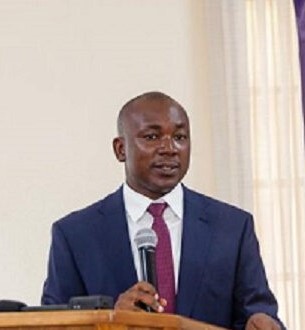
Ing. Kwame Baah-Acheamfuor, Ghana’s representative at the International Telecommunication Union (ITU), set the bar high at this year’s ITU Plenipotentiary Conference (PP-22) by facilitating solutions on enduringly contentious topics two days before the conference’s conclusion.

The PP-22 conference is still going on in Bucharest; it began on September 26 and is scheduled to end on October 15.

Kwame Baah-Acheamfuor, who is admired for his illustrious career and lovable nature, guided delegates to accomplish that extraordinary feat two days before the deadline.

In a statement, the ITU remembered that although delegates spent numerous nights and weekends debating, it took until nearly 20 hours on the conference’s last day for agreements to be reached.

But this year, Kwame has led the world to achieve that two clear days ahead of the final.

According to the statement, the ITU PP-22 Conference, which is hosting nearly 4,000 delegates from 193 countries with the aim of a greening conference, worked from 8:00 am to 9:00 pm daily except for Sundays.

Kwame chaired the Working Group of the Plenary, which negotiated 89 proposals from countries and resulted in approving two new Resolutions and updating 21 Resolutions.

The first new resolution agreed upon was on Artificial Intelligence (AI) technologies and telecommunications/ICTs, and the other was the Role of telecommunications/ICTs in mitigating global pandemics.

There were no changes to the resolution OTTs and another resolution on ITU’s role with regard to international public policy issues relating to the risk of illicit use of information and communication technologies.

Kwame Baah-Acheamfuor has been Ghana’s Focal person to the ITU and Councillor to the ITU Council.

For the first time in Ghana’s relations with the ITU, Ghana was re-elected to the ITU Council for 2023 to 2026 and elected Rev. Ing Edmund Yirenkyi-Fianko to the ITU Radio Regulations Board.



Esther Smith explains inspiration behind new album, ‘Wanimonyam So’

0

Veteran gospel performer Esther Smith from Ghana has discussed the motivation behind her most recent album, “Wanimonyam So.” The singer said in an interview with Giovanni Caleb on 3FM Drive that she was inspired by how the Glory of God supported her in trying circumstances.

So, I composed this song when I was in Germany with my child, who has a heart condition, and I was coming home from shopping, the singer explained. The items I was holding were too much for me to handle. then I ran into two individuals who asked if they could assist me in Dutch. I nodded in agreement and turned to look for them after they had helped me and I had thanked them, but they were not to be seen. I was alarmed and questioned if this how God can send his angels to come in human form to help us. So, that is how I came about the song.”


The singer also sent out some words of advice to upcoming musicians to always listen to God, citing her previous marriage as an example.

“I want to tell musicians and all those coming into the industry that it may look nice, but it is not easy. There are many consequences. I wanted to get married, but my dad advised that it will not help me (at that time). I did not listen. On my wedding day, my dad brought “macho” men. We also went for soldiers. At the end of the day, it nearly ended in death. That is why the Bible says to honour your parents so you shall live long. I have suffered. I nearly lost my life. Sometimes as musicians, God gives us words that are too strong, and they come with consequences.”


She added, “I will advise that whatever you want to do, no matter your anointing, ask God because irrespective of your anointing if someone evil comes your way and you don’t ask God, you will fall into a trap.”

The veteran musician has released her album, “Wanimonyam So”, available on music platforms.


Jackson: The World Bank Director is correct that Ghanaians must solve the country’s economic crisis.

0

A statement made by the World Bank Country Director, Mr. Pierre Laporte, that Ghana and its people hold the key to resolving the country’s economic problems has received support from Mr. Joe Jackson, a financial analyst with Dalex Finance.

Mr. Jackson wrote in a tweet, “The World Bank Director has told the plain truth. Ghanaians and our leadership are responsible for finding a solution to the country’s economic dilemma. Take tough decisions to fix Ghana, which is broken.

Mr. Pierre Laporte stated that although the World Bank is prepared to assist Ghana in addressing these issues, the nation and its people must handle the issues on their own.

“Today, we bring approximately $500 million annually in support of various sectors including roads, energy, water, health, education and skills, governance, name it….to assist to improve the business environment. But in the end we are only part of the solution”, Mr. Laporte disclosed at the re-launch of World Bank/ IMF Parliamentary Network.

“The solution really lies with Ghana, Ghana, and its people. We will be there with whatever we can do to support the new thinking to contribute to the development and to provide financing”, he added.

Sudan: Students return to class despite political and economic unrest

0

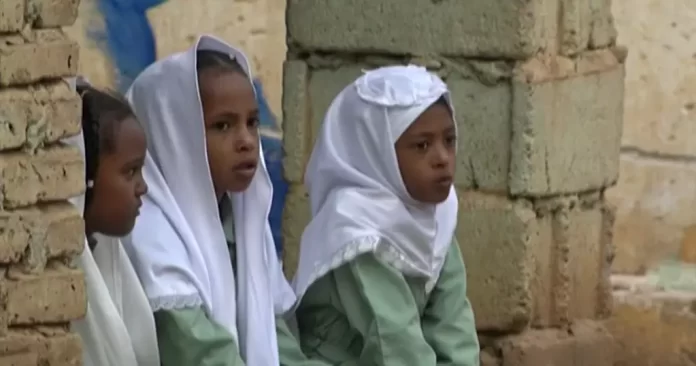
In Sudan, it is back-to-school season, but nine-year-old Zahra Hussein is at home cleaning. She had to drop out of school like many other Sudanese youngsters do since her parents could not afford her tuition.

The young lady tells AFP with pride in her home in the village of Ed Moussa, in the eastern state of Kassala, that she “was the third in the class” when she was in first grade.

Despite the challenging learning environments in her school, which included crumbling walls, shaky tables, and frequently dry toilets, she even managed to rise to first place two years later.

But she had to put everything on hold in the middle of the third grade.

She explains in disappointment, “My father didn’t have enough money, so he yanked me out of school.

In Sudan, seven million children do not go to school, particularly in rural areas where nearly two-thirds of the 45 million inhabitants live, a “catastrophe for an entire generation”, according to NGOs.

Already during the 30-year dictatorship of Omar al-Bashir, who will be removed from office in 2019 following a popular protest movement, families withdrew their children from school to cope with the economic crisis.

The political and economic stagnation that followed a coup a year ago, recurring ethnic conflicts, and prolonged school closures due to the Covid-19 pandemic have only worsened the situation in this country, one of the poorest in the world.

And every year, heavy rains destroy schools: this summer, 600 schools were damaged.

As a result, Sudan and its 12.4 million students are the second most vulnerable country in terms of schooling, according to the Risk Education Index.

“At the age of 10, seven out of ten children are unable to read and understand a simple sentence,” laments Arshad Malik, director of the NGO Save the Children in Sudan.

A symbol of the distress that reaches even the teachers, the latter regularly demonstrate to demand better salaries or denounce a military power incapable of raising the country.

– No meal, no school –

Zahra knows that she will only return to school “if we find the money to pay for meals and school books”.

In the village next to hers, Wad Charifaï, the school canteens closed down two years ago even though they often provided the only meal for the children, made of lentils, vegetables, and cookies.

Since these free meals disappeared, Othmane Aboubakr, a day laborer, has had to drop seven of his nine children from school.

Unable to pay for meals in addition to transportation and school supplies, he chose another option: to have the older children work.

“Now the children can help bring money home,” he says.

Abdallah Ibrahim also sends several of his seven children to work. Some help out in his café, while others have found work in a bakery.

“Making the children work is not good but we have to, at least to pay for their meals every day,” says Ohaj Souleïmane, a 43-year-old day laborer.

But not all children are equal when it comes to dropping out of school, points out Malik of Save the Children.

“A family is more likely to take their daughters out of school to marry them off or to involve them in domestic chores,” he says.

He says four out of 10 girls have dropped out of school compared to three out of 10 boys.

Without action to get them back into school, “poverty and inequality are likely to increase, and with them families’ vulnerability to climate change and natural disasters,” Malik warns.


French Institute damaged during anti-coup protests in Burkina Faso.

0

The French Institute in Ouagadougou, the capital of Burkina Faso, which was the site of a putsch at the end of September, is now nothing but bleak scenes, dear to the cultural milieu. Burned-out walls, broken windows, smashed doors, scattered laptops, and books are just a few of the scenarios.

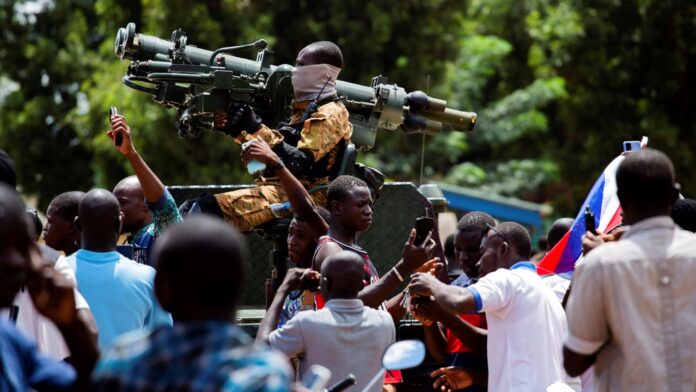
Following the October 1 coup d’état that removed Lieutenant-Colonel Paul-Henri Sandaogo Damiba, who had himself been the mastermind of a putsch eight months previously, Captain Ibrahim Traoré, protests increased.

Demonstrators attacked French structures, including the embassy and institutes in Bobo-Dioulasso, the country’s second-largest city, and Ouagadougou. They claimed that Paris was shielding Lieutenant Colonel Damiba, whose resignation they wanted.

In Ouagadougou, the street leading to the French Institute was littered with broken glass, broken computers, and burned air conditioners.

The building is now isolated by a security perimeter installed by the Burkinabe police, a journalist from AFP noted on Wednesday.

In the entrance hall, the portals and baggage scanners were burned, and the ceiling and walls were blackened by flames.

“It is the work of real monsters, who today can not even justify the ransacking of places so important for the cultural, student, professional and artistic world,” said, between two sighs, William Somda, a cultural entrepreneur, dejected by “the extent of the damage.

“All the buildings were ransacked: the two levels of the adult media library, the children’s media library, the language center, the exhibition hall, and the two performance halls,” laments Thierry Bambara, general manager of the French Institute of Ouagadougou.

“The damage is enormous. We will have to wait for an exhaustive assessment to put a figure on the damage,” he said, adding that “computers, various other devices, including consoles, musical instruments were burned.

“We start by burning books and then we will burn people. Whoever can burn a library, a cultural space, has burned the men who wrote these books,” said Salif Sanfo, a cultural operator and former deputy, looking at the damage in the library.

In the large library room, the shelves are overturned, and books, covered with soot, litter the floor, scattered among CD-ROMs and computer keyboards.

– “A symbol” –

“We are going the wrong way and playing into the hands of those who are logically our enemies and who burned the libraries in Timbuktu (in Mali). Those who burned the French Institute are no better than these people,” the jihadists who have targeted the country since 2015, he slices.

“It is distressing! We will have to condemn with the utmost firmness the perpetrators of these acts of vandalism,” says Mr. Sanfo, who “hopes not to see such a scene unworthy of the legendary Burkinabe hospitality.”

“We must not throw out the bathwater with the baby. Whether one is pro-Russian or anti-French, the institute was and is a symbol for Burkina Faso,” he said, referring to anti-French sentiment and the presence of Russian flags during the demonstrations.

“We have been going to this place for years and it has become a second home for us. To see it in this state, by the fact of insane, it is a big sadness, a desolation and a loss for the Burkinabè, in particular, the artists”, explains to AFP Ali Ouedraogo, a visual artist, looking haggard, in front of paintings piled up in the exhibition room.

For the Burkinabe musician and instrumentalist Kantala, “the ransacking of the Institute is a blow for us. Our projects take a blow because what was made available to us by this space and its administration, we are not sure to have elsewhere.

“I have a festival in preparation that was to take place here at the French Institute in December. Now I don’t know how to do it!” he sighs.

Uganda halts the employment of traditional healers because to Ebola

0

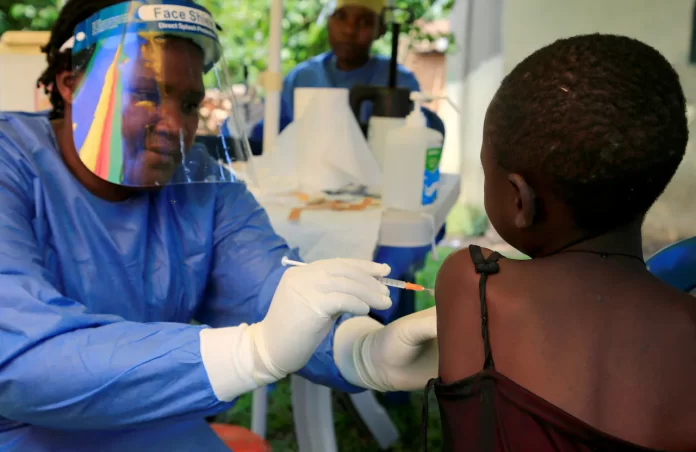
President Yoweri Museveni of Uganda has ordered traditional healers to stop treating patients during the existing Ebola outbreak, which has already claimed the lives of 19 individuals there.

Additionally, the president instructed security personnel to detain anyone who refuses to enter isolation after being suspected of harboring the virus.

He instructed herbalists and traditional healers not to treat those who were thought to be sick with the viral hemorrhagic fever in a televised address to the nation, during which he shifted to the widely spoken Luganda language to address them directly.

It comes after the passing of a 45-year-old man who was reported as having been exposed to the Ebola virus by medical personnel.

The man, who passed away in a Kampala, Uganda, hospital, had left his village in Mubende district, the outbreak’s epicentre.

He sought treatment from a traditional healer elsewhere before turning up at the Kampala hospital and died hours after being admitted there, authorities said.

Some of the man’s family members have been put under quarantine, while others have gone into hiding. The president urged them to report to health facilities.

Although Mr Museveni said there were currently no confirmed cases of Ebola in Kampala, he warned the public to continue being vigilant, assuring that health workers would bring the outbreak under control.

It has been almost a month since Uganda confirmed the outbreak of the Sudan strain of Ebola, which has now spread to five districts.

There have been 54 confirmed cases so far. Some 20 people, including five medical workers, have recovered.

Source: BBC

Bokpin: IMF warns that austerity will be intolerable

0

According to Godfred Bokpin, a professor at the University of Ghana Business School, the next two years will be challenging for Ghanaians if the program Ghana is pursuing through the International Monetary Fund (IMF) is ultimately accepted because of the measures that will be published.

He declared unequivocally that the IMF program’s upcoming austerity measures would be intolerable.

“Take this, the next two years are going to be harder for Ghana because, for an IMF programme to work, the necessary fiscal adjustments that this country will have to go through, I am not sure the government will even have the confidence to go through them,” he said on the Ghana Tonight show with Alfred Ocansey on TV3 on Tuesday, October 11.

“That is the reason perhaps, they are also setting up a committee to interface between the banking sector for the financial sector and then the government and the rest of the.  I can tell you, the austerity that is coming will be unbearable, it could be unbearable because  the level of fiscal adjustments that we need to make to accommodate an IMF programme for micro economic stability to be restored for external buffers to be  created for credibility to come, inflation targeting and the rest of them, I can assure you it is going to be very painful.”

Meanwhile, President Nana Addo Dankwa Akufo-Addo has assured the people of Ghana that his administration will negotiate a good deal with the IMF.

He said a deal that will ensure they the economy is developed more than it it is today will negotiated for.

“We will negotiate a good deal, a deal that will allow us to build a strong economy that we had before,” he said at the delegates conference of the New Patriotic Party (NPP)at the Accra Sports Stadium on Saturday July 6.

The Finance Minister Ken Ofori-Atta also assured that the negotiations have been smooth so far.

“In line with the President’s dialogue with the IMF Managing Director, Kristalina Georgieva, negotiations will be fast-tracked to ensure that key aspects of the programme are reflected in the 2023 Annual Budget Statement in November 2022,” he said at a recent press briefing in Accra.


In addition, the IMF and Government Team are working to update the medium-term macro-fiscal framework to inform IMF programme design.”

“I am extremely confident about where we will land on this journey. We have survived a 142 percent inflation, yellow-corn hysteria, mass exodus from our country, and more recently a successful exit from the 2015 Extended Credit Facility. So let us go for the spirit of courage for the LORD is with this Nation. Let us not fear, for He who is with us is greater than all.”

IMF negotiations are still moving forward; it typically takes 6 to 9 months to reach an agreement with the Fund- Obong Nkrumah

0

Kojo Oppong Nkrumah, Ghana’s Minister of Information, stated that talks between the Ghanaian government and the International Monetary Fund (IMF) for a program have not ceased.

He stated that a program funded by the Fund is typically closed in between six and nine months.

Mr. Oppong Nkrumah was responding to Dr. John Kwakye, director of research at the Institute of Economic Affairs (IEA), who said that the negotiation was not progressing more quickly.

According to Dr. Kwakye, the uncertainty and delay are prompting investors to speculate and worry, which is continuing to harm the cedi.

In a tweet, Dr Kwakye said “The IMF is moving at a snail’s pace in negotiating Ghana’s program, as if nothing is at stake. The delay and uncertainty are fueling speculation and panic in the investor community, causing continued damage to the cedi. Yet our economic managers stand aloof. This is unacceptable!”

But speaking in an interview with TV3’s Paa Kwesi Asare on the sidelines of the ongoing World Bank/IMF meeting in Washington, USA, on Wednesday October 12, Mr Oppong Nkrumah who is also lawmaker for the people of Ofoase Ayirebi said “It usually takes about six to nine months to close an IMF programme, the history is there for many other countries, it is not something you can close in a day.

“We acknowledge that it needs to be done with dispatch, the President himself has spoken to the Managing Director, the Finance Minister has engaged with the Managing Director, the Mission has been to Ghana and those discussions are going on but there are steps you have to to go through. In fact, throughout the day today, the Honourable Charles Adu Boahen, the Honourable Ken Ofori-Atta, they have been at the Fiscal Affairs Department and the Ghana Mission office going through the next level of negotiations.

“I think both sides have just issued statements a few days ago talking about how they are satisfied with how the process is going. I think at this stage, what we need to do is to ensure that the kind of data and scenario that need to be modelled are made available with dispatch and are accepted by both sides so that we can reach the timelines we are looking for.”


IMF-Ghana negotiations are moving slowly, according to an analyst, who claims that this is causing rumors and panic.

0

According to Dr. John Kwakye, director of research at the Institute of Economic Affairs (IEA), the negotiations between the Government of Ghana and the International Monetary Fund (IMF) are not progressing more quickly.

He explained that the uncertainty and delay are prompting investors to speculate and worry, which is continuing to harm the cedi.

Dr. Kwakye stated in a tweet that the IMF is negotiating Ghana’s program “at a snail’s pace, as if nothing is at stake.” The uncertainty and delay are leading the investor community to speculate and panic, which is doing more harm to the cedi. However, our economic managers keep a distance. It’s not acceptable!

Meanwhile, the Finance Minister Ken Ofori-Atta earlier at a press briefing assured that the negotiations have been smooth so far.

“In line with the President’s dialogue with the IMF Managing Director, Kristalina Georgieva, negotiations will be fast-tracked to ensure that key aspects of the programme are reflected in the 2023 Annual Budget Statement in November 2022,” he added.

In addition, the IMF and Government Team are working to update the medium-term macro-fiscal framework to inform IMF programme design.”

“I am extremely confident about where we will land on this journey. We have survived a 142 percent inflation, yellow-corn hysteria, mass exodus from our country, and more recently a successful exit from the 2015 Extended Credit Facility. So let us go for the spirit of courage for the LORD is with this Nation. Let us not fear, for He who is with us is greater than all.”


After years of title conflicts, De Bruyne identifies the fundamental difference between Man City and Liverpool.

0
  • Blues & Reds competing for major honours
  • Guardiola locking horns with Klopp
  • Consistency is key for any successful side

WHAT HAPPENED? Two Premier League heavyweights have been battling it out for several years now when it comes to domestic titles and European crowns. Both have enjoyed considerable success, in the English top-flight and cup competitions, but it is City that have been the more consistent as Pep Guardiola’s side have been crowned champions on four occasions in the last five years, while Jurgen Klopp’s Liverpool have only one triumph to their name.

WHAT THEY SAID: Ahead of the two sides meeting again at Anfield on Sunday, De Bruyne has told Sky Sports what separates a couple of fiercely-ambitious outfits: “They are more of an up-and-down team and we are a team who has more control of the game, so if you can control that style of play then maybe you have more of a chance.”

The Belgium international midfielder added: “I expect them to be at the best Liverpool possible. Obviously they lost some points but they are still Liverpool and I expect them to be good, that’s the only way I see it. I like big games, I like good atmospheres. It’s a game like any other, obviously, it’s hard playing away at a top-six team always, I think the last few years we’ve done well.”

THE BIGGER PICTURE: City head into their meeting with Liverpool unbeaten throughout the 2022-23 campaign, with a 23-point haul through nine Premier League games leaving them second in the table. The Reds, in contrast, find themselves languishing in 10th place after taking only two wins and 10 points from eight fixtures.

IN THREE PHOTOS:

Erling Haaland Virgil van Dijk Manchester City Liverpool 2022-23Getty


Kevin De Bruyne Manchester City 2022-23Getty


Jurgen Klopp Pep Guardiola Manchester City Liverpool Premier League 2021-22Getty

DID YOU KNOW? Manchester City have lost just one of their last 37 Premier League games, and are unbeaten in their last 21 (W16 D5). Away from home, the Citizens are unbeaten in 22 Premier League games (W16 D6), the fourth longest such run in the competition’s history.

WHAT NEXT FOR MAN CITY? The Blues have taken four points from their last two visits to Anfield, but did suffer a 3-1 defeat in their last meeting with Liverpool – which came in the traditional Community Shield curtain-raiser at the start of the current campaign.