Home Blog Page 492

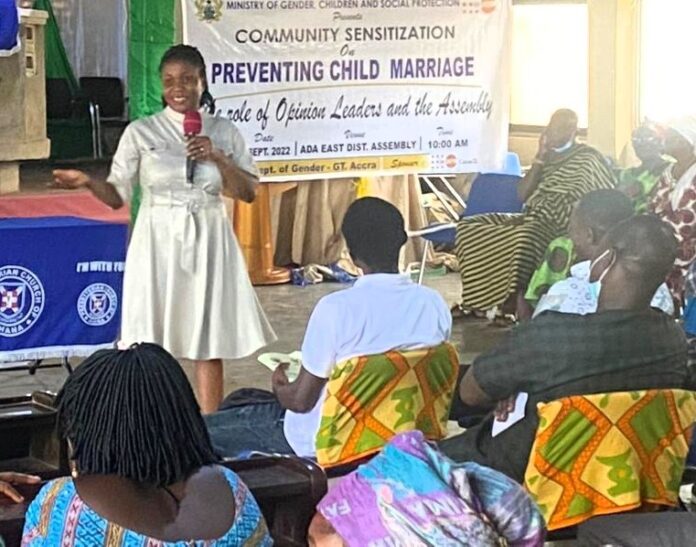
Gender Ministry sensitises residents of Ada on child-marriage consequences

0

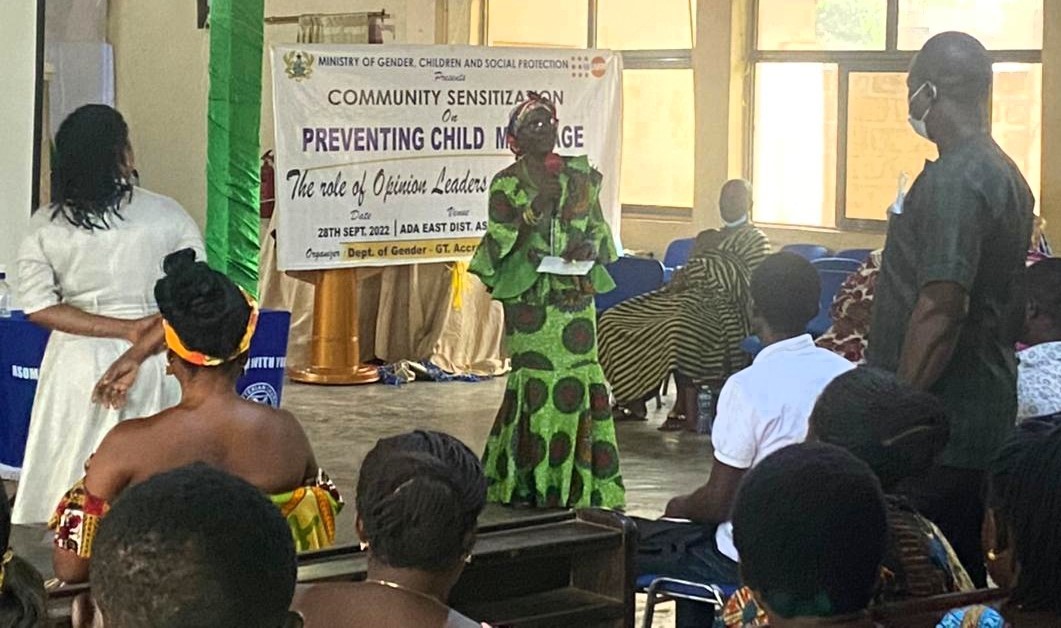
The Ministry of Gender, Children, and Social Protection has reaffirmed its commitment to providing girls with the necessary tools to fight for their rights and make informed decisions concerning their lives.

Madam Matilda Banfro, the Greater Accra Regional Director, Department of Gender, said the Ministry had rolled out series of community engagements to educate parents and the larger community to protect children and working with strategic partners towards eradicating child marriage.

She commended traditional and religious leaders for their role to end child marriage in the country.

Madam Banfro said this at a workshop on Child Marriage for residents of Ada to  educate them on the dynamics and impact of child marriage on the society.

The programme, sponsored by the United Nations Population Fund (UNFPA), brought together traditional leaders, Assembly members, civil society and non-governmental organisations, and girl-child coordinators from the local community, as well as the National Commission for Civic Education.

Madam Banfro defined child marriage as a formal or informal union entered into by an individual before reaching 18 years, as specified by global organisations, with the most affected being girls.

The act took place for a number of reasons, including poverty and ignorance, she said.

Ms Juliana Abbeyquaye from the Department of Gender, Eastern Region, outlined three types of marriages;  Customary, Ordinance, and Islamic under the Mohammedan Ordinance.

The Criminal Offense Act, 1960 (Act 29) section 109 criminalises compulsion marriage, while section 97 makes whoever commits rape guilty of first degree felony.

She called on stakeholders to help end child marriage in the communities and the country as a whole.

Mr Adator Anani Junior, the Ada-East District HIV Coordinator, said data released by UNICEF indicates that 15 million girls marry before their 18th birthday, worldwide.

Breaking down the statistics, he said 41,000 girls got married everyday, 28 got married every minute, and a girl got married every second.

The act robbed the girls of their dignity and prevented them from realising their full potential and contribution to society, he said.

Endless suffering: How GBV stokes HIV infection rates among adolescent girls

0

On March 12, 2022, 12-year-old Akosua (not her real name) was sent on an errand by her mother in Nima, a suburb of Accra. On her way home, an unknown man believed to be in his 30s asked her to buy a recharge card for him, which she did.

Upon her return, he asked Akosua to get his phone from his room, and the moment she entered the room, he followed and raped her.

When Akosua’s mother, Madam Cecilia (not her real name), noticed that her daughter had been gone too long, she decided to look for her. After searching for a while, she saw her daughter come out of a room not far from where they live, and on interrogating Akosua, she narrated the ordeal.

They reported to the Police, but the man is still at large, and all efforts to bring the culprit to justice have yielded no results.

Madam Cecilia did not have money to take her daughter to the hospital for a medical checkup. Instead, she treated her daughter at home for four months by making her sit in hot water every morning to ‘repair the vaginal tears.’

“I am worried because I do not know the extent of the damage or the HIV status of my daughter,” said Madam Cecilia.

Madam Cecilia is worried because sexual violence increases the risk of HIV infection in women and girls because the abrasions caused by forced penetration aid the entry of the virus. UNAIDS notes that this is especially true for adolescent girls because their reproductive tracts are still not fully developed.

Moreover, a growing body of evidence suggests that gender-based violence increases the risk of HIV infection directly and indirectly. Researchers have reported that survivors of gender-based violence, particularly those who have survived repeated abuse, have a reduced sense of self-worth, which predisposes them to behaviour and practices associated with a high risk of HIV infection.

According to the World Health Organisation (WHO), one in four women experiences sexual violence by an intimate partner in her lifetime. In Ghana, a national survey conducted in 2015 found that one in three women had experienced sexual violence in their lifetime. The incidence of violence was higher among younger women and girls, with 38 per cent of teenage girls aged 15 to 19 reporting having experienced sexual violence.

While there is no data on the link between gender-based violence and HIV in Ghana, Dr Kyeremeh Atuahene, the Director General of the Ghana AIDS Commission told the Ghana News Agency that it is an established fact that gender-based violence and intimate partner violence increase the risk of HIV infection in adolescents. However, he said that Ghana is yet to analyse the correlation between child marriage and abuse and HIV infections among girls.

“What we know is that a lot of adolescents are involved in casual sex, multiple concurrent sexual partners, transactional sex, commercial and sex, age mixing (Sugar Daddy and Sugar Mummy), which expose them to likely infection,” he said.

The references to sexual contact with adults, commercial sex and transactional sex point to child sexual abuse, given that the age of consent in Ghana is 16 years. This abuse could be driving some HIV infections among adolescents.

Data on HIV published by UNICEF showed that adolescents and young people represent a growing share of people living with HIV worldwide. In 2020, 410,000 young people aged 10 to 24 were newly infected with HIV, of whom 160,000 were adolescents aged 10 to 19.

In Ghana, the National and Sub-national HIV and AIDS Estimates and Projections Report by the Ghana AIDS Commission (GAC) indicated that of the 18,928 new infections, a total of 5,211 were in the 15-24 age group, and 4,348 (83 per cent) of those infections were in girls. HIV prevalence in adolescents aged 15-19 years is 0.7 per cent (compared to the national prevalence of 1.7 per cent), while new HIV infections among youth aged 15-24 years account for nearly a third (28 per cent) of all new infections. Among children aged 0-14 years, new infections account for 15 per cent.

Gender-based violence is a significant driver of HIV/AIDS infections in women, which is why international organisations focus on eliminating violence against women and girls as key in the battle against the spread of the epidemic.

Mrs Mercy Acquah-Hayford, the National Coordinator of the International Network of Religious Leaders Living With or Personally Affected by HIV and AIDS (INERELA+Ghana) told the Ghana News Agency that people do not understand the correlation between gender-based violence and disease because HIV/AIDS reports do not focus on it.

She observed that, for instance, during the lockdown to contain the COVID-19 pandemic, there were instances of child sexual abuse through transactional sex, where girls were exchanging sex for food and shelter, putting them at risk of HIV infection. She added that the culture of silence due to persistent stigma and discrimination makes matters worse. Even when there is free HIV testing, people do not go for testing, and teenage girls who are HIV-positive shy away from talking about it.

This culture of silence means that many cases of gender-based violence, teenage pregnancy, child marriage and other abusive practices often go unnoticed or unreported, yet they are associated with HIV infection among adolescent girls.

To remedy the situation, Mrs Acquah-Hayford recommended that the Ghana AIDS Commission work with the media to sensitise the public on HIV/AIDS and the factors, including gender-based violence, that lead to infection.

“INERALA is doing its part by educating the people, especially young girls, but more needs to be done,” she said.

Dr Stephen Ayisi Addo, the Programme Manager at the National HIV/STIs Control Programme, said that health authorities are no longer making noise about HIV, leading to the public perception that it is no longer a problem. He said that this lack of awareness and complacency was responsible for higher HIV prevalence and new infections among adolescents.

“Some yth today don’t know HIV. Some know, but they have assumed it’s gone. People are now more afraid of COVID-19 and the Marburg fever than AIDS,” he said.

Preventive interventions, including interventions to deter gender-based violence, are important because HIV and AIDS is one of the world’s most substantial public health challenges. It is also one of the leading causes of death among adolescents (10-19 years) in Sub-Saharan Africa.

Moreover, young people living with HIV face psycho-social difficulties that have a bearing on their health and well-being. Some studies have established that youth living with HIV in Sub-Saharan Africa struggle with depression, low self-esteem, stigma and social pressure. While research focusing on the mental and psycho-social wellbeing of adolescents living with HIV is minimal, a 2020 report published by SAGE Journals indicated that a patient’s well-being is influenced by several factors including psycho-social and environmental factors, current health status and response to treatment.

This article was produced with the support of the Africa Women’s Journalism Project (AWJP) in partnership with the International Center for Journalists (ICFJ) with support from the Ford Foundation.

Wuru residents vow never to pay tax

0

The people of Wuru Community in the Sissila East Community of the Upper West Region have appealed to the government to bring developments to the community to enable them to pay taxes to the appropriate authority to enjoy their portion of the national cake.

According to the people, the community felt cut off from the rest of the country and that had deprived them of basic developments.  to ensure that the community benefitted from the national cake.

Mr Harduna Atiah, a business man and caretaker of the Wuru community market told the Ghana News Agency that, “There are no roads to link Wuru to other Ghanaian communities where we can transact business. No transportation, no reliable communication network, no health facilities, poor educational infrastructure and no means of modern technology for farming.”

He said they used to pay tax to the Tumu Municipal Assembly but for some time now, they had to stop because they saw no reason for the payment.

“Currently, we have decided not to pay tax. Our taxes cannot be used to develop other areas while we suffer”, he said.

Mr Atiah said members of the community were in “prison” and asked for pragmatic efforts to be made to integrate them with the rest of the country.

The GNA traveled to the Wuru community to find out their problems and to report same for government to consider supporting them.

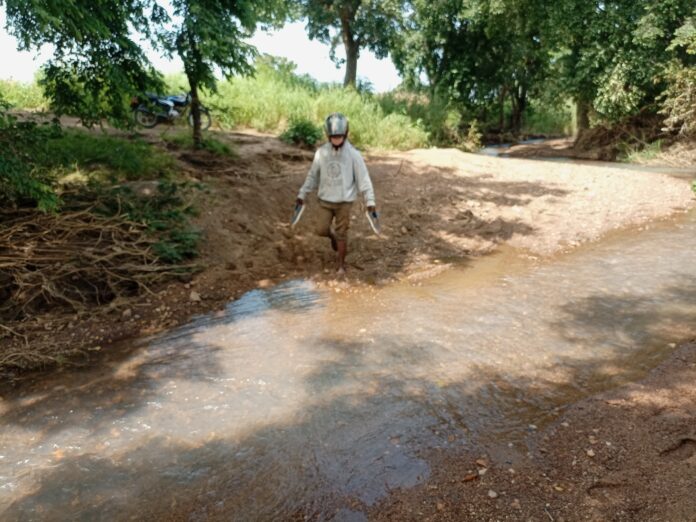
The community is about 70 kilometres from Tumu, which took the GNA three hours to travel to the community on a motorbike.

The community has a CHPS compound with only one male nurse stationed there with no decent accommodation, no electricity to store drugs, meant for immunization and no reliable source of drinking water.

Due to the poor nature of the road, only motorbikes can travel there, which compelled the community to transact business with neighbouring Burkina Faso thereby, rejecting the Ghana cedi as medium of exchange.

The GNA observed that the many Burkinabes who transacted business in the community did not also pay tax.

Mr Fuseini Batong Yakubu, the Sissalla East MCE said the Assembly had not been able to collect tax from the community due to the lack of access road.

He said the Assembly was planning to erect a permanent tax collection shed at the market for the tax collectors.

“I have also met with the chief and the secretary of the Bujan Area Council to hold meetings with the people to see the need to pay market tolls as that would help us to use the IGF to undertake development in the area. The business persons coming from Burkina Faso are supposed to pay income tax”, he explained.

Mr Yakubu said he had also appealed to the chief of Wuru to help in identifying and registering the number of aliens settling in the area.

1D1F has come to stay – Deputy Trades Minister

0

Mr. Michael Okyere Baafi, Deputy Minister of Trade and Industry (MOTI) has urged Ghanaians to embrace the government’s flagship “1D1F” programme, saying, “it has come to stay as an important way to industrialize the country.”

Mr. Baafi said the nation had reached a stage of its development agenda, where “we have no choice than to industrialise” stressing that “industrialization must be a way of life for the people.”

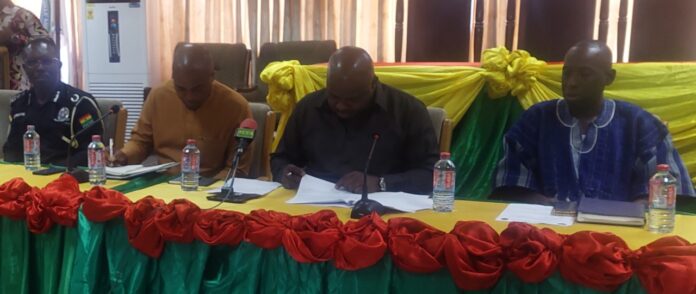
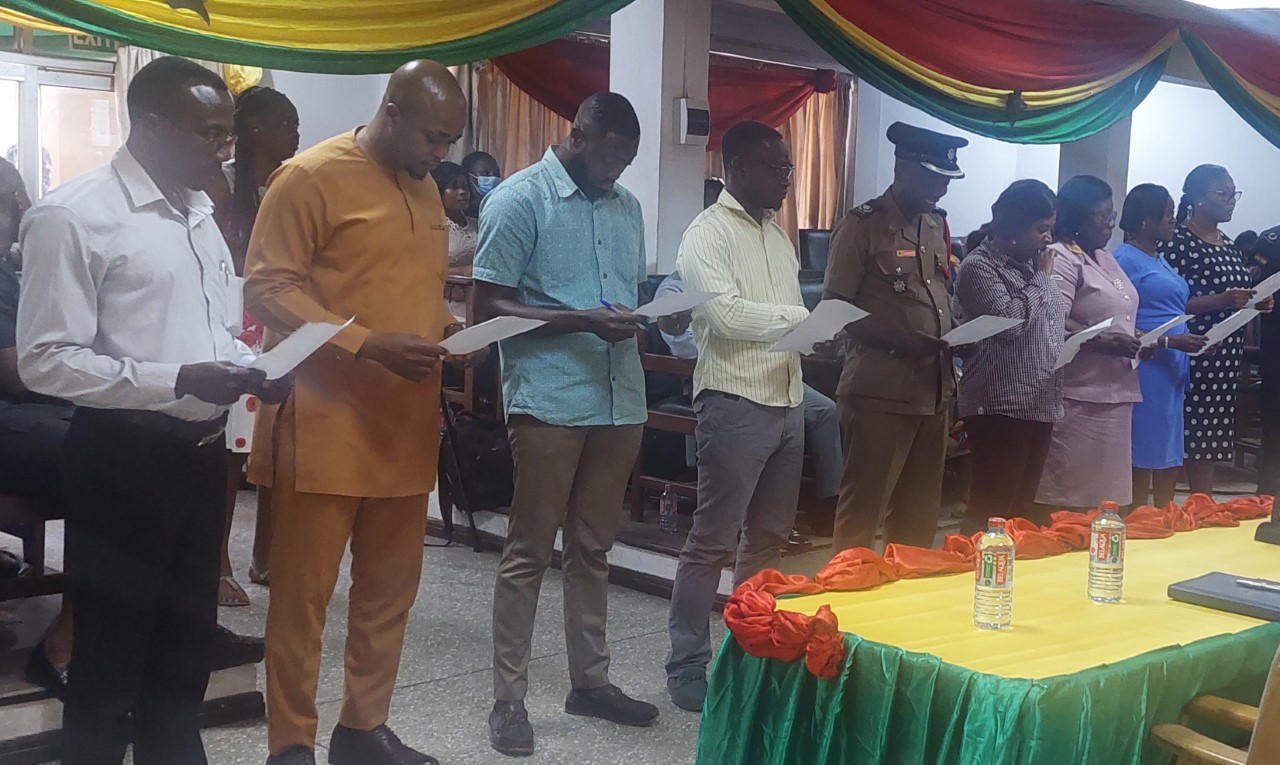
He said this during the inauguration of the Tema Metropolitan Assembly’s (TMA) District Implementation Support Team (DIST) for the 1D1F programme in the metropolis.

The Deputy Trade’s Minister said the importance of industries was evident during the covid-19 pandemic when Ghana had to rely on its local industries to produce hand sanitizers and nose masks which positioned the country as one of the best in the management of the virus.

According to him, apart from the creation of jobs through the programme, 1D1F would also facilitate knowledge and skill transfer to many who would get the opportunity to work in the industries to be established under the initiative.

Mr Baafi charged the newly inaugurated Team to see it as their responsibility to get many more factories to be established in Tema which is known to be the industrial hub of Ghana while educating people on the benefit of the 1D1F.

Mr. Kofi Addo, Lead Officer for the 1D1F programme, said the Ministry of Trade and Industry had a 10-point industrial promotion agenda of which the 1D1F was part.

Others included the Strategic Anchor Projects, Business Regulatory Reform, Industrial Park and Special Economic Zones, and the Industrial Revitalization Programme.

Mr. Addo stated that an agreement had been signed with 15 commercial banks which ensured the capping of interest rate on loans for such companies at 20 per cent to ensure stable funding for the project adding that government also subsidized 10 per cent of the interest rate for companies with majority Ghanaian owned shares.

Mr Yohane Amarh Ashitey, Tema Metropolitan Chief Executive chairing the inauguration said he believed in allowing the private sector to lead in industrialization therefore his resolve to ensure that the 1D1F programme was utilize by many to get more industries in the metropolis in addition to what exists.

World Teachers’ Day Highlights need to Transform Education

0

Teachers are at the heart of education, and their valuable work must also lead to better salaries and working conditions, the heads of three UN agencies and a partner organization said on Wednesday.


The statement comes in their joint message to mark World Teachers’ Day, celebrated annually on 5 October.

The international community has committed to transform education – a process that must be led by teachers.

A critical partner

That’s the firm belief expressed by Audrey Azoulay, Director-General of UN educational and cultural agency, UNESCO; Gilbert F. Houngbo, Director-General of the International Labour Organization (ILO); Catherine Russell, Executive Director at the UN Children’s Fund (UNICEF), and David Edwards, General Secretary of Education International.

“Today, on World Teachers’ Day, we celebrate the critical role of teachers in transforming learners’ potential by ensuring they have the tools they need to take responsibility for themselves, for others and for the planet,” they said.

“We call on countries to ensure that teachers are trusted and recognized as knowledge producers, reflective practitioners, and policy partners.”

Fulfill the promise

The COVID-19 pandemic has revealed that teachers are the engines at the heart of global education systems, the statement said.

Without them, it is impossible to provide inclusive, equitable and quality education to every learner.  Teachers are also essential to pandemic recovery and preparing learners for the future.

“Yet unless we transform conditions for teachers, the promise of that education will remain out of reach for those who need it most,” the partners warned.

They recalled that the Transforming Education Summit, held last month at UN Headquarters, reaffirmed that transformation requires the right number of empowered, motivated and qualified teachers and education personnel in the right place with the right skills.

Demotivated, dropping out

However, in many parts of the world, classrooms are overcrowded, they said, and teachers are too few, on top of being overworked, demotivated and unsupported.

As a result, an unprecedented number are leaving the profession. There has also been a significant decline in people studying to become teachers.

“If these issues are not addressed, the loss of a professional teaching corps could be a fatal blow to the realization of Sustainable Development Goal 4,” they warned, referring to global efforts to ensure quality education for all, by 2030.

Furthermore, teacher loss disproportionately affects students in remote or poor areas, as well as women and girls, and vulnerable and marginalized populations.

Global shortage

We call on countries to ensure that teachers are trusted and recognized as knowledge producers, reflective practitioners, and policy partners

The partners pointed to recent estimates which reveal an additional 24.4 million primary school teachers will be needed globally, along with some 44.4 million secondary education teachers, if the world is to achieve universal basic education by the end of the decade.

Sub-Saharan Africa and Southern Asia alone will require 24 million more teachers, roughly half the number of new teachers needed in developing countries.

These regions have some of the most overcrowded classrooms in the world, and the most overburdened teachers and understaffed educational systems. A remarkable 90 per cent of their secondary schools face serious teaching shortages.

“Therefore, bringing qualified, supported and motivated teachers into classrooms – and keeping them there – is the single most important thing we can do to improve the learning and wellbeing of students and communities,” said the partners.

“The valuable work that teachers do must also be translated into better working conditions and pay.”

Education innovators awarded

Relatedly, three innovative programmes from Benin, Haiti and Lebanon have been recognized for their efforts to enhance the role of teachers and transform education, both in their communities and beyond.

These projects are the recipients of the 2022 UNESCO-Hamdan Prize for Teacher Development, which will be presented at a ceremony in Paris on Wednesday.

They are run by the Graines de Paix Foundation, the organization PH4 Global and the American University of Beirut, who will share a $300,000 endowment to help further their initiatives.

Promoting peace, preventing violence

Graines de Paix organizes a programme in Benin called Apprendre en paix, Enseigner sans violence (Learning in Peace, Education without Violence) that provides educational solutions focused on how to prevent all forms of violence and prevent radicalization.

The project also promotes well-being and a culture of peace, security, equity, and inclusion. Over 4,500 teachers have been trained, and more than 250,000 children reached.

Through its Training Teachers to Transform Haiti programme, P4H Global strives to improve the quality of education in the Caribbean country by training teachers as well as school directors, parents and community members.

Strategies for success

The objective is to transform teachers’ methods into effective student-centred strategies that cultivate critical thinking, collaboration, and creativity. These are reinforced through measures that include personalized feedback via social media and messaging apps.

More than 8,000 educators and 350,000 students across Haiti have benefited from the programme.

Under the TAMAM Project for School-Based Educational Reform, university researchers and educational practitioners in Lebanon work together to generate strategies grounded in the sociocultural contexts of the Arab region.

The initiative covers 70 schools in 10 countries in the region, and has benefited 1,000 educational partners, with 100 improvement projects initiated over the past 15 years.

About the Prize

The UNESCO-Hamdan Prize for Teacher Development was established in 2008 to support the improvement of teaching and learning quality in line with the Sustainable Development Goals.

The prize, which is awarded every two years, is supported by the Hamdan bin Rashid Al Maktoum Foundation for Distinguished Academic Performance.

The GBA is not an elitist grouping- President Akufo-Addo

0

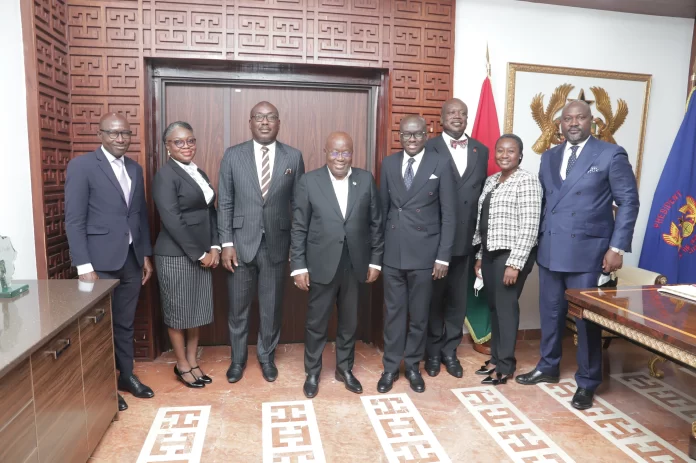
President Nana Addo Dankwa Akufo-Addo says the Ghana Bar Association (GBA) was not an elitist organization, but an institution that had championed the course of good governance in Ghana since its establishment.

He remarked that recent statements made by some political actors that the GBA is a highbrow association are groundless.

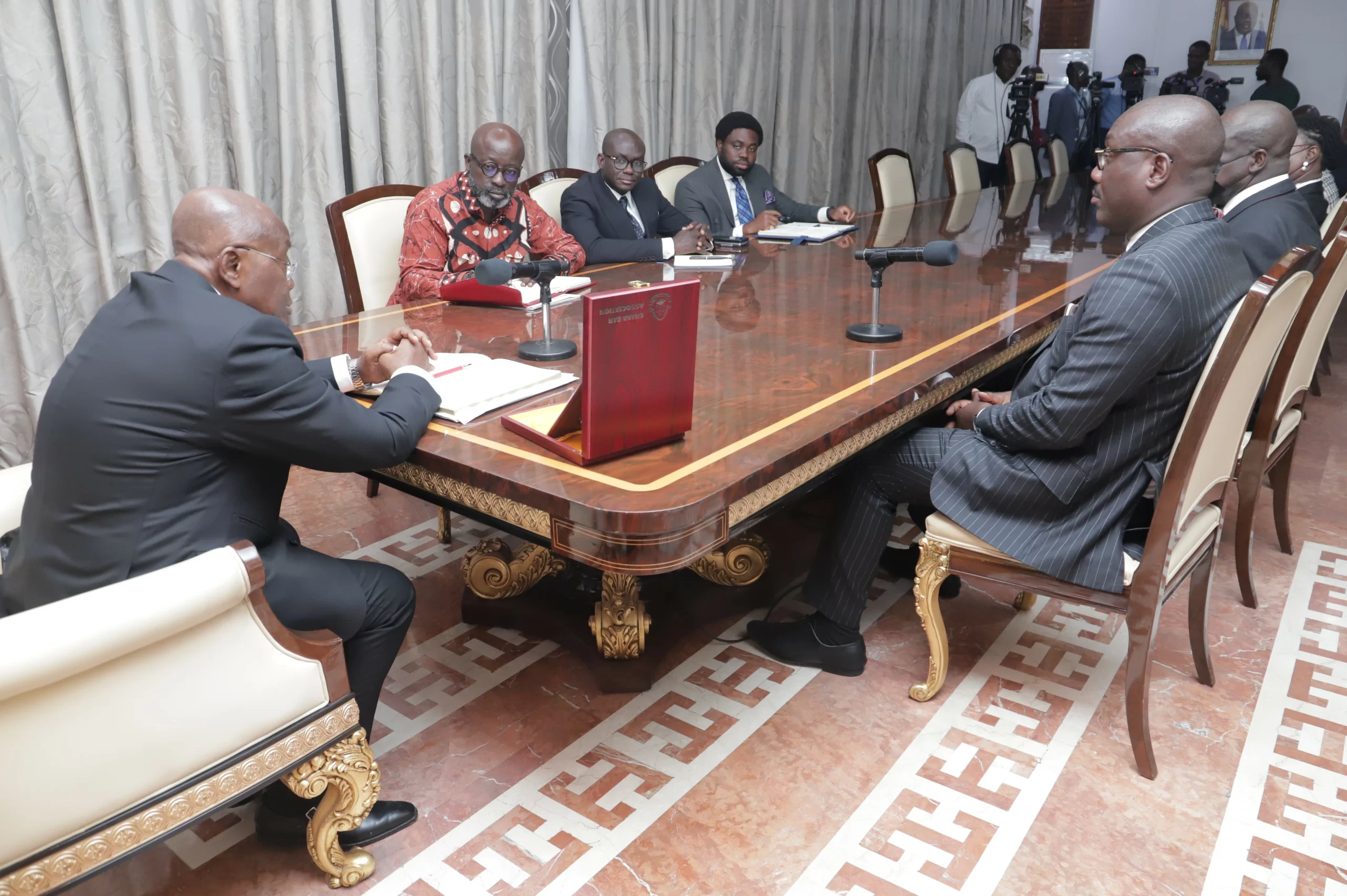
“The association is an institution that has championed the course of good governance in Ghana since its establishment,” the President said when he interacted with a GBA delegation that called on him at the Jubilee House on Tuesday.

The delegation, led by Mr. Yaw Boafo, Bar President, were at the Presidency to thank the President for attending the 2022 ‘Annual General Bar Conference’ in Ho, Volta Region last month.

President Akufo-Addo said the attempt to put an elitist label on the GBA must be resisted because the association “is one of the non-governmental organizations that needs the support of all its members and the country as a whole to bloom in order to do more for the nation.”


“I hear other people are talking about it [The Ghana Bar Association] being an elite organization. I don’t know what they understand by elite.

“I know that it is an organization that is concerned about the welfare of the people, the quality of their governance…an organization which has always been prepared and its leaders have been prepared to make the sacrifices that were necessary to make sure that we have a modern and respectable form of governance in our country. This cannot be an elite organization,” he said.

Emphatic that the GBA was an organization that spoke truth to power, President Akufo-Addo noted that the association was one that concerned itself with the issues that affect the ordinary people of Ghana and that “all attempts to paint her black must be resisted.”

“It (The Ghana Bar Association) is an organization that speaks to the interests of the people of Ghana for accountable governance and that is an organization that deserves the support of all right-thinking lawyers in the country,” he said.

The President said the GBA was one of the most important institutions that had had tremendous impact on the life of the country and on the history of the nation.

He was encouraged by the independence that the GBA had always shown in its utterances, deliberations and interactions, adding, “I cherish that kind of attitude and I think it is important for our country that our public discourse is facilitated by people who have this sort of attitude of making their position on common interest heard and felt”

Mr. Boafo thanked the president for his dedication to the activities of the GBA, saying, “We want to put on record that we’ve never had anybody occupying the high office of President who has shown such commitment to the bar”.

GNA

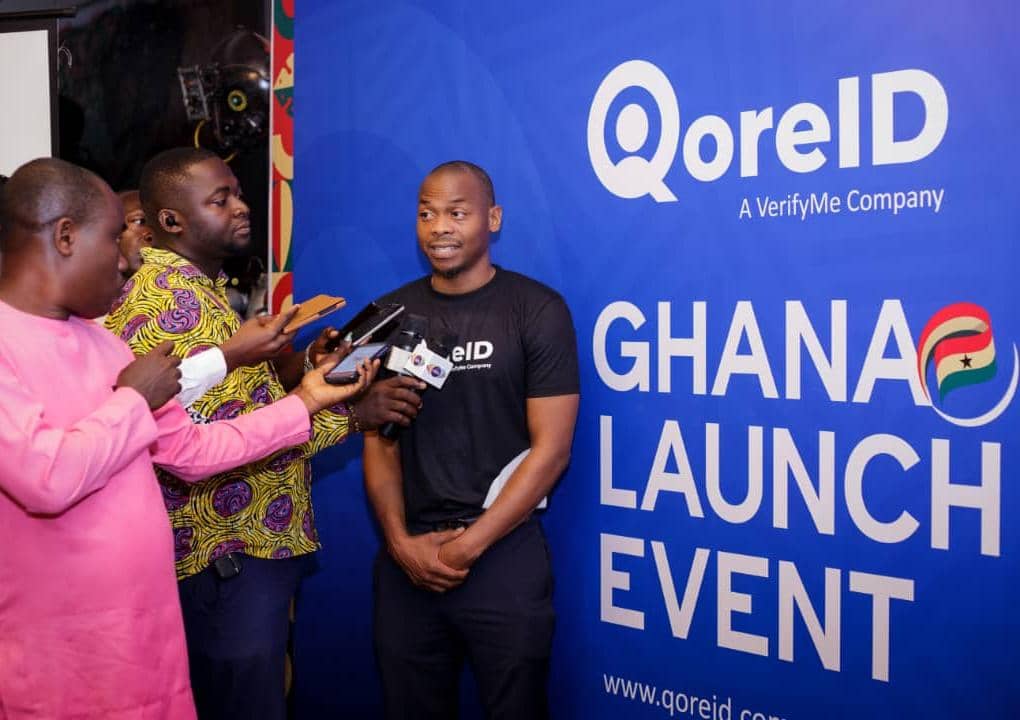
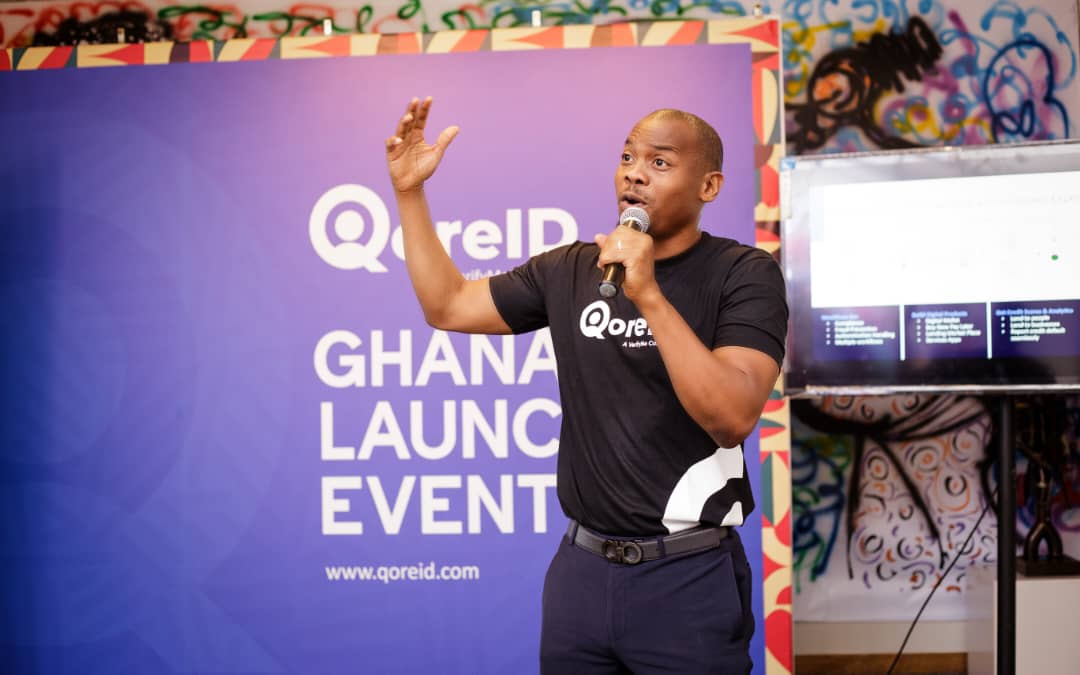
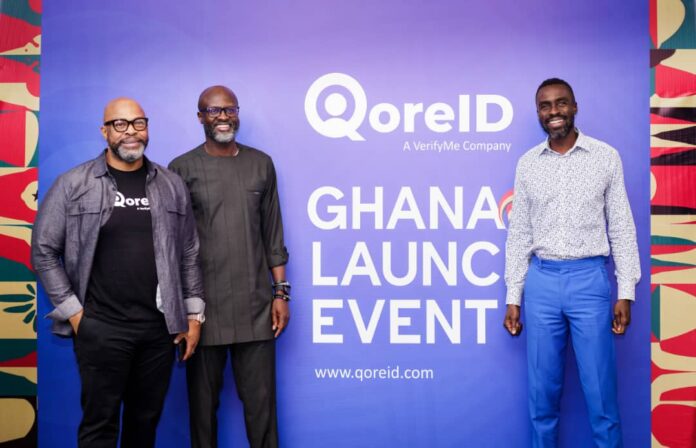
Highlights: QoreID launched into the Ghanaian digital market

0

QoreID’s entry into the Ghana market is about offering a consistent portfolio of services that will work to empower the financial sector and contribute to the tech ecosystem.

QoreID launched into the Ghanaian digital market

0

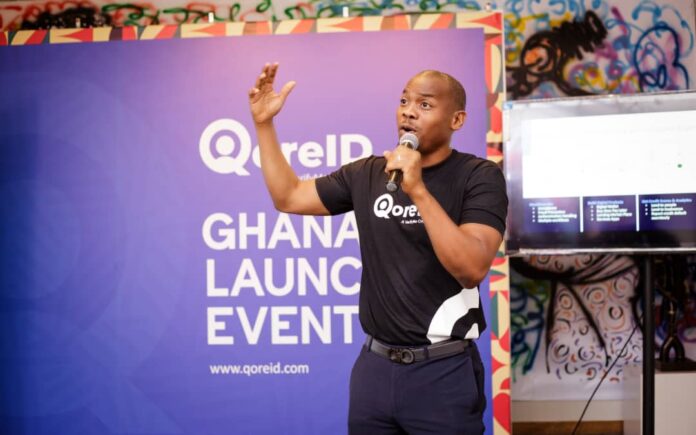
A dedicated digital identity and consumer analytics solution company, QoreID has been launched into the Ghanaian market to offer consistent portfolio of services that will work to empower the financial sector.


The mission of the QoreID, a VerifyMe Company would focus on supporting growth within the Africa’s emerging digital and consumer credit economies including open banking, FinTech, digital and e-Commerce companies, insurance, and other legacy financial services.


Speaking in an interview with the media at the launch in Accra, Mr Esigie Aguele, the Co-founder and Chief Executive Officer of the company stated that QoreID was positioned to transform businesses across Africa and drive growth within key markets by making customer acquisition faster, more affordable, and more efficient.


“It will be supported by local and global best practices for security and compliance, making transactions less vulnerable to fraud, errors, and other risks.


Targeting the medium and large business segment of the economy, the QoreID will offer secure application programming interface (API) infrastructure that will connect businesses to trusted identities and critical customer data, Mr Aguele stated.


He said the company would provide solutions, to include real-time Identity verifications, business verification, financial profiling, fraud prevention, automated last-mile for Fintech, digital addressing and AI-Powered Authentication.


Other services are; alternative credit analytics, income and statement verification, marketplace data, real-time vehicle verification, asset verification, and identity authentication services such as liveness check, face matching, and identity document verification.


According to Aguele: “QoreID is simply a trusted data infrastructure to build businesses or products on.

“Many medium to large-scale companies spend valuable time and resources verifying customer information for KYC (Know Your Customer) or approving them for credit or other services.

“This slows down their business development efforts and may result in several lost opportunities. It also increases the risk of insider abuses.”


He said: “With QoreID, businesses seeking to drive growth within key markets and enhance their overall customer experience can simply use our secure API hub or Software Development Kits (SDKs) to meet their business or regulatory requirements.”


Nana Amoako-Anin, a member of the board of Directors of the QoreID said: “QoreID’s entry into the Ghana market is about offering a consistent portfolio of services that will work to empower the financial sector and contribute to the tech ecosystem. I look forward seeing QoreID’s many dimensions take flight.”

She said the company, driven by a mission to grow Africa’s trust economy, was focused on supporting growth within the continent’s emerging digital and consumer credit economies, which include open banking, FinTech, digital and e-Commerce, insurance and other financial services.

Falcon Oil Holding Angola to Participate at Angola Oil & Gas (AOG) 2022 as Gold Sponsor

0
Angolan oil and gas exploration and production company, Falcon Oil Holding Angola S.A., will participate at this year’s Angola Oil & Gas (AOG) (https://bit.ly/3RIrAQ1) 2022 Conference and Exhibition – taking place in Luanda on 29-30 November and 1 December – as a gold sponsor, demonstrating the event’s high-level participation among key regional energy players.

Involved in numerous oil and gas exploration and production activities in Angola, including assets in the country’s Block 2/05, Block 17/06, and Block 15/06 conventional oil fields, Falcon Oil Holding Angola has been instrumental towards bringing value to Angola’s oil and gas market.

“We at Energy Capital & Power (ECP) (https://EnergyCapitalPower.com) are very pleased to announce the participation of Falcon Oil Holding Angola S.A. at the AOG 2022 Conference this year,” states ECP International Conference Director, Miguel Artacho, adding that, “Their participation is indicative of the conference’s commitment towards engaging the most pressing matters in Angola’s energy market by ensuring that the development of its natural resources translates to energy wealth as well as tangible benefits for the local population.”

Poised to expand and promote exploration and new discoveries in Angola, Falcon Oil Holding Angola’s participation at this year’s esteemed event will highlight the important role that energy companies play in ensuring Angola’s socioeconomic development through its natural resources, while serving to showcase the role of the country’s resources within the shifting global economy.

Now in its third edition, AOG 2022 represents the premier platform for Angola to spur investment and dealmaking within the regional energy value chains. Under the auspices of the Ministry of Mineral Resources, the National Agency for Oil, Gas and Biofuels, AIDAC and the African Energy Chamber (https://EnergyChamber.org), the conference and exhibition will unite innumerable oil and gas players, such as Falcon Oil Holding Angola, together to participate in three days of dealmaking, networking, panel discussions and exhibitions.

SOURCE
Energy Capital & Power

Your Opponents May Dislike And Berate You But God Will See You Through – Paramount Chief Of Bunkpurugu To VP Bawumia

0

The Paramount Chief of Bunkpurugu Traditional Area Naba Alhaji Abuba Nasinmong, has urged the Vice President, Dr. Mahamudu Bawumia, to focus on his good works for the country and not be discouraged by the negativity of his opponents, who he said, will always find negative things to say about the Vice President.

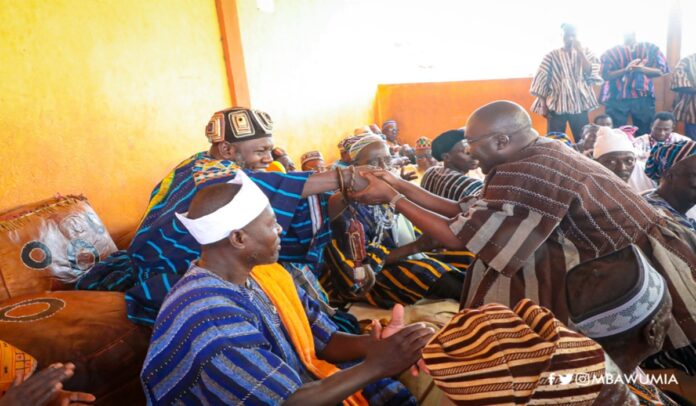
Welcoming Dr. Bawumia, who is on a working visit of the north, to his Palace on Tuesday, the Bunkpurugu Naba, commended the Vice President for his “indefatigable leadership,” and the recognition he has given to the people of Bunkpurugu and the north in general, adding that God will crown his efforts.

“I am excited having you present at my Palace, once again, to pay a courtesy call on me and my people in the Bunkpurugu Traditional Area. We are highly delighted having you with us today, because of the recognition you have given us as a people in this part of our country,” Naba Abuba Nasinmong, who was flanked by his elders and indigens of the community, said.

“You are a true stateman and an astute modern politician who has efficiently aided the first gentleman of the Ghanaian State, His Excellency Nana Addo Dankwa Akufo-Addo to maintain law and order, peace and tranquility and implementation of people centred policies that have touched the life of every Ghanaian, especially in the Bunkpurugu – Nakpanduri District such as Free SHS policy, Planting for Food and Jobs, extension of electricity, improvement on our roads, etc.”

As he lauded Dr. Bawumia and the Akufo-Addo Government, he expressed his support and “wholehearted” encouragement to the Vice President not to be discouraged by the negativity of his critics.

“Permit me to wholeheartedly express the following: your opponents would always find negative things to say about you, but continue with your good works and Almighty God will grant you victory.

“I wish to, on behalf of my people, assure you of our maximum support.”

The Vice President has been on a working tour of the norther  part of the country since Sunday.

After touring the Northern Region on Sunday and Monday, paying courtesy calls on traditional leaders and inspecting on-going Government projects, the Vice took his tour to the North East Region on Tuesday.

The Government’s construction of Agenda 111 District hospitals are among key Government projects the Vice President has been inspecting on his tour.