Home Blog Page 493

Agenda 111 Is Making Up For A 60yr Gap In Access To Healthcare Facilities Across Ghana – Bawumia

0

The decision to undertake arguably the largest investment in the country’s health care system, Agenda 111, arose from Government’s determination to close the gaping lack of access to healthcare facilities, especially in remote areas of the country, Vice President Mahamudu Bawumia has explained.

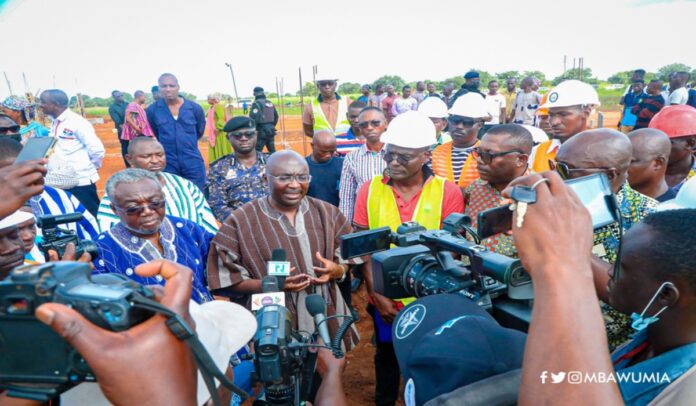
Inspecting progress of work one of the dozens of new hospitals under construction across the country at Bunkprugu in the North East Region on Tuesday, 4th October 2022, Dr Bawumia said this was the first time a concerted effort has been made to ensure that every Ghanaian, irrespective of where they live, has access to a quality health facility within a relatively short distance.

“The Agenda 111 Project is to bridge a 60 year gap in access to health facilities across the country. 90 districts in our country do not have District Hospitals. Six Regions do not have Regional Hospitals. Large parts of our country do not have access to Specialist hospital facilities and services. This is despite over 60 years of being Independent.

“So the government of Nana Addo Dankwa Akufo-Addo took the bold decision to build these hospitals and meet the health care needs of the people of Ghana, to ensure that every District has a hospital and every Region has a Regional Hospital. This will greatly increase access to health care, prevent avoidable, preventable deaths and reduce the suffering of our people,” he added.

The Agenda 111 project involves the construction and/or upgrading of 101 district hospitals, construction of six regional hospitals in the newly created regions, two specialised hospitals in the middle and northern belts, as well as a regional hospital in the Western Region and renovation of the Effia-Nkwanta Regional Hospital.

Officials of the Ministry of Health say the Project, when completed, will significantly deepen delivery of quality healthcare at the district level and boost access to healthcare services for all citizens towards ensuring the attainment of the United Nations’ Sustainable Development Goal Three.

The Vice President had earlier inspected ongoing works at Savelugu and Yendi, both in the Northern Region, as part of the first leg of his working visit to the five northern regions of Ghana. He was accompanied by Dr Anthony Nsiah Asare, Presidential Adviser on Health, Hon Ambrose Dery, Minister for the Interior, and other government officials.
“Submit Report Of Persons Responsible For Infractions In Auditor General’s Report In 4 Weeks” – President Akufo-Addo Charges SIGA, AG

0

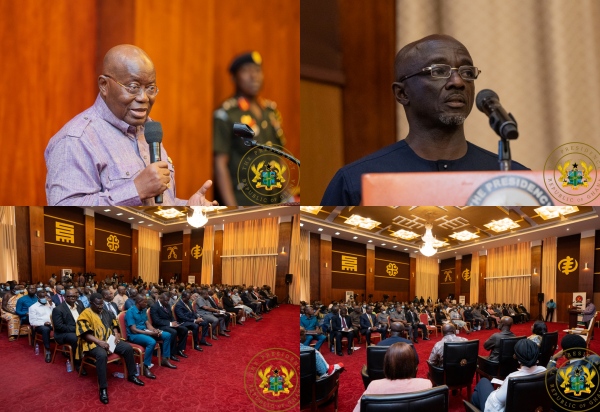
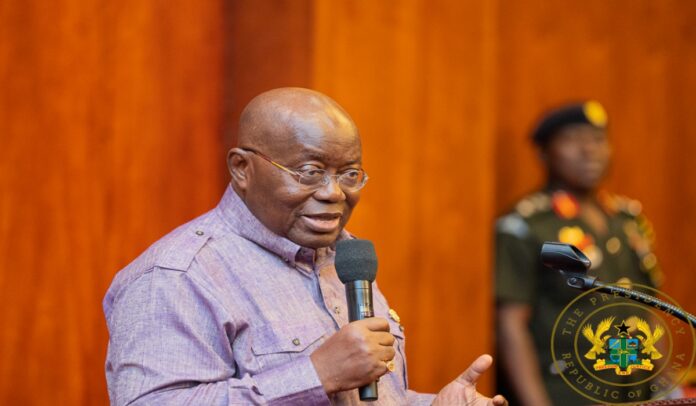
The President of the Republic, Nana Addo Dankwa Akufo-Addo has directed the Director-General of State Interests and Governance Authority (SIGA) to work with the Auditor-General into the causes of the infractions cited in the latest report, identify persons responsible and make the necessary recommendations as prescribed by law.

According to President Akufo-Addo, the 2021 Auditor-General’s report has reported an increase in the number of infractions committed by Specified Entities, and this demands answers from Chairpersons of these entities.

He made this known on Monday, 3rd October 2022, when he held a meeting with the Director General of the State Interests and Governance Authority, and Chairpersons of Specified Entities at Jubilee House, the seat of the nation’s presidency.

According to the President, Specified Entities have been set up to provide efficient public services, promote public economic activities, and contribute to our GDP, reduce imports, increase exports, and, thereby, strengthen our economy, whilst creating jobs for our people.

In addition, he indicated that Specified Entities have a duty to create the economic superhighway.

“However, the current trend of affairs neither portrays that picture, nor reflects positively on the managers of our Specified Entities, oversight institutions, and the government itself. It is a clear indication of poor supervision and management, as well as poor enforcement of implementation and sanctions of the needed measures,” President Akufo-Addo said.

He continued, “I appointed you as leaders of these Specified Entities with the strong belief that you would ensure a positive change in the narrative of loss-making entities and build value for the people of Ghana. That has not happened, so I expect more from you.”

The President thus urged heads of Specified Entities to drill down and agree on the causes and find solutions to address the infractions pointed out by the Auditor-General and the 2020 State Ownership Reports.

“I want to see a marked improvement in these reports next year. Things must change. Your hard-earned reputation and honour are at stake if things crumble under your watch, and there are also serious sanctions in the SIGA Act and other laws for mismanagement, negligence and outright malfeasance,” he added.

Whilst urging Chairpersons to help change the narrative of Specified Entities, the President noted that “the Director-General of SIGA to work with the Auditor General, who is here with us, to drill down to the causes of the infractions, identify persons responsible and make the necessary recommendations as prescribed by law. I am giving them four (4) weeks from now to submit a report to the Chief of Staff.”

He, thus, advocated for good corporate governance practices in Specified Entities, stressing that boards must desist from interfering in day-to-day management of their respective Specified Entities, and making unwarranted demands on their management.

“You must remember that, in each of your entities, you have, apart from SIGA, an overall supervisor or monitor, which is the relevant sector Minister, and, ultimately, the Minister for Public Enterprises. If the hierarchy is rigorously maintained, we are guaranteed an enhanced performance and output of your various entities,” he stated.

In conclusion, President Akufo-Addo encouraged Specified Entities to trade amongst themselves, increase production and patronage of domestic products and services, adding that “I pledge my full support to SIGA and other oversight institutions to exercise their authority, without any fear or favour.”

Second Tottenham player getting Djed Spence treatment from Antonio Conte, says he’s never even spoken to boss

0

Djed Spence isn’t the only Tottenham player getting the cold shoulder from Antonio Conte, as summer signing Destiny Udogie claims he has never actually spoken to his new manager.

Tottenham signed right-back Spence from Middlesbrough on July 19, following his successful season on loan at Nottingham Forest. As per The Guardian, Spence cost Tottenham an initial £12.5million and the deal could eventually be worth £20m.

The defender was hoping to challenge Emerson Royal and Matt Doherty for a starting spot on the right flank. However, he has only played once for Tottenham so far. And that appearance only lasted a few minutes.

Shortly after Spence’s arrival in north London, Conte suggested he didn’t actually want to sign the 22-year-old and that the matter was out of his hands.

“Spence is an investment of the club. The club wanted to do it,” Conte told a press conference.

“I said ‘OK, this player is young but he showed he can become a good, important player for us’. The club decided to buy him.”

Having only joined in the summer, pundits are already predicting Spence will leave Tottenham in January. In September, former Spurs right-back Alan Hutton said: “It has not gone to plan for Spence which is a shame because he has ability. If this continues towards January he is going to have to look to get out on loan and play. He is too good to sit on the bench.

“You do not want that to affect him moving forward. He will want to be playing week in, week out. If that means going out on loan and coming back a better player so be it.”

Spence is now looking out for potential loan opportunities so he can continue his development away from Conte’s side. Should he impress elsewhere, then he could still return and make an impact at Spurs.

Destiny Udogie in similar boat to Spence

Another full-back captured during the summer is Udogie. The Italian, who operates on the left side of defence, joined for a reported £15m from Udinese. Spurs immediately sent him back on loan to Udinese for the remainder of the 2022-23 campaign.

During an interview with Italian source La Repubblica (via Sport Witness), Udogie was asked if he had spoken with Conte when signing for Spurs. The player confirmed this isn’t the case, with Conte giving another arrival a cold welcome.

“Serie A helps you grow,” Udogie said. “The months I remain here on loan at Udine will be important to improve myself further. In my head, I’m here now, meaning I haven’t heard from Conte yet.

“The Premier League doesn’t scare me. The football is fantastic and I have always spoken English at home with my parents, who were born in Nigeria.”

Udogie’s situation isn’t as bad as Spence’s given the fact he is not actually playing for Spurs yet. He doesn’t technically have to chat with Conte until he moves to England next summer.

Spence, in contrast, is having to deal with spending most of Spurs’ matches on the bench. This must be incredibly frustrating after a top season with Forest last time out.

Despite Udogie’s treatment not being quite as bad, it still isn’t a good sign that Conte has failed to greet him. Most managers would make contact with their new signings and wish them luck for the season at their loan club.

Meanwhile, Spurs are reportedly rivalling Chelsea for the signing of an attacker who has recently been compared with two Man Utd stars.

Source: TeamTalk

Man Utd named as prime suitors for ‘exceptional’ Swedish midfielder who has already visited Carrington

0

Manchester United are leading the way when it comes to the signing of superb young midfielder Lucas Bergvall, according to a report.

The 16-year-old came through the ranks at IF Bromma in his native Sweden before joining second tier club Brommapojkarna in the summer. He has made six senior appearances this campaign and registered his first goal during Brommapojkarna’s 4-1 loss to Osters IF on Tuesday.

Bergvall is very highly rated in Sweden and already captains their U16 team, after previously leading the U15s.

His contract with Brommapojkarna runs until the end of 2023. They would obviously love to keep him for the remainder of his teenage years, though some big European clubs are starting to take note.

According to Sport Witness, who cite Swedish outlet FotbollDirektManchester United want to bring Bergvall to England.

They are at the front of the queue to sign the starlet, who has been labelled as a ‘super talent’ by the report.

Manchester United are ‘chasing’ Bergvall’s signature, as are Dutch club Feyenoord. However, there are a couple of reasons why Erik ten Hag’s side will likely win the transfer race.

First of all, they have far more financial power than Feyenoord. This means they will be able to outbid Feyenoord for the player once transfer talks get underway.

Man Utd should be able to fend off transfer rivals

United’s greater financial capability also means they will be able to offer Bergvall far higher wages than he could get in the Netherlands.

Another factor to consider is the fact the youngster has already been shown around Carrington, United’s training ground.

Last year, Brommapojkarna sporting director Peter Kisfaludy called Bergvall an ‘exceptional talent’. Kisfaludy also confirmed he had been to look around United’s facilities, along with a couple of other major teams.

“You have to remember that Lucas has been to Manchester United, Juventus, Bayern Munich,” Kisfaludy said.

“This is an exceptional talent. His technique and understanding of the game. It is not difficult to understand when you see him that he is the team captain in the U16 national team.”

The report doesn’t mention Juventus and Bayern as being on Bergvall’s trail right now, which is a boost for United. Currently, they are leading the way and should be able to fight off Feyenoord for him.

Of course, there is the possibility Juve and Bayern will join in once a bidding war starts. What United chiefs need to do is set the groundwork for a deal by initiating contact with the player’s club. This could give them a helping hand.

It is exciting that United are setting their sights on a teenage talent. However, they will not be able to add him to their youth squad for a couple of years.

Due to post-Brexit regulations, English clubs cannot sign overseas players until they reach 18 years of age. Bergvall could become more expensive by then if he continues to shine in Sweden.

Meanwhile, a former United player reckons the Red Devils will be able to beat Chelsea to a Premier League star.


Source: TeamTalk

Reality of Ghana’s debt restructuring is on businesses, households

0

The rippling effect of Ghana’s debt restructuring will not only be felt by financial institutions but businesses and households.

This is the “reality” that Ghana finds itself, the Policy Initiative for Economic Development (PIED), an economic policy Think Tank, said as the country looks to restructure its debt with the help of the International Monetary Fund (IMF).

Ghana is in negotiation with IMF for a $3 billion loan support for its homegrown economic programme, with a Debt Sustainability Analysis (DSI) currently ongoing.

The loan facility is aimed at easing the country’s economic hardship by restoring and sustaining macroeconomic stability, ensuring a resilient and inclusive growth and promoting social protection.

The Government is also setting up a five-Member Committee of prominent financial services professionals to lead extensive stakeholder engagements across all the key segments of the financial sector in the debt restructuring process.

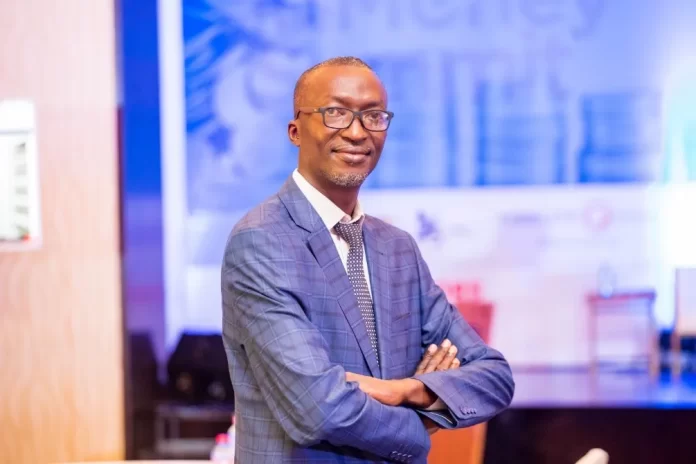
Dr Daniel Abateye Anim-Prempeh, an Economic and Financial Analyst with PIED, told the Ghana News Agency in an interview on Tuesday that financial institutions would be denied the needed access to liquidity through the debt restructuring.

He noted that in effect, banks, pension funds and insurance companies who the Government borrowed from would find it difficult to mobilise enough money for onward lending, thereby denying businesses the opportunity to borrow for expansion.

“If businesses are not expanding, it means that they would not be able to increase output. When output is not increased, jobs will not be created, and they cannot make profit and that will also affect the Government’s ability to mobilise revenue through taxation.” Dr Anim-Prempeh explained.

Mindful of the reduction in the level of public and investor confidence in the economy and, by extension, the financial sector, he urged the Government to ensure that “the debt restructuring is well done and communicated.”

The Financial Analyst said many Ghanaians would resort to the traditional ways of keeping money in their homes should the debt restructuring reduce public confidence, particularly in the financial sector.

“People have invested in treasury bills or bonds with the expectation that when it matures, they can get the money with returns, but now it must now be extended. This means that people’s plan and strategy for the use of that money have been frustrated.”

He also said: “With this, people who have money will resort to other instruments or alternatively. People who have so much money may resort to other markets other than our domestic market.”

Dr Anim-Prempeh, therefore, recommended to the Government to “devise a very good communication mechanism and a holistic stakeholder engagement to ensure that the debt restructuring is done and still maintain investor confidence in the domestic economy.”

He asked the Government to fast-track the negotiations with the IMF and be transparent to everyone, noting that, “once the IMF and the facility comes on board, we’ll earn that credibility from external investors.”

He told the Government to engage captains of industry, including investors and the Association of Ghana Industries (AGI) to incorporate the Planting for Food and Jobs (PFJ) programme to increase value addition and export to anchor economic growth.

The Financial Analyst cautioned the Government against “diverting the money into consumption like paying of wages and salaries, and also conduct periodic audit into the use of the funds to ensure accountability.”

Data provided by the Bank of Ghana shows that the country’s total public debt stock has reached GHS393.4 billion in June 2022, 78.3 per cent of Gross Domestic Product (GDP).

The Central Bank’s Summary of Economic and Financial Data noted that the domestic debt was GHS190.1 billion, and external debt, GHS203.4 billion, and ascribed the increase in debt to exchange rate instability.

The IMF in its April 2022 Fiscal Monitor predicted that Ghana’s debt to GDP ratio would be 84.6 per cent by the end of 2022 – a debt situation that many economic and financial analysts, and financial institutions have described as “unsustainable.”

New cocoa price for 2022/2023 season will be announced next week

0
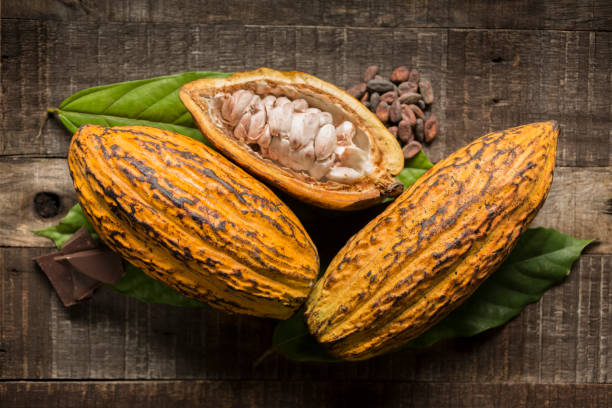
Cacao fruits, nibs and chocolate pieces composition on rustic wooden table. Front view. Studio shot.

The Ghana Cocoa Board (COCOBOD) has concluded its week-long celebration of this year’s Cocoa Day at Suhum in the Eastern Region by assuring cocoa growers that a new cocoa price will be announced next week.

Speaking during the event, Mr Frimpong Yaw Addo, Deputy Minister of Food and Agriculture, stated that the Minister of Food and Agriculture has expressed the need to improve the living standards of cocoa farmers and that the Producer Price Review Committee of COCOBOD was working on a new cocoa price for the 2022/2023 opening season in October next week.

He stated that Ghana’s agricultural sector is more vibrant than ever because of the country’s adoption of multi-sectorial approaches and programmes that have significantly increased food supply and raw materials for both local and global markets.

He cited flagship initiatives in the fisheries sub-sector as well as Planting for Food and Jobs, Planting for Export and Rural Development, and Rearing for Food and Jobs.

According to the Ghana Statistical Service Report, the agricultural sector contributed 18.5 percent of the overall GDP in 2020, with cocoa accounting for 1.8 percent.

As such, the government has been making efforts to diversify Ghana’s cocoa sector to reduce its over reliance on revenues from the export of cocoa.

Mr Addo stated that the Ministry of Food and Agriculture, through the Tree Crop Development Authority, was considering other tree crops such as cashew, shea, mango, coconut, rubber, and oil palm to ensure a balanced and secure production focus.

In response to the President’s directive for a roadmap to explore the untapped potential in the coffee and shea sub-sectors to streamline both crops in the agricultural value chain, the Ministry stated that it was working closely with COCOBOD to institutionalise them to ensure they generate much-needed revenue equivalent to what cocoa generates annually.

“I am confident that when the modalities are finally firmed up, we shall see the birth of yet another division of COCOBOD that will primarily invest in the cultivation of the two crops,” he stressed.

The theme of the Cocoa Day celebration was “COCOBOD at 75: Sustaining our environment, wealth, and health.” It was established in 2005 and is observed on October 1 every year to recognise the contributions of cocoa farmers to the Ghanaian economy and to raise awareness about the health and nutritional benefits of cocoa.

Various news outlets have been reporting on a soon-to-be-implemented new rule in Europe that has the potential to render Ghana’s cocoa and coffee unsuitable for export to many European markets, according to Mr. Joseph Boahen Aidoo, Chief Executive Officer of Ghana COCOBOD.

He said, while working to increase local processing and consumption to reduce reliance on international buyers for cocoa beans, there was a need to realign cocoa and coffee interests with those of European markets to avoid dire consequences for Ghana’s cocoa and coffee production.

He stated that COCOBOD was implementing a number of productivity enhancement programmes and other initiatives aimed not only at increasing production but also at promoting safe environmental practices.

“Our campaign against illegal mining, deforestation and the use of child labour on cocoa farms has fetched positive results, and it is our hope that with the Board’s current efforts to raise the incomes of farmers through the Living Income Differential pricing mechanism as well as the massive support of the gallant farmers and other partners in the cocoa fraternity, our activities will always be in line with the three pillars of sustainability – Economic Viability, Environmental Protection and Social Equity,” he said.

He also stated that the Board has approved the construction of an ultra-modern mechanised borehole for the people of Dawn of Life, a community in Akrabo in the Eastern Region dominated by thousands of cocoa farmers who have worked tirelessly, significantly contributing to cocoa output.

“Through this project, we support the realisation of Sustainable Development Goal six, which requires all persons to have access to clean water,” he said.

“As we aim at addressing the water supply needs of our farmers and their dependents, the scenario of our children having to walk to far locations to collect water every morning will be solved, thereby removing major bottlenecks such as child absenteeism. Its spill-over effects on basic education delivery in the area will also be addressed.”

Adolescents urged to speak up about abuse of children – Monitoring and Evaluation Officer

0

Mr Paschal Gyireh, the Monitoring and Evaluation Officer of Children Believe (CB), a child-focus Non-Governmental Organisation, has urged adolescents to discuss acts of abuse on them with duty bearers.

He emphasized the need for children, especially adolescents to engage duty bearers in meaningful conversations, and be confident enough to share any act of abuse they suffered in the hands of some irresponsible adults in society.

According to him, one of the major challenges of child protection was the lack of meaningful conversations by adolescents with duty bearers, saying even though stakeholders were ready and willing to help victims of child abuse were timid and feared to report abuses on them.

That he noted affected their academic, physical, and psychological development.

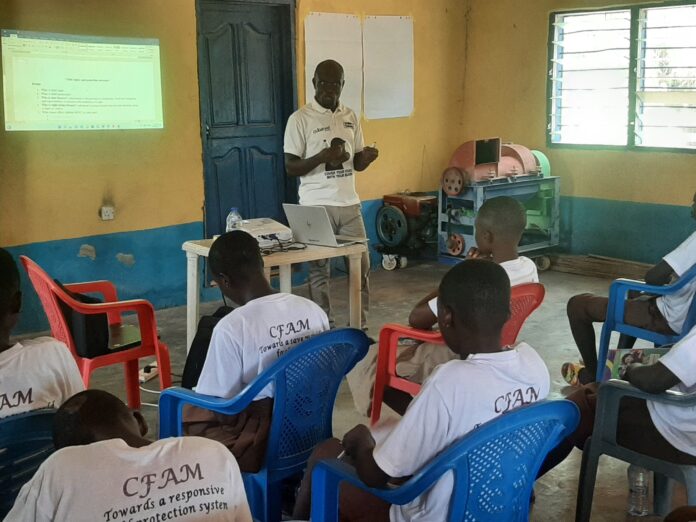
Mr Gyireh said this in an interview with the Ghana News Agency (GNA) at Chuchuliga, in the Builsa North Municipality of the Upper East Region at a training programme for pupils drawn from some selected schools across Chuchuliga and Chiana in the Kassena-Nankana West District.

The training was part of the implementation of the Bulisa-Kassena Area Child Development Programme by the Participatory Action for Rural Development Alternatives (PARDA), a Non-Governmental Organization with funding by CB.

Mr Gyireh said “We are empowering the children, especially adolescent girls to openly speak up to their parents, caregivers, teachers, Police officers about abuses they face in their lives, so that they will be properly protected.

“Until they speak up, we will remain in the dark in our quest to protect these young people,” he said, and further admonished adolescents to go to the right places and seek help, “It doesn’t matter what the conversation is, just say it,” he added.

Mr Samuel Ngumah, the Programmes Officer of PARDA, said child protection was a critical component of the Builsa-Kassena Area Child Development programme by the two child-focused NGOs.

He said PARDA formed nine clubs known as Child Friendly Accountability Mechanism (CFAM) in the selected schools across the two beneficiary Districts to train pupils to interact and demand protection from duty bearers.

He said the clubs, with total membership of 180, also had nine facilitators at the community levels who helped to mobilise non-school going children.

Mr Ngumah indicated that the training was one of the several training sessions PARDA had over the years organised to build the capacities of pupils in the beneficiary communities.

“We are reaping the benefits of these trainings. When some of the pupils see that their colleague is abused, they can report, their confidence levels are gradually being built,” the Programmes Officer said.

A pupil from the Chuchuliga Junior High School, Ms Naomi Atiim, who participated in the training, told the GNA that the training had exposed her to the various forms of child abuses, and was confident to report any form of abuse on her and any colleague to the right duty bearers for redress.

Highlights from the Central African Republic: ‘Healing Jesus Campaign’

0


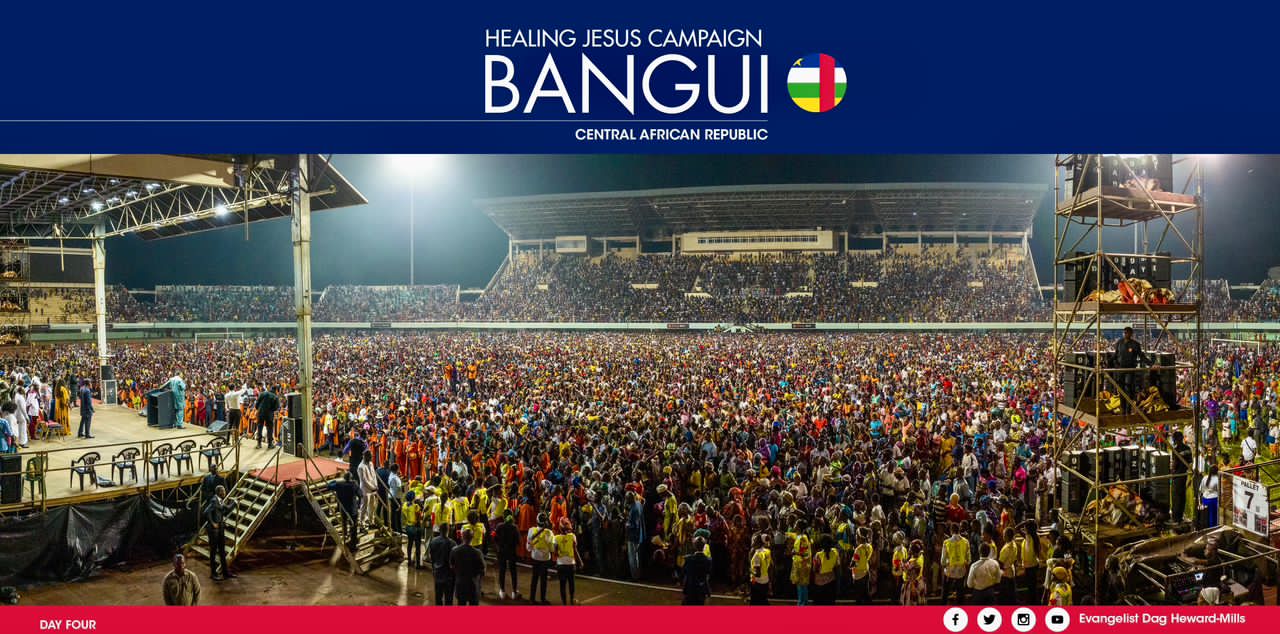
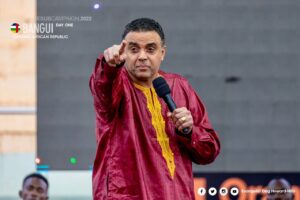
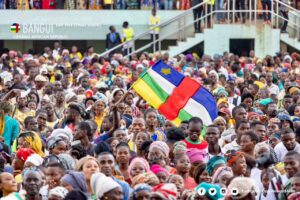
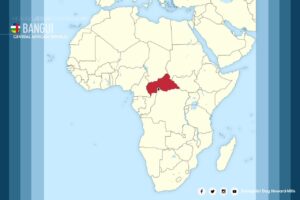
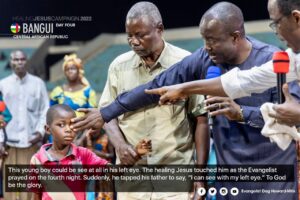
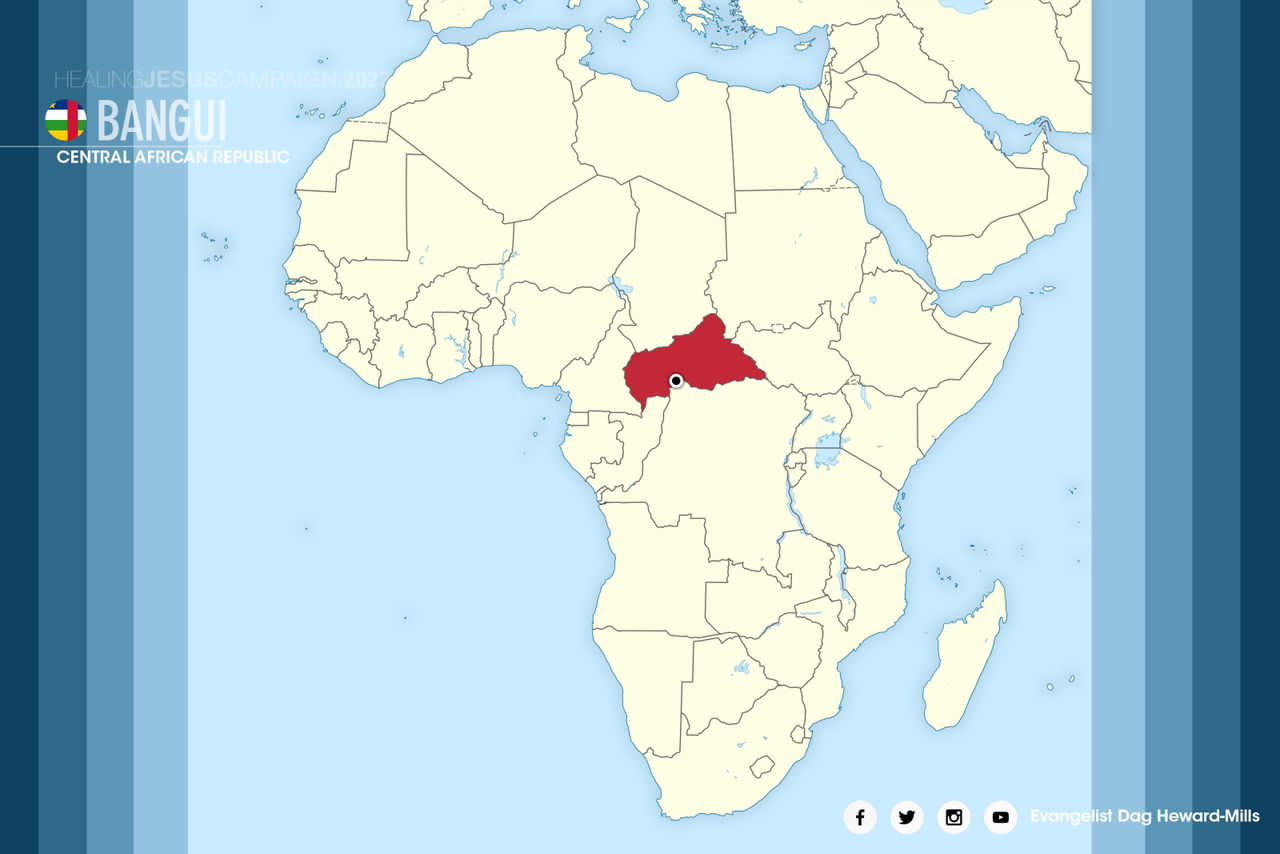
Another amazing season of Healing Jesus campaigns has come to an end in the capital city of the Central African Republic – Bangui.

Mixed feelings after 5-day Healing Jesus Campaign in Bangui

0

Another amazing season of Healing Jesus campaigns has come to an end in the capital city of the Central African Republic – Bangui.


Mixed feelings.

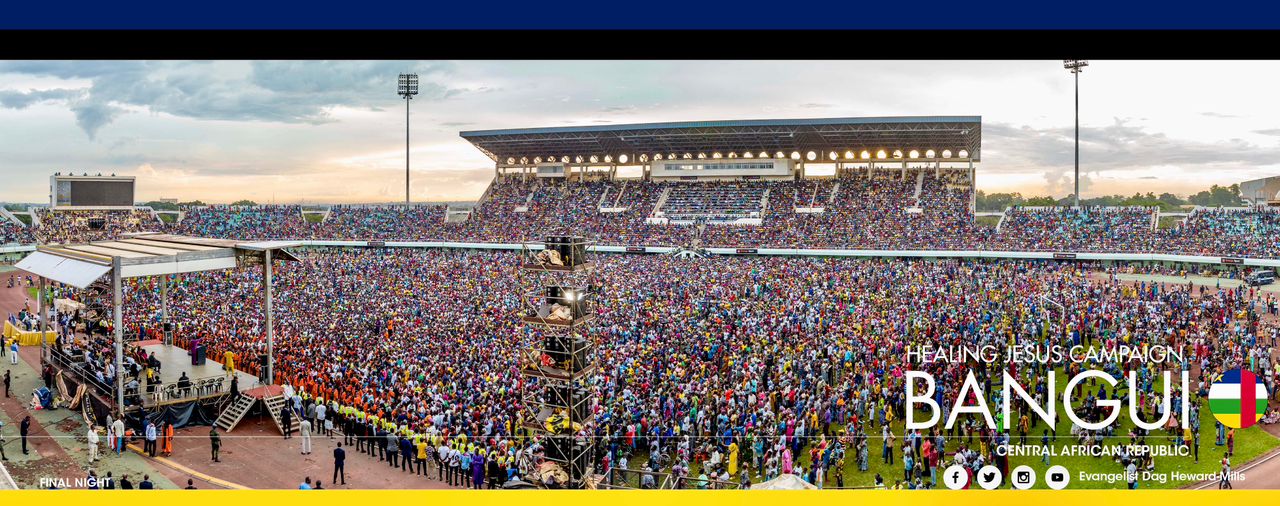
The 5-day campaign had the stadium venue full to capacity – stands and field. The crowds were mesmerized as the sweetly gifted, vibrant, and anointed Mother Vivaldi-Joy as usual led the choir with spirited melodies translated into the local dialect of the people. What a delight.

With that, the people’s hearts were prepared, ready to receive the living word of God preached by the Evangelist Dag Heward-Mills. Passionately and relentlessly, night after night, he delivered the gospel of Jesus in its pure and simple form.


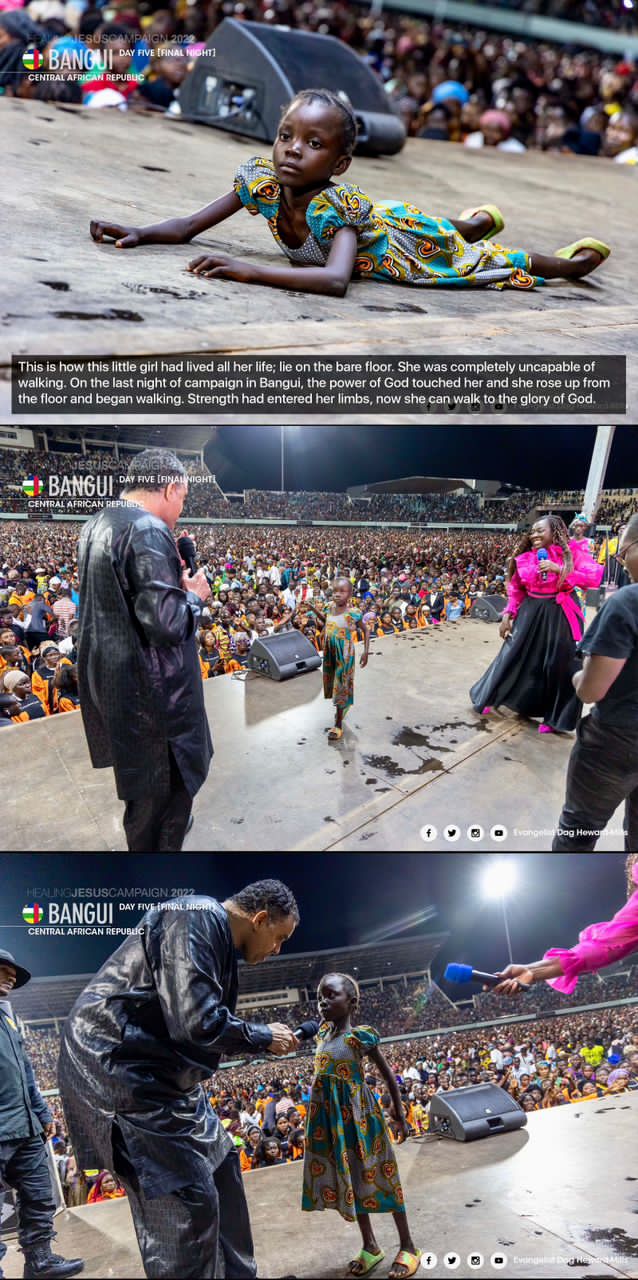
And like clock-work, the miracles followed one mind-blowing testimony after another. It was simply touching to watch.

The pastors’ conference sessions were simply unforgettable. The evangelist spent time teaching and encouraging all gathered. The impact, lasting.

We cannot thank God enough for the mighty works wrought in Bangui, Central African Republic.


God has smiled on His people indeed!

“Kwadaso Agricultural College To Be Upgraded Into Agricultural University” – President Akufo-Addo

0

“The current vision of government for the Kwadaso College of Agriculture is to upgrade the institution into an agricultural university, with collaborative support from the prestigious Mendel University of the Czech Republic. And here, I want to recognise in our midst the presence of our compatriot, Professor Samuel Darkwa, a lecturer and representative of the Mendel University, at this occasion. Professor, I have been apprised of your tireless efforts to help bring about the desired transformation of Kwadaso College, for which we are grateful.”

These were the words of the President of the Republic, Nana Addo Dankwa Akufo-Addo, on Friday, 30th September 2022, at the centenary celebration of the Kwadaso Agricultural College, in Kwadaso, in the Ashanti Region.

With the Kwadaso College established in 1922 to help maintain the then Gold Coast’s enviable position of being the leading producer of cocoa in the world, the President noted that the College has, since, evolved into a centre of excellence, with increased capacity for training.

According to President Akufo-Addo, “the Kwadaso College of Agriculture can, to date, boast of having trained some one hundred thousand (100,000) young people as agricultural assistants, who have since been absorbed by the Ministry of Food and Agriculture, Local Government Service, Ghana Cocoa Board, the Council for Scientific and Industrial Research, as well as the private sector, over the years.”

Having produced a significant number of graduates, who have moved on to leadership positions in industry, academia, civil society and entrepreneurship, he noted that “the record of the College in contributing to the human resource development of this country is testament to its strength”.

One hundred (100) years after the establishment of the College, the President stated that the time is ripe to reposition the institution to harness its full potential, and that is why the decision has been taken to upgrade Kwadaso Agricultural College into an agricultural university, with collaborative support from the prestigious Mendel University of the Czech Republic.

“It is my understanding that the agricultural university will take care of the academic and professional development of our human resource for the agricultural sector. If successful, the plan will include establishing satellite campuses in Ejura and Wenchi Agricultural Colleges,” he said.
The President continued, “The reason why the establishment of this University, dedicated to agriculture, excites me very much is because we will produce the requisite numbers of human resource to support research, impart knowledge and provide leadership in the sector.”

Stressing the need for the country to scale up consciously the number of middle level professionals who provide hands-on support in the sector, President Akufo-Addo acknowledged the fact that the Kwadaso College of Agriculture, and, indeed, other colleges, are already laying the foundation for developing such category of human resource, as some graduates of these institutions have begun benefiting from training in Government’s greenhouse internship programme in Ghana and Israel.

“The trainees at such centres are prepared for entrepreneurship by being equipped with academic knowledge and practical skills in greenhouse technology. Once established, the transformed agricultural university and other colleges will serve as incubators for the development of more agricultural professionals in the country,” he said.

The President, therefore, pledged the continuing support of Government to make the upgrade of the College into a University a reality, and charged the Ministry of Food and Agriculture to step-up efforts, and strengthen the partnership and collaboration with the Mendel University to realise this vision.

“The collaboration between the Ministry of Food and Agriculture and Mendel University exemplifies the wisdom of collaborating to make our institutions very valuable to our developmental efforts. I am confident that this celebration will ignite that spirit of togetherness and make this a reality,” he added.