Home Blog Page 496

Gabby: The government should be commended for continuing to pay bills and salaries despite a drop in tax income and restore roads.

0

According to Mr. Gabby Otchere-Darko, a prominent member of the New Patriotic Party (NPP), the Akufo-Addo administration deserves praise for the approach and manner in which the economy has been managed.

He noted that despite a drop in earnings, bills and salaries are still being paid.

Additionally, roads are being repaired, and funding has been found for initiatives like YouStart that aim to provide the teeming youth jobs.

In a tweet, Mr Otchere Darko said “The Akufo-Addo goverment and, in particular, MoF, deserve the nation’s commendation for their handling of the economy in these most challenging times. Despite slump in revenues, bills are being paid, including salaries, roads being fixed, & money found for programmes like YouStart.”


History of Ghana, NDC incomplete without Asiedu Nketia – Afriyie-Ankrah

0

Mr Elvis Afriyie-Ankrah, Director of Elections, National Democratic Congress (NDC), has hailed the Party’s General Secretary, Mr Johnson Asiedu Nketia, saying the history of Ghana and NDC is incomplete without him.

Mr Nketia has publicly declared his intention not to seek re-election as General Secretary of the NDC in the Party’s upcoming national congress, after 17 years as chief scribe.

In an audio message, Mr Afriyie-Ankrah, who is seeking to replace Mr Nketia as General Secretary, described the latter as “a great personality”.

“He is a great personality and definitely an institution and he has made the necessary impact that anybody could make within the political system and indeed the history of this country and the history of the NDC would definitely not be complete without talking about his major role over the past 17 years.” Mr Afriyie-Ankrah said.

Mr Afriyie-Ankrah added that: “He (Mr Nketia) has been an inspiration to all of us, just as some of us aspire to step in his shoes, we can continue to count on his wisdom, guidance and store-house of knowledge.”

The NDC will hold its Constituency elections between October 22 and 23, 2022, while the regional elections would be held between November 12 and 13, 2022.

The National Congress will be held on December 17, 2022.

About 7,900 executives are expected to be elected in a total of 876 elections at the constituency, regional, and national elections scheduled for the next three months.

Mr Nketia, who had served as General Secretary of the NDC since 2005, in a radio interview on Wednesday, September 21, 2022, said the time had come for him to hang his boots as General Secretary and allow others to also serve the Party in that capacity.

Asked if he would be contesting other positions in the upcoming election, Mr Nketia said he would announce it when the time comes.

Mr Nketia led the NDC to power in the 2008, and 2012 elections. The Party, under his stewardship as General Secretary also lost the 2016 and 2020 presidential elections, sharing the spoils with the New Patriotic Party in the 2020 parliamentary elections.

As we fight racism, let’s eschew entrenched tribalism

0

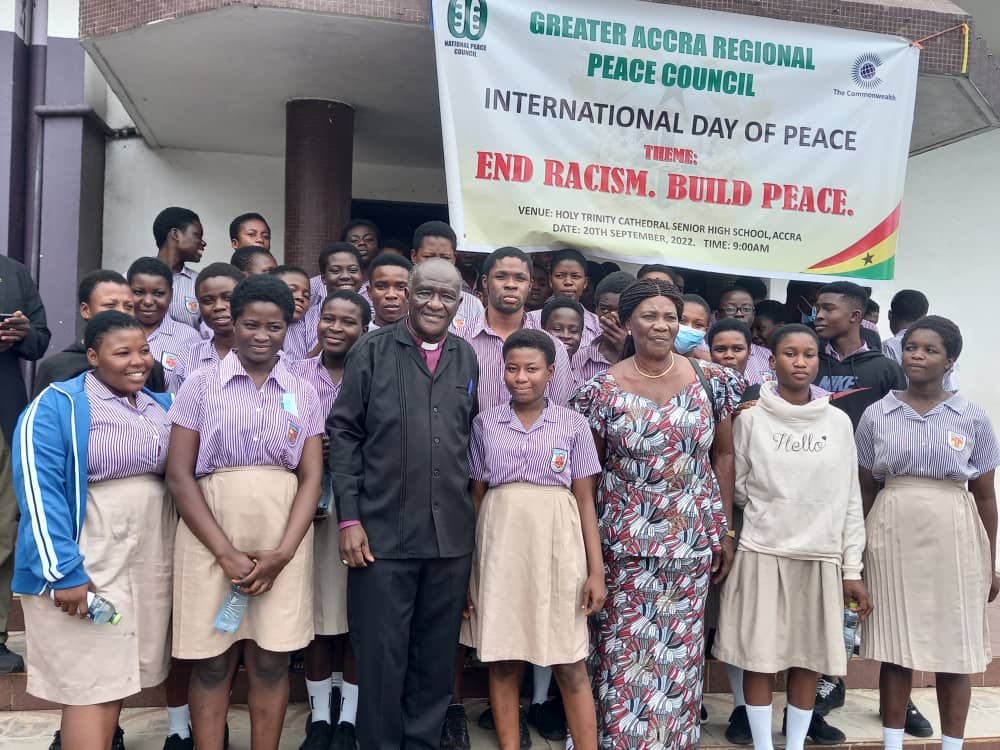
Right Reverend Samuel Kofi Osabutey, Chairman, Greater Accra Regional Peace Council (GARPC), has urged Ghanaians to shun “an entrenched culture of tribalism” which is a threat to society’s progress.

He said though Africans had thrown support behind Black Americans against racial abuses and institutional racism in the United States, as evident in “Blacks Lives Matter,” they conveniently subject one another to “tribalism and tribal” bigotry.

“Africans appear to have conveniently forgotten their own problem of broken intra-race relations that has manifested in the form of tribalism, a problem that’s no less prejudicial than racism.” Rt. Rev. Osabutey said.

He said this at the commemoration of the 2022 International Day of Peace, which is Wednesday, September 21, with this year’s event dubbed: “End Racism, Build Peace” globally.

Meanwhile, the Greater Accra Regional Peace Council celebrated the day on the sub theme, “End Tribalism, Build Peace,” which aimed at ending ethnocentrism in Ghana.

In his commemorative speech, Rt. Rev. Osabutey said ethnocentrism was worse than racism because whereas the White race appeared united in their racism against other people of colour, the Black race was divided along tribal lines in acrimony.

Lamenting the Konkomba-Nanumba war, Alavanyo-Nkonya and the Bawku conflicts, the Chairman urged the public to see and embrace peace as “an essential commodity that propels development, something we all needed especially in a diverse and ethnic society.”

Rt Rev Osabutey said Ghanaians especially those in the Greater Accra Region should learn to tolerate each other as the region constantly received influx of foreigners including West Africans and multinationals.

According to the 2022 Global Peace Index, Ghana is the second most peaceful country in Africa after Mauritius.

“Peace attracts development and foreign direct investment as no one likes to do business in a volatile environment hence the need to protect the peace the country we are enjoying,” he said.

The International Day Peace was declared by the General Assembly of the United Nations in 1981, to strengthen the ideals of peace both within and among all nations and people.

Change the way teachers are trained if we want to see more aggressive students; untrained teachers and headmasters, according to Peter Anti

0

According to Peter Partey Anti, Executive Secretary of the Institute for Education Studies (IFEST – Ghana), pupils in Ghana don’t appear to be courageous since their professors aren’t either.

He added that when teachers make an effort to be authoritative, they often become the victims.

His remarks coincide with the announcement by Ghana’s Minister of Education, Dr. Yaw Osei Adutwum, that other African nations’ schools should embrace what he calls the Assertive Curriculum.

He emphasized that this curriculum would give African American children the confidence to question the established quo.

In his view, the current way of teaching and learning where students are taught every thing from the text books by their teachers and are assessed in examination, is not helpful.

It does not make them critical thinkers, he stressed.

Dr Adutwum said these when speaking at the ‘Transforming Education’ Summit at 77th session of the United Nation’s General Assembly on Thursday September 22.

The Bosomtwe Member of Parliaments said “I go to schools upon schools and I speak with the students, when I finish speaking with them I will ask, do you have a question for me? And no hand goes up. A hand is yet to go up in all my encounters in Ghanaian classrooms.

“We have tamed the children, we just want them to write down what we tell them, at the day of exam they should put down what we have told them and say, you you are the best student the country has seen.

“That kind of education system will not transform Ghana that kind of education system is not going to give us the critical thinking individuals especially since we are in the 21st Century.”

He added “You can’t memorize your way out of poverty but you can critically think and innovate out of poverty.

“So Ghana schools, African schools have to begin to take serious look at what I will call assertive curriculum, a curriculum that empowers the African African child to ask questions and challenge the status quo respectfully within the African tradition context.”

Reacting to this on the mid day news on TV3 with Martin Asiedu Darteh on Thursday September 22, Mr Anti said “Everything he is telling in there is true. We have kids in classrooms that we have tamed them, they are timid. We normally confuse people who are timid to be humble.

[But] his prescription is not right. Teachers are those who are supposed to help students be assertive, to be outspoken, through learning process. But the teachers themselves are victimized when they are assertive.

“Technically, it means we are not training our teachers well. This depends on how we have designed our Colleges of Education, we tame the teachers in the Colleges, so what we give them is what they are also giving.

“If we want to address this then we have to look at the training of teachers.”


Life in South Africa during the blackout

0

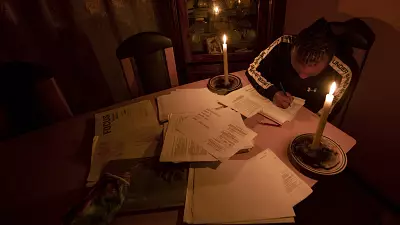
Power outages are the cause of any darkness at the Mfusis. The five-person South African family must now go into battery-operated lamps and candle mode due to the power outage.

The state-owned utility is carrying out planned blackouts. and occasionally only gives a few hours’ warning. For those who live in Soweto, life has grown hectic.

Duduzile Mfusi, a mother of three, adds, “We would come back from school, work, and then just, you know, catch up as a family, do…prepare supper, help with homework.

“However, I now have to move quickly. Your homework and making sure everyone eats promptly before it becomes dark out come first. We therefore make an effort to at least ensure that by the time load shedding (power outage) hits, everything is done”, she adds.

The Mfusis invested in a generator when power outages only laster for an hour or two during stage one earlier this year. However, running the generator has become too costly.

“Not having electricity for a period of about 4 hours to 6 hours in a day, it’s extremely costly because the generator, also, it’s not it’s not effective for us in terms of finances”, Nhlanhla Mfusi, the father, laments.

“It’s extremely expensive because now you’re buying petrol for the generator, you’re buying petrol for your car because we have to transport the kids back and forth, back and forth. So we can’t afford the generator anymore.”

The public power utility, Eskom, produces 95% of the country’s electricity but struggles to to keep its ageing and poorly maintained coal-fired power stations operational.

As matter of consequence, supply street furniture like traffic lights, public services including water supply, businesses and households are going without electricity for up to eight hours a day.

To all of them, Eskom asks to use electricity sparingly in order to help prevent nationwide blackouts.

Bad strategy

Economist Jannie Rossouw, thinks the startegy isn’t the good one: “Eskom treats its consumers as if they are the enemies. The sense is as if Eskom is shouting at people: ‘You use too much electricity, you’re in the wrong.'”

“Eskom should again establish its credibility in civil society with the general public so that civil society and the general public can help support Eskom in its engagement with government to help Eskom overcome the limitations on electricity supply that government has put on Eskom”, the economist concludes.

South African President Cyril Ramaphosa this week cancelled his trip to New York to attend the United Nations General Assembly and returned home after the funeral of the Queen Elizabeth II to chair a meeting with his ministers.

According to the official national statistics agency StatsSA, power cuts -referred to by Eskom as loadshedding- were a crucial contributor to the economy contracting by 0.7% in the second quarter of 2022.

Indeed, just about every sector is hurt, and South Africa’s biggest telecommunication companies this week warned that continuous blackouts may start affecting their services.

In July, Cyril Ramaphosa announced energy reforms, urging South Africans to “join in a massive rollout of rooftop solar” and sell excess to the grid.

He then announced the government, would use climate funding provided through the Just Energy Transition Partnership to invest in the grid and repurpose power stations that have reached the end of their lives.

Last year, the South African authorities raised the licensing threshold for new embedded generation projects from 1 MW to 100 MW.
African leaders address the UN General Assembly and demand reforms

0

Wednesday, September 21, saw the start of the UN General Assembly, which has as its subject “A watershed moment: transformative solutions to interconnected challenges.” Different topics were raised by African leaders.

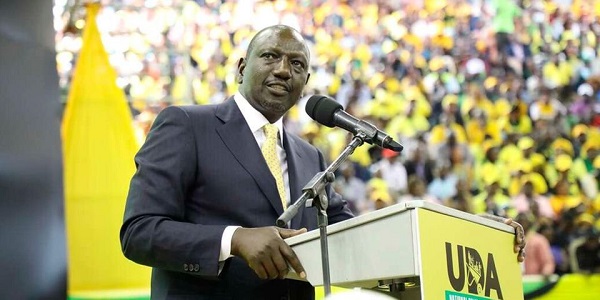
The climate catastrophe was a concern for both Nigeria’s Buhari and Kenya’s William Samoei Ruto.

Ruto explained the dilemma his country is in when Buhari brought up the fact that countries with the highest levels of pollution suffer the least from climate change.

According to him, a drought of this severity has not been witnessed or experienced in our country’s northern desert and semi-arid rangelands in 40 years.

“Three point one million residents of these ASALS (Arid and Semi-Arid Lands) are now severely food insecure on account of scarce rainfall over three consecutive seasons, leading to poor crop and pasture.”

It was the first time that Ruto also explored solutions to financially support nations faced with a conjunction of crises: “I join other leaders in calling upon the World Bank, the International Monetary Fund and other multilateral lenders to extend pandemic related debt relief to the worst hit countries”, he said.

Mentionning particularly countries “affected by the devastating combination of conflict, climate change and COVID-19.”

On the second day of the General Debate in New York, President Hichilema focused on those bearing the brunt of the impact of the war in Ukraine.

“Zambia joins other governments in expressing particular concern about the ongoing war in Ukraine”, the 60-year-old insisted.

“As we stand with all those affected, both inside Ukraine and in the neighboring countries, we also take this opportunity to stress the far-reaching negative consequences of this war, particularly on the prices of food across the world, fuel, fertilizer and other key commodities”, Hichilema concluded.

Growing call for reform of international agencies

Delivering his final speech as head of state ahead of stepping down, Nigerian leader Buhari said challenges raised by the war in Ukraine and other recent crisis justify calls by for the reform of the United Nations system to make the Security Council and agencies more representative and capable of meeting current demands.

Kenya’s president doubled down on that: “It is time for multilateralism to reflect the voice of the farmers, represent the hopes of villagers, champion the aspirations of pastoralists, defend the rights of fisherfolk, express the dreams of traders, respect the wishes of workers and indeed, protect the welfare of all peoples of the Global South.”

The 77th UN general assembly will end on 26 September.


The president of ECOWAS is attacked by the Guinean junta.

0

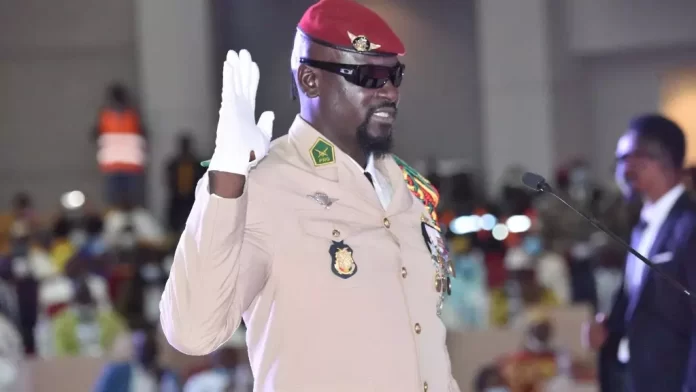
Ahead of an ECOWAS summit, the governing junta in Guinea has attacked the organization’s current president violently, calling his comments from Wednesday a “disgrace.”

The junta charged the president of ECOWAS with using “clown diplomacy” in the attack on Thursday (September 22).

“The scathing untruth and the intimidating insults are outmoded behaviors used nowadays that dishonor the author and damage the reputation of ECOWAS at the same time. The transitional presidency’s secretary general, Colonel Amara Camara, declared, “We cannot accept this dishonor.

He said, “We are not in a relationship of clowns or reality TV.

Colonel Camara blamed the current president of the Bissau-Guinean Umaro Sissoco Embalo, for his statements to French media RFI and France 24 on Wednesday.

Mr. Embalo had warned that Guinea would face “heavy sanctions” if the junta, which came to power by force in September 2021, persisted in wanting to stay in power for three years.

He reaffirmed that during a visit to Guinea he had obtained an agreement with the junta to hand over to elected civilians after two years, which Colonel Camara described as a “lie.

Leaders of ECOWAS member states are expected to hold a summit in New York on Thursday afternoon on the sidelines of the UN General Assembly, with the situation in Guinea and the crisis between Mali and Ivory Coast at the top of their agenda.


Instagram is developing message “nudity protection” technology.

0

Meta confirmed that it’s in testing.

Unwanted nudity photographs are a huge issue on social media, but Instagram is allegedly developing a solution that could be of assistance. The “Nudity prevention” technology “covers photographs that may include nudity in conversation,” according to an early screenshot posted by researcher Alessandro Paluzzi, giving users the choice of whether to view them or not. It’s in development, Instagram parent company Meta acknowledged to The Verge.

Unsolicited nude photos are a massive problem on social media, but Instagram is reportedly working on a tool that could help. An early screengrab tweeted by researcher Alessandro Paluzzi indicates that “Nudity protection” technology “covers photos that may contain nudity in chat,” giving users the option to view them or not. Instagram parent Meta confirmed to The Verge that it’s in development.

Meta said the aim is to help shield people from nude images or other unsolicited messages. As further protection, the company said it can’t view the images itself nor share them with third parties. “We’re working closely with experts to ensure these new features preserve people’s privacy, while giving them control over the messages they receive,” a spokesperson said. It plans to share more details in the coming weeks ahead of any testing.

The new feature is akin to the “Hidden Words” tool launched last year, Meta added. That feature allows users to filter abusive message in DM requests based on key words. If a request contains any filter word you’ve chosen, it’s automatically placed in a hidden folder that you can choose to never open — though it’s not completely deleted.

The feature is welcome but long overdue, as unwanted nude photos were largely ignored by social media companies and are now a pervasive problem. One study back in 2020 by the University College London found that of 150 young people aged 12-18, 75.8 percent had been sent unsolicited nude images.

Sending unwanted nude photos, also known as “cyberflashing” has been targeted by multiple jurisdictions including California and the UK. In the UK, it could become a criminal offense if the Online Safety Bill is passed by parliament. California didn’t go quite that far, but last month, the state legislature and senate voted unanimously to allow users to sue over unsolicited nude photos and other sexually graphic material.


Big IT firms will be subject to UK investigations on their use of cloud services, messenger, and smart speakers.

0

Ofcom wants to ensure there’s healthy competition in various digital markets.

To ensure that there is healthy competition in the market, Ofcom, the UK’s broadcasting and telecoms regulator, is starting an investigation into the cloud services that internet giants provide in the coming weeks. The regulatory body has also said that it will soon look at texting and video calling services, as well as smart and linked gadgets. Amazon Web Services (AWS), Microsoft, and Google are the three largest cloud providers in the area, and they will be the focus of Ofcom’s market examination into the cloud.

The three providers generate 81 percent of the revenue in the UK’s £15 billion (US$16.95) cloud infrastructure services market. Ofcom’s study will assess how well the market is working with these tech giants dominating the space. It will also examine the strength of the competition and whether the market, in its current state, makes it difficult for other players to enter and expand their share.

Ofcom explains that it’s looking to nip any potential competition concerns in the bud to prevent them from becoming a huge issue as the cloud services market matures. The lack of healthy competition, after all, could stifle growth and innovation and could lead to low quality of service. If the regulator determines that the market isn’t working well, it can recommend regulatory changes to the government, take enforcement action itself or refer the situation to the Competition and Markets Authority (CMA). To note, the CMA has a separate and ongoing investigation into Google’s ad tech practices.

The regulator will also launch probes to look into other digital markets over the next year. It will assess the impact of messaging and video calling services, such as WhatsApp, FaceTime and Zoom, on traditional methods of calling and messaging. Ofcom aims to determine how competition in this area could evolve in the coming years and whether the lack of cross-messaging and cross-calling capabilities between the services is a cause of concern.

The agency also intends to investigate the competition in the smart speaker and TV space. It plans to analyze consumer behavior, as well as the bargaining power of major players with companies that provide content for the devices.

Selina Chadha, Ofcom’s Director of Connectivity, said:

“The way we live, work, play and do business has been transformed by digital services. But as the number of platforms, devices and networks that serve up content continues to grow, so do the technological and economic issues confronting regulators.

That’s why we’re kick-starting a programme of work to scrutinise these digital markets, identify any competition concerns and make sure they’re working well for people and businesses who rely on them.”


We have tamed schoolchildren in Ghana, and because they are unable to raise challenging questions, we are unable to advance – Adutwum @UN

0

Dr. Yaw Osei Adutwum, Ghana’s minister of education, has voiced concerns about the manner in which students are taught and learned in classrooms across the continent of Africa.

He saw that students are not taught in a way that encourages critical thought and questioning.

This condition, he claimed, cannot guarantee the 21st Century development that is required at a time when others are formulating novel concepts to create.

These remarks were made by Dr. Adutwum on September 22 during the “Transforming Education” Summit at the 77th General Assembly of the United Nations.

The Bosomtwe Member of Parliament said “I go to schools upon schools and I speak with the students, when I finish speaking with them I will ask, do you have a question for me? And no hand goes up. A hand is yet to go up in all my encounters in Ghanaian classrooms.

“We have tamed the children, we just want them to write down what we tell them, at the day of exam they should put down what we have told them and say, you you are the best student the country has seen.

“That kind of education system will not transform Ghana that kind of education system is not going to give us the critical thinking individuals especially since we are in the 21st Century.”

He added “You can’t memorize your way out of poverty but you can critically think and innovate out of poverty.

“So Ghana schools, African schools have to begin to take serious look at what I will call assertive curriculum, a curriculum that empowers the African African child to ask questions and challenge the status quo.”