Home Blog Page 495

Government urged to invest in nurses, midwives to ensure quality care

0

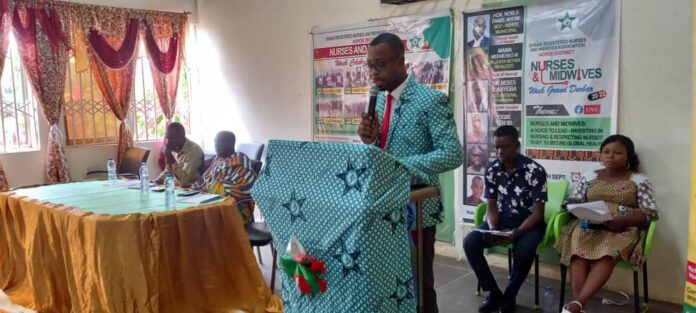
Mr Moses Robertson Anyigba, the Volta Regional Chairman, Ghana Registered Nurses and Midwives Association (GRNMA), has called for investment in the nursing and midwifery workforce to improve quality health care delivery.

He said nurses and midwives formed the bulk of the skilled healthcare workers and were the backbone and the heartbeat of any healthcare delivery system worldwide.

Targeted investment in nursing and midwifery, therefore, meant building a resilient and highly qualified workforce for a transformed health system to meet the needs of society, he said.

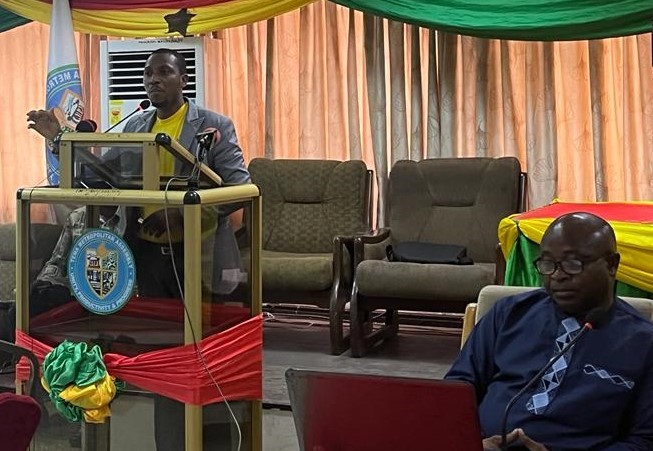
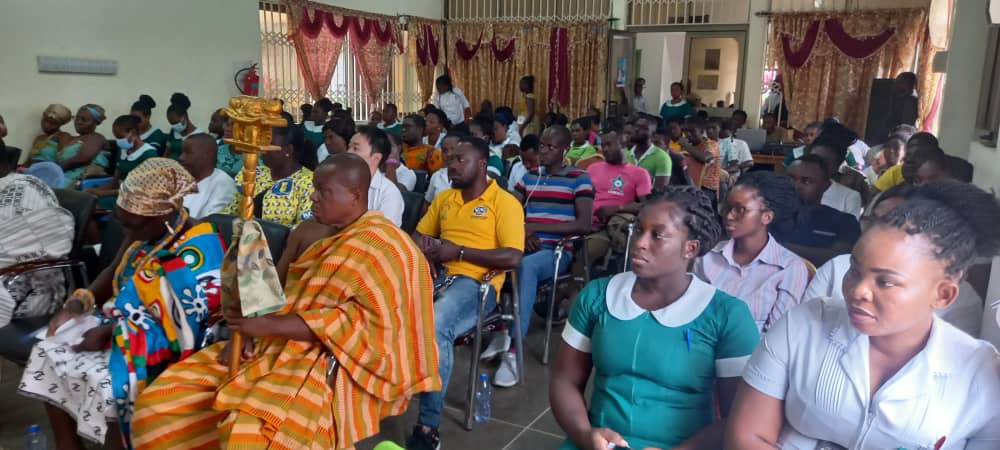
Mr Anyigba said this during the GRNMA’s 2022 Week Celebration at Hohoe in the Volta Region.

“Evidence has shown that highly qualified and skilled nurses and midwives are essential to ensuring quality care. Safe and quality care will not and cannot be possible without significant investment in the nursing and midwifery workforce,” he said.

Mr Anyigba said shortages in that workforce hindered quality care thereby threatening patients safety and wellbeing.

A study published in the Lancet in 2018 showed that 8.5 million deaths occurred in low and middle income countries, which were attributed to healthcare lapses.

Mr Anyigba said investing in the sector would accelerate progress towards achieving the Sustainable Development Goal (SDG-3) and the attainment of the Universal Health Coverage.

Critical areas requiring investment include the service delivery value- chain, nursing and midwifery jobs and education, leadership and safe working environment.

Mr Daniel Noble Awume, the Hohoe Municipal Chief Executive, said the lack of working tools at the health facilities continued to be the bane of the country’s healthcare system.

He said despite the challenges nurses and midwives faced, they had kept faith with humanity and continued to work hard to provide the best services they could.

Mr Awume said the Assembly would continue to invest in the health sector to improve health service delivery in the Municipality.

He mentioned the construction of CHPS compound with accommodation for nurses at Gbi Kodzofe and Gbi Akplamafu, renovation of a health centre at Gbi Wegbe and support to the Municipal Health Directorate in rolling out vaccination and immunisation programmes as some of the interventions.

Togbe Keh XII, the Divisional Chief of Gbi-Wegbe, said the role of nurses and midwives in ensuring quality health for all could not be overemphasised, adding that their importance was always felt anytime they went on strike.

Mama Meemesio III, Divisional Queen of Gbi-Kledzo, called on members of the Association to strive to do their best in which ever capacity they were in.

She urged them to use the little resources at their disposal to achieve their goals and be decent in their dressing.

Madam Genevieve Ahafia emerged the Overall Best Nurse in the Hohoe Municipality and was presented with a citation.

The celebration was on the theme: “Nurses and Midwives: A Voice to Lead – Invest in Nursing and Respect Nurses’ Right to Secure Global Health.”
Break barriers impeding effective implementation of RTI Act—Public institutions told

0

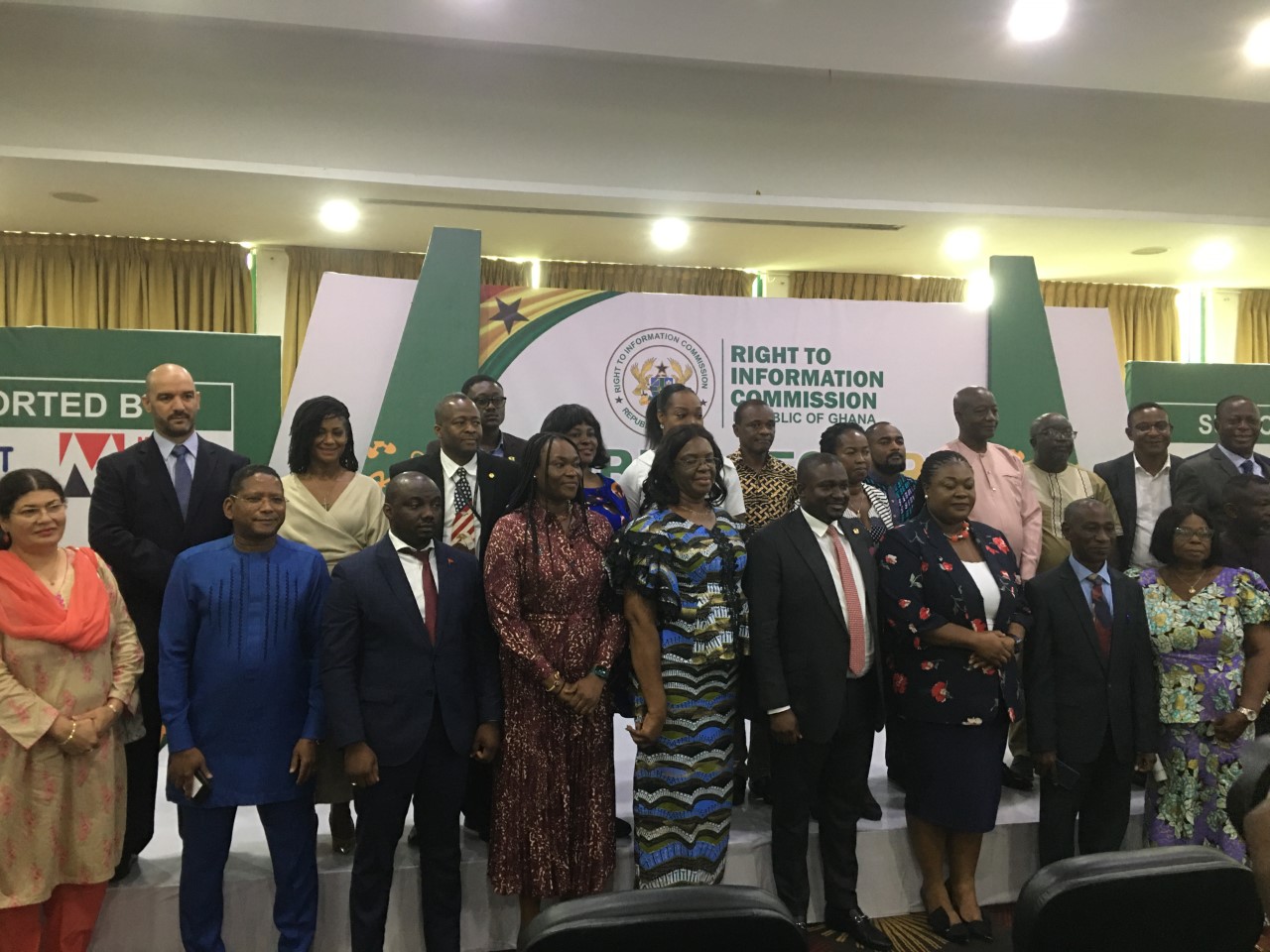
Madam Diana Asonaba Dapaah, Deputy Attorney-General (AG) and Deputy Minister of Justice, has asked public institutions to “break every mental and physical barrier” impeding the effective implementation of the Right To Information (RTI) Act.

She has also asked them to embrace the use of Artificial Intelligence (AI) and E-Governance where possible to enhance access to information by the public.

“All state institutions, particularly those of you with a defensive posture, may you break down the mental and physical barriers that you have surrounded yourselves with to impede the effective implementation of the RTI Act,” she said.

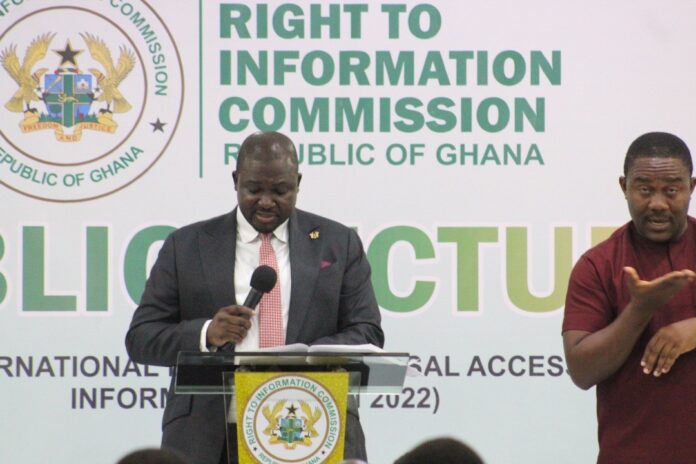
The Deputy Minister said this on Wednesday during a public lecture to mark this year’s International Day for Universal Access to Information (IDUAI).

The event, which was organised by the Right To Information Commission, was themed: “Artificial Intelligence, E-governance and Access to Information.”

She observed the general lack of responsiveness of government institutions to handle requests for information mostly because they did not have an information unit with designated personnel to handle requests.

The Deputy Minister, therefore, urged agencies to establish information units or designate an employer to handle such requests.

She said the application of AI and E-Governance simplified information gathering concerning any public department for easy access by citizens.

Madam Dapaah said AI also enabled the public to be actively involved in decision-making before the development or implementation of new policies.

She said integrating AI with E-Governance would best tackle corruption through services automation and enhanced transparency in information publication.

The Deputy Minister said the AG’s Office had resolved to provide every support needed for the Act to work and for the RTI Commission to succeed.

She said the AG had granted prosecutorial powers to the Commission to enable it to prosecute offenses under Act 989.

Furthermore, Madam Dapaah said staff of the Commission had received training to build their capacities as prosecutors to successfully prosecute offenses under the Act.

The Deputy AG said some challenges associated with the implementation of E-Governance policies include infrastructural constraints that affected reliability and availability of E-Governance, especially to remote areas of the country.

Also, she said the low level of ICT skills in the public sector and the general Ghanaian populace was a major challenge.

“This challenge is coupled with the financial constraints that the government of Ghana is faced with. The cost of running and maintaining these systems on a day-to-day basis is no minor challenge,” she said.

The Deputy Minister, therefore, called on corporate organisations and private entities to partner the government with funds and resources required to develop needed infrastructure.

Mr Yaw Sarpong Boateng, Executive Secretary, RTI Commission, said the role of AI could not be overlooked in modern technological times, adding that Ghana should restructure its educational system from basic to tertiary level to catch up with the modern world.

“It has become paramount for institutions to employ the services of the internet in policy scheming and operational management. Al certainly has a role to play in service delivery and helping facilitate work.”

“Government must drive this nation towards universal access to affordable electricity and internet service, which is the backbone of the digitisation and the digitalisation drive,” he said.

Mr Boateng said E-governance could be achieved if Ghana acknowledged that the world was changing and the need to upgrade the traditional method of tracking information services.

He said it was integral for institutions to embrace the best and right data management environment if they wanted to implement AI.

Mr Boateng said for information to play an instrumental role in the world, all people must have equal access to it and countries must adopt constitutional, statutory and political guarantees to make that possible.

Dr Winifred Nafisa Mahama, Director of the Access to Information Division at the Ministry of Information, said a digitised information regime would promote accountability, and quality of public data.

She said the government was committed to E-Government initiatives to restructure the delivery of public services and implement mechanisms that enhanced communication between different parties and also made processes simpler, easier and faster.

“Government understands that an E-Governance system facilitates the integration of policies in public services by encouraging accountable and transparent institutions,” Dr Mahama said.

Stakeholders call for women to be included in climate change campaign

0

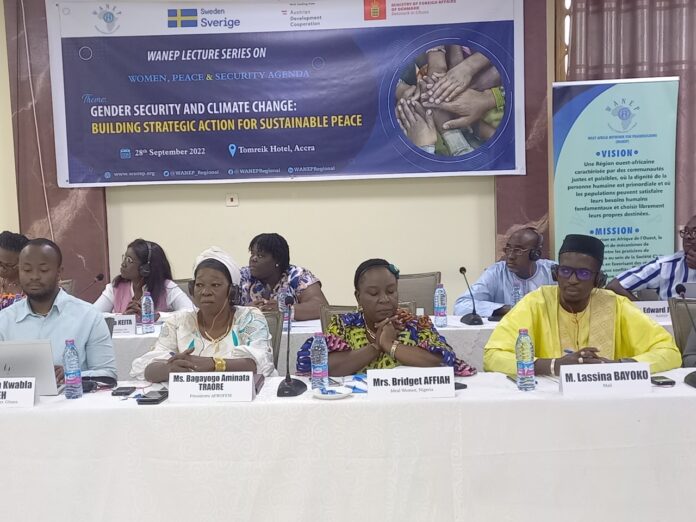
The West Africa Network for Peacebuilding’s (WANEP) has held its second Lecture Series on Women, Peace and Security Agenda with a call for women to be included in tackling issues of climate change.

It was on the theme: ‘‘Gender, Security and Climate Change: Building Strategic Action for Sustainable Peace.’’

The Lecture series was instituted in 2021 as a platform to help bring visibility to the needs and efforts that are being taken by women and to identify gaps to achieve the aspirations that have been set out in various global frameworks, including the SDGs and AU’s Agenda 2063.

The second Series was for stakeholders to share experiences and good practices in implementation of climate change actions and brought together experts on issues, including gender, security and climate change  from West African countries to establish the links between climate change, women and security.

Mrs Mrs Levinia Addae-Mensah, Deputy Executive Director, WANEP, said there was an urgent need to address specific needs of women in response to climate change because gaps had been identified in that regard.

She said when people meet their basic needs, it reduced their tendency to be involved in violent acts.

Mrs Adda-Mensah said some existing policies that had gaps would be reviewed to ensure that it reflected in responding to the gaps identified around women’s participation

She said the experiences shared at the Lecture Series would encourage others to find innovative ways to address climate change.

Dr Angela Lusigi, Resident Representative, United Nations Development Programme, (UNDP) said climate change was one of the greatest threats to global peace and security, noting that the impacts were more pronounced in Africa.

She said its effects were reversing gains the world had made towards achieving the Sustainable Development Goals (SDGs) as demonstrated by UNDP’s latest global human development report.

Dr Luigi noted that inadequate coping mechanisms and social protection caused the rise in food insecurity leading to increased malnutrition.

‘‘As you know, a key coping strategy for households when food is in short supply is for women to give the available food to their children and go hungry,’’ she stated.

Major General Francis Ofori, Commandant, Kofi Annan International Peacekeeping Training Centre, said climate change had become an ultimate threat multiplier defining the way peace and security was perceived in recent times.

He noted that its impact had already increased the insecurity of vulnerable communities in many regions of the world, worsening loss of livelihoods, food insecurity, competition over scare resources, human mobility, and political and economic instability.

Dr Afisah Zakariah, Chief Director, Ministry of Gender, Children and Social Protection, in a speech read on her behalf, said pre-existing inequalities, gender-related roles and climate expectations, and unequal access to resources could increase inequality and leave some groups disproportionately vulnerable.

She underscored the need to design policies and programmes that meaningfully engaged women in assessing and addressing the gender-differentiated risks and opportunities of climate change impacts in fragile contexts to better address the root causes of conflict and promoting more inclusive, peaceful societies.

Mr George Amoh, Executive Secretary, National Peace Council, said women were denied their livelihoods due to the activities of illegal miners, noting that over 70 per cent of women farmers were the most affected by climate change.

He called for right measures to be put in place to tackle climate change issues to build resilience and mitigate conflicts in Ghana and the Sahel regions.

Ex-Barca teammate Iniesta praises Neymar: “He’s a machine and always puts up a show!”

0
  • Called Neymar one of the best
  • Appreciated his dribbling & passing skills
  • Thinks Brazil are among favourites in Qatar

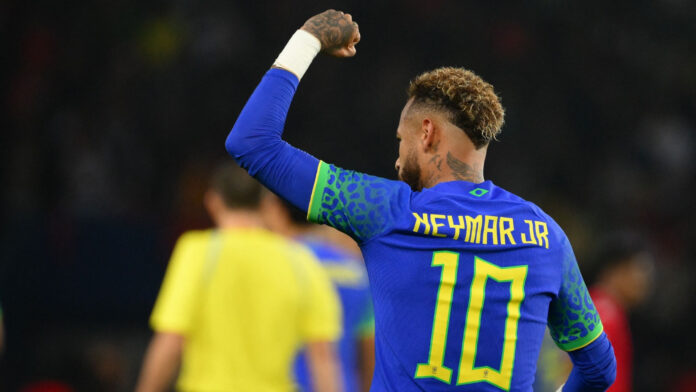
WHAT HAPPENED? The former Spain international played with Neymar at Camp Nou for four seasons from 2013 to 2017 and they won several accolades together, including a Champions League title in 2015. Iniesta now plies his trade in Japan with Vissel Kobe but still keeps a close eye on his old colleague, who is now part of an all-star squad at Paris Saint-Germain and is set to lead Brazil to the 2022 World Cup.

WHAT THEY SAID: “For me, he’s one of the best players I’ve ever seen and with whom I’ve played. He is a machine for playing football, dribbling, and passing. I believe that when we talk about football, we are talking about spectacle, enjoying what the players present. And I think that seeing Ney playing is synonymous with that,” Iniesta said to One Football.

The Barca legend added on Neymar and Brazil’s chances of success in Qatar: “I think no one would not put Brazil as a candidate to win the World Cup. I believe they have a very strong team and I am sure Brazil will be fighting for the title.”

THE BIGGER PICTURE: Neymar has been in superb form for PSG and his national team in the early stages of the 2022-23 campaign. In just 11 matches for PSG across all competitions, the 30-year-old forward has managed to rack up 19 goal contributions. Neymar continued in the same vein during the international break, conjuring up two assists in a 3-0 win against Ghana and a goal from the penalty spot in a 5-1 thrashing of Tunisia.

IN THREE PHOTOS:


Neymar PSG 2022-23Getty
Neymar comemora com careta, Brasil x Tunísia, amistoso, 27092022Getty Images
Neymar PSG Juventus 2022-23 Getty Images


WHAT NEXT FOR NEYMAR? The Brazilian attacker will return to Ligue 1 action for PSG on Saturday against Nice.


Five-member committee to lead IMF stakeholder engagement with financial sector

0

Government in the coming days will name a five-Member Committee of prominent financial services professionals to lead extensive stakeholder engagements across all the key segments of the financial sector.

Engagement with stakeholders in the banking, asset, management, pensions, and insurance industries of the financial sector is part of government’s broad stakeholder engagement drive as the country seeks to fast-track International Monetary Fund negotiation process in a clear and transparent manner.

Currently there are ongoing engagements with Civil Society Organisations (CSOs), social partners (labour unions, employers, and FBOs), academia, industry professionals, and the leadership of Parliament.

“Ghana needs a viable domestic financial system to support its development programme, especially in these three years with limited access to the International Capital Market.

“Therefore, everything must, and will be done, to protect our financial sector; and there must be room for a win-win conversation through extensive stakeholder engagement with both our domestic and external investors” said the Finance Minister, Mr Ken Ofori-Atta, at a press briefing in Accra.

“We welcome all contribution to this great public debate, but we must be careful to build and not to tear down our nation.”

The sanctity and the well-functioning of the financial system, he said, was sacrosanct as Government had earlier worked to protect the savings of 4.6million Ghanaian depositors with the reform of the Banking and financial sector.

Formal negotiations for a Fund-supported programme began on Monday September 26, 2022 and the IMF Mission is covering a period of 10 days.

The IMF/World Bank and the Ghana Team are currently undertaking a debt sustainability analysis (DSA) to inform the programme negotiations.

Meanwhile, IMF and Government Team are working to update the medium-term macro-fiscal framework to inform IMF programme design.

Mr Ofori-Atta noted that government was working to ensure that key aspects of the programme were reflected in the 2023 Annual Budget Statement in November 2022.

“Government is committed to ensuring that a comprehensive package is negotiated with the aim of restoring and sustaining macroeconomic stability, ensuring durable and inclusive growth and promoting social protection.”

According to the minister, Ghana so far has an economic programme that contains a set of time-bound structural reforms and fiscal consolidation measures to place debt levels and fiscal accounts on a sustainable path over the medium-term.

He said that the programme was hinged on seven pillars that included debt sustainability; fiscal consolidation; strengthening monetary and exchange rate policies; building strong financial institutions; macro-critical structural reforms; maintaining peace and security; and economic growth and transformation.

Non payment of Mobile money loans could affect borrowers

0

The Bank of Ghana (BOG) says deliberately refusing to repay mobile money loans could negatively affect customer’s credit history.

The Bank indicated that access to credit facilities for defaulters may be limited in the future from financial institutions.

It has therefore advised borrowers who have discarded their SIM Cards to contact their telecommunication service providers or respective lenders, to discuss repayment arrangements.

“BOG wishes to inform the general public that data on all mobile money loan customers are domiciled in the databases of credit bureaus, ” the Central Bank stated in a statement.

The issue of discarding SIM cards to avoid payment of loans became topical when the minister for Communications, Mrs Ursula Owusu, described the act as evil at a press briefing in Accra.

The ministry during the briefing announced a September 30 deadline for SIM registration with the Ghana Card.

This was an extension from the July 31 deadline

World Rabies Day: Stakeholders discuss synchronisation of approaches to eradicate disease

0

The Tema Metropolitan Office of the Veterinary Services, with support from the Assembly, has held a forum to discuss the need to synchronise health approaches to eradicate rabies from the metropolis.

The forum brought together key stakeholders to discuss rabies and dog bite related cases and the way forward.

It forms part of programmes for the sixth World Rabies Day, on the theme; “One Health, Zero Death” commemorated on September 28, annually.

Dr Joseph Abu, the Greater Accra Regional Veterinary Officer, said the ‘one health strategy’ approach was a call on public health, animal health, and environmental practitioners to work together towards eradicating zoonotic diseases, especially rabies.

“If all of us come together we will be able to do effective vaccination, if we can vaccinate at least 70 per cent of all dogs within our region then we can eradicate it,” he said.

He challenged all metropolitan, municipal, and district assemblies to adopt the one health approach and strengthen their by-laws on dog ownership to ensure proper shelter, food, and medication for the animal.

Dr Abu said stray animals roamed and got into contact with wild animals, who were reservoirs of the rabies virus and they, in turn, affect other animals and humans.

There was, therefore, the need for the assemblies to strictly enforce the by-laws on roaming animals to curb rabies by 2030.

Dr Emmanuel Kwao Pecku, the Tema Metropolitan Vet Officer, giving an overview of rabies, said even though it was the number one zoonosis (transmitted from animals to humans), it was underreported.

Most cases happened in deprived communities where people might die from it without reporting to the health institutions, he said.

Dr Pecku said the hotspot for rabies in the world was Asia and Africa with 100 per cent fatality, hence the need for every dog bite case to be reported at the health facility and the vet office for the necessary action to save lives.

When the virus enters the body, it multiplies quickly and attacks the nerves, brain, and other nervous tissues as well as the salivary glands.

Transmission could also occur when the infected saliva of a dog or animal gets into contact with an open wound of humans.

Some of the clinical signs are sudden change in behaviour and aggressiveness, among others.

Dr Pecku, who also have oversight duties on Tema West and Kpone-Katamanso municipalities, disclosed that within the past two years, 12 confirmed cases have been seen within his jurisdiction.

He noted that out of the 12, six; made up of five dogs and one goat cases were presented at the Tema Vet Clinic.

He encouraged dog owners to vaccinate their pets against the virus as rabies was quite dynamic and at the terminal stages, nothing could be done by clinicians to save the life of an infected person.

There is, therefore, the need to protect everyone by vaccinating the animals.

Meanwhile, one confirmed case of rabies from Kpone, involving a seven-year-old child, was reported this year at the Tema General Hospital.

Mr Edwin Afotey-Oddai, the Disease Control Officer, Tema Health Directorate, said the victim survived due to early action by the paediatrician who attended to the case.

While the number of reported dog bites at both private and public health facilities started declining in 2018, a sharp increase was seen in 2021 when 51 dog bites were seen.

He said, already, 39 bites have been documented as at the end of August 2022.

JEHOVAH JIREH, GOD WILL PROVIDE

0
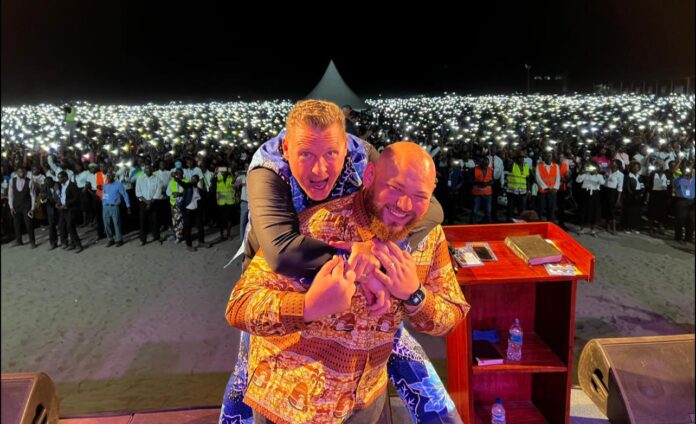
A few days ago, I called my friend Denis Artyushevskiy to congratulate him on organizing a crusade in Beira, Mozambique, where 150,000 people attended on the last night alone. Can I say that again? 😃 It’s astonishing to me that my friend just organized a crusade for 150,000 people!!
It was a partnership crusade with Christ for all Nations USA and Randy Roberts.
I was amazed by the size of the crowd when I saw the video. But more than the size of the crowd, I was amazed by the faithfulness of the Lord🙌🏻
You see, I’ve known Denis since 2014. We went to the same SMBS Slavic Missionary Bible School, and to Tanzania for the first time as a team. Our life didn’t look like anything extraordinary.
Our team lived in a small house. We didn’t have the money to buy a couch (please take a look at the pictures.. as you can see, Denis—in the black t-shirt—and I are sitting on the floor with my coffee next to my Bible… yes some things never change, I still love coffee!
For months, we slept on thin mattresses on the floor and cooked on hot coals outside (it took forever to prepare food). Sometimes our mission looked like painting the walls or sitting with the kids in our living room, feeding them and showing them cartoons… whatever opportunity the Lord gave us to love and serve the locals— we took it!
I remember one week where Denis needed to have surgery on his hand due to an infection, and he ended up doing this in the hallway of a hospital— and HE was the one helping doctors! That week I almost died because of malaria, and a week later Denis needed to rescue us from a local jail (but that’s another story)
I remember that year I prayed so that someone would give me money to buy a return ticket home from Tanzania (4 months was a long time for a first mission trip), and I’m glad for those who did. Denis learned the Swahili language because when the team left, he stayed and he lived with the local people for months, ate the local food and sometimes the locals needed to feed him because he had no opportunity to buy his own food.
You see my friend, there is a story behind every success. Sometimes it’s good to ask a person what he needed to go through in order to be where he is at now. Then maybe people will stop being envious and will think twice about whether they are truly ready to follow Jesus— no matter the cost.
We need to remember Matthew 13:44, which says, “The kingdom of heaven is like treasure hidden in a field, which a man found and covered up. Then in his joy he goes and sells all that he has and buys that field.” A man sees and sells everything he has — everything he has! — to get that treasure. In other words, all the so-called costs and all the so-called losses — everything — are nothing compared to the gains of having Jesus, the greatest treasure.
To follow Jesus will cost you everything! But He is worthy of it all! Don’t despise small beginnings, but be faithful in all things and do them as unto the Lord.
A few days ago, I went to the city center to see a big CfaN Operation Decapolis billboard in the city of Kabwe, Zambia. What an honor to serve Jesus together with one of the most incredible and anointed evangelists of our time – Daniel Kolenda, and to have the opportunity to preach the Gospel on the same stage ( Evangelist Richard Fullwood and I – are preaching in the same city). What a joy!
Next to the billboard, I saw a huge poster where it said ‘JEHOVAH JIREH, GOD IS OUR PROVIDER.’
I smiled. I paused. I thanked God for the way He led me. It’s only by His Grace I can be here and witness His marvelous works in my life. I remembered the moments where I felt inadequate, when I had no money, when I was in the hospital, when I was lost, when I tried to commit a suicide, when I was broken, when I was doubting and fearful, when Satan tried to destroy my life and I realized that Jehovah JIREH was in the midst. Jehovah JIREH was always there and He led me to this very moment. He is enough. He is always enough!
I’m blessed to run this race with my brother Denis, with Evangelist Daniel Kolenda, with Evangelist Richard and with many other wonderful brothers and sisters in Christ! Let’s give our ALL to the One who is worthy of it all!
If you are in the midst of a crossroads, if you are tired and doubtful, if you don’t know how to face another day and there are no words left in you to articulate the agony that is taking place in the depths of your soul… I want prophetically to proclaim this over you and over your life: LIVE, IN JESUS’ NAME! Jehovah JIREH is enough. May a presentation of the Lord’s eternal grace, hope, love, continual provision, and all-encompassing wisdom fill your life in the mighty name of Jesus!
Jehovah-Jireh is not “The LORD Did Provide,” but “The LORD Will Provide.” Trust Him!

Evelina Smane 

(Facebook)

Galamsey: Let’s put aside partisan politics and address the threat because people are dying from cancer – Afenyo-Markin

0

Alexander Afenyo-Markin, a member of parliament representing Effutu, has stated that all politicians must band together and help the government in the struggle against illegal small-scale mining (Galamsey), which is doing havoc on the environment and water bodies in particular.

He hinted that galamsey was to blame for the Ghana Water Company Limited’s high treatment costs.

In addition, he added, individuals are contracting cancer from drinking tainted water from rivers that the miners had ruined.

Addressing a gathering in Effutu, the Deputy Majority Leader said “President Akufo-Addo made me Board Chairman of Ghana Water Company Limited and I know how much it costs to treat water Because we the politicians have made every thing partisan, we are looking at the next elections, we are unable to boldly confront the challenges that face our nation. So galamsey is destroying us.

“People are dying of cancer, people are dying without knowing why they are dying, the water we drink, you think it is safe for you?  Let us confront galamsey, let us confront the challenges that face our nation.

“I call on my colleague politicians CPP, NDC, NPP, let us come together, build a consensus  on the key national issues that will benefit our people in the long term. That is what these Europeans and Americans have done and we all want to go there. If we continue with this type of parochial politics trust me, our country will go nowhere.”

Meanwhile, the Minister of Lands and Natural Resources, Samuel Abu Jinapor has served notice that in the coming weeks, he is going to announced a decision by the government to to increase the level of enforcement of the measures against galamsey.

Mr Jinapor said this has been a preoccupation for his Ministry over the past two weeks.

He explained that the fight against galamsey is not the function of the Ministry alone, rather , he said, it is a collective duty of all citizens.

“We are going to ramp up the enforcement measures. This has been occupying all my time in the past week or two” the Damongo lawmaker said.

“In the weeks to come, the Ghanaian people will see that the enforcement measures are going to be ramped up. I need to stress that it cannot be the responsibility of the Ministry of Lands and Natural Resources, alone, it is going to be our collective responsibility,” he further said on Joy FM Saturday September 17.

The Director of Finance for the Ghana National Association of Small Scale Miners,  Francis Opoku has said members of his association do not destroy water bodies.

He explained that they need clean water to wash the minerals therefore, they cannot be the ones destroying the water bodies.

Opoku explained that the Galamseyers are the ones mostly seen mining in rivers thereby, destroying the water.

Speaking on the Key Points on TV3 Saturday September 17, he said these galamseyers are mostly from “Benin, Togo, they have the expertise to swim.”

“A lot of these people are not Ghanaians in the first place,” he stressed.

Tamale North Member of Parliament, Alhassan Suhuyini also said the Akufo-Addo administration is not committed to the fight against illegal small scale mining (Galamsey).

He said the government has only been engaged in rhetoric when it comes to fighting the menace.

Speaking also on the Key Points,  he explained that it was the Media Coalition against illegal small scale mining which is made up of some journalists, who took it upon themselves to highlight the dangers of galamsey and the need for it to stop.

It was only after this that the government started initiating some moves to deal with the situation.

‘The government was not really committed to the fight against galamsey,” Suhuyini stressed.

He added “They have only engaged in rhetoric and waste of money money.”

The government has been trying to deal with the activities of these miners.

A taskforce has been set up to that effect.


International financial system is biased against poor nations, according to Akufo-Addo

0

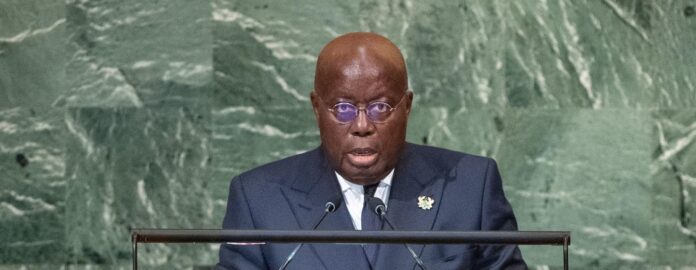
The international financial system, according to President Nana Addo Dankwa Akufo-Addo, is biased against emerging and developing nations like Ghana.

He noted at the 77th UN General Assembly meeting that “the routes that are given to big nations to enable them to adopt actions that would reduce strains on their economies are closed to tiny nations.”

Credit rating agencies “have been eager to degrade economies in Africa, making it tougher to service our obligations,” President Akufo-Addo further lamented.

Ghana’s foreign and local credit ratings were recently reduced by Standard and Poor’s (S&P) global ratings from B-B’ to CCC+C with a bleak economic outlook.

Before this, Fitch had downgraded Ghana’s Long-Term Foreign-Currency Issuer Default Rating (IDR) to ‘B-‘ from ‘B’ and the outlook was negative.

Moody’s Investors Service (Moody’s) also downgraded Ghana’s long-term issuer and senior unsecured debt ratings to Caa1 from B3 and changed the outlook to stable from negative.

Ghana’s debt was about to hit GH¢400 million in April 2022.

President Akufo-Addo fears these ratings are prejudiced and pushing developing countries deeper into debt.

He further described inflation as “the number one enemy this year”.

“Several African countries have inflation rates surging three to four times higher than what they were just two years ago. In Ghana, we are experiencing the highest inflation for 21 years. The high costs of food are hurting the poor, especially the urban poor, the most.”