Home Blog Page 66

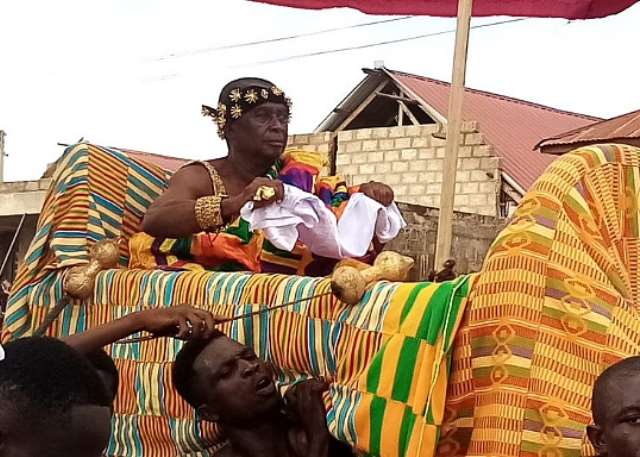
Atronie chiefs, people laud Asantehene’s passion for development.

0

The Chiefs and people of Atronie in the Sunyani Municipality of the Bono Region have lauded the Asantehene Otomfour Osei Tutu II for his passion for development.


Diawusie Amponsem Darko II, the Chief of Atronie, near Sunyani, said efforts by the Asantehene to upgrade the Atronie Divisional Authority was in the right direction, saying it would bring the development of the area to the next level.


Interacting with the media on the sidelines of a meeting of the chiefs and queens of the town, Diawusie Darko said “we are excited about the Asantehene’s decision to upgrade Atronie into a paramountcy”.


He said the chiefs and people of Atronie had pushed for the upgrade for a long time, stressing that the upgrade of the Authority into a paramountcy would enable the area to gain the required recognition, thereby positioning the town to equally benefit from development projects.


Diawusie Darko regretted that the Atronie Township lacked basic facilities, including public toilets for the growing male and female population, as well as a Senior High School (SHS).


He said the community had mobilised funds and started construction work on an SHS project, and appealed to the government and wealthy Atronie natives, home and abroad, to come to their aid.


The Chief indicated that successive governments had failed to tackle the development needs of the people and appealed to the current administration to reshape the deplorable condition of the Sunyani-Atronie road, to facilitate the movements and economic activities of the people.


Diawusie Darko said the people would forever be grateful to the government if the Sunyani-Atronie road was rehabilitated.

Cycling for Change: Captain Asuamah takes on 250km endurance ride in advocacy for cyclists safety.

0

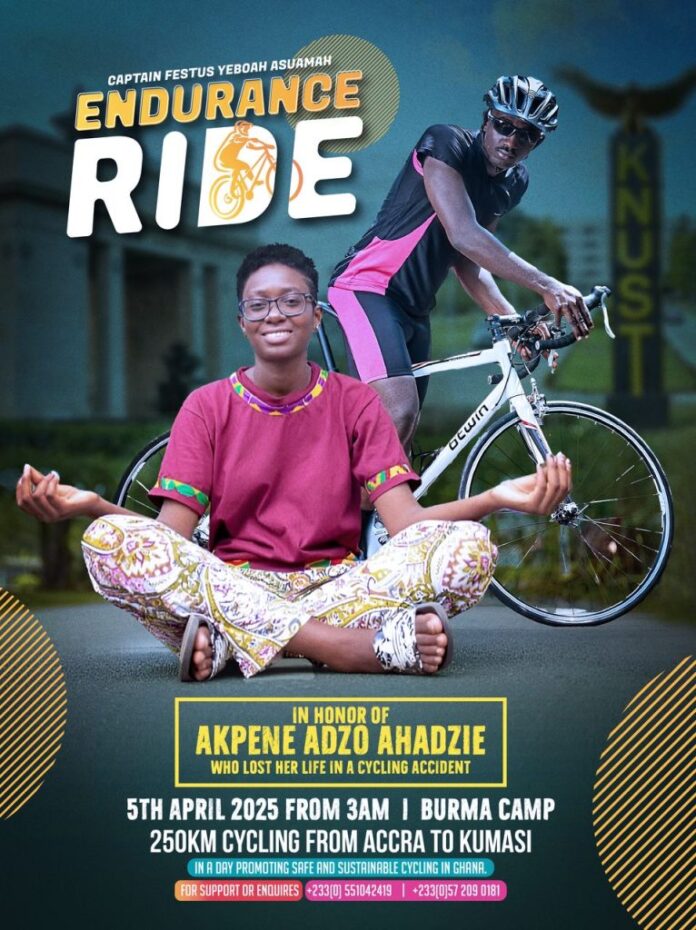
Captain Festus Yeboah Asuamah, a dedicated officer of the Ghana Army, is set to embark on an extraordinary 250-kilometer cycling journey from Accra to Kumasi in a single day.


The initiative, dubbed the “Ride for Safety and Fitness 2025,” is aimed at advocating for cyclist safety on Ghanaian roads while promoting cycling as a sustainable and effective form of transportation and physical exercise.


Scheduled for Saturday, April 5, 2025, the endurance ride will begin at Burma Camp in Accra at 3:00 AM and conclude at the Kwame Nkrumah University of Science and Technology (KNUST) in Kumasi by 7:00 PM.


The journey will take approximately 13 to 15 hours, with designated stops along the route for hydration, medical check-ins, and bike maintenance.


Key stops include Nsawam (40km), Suhum (70km), Linda Dor (100km), Nkawkaw (146km), Adansi (177km), Konongo (200km), Kubease (222km), and Ejisu (245km) before reaching KNUST at 250km.
In memory of Akpene Adzo Ahadzie


The ride is being dedicated to the memory of Akpene Adzo Ahadzie, a Level 600 Master of Architecture student at KNUST, who tragically lost her life in a cycling accident on campus in 2024.


Captain Asuamah’s effort seeks to raise awareness about the importance of road safety, particularly for cyclists, and advocate for improvements in urban mobility to ensure safer roads for all users.


The initiative aligns with the United Nations’ Sustainable Development Goal (SDG) 11.2, which emphasizes the need for safe, affordable, and accessible transport systems, with a focus on enhancing road safety for vulnerable users, including cyclists.


Safety, medical support measures
To ensure the safety of the ride, a comprehensive support plan has been put in place. The journey will be accompanied by a medical team with a fully equipped first aid kit, periodic medical check-ups at each safety stop, and an ambulance on standby throughout the ride.


Additionally, security escorts will be deployed to provide protection and ensure a smooth passage along the route.
The Ride for Safety and Fitness 2025 aims to drive collaboration with government agencies, corporate entities, fitness organizations, and health institutions to foster a safer environment for cyclists in Ghana.


The target audience includes government institutions responsible for sports and transportation, fitness organizations, road safety authorities, health and fitness brands, and students.


Upon arrival in Kumasi, Captain Asuamah will meet with the family of the late Akpene Adzo Ahadzie to offer condolences and solidarity.


The event will also feature brief speeches from the family, the rider, and the management team, as well as acknowledgments of supporting partners, special guests, and participants.


Media interviews will be conducted to further amplify the message of cyclist safety and fitness promotion.
Capt. Asuamah on his inspiration

In an interview with the Ghana News Agency, Captain Festus Yeboah Asuamah, sharing his motivation for the initiative said, “The inspiration is the late Akpene Adzo Ahadzie, who was involved in a cycling accident. The objective of the ride is to advocate for the safety of cyclists on the roads.


“Coming from a military background and being a physically active person, I know that cycling is beneficial for both training and exercise. So, we also want to promote cycling as an effective form of exercise and transport,” he added He emphasized the need for sustained awareness, stating, “We don’t want this to be a one-time event.

We will leverage social media and other platforms to consistently remind drivers and road users that cyclists also share the road. When we keep talking about this, it will sit in people’s minds, and they will start being more conscious of cyclists on the road.”


Captain Asuamah also revealed that Akpene was working on a final-year project that sought to repurpose urban spaces to accommodate cyclists.


He said, “She came up with 3D designs and ideas to promote cycling-friendly infrastructure. Our hope is that this initiative will bring attention to the need for cycling lanes and better road safety measures.”


Support, challenges in preparation
Captain Asuamah stated that, the family of the late Akpene Ahadzie had expressed full support for the initiative, confirming that “they have been involved in the planning process and will be part of the final event in Kumasi, where a brief memorial will be held.”


Discussing his personal preparation for the ride, he said, “Since the beginning of the year, I have intensified my cycling training. In the military, we train frequently, so physical fitness has always been part of my routine. However, I had to put in extra work for this long-distance ride.”


He noted that the event, initially planned as a solo ride, has attracted interest from other professional cyclists.
“Now, more people want to join. My only concern was their physical readiness, but most of them have been riding for a while.

The logistical aspect has been a challenge, as most of the costs are self-sponsored. If we secure financial support, we can cover the accommodation and feeding costs for participants.”
Captain Asuamah, therefore, encouraged individuals, organizations, and government bodies to support the cause.


“We have a management team in charge of sponsorships. Anyone interested can contact us. Financial support will help cover logistics, accommodation, and feeding for riders joining the event,” he noted.
Challenges anticipated on the ride


According to Captain Asiamah, one major challenge identified is the poor state of the Pokuase road, which had led to a change in route.


“Initially, we planned to start from Burma Camp and end in Kumasi at Luv FM, but the Pokuase road is so bad that even vehicles struggle to navigate it. Since we are now riding as a group, we had to adjust our starting point beyond Pokuase to ensure safety.”


Another challenge is the possibility of rain. “According to the weather forecast, it should be clear, but we will confirm again by Wednesday. If it’s light rain, we will continue, but heavy downpours might affect the ride.”


Join the ride
With this initiative, Captain Asuamah hopes to inspire a nationwide conversation about the importance of integrating cycling into urban transportation planning while ensuring the protection of cyclists on Ghana’s roads.


The “Ride for Safety and Fitness 2025” is more than just a personal challenge — it is a call to action for individuals, policymakers, and communities to recognize cycling as a vital part of a healthier and safer urban landscape.


As Ghana’s cities continue to grow, the need for alternative and eco-friendly transportation solutions has never been greater. By pushing his physical limits and championing this cause, Captain Asuamah is not just riding for himself but for every cyclist who has ever felt unsafe on the road.


Whether you are a cycling enthusiast, a road safety advocate, or someone who simply believes in creating a better future, this is a movement you can support.
Ghana’s roads must be shared fairly and safely by all. Join the conversation, support the cause, and together, let’s pedal towards a safer and more sustainable Ghana.

Parliament abolishes E-Levy, returns GH¢2 billion to Ghanaians  

0

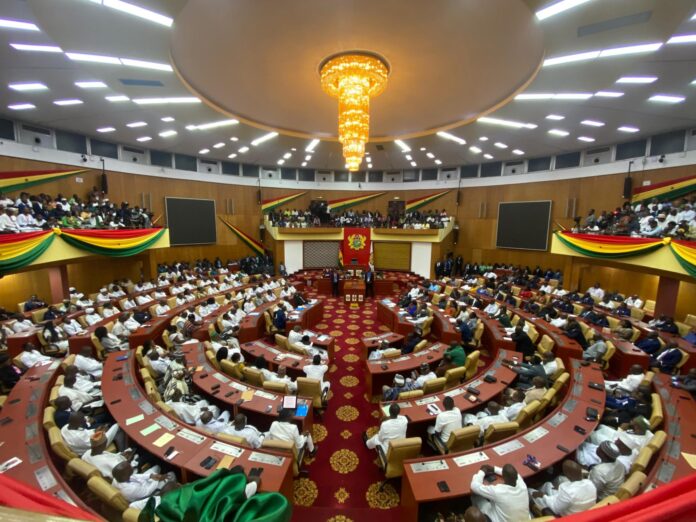
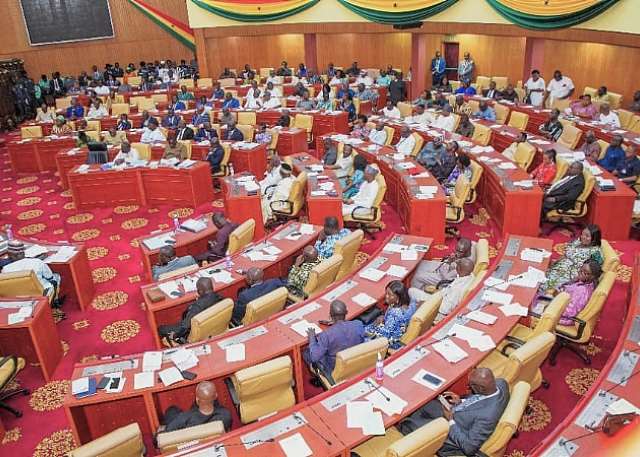
Parliament on Wednesday officially approved the Electronic Transfer Levy Repeal Bill 2025, effectively abolishing E-Levy.   

The Electronic Transfer Levy also known as E-levy, introduced in 2022, imposed a 1 per cent tax on electronic transactions, including mobile money payments, bank transfers, and inward remittances.  

This repeal is expected to ease financial pressures on the citizens and boost digital commerce.   

The E-Levy faced significant opposition from the public and stakeholders, who argued that it placed an additional financial burden on citizens and discouraged digital transactions.   

Deputy Finance Minister, Mr. Thomas Nyarko Ampem highlighted the financial relief the move brought to Ghanaians, stating that the abolition of the E-Levy will effectively return GH¢2 billion to the people.  

“Mr. Spraker, the abolition of the E-Levy will effectively return GH¢2 billion to the people, helping to ease financial pressures and improve livelihoods,” Mr. Ampem said during parliamentary debates on the repeal bill.  

The repeal of the E-Levy aligns with the government’s efforts to promote financial inclusion and encourage the use of digital payment platforms without imposing additional costs on users. Many business owners, mobile money agents, and financial analysts had previously criticised the levy, citing its impact on digital transactions and financial accessibility.  

With the passage of the Electronic Transfer Levy (Repeal) Bill 2025, Ghana’s financial sector is expected to witness increased electronic transactions, boosting digital commerce and economic growth.  

Africans expect their leaders to act in their best interests, according to Aïsha Dabo.

0

Russia and China are becoming more powerful in Africa. What is the explanation behind this? How can civil society interact with these concerns, and how are African governments reacting?

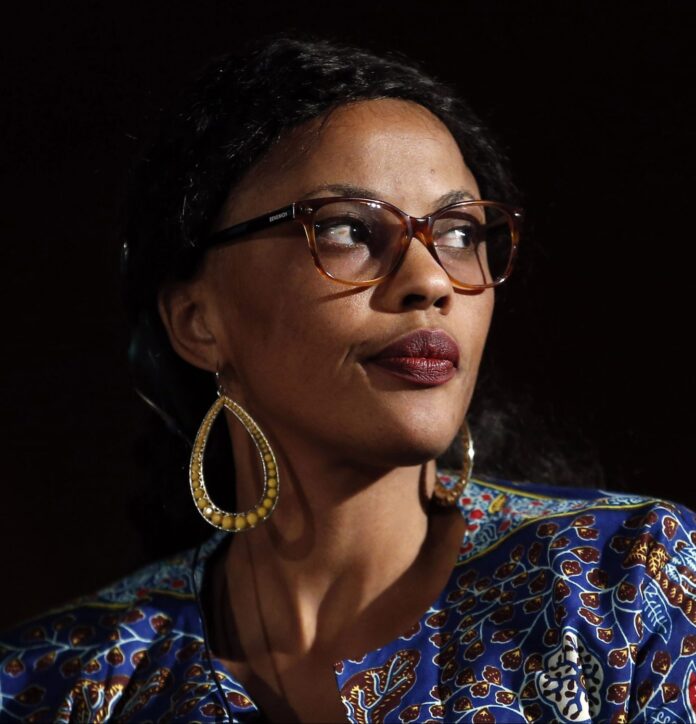
On the fringes of the 2025 International Film Festival and Forum on Human Rights in Geneva, which featured a discussion on the subject, Africanews chats with Aïsha Dabo, coordinator and co-founder of the programs at the pan-African group Africtivistes.

You have led digital initiatives to promote cybersecurity, combat disinformation, and strengthen democratic governance in Africa. What have you observed regarding public opinion on the continent? Does it influence how African governments manage their international partnerships?

African citizens want their leaders to properly represent their interests. However, there is a significant gap between what the people want and what leaders are actually implementing the agreements they sign and the partnerships they negotiate. At Africtivistes, as a pan-African network, we encourage governments and the private sector to negotiate with the general interest in mind.

The continent is highly sought after for its resources and has long been a battleground for competing global powers. Do you think African governments have realized that they can leverage these rivalries to their advantage?

As long as it serves the country’s interests and results in win-win partnerships, I personally see no issue with it.

However, if these deals only benefit the elite, they are not sustainable. These negotiations involve the natural resources of the people, and they impact not only the current population but also future generations.

Take Senegal, for example. When the new administration came to power, they announced plans to renegotiate contracts that were not in the public’s best interest. Discussions are currently underway to review what was decided under the previous government, what actions were taken, and whether they truly served the Senegalese people.

Africa is being courted by multiple foreign players, with China and Russia being the most prominent. How have these two countries expanded their influence?

Whether it’s Russia, China, or other global powers, their primary interest in Africa is resources and the international influence that comes with them—nothing more. It is up to Africans, or rather the African elites negotiating these deals, to recognize this reality and ensure that they negotiate in their own interest—not just in the interest of those in power and their inner circles.

This goes beyond individual leaders. That is why we focus on raising awareness, sharing information, and equipping young people and communities with the knowledge they need to understand their rights and responsibilities. This allows them to make informed decisions, which is why we prioritize this work.

This is what Africtivistes does—empowering civil society and the general public to understand these issues and providing them with the tools to take action.

Yes, and our focus is on democracy. We believe it is a system that can work, and each country should be able to define its own model—as long as the three branches of government remain independent and citizens have a voice.

We work to educate citizens on how these systems function. Citizens have the right to vote and pay taxes. But where does their money go? Do they see how it is used? How can they demand accountability? They should be able to access public information that is not classified as a state secret. They should also be able to review contracts negotiated in their name.

Through technology, we develop tools to strengthen civic participation. Our goal is to ensure that Africans are no longer passive observers of their own future, allowing others to decide what the Africa of tomorrow should look like.

Sudan: As paramilitaries flee, army forces firmly hold Khartoum

0

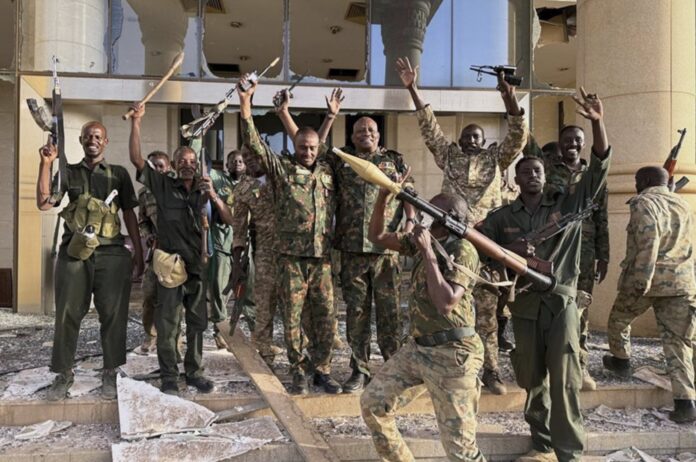
Following the military’s takeover of the Republican Palace from a paramilitary organisation, a senior Sudanese army officer welcomed soldiers there on Tuesday.

General Yasser Al-Atta, the assistant commander-in-chief of the armed forces, visited the palace to inspect the troops and give them an update on the ongoing conflict.

In a significant symbolic win for the Sudanese military in its almost two-year conflict with the Rapid Support Forces, the military retook the Republican Palace, the government’s prewar seat, on Friday.

The military of Sudan strengthened its hold on the capital this week, seizing other important government structures.

Brig. Gen. Nabil Abdullah, a spokesperson for the Sudanese military, said troops expelled the RSF from the headquarters of the National Intelligence Service and Corinthia Hotel in central Khartoum.

The army also retook the headquarters of the Central Bank of Sudan and other government and educational buildings in the area, Abdullah said.

Sudan, a nation in northeastern Africa, has been unstable since a popular uprising forced the removal of longtime autocratic President Omar al-Bashir in 2019.

A short-lived transition to democracy was derailed when Sudanese army chief Gen. Abdel-Fattah Burhan and Gen. Mohammed Hamdan Dagalo, who leads the RSF fighters, led a military coup in 2021.

The RSF and Sudan’s military began fighting each other in 2023.

Since the start of the year, Burhan’s forces, including Sudan’s military and allied militias, have advanced against the RSF.

They retook a key refinery north of Khartoum, pushed in on RSF positions around Khartoum itself.

The fighting has led to an increase in civilian casualties.

Make Volta Region model of AfCFTA success – Gunu  

0

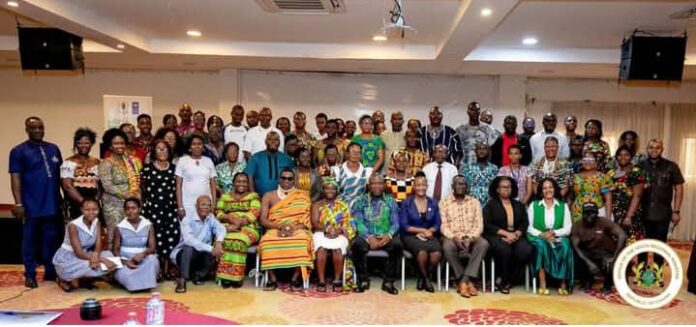
Mr James Gunu, the Volta Regional Minister, has entreated the National AfCFTA Coordination Office (NCO) to pay a special attention to the region and ensure that businesses occupy the forefront of the implementation of the African Continental Free Trade Area agreement.  

He said the Volta Region had always represented and produced the best in the country – boasting of its history, the intellect and industrious spiritedness, which speaks volumes.    

“You have our full support, and we expect nothing less than a deliberate effort to make the Volta Region, a model for AfCFTA success in Ghana.  

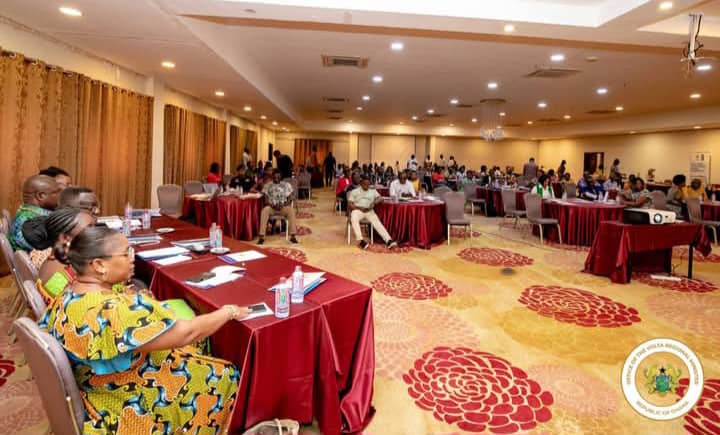
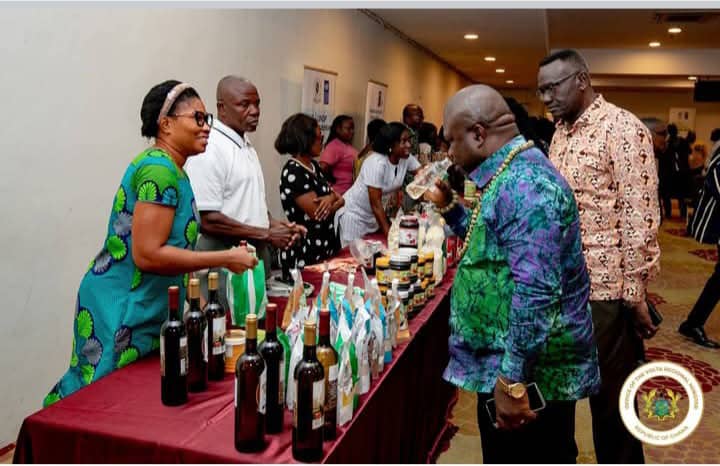
Speaking at the Regional Dialogue on the AfCFTA Protocol on Women and Youth in Trade in Ho, Mr Gunu said all efforts should be harnessed to make the Region ‘Ghana’s Trade Hub,’ under AfCFTA.  

“We have the strategic location, the industrious workforce, and the productive sectors to drive this agenda. What we need now is action—bold policies, strong partnerships, and an unshakable commitment to ensuring that every woman and young entrepreneur in this region has a fair shot at success in the African market.”  

“Let us turn this dialogue into action and build an economic standpoint, where women and the youth are leaders, when MSMEs and entrepreneurs succeeds and therefore, there’s no limit the Region and nation could not achieve under AfCFTA.”  

Mr Gunu pledged the Regional Coordinating Council’s commitment to supporting women and youth-led Micro, Small and Medium scale Enterprises (MSMEs) to leverage the AfCFTA Protocol on Women and Youth and work with all major actors.  

“We will push for more trade facilitation initiatives, business incubation programmes, and financial inclusion measures tailored to the needs of women and young entrepreneurs in our region. Our doors are open, and our commitment is unwavering.”  

The Regional Minister noted that to access markets alone was not enough leveraging but ensuring that women and youth-led businesses in the Region are equipped to compete through capacity building, knowledge-set and finance to scale-up as measures to advance.  

He said opening up regional and continental markets, would create new demands and markets for goods and services produced in the region leading to business expansion, and more job avenues for the youth as well as stimulate the 24- hour economy policy as espoused by President John Dramani Mahama.  

He described AfCFTA as the biggest trade opportunity of our lifetime, one that breaks down barriers, creates a single African market, and ensures that businesses, no matter size, could compete and thrive across the continent.  

Ms Edem Attor, a representative of UNDP, disclosed that the engine for growth of economies was the private sector of which MSMEs, contributing about 50 per cent of the private output, nearly 70 per cent of employment, and about 90 per cent of businesses in the country.   

She said the AFCFTA was a monumental initiative that had the power to reshape the economic landscape of Ghana and Africa by creating a single market of 1.3 billion people and a combined GDP of $3 trillion.  

He said the AFCFTA represented unparalleled opportunities for African businesses to expand their horizons, increase their competitiveness, and scale their operations across the continent.   

She reaffirmed UNDP’s continuous support towards the course of the tenets enshrined in the AfCFTA agreement now and into the future.  

Ms Gonaja Sephora, Women and Youth in Trade Expert, AfCFTA Secretariat, enumerated challenges facing women and youth in trade SMEs as inadequate finance, limited or lack of disaggregated data by sex and age to support gender responsive trade policies, high cost of transportation logistics, complex customs procedures.  

Others, she said was lack of infrastructure to support rural women and youth participation in trade, non-tariff barriers (NTBs), increased trading cost pushing women and youth traders into the informal economy, compliance with regulatory requirements as safety and quality standards as well as lack of digital drive.  

She said the AfCFTA Protocol provided a legal framework for implementation of the agreement, inclusion of youth and women in policy-making decisions, availability and access to trade info and data, research on issues affecting women and youth in trade, technical assistance skills development, technology and development to integrate in regional value-chains, implement mechanisms to prevent, discourage, address, eliminate harassment for women in trade.  

Ms Sephora indicated the wayforward was to create a conducive environment for women and young entrepreneurs, expanded market access, expansion of customer-base, promote sustainability of youth SMEs, value addition, increase competitiveness, integration into regional value chains, diversified business opportunities, increased investments and collaboration, skills and knowledge exchange, and easier access to input and resources.  

Mr Jacob Gyamfi-Aidoo, Senior Advisor, NCO, disclosed that AfCFTA was crafted not to leave anyone behind, reason it had mainstreamed women and the youth into its protocols for greater operations.  

The dialogue seeks to elicit concerns from women and the youth in trade into the AfCFTA implementation strategy to broaden participation and targeting for deliberate access into the  continental market.  

Parliament approves GH¢ 3.2 billion for Ministry of Roads and Highways

0

Parliament Tuesday approved GH¢3.2 billion allocation for the Ministry of Roads and Highways for the year 2025.

The significant funding is expected to drive major infrastructure projects and improvements in the country’s road network.

According to reports, the Ghana Highway Authority, under the Ministry, plans to recruit 137 new staff members to address the shortfall created by the establishment of new regions and regional offices.

The move is part of the Ministry’s decentralization efforts to enhance operations.

The Ministry has outlined ambitious plans to dualize and improve safety on major trunk roads across the country.

Additionally, the ongoing construction of four by-passes on the Accra-Kumasi Highway at Osino, Anyinam, Enyiresi, and Konongo is expected to continue, further enhancing the country’s transportation infrastructure.

The 2025 Budget Statement and Economic Policy of the government was presented to Parliament by Dr. Caasiel Ato Forson, the Minister of Finance on Tuesday, March 11 on the theme: “Resetting Ghana for the Economy We Want.”

The comment on the budget ended on Tuesday March 25 2025 following the Majority and Minority Leader’s comments.

Mahama consults with Council of State on three petitions for removal of Chief Justice

0

President John Dramani Mahama has received three petitions from various persons seeking the removal of the Chief Justice.

A statement issued by Mr Felix Kwakye Fosu, Presidential Spokesman and Minister of State in-charge of Government Communications, copied to the Ghana News Agency, said the President had forwarded the three petitions to the Council of State to commence the consultation process mandated by Article 146 of the 1992 Constitution.

“It is the right time to step aside” – Nunoo Mensah not to seek re-election as GOC President

0

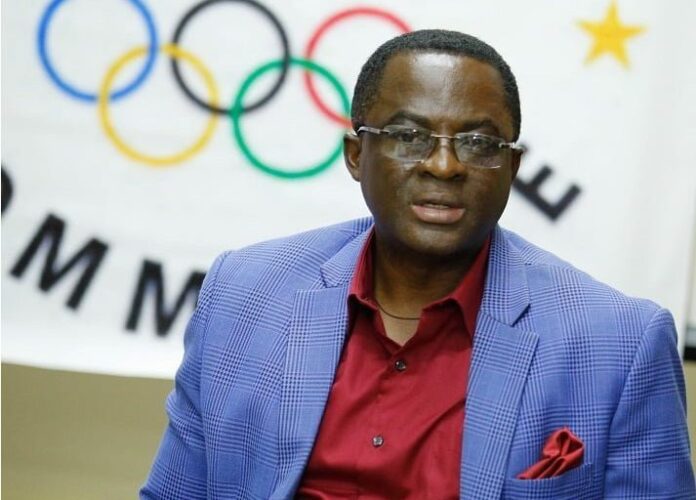
Mr Ben Nunoo Mensah, President of the Ghana Olympic Committee (GOC), has declared that he will not seek re-election in the upcoming elective congress.

Associations and federations under the GOC are expected to elect new executives in April 2025 to spearhead their activities for the next four years.

 Mr Nunoo Mensah, who has served two terms, said in a statement that it would be a pleasure to continue serving the country, but he has opted to do so in other ways. 

“I wish to confirm that while it would have been an honour to continue serving my nation and sports community in this capacity, there is a greater call to serve humanity in a different and equally fulfilling way.

“I accordingly want to move on and will not contest in the upcoming GOC elections,” said Mr Nunoo Mensah.

He also listed several accomplishments during his time, such as the Amasaman OlympAfrica project, the rehabilitation of the Olympic House, and the provision of assistance to national federations. 

“I believe this is the right time to step aside so that others can continue our progress. While it would be impossible to mention everyone by name, I ask God’s blessings upon those who have contributed to our collective success in various ways.

“Thank you all for your uniting support, and may God bless you and your sporting fraternity,” the statement ended.

It is worth noting that under Mr Nunoo Mensah’s tenure, Ghana, for the first time in 30 years, won a medal at the 2020 Olympic Games.

We need effective measures to address challenges – Ashanti NPP Parliamentary Caucus

0

The Kumasi NPP parliamentary Bloc has blamed the numerous challenges facing the city of Kumasi on poor management and the current ineffective governance structures.

According to them, there is the need for significant overhaul of the management of the city to help create a conducive environment for both businesses and residents to thrive, free from the constraints of partisan interests.

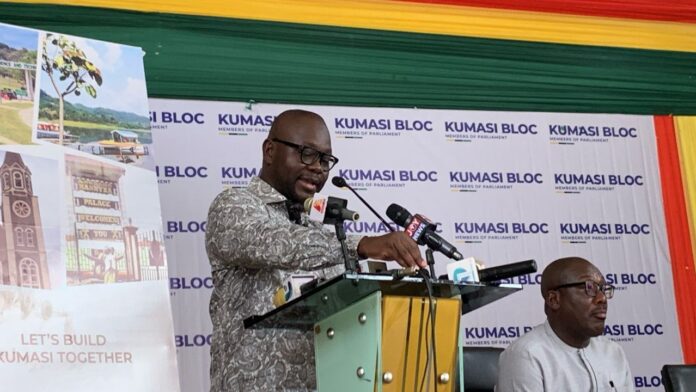
Mr Francis Asenso-Boakye, Chairman of the Bloc, who made the call, blamed the recent devastating fire outbreak in Adum on the poor management of the city.

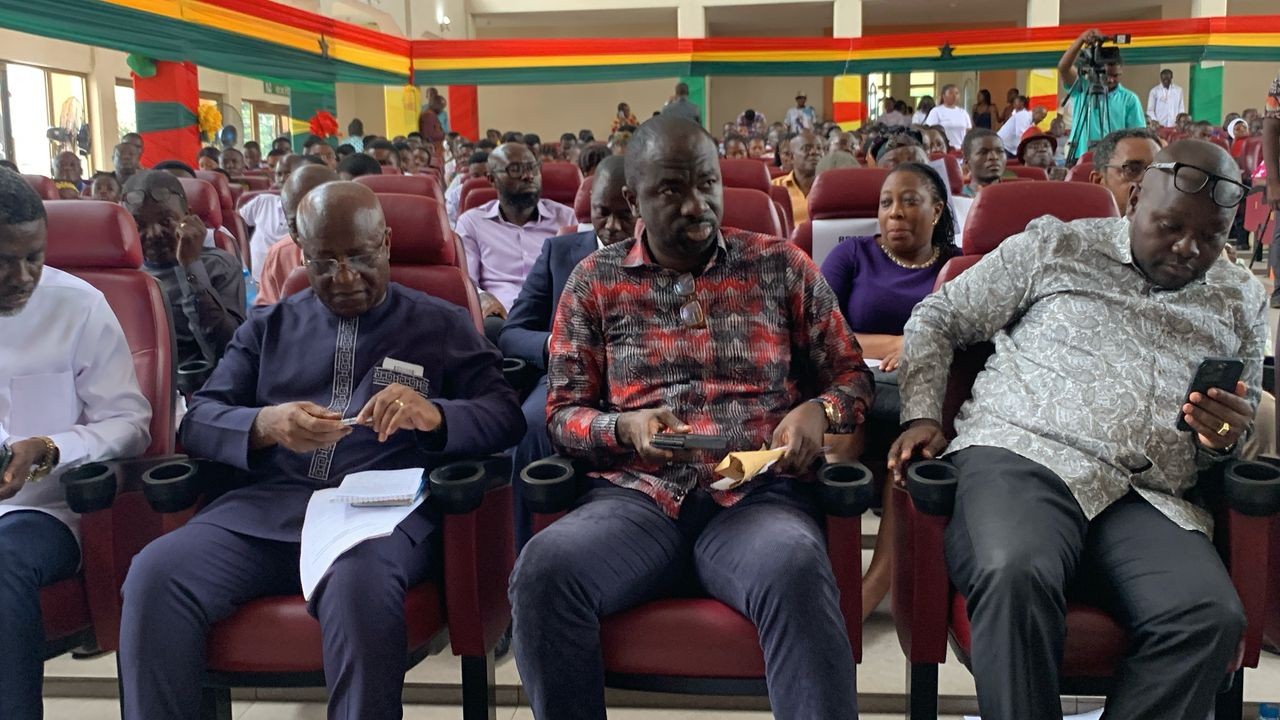
He was speaking at a forum organised by the caucus as part of its outreach programme to educate members of the public on issues currently going on at the chamber of parliament.

Among the issues discussed was the 2025 budget and other issues of concern to the public.

Mr Asenso-Boakye pointed out that Kumasi, which is the second largest city of Ghana, deserved better governance mechanism and more effective measures to address the challenges residents were facing.

He stressed the need for city managers to work together in unison, placing the welfare of the people above any political interest to prevent the future occurrence of such devastating disasters.

Mr Asenso-Boakye, who is the NPP MP for Bantama, pointed out that members of the caucus and NPP party were fully committed to addressing the pressing challenges facing Kumasi.

As an example, he referred to a recent visit by members of the caucus to the Suame Magazine to sympathize with victims of the recent fire outbreak in the largest automobile repairs enclave in West Africa.

He said the Bloc was playing a significant role in improving the overall quality of life of individuals in the city.

The MPs raised concerns about how the budget would directly impact the people of Kumasi, questioning whether the allocations would adequately address the city’s needs, particularly in terms of infrastructure, emergency response measures, and disaster prevention.