
Home Blog Page 67

CUTS International urges MultiChoice Ghana to uphold consumer rights

0

CUTS International, a consumer-focused agency, has urged MultiChoice Ghana, operators of Digital Satellite Television (DSTV), to prioritize consumer rights and satisfaction in their operations.

This follows MultiChoice Ghana’s announcement of a 15 per cent average subscription price increase across all packages, effective April 1, 2025.

For example, the Family package will rise from GH¢165 to GH¢190, Compact from GH¢330 to GH¢380, Compact Plus from GH¢495 to GH¢570, and Premium from GH¢750 to GH¢865.

The changes were communicated to subscribers on March 24, 2025, less than a week before taking effect.

In a statement signed by Mr. Appiah Kusi Adomako, West Africa Regional Director of CUTS International, the organisation criticised the short notice given to consumers to adjust.

“Respect for consumers is fundamental in any market, particularly where services are paid for in advance and on a recurring basis.

“Providing timely and transparent communication around price changes is not only fair and reasonable but also helps to build trust and foster good customer relationships,” the statement said.

The statement highlighted MultiChoice Ghana’s market dominance and urged them to avoid business practices that could disadvantage consumers.

MultiChoice Ghana holds a unique position in the market due to its access to premium competitive edge. However, with such market strength comes a heightened responsibility to ensure that business practices do not inadvertently disadvantage consumers.

“In markets where competition is limited, there is a greater risk of practices that may be perceived as exploitative or unfair,” it said

CUTS International cited a similar case in Nigeria, where the Federal Competition and Consumer Protection Commission (FCCPC) criticised MultiChoice Nigeria for inadequate notice of subscription fee changes.

As a result, the FCCPC directed the company to offer a one-month free subscription as a remedial measure.

“This case sets a useful persuasive precedent and reinforces the principle that consumers should be given sufficient time to adjust to changes that affect their financial commitments,” the statement noted.

The statement said since MultiChoice operates on a monthly subscription basis, it is widely seen as reasonable to give subscribers at least a month’s advance notice regarding price changes.

However, in Ghana, MultiChoice informed subscribers of the price hike via SMS and email on March 24, 2025, providing less than a week to adjust before the new prices were implemented.

“This short notice period may not have given subscribers adequate time to review their options or make necessary adjustments,” the statement said.

CUTS International emphasized the need for Ghana to enact a comprehensive Consumer Protection and Competition Act to empower consumers, ensure fair practices, and provide avenues for redress.

“It would also help ensure that service providers — especially those with significant market influence — operate in a manner that upholds consumer rights and welfare.

“We trust these observations will contribute to ongoing discussions about strengthening consumer protection in Ghana,” the statement said.

Chronic Kidney Disease Affects 10% Globally, 13% in Ghana – Specialist

0

Dr. Ahmed Qinan Lukeman, a Physician Specialist, revealed that 10 per cent of the global population and 13 per cent of Ghana’s population suffer from chronic kidney disease.

He noted that many cannot afford dialysis, resulting in loss of life.

A statement copied to Ghana News Agency said Dr. Lukeman, of the Ghana Armed Forces Critical Care and Emergency Hospital (GAFCCEH), made these remarks during a free kidney screening and medical check-up at the 37 Lorry Station for drivers and the public.

 The screening, held on March 14, 2025, was organized by GAFCCEH and Ghana National Gas Company Limited as part of the 2025 World Kidney Day celebrations under the theme: “Are Your Kidneys OK? Detect Early, Protect Kidney Health.”

 Dr. Lukeman stressed the importance of protecting kidney health by maintaining regular exercise, staying hydrated, and eating a balanced diet.

He noted that overuse of painkillers, smoking, alcohol consumption, hypertension, and diabetes are major contributors to kidney disorders.

 Mr. Bright Ohene Okyere, Community Relations CSR Officer of Ghana National Gas Company, said the partnership with GAFCCEH aligned with his organisation’s Corporate Social Responsibility, particularly accessible healthcare.

He noted that the collaboration would strengthen advocacy for kidney care.

Mr. Andy Coffie, Area Sales Manager of MTN Ghana, expressed his outfit’s support for the screening event, which also showcased their products.

Key attendees included Brigadier General Evelyn Vivian Abraham-Kwabiah, Commander of GAFCCEH; Brigadier General Thomas Acquinas Gbireh, Acting Commanding Officer of GAFCCEH; Colonel Evelyn Azera, Administrative Officer; Lieutenant Colonel Richard Otchere Mintah, Chief Nursing Officer; Captain Irene Boahemaa Koranteng, and other GAFCCEH staff.

Ghana National Gas Company Limited staff involved in the screening included Madam Fidelia Ohemaa Adjoyi, Manager of Community Relations and CSR, and Madam Augustina Asare Osei, Senior Manager of Government Relations.

Pitch invader in Ghana-Chad game sentenced to 100 days imprisonment

0

An Accra District Court has given a 100-day sentence to Mohammed Huzeinu, for invading the pitch during Ghana’s World Cup qualifier against Chad at the Accra Sports Stadium on Friday, March 21, 2025.

The 21-year-old fan was apprehended by Ghana Police after causing a temporary halt to the game in the second half.

The Ghana Football Association (GFA) is now facing possible hefty sanctions from football’s world governing body, FIFA, for poor crowd control.

According to a statement on the GFA website, pitch invasions are a significant violation of security that impede the smooth operation of games. 

“The sentencing serves as a strong warning to fans to respect stadium regulations and maintain order during matches.

“The FA has consistently urged fans to refrain from such actions, emphasising the importance of discipline and adherence to match day protocols to avoid fines and maintain Ghana’s reputation in international football.”

Agriculture Directors Commit to Advancing Agricultural Development in Eastern Region

0

A delegation from the Conference of District Directors of Agriculture (CODDA), led by Hajia Habiba Yusuf, Regional Director of Agriculture, has called on Mrs. Rita Akosua Adjei Awatey, Eastern Regional Minister. 

The visit served to congratulate her on her appointment and affirm CODDA’s unwavering support for her efforts to promote agricultural development in the region. 

This gesture underscores the strong partnership between the ministry and CODDA in advancing sustainable agriculture.

The Minister thanked the delegation for the gesture and acknowledged the role of CODDA in the implementation of the Government’s Agricultural Economic for Transformational Agenda (AETA) which is anchored on the 24-hour economy.

She highlighted the need for CODDA to play a leading role in revitalizing the Agricultural Sector through climate resilient agricultural technologies, and the need to recognize traditional leaders (Chiefs) as key stakeholders, especially in land acquisition and ownership in agricultural development in the region. 

Mrs. Awatey pledged her support to CODDA and called for more collaborations to enhance agricultural growth and development.

She said her office had already inaugurated a taskforce to clamp down activities of illegal miners, stressing on the potential threat and danger their activities posed to the forest, water bodies, lands and biodiversity. 

“I’m hopeful that together, we can improve the agriculture landscape,” she noted.

On her part, the Eastern Regional Director of Agriculture said the region had done well with its Eastern Commodity Satellite Market Fair, an initiative that links producers and processors to both local and international markets.

She called on all stakeholders and development partners to support this year’s fair, which is the fifth edition upon its inception.

She stated that the Regional Department of Agriculture remained committed to rolling out a number of initiatives aimed at promoting the growth and development of agriculture.

Among the key challenging issues she raised were, lack of adequate Agricultural Extension Agents to bridge the Agric Extension-Farmer ratio, effect of illegal mining on agriculture and climate variabilities. 

Mr. Stephen Boadi, President of CODDA, Eastern Region and the District Director of Agriculture in the Asene Manso Akroso District, said CODDA had played a role in the implementation of programmes, projects and policies of governments over the years. 

He said, “implementation of government policies in agriculture start at the district level hence the need to see CODDA as key to the development of Ghana`s Agricultural Transformational Agenda.”

He pledged CODDA’s readiness in spearheading the implementation of the Agricultural Economic for Transformational Agenda, aimed at modernizing agriculture, boosting local food production, promoting food security, creating jobs for the unemployed youth, and cutting down on food imports.

Ghana takes big step towards 2026 World Cup qualification after thrashing Madagascar

0

Ghana’s Black Stars defeated Madagascar 3-0 in their 2026 World Cup qualifier at the Al Hoceima Grand Stadium in Morocco.

Thomas Partey scored twice, and Mohammed Kudus added a goal to lead the Black Stars to a convincing victory against Madagascar.

Ghana leads Group I with 15 points, while Madagascar are second with 10 points. Mali and the Comoros are third and fourth, respectively, with nine points each.

The Central African Republic are fifth with five points, while Chad, the whipping side in the group is last in the group with no points.

Ghana coach Otto Addo made a few changes, starting Jerome Opoku and Abu Francis and benching Ernest Nuamah and Inaki Williams.

The Black Stars had a strong start to the game, troubling Madagascar’s defence with Salisu Mohammed coming close in the fifth minute.

Partey put the Black Stars ahead in the 11th minute with a powerful header from Jordan Ayew’s lovely cross on the edge of the penalty box.

The Black Stars defence arrangement was quite excellent in the first half hour of the game, as they limited their opponents’ attacks.

Goalkeeper Benjamin Asare, who was making his second appearance for the Black Stars, had a quiet first half as Madagascar were left to shoot outside the penalty box.

Ghana held onto their solitary 1-0 goal lead as the game went into recess.

The Black Stars of Ghana started the second half on the front foot and scored a cushion through Thomas Partey, who headed home from close range after a beautiful cross from Jordan Ayew.

Kudud Mohammed made it three for the Black Stars in the 59th minute after he was teed up by Jordan Ayew.

It was a hat-trick of assists for Ghana captain Ayew, who had a splendid game as Ghana cruised to victory.

Madagascar huffed and puffed to reduce the deficit, but Ghana was too solid in defence as they kept a clean sheet at the end of 90 minutes.

Ghana would continue their quest for qualification with the next round of matches in September with games against Chad and Mali.

Benjamin Zigorsh-Nyakpenu assumes duty as Deputy Registrar of Companies

0

Mr Benjamin Zigorsh-Nyakpenu has assumed office as the First Deputy Registrar of Companies to assist the Registrar to ensure compliance with corporate regulations and implement new strategies to improve the office’s mandate.

His appointment is in line with Article 195 of the Constitution and Section 363(1) of the Companies Act, 2019 (Act 992).

Mr Zigorsh-Nyakpenu was officially introduced to staff of the office on Thursday during a meeting, a statement signed by Mrs Constance Adomaa Takyi, the Head of Corporate Affairs and Communications, on behalf of the Acting Registrar of Companies, said on Monday.

Mrs Maame Saama Peprah, the Acting Registrar of Companies, who did the introduction, welcomed him on behalf of management and expressed the hope that he would bring his expertise to bear on the operations of the Office of the Registrar of Companies (ORC).

She said Mr Zigorsh-Nyakpenu’s appointment as Deputy Registrar was to further enhance the office’s operational efficiency and strengthen its commitment, recognising his experience and leadership abilities.

Mr Zigorsh-Nyakpenu expressed appreciation for the warm reception accorded him and assured management of his commitment to operate an open-door policy, encourage inclusive ideas, and foster knowledge-sharing to advance the overall interest of the ORC.

He encouraged teamwork and promised to be part of the team, adding: “Let’s see ourselves as a unit willing to work rather than as individuals that are needed.”

Mr Benjamin Zigorsh-Nyakpenu is a lawyer with extensive experience in corporate and commercial law, compliance, and regulatory matters.

He has built a strong background in banking and financial law, oil and gas, alternative dispute resolution, probate, and immovable property transactions.

He is skilled in legal consultancy, corporate structuring, and ensuring businesses meet statutory and regulatory obligations. He has practiced law at Thompson Law Consult, Hales Solicitors, and K-San Law.

The Deputy Registrar served in the Legal Department of the National Investment Bank Ltd., specialising in corporate lending, structured finance, and public sector transactions.

He is an expert in compliance and regulatory frameworks and has been a consultant to multinational corporations while continuing to provide strategic legal insights to businesses.

He holds a Bachelor of Arts in Political Science (Hons) from the University of Ghana (2008), an LLB (2011), and was called to the Bar in 2013 after completing the professional law course at the Ghana School of Law.

He also holds an LLM in Oil and Gas Law from the University of Ghana (2019).

As First Deputy Registrar, he will work closely with the Registrar to oversee the day-to-day operations of the office, ensure compliance with corporate regulations, and help implement new strategies aimed at improving the ORC’s mandate.

The ORC is the sole body responsible for the registration, regulation, and supervision of corporate entities in the country.

It is to provide efficient corporate registry services that ensure the integrity of the business and corporate environment while supporting economic growth and development.

Established by the Companies Act 2019 (Act 992), the ORC and its two deputies perform functions vested in them by this Act or any other enactment.

Section 363(1) of the Companies Act, 2019 (Act 992) states that: “The President shall, in accordance with Article 195 of the Constitution, appoint a Registrar, two Deputy Registrars, and any other staff for the Office of the Registrar of Companies that are necessary for the proper and effective performance of the functions of the Office.”

Bank of Ghana Governor proposes mechanisms to make the MPC’s decision more accessible

0

Dr. Johnson Asiama, Governor, Bank of Ghana, has proposed the implementation of mechanisms to make the Monetary Policy Committee’s decisions more accessible whether through publishing of voting outcomes or enhancing the narrative content of policy statements.

He said similarly, the committee needed to work on simplifying the way forecasts were presented so the public and market participants could better understand the underlying policy story.

The Governor was speaking at the opening of the 123rd regular meeting of the Monetary Policy Committee (MPC) in Accra on Monday.

He said these changes would strengthen credibility and deepen trust in the policy framework.

Dr Asiama said the transparency of the MPC decision-making process and the communication of the forward-looking guidance could further be strengthened going forward.

There’s a growing sense in public commentary that MPC decisions are taken behind closed doors without clear, data-driven reasoning, he said.

He commended the external members of the Committee; Professors Joshua Abor and Ebo Turkson for their long-standing contributions to the Committee.

He said while inflation was easing, it remained uncomfortably high, at over 23 per cent, and progress had been slow, particularly on a month-on-month basis.

He said, for instance, structural drivers of food inflation remained persistent.

The Governor said the external environment, though currently supportive, was becoming increasingly volatile.

“We have seen a strong trade surplus and solid reserve build-up on the back of gold exports and remittance flows, but a possible escalation in global tariff wars, rising geopolitical tensions, and weakening Chinese demand could quickly shift the dynamics,” he added.

He said these global factors could also have spillover effects on inflation, capital flows, and exchange rate stability.

He said domestically, the 2024 fiscal outturn was expansionary, with the deficit exceeding programme targets.

Dr Asiama said there were encouraging signs of consolidation early in 2025, but questions remained as to whether current measures were adequate to anchor expectations and satisfy upcoming IMF programme reviews.

The Governor said financial conditions were evolving quickly, liquidity in the system had increased, commercial banks had raised concerns about the Cash Reserve Ratio framework, and there was the need to carefully assess its macro financial implications, especially with respect to inflation, foreign exchange demand, and credit growth.

He said while private sector credit was recovering in nominal terms, real credit growth remained modest, banks were still cautious, and Non Performing Loans levels remained a concern.

“Meanwhile, our microfinance and rural banking sectors are showing early signs of stability, but recapitalization and regulatory reforms must continue to preserve confidence,” he added.

He acknowledged that some of today’s challenges stemmed from earlier monetary and fiscal policy missteps, particularly losing fiscal policy during periods of macro stress, weak monetary fiscal coordination, and delays in key structural reforms.

These contributed to elevated inflation, impaired policy transmission, and a loss of credibility.

He said it was essential that the MPC reflected on these issues not to assign blame, but to strengthen the institutions and avoid repeating past mistakes.

“There are also deeper, structural issues we must not lose sight of such as underinvestment in agriculture, persistent exchange rate misalignments, and the need to deepen domestic financial markets,” he said.

These are outside the scope of today’s immediate rate decision, but they will shape the broader monetary policy landscape over the medium term.

He said they were facing a convergence of risks: stubborn inflation, elevated liquidity, soft real interest rates, a fragile fiscal recovery, and growing external uncertainty.

“But we also have buffers, strong reserves, improving sentiment, and the credibility of our policy framework to guide us,” he added.

24-hour economy: Jinijini tomato growers call on government to revamp Weddi Processing Factory

0

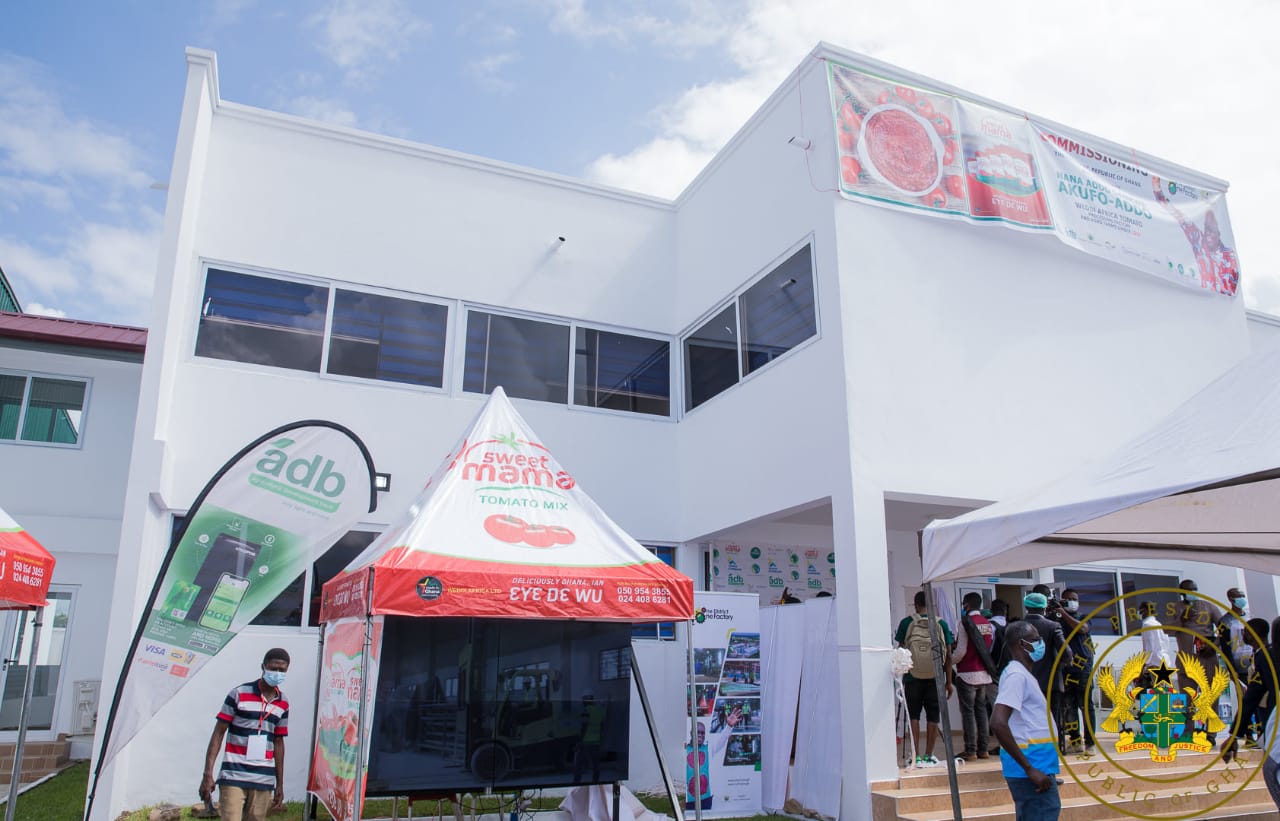
Tomato growers at Jinijini in the Berekum West Municipality of the Bono Region have appealed to the government to invest in tomato production in the area.

They also called on the government to revamp the defunct Weddi Africa Tomato Processing Factory set up in the area under the One-District-One Factory (1D1F) initiative of the previous administration.

In an interview with the Ghana News Agency (GNA) at Jinijini, one of the largest tomato producing communities in the Bono Region, the farmers regretted that since the factory was shut down from commercial production, it had left hundreds of the youth in the area jobless.

Mr Paul Ofosu, spokesperson for the tomato farmers told the GNA that tomatoes had become scarce in the area because growers lacked funds to go into commercial production.

He said with financial assistance, pumping machines and irrigation facilities, the farmers could grow the vegetable in commercial quantities, feed the factory and create jobs for the people.

Checks reveal that the factory, a wholly Ghanaian owned company constructed at the cost of $16 million was shut down from commercial operation because of lack of fresh tomatoes to feed it.

Hitherto, it was processing 40,000 metric tons of fresh tomato per annum, which translated into 720 crates of tomatoes per shift per day, with the factory also possessing a 500-metric ton cold room facility to hold fresh tomato fruits.

With the government’s 24-hour economy, the tomato farmers said reviving the factory would not only make the sector attractive but also boost local employment.

“That is why we are appealing to the government to give some financial assistance and logistics so that we can produce more to feed the factory”, Mr Ofosu stated, worrying that tomatoes were now scarce in the area because most of the growers lacked funds to go into commercial production.

“In fact, tomato farmers here are ready to increase production, only if the government will come to our aid”, he stated.

During a visit to the Jinijini market, traders lamented about the scarcity of tomatoes in the area nowadays and thereby affecting the price of the vegetable.

Madam Eunice Agyeiwaa, one of the tomato sellers said they had increased the price of the vegetable because they could not get some to buy from the farmers.

The GNA noticed that three balls of fresh tomatoes were selling at GH¢5, while six balls were going for GH¢10.

Many consumers were now opting for tomato paste instead of the fresh ones due to the market price increase.

Another trader, Akua Tawia told the GNA that the sellers now imported fresh tomatoes from neighbouring Burkina Faso for the local market due to the scarcity of the vegetable in the area, saying that had affected the price.

She said the price increase had also resulted in poor sales, adding that because there were no storage facilities quantities of the tomatoes went waste, leading to significant losses.

Oti Regional Minister embarks on tour to foster strong ties with Assembly workers

0

In a bid to strengthen relationships and promote development, Mr John Kwadwo Gyapong, Oti Regional Minister, has undertaken a familiarization tour of the Region.

The tour aims to foster strong ties with Assembly workers, inspect ongoing development projects, and explore opportunities for growth.

During the tour, the Minister interacted with Assembly workers, listening to their concerns and ideas for improving the region’s development.

This move is seen as a significant step towards building a collaborative and inclusive approach to governance.

The Minister’s tour also focused on inspecting ongoing development projects, including infrastructure, education, and healthcare initiatives.

This hands-on approach demonstrates the Minister’s commitment to ensuring that development projects are on track and meeting the needs of the local community.

The Minister commended the Krachi East Municipality for its exceptional record keeping and work approach, describing it as the best in the region.

In addition, he pledged to invite other districts to learn from their experiences.

He emphasized his commitment to open-door communication, encouraging stakeholders to engage with him freely.

However, he also issued a stern warning, stating that any unauthorized absence exceeding three consecutive days would be met with severe consequences.

This proactive approach is expected to yield positive results, improving the lives of citizens, and driving economic progress.

Brute force and intimidation of former government appointees dangerous to Democracy-Minority

0

The Minority in Parliament on Monday condemned the Attorney-General and Minister of Justice for allegedly ordering the arrest and raiding of homes of former government appointees.

The Minority Caucus urged the media, civil society organisations (CSOs) and well-meaning Ghanaians to stand up against the growing trend of intimidation through state institutions including the National Intelligence Bureau (NIB) and National Security operatives.

Mr Jerry Ahmed Shiab, the Second Deputy Minority Whip and Member of Parliament for Weija-Gbawe, who addressed the media on behalf of the Caucus at Parliament House, Accra, said such political intimidations and harassments were relics of the coup era and had no place in democratic dispensation.

He added that the Minority was not against prosecution of individuals who had committed any offence but should be taken through the courts or legal system, and not the use of brute force and political intimidation.

“State power must be exercised in good faith and not wielded as a weapon of political intimidation. We will continue to demand justice, transparency, and adherence to the principles of constitutional democracy,” Mr Ahmed Shiab stated.

The legislator mentioned some of the victims of the recent raids and political intimidations as Dr Ernest Addison, former Governor of the Bank of Ghana, Ken Ofori-Atta, former Minister of Finance, Professor Christopher Ameyaw- Akumfi, former Chairman of the Public Procurement Authority, Mr Kwabena Adu Boahene, former Director of the National Signals Bureau, Mr Lord Oblitey Commey, former Director of Operations at the Jubilee House, and Mr John Peter Amewu, former Minister of Railways Development.

He said those actions were led by Richard Jakpa and officials from the National Intelligence Bureau and National Security, noting that it was a clear violation to Article 18 of the Constitution of Ghana, which protects the fundamental human rights of these individuals, particularly their right to personal liberty, privacy, and protection from arbitrary searches and seizures.

The Caucus expressed its readiness to stand resolute to defend the country’s democracy and the rule of law, noting that “If our institutions are to command public confidence, they must act with integrity, fairness, and respect for individual rights”.

“Ghana’s democracy cannot thrive under a climate of fear and selective justice. The weaponisation of state institutions for political ends is not only dangerous, but also unconstitutional,” the lawmaker stated.

“This incident speaks to a troubling trend of power being abused without accountability, and institutions being manipulated to protect those in power rather than serve the people.

“Let us be clear – the health of our democracy depends on our collective ability to call out abuse when we see it, and to demand better. Ghana deserves better. The people of Ghana deserve better,” Mr Ahmed Shiab added.