Home Blog Page 80

Portraying bleak picture of Ghanaian economy will dim investors’ confidence in Ghana-Minority

0

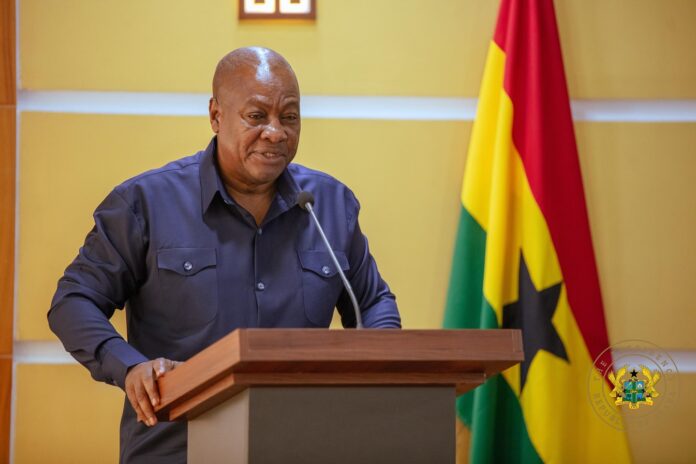
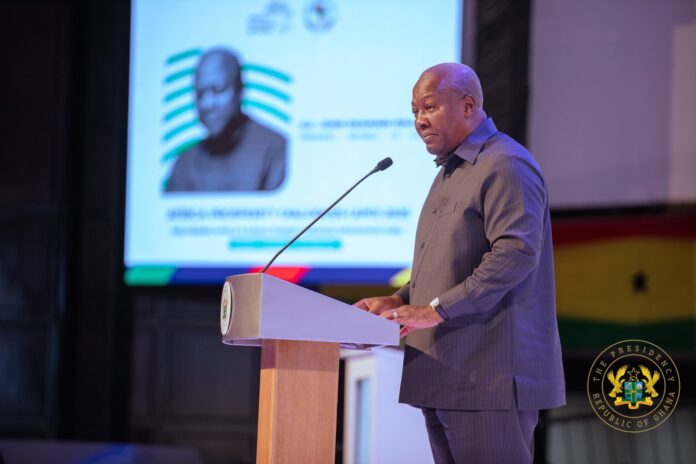
The Minority in Parliament has observed that the gloomy picture painted by President John Dramani Mahama in his maiden State of the Nation Address (SONA) will hurt the nation as it will scare investors away.

“President Mahama shot himself in the foot by his rush to paint gloomy picture of the economy.

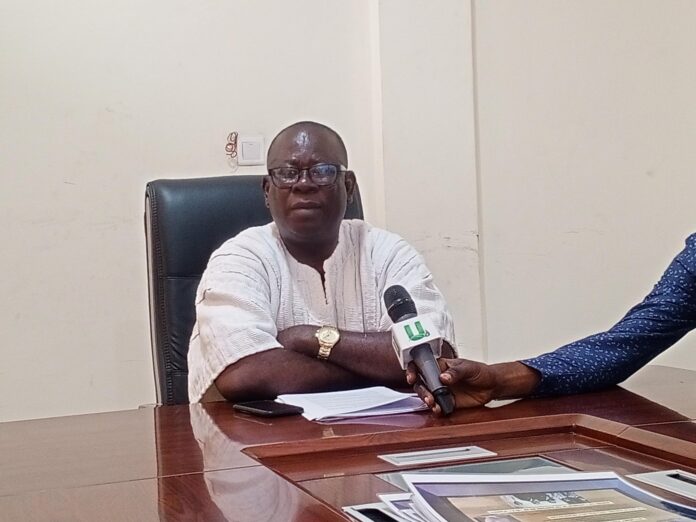
“What the President also failed to do was to inform the people of Ghana that there are other significant measures of the performance of the economy that inform the state of the nation other than inflation Mohammed Amin Adam, a former Minister of Finance, made these remarks during a news conference at Parliament House in Accra on Monday.

Dr Amin Adam, also the Member of Parliament for Karaga, spoke on behalf of the Minority Caucus in its “True State of the Nation Address” in response to President Mahama’s SONA, presented to Parliament last Thursday, February 27.

The legislator said besides the Sinking Fund, the immediate past NPP administration left significant financial buffers to cushion the new government and support its expenditures and maturing debt obligations.

He mentioned five billion Ghana Cedis left by the GRA’s revenue collection in the Treasury Main 2 Accounts, $8.9 billion gross international reserves, which translated to four months import cover and $360 million IMF support due for disbursement to Ghana on December 2,2024.

More also, he said, with the strong negotiation skills of the previous government, Ghana’s bilateral creditors agreed to reschedule her debts worth $5.4 billion until 2026.

Additionally, the country’s bilateral creditors cancelled four billion dollars of her debts and given $4.7 billion debt service relief with her Eurobond holders.

Dr Amin Adam said the previous NPP government’s debt management strategy was a masterstroke that had inured to the benefit of the current NDC government.

“We must celebrate our achievements irrespective of who is recounting it at any point,” he noted.

Dr Amin Adam argued that debt management was a routine responsibility of any administration and entreated the new government to mobilise funds in due course to pay it.

The President in his address raised concerns over Ghana’s debt servicing obligations for the next four years, estimating that the government would need GH₵280 billion, comprising GHS150 billion for domestic debt and GHS130 billion for external debt.

Dr Amin Adam said such debts obligations were not unusual and entreated the new government not to instill fear in the public and the investor community but rather find innovative ways to raise funds to redeem her debts.

“The President tried to scare the Ghanaian people about the country’s debt service obligations for the next four years. Government at every time, provides for debt servicing obligations, and the President is aware of this. We expect him to mobilise the funds as every government in Ghana has done to service our debts,” Dr Amin Adam stated.

Dr Amin Adam outlined the terms of debts rescheduling payment plans, noting that it would provide breathing space for the current government.

“This is money that the government of Ghana would have paid but which now stands as savings to the country,” he said.

The lawmaker thus urged President Mahama to focus on effective economic management rather than stirring fear among the populace.
Electronic Money Issuers Chamber condemns attacks on Mobile Money Agents

0

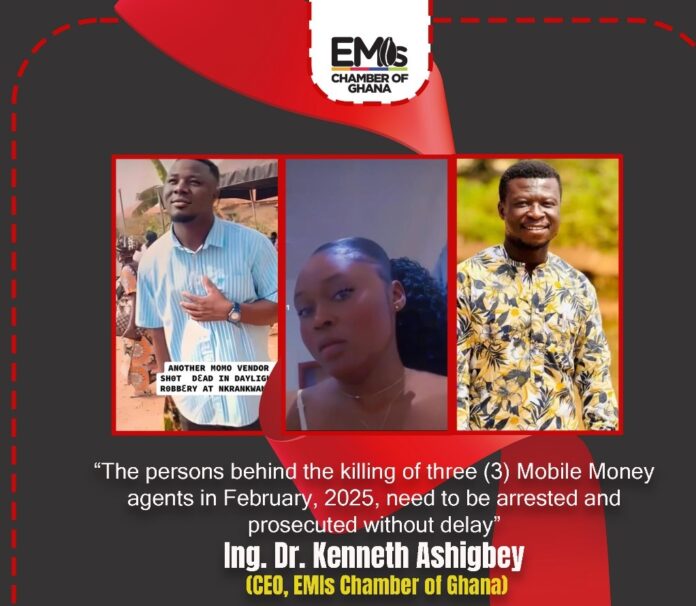
The Electronic Money Issuers (EMIs) Chamber of Ghana has denounced the ongoing assaults on mobile money agents, resulting in fatalities.

The Chamber expressed its sympathies to the families of the fallen mobile money agents whose lives were taken by certain unscrupulous individuals.

“We also want to extend our condolences to the entire mobile money agents’ fraternity following the recent spate of attacks and killings,” The EMIs Chamber stressed in statement by Mr. Louis Bobbie Osei, Regulatory and Research Manager, and copied to the Ghana News Agency on Monday.

Mobile money agents are critical in Ghana’s financial ecosystem, facilitating secure and accessible financial transactions for millions of Ghanaians.

The alarming rise in attacks threatens their safety and the stability of the financial services ecosystem across the country.

“Their role is invaluable and must be protected.” Mr. Osei said, adding: “Three Mobile Money agents dying in one month is entirely unacceptable. One life lost is one too many.”

He called for action to protect mobile money agents, from President John Dramani Mahama, the Interior and Finance Ministers, the Inspector General of Police (IGP), and the Governor of the Bank of Ghana to collaborate with EMIs to implement essential safety measures.

“We must take steps to protect all mobile money agents from these senseless attacks,” he stated.

He expressed concern about the rising frequency of violent crimes targeting these agents, urging law enforcement agencies to intensify their efforts to bring the perpetrators to justice.

As part of its commitment to ensuring the safety of mobile money agents, he said the Chamber was taking steps to engage the Ghana Police Service to develop effective security solutions.

“We will also collaborate with the Bank of Ghana on the Agent Registry and the Security of Agents project to provide protection for our partners,” he added.

“We will work closely with relevant stakeholders to explore enhanced protection measures, improve law enforcement responses, and implement policy interventions to safeguard mobile money agents nationwide.”

“We want to state that “mobile money agents do not carry significant amounts of money on their person,” Mr. Osei said.

He explained that mobile money transactions were predominantly digital, significantly minimizing cash handling through structured financial processes. “We urge the public to support efforts to protect agents rather than propagate falsehoods that fuel these attacks,” he said.

Mr. Osei issued a call for mobile money agents to strengthen their security measures, emphasizing the importance of taking urgent action to safeguard themselves first.

He stated that though the EMIs Chamber expected swift action from security agencies, it strongly advised all mobile money agents to implement precautionary measures.

He suggested that Agents avoid transporting large sums of cash and conducting transactions in isolated locations and should invest in CCTV cameras, panic alarms, and security systems at their operating points.

It urged them to ensure that their shops and agencies were known to the nearest police station for their Motor Bicycle Visibility Team to regularly patrol around the locations.

The Chamber reiterated its commitment to collaborating with stakeholders to address the security threats and urged the Government, the Ministry of Interior, the National Security apparatus, and the Ghana Police Service to prioritize the safety of mobile money agents.

A three-day workshop on violent extremism and terrorism takes off in Ho

0

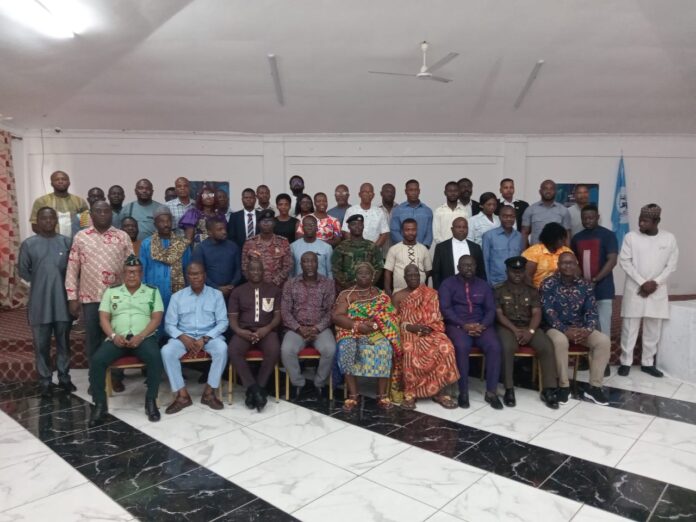
A workshop to review the National Framework for Preventing and Countering Violent Extremism and Terrorism (NAFPCVET) in the country has taken-off in Ho.

The three-day national event, which marked the eighth regional reviews seeks to solicit stakeholders’ contribution to the framework towards giving it a practicable national dimension for implementation.

The event funded through Project ICT shield, Interpol International, by the German Federal Foreign Office (GFFO), with objective to counter terrorism in West Africa since February 2022, aimed to introduce the Framework to participants, discuss optimal implementation strategies and gather recommendations.

Mr. Daniel Osei-Bonsu, Deputy Director of Fusion Centre of the National Security Council Secretariat (NSCS) emphasised the critical importance of the review process to the country, referencing the framework’s establishment in approximately 10 years running.

Mr. Osei-Bonsu stressed the need for collective engagement to examine the framework and chart a course forward in countering terrorism and eradicating Violent Extremism and Terrorism (VET).

He highlighted countries surrounding Ghana that had fallen victim to VET, citing Burkina Faso’s loss of 70 per cent of its territory to terrorists, emerging threat of terrorism particularly in Togo and Benin, while acknowledging that the country was not currently under immediate pressure.

He said the presence of marginalised individuals within the country, who believed their fundamental freedoms were trampled upon compounded the issues and not the external factors alone.

Mr. Osei-Bonsu drew attention to the radicalization of young people and the surrounding factors, emphasizing the need to mitigate the various nuances of radicalization stating these issues, among others, must be addressed to establish a robust framework for combating terrorism.

He said Volta region had been classified under zone three, and that organized crime, specifically the smuggling of cocoa, had been identified as a threat, making the region receive elevated priority.

He said the National Security was suspicious that proceeds from cocoa smuggling could become the fuel or oxygen to finance terrorism activities within or outside the borders of the country that demands prevention.

Ms Leila Marzo, Project Administrator for Project ICT shield at Interpol headquarters, Lyon, France, expressed gratitude to the National Security Council Secretariat for forging partnership with her entity particularly the National Counterterrorism Fusion Centre, for initiating the activities with support from Interpol’s National Central Bureau in Accra.

She outlined Interpol’s four broad programmes, which included counterterrorism, cybercrime, organized and emerging crime, and financing crime, financial crime, and corruption.

Regarding counterterrorism, Ms Marzo stated that their strategy involved preventing and disrupting terrorist activities by identifying members of terrorist networks and their affiliates, targeting their funding mechanisms, and hindering their ability to travel, traffic weapons, and use cybercrime.

She explained that Interpol’s counterterrorism operations and initiatives were based on border security support, biometric collection, and battlefield information exchange to support member countries’ efforts.

She anticipated positive outcomes from the workshop to shape the national discourse towards preventing VET and reiterated Interpol’s commitment to continued cooperation with Ghana.

Mr. James Gunu, the Volta Regional Minister, in an address read on his behalf by Mr Augustus Awity, Chief Director of the Regional Coordinating Council (VRCC) acknowledged the increasing threats of Violent Extremism and Terrorism (VET) in the subregion, emphasising that the Volta region was not immune to security threats.

He stressed the need for vigilance and stated that the consultation, bringing together all stakeholders, was therefore necessary and asserted that it was everyone’s duty to contribute to the discourse.

Mr Gunu affirmed the VRCC’s and government’s commitments to ensuring the safety of their communities against VET.

Faith and Healing in Honiara as Solomon Islands Crusade Gathers Momentum

0

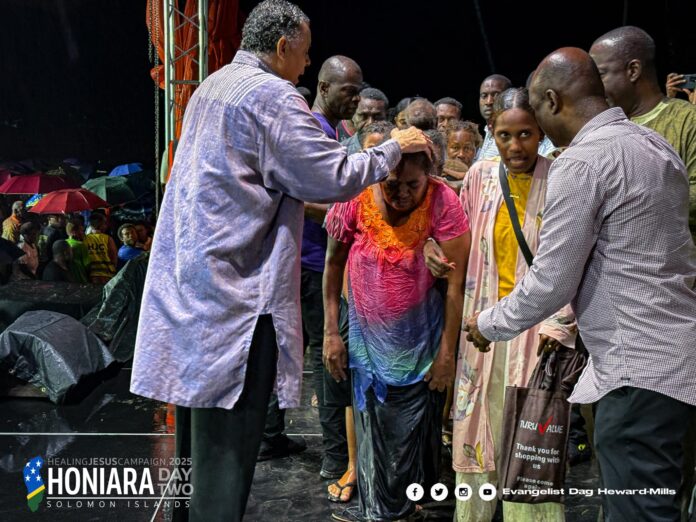
Honiara, Solomon Islands – The second day of the Healing Jesus Campaign in the Pacific nation of the Solomon Islands has drawn an even larger crowd, as thousands gathered in Honiara to hear Evangelist Dag Heward-Mills preach a message of salvation and healing.

The atmosphere was described as reminiscent of biblical times, as the evangelist spoke with conviction, urging attendees to embrace the gospel. The response was overwhelming, with reports of miraculous healings and personal testimonies of transformation.

Despite rain falling over the open-air venue, worshippers stood firm, umbrellas raised, undeterred by the weather. Organisers say the determination of those present reflected a deep hunger for spiritual renewal.

“We are witnessing something truly extraordinary,” a campaign spokesperson said. “People are experiencing healing and hope in ways they never imagined.”

The Healing Jesus Campaign, which has been held in several nations worldwide, marks its first-ever crusade in the Pacific region. With expectations soaring, organisers anticipate an even greater turnout in the coming days.

The campaign continues throughout the week, with supporters invited to follow updates and contribute to the mission at BENMP.com.

Thousands Gather as Evangelist Dag Heward-Mills Begins Solomon Islands Campaign

0

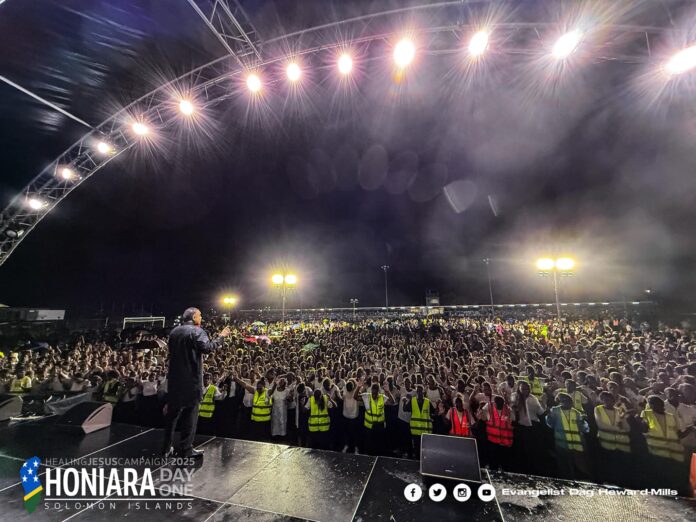
Honiara, Solomon Islands – The opening day of the Healing Jesus Campaign in the Solomon Islands witnessed a remarkable turnout, as thousands braved the threat of rain to hear Evangelist Dag Heward-Mills deliver a message of faith and healing.

Preaching under the theme “Jesus, The Saviour and Healer of the World”, the evangelist addressed a vast audience, many of whom had travelled long distances to attend. The campaign, which aims to spread the Christian gospel across nations, has drawn significant attention in the region.

In scenes described as “a powerful testament to God’s faithfulness,” attendees reported witnessing miraculous healings, including cases of advanced-stage cancer said to have disappeared. Among the most striking testimonies of the night was that of a paralysed man who, after years of immobility, was seen moving his limbs for the first time. The moment was met with jubilation, with many in the crowd moved to tears.

“We saw the power of God in a way that left us in awe,” one witness shared. “People came with pain and left with joy.”

With an atmosphere of heightened expectation, organisers anticipate an even larger gathering in the days ahead. The campaign is set to continue throughout the week, with more sessions planned in the capital, Honiara.

Supporters of the mission are encouraged to follow updates and contribute to the outreach efforts through BENMP.com.

Ghana’s $2B Food Import Bill: Mahama Pushes for Local Production

0

Ghana’s food import bill has soared beyond $2 billion annually, a situation President John Dramani Mahama says is unsustainable and must be reversed through increased local agricultural production.

Delivering his State of the Nation Address, Mr. Mahama outlined plans to modernize the agricultural sector, boost domestic food production, and reduce dependency on imports.

“We cannot continue to spend billions importing food that we have the capacity to produce locally,” he told Parliament. “Our focus is on agricultural transformation, ensuring food security, and creating jobs for our people.”

📺 Watch the Full State of the Nation Address: YouTube Link

Agriculture for Economic Transformation

The government’s plan, dubbed the Agriculture for Economic Transformation Agenda (AETA), aims to:

  • Increase investment in agribusiness to encourage local food processing.
  • Expand the Feed Ghana Programme, which supports farmers with improved seeds, fertilizers, and mechanization.
  • Launch the Nkoko Nkitinkiti Project, focused on poultry production to reduce chicken imports—one of Ghana’s highest food import costs.
  • Strengthen partnerships with private investors and development agencies to modernize farming practices.

Cutting Down Imports, Boosting Local Jobs

Ghana’s heavy reliance on food imports—especially rice, poultry, and vegetable oil—has not only weakened the local agriculture sector but also contributed to rising food inflation. The government’s strategy, Mr. Mahama said, is to increase local food production and value addition, making Ghana self-sufficient.

“We must support our farmers, empower agribusinesses, and ensure that Ghanaian households can access affordable, locally produced food,” he stated.

Skepticism and the Road Ahead

Despite the ambitious plans, analysts warn that infrastructure gaps, post-harvest losses, and financing difficulties remain key challenges in Ghana’s agricultural sector.

While some farmers welcome the renewed focus on agriculture, they stress the need for consistent government support, irrigation development, and access to credit.

For many Ghanaians, the real test will be whether the policies translate into lower food prices and a reduced dependence on foreign imports.

Edem Alorzuke, reporting for Sweet Melodies FM.

📺 Watch the Full State of the Nation Address: YouTube Link

Dumsor Resurgence? Government Vows Reforms to Stabilize Power Supply

0

Accra, Ghana – 27 February 2025 | Report by Edem Alorzuke, Sweet Melodies FM

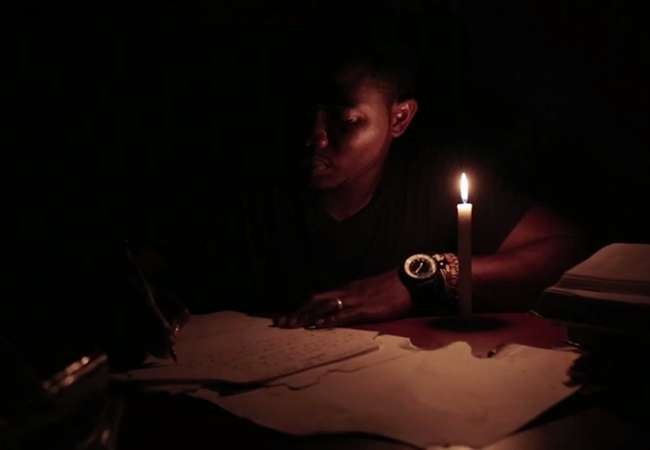
Ghana’s government has pledged to implement urgent reforms to stabilize the country’s power supply, amid growing fears of a return to ‘Dumsor’—the prolonged power outages that crippled businesses and households in the past.

Speaking during his State of the Nation Address, President John Dramani Mahama acknowledged the fragile state of the energy sector, citing a GHS 70 billion debt burden, inefficiencies, and the threat of Independent Power Producers (IPPs) withdrawing their services over unpaid arrears.

“The energy sector is under immense pressure,” Mr. Mahama told Parliament. “But let me assure Ghanaians: we will not allow a return to widespread load shedding. We are committed to comprehensive reforms to secure reliable power for all.”

Stabilizing Power Supply

The President outlined key interventions, including:

  • Enforcing the Cash Waterfall Mechanism to ensure prompt payments to IPPs and prevent debt accumulation.
  • Transitioning to 100% gas utilization for power generation, reducing reliance on expensive fuel imports.
  • Investing in renewable energy through the newly announced Renewable Energy and Green Transition Fund.
  • Tackling commercial losses by strengthening regulations against power theft and improving revenue collection.

According to Mr. Mahama, these measures will help restore confidence in the energy sector, attract investment, and ensure consistent power supply.

Ghanaians Wary of Empty Promises

While the government’s commitment to energy reforms has been welcomed, many Ghanaians remain skeptical. Previous administrations have made similar promises, yet power cuts have persisted due to funding shortfalls, operational inefficiencies, and mismanagement.

Some energy experts warn that without significant infrastructure investment, the sector will continue to struggle. Others argue that addressing corruption and enforcing strict financial discipline will be key to preventing another full-blown crisis.

For now, many Ghanaians are watching closely, hoping that this latest set of reforms will finally bring an end to years of power instability—and ensure that ‘Dumsor’ remains a thing of the past.

Edem Alorzuke, reporting for Sweet Melodies FM.

Renewable Energy Push: Ghana to Establish Green Transition Fund

0

Accra, Ghana – 27 February 2025 | Report by Edem Alorzuke, Sweet Melodies FM

Ghana is set to ramp up its transition to sustainable energy with the establishment of a Renewable Energy and Green Transition Fund, President John Dramani Mahama has announced.

Speaking during his State of the Nation Address, Mr. Mahama outlined the government’s commitment to reducing dependence on fossil fuels and investing in clean energy solutions.

“The global energy landscape is changing, and Ghana must not be left behind,” he told Parliament. “This fund will drive investment in solar, wind, and other renewable energy sources, ensuring a more sustainable future.”

A Move Towards Sustainability

Ghana’s energy sector has long been reliant on thermal power plants, many of which use expensive and environmentally harmful fossil fuels. The President said the new fund would accelerate the country’s transition to low-carbon energy sources, helping Ghana meet its climate commitments while also improving energy security.

The fund is expected to support public-private partnerships, encourage local innovation, and attract foreign investment into the renewable energy sector.

“We will work closely with industry players and development partners to ensure this initiative delivers tangible benefits to all Ghanaians,” Mr. Mahama said.

Tackling the Energy Crisis

The move comes as Ghana grapples with a deepening energy crisis, with a GHS 70 billion debt burden in the sector and Independent Power Producers (IPPs) warning of possible shutdowns due to unpaid arrears.

The President said the government was committed to diversifying the energy mix, reducing reliance on imported crude oil, and transitioning to 100% gas utilization for power generation.

“This is a long-term solution that will not only stabilize the energy sector but also create jobs and boost industrial growth,” he added.

Challenges and Road Ahead

While the initiative has been largely welcomed, energy experts caution that strong policy enforcement, infrastructure investment, and transparent management of the fund will be crucial to its success.

Analysts say previous renewable energy projects in Ghana have faced setbacks due to bureaucratic hurdles and inadequate funding, and the success of this fund will depend on sustained government commitment.

For many Ghanaians, particularly those affected by frequent power cuts and rising electricity costs, the government’s renewable energy push is seen as a step in the right direction. However, they will be watching closely to see if this initiative delivers real and lasting change.

Edem Alorzuke, reporting for Sweet Melodies FM.

100% Gas Transition: Mahama’s Plan to Tackle Energy Challenges

0

Ghana’s President, John Dramani Mahama, has unveiled a bold plan to transition the country’s energy sector to 100% gas utilization in a bid to tackle the nation’s deepening power crisis.

Speaking during his State of the Nation Address, President Mahama outlined sweeping reforms aimed at stabilizing the struggling sector, which is burdened with a GHS 70 billion debt and mounting pressure from Independent Power Producers (IPPs) threatening to halt operations.

A Sector in Crisis

Ghana’s energy sector has been grappling with chronic financial instability, worsened by inefficiencies in the payment system and an over-reliance on expensive fuel imports. The President warned that without urgent intervention, power shortages could escalate.

“The energy sector is in distress. We are committed to implementing lasting solutions, starting with a shift to 100% gas utilization for power generation,” Mahama told Parliament.

The move, he said, would reduce costs, cut reliance on costly imported crude oil, and improve energy security.

Gas Transition and Renewable Energy Push

Under the government’s plan, all thermal power plants will gradually switch to using natural gas as their primary fuel. This transition is expected to lower the cost of electricity production while enhancing efficiency.

In addition, Mahama announced the creation of a Renewable Energy and Green Transition Fund, aimed at boosting investment in solar, wind, and other sustainable energy sources.

“We cannot build a resilient energy sector without a firm commitment to renewables and sustainability,” he said. “This fund will support innovative solutions to drive Ghana’s green energy transition.”

Addressing Debt and Payment Issues

One of the biggest hurdles facing the sector is its massive debt burden, which has led to payment delays and threats from power producers to cut supply. The President reiterated his administration’s plan to fully enforce the Cash Waterfall Mechanism, a policy designed to ensure equitable and timely payments to power companies.

“The implementation of the Cash Waterfall Mechanism will guarantee that revenues are fairly distributed among all stakeholders in the sector,” Mahama stated.

He also pledged to reduce commercial losses, tackle inefficiencies, and ensure greater transparency in the sector’s financial management.

Will It Work?

Energy analysts say Ghana’s transition to 100% gas reliance is ambitious but faces significant challenges, including the need for major infrastructure upgrades and reliable gas supply sources.

While the government’s focus on renewable energy is welcomed, experts caution that the plan must be backed by concrete investments and policy enforcement to yield long-term benefits.

For now, Ghanaian consumers remain watchful, hoping that the proposed reforms will bring an end to the recurring power challenges that have plagued the nation for years.

Edem Alorzuke, reporting for Sweet Melodies FM.

Ghana needs hybrid, solution-oriented democratic system to surmount challenges – CNIR 

0

Accra, Feb. 27, GNA – The Centre for National Interest and Research (CNIR), a leading think tank, has called for a hybrid democratic system that is solution-oriented to surmount Ghana’ s socioeconomic challenges. 

Dr Dzabaku Kudiabor Ocansey, the Executive Director of the Centre, said the country faced challenges of exploitation, divisiveness, corruption and economic crisis, which must be dealt with decisively.  

At a press conference on: “Advocating an end to Binary Extreme Partisan Politics of Divisiveness and Unprecedented Corruption,” Dr Ocansey said citizens, including politicians, needed to understand that politics was not a reserve of a small established elite but for a collective participation of the people to rethink an approach towards improving governance, the economy and society.  

“There is the need to move beyond Ghana’s binary, extreme partisan politics, which perpetuate divisiveness, corruption and unsustainable national debt,” he said.  

Dr Ocansey said Ghana’s political and democratic landscape should not just be centered on the Conventions People’s Party, the New Patriotic Party and National Democratic Congress but centre on the broader national interest, recognising the selfless contributions of all nationalists.  

It was imperative to celebrate the illustrious sons and daughters of Ghana, who sacrificed their resources and made selfless efforts towards her independence from 1806 to 1957. 

“We must pay tribute to pioneers like Tetteh Quarshie, who introduced cocoa, the backbone of Ghana’s economy, Jacob Wilson Sey, who led the campaign against the 1897 Land Bill and saved our lands through his Aboriginies Right Protection Society, A.G. Paa Grant, who financed political events, and Alfred John Kabu Ocansey, who used his media outlets for national discourse,” he added.  

He urged President John Dramani Mahama to rename the Kotoka International Airport after any of the four personalities mentioned, adding that the Centre would present its ideas to the Constitution Review Committee. 

Dr Ocansey urged Ghanaians, especially the middle class and youth, to unite for national development, prioritise inclusivity and collaboration and promote more nuanced narratives that acknowledged all nationalists.