Home Blog Page 9

Ada East Assembly to elect new presiding member amid internal concerns 

0

The Ada East District Assembly is set to hold a meeting to elect a new Presiding Member following calls from members for fresh leadership. 

Mr Philip Tetteh Achia, the current presiding member of the assembly, disclosed that he had already summoned a meeting for the exercise, scheduled for April 24, 2026, at the District Assembly Hall.  

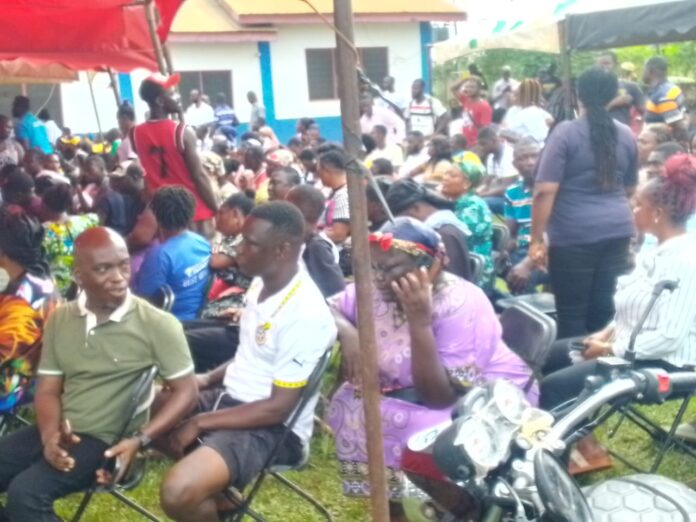
Speaking to the media, Mr Achia noted that although he had spent less than a year in office, there had been pressure from a section of the assembly members for a new election. 

He explained that while the standing orders of the assembly stipulate a two-year tenure for a presiding member, certain provisions appeared ambiguous, leading to differing interpretations among members. 

 “Some assembly members are calling for a new election, but others believe that I have only spent about 11 months in the office,” he said. 

 According to him, the District Coordinating Director, therefore, directed him to formally summon the meeting, which he complied with. 

On his expectations, Mr Achia said he remained confident in the decision of members, noting that he had served in both the eighth and ninth assemblies and believed members were familiar with his leadership. 

“I will leave the decision to the assembly members,” he added. 

Ghana moves to harness diaspora remittances for development 

0

Ghana is developing strategies to harness migration and diaspora remittances into its medium- and long-term development agenda to create jobs and drive sustainable economic transformation. 

In 2025 alone, the country received an estimated US$7.8 billion in remittances, representing nearly seven per cent of Gross Domestic Product (GDP). 

Despite their resilience and scale, a significant proportion of these inflows is channelled into household consumption, with limited impact on savings and productive investment. 

Dr Audrey Smock Amoah, Director-General of the National Development Planning Commission (NDPC), said the Commission had developed a toolkit in collaboration with the United Nations Economic Commission for Africa (UNECA) to integrate diaspora contributions into national and sub-national development plans. 

A speech delivered on her behalf by Mr Richard Tweneboah Kodua, Director of Research and Innovation at the NDPC, said the initiative sought to mainstream migration and remittances into development planning frameworks. 

Dr Amoah noted that an estimated 1.7 million Ghanaians live abroad across more than 50 destinations worldwide, with their remittances sustaining households, supporting education and health, and strengthening local economic activities. 

“This presents a clear opportunity for us to better harness diaspora resources for sustainable development, job creation, and economic transformation,” she said.   

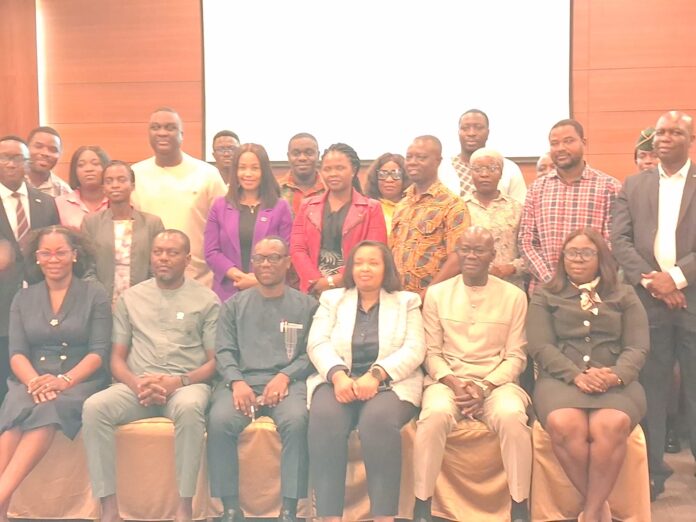
The capacity-building workshop brought together representatives from the Ministry of Labour and Employment, Ministry of Youth Development and Empowerment, the Ghana Statistical Service, the Bank of Ghana, and Metropolitan, Municipal and District Assemblies. 

Participants were trained on how to reflect migration dynamics and diaspora contributions in their respective development plans. 

Mr Amadou Diop, an Economic Affairs Officer at UNECA, said since 2024 the Commission had engaged six African countries, including Ghana, Comoros and Tunisia, to explore best practices for leveraging diaspora inflows to reduce poverty and enhance economic growth. 

He stressed that the success of the initiative depended on the active participation and commitment of institutions to ensure diaspora contributions were translated into tangible development outcomes. 

Minority vows to resist alleged “executive takeover” of anti-corruption fight

0

The New Patriotic Party (NPP) Minority Caucus in Parliament has accused the National Democratic Congress (NDC) Government of attempting to undermine Ghana’s anti‑corruption architecture by allegedly restoring executive control over prosecutions.

The Caucus warned government against allegedly attempting to “restore exactly the structure of vulnerability that the Office of the Special Prosecutor (OSP) was designed to kill.”

The Caucus said recent legal and policy developments could place anti‑corruption prosecutions back under the authority of the executive branch, defeating the purpose for which the OSP was established.

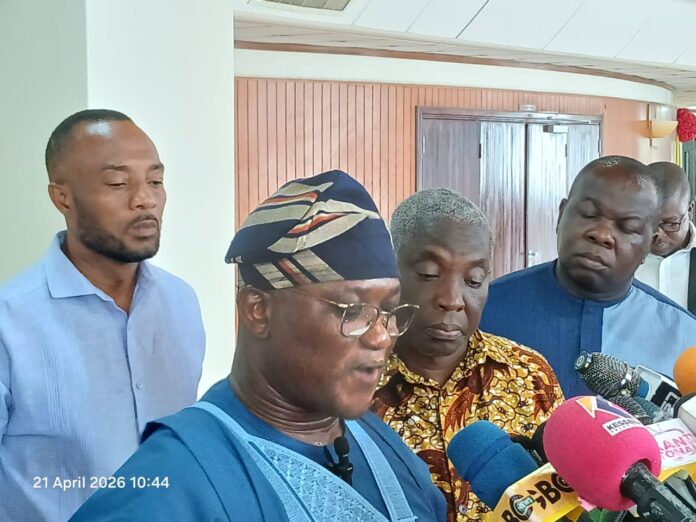
Addressing the Parliamentary Press Corps in Parliament on Tuesday, Mr Alhassan Tampuli Sulemana, Deputy Ranking Member of the Constitutional and Legal Affairs Committee, said the OSP was created because “government cannot be relied upon to prosecute itself.”

“It was created because the Attorney‑General, however distinguished, serves at the pleasure of the President,” Mr Sulemana stated.

“It was also created because history has shown repeatedly that corruption thrives when those who hold political power are also those who decide whether prosecutions should go forward.”

Speaking on behalf of the Caucus, Mr Sulemana alleged that actions by the NDC Government — including proposed legislative amendments, legal challenges and recent court decisions — were aimed at reversing the independence of the OSP.

“It was created because history has shown repeatedly that corruption in Ghana’s public life first is most vigorous when those who hold power are also those who decide whether it’s possible or not.

“What the NDC government has done through the repeal bill, through the petitions, through the Supreme Court violence, and now the High Court is to attempt to restore exactly the structure of vulnerability that the OSP was designed to kill,” he said.

He criticised arguments attributed to the Deputy Attorney‑General suggesting that the OSP must seek authorisation from the Attorney‑General before initiating prosecutions.

“They want an Attorney General who must authorise every prosecution. If you follow the argument of the Deputy Attorney General, he says that the Office of the Special Prosecutor must come to them. In other words every day he must take to the Attorney General Department. If he wants to prosecute Mister A, he goes for a warrant. He wants to prosecute Mister B, another to the Office of the Attorney General. Is that what we are saying? Is that the intendments of the law?” he asked.

According to the NPP MP for Gushegu, such an arrangement would amount to direct executive control over anti‑corruption prosecutions, allowing government to determine “case by case, ally by ally, which corruption case  is pursued and which is dead.”

The Minority Caucus vowed to resist any such move.

“The NPP Minority will pursue every parliamentary, constitutional and legal avenue available. We will not rest until this is resisted,” Mr Sulemana declared.

He argued that Ghana’s anti‑corruption framework, built over years of reform, was being weakened within months of the NDC assuming office.

“The evidence of our warning is before the Ghanaian people, who will be the ultimate judges,” he said.

Mr Sulemana further stated that until the Supreme Court conclusively determines the matter, Act 959 — the Office of the Special Prosecutor Act — remains in force.

“Until the Supreme Court speaks, the OSP stands, and the principle that no one — not even the President or any public officer — is above the law remains intact,” he added.

Meanwhile, an Accra High Court has ruled that the OSP does not have the constitutional authority to independently prosecute criminal cases and must refer all such matters to the Attorney‑General’s Department.

The ruling, delivered on Wednesday, April 15, 2026, by Justice John Eugene Nyadu Nyante, has placed ongoing OSP prosecutions in abeyance pending further legal direction.

The Court held that while the OSP is empowered to investigate corruption‑related offences, the initiation of prosecutions falls within the exclusive mandate of the Attorney‑General under the Constitution.

Atwima Nwabiagya South NPP opens nominations for polling station executive positions 

0

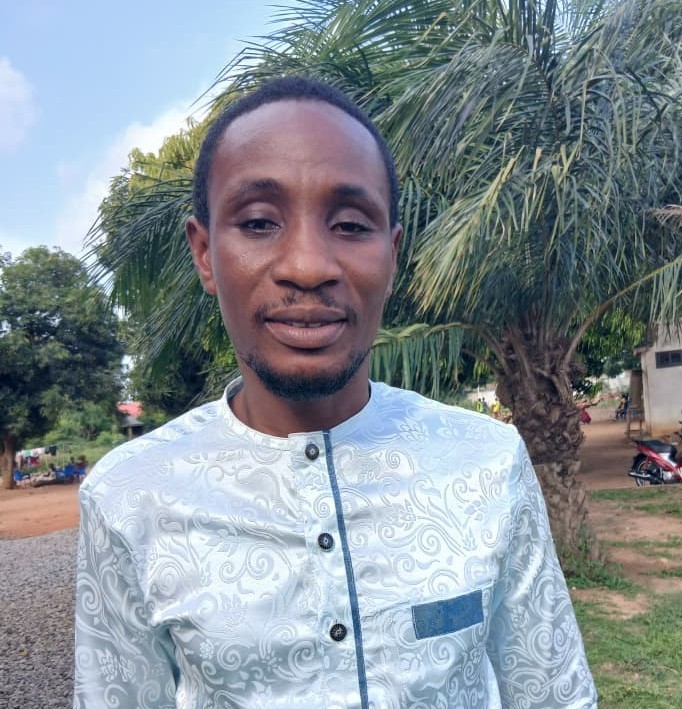
The Atwima Nwabiagya South constituency of the NPP has opened nominations for polling station executives’ positions in the party in the constituency. 

The positions declared are polling station chairperson, secretary, treasurer, organizer, women organizer, communications and electoral affairs officer. 

Mr Stephen Boateng, constituency chairman told the Ghana News Agency, in an interview that, the nominations would be opened for five days. 

He said, the 196 polling stations have been demarcated into eight zones to ensure a smooth exercise for the interested persons. 

This, he said, was to ensure fairness in the exercise. 

He said it was important to ensure that all interested persons seeking to work for the party were given the opportunity to file and contest positions they wished to serve for the party. 

Mr Boateng stressed the readiness of the constituency executives to strictly apply the directives from the national level of the party in connection with the exercise. 

He urged the contestants and the entire members of the party to cooperate for a peaceful and successful completion of the exercise 

As at the time of filing this report, about 100 persons had picked their forms to contest for various positions at the polling station levels in the constituency. 

War increases poverty in Sudan to 70%, UN says.

0

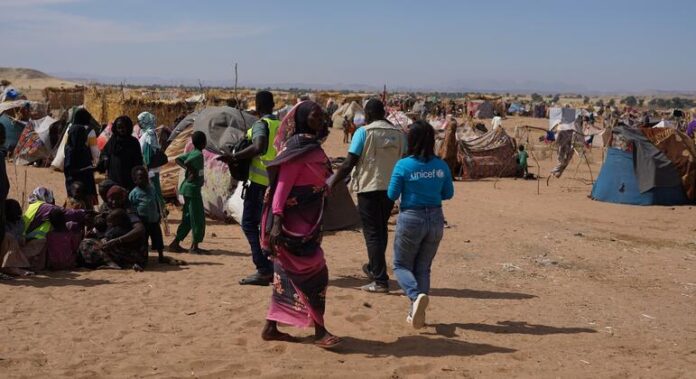
According to a top UN official, about 70% of Sudanese citizens are now living in poverty, nearly double the pre-war rate, as conflict continues to damage the country’s economy and social fabric.

According to Luca Renda of the United Nations Development Programme, poverty has increased from approximately 38% prior to the war to an estimated 70% today.

The numbers are based on a daily income of approximately four dollars, with at least one-quarter of the population living on less than half of that amount.

The hardest-hit regions
Conditions are most terrible in South Kordofan and North Darfur, where up to 75% of population experience extreme destitution.

These regions remain among the most affected by ongoing fighting.

A protracted humanitarian crisis

Now in its fourth year, the war between the Sudanese army and the paramilitary Rapid Support Forces has killed tens of thousands and displaced more than 11 million people.

Hunger and famine conditions have spread across multiple regions, with over 21 million people facing severe food insecurity.

International response

Donors are expected to gather in Berlin to revive stalled peace efforts and mobilize humanitarian aid.

The UN warns that incomes have fallen to levels not seen since 1992, with extreme poverty now worse than in the 1980s.

“These are not just numbers,” Renda said, describing families torn apart and a generation at risk of losing its future.

Violence shows no sign of easing

Fighting continues to intensify in Kordofan and Blue Nile, while recent drone strikes have killed hundreds of civilians.

Analysts say there is little indication that hostilities will subside anytime soon, deepening one of the world’s most severe humanitarian crises.

Ghana midfielder Thomas Partey has pleaded not guilty to new rape charges.

0

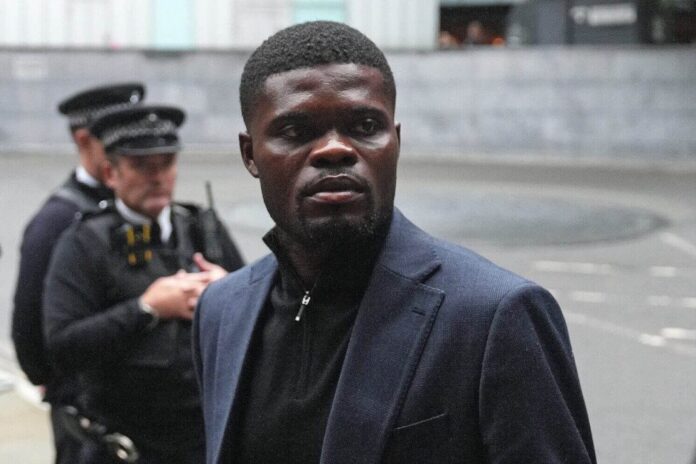
Ghana player Thomas Partey has pleaded not guilty to two additional rape charges.

On Monday (13 April), the 32-year-old footballer appeared at Southwark Crown Court in London, United Kingdom.

He denied twice raping a lady in the English capital in December 2020.

Partey was already charged in July 2025 with five charges of rape and one count of sexual assault stemming from alleged incidents in 2021 and 2022, according to Sky Sports.

He also pleaded not guilty to the accusations.

The fresh claims were made in February. On Monday, Judge Tony Baumgartner decided that all charges will be tried simultaneously, potentially postponing the trial until January 2027.

In total, the former Arsenal player faces seven allegations of rape and one of sexual assault from four different women. He denies all the accusations.

“Thomas Partey continues to deny all charges against him. He has cooperated with the police throughout,” his lawyer Jenny Wiltshire said on Monday.

Partey, who joined La Liga club Villareal last summer, remains out on bail throughout the legal proceedings.

The Ghana midfielder is expected to play in the upcoming FIFA World Cup starting in June, although a new muscle injury is raising concerns regarding his participation.

In the meantime, Partey’s case is due to be listed in court for a pre-trial hearing on 14 May, according to Sky Sports.

Uganda kindergarten killings trial begins with defendant pleading not guilty.

0

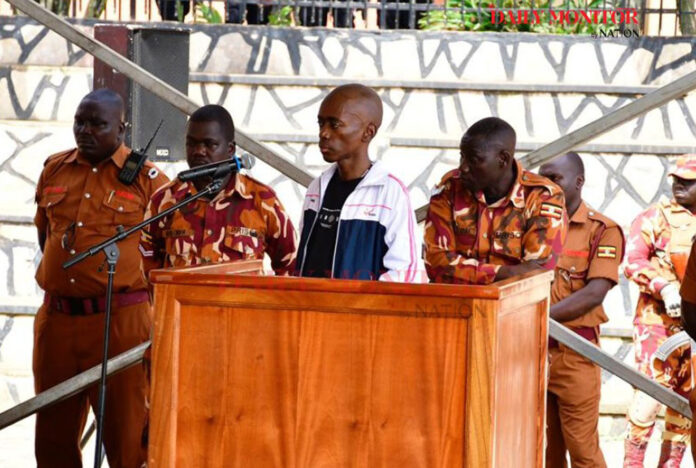
A case that has shaken Uganda is now front and center in court. Christopher Okello Onyum’s trial in Kampala has officially began. He is accused of killing four small children in a crime that has shook the nation. Despite prosecutors’ claims that he previously admitted to the killings, Onyum has pleaded not guilty.

“I plead not guilty to this charge, my lord,” he told the court.

Onyum is accused of fatally stabbing the children at a kindergarten. He was arrested on April 2 while allegedly trying to flee the scene and has denied all four counts of murder.

Public reaction has been strong, with some Ugandans expressing frustration over the pace of the judicial process. Swabrah Kirabo, a university student, said the case could drag on, reflecting concerns about delays in the legal system.

Prosecutors say that in an earlier hearing, Onyum confessed to the killings. The victims were aged between just 15 months and two and a half years. He allegedly claimed he believed the act of so-called “human sacrifice” would make him rich, an assertion that has added another layer of shock to an already devastating case.

Ex-Nigeria oil chief denies £2 million bribery allegations in London court.

0

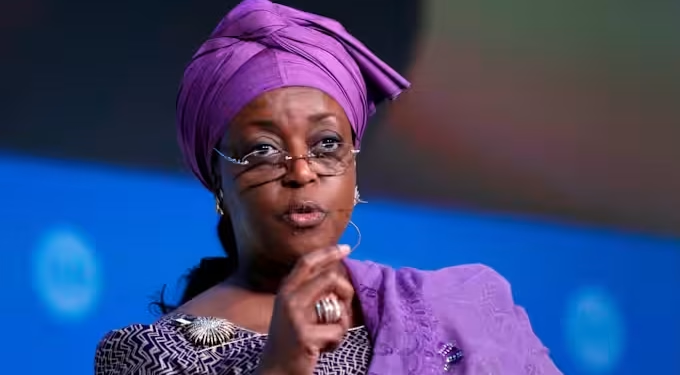
Diezani Alison-Madueke, a former Nigerian oil minister, refuted corruption allegations as she testified in a London court, dismissing claims that she accepted payments while in office.

Speaking at Southwark Crown Court on Monday, the 65-year-old stated that she “did not abuse” her position as Nigeria’s Minister of Petroleum Resources from 2010 to 2015.

She is facing five counts of receiving bribes and one count of conspiracy to commit bribery.

Allegations of luxurious benefits
Prosecutors claim Alison-Madueke received a number of high-value favours from energy companies pursuing government contracts in Nigeria.

These include access to multimillion-pound residences in the United Kingdom, private jet travel, chauffeur-driven cars, and high-end shopping excursions.

Among the expenses highlighted in court is a reported £2 million spending spree at Harrods, along with £100,000 in cash said to have been received during her time in office.

Strong denial in court

In her testimony, Alison-Madueke firmly rejected the accusations. “At no time did I ask for, take or seek a bribe,” she told the court.

She maintained that travel logistics and financial arrangements linked to her official duties were handled by Nigerian National Petroleum Company. According to her, any services provided were later reimbursed through official channels.

Co-defendants plead not guilty

The case also involves other defendants. Olatimbo Ayinde denies two bribery charges, while Alison-Madueke’s brother, Doye Agama, has pleaded not guilty to conspiracy to commit bribery.

The trial is expected to examine the relationships between public officials and private energy firms operating in Nigeria’s oil sector.

Legacy and wider investigations

During her tenure, Alison-Madueke oversaw Nigeria’s state oil industry and became the first female president of OPEC. She had pledged to reform the sector, though her time in office has been overshadowed by longstanding corruption allegations.

Nigeria’s anti-corruption agency has previously secured court orders to seize properties, vehicles and jewellery believed to be linked to illicit funds connected to her and her associates.

Authorities say some of these assets are located in the United States and the United Kingdom.

Alison-Madueke has spent much of her time in the UK since leaving office, as legal proceedings continue.

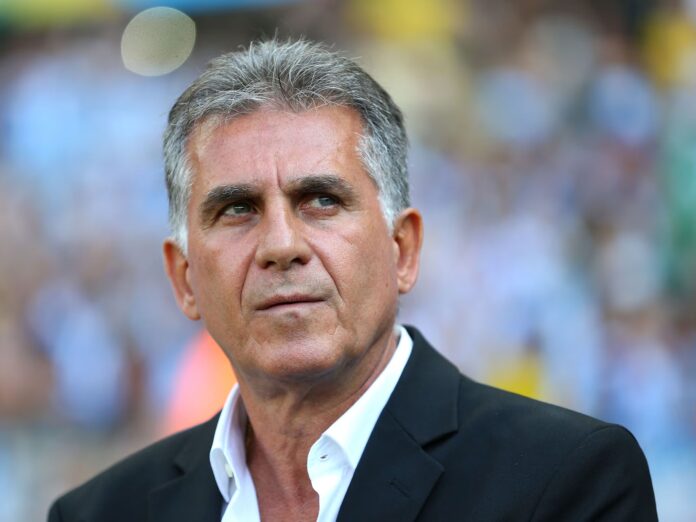
Queiroz eyes stellar stint as he takes charge of Ghana’s Black Stars

0

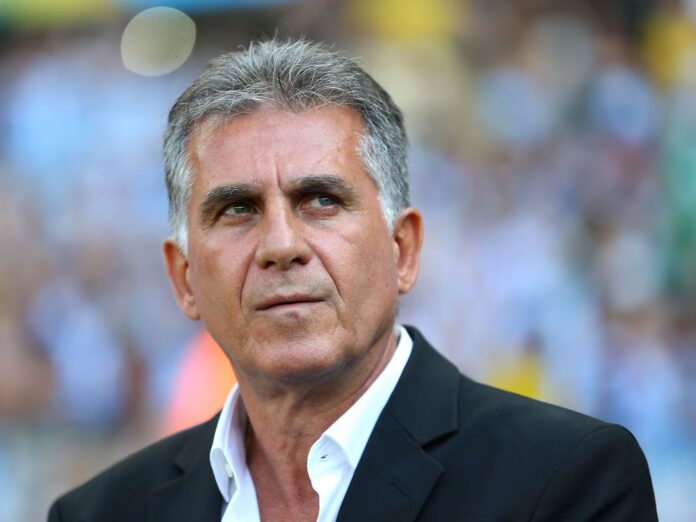
Veteran Portuguese coach Carlos Queiroz says he has assumed the role of head coach of Ghana’s Black Stars with a strong sense of responsibility.

The highly experienced tactician was appointed as the new Black Stars coach ahead of the 2026 FIFA World Cup, which would be held in the United States, Canada, and Mexico.

Speaking after his appointment, Queiroz expressed gratitude to the Ghana Football Association (GFA) for entrusting him with the head coach role.

“It is with a deep sense of gratitude to GFA, responsibility and humility that I embrace this new chapter with the National Football Team of Ghana,” he said.

Reflecting on his career and the task ahead, Queiroz described the Ghana job as more than a routine appointment.

“Football has given me a lifetime of challenges, lessons and unforgettable journeys all over the world. Today, I accept this mission with the same passion and commitment that have guided me throughout my career.

“Ghana is a nation of talent, pride and footballing soul. I arrive with respect for its history and belief in its future. Together, with unity, discipline and ambition, we will work to honour the expectations of a great football nation,” he said.

He stressed that success would require collective effort and a clear identity.

“This is not just another job — it is a mission. And I am ready to give all of my experience and knowledge once again in service of the game and the happiness of the people,” he added.

Queiroz brings decades of experience at the highest levels of club and international football. Over a long career, he has coached European giants Real Madrid and Manchester United and led several national teams, including Portugal, Iran and South Africa.

He has appeared at four World Cups as a head coach, guiding South Africa to qualification for the 2002 tournament, taking Portugal to the knockout stage in 2010, and leading Iran at the 2014 and 2018 finals.

He has also had stints with Egypt, Oman, Japan and Qatar.

Queiroz would lead Ghana at the upcoming World Cup, where the Black Stars would open their campaign against Panama before facing England and Croatia, respectively.

GFA appoints Carlos Queiroz as new Black Stars coach

0

The Ghana Football Association (GFA) has announced the appointment of Carlos Queiroz as head coach of the senior national team, the Black Stars.

The former Real Madrid, Manchester United, Portugal, and Iran coach would lead Ghana’s campaign at the 2026 FIFA World Cup in Canada, Mexico, and the United States.

The 73-year-old brings extensive World Cup experience. He led South Africa to qualification for the 2002 finals, guided Portugal to the knockout phase in 2010 and was in charge of Iran at the 2014 and 2018 World Cups.

His previous coaching roles also include spells with Egypt, Oman, Japan and Qatar.

Queiroz takes up the role with immediate effect as Ghana prepares for the tournament, which begins in June 2026.

Ghana would play its first group match against Panama on June 17, 2026, in Toronto, Canada before facing England and Croatia in the other group matches.