
Home Blog Page 10

GUTA suspends trade action over AI system

0

The Ghana Union of Traders’ Associations (GUTA) has suspended its planned nationwide trade action over the Publican Artificial Intelligence system after engaging the Ghana Shippers’ Authority (GSA).

The decision follows a high-level meeting involving GUTA, freight forwarders and officials of the Authority to address concerns by traders.

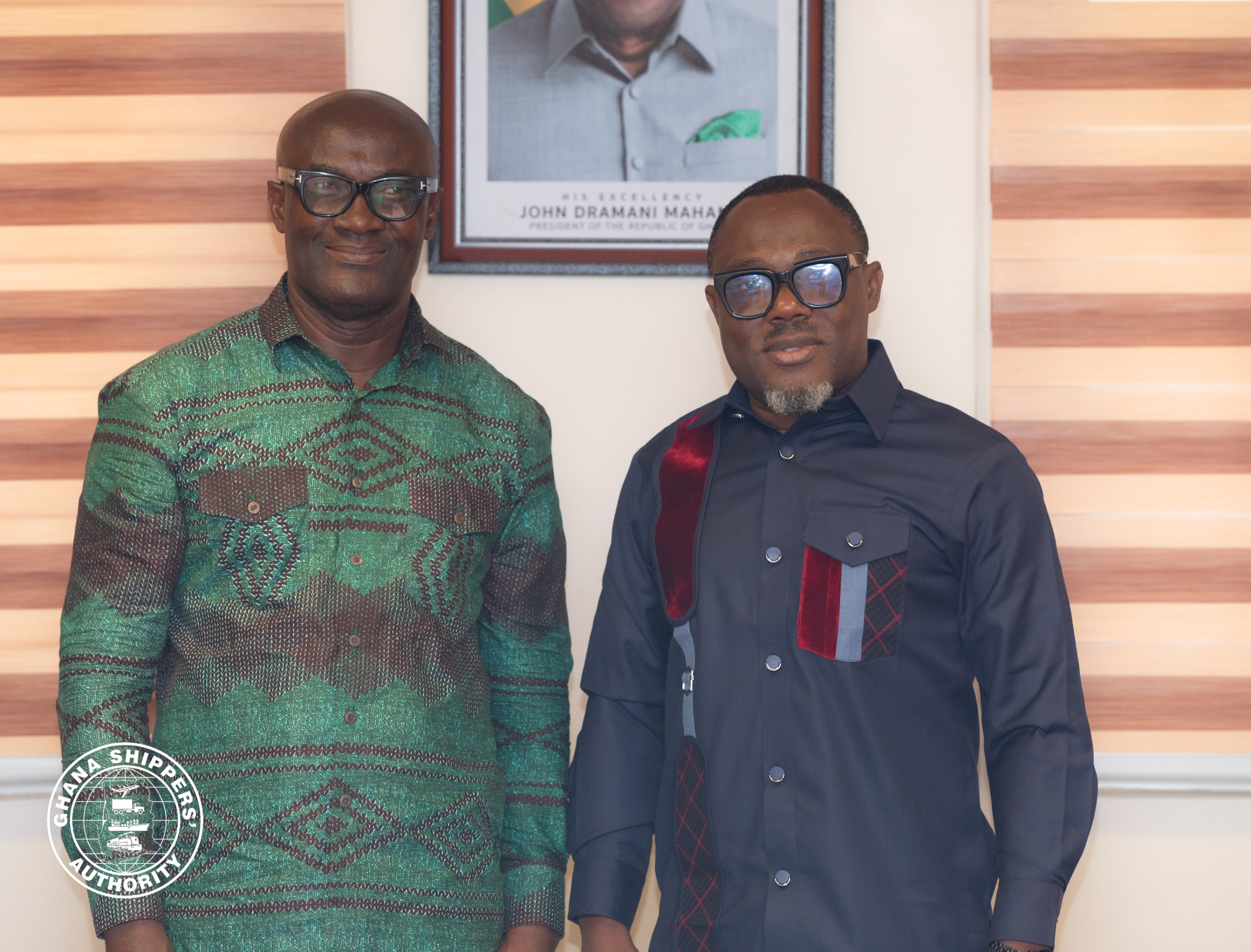
Professor Ransford Gyampo, Chief Executive Officer of the GSA, said dialogue and collaboration were essential in resolving issues within the trading sector.

He assured traders that their concerns would be addressed through appropriate institutional mechanisms and reiterated the Authority’s commitment to a fair and efficient trading environment.

Prof Gyampo said ongoing reforms were aimed at improving efficiency and supporting national economic development.

Earlier, GUTA had directed its members, including freight forwarders and clearing agents, to suspend payment of duties and halt operations from April 13 to April 17, 2026.

The action was intended to compel authorities to suspend the AI system for broader stakeholder consultations.

However, following the meeting, the Association agreed to suspend the full rollout of the action to allow for further engagement, including a scheduled meeting with Joseph Nikpe Bukari, Minister of Transport, on April 16, 2026.

Mr. Clement Boateng, GUTA President, welcomed the engagement but maintained that the Publican AI system should be suspended for further consultations.

He expressed concern over rising duties under the system, which he said were adversely affecting traders and manufacturers and could lead to business closures.

GUTA said it remained committed to engaging stakeholders to ensure reforms in the sector were transparent, inclusive, and beneficial to all players.

Advocate calls for constitutional quotas to boost women’s political representation

0

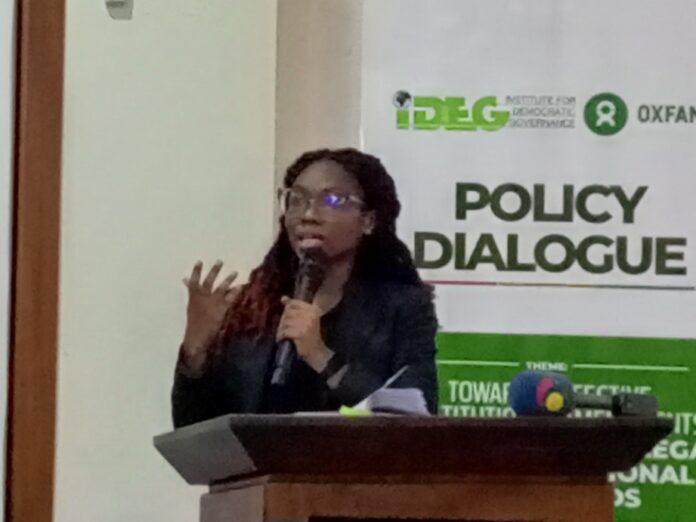
Becky Enyonam Ahadzi, a Women’s Rights Advocate, has called for constitutional safeguards to boost women’s political representation.

She said challenges facing women in politics stemmed from the absence of structural guarantees despite existing legal provisions.

Ms Ahadzi, who is also the Coordinator of the Affirmative Action Law Coalition, made the call at a policy dialogue in Accra.

The dialogue, organised by the Institute for Democratic Governance (IDEG) in partnership with Oxfam, brought together legal experts, political actors, civil society organisations and youth leaders.

Ms Ahadzi said although Article 17 of the Constitution guaranteed equality, weak enforcement had not yielded equitable outcomes in women’s political participation.

She said Ghana’s electoral system contributed to the imbalance.

“The country operates the first-past-the-post system, a system that does little to support women’s representation.

“In a political landscape shaped by entrenched patriarchal norms and increased monetization of politics the chances and success of women as leaders are limited,” she said.

Ms. Ahadzi compared Ghana with countries such as Rwanda and Kenya, where proportional representation systems had increased women’s participation.

She said those countries had adopted constitutional quotas that also catered for youth and persons with disabilities as part of inclusive governance efforts.

Ms. Ahadzi said the ongoing constitutional review process provided an opportunity to implement enforceable reforms to strengthen women’s representation.

She, however, noted that the current report of the Constitution Review Committee did not include provisions for quotas for women in Parliament and local government.

Participants at the forum emphasised the need for institutional safeguards to promote a more inclusive and representative democratic system.

MTN Momo staff walk to promote wellness and fitness 

0

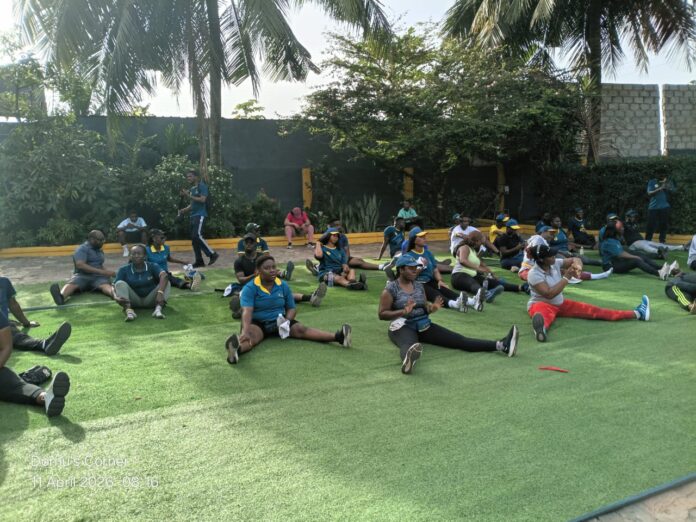
Staff of MobileMoney Fintech LTD (MMFL), the newly merged mobile money business on Saturday embarked on a spirited health walk aimed at promoting fitness and a healthy lifestyle. 
 
Dubbed the “MMFL Staff Wellness Walk,” the electrifying 8-kilometre trek kicked off from Ayi Mensah, as participants powered their way up the mountainous stretch with determination and rhythm. 

The energy peaked at the iconic Peduase Lodge, where the adventure climaxed in a burst of high-octane aerobic sessions, turning the finish line into a full-blown fitness celebration. 
 
MMFL, rebranded from MobileMoney Limited (MMlL) effective March 31, 2026, as a standalone entity that now operates all MTN Mobile Money (MoMo) services, focusing on scaling fintech growth while complying with regulatory requirements. 
 
Over 80 staff of MMFL took part in the early morning walk, to challenge staff to maintain a healthy lifestyle and keep fit for the year ahead, as well as to inculcate teamwork and togetherness. 
 
Mrs Dzifa Romano Mensah, Head, Human Resource at MMFL, speaking to journalists after the aerobic sessions at the Peduase Lodge, said the initiative was to empower staff to maximise efficient services to their customers.  

She indicated that similar exercises are planned for the latter part of the year to drive wellness and superior customer services. 
“This is not just about keeping us safe but also ensuring that we are performing and delivering when it comes to our business,” Mrs Mensah said. 

She described the experience as both rewarding and inspiring, emphasizing the importance of unity and collaboration. 
 
“It’s been definitely worth it and amazing. Not just walking but holding each other because our strengths are different, and that’s the power of teamwork. We are also a family because MMFL brings us all together.” 

Wholesale constitutional reform not practicable – Professor Quashigah

0

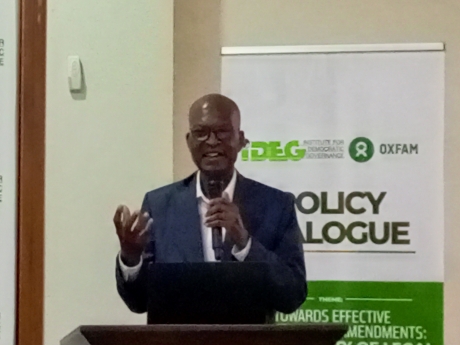
Professor Kofi Quashigah, a constitutional law expert, has cautioned against wholesale constitutional reform in Ghana, warning that sweeping changes could prove legally impracticable and destabilising.

He explained that the stringent requirements under Article 290 made such reforms difficult to achieve, particularly within limited political timelines.

Prof Quashigah  gave the caution at a policy dialogue organised by the Institute for Democratic Governance (IDEG) in Accra.

“Wholesale constitutional reform is not feasible under the current constitutional framework, particularly due to the strict provisions governing amendments,” he stated.

The event, held on the theme “Towards Effective Constitutional Amendment: The Necessity of Legal and Institutional Safeguards,” was organised by IDEG in collaboration with Oxfam.

It brought together legal scholars, policy analysts, political party representatives, civil society organisations and youth leaders.

Prof Quashigah acknowledged that amendments to non-entrenched provisions may be achievable but expressed doubt about completing major reforms within the lifespan of a single government administration.

He emphasised that constitutional reform must be approached in a structured, incremental manner to avoid unintended consequences across the broader legal and institutional framework.

Prof Quashigah noted that regardless of any amendments made, public dissatisfaction with governance would continue to drive demands for further changes, hence the need for a more flexible and responsive amendment process.

Touching on the way forward, he stressed the need for strong, specialised institutions to oversee and sustain the amendment process, rather than relying on ad hoc arrangements.

Prof Quashigah, drawing inspiration from practices in Illinois and California, advocated a continuous approach to constitutional review.

He proposed institutionalising periodic reviews every 20 to 25 years to sustain public participation and ensure the Constitution reflects contemporary needs.

Trump backs off Iran strike threat and agrees to a two-week truce timeframe.

0

U.S. President Donald Trump announced late Tuesday that he is backing down from his threats to launch devastating strikes on Iran, attempting to deescalate the conflict less than two hours before the deadline he set for Tehran to yield or else a “whole civilisation will die tonight.”

Trump said he was postponing his threatened attacks on Iranian bridges, power plants, and other civilian targets in exchange for Tehran agreeing to a two-week cease-fire and the reopening of the Strait of Hormuz, the critical waterway through which a fifth of the world’s oil is transported during peacetime. He also stated that Iran has provided a “workable” 10-point peace plan to assist stop the war between the United States and Israel, which began on February 28.

Iran’s Supreme National Security Council said it has accepted a two-week ceasefire in the war and that it would negotiate with the United States in Islamabad beginning Friday. “It is emphasized that this does not signify the termination of the war,” the council’s statement said.

Iranian Foreign Minister Abbas Araghchi said passage through the Strait of Hormuz would be allowed for the next two weeks under Iranian military management. It wasn’t immediately clear whether that meant Iran would loosen its chokehold on the waterway crucial to global energy supplies.

In a post on his social media site, Trump said that provided Iran agreed “to the COMPLETE, IMMEDIATE, and SAFE OPENING of the Strait of Hormuz” he would “suspend the bombing and attack of Iran for a period of two weeks.”

Since the war began on Feb. 28, Trump has repeatedly backed off of deadlines just before they expire.

In doing so again Tuesday, Trump said he had come to the decision “based on conversations” with Pakistan Prime Minister Shehbaz Sharif and Gen. Asim Munir, Pakistan’s powerful army chief. Sharif, in a post on X hours earlier, urged Trump to extend his deadline by two weeks to allow diplomacy to advance. He used the same post to ask Iran to open the strait for two weeks.

The president said in his social media post that Iran has presented “a workable basis on which to negotiate.”

“Almost all of the various points of past contention have been agreed to between the United States and Iran, but a two week period will allow the Agreement to be finalized and consummated,” Trump said.

‘We must reject division:’ UN chief marks 32 years since the beginning of the Rwandan atrocity.

0

On Tuesday, Rwanda commemorated the 32nd anniversary of the genocide, which killed over a million people in just 100 days.

The majority of the fatalities were Tutsis, but Hutus and individuals opposed to the violence were also slaughtered.

The United Nations Secretary General, Antonio Guterres, delivered a statement in which he mourned the victims and paid tribute to the surviving.

“We must do more than remember the dead. We must protect the living, by defending truth and rejecting narratives that make violence seem acceptable. With history as our guide, and the prevention of genocide as our goal.”

He called on people to remember the lessons from 1994 and take action every day “by confronting hate wherever it appears. By rejecting distortion and division. By strengthening education, rooted in historical truth and human dignity. And by intervening before dangers spiral out of control.”

Guterres also issued a warning:

“Today, digital platforms allow hate speech and incitement to violence to spread faster and farther than ever before — fuelled by artificial intelligence and misguided algorithms.

“The genocide against the Tutsi shows us where this path can lead; when words are weaponised and the world waits too long to respond. We must do more than remember the dead. We must protect the living — by defending truth and rejecting narratives that make violence seem acceptable. The ancient toxins of racism, misogyny, antisemitism, and anti-Muslim bigotry are once again corroding our political discourse.”

‘Africa stands firm for peace’

Members of the African Union also commemorated the anniversary at the organisation’s headquarters in Addis Ababa, Ethiopia.

“We remember over one million lives lost to hatred, indifference, and inaction,” said AU Chairman Mahmoud Ali Youssouf.

“Kwibuka (meaning ‘to remember’) is not only a moment of mourning, but also a call to truth, responsibility, and vigilance.

“Africa affirms: Never again will organised hatred be allowed to become a political project,” he said. “Remembrance obliges us to act, to prevent, and to defend human dignity everywhere. Africa stands firm for peace, justice, and the protection of all.”

On April 7, 1994, a day after the presidents of Rwanda and Burundi died in a missile attack on their aircraft, the moderate Hutu prime minister of Rwanda, Agathe Uwilingiyimana, and her husband were killed by Rwandan soldiers; in the 100 days that followed, Hutu extremists slaughtered hundreds of thousands of minority Tutsi and Hutu moderates.

Two young Ghanaians secure Bank of Canada licence for fintech firm

0

Two young Ghanaian entrepreneurs have secured a major international regulatory milestone for their fintech company, WeWire, following its registration as a Payment Service Provider (PSP) under the Bank of Canada.

The licence, granted under Canada’s Retail Payment Activities Act, formally recognises WeWire as a registered fintech within the Canadian financial regulatory system.

A statement issued in Accra said the development marked a significant breakthrough for Ghana’s fintech ecosystem, highlighting the growing influence of African-led digital financial solutions on the global stage.

WeWire, a cross-border payments company with operational leadership based in Accra, focuses on simplifying international money transfers for businesses and individuals.

The company is led by Ebenezer Ghanney, Chief Executive Officer, and Desmond Nyamador, Chief Technology Officer.

Mr Ghanney said the milestone demonstrated that Ghanaian startups could meet the stringent compliance and operational standards required by advanced economies.

“I am thrilled to share that WeWire has officially been granted a Payment Service Provider licence. This makes us a registered fintech under the Bank of Canada,” he said.

He noted that the approval would enhance the company’s ability to deliver faster, more secure, and cost-effective payment solutions across multiple markets.

He said unlike many fintech firms that rely on several intermediaries, WeWire aimed to move closer to core financial infrastructure to reduce delays and transaction costs.

Mr Ghanney said the PSP status would enable it to offer more direct and efficient payment services for businesses operating across borders.

Mr Nyamador said the milestone followed another global recognition for the company after it was featured in the USDT Ecosystem Directory by Tether.

The listing places WeWire among a select group of fintech firms contributing to the expansion of digital finance and stablecoin adoption worldwide.

Industry data indicates that stablecoins accounted for about 43 per cent of Sub-Saharan Africa’s crypto economy in 2024, with transaction volumes estimated at 54 billion dollars.

He said the firm had already processed more than three billion dollars in transactions for over 3,000 businesses across 80 countries.

He noted that the new licence would support faster settlements, improved transparency, and stronger security for its users.

The Chief Technology Officer said the development would also enhance financial linkages between Africa and North America, particularly for businesses engaged in cross-border trade.

Mr Ghanney said the company remained committed to building financial infrastructure that enabled businesses in emerging markets to compete globally.

“For businesses to scale internationally, their money must move as fast as their ideas, and that is what we are building,” he said.

Kadjebi Zongo/Estate Assemblywoman eyes Akan NPP Women Organiser portfolio

0

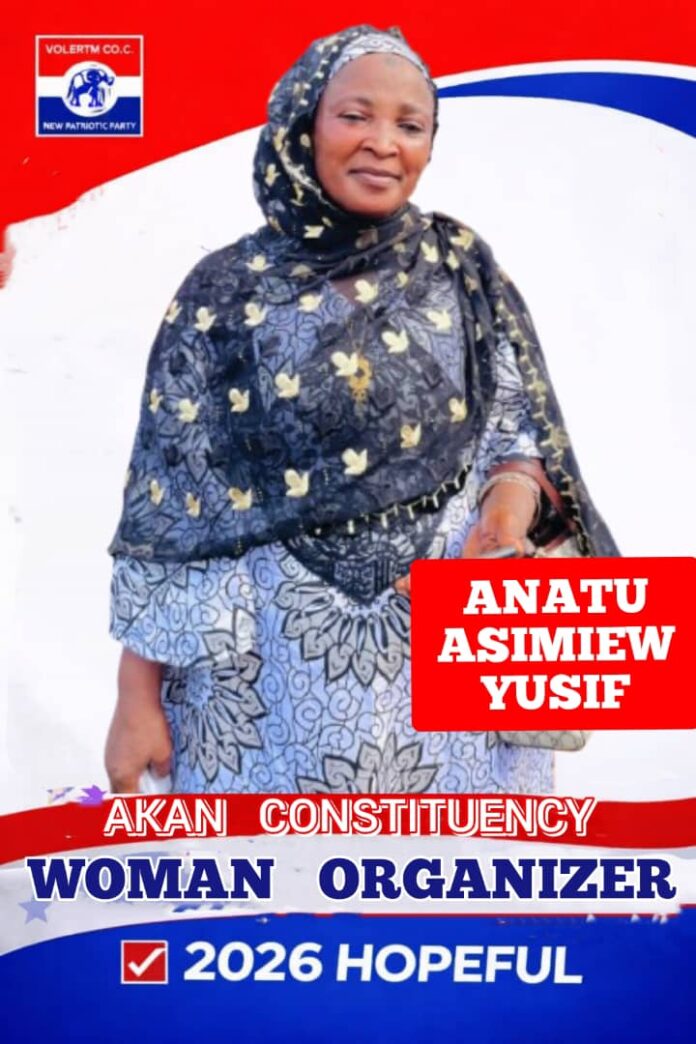
Mrs Annatu Asimiew Yusif, Assemblywoman for the Kadjebi Zongo/Estate Electoral Area in the Oti Region, has declared her intention to contest for the Women Organiser position of the New Patriotic Party (NPP) in the Akan Constituency.

Speaking to the Ghana News Agency (GNA), Mrs Yusif said her years of service at the grassroots level had equipped her with the requisite experience and leadership skills to mobilise and empower women within the party.

She explained that her tenure as Assemblywoman had afforded her the opportunity to engage women across various communities, understand their challenges, and advocate initiatives aimed at improving their socio-economic well-being.

Mrs Yusif, who also serves as the Deputy Nasara Coordinator for Akan NPP, emphasised that strengthening the role of women in the party remained critical to securing victory in the 2028 elections.

She pledged to champion programmes that would enhance the economic independence of women, including skills training, access to microfinance opportunities, and support for small-scale enterprises.

According to her, empowering women financially would not only improve their livelihoods but also increase their active participation in party organisation and campaign activities.

Mrs Yusif further indicated her commitment to fostering unity within the party at the constituency level, noting that collaboration among members would be key to achieving electoral success.

She called on party delegates to support her bid when nominations were opened, assuring them of her dedication, accessibility, and readiness to serve in the interest of the party.

Mrs Yusif reiterated that with collective effort and strategic mobilisation, the NPP in the Akan Constituency would be well-positioned to make significant gains in future elections.

Digital skills project transforms women-led businesses in Nadowli-Kaleo District

0

A digital skills intervention targeting women-led micro and small enterprises in the Nadowli-Kaleo District has significantly improved business performance, confidence, and market access among beneficiaries.

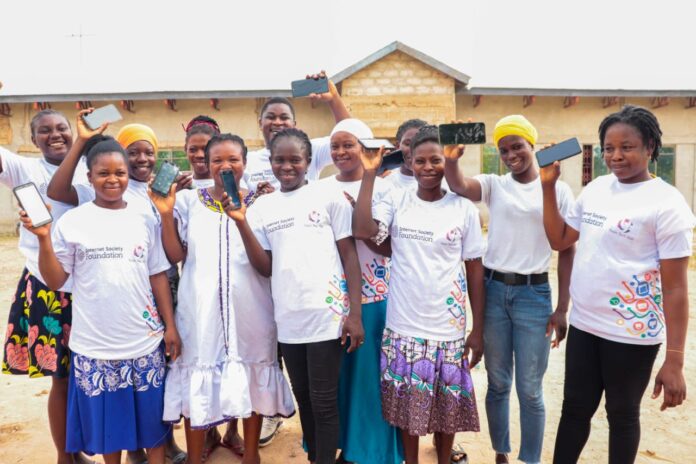
The intervention, “The SMART Woman Project,” is a structured, community-based digital inclusion initiative designed to equip women entrepreneurs with practical digital skills for business growth.

It was implemented by Yison Tech Hub with funding support from the Internet Society Foundation.

Ten communities—Nadowli, Serikpere, Charikpong, Kalsegra, Sombo, Goli, Sankana, Takpo, Kaleo, and Loho—benefited from the project.

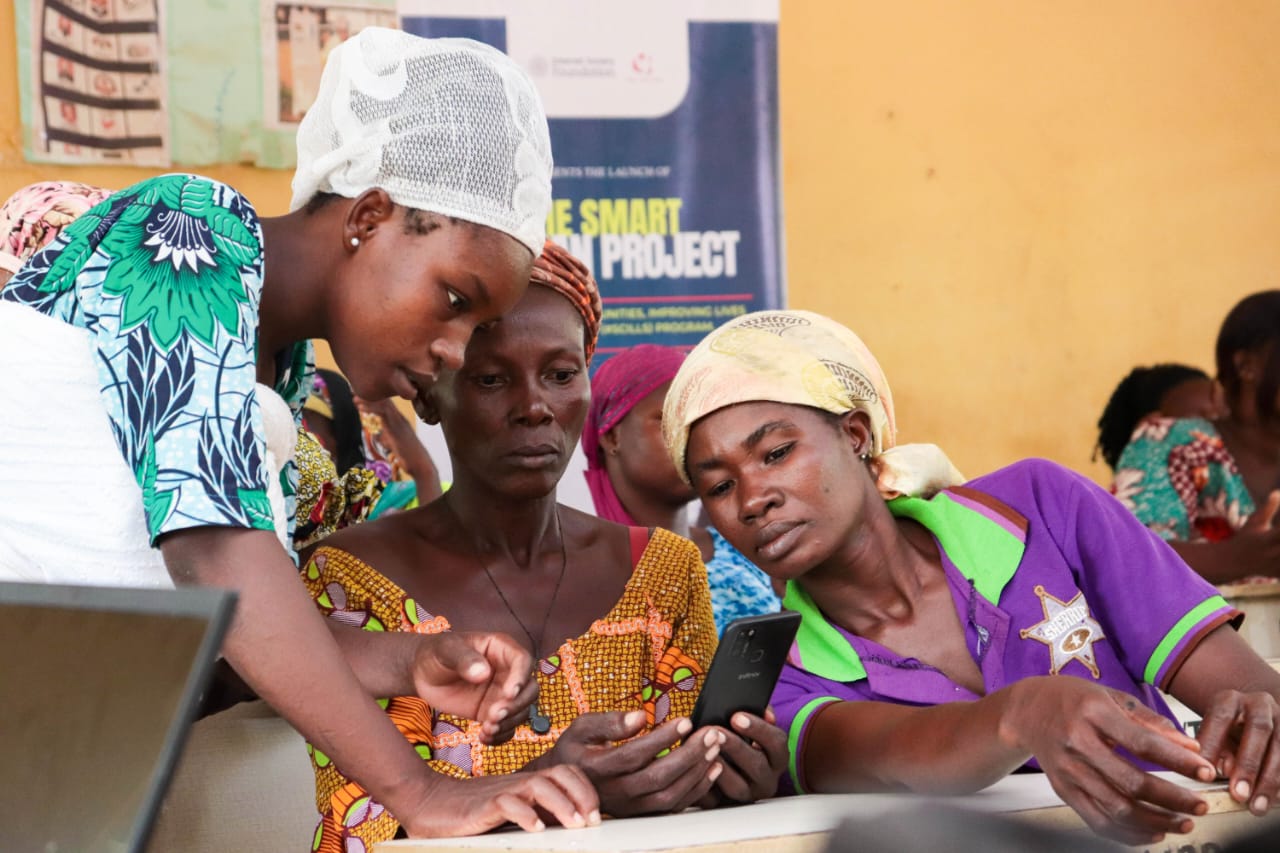
Speaking to the Ghana News Agency (GNA), Madam Joan Mwinkaara, a beneficiary from Nadowli, said the training had enabled her to use social media platforms such as Facebook and WhatsApp to market her business.

Madam Charit, a weaver from Sankana, said she had learned to create videos and pictures of her weaving products and share them online to attract customers.

Agartha Ormuo, also a weaver, noted that the project had helped her acquire business record-keeping skills, enabling her to secure a loan from a financial institution to expand her operations.

Other beneficiaries reported notable improvements in their businesses, with Ms Saala Vida indicating that she now manages a mobile money account for her enterprise, while Madam Niamatu Jackalia said she uses WhatsApp to showcase her dressmaking designs to clients.

Beneficiaries expressed gratitude to Yison Tech Hub and its partners for the initiative, which has enhanced their businesses and livelihoods.

Serikpera Naa Issahaque, Executive Director of Yison Tech Hub, said the project aimed to build digital capacity among women in underserved communities to improve income generation and economic resilience.

He noted that the initiative attracted more than 1,000 applicants against a target of 200 beneficiaries, with over 80 per cent meeting eligibility criteria.

Out of this, 220 women were enrolled and completed the training, exceeding both enrolment and completion targets within the allocated budget.

The training covered smartphone usage, mobile money operations, social media marketing, basic digital bookkeeping, and safe internet practices.

It also focused on enhancing business visibility through platforms such as WhatsApp Business, Facebook, TikTok, Snapchat, and Instagram for product promotion and customer engagement.

Mr Issahaque said the project increased digital confidence, with 200 women (91 per cent) reporting improved comfort in using the internet and digital tools.

He added that 189 participants (86 per cent) recorded improved business performance, including increased sales, expanded marketing, and higher profits.

He expressed hope that the project would be extended to other communities to scale up its impact on improving women’s livelihoods in the region.

Cocoa farmers amplify plights, urge gov’t to keep them in cocoa producing business

0

Cocoa Farmers at Ntotroso, a mining community in the Asutifi North District of the Ahafo Region have amplified their voices, urging the government to alleviate their plights, and to keep them in the cocoa producing business.
They also called on the government to do something about the reduction of the cocoa producer price, and pay them immediately, describing their present socio-economic condition as appalling.
The aggrieved farmers said the reduction in the cocoa producer price and delays in government payment were discouraging, making cocoa farming unattractive in the area.
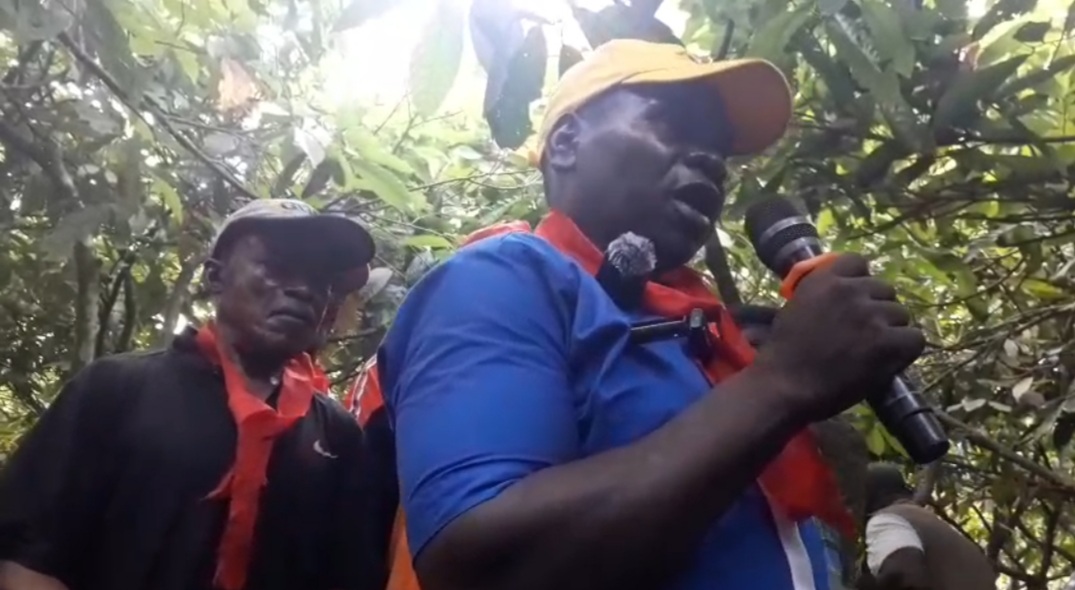
They shared their concerns during an interaction with the Minority Caucus in Parliament at Ntotroso, a mining community in the Newmont Ahafo South concessional area.
A farmer who spoke on condition of anonymity said he migrated from the Northern part of the country to farm and added that he would be left without any option than to leave cocoa farming and return to the North to engage in cattle rearing.

“I am a Grusi and John Mahama is a Gonja. I am unhappy about what he is doing to us and so please tell him to do something about our condition”, he stated. Another female cocoa farmer recounted that since her husband died 16 years ago, cocoa farming remained the only source of socio-economic livelihood for her and the entire family.
She noted that the government had been unfaithful to the cocoa farmers, saying that: “We are now struggling to provide for the needs of our families”.
Earlier, Mr Frank Annoh-Dompreh, the Minority Chief Whip and the MP for Nsawam Adoagyiri told the farmers that the caucus was in the area to listen to their problems and concerns and to find lasting solutions.
He emphasised that Parliament remained dedicated to amplifying the voices and concerns of cocoa farmers and calmed their nerves, assuring that the MPs would do everything possible for their concerns to be addressed, and their plights alleviated.