Home Blog Page 90

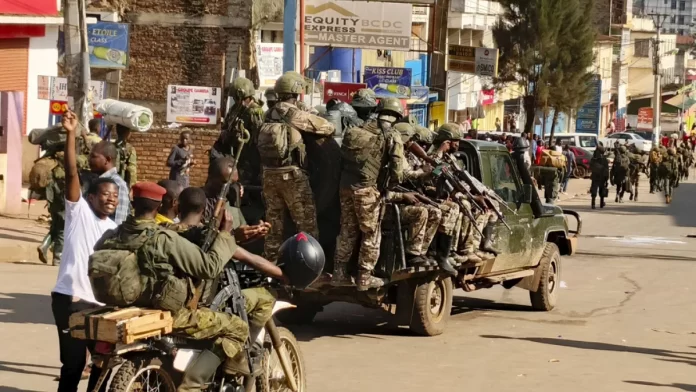
Following the capture of Bukavu, the rebel-held territory grows.

0

In front of the South Kivu governor’s office in Bukavu, M23 leader Bernard Maheshe Byamungu, who has been sanctioned by the U.N. Security Council for violating human rights, informed the locals that they had been living in a “jungle.”

As several of the young men in the small group encouraged the rebels to “go all the way to Kinshasa,” the capital of Congo, which is about 1,000 miles away, Byamungu declared, “We are going to clean up the disorder left over from the old regime.”

Congo’s communications ministry in a statement on social media acknowledged for the first time that Bukavu had been “occupied” and said the national government was “doing everything possible to restore order and territorial integrity” in the region.

One Bukavu resident, Blaise Byamungu, said the rebels marched into the city that had been “abandoned by all the authorities and without any loyalist force.”

“Is the government waiting for them to take over other towns to take action? It’s cowardice,” Byamungu added.

Fears of regional escalation

Unlike in 2012, when the M23 briefly seized Goma and withdrew after international pressure, analysts have said the rebels this time are eyeing political power.

The fighting in Congo has connections with a decades-long ethnic conflict. The M23 says it is defending ethnic Tutsis in Congo. Rwanda has claimed the Tutsis are being persecuted by Hutus and former militias responsible for the 1994 genocide of 800,000 Tutsis and others in Rwanda. Many Hutus fled to Congo after the genocide and founded the Democratic Forces for the Liberation of Rwanda militia group.

Rwanda says the militia group is “fully integrated” into the Congolese military, which denies it.

But the new face of the M23 in the region — Corneille Nangaa — is not Tutsi, giving the group “a new, more diverse, Congolese face, as M23 has always been seen as a Rwanda-backed armed group defending Tutsi minorities,” according to Christian Moleka, a political scientist at the Congolese think tank Dypol.

Congo’s President Felix Tshisekedi, whose government on Saturday asserted that Bukavu remained under its control, has warned of the risk of a regional expansion of the conflict.

Congo’s forces were being supported in Goma by troops from South Africa and in Bukavu by troops from Burundi. But Burundi’s president, Evariste Ndayishimiye, appeared to suggest on social media his country would not retaliate in the fighting.

The conflict was high on the African Union summit’s agenda in Ethiopia over the weekend, with U.N. Secretary-General António Guterres warning it risked spiraling into a regional conflagration.

Still, African leaders and the international community have been reluctant to take decisive action against M23 or Rwanda, which has one of Africa’s most powerful militaries. Most continue to call for a ceasefire and a dialogue between Congo and the rebels.
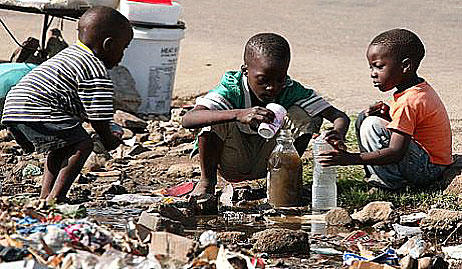

Cholera Outbreak: Cape Coast, Winneba to commemorate Independence with self-protest against poor sanitation.

0

Mr Ekow Panyin Eduamoah, Central Regional Minister, has announced that Cape Coast and Winneba will commemorate this year’s Independence Day with a march against poor sanitation.   


He said in addition to massive clean-up exercises in the two cities, the people would embark on a protest against bad behavioural practices in an effort to promote healthy sanitation practices.   
The move is a practical measure to fight the cholera outbreak in the two coastal cities.  


 It is also in response to government’s moderate celebration of this year’s Independence Day.   
The Minister made the announcement when he visited some communities in Cape Coast to assess the sanitation situation in the wake of the outbreak.   


The Minister also went to the Cape Coast Metro Hospital to visit some cholera patients at the facility’s treatment centre.   


The Minister’s tour uncovered an awful sanitation situation in most of the communities, seeing open defecation and heavily choked gutters, pronounced in highly populated places like Brofoyedur and Amanful.    


Over there, many households with toilets had connected their toilet facilities to the open gutters, which were choked with silt and plastic waste.   


The seashore had become a dumping site and a defecation spot for most of the dwellers and the communities were swallowed by filth, chiefly plastic waste.   


The terrible situation is compounded by an acute water shortage.    
Mr Eduamuah and his team spotted people casually cooking and selling by open gutters filled with excrement.   


He expressed utter shock at the situation and directed that immediate actions should be taken to alleviate the situation and ward off the cholera disease.   


Mr Eduamoah was particularly worried about the economic consequences of the outbreak and its impact on the government’s development agenda.   


Mr Eduamoah directed the Metropolitan Assembly to deploy tankers to supply water to citizens in the wake of the acute water shortage.   


The water supply is expected to assist with the fight against the cholera outbreak.   
The Regional Minister appealed to churches and mosques to make cleanliness and behavioural change an integral part of their sermons to support the fight against cholera.   


“If we should leave the education and sensitisation to the environmental and sanitation departments and the National Commission for Civic Education (NCCE) alone, it won’t get anywhere,” he added.  

Plumber jailed 12 years for sextortion.

0

An Accra Circuit Court has sentenced a 26-year-old plumber and hairstylist to 12 years’ imprisonment for sexual extortion.


Philip Spain Narh is said to have taken advantage of a 19-year-old SHS graduate by having vaginal and anal sex with her with the promise to help her become a web designer.
Unknown to the victim, Narh recorded his sexual encounter with her and published those nude scenes on the internet with the view of blackmailing her.


He was charged with seven counts of sexual extortion, non-consensual sharing of intimate images, publication or sale of obscene material and unlawful possession of narcotic drugs.
Narh pleaded not guilty to the charges. 


He was, however, found guilty after going through a full trial.
Prosecution’s facts before the court are that the Complainant (Name withheld), is a 19-year-old Senior High School graduate and lives with her parents at Kpone, near Tema in the Greater Accra Region.


Narh, also known as Sharon Stuttgart Woods, is a 26-year-old plumber and hairstylist, residing at Bawaleshie near Dodowa with his father.
In the latter part of the year 2020, the complainant was introduced to the convict by a girl known as Delphine whom she met via Telegrarm, an online social media platform.


Prosecution said the convict created the impression that he was a female German American by name Sharon Stuttgart Woods, who was into financial services and had come to Ghana to do business.


Again, the convict portrayed himself as a philanthropist, with the passion to helping “black girls” achieve their dreams and could assist the complainant to travel abroad to further her education at MIT, Massachusetts.


The complainant informed “her” that she was into IT and wanted to be a web developer and her long-term goal was to create Artificial Intelligence.
In December 2020, the convict informed the complainant that ‘she’ had arrived in Ghana and arranged to meet with the complainant at a hotel at Dodowa to get acquainted with each other.


On December 8, 2020, while on her way to the said location, the convict sent her a text that “she” had been summoned for an urgent meeting and that the complainant should wait at Bawaleshie, at a place belonging to “her” driver’s brother.


Unknown to the victim, the said driver’s brother was the convict himself.
When she arrived at the location, the convict sent another message, compelling the complainant to have sex with the said driver after which it would be recorded, to test her loyalty, as a pre-condition to assisting her to get a place at MIT.


The convict forced the complainant into having sex with him and he recorded it.
Feeling ashamed for “acting foolishly and losing her virginity in that manner”, the complainant refused to go back to the convict and deleted her Telegram account when the convict demanded for more sex, prosecution said. 


The victim created another account and the accused, who was determined to satisfy his sexual desires, reached out to the complainant under the name “Valquez Rodeo De Mel”.
He informed the victim that he was being paid to leak her sex video but decided to reach out and assist her since he knew her family. 


The convict advised that the complainant met with Stuttgart Woods and settle matters with “her”.
The convict started blackmailing the victim and demanded to have anal and oral sex with her twice a month or leak the sex video via a YouTube channel for porn, WhatsApp and
Telegram if she refused.


On 5th January 2021, the convict published the complainant’s nude photos and sex video on a link on Telegram known as ADULT HOUSE, a porn channel, and sent the link to the complainant.
After watching the video she became worried and suicidal, confided in her best friend who advised her to go back and agree to Narh’s terms.


On 12th January 2021, the complainant went to the convict to plead with him to speak to Stuttgart Woods” to delete the nude photos and video, but he became violent and forcibly had oral and vaginal sex with her, recorded the act and continued to blackmail her.


Prosecution said the victim, who persistently had suicidal thoughts, opened up to her coding tutor who noticed that she was disturbed.
He helped her to report the matter to the police.


Narh was arrested and when his room was searched, the police retrieved two mobile phones containing the complainant’s nude photos, sex
videos, a quantity of seeds, dried powdery and liquid substances suspected to be narcotic substances.


The suspected narcotic substances were sent to the Police Forensic Laboratory for testing and on 30th June 2021, the report showed the powdery substances had a net weight 95.13 grammes of narcotic substance, the seeds had a net weight of 1.10 g, and another substance contained 73.37g.
They all tested positive for cannabis sativa, a narcotic drug.

GNFS, North Dakota National Guard train personnel to manage harzadous materials.

0

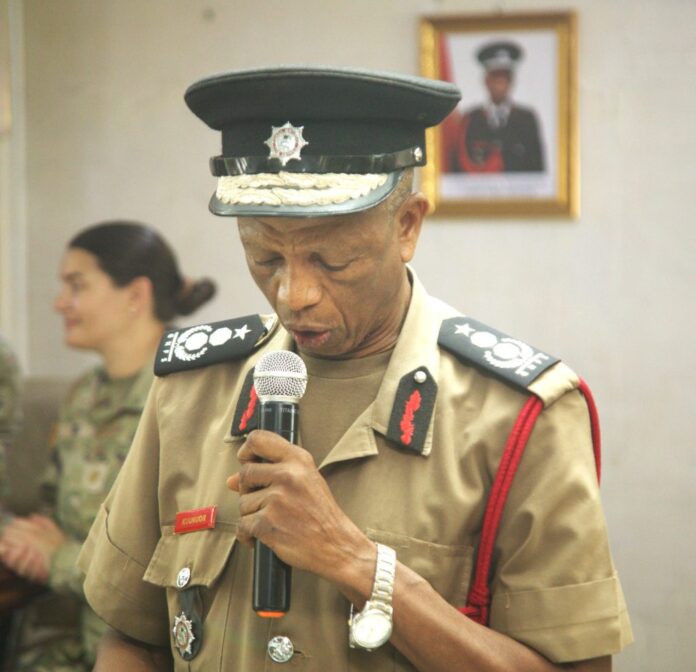
The Ghana National Fire Service (GNFS), in collaboration with the North Dakota National Guard, has successfully concluded a week-long hazardous materials (hazmat) training for 55 selected security officers.   


The programme, held at the GNFS Headquarters in Accra, saw 45 GNFS officers, five Ghana Armed Forces personnel, and five National Disaster Management Organisation (NADMO) officers equipped with critical skills to effectively manage hazardous materials during emergencies. 

 
Participants engaged in both theoretical and practical simulations and were taken through the identification of hazardous substances, chemical properties, emergency response protocols, and decontamination procedures to reinforce their ability to respond to real-world incidents.  


Mr Julius Kuunuor, the Chief Fire Officer (CFO) of the GNFS, in a statement copied to the Ghana News Agency, expressed appreciation to the North Dakota National Guard for its efforts in strengthening Ghana’s emergency response capacity.   


The training, he said, would significantly enhance officers’ skills, ensuring their safety and the protection of lives and property.  
As part of the support, the North Dakota team donated Personal Protective Equipment (PPE) to the GNFS.  

 
CFO Kuunuor expressed gratitude for the gesture, stating that the PPE would go a long way to protect firefighters during hazardous material incidents, ultimately contributing to saving lives and protecting property.  


The initiative also strengthened coordination among emergency services, ensuring a more effective joint response to “hazmat” incidents.   
Officers received certificates of proficiency, positioning them as essential assets in handling hazardous materials and safeguarding communities.  

MTN Foundation,Ghana Supports the Blood Banks.

0
MTN Foundation,Ghana Supports the Blood Banks   

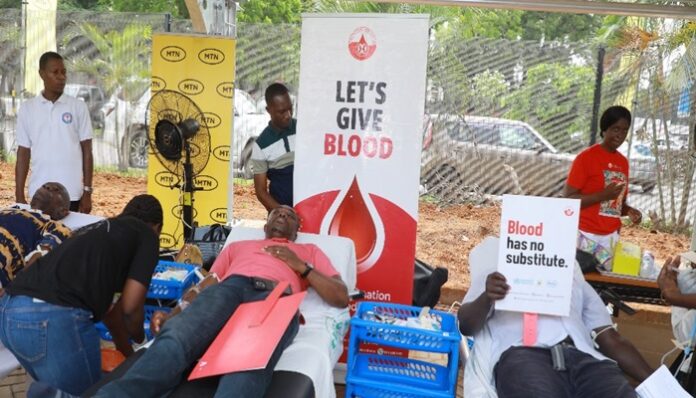
The MTN Foundation Ghana has organized a blood donation exercise drawing citizens to stock the blood bank of major regional hospitals across the country.   


The event which was in partnership with the National Blood Service (NBS), 37 military hospitals and Greater Accra Hospital (Ridge Hospital), on  the theme “Save a Life”, aims at raising awareness about the significance of blood donation, its impact in Ghana and to collect 6,100 units of blood from all locations.  


Mr Kofi Aware, General Manger Legal and Regulatory, in an interview with the Ghana News Agency (GNA) said the “Safe a Life” was an initiative of MTN Ghana Foundation.  


He explained that since the inception in 2011 “Save a Life” initiative, had responded to the NBS’s call to action, helping to restock the blood bank and provide a lifeline to those in need.  


According to him, “reports in Ghana shows that, voluntary blood donation has progressed in recent years, yet again there has been significant challenges that persist in meeting the nation’s transfusion needs.”  


“In 2022, Ghana collected approximately 179,765 units of blood with 45,463 units and these figures fall short of the World Health Organization’s (WHO) transfusion requirement.,” he added.  


He said, the WHO recommended minimum of 10 units per 1,000 populace which was essential to meet basic transfusion requirement, adding that Ghana’s blood collection index (BCI) was 5.8 per 1,000 populace in 2022 which indicated a substantial gap between supply and demand.  


Dr Shirley Owusu Ofori, Chief Executive Officer, National Blood Service (NBS) extended gratitude to MTN Ghana Foundation and its partners for such an initiative saying it would go a long way to save lives in the country.  


She therefore encouraged Ghanaians to exhibit the practice of donating blood stating that it was the only ways in supporting families and loved ones who need transfusions to manage their health conditions.  

Team Kpando Constituency wins maiden edition of Minister’s cup.

0
Team Kpando Constituency wins maiden edition of Minister's cup.

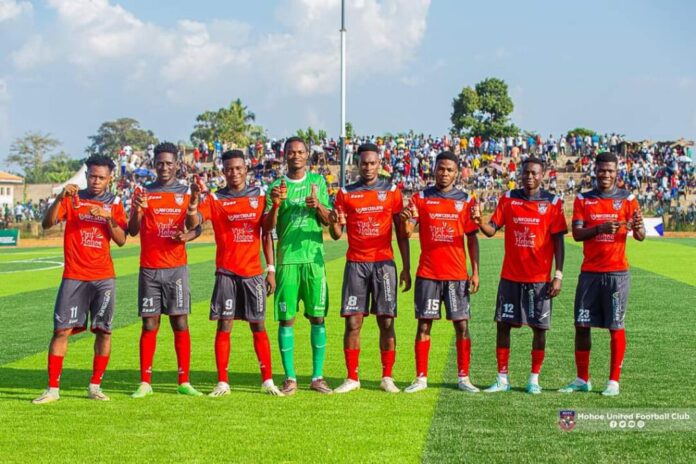
Team Kpando Constituency has emerged winners of the maiden edition of the Volta Regional Minister’s Cup organised by Mr James Gunu, the Regional Minister.

They defeated Team Tongu by 9-8 on penalties after a goalless draw game in regulation time during the finals of the competition after the team clenched 1-0 and 2-0 victories against Team Kpetoe-Ziope/Adaklu and Team Dayi constituencies at the group stage and semifinals, respectively.

As champions, Team Kpando took home Gh¢ 3,000, a trophy, medals, set of jersey and football as the prizes for the first position.

Mr Anthony For, the Coach of Team Kpando, who also received Best Coach award, in an interview with the Ghana News Agency, said that the victory demonstrated the team’s hard work and determination for the coveted trophy.

“The challenge we have was that the time for our preparations was limited to train together, but we worked hard for the trophy, we thank God for it,” he said.

He thanked the Regional Minister and the executives of Volta Regional Football Association for organising a smooth and successful game and pledged that the team would work harder to defend the trophy in the next edition.

He commended the players, the technical team and the fans for the various supporting roles played for a successful victory.

Meanwhile, team Tongu, the first runner-up received Gh¢2,000, a set of jersey and a football whilst the six other participating teams which include team Southern A and B, Hohoe/Afadjato, Dayi, Kpetoe-Ziope/Adaklu and Ho constituencies took home Gh¢ 500, football and a set of jersey each.

In the individual’s awards category, Nortu Paul of team Tongu was named best player, while Zaphnart Kpeti and Samuel Kunjam of team Kpando were adjudged best goalkeeper and highest goals scorer respectively.

Mr Gunu, the Regional Minister, in his closing remarks, commended all teams for displaying good sportsmanship with humility and self-discipline throughout the successful tournament that served as a platform for various young players to display their football talents and skills.

“We thanked God for a successful tournament which was the first edition, we would go back to the drawing board, do the necessary needful corrections towards the next edition.”

He announced that the next edition of the Minister’s cup would allow all the 18 constituencies produce their own teams each to participate without the merging system.

Some sports fans and enthusiasts GNA spoke with after the tournament commended Mr Gunu and Mr Gabriel Kwamiga Atokple, the Volta Regional Council of State Member as well as the Volta Regional Football Association for a successful and smooth tournament and look up to the next edition.

COHBS demand immediate payment of responsibility allowance arrears by March.

0

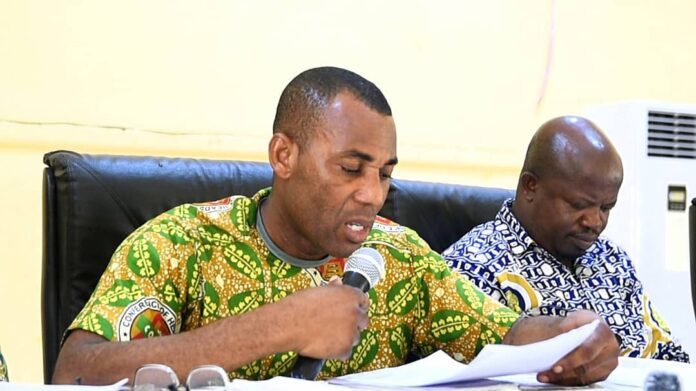
The Conference of Heads of Basic Schools (COHBS) in the Volta Region has called on the government to settle all outstanding responsibility allowance arrears for headteachers by the end of March 2025.

At a press conference in Ho, Mr Vincent Gordor Stephen, the Volta Regional Chairman of COHBS, said he was worried that nearly one-third of headteachers in the region have been denied their rightful allowances for years, significantly affecting their morale and commitment.

“It is unacceptable that headteachers, who bear the heavy responsibility of managing schools, are being denied their due allowances. This has demoralised not only headteachers but also teachers under their leadership. We demand that all arrears be paid in full without any deductions for taxes,” he stated.

COHBS further demanded that the responsibility allowance be set at 20 per cent of their gross salary and be reflected as a stand-alone item on their payslips for clarity and fairness.

“How can the cook of Managing Director earn at about GHC 7,000 while a headteacher overseeing an entire school receives a meager GHC 70 as a responsibility allowance? This is both insulting and frustrating. We demand that this allowance be increased to at least 20 per cent of our gross salary and be properly documented,” Mr Gordor emphasised.

COHBS also expressed frustration over the delay in salary upgrades for Deputy Directors, stating that some members have been promoted for three to five years but have yet to receive their corresponding salary adjustments.

“We urge the Ghana Education Service (GES) and the Ministry of Education to immediately address this issue. It is unfair for Deputy Directors to remain on their old salary scale years after their promotion,” Mr Gordor stated.

To resolve this issue, COHBS suggested the introduction of Deputy Director I and Deputy Director II ranks, which would allow salary adjustments even if there are no immediate openings for district director positions.

“If the delay is due to the absence of vacancies for District Director positions, then a structured ranking system such as Deputy Director I and II should be introduced to ensure that all Deputy Directors receive their rightful salaries,” he added.

COHBS further decried the lack of car maintenance allowances for headteachers, despite the fact that public basic school heads did not receive government-provided vehicles and must use their personal cars or motorbikes for official duties.

“It is unfair that headteachers are expected to use their personal vehicles for school-related activities without receiving any form of car maintenance allowance. The government must immediately rectify this and provide adequate compensation,” Mr Gordor stated.

The group also reiterated the need for accommodation allowance, acknowledging the efforts of teacher unions in advocating for this benefit but demanding that it be a non-taxable, stand-alone item on their payslips.

“We have waited far too long for this allowance. While we appreciate the efforts of our union leaders, we demand that it be clearly stated on our payslips and remain non-taxable, just as it is for other public sector workers,” COHBS stated.

COHBS stressed that their demands were not complaints but calls for immediate action to improve the conditions of basic school headteachers and the quality of education in the Volta Region.

“Education is the backbone of national development. If these issues are not addressed now, the future of our children will be at risk. We call on the government, stakeholders, and all well-meaning Ghanaians to support our efforts in improving basic education,” Mr. Gordor concluded.

Dr. Amoakohene taps into the knowledge of former Ashanti Regional Ministers 

0

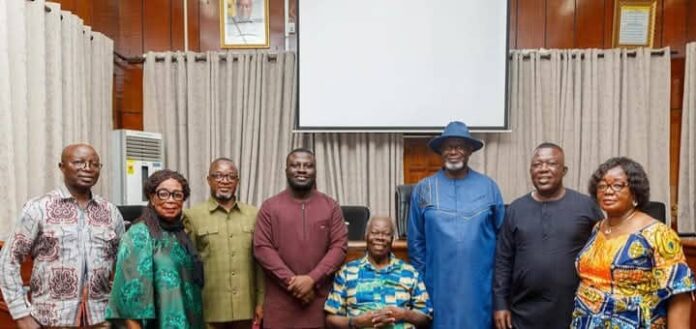
Dr. Frank Amoakohene, the Ashanti Regional Minister, has met some former Regional and Deputy Ministers of the Region as he continues to engage relevant stakeholders after taking office. 

The latest engagement was aimed at tapping into the rich experiences of his predecessors to enable him to provide efficient and impactful leadership required of a Regional Minister. 
With the wealth of knowledge that the previous Ministers had acquired with the benefit of hindsight, they have what it takes to guide the new Regional Minister to succeed in his quest to improve the lives of people in the region. 
This, according to Dr. Amoakohene, informed his decision to draw closer to his predecessors as he leads the next chapter of governance in the Ashanti Region. 
Among the former Regional and Deputy Ministers he met were Ambassador Daniel Ohene Agyekum, Dr. Samuel Sarpong, Mrs. Appiah Dwomoh, Mr. John Alexander Ackon, Madam Elizabeth Agyemang, and Mr. Osei Asibey Antwi. 
It was a fruitful discussion which evoked nostalgic emotions as the former Ministers shared their wealth of experiences and insights with the young Minister who currently has the onerous task of ensuring peace, stability and progress in the region. 
They advised him to work closely with all relevant stakeholders and lead with conviction with the interest of the people as the goal of his administration. 
He must build trust and credibility, foster a sense of purpose and direction, while driving positive change inspired by commitment to achieve exceptional results. 
Dr. Amoakohene expressed his profound gratitude to the former Ministers for honouring his invitation and offering invaluable advice which he believed would shape his administration for the benefit of the people. 

Ellembelle NDC Vice Chairman lauds appointment of Dr Robert Lartey as CEO of Ghana Gas

0

Mr Felix Ehwiada Quayson, Ellembelle Constituency Vice Chairman of the National Democratic Congress (NDC), has lauded President John Dramani Mahama for appointing Dr Robert Kofi Lartey as the Chief Executive Officer (CEO) of Ghana National Gas Company Limited (GNGCL).

He stated that Dr Lartey’s vast experience, with over 23 years in the Oil and Gas industry, left no doubts that GNGCL would thrive under his leadership.

He highlighted the CEO’s impressive professional journey, which included roles such as General Manager of Operations, Director of Operations, and Manager of Gas Processing Plant at the Company (GNLC).

Others are senior positions at the Western Corridor Gas Infrastructure Development Project (WCGIDP) and Tema Oil Refinery (TOR).

Mr Quayson expressed gratitude to President Mahama for acknowledging Dr Lartey’s hard work through such appointment and wished him well in his new leadership role.

He encouraged the youth to be inspired by Dr Lartey’s accomplishments, as dedication and determination could lead to recognition and success.

He also urged the CEO to prioritise local employment opportunities for the youth in Nzema to help improve their lives, while contributing to the overall development of the Nzema area.

“By engaging local talents, I believe that Dr Lartey can make a positive impact on both the workforce and the community, fostering growth and progress for the region,” Mr Quayson added.

World Bank advocates pro-poor fiscal adjustments

0

Mr Robert Taliercio, the World Bank Country Director for Ghana, Liberia and Sierra Leone, has called on the government to pursue fiscal measures that support economic growth and protect the poor and vulnerable in society.
He said as government stayed on cause to stabilise the economy through fiscal consolidation and debt restructuring in the aftermath of the 2022 economic crisis, it was critical to ensure that fiscal adjustments were fair and efficient.
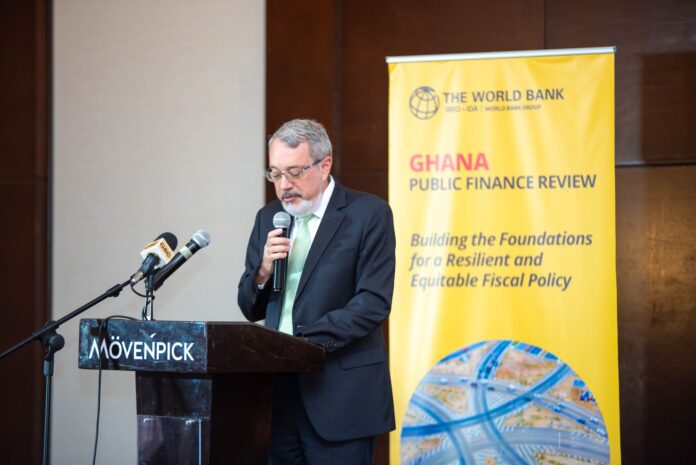
“It is crucial to protect pro poor and pro-growth investment, while enhancing domestic revenue mobilisation. Additionally, Ghana must address the increasing fiscal liabilities stemming from the energy and cocoa sector,” he said at the launch of the Ghana Public Finance Review Report on Wednesday.
The report, titled: “Building the Foundations for a Resilient and Equitable Fiscal Policy”, provided an in-depth analysis of the efficiency, equity and impact of public revenue and expenditure with focus on selected critical issues.
It examined domestic revenue mobilisation, public expenditure efficiency, public financial management, public sector wage bill and efficiency of human development and agriculture spending.
Sharing the findings of the report, Mr David Elmaleh, Senior Economist at the World Bank, noted that the lack of fiscal discipline and expensive fiscal response to global shocks plunged Ghana into a full-fledged crisis in 2022.
He explained that fiscal indiscipline was marked by weak budgetary institutions, high fiscal liabilities and insufficient revenue collection.
“The prolonged and expensive fiscal response to the COVID-19 and the subsequent deterioration of global conditions plunged Ghana into a full-fledged crisis and into debt distress” he said.
He highlighted the high tax exemptions leading to revenue loss of 3.9 per cent of Gross Domestic Product (GDP); high government expenditure characterised by overspending during election year and non-discretionary spending and the inefficient public spending on education with less focus on preprimary and primary level.
“Financing shortfalls for National Health Insurance Scheme are undermining the progress in health” he said, and that: “The NHIS no longer receives its full levy allocation due to the capping law.”
Madam Tamoya Christie, Senior Economist and co-author, shared medium term policy recommendations of the report, which, among other things, encouraged fiscal discipline and oversight by entrenching fiscal rule, effective spending controls, and better oversight of contingent liabilities.
It called for the sustainable enhancement of domestic revenue mobilisation by broadening the tax base and strengthening the tax administration to support Ghana’s development goals.
“Target investment spending to support economic transformation and climate resilience through infrastructure development and technological innovation,” she said.
Dr Alex Amankwah-Poku, a public financial management practitioner, speaking on behalf of the Minister of Finance, said the findings would serve as a valuable guide for government in the formulation of long-term policies to create a resilient economy.