Home Blog Page 1322

Women in PR holds third annual summit

0

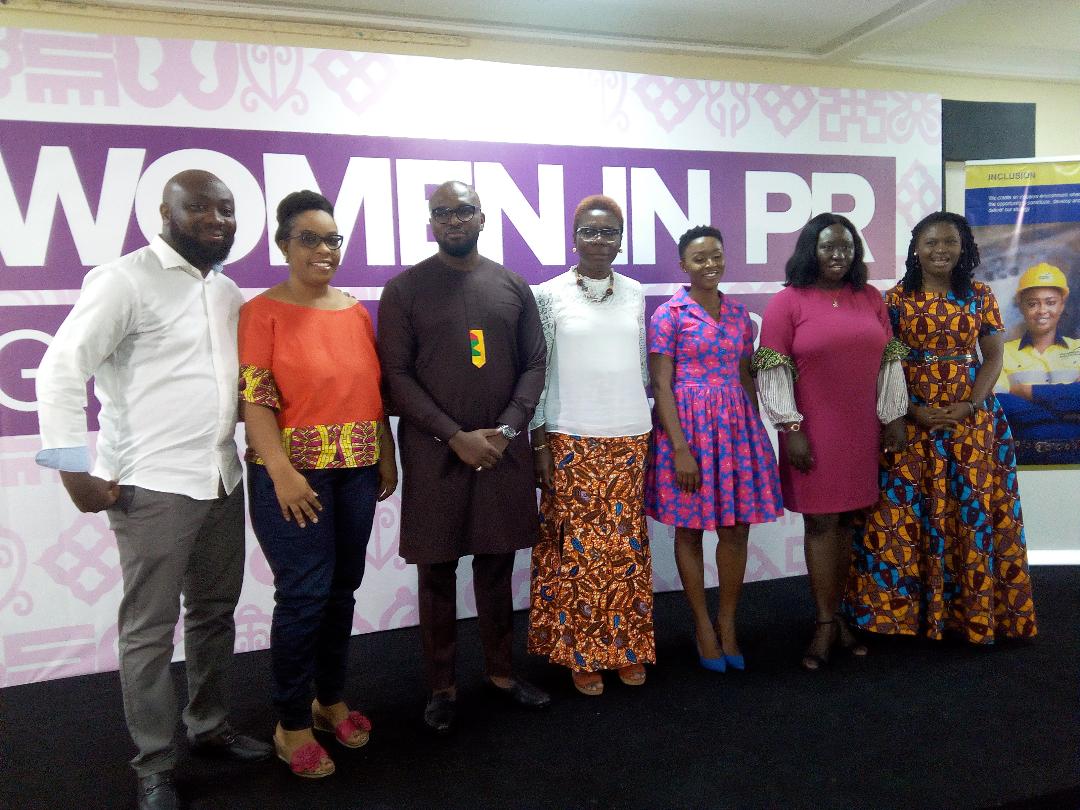
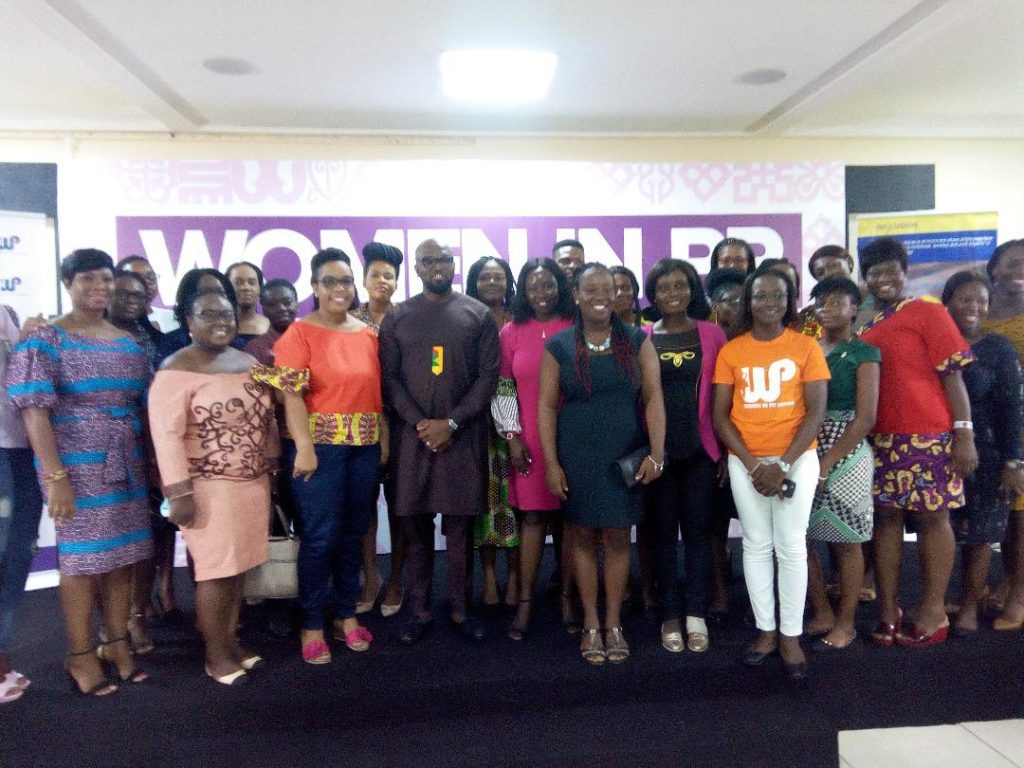
Women in Public Relations (PR) Ghana, a professional platform created for women in the communications and media sector, held its third annual summit over the weekend.


The event brought together senior professionals in the sector to share their experience and impart knowledge to upcoming professionals and students within the industry.


The summit, was held under the theme: “Collaborate, Inspire, Lead”, and the interactive style of the deliberations, gave participants the opportunity to come up close to resource personnel as they went through various topics.

Amongst the topics discussed included: “The next generation of PR Woman”, “Fostering strategic collaboration in the digital era”, “Putting entrepreneurship into PR”, “The relevance of social media and organisational context in PR management” and “Applying emotional intelligence to leadership”.


Ms Faith Senam Ocloo, Founder of Women in PR (WiPR) Ghana, said that the summit was to create a platform for women in public relations to network, learn, mentor and share with each other to bring growth in their respective organisations.


She said the PR women in this digital era needed to employ new methods to enhance her productivity and growth in the industry.


Madam Adiki O. Ayitey, Vice President, Sustainability and external relations, Newmont Goldcorp Africa, said to be successful in this sector, there is the need for collaboration.


“You need to build a team to work together with the common purpose of reaching your goals”, she said adding that in order for collaborations to be effective and successful there is the need to consider the following key concepts: support, teamwork, communication, trust, motivation, inspiration.


Mr Gabriel Opoku-Asare, Head of Society, Africa Region Diageo PLC, said the PR woman as the eye of the organization, should be able to analyse, predict and counsel management in its decision making processes.


Madam Sophia Lissa, Group Head, Communication, Jaspong Group of Companies, said there is the need for the PR woman to also demonstrate entrepreneurial skills to bridge the gap in this digital era.


She said entrepreneurs are mostly people whom have passion for their work, took risk, focused, solution driven, persons who challenged the status quo and did not take a no for an answer.


The panelled section of the event deliberated on ‘Emotional Intelligence and Leadership’ with resource persons such as; Cynthia Ofori-Dwumfou, PR Business Ogilvy Ghana; Emma Wenani, Chief Director Global Media Alliance; Mrs Baaba Cofie, Snr PR Consultant MahoganyConsult; and Dr Eric Rhiney, Chair, Management Department, Webster University.

GNA

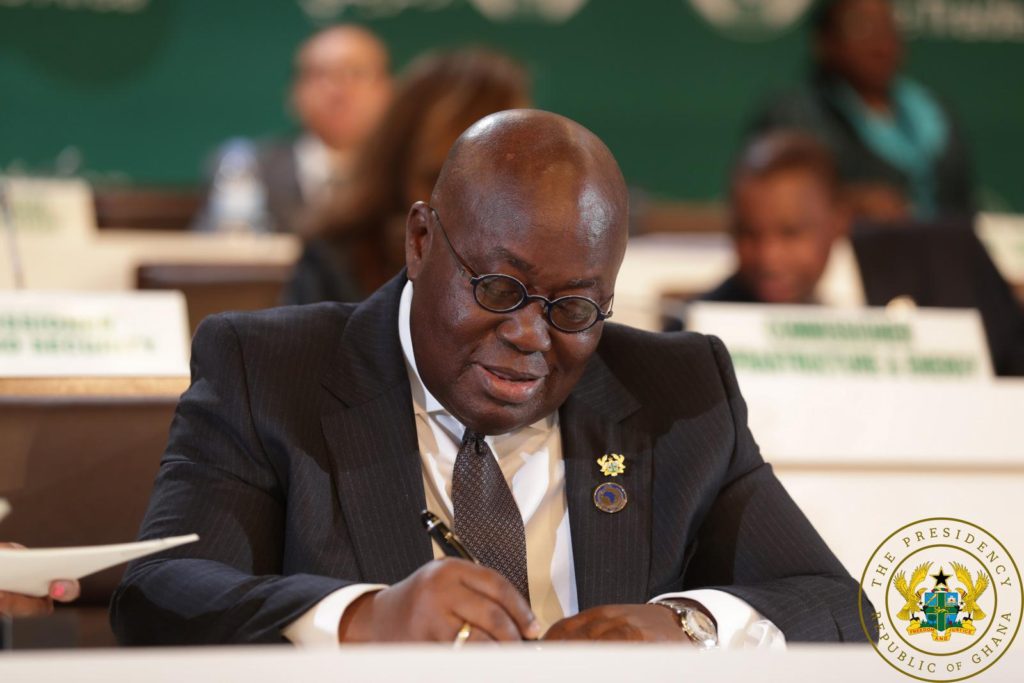
Ghana has been chosen to host ACFTA Secretariat – Veep

0

Ghana has been chosen to host the Secretariat for the Africa Continental Free Trade Area (ACFTA), beating off competition from six other contenders including e-Swatini, Egypt, Ethiopia, Kenya, Senegal and Madagascar.


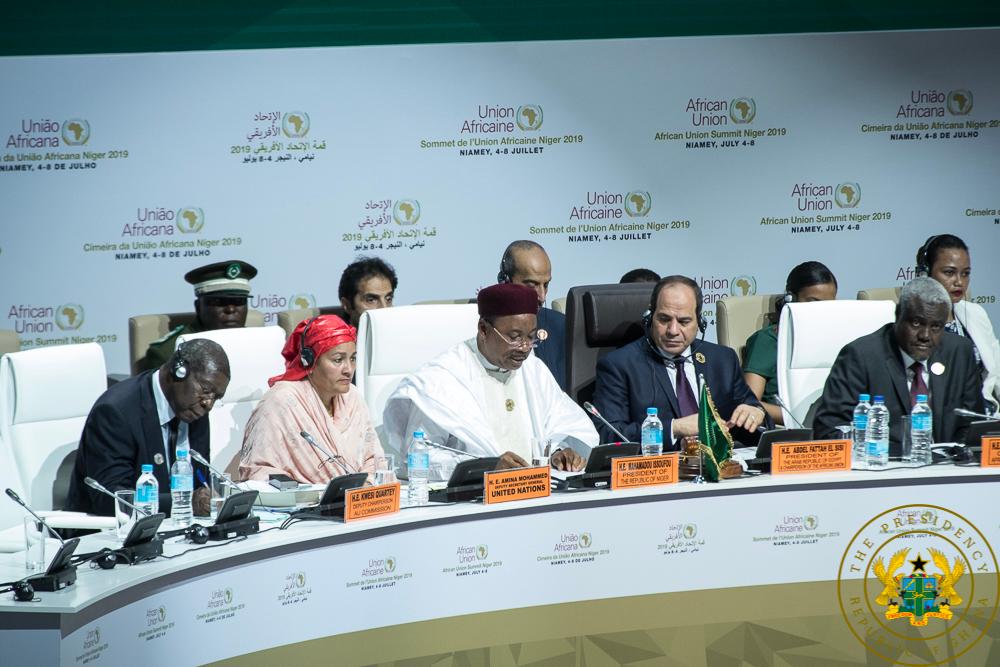
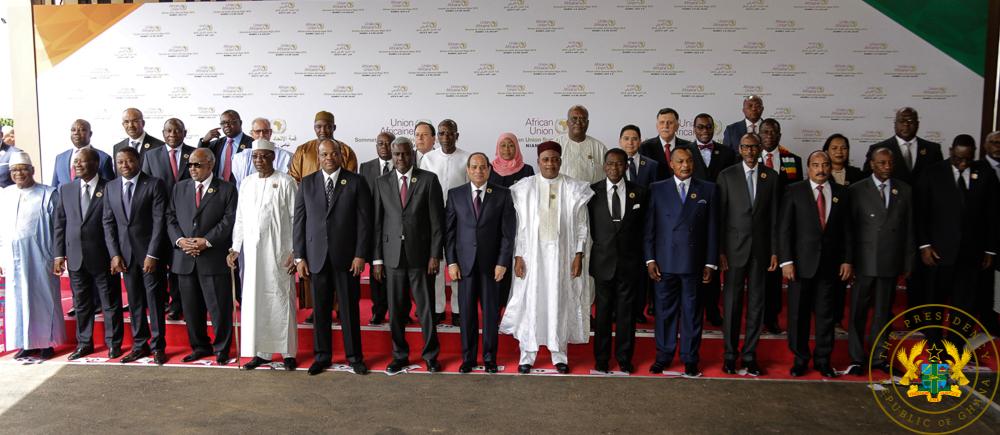
The official announcement of Ghana’s selection is expected to be made at the 12th Extraordinary Session of the Assembly of Heads of State and Government in Niamey, Niger.

The summit will launch the operational phase of the African Continental Free Trade Area after achieving maturity on May 30, 2019, when the 22-Member State deposited its instrument of ratification at the Africa Union Commission headquarters in Addis Ababa, Ethiopia.

Vice President Bawumia said this at a Presidential Gala for the official closing ceremony of a four-day Ghana Diaspora celebration and Homecoming Summit on Saturday.

The summit formed part of the Government’s strategy to harness the expertise of human and financial resources of Ghanaians living in the Diaspora towards investments and accelerate national development.

A 10-member delegation from the Africa Union (AU), led by Ambassador Rosette Katungye, AU Advisor on Regional Integration, arrived in Accra on May 13, and spent seven days to assess Ghana’s preparedness and facilities towards hosting the Africa Continental Free Trade Area (ACFTA).

The ACFTA is to create continental market for goods and services, with free movement of business persons and investments, and thus pave the way for accelerating the establishment of the Continental Customs Union and the African customs union.

The 18th Ordinary Session of the Assembly of Heads of State and Government of the African Union, held in Addis Ababa, Ethiopia in January 2012, adopted a decision to establish a ACFTA by a tentative date of 2017.

The ACFTA will bring together 54 African nations with a combined population of more than one billion people and a combined Gross Domestic Product (GDP) of more than US$3.4 trillion.

Dr Bawumia gave the assurance that government would continue to engage with Diasporans, draw synergies and tap into their wealth of knowledge and expertise.

He said 60 of President Akufo-Addo’s appointees were Ghanaian Diasporans because he believed in their competences and hard work, noting that the commercial discovery of crude oil in Ghana was made possible through Dr Kwame Bawia Adusei and George Yaw Owusu, who were all Ghanaians based in the United States.

He said the establishment of the Diaspora Office at the Presidency was intended to ensure effective collaboration between government and the Diasporan Community.

This, he said, would facilitate understanding of government policies and programmes and create a feedback loop that would enable Ghanaians abroad, to bring their expertise on-board to help build a better economy.

Dr Bawumia said a Dual Citizenship Bill has been placed before Parliament and its passage would enable Ghanaians holding dual citizenship to hold public office in Ghana and urged all Diasporans to engage the Diaspora Office for clarification and inputs.

Touching on some successes chalked by Akufo-Addo’s government, he said, Ghana was one of the fastest economies in the world, with more than six per cent growth coupled with stable macro-economy and human-centred policies and interventions to better the lot of the people.

He also mentioned the medical drone delivery, property addressing system, and paperless ports system, as well as the digitisation of the business registration, driver’s application and licensing, mobile money interoperability system and automation of services, to improve how the public sector conducted its activities.

He said government would turn its attention towards infrastructural development this year and urged the Ghanaians in Diaspora to bring their expertise and investments towards that direction.

By Godwill Arthur-Mensah, GNA

Sudan generals, protesters in landmark deal on new governing body

0

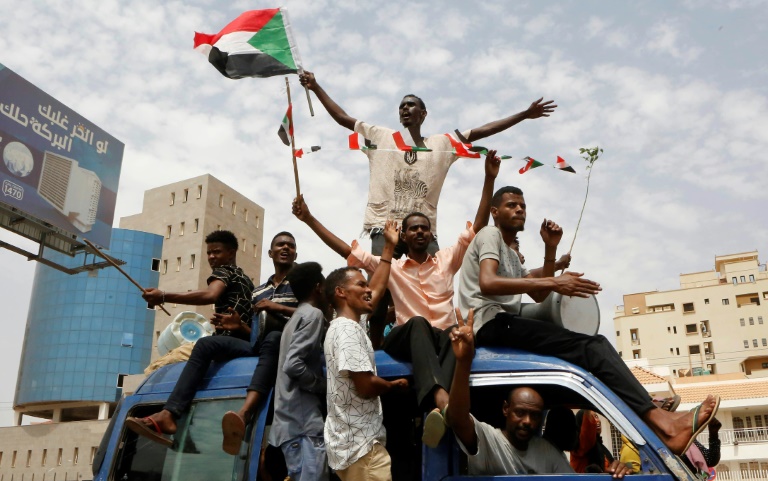
Crowds of jubilant Sudanese took to the streets of Khartoum on Friday to celebrate a landmark deal between protest leaders and the country’s ruling generals aimed at turning the page on months of political unrest.

The power-sharing deal, reached in the early hours after two days of hard-won talks brokered by Ethiopian and African Union mediators, came after a previous round of negotiations collapsed in May over who should lead the new body — a civilian or soldier.

“The two sides agreed on establishing a sovereign council with a rotating military and civilian (presidency) for a period of three years or little more,” African Union mediator Mohamed El Hacen Lebatt told reporters.

Sudan has been gripped by political deadlock since the generals ousted longtime president Omar al-Bashir in a palace coup in April following months of mass protests nationwide.

“We want to reassure all political forces and armed movements and all those who took part in the change… that this agreement is all-inclusive and does not exclude anyone,” the ruling military council’s number two, General Mohamed Hamdan Dagalo, said after the deal was reached.

The deputy head of Sudan’s ruling military council, General Mohamed Hamdan Dagalo, promises that the landmark deal with protest leaders will “not exclude anyone”

Tension between the two sides had soared after a brutal raid on a longstanding protest camp outside army headquarters in Khartoum that killed dozens of demonstrators and wounded hundreds on June 3.

Lebatt did not specify the exact make-up of the new ruling body, but prominent protest leader Ahmed al-Rabie told AFP it would comprise six civilians, five of them protest movement nominees, and five military representatives.

The Sudanese Professionals Association, which took the lead in organising the long months of protests, said a final draft of the agreement would be ready for signing by the two sides by Monday.

It said the transition would last three years and three months, and confirmed: “The first 21 months will be presided by the military: the last 18 months will be presided by the civilians.”

– ‘Blood not shed in vain’ –

The eagerly waited deal triggered celebrations on the streets of Khartoum from before dawn into Friday.

Chants of “the martyrs’ blood has not been shed in vain” and “civilian rule, civilian rule,” reverberated around the city as security forces kep a low profile, an AFP correspondent reported.

“Today we can say that our revolution has embarked on the right path in achieving our goals,” said north Khartoum resident Somaiya Hassan.

Sudanese women have been at the forefront of the protests

“I think we will be able to change the horrible situation of our people,” she said, as fellow residents flashed victory signs and waved national flags.

The deal was swiftly welcomed by the United Arab Emirates, which like other Gulf Arab states has been sympathetic to the ruling generals.

“We hope that the next phase will be the establishment of a strong constitutional system that strengthens the role of institutions,” UAE minister of state for foreign affairs Anwar Gargash wrote on Twitter.

The latest round of talks had resumed Wednesday after Ethiopian and African Union mediators put forward a draft proposal to break the deadlock.

– ‘Independent’ probe –

The blueprint proposes that a general hold the presidency of the governing body for the first 18 months of a three-year transition, with a civilian taking over for the rest.

However, in a sign of the hurdles that may yet lie ahead, it remained unclear if both sides had signed off on the military holding the presidency first.

Lebatt said the two sides had agreed to postpone the establishment of a transitional parliament.

Before talks collapsed in May, the generals and protest leaders had agreed on a 300-member legislature, with two-thirds of lawmakers to be from the protest movement.

Sudanese celebrate on the streets as word spreads in the early hours of the deal, which also provides for an “independent investigation” into protest deaths

Lebatt said the two sides have also “agreed to have a detailed, transparent, national, independent investigation into all the regrettable violent incidents that the country faced in recent weeks,” including the June 3 raid.

At least 136 people have been killed nationwide since June 3, including more than 100 on the day of the raid, according to doctors close to umbrella protest movement, the Alliance for Freedom and Change.

The health ministry says 78 people have been killed nationwide.

The military council insists it did not order the violent dispersal of the sit-in, although witnesses have said the raid was carried out by men in military fatigues.

On Sunday, protest leaders managed to mobilise tens of thousands of supporters in the first mass protest against the generals since the raid.

The mass rally had been seen as a test for the protest leaders’ ability to mobilise crowds after the generals imposed a widespread internet blackout and deployed security forces in numbers in the capital and its twin city Omdurman.

On Thursday, hundreds of schoolchildren held protests in the towns of Madani, Gadaref and Sinnar chanting “civilian rule, civilian rule”, witnesses said.


Source : AFP

Which of these 16 teams will triumph at the Africa Cup of Nations?

0

The knockout stages of the competition begin on Friday.

Uganda (50/1)

RANK OUTSIDERS WITH few if any players that will be familiar to an Irish audience, Uganda nonetheless performed relatively well so far. In the group stages, they beat a DR Congo side that has exceeded expectations in previous tournaments, finishing third in 2015 and qualifying for the quarter-finals in 2017.  However, after picking up four points in their group, they face a very tough round of 16 match with Senegal.

Senegal (5/1)

One of the teams most fancied to triumph, Senegal boast one of the strongest squads in the tournament, with Kalidou Koulibaly (Napoli), Idrissa Gueye (Everton), Keita Baldé (Inter) and Sadio Mane (Liverpool) among their big names. The highest ranked team in Africa, they were still beaten by Algeria in the group stages and needed to overcome Kenya in the final game to be sure of a place in the second round.

Morocco (8/1)

Their coach, Hervé Renard, is seeking to make it a hat-trick of Africa Cup of Nations wins, having previously guided Gabon (2012) and Ivory Coast (2015) to victory. And while there are better squads at the tournament, Renard certainly has some talented players to choose from, including Ajax duo Hakim Ziyech and Noussair Mazraoui, as well as Wolves’ Romain Saïss. So far, they have impressed, picking up three wins from three in what looked a tricky group that also featured Ivory Coast, South Africa and Namibia.

Benin (200/1)

The least likely team to win if the bookmakers are to be believed, unless you are an avid follower of African football, you probably won’t have heard of too many of their players, many of whom are on the books at low-profile French clubs such as Niort, Caen and Sochaux-Montbéliard. They are tough to beat, however, and just about did enough to advance to the last 16, drawing all three of their matches against Cameroon, Ghana and Guinea-Bissau.

Madagascar (50/1)

Ranked 108th in the world, not many people will have fancied Madagascar ahead of the tournament, but they have excelled so far, pulling off a stunning 2-0 win over three-time AFCON champions Nigeria in the group stages and topping a group that also included Guinea and Burundi. They are another side lacking obvious stars, but that factor hasn’t prevented them from performing superbly so far, and they will be optimistic about their chances of beating DR Congo and qualifying for the quarters on Sunday.

DR Congo (50/1)

Having performed well in recent competitions, DR Congo have been distinctly underwhelming so far, losing twice in the group stages and needing a win in their final group game against Zimbabwe to progress. They have been written off prematurely in the past and coach Florent Ibenge has plenty of experience, having been in charge since 2014, though they will certainly again be required to punch above their weight if they are to emulate past feats. There are far more talented squads to choose from, with Middlesbrough striker Britt Assombalonga, Anderlecht’s Yannick Bolasie and former Newcastle defender Chancel Mbemba among their better-known players.

Ghana (16/1)

The current incarnation are, in most people’s eyes, not as impressive as previous Ghana teams, such as the side that reached the quarter-finals of the 2010 World Cup and were unlucky to lose to Uruguay on penalties. They have won the Africa Cup of Nations on four previous occasions, though not since 1982, despite reaching the final in 2010 and 2015. They are not favourites this year, but with players such as Kwadwo Asamoah (Inter), André Ayew (Fenerbahçe), Thomas Partey (Atlético Madrid) and Christian Atsu (Newcastle), they deserve to be considered dark horses. That said, they looked less than convincing in the group stages at times, with the Black Stars held by both Benin and Cameroon.

Tunisia (20/1)

Coached by legendary ex-France international Alain Giresse, whose CV also includes stints in charge of Georgia, Gabon, Senegal and Mali, who he guided to third place at the 2012 tournament, Tunisia achieved the improbable feat of advancing to the knockout stages without winning a game, as they were held by Angola, Mauritania and Mali in a group where four of the six games were draws. With a high number of home-based players, they are not a side expected to go all the way. Premier League fans may remember attacking midfielder Wahbi Khazri, who spent a couple of ill-fated seasons at Sunderland and is now playing for Saint-Étienne in Ligue 1.

Mali (25/1)

Another side who have gone relatively under the radar due to the lack of star names in their team, Mali have still been relatively impressive so far, topping their group with seven points. Curiously, they have not one but two Adama Traorés in their team, both of whom scored in their 4-1 opening win over Mauritiana. They have never won a major trophy at international level, coming closest in 1972, when they were runners-up in the  Africa Cup of Nations. On Monday, they face a difficult last-16 encounter with Ivory Coast.

Ivory Coast (10/1)

Another team who perhaps don’t quite have the same array of high-quality players as previous versions of the side, such as the champions of 2015, Ivory Coast still have a number of individuals playing at a good level and are rightly considered among the favourites to lift the trophy. They are captained by Tottenham’s Serge Aurier, while other big names include Lille’s Nicolas Pépé, Swansea striker Wilfried Bony, Crystal Palace’s Wilfried Zaha and Milan’s Franck Kessié. They haven’t had it all their own way so far though, losing 1-0 to Morocco in the group stages.

Algeria (7/1)

Managed by former Southampton player Djamel Belmadi, Algeria’s star name is unquestionably Man City player and team captain Riyad Mahrez. Yet they have plenty of talent elsewhere too, including Porto’s Yacine Brahimi, Leicester’s Islam Slimani and Napoli’s Adam Ounas, with these individuals helping them to progress from the group stages with a 100% record, beating another highly rated side, Senegal, in the process.

Guinea (66/1)

Liverpool’s Naby Keïta is unquestionably their star name and one of the best midfielders on the continent currently. Elsewhere though, they lack the depth of the top nations, which is why they struggled in the group stages at times, edging through on four points with a tough last-16 match against Algeria to come.

Nigeria (10/1)

The three-time winners last won the competition in 2013 and will be hopeful of repeating that feat with the likes of Alex Iwobi (Arsenal), team captain John Obi Mikel (Middlesbrough) and Wilfred Ndidi (Leicester) among the solid if not spectacular names to choose from. Up front too, they have decent options, with Odion Ighalo and Ahmed Musa, formerly of Watford and Leicester respectively. They are led by German coach Gernot Rohr, who is no stranger to managing African sides, having also taken charge of Gabon, Niger and Burkina Faso. A surprise 2-0 defeat by Madagascar means they had to settle for second in their group and now face a difficult last-16 tie with Cameroon.

Cameroon (16/1)

Cameroon are managed by legendary former Dutch player Clarence Seedorf, who won four Champions League titles with Ajax, Real Madrid and AC Milan. Seedorf, however, is still looking to prove his worth as a coach, having endured brief, difficult stints at AC Milan, Shenzhen in China and Deportivo la Coruna. The tournament’s holders are captained by former Stoke and current PSG attacker Eric Maxim Choupo-Moting, while highly regarded Ajax stopper André Onana is their number one. Premier League fans will also likely be familiar with Brighton’s Gaëtan Bong and Fulham’s André-Frank Zambo Anguissa. Clinton N’Jie, meanwhile, was on the fringes of the Tottenham first team briefly, before sealing a permanent transfer to Marseille in 2017. With five Africa Cup of Nations titles, only Egypt (7) have won the competition more. They were not totally convincing in the group stages, however, picking up just one win and progressing on five points.

Egypt (10/3)

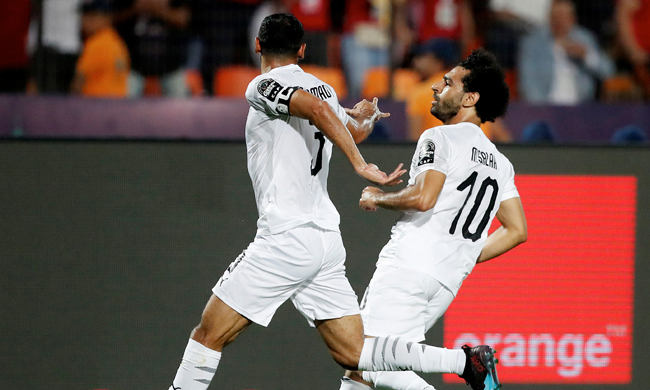
Many people’s favourites, this is largely due to two factors — their status as hosts of the competition and the presence in the side of one of the best players in the world, Mo Salah. To be fair, they have backed up the hype so far, with three wins from three, though their opening games have been overshadowed to an extent by the controversy surrounding Amr Warda. Other important players include Aston Villa’s Ahmed El Mohamady and Arsenal’s Mohamed El Neny, with 15 members of the 23-man squad home-based. They are looking to bounce back from a deeply disappointing 2018 World Cup, where they were one of two sides (along with Panama) that failed to pick up a point.

South Africa (66/1)

The current crop of South American players are a long way from the glory days of 1996, when the likes of Shaun Bartlett, Mark Fish and Phil Masinga inspired them to their one and only Africa Cup of Nations title (with the substantial caveat that they were barred from competing between the competition’s onset in 1957 and 1992 because of apartheid). They followed their sole triumph up with a runners-up placing in 1998, but have flattered to deceive in more recent years. They didn’t even qualify in 2017 and only got past the group stages once in the last seven competitions. With the majority of their 23-man squad home-based, they’ve struggled to this year’s knockout stages, finishing third in their group and losing twice already, with most people expecting them to bow out against Egypt in the last 16.

Upcoming Round of 16 matches (Irish time in brackets):

5 July

Morocco v Benin (4pm)

Uganda v Senegal (7pm)

6 July

Nigeria v Cameroon (4pm)

Egypt v South Africa (7pm)

7 July

Madagascar v DR Congo (4pm)

Algeria v Guinea (7pm)

8 July

Mali v Ivory Coast (4pm)

Ghana v Tunisia (7pm)

2019 Africa Cup of Nations: Jonathan Mensah misses training

0

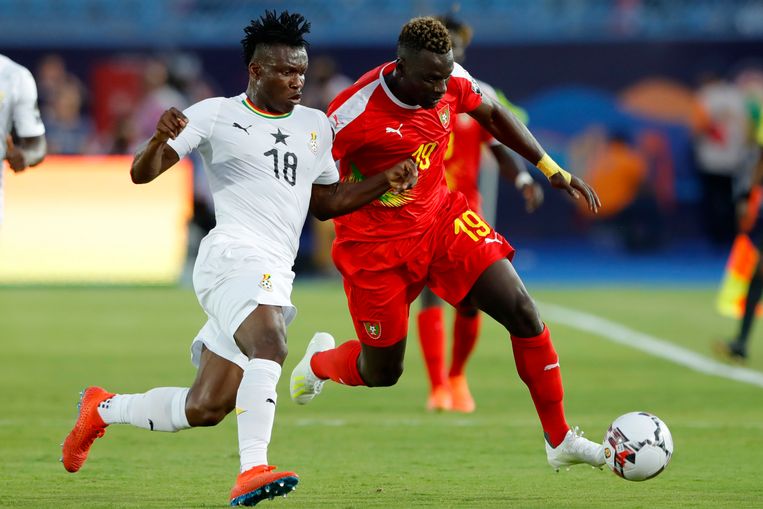
Ghana defender Jonathan Mensah missed the Black Stars training on Thursday in preparation for Monday’s 2019 Africa Cup of Nations Round of 16 clash with Tunisia.

This makes him doubtful for the game against the Carthage Eagles as coach Kwesi Appiah will need all his men fully fit for the match that will decide whether they will play in the quarter-finals.

The Black Stars team doctors are monitoring his recovery as they are not keen on rushing him out of the injury to further complicate matters for the USA-based centre-back.

Ghana returned to training in Ismailia on Thursday but Mensah was absent clearly not fully fit from the injury.

The Columbus Crew defender started off his campaign at the 2019 Africa Cup of Nations (AFCON) tournament during Ghana’s first match against the Squirrels of Benin where he was introduced in the second half when center-back John Boye was red-carded.

Jonathan Mensah went on to start for the team in their second Group F match against the Indomitable Lions of Cameroon last week.

Though he lasted the entire duration of the match, he picked up an injury that ruled him out of the side’s final group match against Guinea Bissau yesterday.

Doctors want the experienced defender to be full fit to make him stay in contention to feature for the Black Stars when they face the Carthage Eagles of Tunisia in the round of 16.

He is expected to train with the team for the next 5 days for the technical team of the side to monitor his situation and decide whether he should be handed a spot in the starting lineup or not.

The Round of 16 tie with Tunisia will be played on Monday, July 8, 2019, at the Ismailia Stadium.


Source: Ghana Soccernet

Ghanaian defender Joseph Aidoo join Spanish side Celta Vigo

0

Ghana defender Joseph Aidoo has reached a massive deal to join Spanish top-flight side Celta Vigo after the 2019 Africa Cup of Nations tournament in Egypt following successful negotiations with his Belgian club Genk on Thursday night, Ghanasoccernet.com can exclusively reveal.

Genk agreed to release their powerful centre-back on Thursday after the club’s representative travelled to Spain to seal the deal for the club who helped them clinch the title.

The amount involved in the transfer is regarded as one of the most profitable for Genk for the defender who joined their club under two seasons ago from the Swedish league for a fraction of the amount.

Aidoo, who is currently with the Ghana national team in Egypt, also agreed for the move to be sealed as his representatives also travelled for the meeting to seal his part of the deal.

The defender was sent details of the Celta Vigo via his e-mail before he agreed to all the terms after hours of negotiations.

Aidoo will travel to Spain at the end of Ghana’s campaign at Africa’s flagship football competition to seal the deal before he is unveiled to the fans of the club.

Celta Vigo will cough out a whopping $10 million to sign Black Stars defender Joseph Aidoo who helped Genk to win the Belgian league title last season.

Vigo who battled relegation for the most part of the 2018/2019 season is looking to boost their squad for the upcoming season and have identified the defender as a good addition to their current squad.

Aidoo’s campaign in the Belgium top-flight last season impressed Celta Vigo but his impressive showing with the Ghana national team in Egypt heightened their desire to sign him before other clubs swoop for his signature.

Nicknamed the Sky Blue, Celta Vigo finished 17th on the Spanish La Liga table after picking up a meager 41 points in 38 games, an appalling statistics which narrowly saved them from relegation.


Source: GhanaSoccernet

Majority Leader responds to 450-seater parliament

0

 Mr Osei Kyei-Mensah-Bonsu, the Majority Leader in Parliament and Minister for Parliamentary Affairs on Thursday said discussions on the proposed construction of a new chamber building for the House were still ongoing and no decision has been taken by Leadership on the matter yet.

He explained that the project, a new 450-seater chamber, was being considered at the level of the Parliamentary Service Board (PSB), and denied media claims that the project has support from the Executive.

Since last Friday, the issue of the new 450-seater parliament has generated a lot of public interest and conversations have gone on in both traditional and social media.

Last Friday, the architectural design for the new chamber building was out-doored by the Parliamentary Service Board (PSB) at a media briefing on the project attended by the Speaker Prof Mike Aaron Oquaye and the Leadership of Parliament

Mr Kyei-Mensah-Bonsu, who is also a member of the Board, told a press conference at the Parliament House, in Accra, that the reason for the encounter was to put out relevant information on the proposed new 450-seater parliament.

Mr Kyei-Mensah-Bonsu also used the occasion to apologize to Members of Parliament (MPs), saying it is inappropriate for MPs to hear about this in the press for the first time when they should have been briefed on the matter much earlier.

He said it is most unfortunate that some people are beginning to personalize the issue, saying he (Kyei-Mensah-Bonsu) was defending the construction of the new chamber building.

He said as a person he may have his own ideas but he belongs to a collective body and that what he did was to put out the important information on the project to the people.

Mr Kyei-Mensah-Bonsu also stated that the genesis for a new chamber block began at the time of Justice Adeline Bamford-Addo, when the House felt that the time had come to look for a suitable place for Parliament. 

He added that even before the speakership of Justice Addo, Parliament had secured a parcel of land near Trassaco which was going to be developed into a parliamentary enclave.

However, along the line, the parcel of land meant for the parliamentary village got encroached upon by developers.

He said later the House came back to start the refurbishment of the Job 600 to serve as offices for the MPs and alongside came the discussion for the construction new chamber building.

Mr Kyei-Mensah-Bonsu also explained of all the three arms of government, it is only the Legislature which does not have its own enclave compared to the executive and the judiciary which have their own territory.

He said the land on which the current parliament is situated and the Job 600 complex still belonged to the State Protocol, adding that Parliament was still working to secure this precincts.

Mr Kyei-Mensah-Bonsu further stated that discussions on the process, financials and contract have not been concluded.

He argued that if the agreement was firmed up it would definitely have to come to Parliament for members to approve it.

He said whatever decision that Parliament would come out with on the new chamber building they have to factor in the sensibilities of the people of Ghana.

Minority Leader Haruna Iddrisu, scheduled to attend the press conference, was absent, for which the Majority Leader explained that he had been caught up another assignment.


GNA

Africa broadband markets being strengthened with upgrades to national telecom networks, report

1

The development of the fixed-line broadband market in Africa has long been stymied by the lack of fixed-line infrastructure in rural and semi-rural regions, as well as by the poor quality of networks in those urban areas where they are concentrated according to a latest report by Research and markets.

 As a result, mobile networks provide the principal platform for voice and data connectivity. Depending on the market, between 90% and 98% of all internet connections are via mobile networks and thus governments and regulators alike are concentrating on this platform to deliver on their broadband targets.

However, progress is being made to increase backhaul capacity on both the international and national levels.

This backhaul is being used to improve fixed-line telecoms as well as to support growing mobile data traffic. New submarine cables are being built to provide direct links to southern Europe and Brazil (the latter with onward connectivity to the US east coast).

Many countries are tapping into an existing submarine or terrestrial cables to provide improved links to underserved regions. In Nigeria, for example, the newly commissioned Glo-2 cable will connect Lagos to cities on the south coast with extensions to the existing terrestrial backbone network, while two branching lines will provide onward connectivity to Cameroon and Equatorial Guinea.

 For its part, the government is committed to building an additional 18,000km of fibre in a bid to extend the reach of broadband from urban areas to rural parts of the country. Although the national network at the start of the project ran to about 38,000km the telecom regulator perceives that the country needs at least 120,000km of fibre to provide national coverage.

These projects are supported by sympathetic regulatory regimes as well as by governments which understand the key functions of broadband connectivity for economic growth. Through this awareness, countries are placing greater focus on their fibre-based national broadband plans.

These efforts are supplemented by small-scale fibre operators which are expanding their investments beyond the wealthy suburbs and business districts.

These efforts aimed at increasing the use of ICTs and developing broadband penetration are crucial to augmenting economic productivity and GDP growth, and further driving a range of benefits based on enhanced social inclusion.

www.researchandmarkets.com

Government urged to borrow from domestic sources

0

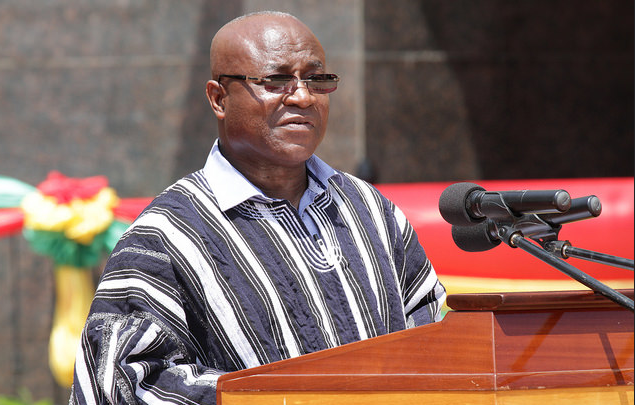
Mr Isaac Adongo, the Member of Parliament (MP) for Bolgatanga Central constituency has called on government to consider the concept and realisation of domestic borrowing instead of foreign borrowing.

Mr. Adongo also a member of the Finance Committee of Parliament, said the challenge was that when a country borrowed a lot from external sources, it needed to find the currency in which it borrowed to pay for it.

“So if you borrowed in dollars, you need to pay in dollars. When you need to pay, you will realise there is pressure on you but if you borrowed on your domestic market and Ghanaians gave you the money, you can pay in Cedis and by that, you eliminate the pressure on you to get dollars,” he said.

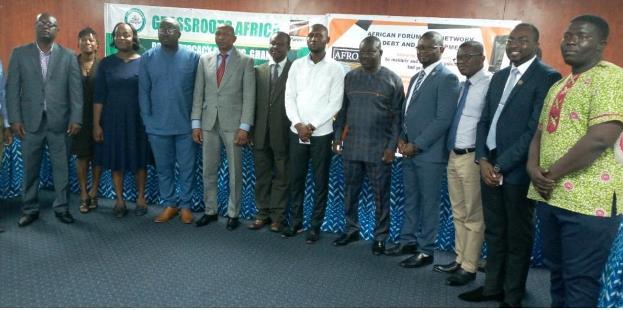
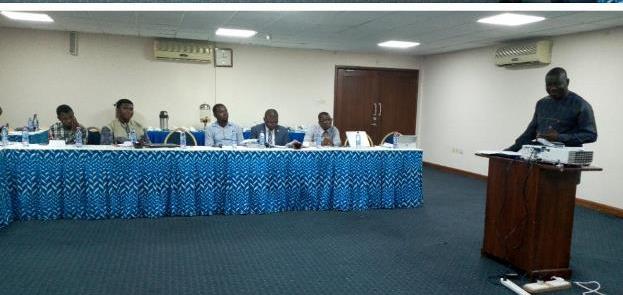
He said this as the Keynote Speaker at a “Debt Advocacy Forum” organised by Grassroots Africa in collaboration with African Forum and Network on Debt and Development (AFRODAD) for stakeholders within the financial sector to discuss ways to manage debt and develop the African economy.

The forum was on the theme, “Interrogating Ghana’s Debt Management Strategy: Lessons for West African States”.

Mr Adongo reiterated that borrowing from domestic sources made the government less pressurised when making policies as it didn’t have to formulate policies that would please any foreign investor.

“But when you have about 67 per cent of your debt held by people outside of your country, with only 33 per cent owned by your people, then decisions are dictated more by what would satisfy the foreign investor and not the domestic investor,” he said.

“..And that makes you very vulnerable and create problems for your currency and balance of payment, so we need to develop the local capacity to fund government programmes through Ghanaians lending to the government.”

The MP said governments had resorted to borrowing to provide social services to citizens and grow the economy, and the debt builds ups had exceeded the sustainable levels which posed serious threats to the economy.

In recent times, he said Ghana’s public debt grew to unsustainable levels and data released by the Ministry of Finance and the Bank of Ghana put Ghana’s public debt at an all-time high of GH?198 billion in March 2019.

Mr Adongo explained that as a sign of failure of Ghana’s monetary policy and weak development of financial markets to support domestic financial resource mobilization in funding the annual budget, Ghana’s economy continued to be at the mercy of external investors.

He disclosed that Ghana currently had the highest external holding of domestic bond in any country in Africa, adding that, “This means that our economy is the most vulnerable to foreign investor sentiments in Africa.”

He emphasised that Ghana had one of the highest debt service costs in Africa, explaining that the country spent over four billion dollars on debt service between 2017 and 2018 which was equivalent to the 80 per cent of the entire five billion dollar Eurobond issued in 2018 and 2019.

Mr Adongo said it was unfortunate how, between 2017 and 2018, Ghana spent about 42 per cent of its tax revenue on debt service each year and by the end of March 2019, began to borrow to pay the debt service as the primary balance runs into a negative.

Grassroots Africa is a nongovernment organisation that advocates for women empowerment, improvement on the productivity of farmers and an enhanced economic growth.  

AFRODAD was created 23 years ago as a pan African platform and organisation for lobbying and advocating for debt cancellation and addressing other debt related issues in Africa. 

GNA  

South Akim Rural Bank made a profit of Ghc2.2 million

0

The South Akim Rural Bank limited made a net profit of GhC2,160,363.00 for the year 2018.

      The figure is a reduction of 7.83 per cent of the net profit of GhC2, 343,843.00 made by the bank the previous year.

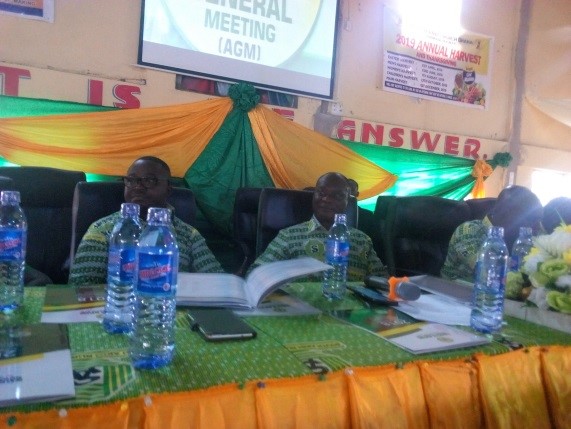
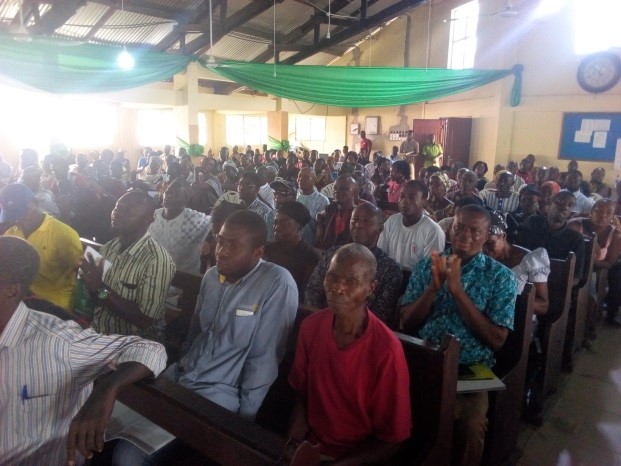
     This was announced by the chairman of the Board of Directors of the Bank, Mr William Kwadwo Boateng at the 34th Annual General Meeting of the Bank at Nankeen near Suhum in the Eastern Region.

     The Bank declared a dividend of GhC0.012 per a share which is the same as that of the previous year.

     The Chairman of the Board of Directors said the bank increased its total investment from GhC27, 827,683.00 to GhC29, 455,499.00 and increased its assets from GhC69, 058,684.00 in 2017 to GhC74, 873,530.00.

    Mr Boateng said, the bank increased loans to the agriculture sector from GhC384, 000.00 to GhC611, 000.00, an increase of 59.11 per cent in 2018.

     He explained that, the agriculture sector enjoyed the highest growth in the overall loans granted by the bank to the various sectors of the economy.

    Mr Boateng said, that was an indication that, gradually, the bank is giving more attention to the agriculture sector which provide the livelihood to the greater part of the people in the catchment area of the bank.

    He announced that, with the introduction of the free Senior High School policy of the government, the bank would use its scholarship scheme to support more students at the tertiary level.

      Mr Boateng assured the shareholders that, the bank would focus more of improving customer focused products and services to sustain the loyalty of the customers and their commitment to expand public patronage.

   Mr Charles Frimpong Asare, Manager of the Koforidua branch of the ARB APEX Bank, urged rural and community banks to focus on their specialty of supporting small and medium scale enterprises and said with that strategy, rural and community banks could succeed despite the current challenges in the banking sector.

     He called on the rural and community banks to strictly abide by the rules and regulations of the Bank of Ghana for the banking sector.

GNA