Home Blog Page 1323

SACOMO Empower Young People to Attain SDGs

0

The Savannah Conservation Movement (SACOMO), a new voluntary organization, has launched a youth empowerment programme in the Upper East Region to contribute towards the attainment of the Sustainable Development Goals (SDGs).

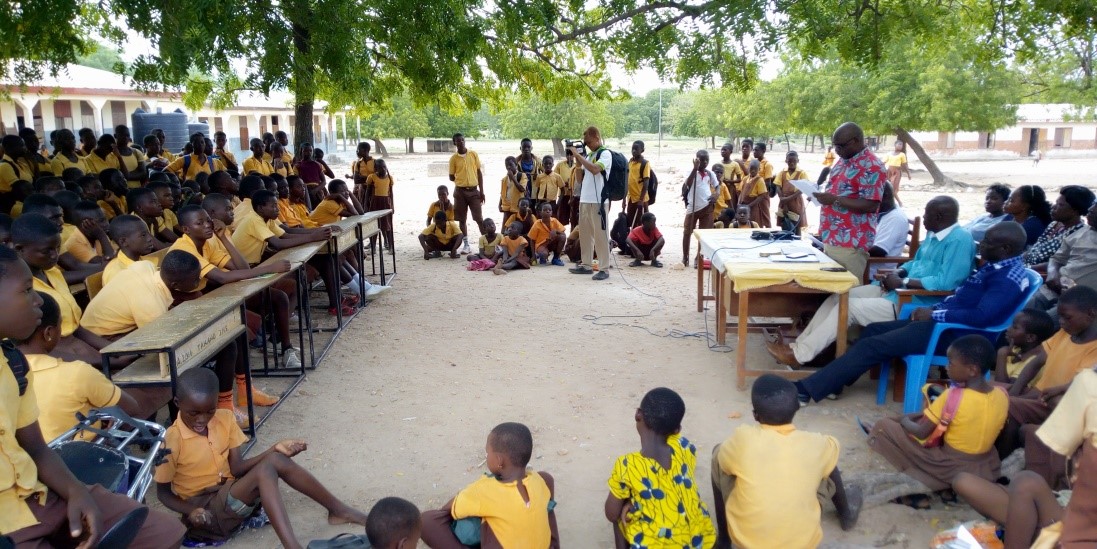
The programme dubbed, “Junior Conservation Club (JCC)”, the first of a series of conservation clubs that would cover the Northern and Coastal Savanna Zones of Ghana, was launched at the Pwalugu Basic Schools in the Talensi District.

The objective of the project is to build capacities of young people to understand, appreciate and value the usefulness and benefits of nature, including savanna natural resources (Ecosystems and Biodiversity) to people, communities and the Earth and serve as key stakeholders in the country’s quest to achieve SDGs. 

In an interview with the Ghana News Agency (GNA), Dr John Atibila, the Founder of SACOMO, explained that, the JCC operates as an Environmental Movement, similar to Boys Scouts or Girls Guide and said it is meant to develop self-discipline, team-work and community service skills for its members. 

He said apart from the academic benefits of learning the practical aspects of the Junior High Schools Integrated Science Syllabus, each club would engage in Sustainable Income Generating Activities (SIGA), which would provide internally generated funds for the school and at the same time provide students with skills to pursue alternative livelihood activities at home. 

Dr Atibila, who is also the Research Development Manager, AgriFood Knowledge Exchange Fellow at the University of York, disclosed that SACOMO will work to complement Integrated Science teaching and learning through co-curricular science activities for Junior High School students, in collaboration with the Ghana Education Service (GES).

The Research Development Manager noted that plans were advanced to establish complementary Community Conservation Clubs (CCCs), with full participation of the chiefs and traditional leaders from the community. 

He revealed that initial pilot scheme would start at the Pwalugu-Wulugu Trans boundary River Project and with formation of JCCs across the country, especially the Northern and Coastal Savannah belts.

Dr Augustine Awuni, the Director of SACOMO and International Relations expect in Political Economics, mentioned that his outfit would undertake honey production through beekeeping, and rear rabbits as income generating activities that would help raise income and prevent bushfires. 

He stated that practical learning and application of the National Science Curriculum, Field trips to places of significant conservation interest, Celebration of Earth and World Environment Day, Conservation Fun Games and Competitions, Community Volunteering; Leadership Skills Development, Career Development in Nature, conservation, environmental jobs for Club members.

Ms Edna Kurug, a Junior High School two pupil of the Pwalugu Basic School on behalf of the club members expressed her joy for the formation of the club and added that the members would cooperate fully to help preserve the environment.

GNA
Maternal mortality decline in Upper East Region

0

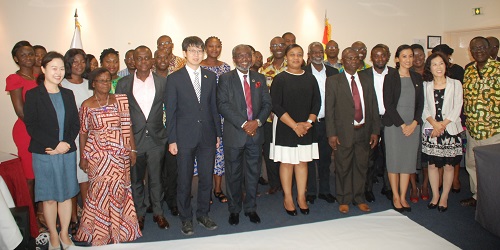
Maternal mortality rate in the Upper East Region saw a sharp decline from 137 per 100,000 live births in 2017 to 91 last year.

The region has also seen improvement in antenatal and post natal care indicators with skilled delivery and immunisation indices reaching 79 and 81 per cent respectively in the last two years.

Regional Health Director, Dr Winfred Ofosu, in an interview attributed the development, among others, to the roll out of the Community-Based Primary Health Care through CHPS Strengthening (CHPS+) project by the Government of Korea.

The 5-year project being spearheaded by the Korea International Cooperation Agency (KOICA) in partnership with the Ghana Health Service (GHS), aims at enhancing community engagement, improving quality of Maternal, Newborn and Child Health service and strengthening the health environment in all 13 districts of the region.

At a midline review workshop to assess progress of the project in Accra on Wednesday, Dr Ofosu noted the improvement in CHPS zones, which hitherto were less endowed, equipment and logistical supply, skills level of health workers and monitoring systems in the region as a result of the project.

He, however, observed the need to strengthen capacity of sub-district health management teams in CHPS zones, urging the district assemblies to construct more compounds in the regions to reach more community members.

“One issue too is that the project does not focus on family planning which is a key component to reducing maternal and neonatal mortality and also the scope is on 120 CHPS compared to 500 we have in the region, so in terms of impact we are reaching less people,” Dr Ofosu said.

The Regional Director said, moving forward the region hoped to “improve antenatal care, strengthen systems so that no mother dies and also work with community leaders to mobilise adequate blood for transfusions for mothers and babies at our facilities.

We are also looking at improving care for newborns where critical care can be readily available for pre-term babies while strengthening other areas. We want the region to be a model for healthcare for others to emulate in the nearest future,” he stated.

Director-General of the GHS, Dr Nsiah-Asare in a remark, said the service was committed to scaling up health interventions across the country to strengthen primary healthcare to achieve universal health coverage (UHC).

The service, according to him, would soon come out with a primary healthcare package as part of the country’s UHC roadmap to ensure a comprehensive health system.

Dr Nsiah-Asare for instance singled out the e-tracker module currently being implemented in the Upper East Region which he said had proven to be of enormous benefit in obtaining accurate health data for decision making, pointing out the need for the system to be replicated in all regions.

“We are going to ensure that in the 2020 budget there is money made available for e-tracker to help us with right quality and timely data for decision making,” he said, assuring that other areas including research, community engagement and logistical support would be improved to meet health targets.

Country Director of KOICA, Mr Yukyum Kim, was happy the project had achieved milestones since its implementation and hoped that gains made so far would be sustained long after the project ends come 2020.

BY ABIGAIL ANNOH

NDC executives visit former President Kufuor to wish him speedy recovery

0

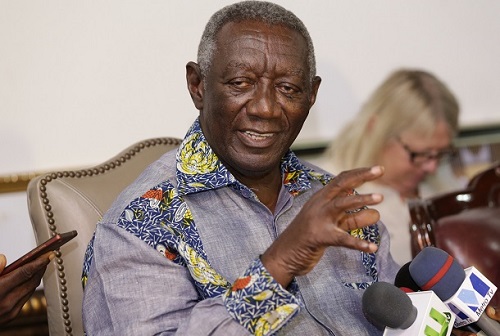
The leadership of the National Democratic Congress (NDC) has visited former President Agyekum Kufuor to check on him after a successive surgery.

Former president Kufuor, highly respected for his exceptional statesmanship, has not been too well for some time now due to a back pain. This sent him into surgery, and the leadership of the NDC went to his residence to wish him well.

But the gesture was a surprise tonic for a country torn by political fault lines. The entourage, led by the party’s General Secretary, Asiedu Nketia, was with the leadership of the Minority in town.

However, Abraham Ossei-Aidooh, former Majority Leader and Minister for Parliamentary Affairs in the former President Kufuor-led administration, heaped praises on NDC over the courtesy call they made to the former president and described the gesture as healthy.

“It is like the NDC taking pause and saying: hey you know what, before politics, we are Ghanaians, before all acrimony for power, we have elders, this is what the country is about, we are one big family of relatives.

“It appears we have forgotten all about that, especially in recent years, with vigilantism. The gesture is a mark of maturity from the side of the NDC. I am hoping for the umpteenth time, our supporters who hate one another because of politics will realise there is no feeling of enmity.

“When we rant, shout at one another in parliament and on campaign platforms, it is all for the good of the country. How can we be shouting and ranting about how good the country should be run and also scheming about how to destroy one another, who will benefit from all good intents?

“The maturity the NDC showed towards former President Kufuor should be an eye-opener for all. Indeed in politics, you do not have permanent friends or enemies,” Mr Ossei-Aidooh pointed out. –GNA

NDC demands cessation plan for new parliamentary chamber …But Majority Leader says is baseless opposition

0

The National Democratic Congress (NDC) has stated that any attempt to construct a new parliamentary chamber is immoderate in the face of challenges when one exists, and serving the needs of Parliament.

“It will be unconscionable for the nation to spend $ 200 million on parliamentary chamber at a time parliament recently had Job 600 project undertaken to provide decent offices for Members of Parliament (MPs) and unable to appreciate basis upon which a new chamber should be built,” it said.

In a statement issued in Accra, the party noted that about 20 per cent of the citizenry could not have access to potable water are compelled to share dirty, infested water with animals, about 16 per cent of them are without access to electricity and sleep in darkness.

“There remain many roads that require urgent attention because of their deplorable state, school children study under trees or compelled to study in dilapidated structures, with three million Ghanaians living below the poverty line who cannot afford three square meals a day.

 “We demand immediate cessation of plans to undertake the project since national resources must be channeled into projects, and expenditure have direct bearing on lives of the citizenry not grandiose and prestige projects of doubtful relevance,” the statement said.

However, the Majority Leader, Osei Kyei-Mensah-Bonsu, has described as baseless opposition to the building, and maintained that “as a country, we are not out of the woods yet in spite of quality, quantity of various shades of improvement we are adding to the lives and living standards of our people.

“We are not there yet but tell me, we do know the basic needs of human being to start with are food, clothing and shelter, whenever have we been able to achieve this before we started building our stadia or our national theatre?

“There’s housing deficit close to two million yet we are building roads, priority should be on housing, we build roads, schools, health facilities to inure to quality of life, let’s not say until we satisfy basic human needs, other things are luxurious.

“They are not because we should begin by saying before we build a school, we should ensure the citizenry have three square meals, even the United States of America, can we say every citizen has three square meals? And yet have things they enjoy,” Mr Kyei-Mensah-Bonsu alluded.

 -starrfmonline.com

Newspaper Headlines Friday 5th July 2019

0

[ngg src=”galleries” ids=”82″ display=”basic_slideshow”]

Newspaper Headlines Thursday 4th July 2019

0

[ngg src=”galleries” ids=”81″ display=”basic_thumbnail”]

Employers urged to make terms of engagement clear to employees

0

The National Labour Commission (NLC) on Tuesday urged employers in the country to engage persons with the right qualifications and to clearly spell out their conditions of service to reduce disputes.

Mr Ofosu Asamoah, the Executive Secretary of the NLC, speaking at a workshop organised by the Ghana Employers’ Association (GEA) in Accra, said employers should make a good assessment of potential employees by knowing and examining their capabilities.

He said when initial assessments were done before any dispute came up, it would be easier to negotiate terms as the first step to resolve disputes in an organisational setting.

Mr Asamoah urged the employers to desist from engaging relatives, especially those who were not qualified for the position.

He noted that many employers hired people who have affiliations with them but not because they qualified for the job, adding that such people usually did not have the requisite knowledge on the demands of the job, which could create disputes.

Mr Alex Frimpong, the Chief Executive Officer of GEA, in his address said disputes were inevitable at the workplace but the most important thing to do when disputes came up was to resolve them amicably.

He said the workshop was meant to sensitise employers on the existing laws and also help them to understand the clear procedure adopted by the Labour Act towards dispute resolution at the workplace.

Mr Frimpong said disputes could be very expensive and that it could create problems for an organisation, adding that there was the need for employers to lay down measures to reduce disputes at the workplaces.

On his part, Justice Peter K. Ababio, a Retired Justice of the Supreme Court, said that the Labour Law had set out the types of termination of employment to guide organisations in settling disputes.

He said section 62 of the Labour Act states that a termination of a worker’s employment was fair if the contract employment was terminated by the employer when the worker was incompetent or lacked the qualification in relation to the work for which he/she was employed.

Justice Ababio said a worker’s employment was terminated unfairly if the only reason for the termination was that he/she has joined, intends to join or had seized to be a member of a trade union or intends to take part in the activities of a trade union.

Mr Joshua Ansah, the Deputy Secretary General of the Trades Union Congress (TUC), said “as organised labour, as trade unions, and as workers, we would continue to work hand in hand with our employers so that we can together continue developing the workplace that will affect the development of this country.”

He said employers ought to demonstrate good leadership by resolving disputes internally and not let them degenerate.

He urged Government to adequately resource Labour Department, the Ministry of Employment and Labour Relations, and Inspectorate Division to enable carry out their mandates as expected and further contribute towards reducing disputes at the workplace.

By Julius K. Satsi/Linda Ngissah

Dutch Fund targets SMEs in Southern Africa

0
Logo

Buxeros Capital, a public-private social impact investment fund has established a presence in South Africa with the aim of investing in emerging market SMEs in Southern Africa.

Fund director Corné Melissen says the company was established by a group of well-known Dutch investors, in close cooperation with the Dutch Ministry of Foreign Affairs and the Minister of Foreign Trade and Investment Cooperation.

“Social impact is an important requirement, however, we will review potential deals on economic and commercial viability. Our goal is to invest in sustainable businesses and business models that add value to both the Dutch and local economies. We will act as a co-investor and a partner for entrepreneurs with the ambition to expand into emerging markets,” he points out.

Estelle Byrne, who is managing the South African operations, says the Netherlands-based organization has a Cape Town office. “We focus on investments in SMEs and have an entrepreneurial eye out for good opportunities. Our team includes private equity veterans, seasoned entrepreneurs and strong partners in each region globally. In this region, we also have Arthur Johnson (BCom LLB CFA University of Cape Town) as a director. He has extensive fund and investment experience both locally and internationally.”

“Buxeros Capital invests in SMEs that have a positive impact on the local economy while being compliant with International Corporate Social Responsibility guidelines. Our primary focus is on companies with a scalable business model, where we can add value, in addition to our equity investment. These companies should have a strong and experienced team while showing economic and commercial viability.”

“The Buxeros Capital management team has relevant expertise in markets across the globe and is able to provide hands-on experience and network access, in addition to capital (equity and mezzanine loans). Our investments often give the necessary leverage to acquire additional public and/or private funding to scale a company’s activities,” Byrne adds.

“The company aims at maximizing both financial and social impact through adherence to Organisation for Economic Co-operation and Development (OECD) guidelines and International Finance Corporation standards – both regarded as important requirements,” she concludes.

www.buxeros.com

United States signs customs mutual assistance agreement with Tunisia

0

The United States has signed a Customs Mutual Assistance Agreement (CMAA) with Tunisia marking a significant milestone in collaboration on security and facilitation of lawful trade between the two countries.

“Customs Mutual Assistance Agreements allow for the exchange of information that is vital to our national and economic security,” said Deputy Commissioner Robert E. Perez. “We value our partnership with Tunisia in pursuing our mutual goals of stronger law enforcement and a more resilient and secure supply chain. These agreements form sound legal frameworks on a wide range of issues, including securing our borders against terrorists and combatting drug traffickers. This collaboration and cooperation will enable us – and generations after us – to work more effectively to prevent, detect, and investigate customs offenses.”

The United States has now signed 81 CMAAs with other customs administrations across the world. CMAAs are bilateral agreements between countries, enforced by their respective customs administrations.

They provide the legal framework for the exchange of information and evidence to assist countries in the enforcement of customs laws, including duty evasion, trafficking, proliferation, money laundering, and terrorism-related activities. CMAAs also serve as foundational documents for subsequent information sharing arrangements.

CBP and U.S. Immigration and Customs Enforcement (ICE) are the implementing agencies for the United States.

CBP is one of the U.S. Department of Homeland Security’s largest and most complex agencies, with a priority mission of keeping terrorists and their weapons out of the United States.

It also has a responsibility for securing the border and facilitating lawful international trade and travel while enforcing hundreds of U.S. laws and regulations, including immigration and drug laws.

ICE is the largest investigative arm of the U.S. Department of Homeland Security. ICE is a 21st century law enforcement agency with broad responsibilities for a number of key homeland security priorities.

www.ice.gov

Ghana Parliament urged to pass Occupational Health Hazard Bill

0

Dr Augustine Adoliba Ayanoore, a Medical Officer at the Korle-Bu Teaching Hospital, has called on parliament to as a matter of urgency pass the over aged Occupational Health Hazard Bill.

The Bill when passed, he said, would force organisations to put up Occupational Health Teams to prevent unnecessary work-related health problems and deaths.

A statement signed and copied to the Ghana News Agency by Dr Ayanoore, noted that, the bill had overstayed its maturity and was gathering cobwebs in the august house and therefore needed to be passed without any further delay.

He appealed to employers to punish employees who consistently flout safety rules and regulations, saying, the cost benefit analysis points positive for organisations to insist on safety precautions against the rest, the statement said.

It explained that the cost of treating employees’ accidents including death of human resource had crippled many companies across the world.

According to the statement, Dr Ayanoore said this at a safety week programme organised by the Integrated Recycling and Compost Plant (IRECOP) in Accra.

The statement said it was necessary for every work environment to have a medical team to manage accidents and hazard cases to stabilise conditions before referring them to bigger health facilities for secondary controls.

The statement quoted Dr Ayanoore as saying: “It is imperative for employees to also religiously abide by safety rules and regulations for their own good since working place accidents and hazards have the ability to make them permanently disable or kill them.”

Ms Betty Brown Nyadu, the General Manager of IRECOP, said any organisation which did not take the safety and health concerns of its employees into consideration did not deserve to operate, the statement said.

The vision of IRECOP, she said, was to inculcate healthy and safety policies and procedures in all aspects of management decisions and to protect employees by arriving at an accident free work environment.

The statement said in contemporary times, safety had moved from a voluntary option to an inevitable choice in management practice, and therefore advised every manager to take health and safety issues critically to forestall the loss of lives and the payment of unnecessary claims.

Ms Nyadu, according to the statement said the Ghana Labour Act makes it mandatory for the employer to prioritise health and safety by minimizing hazards at the work place and IRECOP believed in it.

“Many companies have resolved to the fact that being safe in the workplace is just the provision of reflector, boots and helmets for staff; but suffice it to say safety is in the mind – safety indicates our commitment to do things right and report activities that has the potential to cause harm and an unsafe environment,” she said.

The statement said over 200 staff were screened for various diseases and were given medical counselling.

Source: GNA