
Home Blog Page 1336

Mali attack: ‘100 killed’ in Dogon village

0

Nearly 100 people have been killed in attack in a village in central Mali inhabited by the Dogon ethnic group, reports say.

The attack happened in Sobane-Kou, close to Sanga town, according to French-language news outlet RFI.

The bodies of the dead have been burned, says a local official, and the search for more bodies is ongoing.

There have been numerous attacks in Mali in recent months, some ethnic, some carried out by jihadist groups.

Clashes between Dogon hunters and semi-nomadic Fulani herders are frequent.

The mayor of nearby Bankass, Moulaye Guindo, told Reuters news agency that Fulanis from that district had attacked Sobane-Kou after nightfall.

A local official in the Koundou area, where the village is located, told the AFP agency: “Right now we have 95 dead civilians. The bodies are burned, we are continuing to look for others.”

In the same region in March, more than 130 Fulani villagers were killed by armed men wearing traditional Dogon hunters’ clothing.

Clashes between the two groups have increased since a militant Islamist uprising in northern Mali in 2012.

The Dogon people have lived in central Mali for centuries, and live a largely traditional way of life as settled farmers. The Fulani, on the other hand, are semi-nomadic herders who move across large distances in West Africa.

Friction between farmers and the roaming herders over resources is long-standing.

Previously, disagreements between the Fulani and Dogon had often been settled through negotiation, but the uprising – which spread to the centre of Mali by 2015 – decreased government control and increased the availability of weapons.

Both sides accuse the other of carrying out attacks amid the unrest.

The Fulani, a largely Muslim ethnic group, have been accused of having links with the Islamist uprising. But for their part, the Fulani accuse a Dogon self-defence association, Dan Na Ambassagou, of attacks on their villages.

BBC

Government inaugurates 30-bed capacity polyclinic at Oduman

0

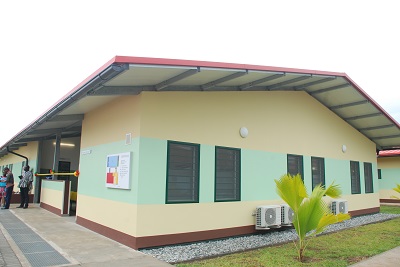
Residents seeking healthcare in Oduman and its environs in the Ga West Municipal Assembly can heave a sigh of relief with the inauguration of an ultra-modern polyclinic.

Mr Kwaku Agyeman-Manu(third from right),being assisted by Dr Anthony Nsiah Asare,Director-General,GHS to cut the tape to commission the Oduman Polyclinic.

The 30-bed capacity facility comes with an operation theatre, a laboratory, an x-ray department, a pharmacy, a counselling room, wards, staff bungalows and a cold room.

It forms part of five polyclinics being constructed by the government in the Greater Accra Region to improve access to healthcare services in the region.

It is also to help reduce pressure on the major tertiary and referral hospitals within the capital.

The projects which begun in May 2017 is estimated at a total cost of 13.5 million euros.

At a handing over ceremony which brought together highly elated community members, traditional rulers, religious leaders and staff of the Ghana Health Service (GHS), Minister of Health, Kwaku Agyeman-Manu pledged that by end of June, all five polyclinics would be accessible to patients.

According to the Minister, Ghana was a signatory to international health treaties to provide healthcare in “a different manner and one of such means is to bring healthcare closer to the people.”

He held that easy access to healthcare “without barriers” was critical to achieve the country’s vision for universal health coverage (UHC) by 2030.

Mr Agyeman-Manu was hopeful the polyclinic would become a centre of excellence in healthcare delivery particularly in the area of reducing maternal and neonatal deaths.

“There should be zero tolerance for maternal deaths here. We should carry out our duties such that we have no or minimal deaths,” he charged workers.

The Minister also entreated residents to patronise the health facility and have confidence in the health personnel to address their health needs.

“With this polyclinic, there will be no need rushing to Korle Bu, Ridge and others. We have placed well qualified health professionals here capable of handling cases so let this place be your first point of call,” he urged.

Director General of the GHS, Dr Anthony Nsiah-Asare charged workers of the facility to embark on rigorous public health education in the communities to enable residents lead healthy lifestyles.

“The coming of this polyclinic should help reduce teenage pregnancies, maternal mortality and lifestyle diseases in this community and its environs,” he charged.

Dr Nsiah-Asare asked the workers to adopt good customer care towards patients and uphold a high maintenance culture at the facility.

An opinion leader of the community and chairperson for the occasion, Mr Nickson Acquaye, pleaded that, an ambulance must be provided to the clinic for emergency purposes as residents are considered for employment at the facility.

The Municipal Chief Executive for the Ga West Municipal Assembly, Clement Wilkinson on his part pledged to work on the deplorable road network leading to the health centre.

By ABIGAIL ANNOH AND DOROTHY BROCKE            

Newspaper Headlines Monday 10th June 2019

0

[ngg src=”galleries” ids=”69″ display=”basic_thumbnail”]

2019 BECE begins today …517, 33 candidates from 16,871 schools write exams across country

0

A total of 517,332 candidates from 16,871 public and private basic schools nationwide will this morning begin the 2019 Basic Education Certificate Examination (BECE).

Made up of 263, 616 males and 253,716 females, representing an increase of 7,508 over the 2018 figure of 509,824, they will converge at 1,880 examination centres.

 They will be supervised by a total of 21,726 supervisors, their assistants and invigilators, according to figures made available to the Ghanaian Times by the West African Examination Council (WAEC).

The week-long examination was initially slated for Monday, June 3 to Friday June 7 but the Ghana Education Service (GES) rescheduled the date to the present one.

A regional breakdown of the candidates shows that the Ashanti Region has the highest number of 104, 461, made up of 52,945 males and 51, 516 females, followed by the Greater Accra Region with 90,584 of which 43,273 are males.

A total of 55,535 constituting 28,212 males and 27,323 will write in the Central Region while the erstwhile Western Region will present 52,806 candidates, comprising 27,619 males and 23,508 females.

The former Brong-Ahafo has 49,127 candidates including 26,619 males. The Eastern and Northern regions will present 47,964 including 24,883 males and 43,960 including 23,900 males, respectively.

Upper West Region has the least number of 13,109 candidates (6,725 males and 6,384 females), the Upper East has 22,001(including 10,812 males), while the Volta Region has 37,785 of which 19,978 are males.

The Deputy Director of Public Affairs, Mrs Agnes Teye-Cudjoe told the Ghanaians Times all was set for the exams adding that enough measures had been put in place to prevent leakage or cheating in the examination halls.

In a related development, the Ghana Education Service (GES) has said it has worked closely with WAEC to ensure the smooth conduct of the examination throughout the country.

A statement issued by the Head of Public Relations, Cassandra Twum Ampofo assured candidates in the Chereponi District in the North-East Region of maximum security during the examination in view of ongoing conflicts.

It has, therefore, called for support from stakeholders in the area to ensure that the future of the children was not jeopardised by any form of insecurity during the period of the examination.

The statement also called on the candidates, invigilators and supervisors to appreciate the fact that the basis of success in life was honesty and hard work; as a result, they must eschew all forms of examination malpractices during the period of the examination.

 “We also encourage the security agencies to help deal decisively with all those who attempt to undermine the integrity of the exercise and to jeopardise the future of the candidates.”

It congratulated all candidates, teachers, heads of basic schools, directors of education, parents and guardians as well as all stakeholders for the crucial roles they have played so far in preparing the candidates for the examination.

BY JONATHAN DONKOR

[Ghana] Nsano unveils fraud management Centre

0

Nsano has unveiled its high-level fraud management center as part of key initiatives to boost security as well as standardisation of its Information Security Management (ISMS) processes.

The Nsano Fraud Management center is a comprehensive security system integrated to platforms of financial institutions that enables fraud experts to detect in real time, any fraudulent activities on the institution’s platform and prevent them from being processed.

The center provides a 24-hour fraud monitoring service and assistance to all clients. The Nsano Fraud Management Center is the first of its kind operated by a Fintech firm on the Ghanaian market.

“We are committed to ensuring the security and privacy of our platforms and this commitment has led to the establishment of the Nsano Fraud Management Center and an audit of our processes to ensure it meets the standards of ISO 27001:2013,” Chief Operations Officer of the company, Mrs. Linda Otoo stated.

Mrs. Otoo added: “Our certification today is testament to our coordinated efforts in the area of security and we will roll out similar initiatives across other markets in Africa.”

Mr. Kofi Owusu Nhyira, the company’s Group CEO also added that “Nsano’s renewed focus on platform and information security is to give our clients the assurance that their transactions and data are secure so they can truly experience the value of seamless e-payments”.

Nsano currently operates in eight African countries. The company specialises in electronic payments and liaises with telecom providers and payment processors to provide services to its clients and third parties.

Fraud levels in the e-payments industry have increased across different markets in Africa and Nsano’s security focus is a step to ensure robust operations in the various markets in which it operates.

The ISO 27001:2013 was issued by PECB after an auditing process carried out by Innovare, an independent ISMS auditing firm.

The Fraud Management Center and the ISO 27001:2013 certificate are major steps in the company’s roadmap to tackle security in payments.

Nsano looks to expand its operations to other African countries, as it innovates to develop payment solutions that ensure financial inclusion for all.

www.nsano.com

Egypt, Japan sign 7.5-million-pound grant

0

Egypt and Japan have signed a 7.5-million-pound grant to back Egyptian-Japanese management unit, the Education Ministry has said in a statement.

The grant comes as part of the Egyptian-Japanese partnership initiative announced by President Abdel Fattah El Sisi during his visit to Japan in 2016. Under the grant, the unit will build technical and vocational cadres to follow up the implementation of Tokkatsu activities in Egypt.

Tokkastu is an educational system known in Japan that develops all the skills of the student, focusing on creativity and thinking rather than conservation and indoctrination.

The unit will be tasked with carrying out the goals of the Egyptian-Japanese schools in a way that will hone students’ skills and improve educational environment.

The unit aims at serving Egyptian-Japanese schools across Egypt. There are 35 Egyptian-Japanese schools in 21 Egyptian governorates. Five new schools will be also opened in 2019/2020.

www.sis.gov.eg

GHANA CHARISMATIC CONFERENCE KICKS AGAINST CALL TO REGULATE CHURCHES.

0

The discussions by Parliamentarians leading to the call for laws to regulate churches have met another stiff opposition from believers in the country, this time from the Ghana Charismatic bishops Conference.

The Ghana Charismatic bishops conference chaired by bishop Kwame Yirenkyi Ampofo issued a communique this week calling on the Parliamentarians to concentrate on dealing with more important issues of national concern and leave regulation of churches.

According to the communique signed by the secretary Rev Kwasi Dei, the GCBC did not support the idea to regulate churches based on a number of points it raised. One of them being that it would be difficult to regulate peoples beliefs because it would then raise the need to regulate all other beliefs otherwise that would definitely create a bias.
The GCBC suggested that Ghanaians should be allowed to use their judgement to choose which faith and which church to belong to.

The GCBC believes that people are flocking to these self-styled pastors and prophets as an escape or in search of solutions to the myriad of problems facing them.

The Conference which has bishops with huge cathedrals all over the nation however advised the Parliament to find solutions to these myriad of problems plaguing the nation such as bad roads, the decline in the quality of education, how to curb the menace of armed robbery which is on the increase in the country making it unsafe and also the spread of slums in our cities especially the capital Accra.

The Ghana Charismatic Bishops Conference went further to reiterate their belief in the deliverance of the nation through the prophetic word of God to the government.

It can be recalled that last year and the beginning of this year the GCBC gave the government a prophetic word to use the army to fight armed robbery, use concrete to construct roads which led to the Vice President Dr. Bawumia experimenting with the idea in the construction of some roads near the Tema roundabout, and also to revert the educational system to the ordinary and advance level system to save our education as well as other ways by which the government could develop the nation.

The prophetic word is yet to be heeded to or implemented by government.

Read the communique hereCOMMUNIQUE-LegislationToRegulateChurches_vers2_03Jun2019

By Naa Ode

Newspaper headlines Friday, June 7, 2019

0

[ngg src=”galleries” ids=”68″ display=”basic_thumbnail”]

Microsoft extends its Cloud Accelerator Programme to eight more African countries

0

Microsoft has announced it is extending the reach of its Cloud Accelerator Programme to eight more countries including Kenya. The programme is an immersive 6-month programme designed to help women-led companies start and build their businesses through Microsoft and its cloud distribution channels.

The programme, which currently covers the US market, will be expanded to Kenya, South Africa, Canada, France, Germany, India, the UAE and the UK in partnership with IdeaGen and Women in Cloud.

This scale will provide women-owned technology companies all around the world with access to the cloud, mentorship, networking communities and resources to bring women-led innovations to market.

“Through a multi-million-dollar, multi-year investment from Microsoft, it is our goal that with this expansion and continued scaling, this program can help generate $1B in cloud opportunity by providing accessible cloud technology to more than 1,000 women-led tech companies annually, enabling them to scale their businesses for sustainable economic growth in all corners of the world,” says Charlotte Yarkoni, Corporate Vice President of Cloud + AI at Microsoft.

Since its formation two years ago, Women in Cloud, a community-led initiative built to empower women-led technology businesses to drive growth through cloud solutions and services, has become a leading community and resource for women innovators all over the world. The Microsoft Cloud Accelerator Programme is one of the key initiative within the Women in Cloud community.

“We’re excited to build on the program’s previous success. To date, the Women in Cloud Accelerator has provided opportunities to 30 women-owned companies, accelerating businesses such as Stylyze, Meylah, Genneve Health, and Automaton, while developing more than $30M of Cloud pipeline at its start,” explains Yarkoni.

Since launching Microsoft for Startups, Microsoft’s vision has been to deliver access to transformational technologies like cloud and AI and go-to-market and community benefits that help startups grow their customer and revenue base. As a part of that commitment, Microsoft supports the acceleration of opportunities for diverse and underrepresented startups and entrepreneurs in a myriad of ways such as partnerships with groups like Backstage Capital, Black and Brown Founders, The Riveter, and WTIA’s Founder Cohort Program, as well as launched programs like M12’s Female Founders Competition. 

“As a woman and a leader at Microsoft, I’m proud of these initiatives, many of which have been established and are supported by women leaders within our organization. I am encouraged by our continued commitment to providing inspiration and mentorship for both women in tech and those just starting to develop interest in the industry,” adds Yarkoni. “While there remains much to do, we at Microsoft believe that we will only be able to address our toughest technology challenges when we embrace diverse perspectives. To build this diversity, it’s critical to have a varied partner ecosystem and one that actively supports women entrepreneurs.

www.microsoft.com

Gov’t Has Created 350,000 Jobs In 2 Years – Bawumia

0

Vice President, Dr. Mahamudu Bawumia, has disclosed that the government has created 350,000 jobs within two years.

According to him, the creation of jobs in the public sector was to complement the private sector.

He indicated that the government has recruited 3,000 Arabic teachers to help in the teaching of Arabic, 54,000 nurses across the country, 100,000 NABCO workers, 45,000 teachers, Forestry and other institutions.

He said the government was committed to creating more jobs for Ghanaians.

He made this known when he completed his 2019 nationwide Ramadan tour with visits to Saboba (Northern region), Chereponi, Bunkpurugu, Nalerigu and Gambaga in the North East region where he met with traditional rulers and also prayed with the Muslim Ummah.

FROM Eric Kombat, Nalerigu