Home Blog Page 297

Stampede kills 31 people while recruiting for the Congolese army

0

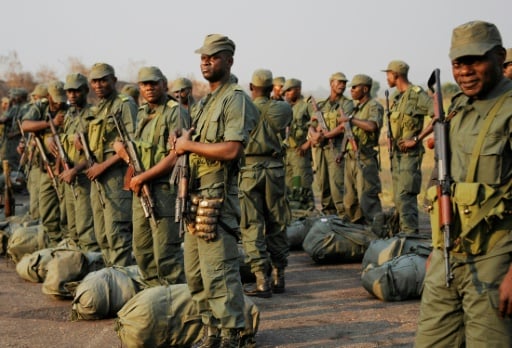
At least 31 people were crushed to death in the capital of the Republic of Congo after a frantic rush to get past a stadium gate for an army recruiting event, according to officials on Tuesday.

A prosecutor said that he had launched an inquiry into the tragedy that occurred when thousands of young people arrived at the Michel d’Ornano stadium on Monday night in the hopes of securing one of the 1,500 army jobs.

According to security personnel, a gate was attempted to be forced open, leaving victims dead inside.

Some allegedly attempted to break through the gate, while others attempted to scale a wall and enter the stadium.

The government later updated the death toll from 37 to 31, although several of the 145 injured were listed as critically ill, according to authorities.

A 24-year-old man, who declined to be named, told AFP how people were pushing to get through the gate, sparking a stampede. “There were people injured far worse than me,” said the survivor, who dislocated his foot.

Another survivor, who also requested anonymity, said: “There was a row of people in front of me. The people fell. I fell on top of them and other friends fell on top of us.”

He said he lost conscious and only woke up in an ambulance.

Several videos on social media appeared to show dozens of bodies in a city morgue.

Others showed injured people being admitted to hospitals in Brazzaville.

The army said in a statement read on national television that the recruiting drive had been indefinitely suspended.

Tresor Nzila, head of local rights NGO, called for a full investigation and to hold the Congolese government responsible for not evaluating the risks of a call-up.

“The Congolese government is incapable of creating other employment opportunities,” he said. “The defence and security forces have become the main job providers”.

The Republic of Congo, which is also known as Congo-Brazzaville to distinguish it from its larger neighbour the Democratic Republic of Congo, is an impoverished country of about five million people — despite its rich oil and gas reserves.

Youth unemployment is about 42 percent, according to the World Bank.

Congo-Brazzaville’s state prosecutor Andre Ngakala Oko said he had launched an investigation.

Congo has witnessed similar disasters. Seven people died in a stampede at a music festival in Brazzaville in 2011.

And at least 150 people were trampled to death in the capital in 1994 when worshippers crammed into a church to avoid a storm.
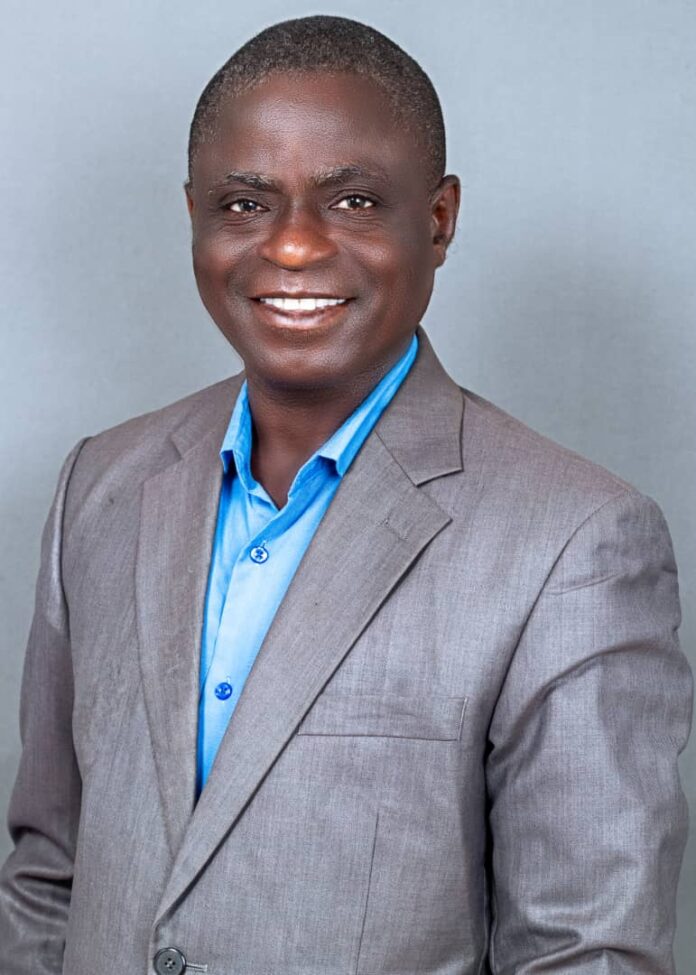
Mahama supports flood victims with relief items at Benkrom

0

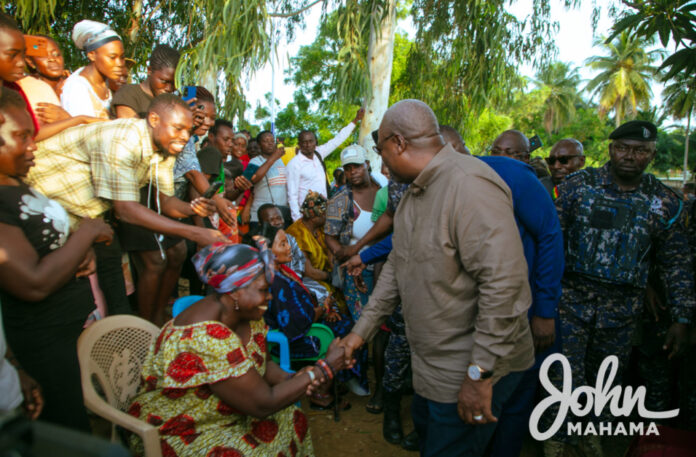
Former President John Dramani Mahama, flagbearer for the National Democratic Congress (NDC) in election 2024, has presented quantities of relief items to flood victims at Benkrom community, that was affected by recent rise of the White Volta due to the Akonsombo Dam spillage.

About 300 houses were affected with thousands of people displaced. Schools, hospitals and other socio-economic activities have been shut down, making life unbearable for the people, who are mostly farmers and fishermen.

The former President made the donation at Benkrom in the Kintampo North Municipality of the Bono East Region during a two-day “Build Ghana Tour”, in the area.

Among the items presented were 50 mattresses, 300 bags of rice, 40 boxes of cooking oil, two bags of used footwear and five bags of used clothes.

Mr Mahama said it was unfortunate they were facing such challenges in a period that the country was going through economic difficulties and assured them that efforts were underway to improve their conditions.

He asked the people of Benkrom to remember that the NDC was the only hope to restore the country back to its normal state and that there was the need to vote massively for the party in the 2024 elections.

Mr Mahama said the NDC government was coming into power to restore hope and bring prosperity to the lives of the people to gain what they lost over the years.

Nana Kwaku Dankwah III, Paramount chief of the area, on behalf of the affected people, expressed gratitude for the gesture, saying the items came at the appropriate time to relieve the people.

He promised that the items would be shared accordingly to restore the lives of the affected people

He called for more government support to alleviate the suffering of the people in the area as some have completely lost everything acquired in life.

Stop Politicisation of District-Level Elections – Former DCE nominee 

0

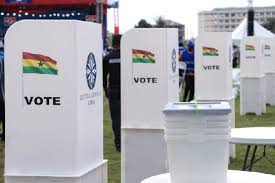
Mr Goodman Paul Agbesi Ayrah, a former District Chief Executive (DCE) nominee for Akatsi North, has decried the rate at which party politics was creeping into the District Level elections.  

He said care must be taken “not to create unamenable cracks within the core of the fiber of our society which will be beyond repairs.” 

Mr Ayrah, a former assembly member and a human rights activist, made the call in an interview with the Ghana News Agency (GNA) ahead of the upcoming December 19 exercise. 

“It is worrying as one can observe glaringly, the frantic efforts being made by some political parties in getting their members or sympathisers elected.” 

He indicated that it was not for nothing that the constitution abhorred the politicisation of the local-level elections.  

“The District Assembly concept is the most basic core and fundamental structure of our democratic architecture, and so it must be kept politically neutral as the framers of the 1992 posit to attract the necessary community cohesion and local development to take place,” he said. 

Mr Ayrah argued that the canker remained a common knowledge that some, “if not all political players, such as MPs and party executives, sponsor these aspirants during their contest.” 

“Of late, many aspirants even design their campaign flyers and posters using their party colours to influence other party members to vote for them.” 

The act, he said, is gradually creating a state of lawlessness and self-will with no respect for the Constitution.  

“Even now, some politicians have started organising intra-party primaries for aspirants deemed to belong to the same political party to get one formidable candidate to contest the supposed opposition candidate in blatant disregard for Local Governance Act 2016, as amended Act 936, section 8 clause 1, 2, 3 and 4.” 

Mr Ayrah further attributed the practice to the view that political parties intentionally engage in the move to hold majority support to influence decisions on sensitive matters in the assembly, such as wielding the power to confirm or reject DCE nominees, and others. 

“It is constructive and useful to speak against the phenomenon if we love our democracy to grow to benefit all of us.” 

He, therefore, called on Corporate Social Organisations (CSOs), NGOs, Democratic Institutions, the Media, religious bodies, and individuals to rise to speak against the act. 

“Let us allow the Constitution to function. We cannot pretend all is well. Competence of a candidate must be the choice over political sycophancy,” he added. 

Barring any unforeseen circumstances, the various Metropolises, Municipalities, and Districts would go to the polls to elect Assembly and Unit Committee Members on December 19 this year in fulfilment of the 1992 constitution. 

Nana Soglo Alloh calls for constitutional amendment ahead of election 2024 

0

Nana Soglo Alloh IV, Otekple of Likpe and President of the Likpe Traditional Council, has called on the government to amend the 1992 Constitution ahead of the 2024 general election.  

He said Article 95 clause 1 and Article 100 clause 1, contradicted each other. 

Nana Alloh, speaking at Ve-Golokuati during the silver jubilee of the Ve Lukusi Dodoleglimeza of the people of the Ve Traditional Area, said the amendment should allow the Chief Justice to be given the responsibility of swearing in the Members of Parliament (MPs) before they elected the Speaker.  

He said, “Article 95 clause 1 says there shall be a Speaker of Parliament, who shall be elected by the members of Parliament from among persons, who are members of Parliament or who are qualified to be elected as members of Parliament.” 

Nana Alloh said Article 100 clause 1 of the same Constitution stated that before a Member of Parliament takes his seat in Parliament he must be sworn in by the Speaker of the same Parliament. 

“Article 100 means that after the Speaker has been elected by the MPs he then swears in the MPs. Under the Constitution, the first duty of an MP in a new Parliament is to elect the Speaker.”  

How can he perform that duty if he himself has not been sworn in?, Nana Alloh quizzed.  

He also said much had been written about the roles that Churches and governments played in the development of society, particularly in the field of education and medical support but very little credit had been given to the traditional rulers and authorities. 

Nana Alloh said what had not been documented and which had been largely ignored was the role that traditional rulers played in all stages of social and educational development. 

He said the chieftaincy institution had undergone tremendous transformation over the years and had been able to maintain its core values and at the same time cope with modernity. 

Nana Alloh said the chieftaincy institution had faced competition from the Churches and the politicians to win the soul of the people and continued to face challenges.  

He said the Institution had become more responsive to the development aspirations of their people and also provided the glue that guaranteed the cohesion of their people.  

Reduce taxes on telecommunication companies   – Chamber of Telecommunications appeals to Gov’t. 

0

The Ghana Chamber of Telecommunications has appealed to the government to have a second look at taxes imposed on telecommunication companies. 

According to the 2022 Mobile Industry Transparency Initiative Report, telecommunication companies paid GHC6.07 billion in taxes, and other remittances to the government and allied agencies. 

The Chamber said that constituted about 7.28 per cent of the Ghana Revenue Authority’s tax revenue in the fiscal year, with the industry contributing 2.27 per cent to the country’s Gross Domestic Product. 

The telecommunication companies in 2022 paid 1.27 billion in Corporate Income Tax, GhC922,9 million in Value Added Tax, GhC679.4 million in withholding Tax, GhC482.8 million in E-Levy, GhC768 million in National Health Insurance Levy, GETfund Levy and Covid 19 levy. 

They also paid GhC511.6 million in Communication Service Tax, GhC175.18 million in Pay-as-you-earn tax, and GhC560.7 million in other remittances. 

Speaking at the launch of the 2022 Mobile Industry Transparency Report in Accra, Mr. Ken Ashigbe, Chief Executive Officer of the Ghana Chamber of Telecommunications, indicated that about 47 per cent of the annual income of telecommunication companies went into the payment of various taxes, describing it as huge. 

He, therefore, asked the government to abolish some of the tax components to lessen the financial burden of the companies, so they could invest substantially to enhance telecommunications services in the country. 

Members of the Chamber stressed the need to abolish import duty on some telecommunication equipment, and smartphones, among others. 

Current IMF programme most costly in recent years – Economist

0

Dr. Patrick Assuming, an economist and lecturer at the University of Ghana Business School, says the current International Monetary Fund (IMF) Programme is the costliest of the 16 other programmes pursued by the government.

He said certain government decisions influenced by the IMF programme, notably the Domestic Debt Exchange (DDEP), were drastic and had dire economic consequences for businesses and households.

He made the remarks during the Graphic Business/Stanbic Bank Meeting on Fiscal Discipline and Breaking the Political Business Cycle in 2024.

He observed that the current IMF programme tried to solve the country’s public financial challenges, but it fails to address the fundamental issues afflicting the country, notably the country’s reliance on import and lack of economic resilience.

“Even the measures we had to undertake for the IMF programme to come into being are drastic. This is the costliest IMF programme for ordinary Ghanaians because of its nature and the sacrifices the citizens had to undertake. Ordinary Ghanaians and businesses have really been impacted, so we see a big part is the Domestic Debts Exchange (DDEP) and the challenges and problems impacted businesses in the financial sector as well as senior citizens,’’ he said.

Experts say Ghana’s economic woes resurface after the electioneering year, as elections are usually characterised by budget excesses, especially overspending and spending on unplanned expenditures by the regime in an attempt to appease the voters.

Dr. Assuming said the 2024 general election could stall the economic recovery efforts of the country.

He advised the citizens and Parliament to develop a keen interest in the budget by scrutinising the expenditures to monitor a possible budget overspending.

Mr. Boahene Asamoah, Editor, Graphic Business, questioned the government’s capacity to fulfil its commitment to the 2024 budget in view of less success in securing an external debt restructuring.

He said the government’s decision to increase base pay by 23 percent could exacerbate fiscal discipline efforts due to the size of the wage bill.

He added that the government did not have the leverage to overspend in the 2024 elections due to the unsuccessful attempts to secure external debt relief.

Mr. Bozumbil Michael, the Chief Executive Officer for Petrosol, urged businesses to place a lower premium on the budget due to the government’s failure to address the industry’s key challenges with taxes and other financial obligations.

The event brought stakeholders in the financial sector, representatives of government agencies, and the media together to share insights on how to ensure fiscal discipline in the election year.

Nourish, don’t feed Ghanaians – nutrition experts advocate

0

Three food and nutrition experts have called for greater collaboration between farmers, industry and academia to ensure nutritious, safe and affordable food for Ghanaians.

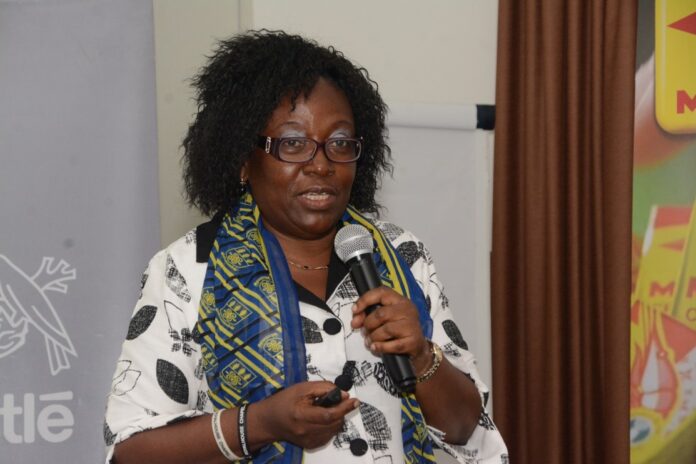
They made the call at the Nestlé-University of Ghana summit on the theme: “Valorising industry–Academia partnerships for sustainable and affordable nutrition,” held in Accra.

That had become necessary because “feeding without nourishing” was making many productive workforces malnourished and ineffective, due to lack of energy for the brain and body to work to its maximum level.

“Deepen partnership to nourish the population, and not just feed them,” Professor Matilda Steiner-Asiedu, Nutrition Consultant, advocated when she spoke on the topic: “Addressing the challenges to affordable nutrition– contributions from academia.”

Prof Nyarkoh, who is with the Department of Nutrition and Food Science, University of Ghana, bemoaned that in many developing countries, including Ghana, about 85 per cent of the population are unable to afford healthy diet.

That is attributed to the expensive cost of high-nutrient-rich foods, particularly, vegetables and fruits, a situation that is also affecting academic performance of many students.

Prof  Nyarkoh said, for example, about 65 per cent of nutrients was often lost in fish foods before reaching consumers due to poor distribution systems and handling, while what went to the market was expensive.

In an interview with the Ghana News Agency after the summit, she said: “We’re just feeding people to get full. So, someone will just eat gari-water (gari soakings) – full of carbohydrate, and this person is food and nutritional insecure. But if you’re nourishing the person, there should be at least some groundnut.”

“When you ask any Ghanaian, what did you eat? The person will tell you rice, fufu, banku, and sometimes, the fufu is just with soup, no meat no fish, its same with banku–banku with shito, or banku with okro soup, which you can even count the number of okro,” she stated.

“That’s feeding, but if you’re nourishing, we should see all the compliments of the nutrients – proteins, carbohydrate, fat and micronutrients, which we get from our fruits and vegetables.” Prof Nyarkoh explained.

The Nutrition Consultant noted that poor roads pushed drivers and traders to increase prices, and by the time the food got to the market it had become highly priced and obviously not affordable.

“We need to look at our production and post-harvest system and consider all the value-chain so that we don’t waste and lose the food,” the Nutrition Consultant commended.

Prof Ankomah Asante, Pro-Vice Chancellor, Research, Innovation and Development, University of Ghana, reiterated the need for academia and industry to work together.

Such synergy, he said would help advance knowledge sharing and effective utilisation of resources in food systems to ensure availability of affordable and nutritious food for all.

Prof Stefan Palzer, Head, Innovation, Technology, Research and Development, Nestlé, noted that climate change, global geopolitical tensions, and food security concerns required improved collaborations.

“We must ensure that nutritious food is made affordable for people using technology and modern factories to produce, and packaging them in a safe manner,” said, Prof Palzer.

Africa must tackle infrastructure gap to unlock opportunities for transformation – Report

0

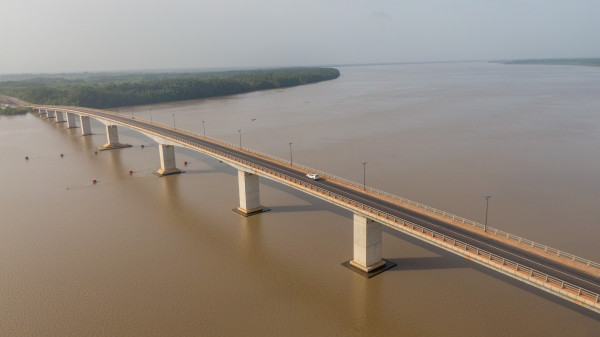
Africa must address its road infrastructure deficit which creates high cost of production and transaction to scale opportunities envisaged under the Africa Continental Free Trade Area.

According to a new report, called “Cross-Border Road Corridors Expanding Market Access in Africa and Nurturing Continental Integration,” while roads are the primary mode of transport, carrying 80 per cent of goods and 90 per cent of passenger traffic, only 43 per cent of Africa’s main population have access to an all-season road.

A statement issued in Accra released during a special session of the Africa Investment Forum 2023 Market Days, taking place in Marrakech, Morocco, said “Just 53 per cent of roads on the continent are paved, isolating people from access to basic services, including healthcare, education, trade hubs and economic opportunities.”

Dr Akinwumi A. Adesina, African Development Bank, President, urged collaborative efforts to fast-track the integration of African economies, lower transport costs, connect landlocked countries to coastal countries, and improve regional trade and competitiveness.

He said, “That is the Africa we want: a fully interconnected Africa, using regional corridor infrastructure and innovative regional financing instruments, to unleash economic opportunities and assure competitiveness of national and regional value chains. A well-connected Africa will be a more competitive Africa.”

He said the Africa Investment Forum would dedicate a special board room annually for regional corridors to foster greater collaboration, co-financing, and faster development of strategic corridors.

Dr Adesina said five priority areas to fully optimize the benefits of the developing regional corridors across Africa.

These include dedicating pooled financing facilities to corridor projects; building special industrial zones around the corridors to optimize existing infrastructure; adopting a systematic approach and platform to syndicate around the development of strategic regional corridors.

He said the development of regional corridors should be complemented with one-stop border posts to facilitate trade and reduce travel times on the corridors. He proposed concessional financing, such as the African Development Fund, which offers low-income countries unmatched resources to commit to developing regional corridors.

He reaffirmed the Bank’s commitment to infrastructure development, saying the institution invested more than $44 billion over the last seven years in developing road corridors, ports, railways and expanding power pools to interlink countries and boost trade.

 Dr Adesina said the Bank would contribute $500 million to develop the strategic Lobito Corridor to connect Angola, Zambia, and the Democratic Republic of the Congo, connecting the mines to the port in Angola.

Other projects include the $20 billion Desert-to-Power initiative to develop 10 GW of solar power across 11 countries of the Sahel zone; the Mozambique-Beira corridor transport system; the $259 Kazungula bridge, which has already been commissioned; the $2.7 billion Nacala rail and port project in Mozambique, and the Lagos-Abidjan highway, which secured investment interest of $15.2 billion at the Africa Investment Forum last year.

As of 2022, the Bank had financed 25 transport corridors, constructed over 18,000 km of roads, 27 border posts and 16 bridges for $13.5 billion.

Madam Danae Pauli, Senior Advisor for the US-led Partnership for Global Infrastructure and Investment (PGII), a lead partner in the Lobito Corridor, said her government’s involvement in the project reflected its commitment to partnering with African nations and institutions and not relying just on traditional aid for Africa.

“Our goal is not rail for the sake of rail, but to catalyze investments across multiple sectors to spur economic growth and improve lives,” she said, projecting that the project could be operational by 2028.

Implement Ghana’s Fisheries Co-managent policy-CaFGOAG

0

Ghana on Tuesday joined the rest of the world to commemorate World Fisheries Day with a call on stakeholders to implement the Sector’s Co-management policy.

A press statement issued by the Canoe and Fishing Day Gear Owners’ Association (CaFGOAG) Secretariat and copied the Ghana News Agency, said, the Co-management policy would ensure that both fishers and government agencies, managing fisheries would collaborate and share some responsibility and authority.

“Fisheries Co-management is now widely considered to be the most appropriate, fair, and effective form of governance for small-scale fisheries.”

It said, “With the formation of Regional Small Pelagic Co-management Committees (SPCCs) in Ghana and the subsequent ongoing capacity development programmes for members of the co-management committees, stakeholders can envision the process as one to reverse the declining artisanal fisheries, and to transform Ghana’s artisanal fisheries into engine of inclusion, sustainability and prosperity for fishing communities.”

“Towards a successful implementation of Ghana’s fisheries co-management, CaFGOAG has identified among others the responsibilities of creating strong awareness among fishers of the co-management process, improving fishers’ knowledge of the co-management process, as well as mobilizing and organizing fishers for collective actions”.

On World Fisheries Day, CaFGOAG has chosen the theme, “Mobilizing fishers’ support for Ghana’s fisheries co-management,” explaining that the theme highlighted the significance of co-management and the need for fishers to embrace and own the process.

“CaFGOAG is celebrating the day across the four coastal regions of Ghana, by bringing together fishers to discuss how to contribute to successful implementation of Ghana’s Fisheries Co-management Policy,” the statement said.

It said a monthly pilot programme of co-management meetings at selected communities; Abutiakope, Teshie, Apam and Shama, would be launched at the celebration.

This initiative is aimed at getting fishers to know who represent them at the co-management committees and promoting regular fishers’ interactions with SPCC members.

We are positive of Ghana’s economic recovery – German Deputy Mission Head

0

Madam Sivine Jansen, Deputy Head of Mission, Embassy of Germany to Ghana, says the economic recovery effort of Ghana is commendable.

She observed that the country had come a long way, from the situation of not paying its creditors by the end of last year to the attempts of restructuring the economy, which inadvertently aided Ghana to secure an International Monetary Fund (IMF) bailout.

“What I hear from the representatives in that regard is that Ghana has really been doing its job to get into greener pastures.

“When we look at last year and we look at this year, the development we are seeing is actually quite positive,” she said during the opening ceremony of the 6th edition of the International Trade Show for West Africa Agrofood and West Africa Plastprintpack conference and exhibition in Accra on Tuesday November 21, 2023.

The event, which is jointly organised by the AHK Delegation of German Industry and Commerce in Ghana and Fairtrade Messe, aims to help enhance Ghana’s self-sufficiency and improve supply.

Madam Jansen said the country had been successful at allaying the fears of some German investors who were worried about the economic situation in the country, adding that “we do see a certain stabilisation when it comes to the inflation rate.”

In all, about 70 exhibitors from 12 countries are participating in the event and presenting products, technologies and solutions specifically tailored for the Ghanian and West African market.

The exhibitors are from Ghana, Austria, China, France, Germany, Italy, the Netherlands, South Africa, Nigeria, Poland, Thailand, and Ukraine.

Ms. Daniela d’Oriandi, Ambassador of Italy to Ghana and Togo, noted that despite Ghana’s economic challenges in 2022, bilateral trade volumes between Ghana and Italy reached 874 million euros while in July this year, bilateral trade had reached 300 million euros.

“The most important part of Italy’s export to Ghana remains capital goods, where over 90 million euros of machinery and equipment have been traded in 2022, an increase of 30 per cent compared to the previous year,” she said.

She noted that the participation of seven Italian manufacturers of machinery and products for the plastic, printing, packaging and agribusiness industries in this year’s exhibition provided the opportunity for Ghanaian companies to learn about the possibilities of Italy to upgrade local production capacity and meet the increasingly sophisticated demand.

She said it would also improve competition and help meet the demands of foreign markets with more added value products.

“We invest in innovation, training, provide technical assistance, and our products are reliable, and there are many initiatives to promote the trade between Ghana and Italy,”

Mr. Paul März, Managing Director of Fairtrade, noted in his opening remarks that, with almost 40 million population, Ghana is a huge food market, and its expenditure in the food and beverage sector is growing steadily and is “by far the largest segment of the Ghanaian processing industry”.