Home Blog Page 456

E-levy rate cut is approved by parliament.

0

The e-levy rate will drop by 1%, according to the Ghanaian Parliament.

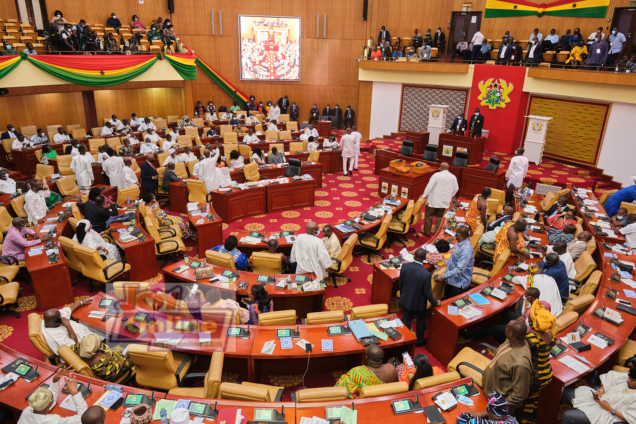
On Wednesday, December 21, 2022, the House passed a change to the Electronic Transaction Levy (E-levy) Act.

“We in the Minority had made it very clear that we did not think the GH100 threshold ought to be eliminated for a variety of reasons.

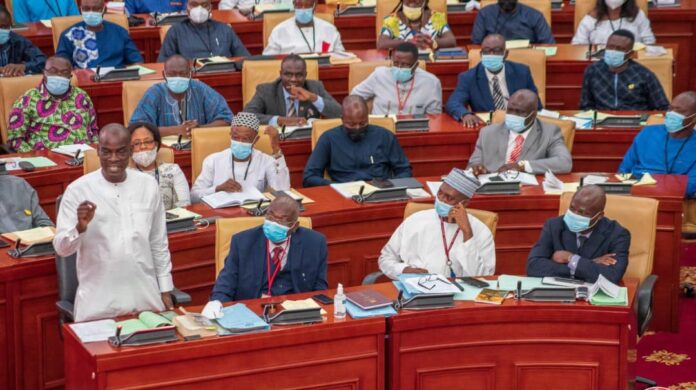
“They have listened, and by plainly presenting the e-levy bill, they have chosen to include what they had originally intended to exclude. On the House floor, Dr. Cassiel Ato Forson, the ranking member of the finance committee, said, “Mr. Speaker, it is crucial for us to applaud them for at the very least they have listened.

  1. ECONOMIC RECOVERY: Focus on homegrown solutions, reduce E-levy – GNCCI
  2. E-levy is only providing 10% of anticipated income, according to Gabby

The Finance Minister Ken Ofori-Atta announced the proposal in the 2023 budget statement to reduce the e-levy rate from 1.5 per cent to 1 percent.

He also announced a proposal to “increase the VAT rate by 2.5 percent to directly support our roads and digitalization agenda;  Fast-track the implementation of the Unified Property Rate Platform programme in 2023; and Review the E-Levy Act and more specifically, reduce the headline rate from 1.5% to one percent (1%) of the transaction value as well as the removal of the daily threshold.”


Parliament passes Electronic Transfer Levy (Amendment) Bill 2022, threshold maintained

0

Parliament on Wednesday passed the Electronic Transfer Levy (Amendment) Bill, 2022 but the daily threshold on the first Gh¢100 transaction has been maintained.  

The Bill, also known as (E-Levy), which contained three Clauses, has the objective to amend the Electronic Transfer Levy Act, 2022 (Act 1075) to reduce the transfer levy to one per cent, to enhance the filing of returns and the time for payment. 

Implemented in May 2022, with a modified phased approach where the charging entities temporarily used their own systems to assess and charge the Levy, in July same year, the next phase saw the introduction of the Ghana Revenue Authority (GRA) Common Platform for the assessment of the levy.  

 The Government received several proposals for the review of the levy and worked with stakeholders to evaluate its general impact to decide on the next line of action.  

As a result of consultations with stakeholders, the rate of the levy was reduced to one per cent of the transaction value.  

 Moving the Motion for the adoption of the Finance Committee’s report and pass the Electronic Transfer Levy (Amendment) Bill, 2022 into law, Mr Kwaku Agyeman Kwarteng, the Chairman of the Committee, said the members were informed that a reduction in the rate of the Levy was expected to lead to an increase in transfers, which would offset any losses in revenue resulting from the rate reduction.  

He said the Committee observed that the Bill required charging entities to file returns with the Commissioner-General and provide the timelines for the payment of the levy.  

“Mr Speaker, the Committee also notes with satisfaction that the Bill reduces the rate of the levy to one per cent of the transaction value. This will reduce the burden on taxpayers and encourage enhanced patronage of electronic transfer services,” he said.  

Seconding the motion, Dr Cassiel Ato Forson, the Ranking Member on the Finance Committee, said the Minority did not believe that the GH¢100 threshold would be removed for several reasons, one of them being to protect the vulnerable from paying taxes on electronic transfers.  

At the time the GH¢100 exemption was introduced as a threshold, the value of the amount had been eroded as at today, he said. 

“Mr Speaker, if you are to use the inflation deflator to adjust, it is obvious to note that the value of GH¢100 at the time will be about GH¢40 today.” 

With the Government reducing the tax to one per cent, Mr Forson said it was the Minority’s position that the threshold must be removed completely.  

“But since we have not been able to achieve that position and the government says it wants to reduce it from 1.5 per cent to 1 per cent, it is our prayer that next year again it would be reduced to 0.5 per cent and removed entirely in the next budget by the Finance Minister,” he said. 

Supporting the motion, Dr James Klutse Avedzi, the Deputy Minority Leader, said it was the wish of the Minority that the threshold on the e-levy was increased to GH¢200 or GH¢300 to protect the vulnerable and the poor. 

Mr Alexander Kwamena Afenyo-Maekin, the Deputy Majority Leader, said the E-levy was among the social intervention programmes of government to sustain the economy.  

The Electronic Transfer Levy (Amendment) Bill, 2022 was presented and read for the first time on the floor of Parliament on Tuesday, December 20, by Mrs Abena Osei-Asare, a Deputy Finance Minister, on behalf of Mr Ken Ofori-Atta, the Minister.  

The Committee met and considered the Bill with Mrs Osei-Asare and a team of officials from the Ministry of Finance, the GRA, and the Attorney General’s Department.  

On November 24, Mr Ofori-Atta announced that the Government would reduce the headline rate of the E-levy from the 1.5 per cent to one per cent.  

Also, the tax-free daily threshold on the first GH¢100 electronic transaction would be removed as a measure to reset the economy and restore macroeconomic stability.  

The government introduced the 1.5 per cent on mobile money transactions in May 2022 to improve tax revenue mobilization by tapping into fast-growing digital financial services.  

However, the performance of the policy did not meet expectations because of its rate, which the public thought was too high.  

 

Hospitals in China appear to be getting busier, according to the WHO.

0

According to the World Health Organization (WHO), hospitals in China look to be getting busier as worries about a new Covid-19 epidemic hitting the nation grow.

ICUs are busy, according to Dr. Michael Ryan, despite claims from administrators that patient numbers are “quite low”.

China’s official statistics indicate that no one passed away from Covid on Wednesday, but doubts persist about the disease’s true toll.

As the latest Covid surge strikes China, hospitals in Beijing and other places have been filling up recently.

As part of its zero Covid strategy, China has set rigorous health regulations since 2020.

However, following historic demonstrations against the tight regulations, the administration halted the majority of those measures two weeks ago.

The number of cases has since soared, raising fears of a high mortality rate among the elderly, who are particularly vulnerable.

Despite the rise, the official figures show only five people died from Covid on Tuesday and two on Monday.

It has led to WHO emergencies chief Dr Ryan urging China to provide more information about the latest spread of the virus.

He said: “In China, what’s been reported is relatively low numbers of cases in ICUs, but anecdotally ICUs are filling up.

“We’ve been saying this for weeks that this highly infectious virus was always going to be very hard to stop completely, with just public health and social measures.”

Speaking during a weekly news conference in Geneva WHO chief Tedros Adhanom Ghebreyesus said he is “very concerned over the evolving situation in China”.

He appealed for specific data on disease severity, hospital admissions and intensive care requirements.

Dr Ryan added that “vaccination is the exit strategy” to coronavirus outbreaks.

China has developed and produced its own vaccines, which have been shown to be less effective at protecting people against serious Covid illness and death than the mRNA vaccines used in much of the rest of the world.

His comments come as the German government announced on Wednesday it had sent its first batch of BioNTech Covid-19 vaccines to China.

The German vaccines are to be administered initially to expats in China – estimated to be about 20,000.

It is the first foreign Covid-19 vaccine to be delivered to China, although no details have been released about the time or the size of the delivery.

Last month during a visit to Beijing, Chancellor Olaf Scholz pressed for the vaccine to be made freely available to Chinese citizens as well.


GDP growth slows to 2.9 per cent year-on-year in third quarter

0

Ghana’s economic growth slows to 2.9 per cent year-on year in the third quarter of this year compared to 6.5 per cent in the same period of 2021, Professor Samuel Annim, the Government Statistician, said on Wednesday.

The mining and quarrying, information and communication, education, crops and fishing sub-sectors were the main drivers of GDP growth for the third quarter of 2022.

The GDP growth rate without oil and gas for the third quarter of 2022 was 3.6 per cent, compared to 8.2 per cent rate recorded in 2021.

The agriculture sector recorded the highest growth of 4.6 per cent, followed by the services sector with a growth of 3.9 per cent and the industry sector of 0.9 per cent.

He said the main sub-sectors with more than 10 percent expansion in quarter three of 2022 were information and communication (18.4 per cent), mining and quarrying (14.9 per cent) and education (10.2 per cent).

Nine sub-sectors contracted in quarter three of 2022 are professional, administrative and support services activities, other personal service activities and manufacturing.

The rest are construction, real estate, hotel and restaurants, trade, electricity and water.


Minority’s attempt to defeat the VAT Amended Bill fails by one vote.

0

The Minority could not muster the necessary support to win the voting called despite fierce resistance to the 2.5 percent increase in the Value Added Tax (VAT) as stated in the 2023 budget statement.

The issue was put to a vote following a contentious discussion on the floor of Parliament on Thursday morning, and the Majority prevailed.

With 136 votes to the Minority’s 135, the Majority prevailed.

Many were surprised by the inclusion of the 2.5 percent increase in VAT in the 2023 budget, especially in light of the current president’s opposition to the tax’s establishment in 1995 when he was a member of the opposition.

Nana Akufo-Addo was one of the leaders of the popular deadly ‘Kumi Pr3ko’ demonstration against the Rawlings-led administration.

In arguing against the policy on the floor of Parliament on Wednesday night, Ranking Member on the Finance Committee Dr Cassiel Ato Forson cautioned against the introduction of the 2.5 percent increment at this time of economic turmoil.

“I do not believe that this is the time to introduce a VAT, a tax that seems to take away additional disposable income,” he stated.

“I urge the Ministry of Finance to wait for this measure and introduce this single tax handle at the right time, during times of stability, particularly at a time when disposable income has not been eroded by 300 percent,” the Ajumako-Enyan-Essiam Member of Parliament (MP) urged.

Nhyiaeso MP Dr Stephen Amoah, however, challenged the Ranking Member and said even “giant” economies like that of the US are facing inflationary challenges and increasing taxes.

He said the National Democratic Congress (NDC) only wants to reject the VAT to “destroy the country because they want Ghanaians to vote for them”.

“I am urging my brothers [in the Minority] to bury their ego, to stop displaying their egotrips and support this good alternative and ensure that this country could rise up to continue the good works that we are doing.”

The Amendment Bill was approved.


Government allots GHS80 million for the National Cathedral to the road and communication sectors.

0

According to TV3’s Parliamentary Correspondent Komla Klutse, who witnessed the approval during the debate on the 2023 budget statement on Wednesday, December 21, the government has diverted the contentious GHS80 million that was intended for the construction of the National Cathedral into the communication and road sectors.

Prior to this, on Tuesday, December 20, Ranking Member Emmanuel Armah-Kofi Buah of the Joint Committee on Trade, Industry, and Tourism dedicated to Ghanaians a Minority voting decision to reject the budget estimates for the construction of the National Cathedral as contained in the 2023 budget statement.

He claimed that because earlier funding for the project had not been properly accounted for, the judgement was a triumph for all Ghanaians.

Eleven Minority MPs as against 10 Majority MPs, therefore, voted to reject the GH¢80-million allocation for the continuation of the project.

Commenting on this development, Member of Parliament for North Tongu Samuel Okudzeto Ablakwa said “Government compelled to withdraw and reallocate the obnoxious and dubious GHS80million for President Akufo-Addo’s Cathedral to the Roads and Communications sectors.

“We won this battle for God and the suffering masses. Thank you all for your unflinching support.”


CPA desires that GUTA lower costs as rapidly as they raised them.

0

Kofi Kapito, the executive secretary of the Consumer Protection Agency (CPA), has been harshly critical of members of the Ghana Union of Traders Association (GUTA) for refusing to lower commodity prices in spite of the government’s efforts to stimulate the economy.

His remarks follow government initiatives to reduce the price of petroleum and the Cedi’s weakening against the US dollar.

Due to the combined effects of the devaluation of the Cedi and the rise in the price of crude oil internationally, business owners increased the pricing of goods and services.

The scenario had a detrimental effect on people’s livelihoods and increased the cost of living in the nation.

The Cedi, however, has seen significant advances against the major foreign exchanges.

This is as a result of government’s effort to aid the growth of local businesses and sustain livelihoods.

Nevertheless, this has not reflected on prices of goods and services in the market.

Kofi Kapito, who was addressing the media on Tuesday, December 20, described the attitude of the traders as unfair, shady and unhealthy for Ghana’s economy.

He has demanded transport unions and GUTA members to use the same speed and alacrity to increase prices to reverse prices of commodities downwards.

“We are operating in a free market so the CPA understands and appreciates the importers, retailers and transport unions but that doesn’t give them the advantage to not adhere to the same principles when it favours them and when it favours the consumer there shouldn’t be a challenge.

“I urge businesses to consider this to encourage free flow of commerce in the country because the worst situation is for consumers to either reduce their consumption or stop patronizing their businesses,” he reiterated.

He has maintained that it is only fair that the government’s effort in mitigating the cost of fuel and stabilizing the cedi would reflect in the prices of goods and commodities.

He affirmed that the CPA will continue to engage the traders to reduce the prices of goods significantly to cushion consumers.


The World Cup victory won’t put an end to the GOAT argument, according to Messi’s former Barcelona teammate Iniesta.

0
  • Messi fired Argentina to World Cup win
  • Iniesta believes GOAT debate will still rage
  • Believes Spain should stick to same model of football

WHAT HAPPENED? The Argentine skipper inspired his nation to their third global crown with scintillating displays across the 2022 tournament in Qatar, leading many fans and experts to claim that he is now out in front as the best player in history. However, Messi’s former Barcelona team-mate Iniesta believes that the arguments will still go on as there will be “excuses” for those that favour some of the 35-year-old’s rivals, such as Cristiano Ronaldo.

WHAT THEY SAID: “I am sure anyone who doesn’t view Messi as the best will find an excuse to keep seeing it that way, regardless of whether he won the World Cup or not,” Iniesta told ESPN.

“For me, Messi is the best with or without [winning] a World Cup. I think the fact he has won a World Cup, more than what other people [think], is a huge source of happiness for himself. Not just for him, but for Argentina as a country. They are always in the running and the fact they’ve won it in the way they did makes it totally deserved.”

THE BIGGER PICTURE: Iniesta, who scored the goal that gave Spain victory in the 2010 World Cup final against the Netherlands, also weighed in on his nation’s disappointing round of 16 exit in Qatar after going down to Morocco. La Roja’s failure has led to question marks over whether they should continue with their possession-based football model, but Iniesta has put his weight behind the existing style. “I think the model has to stay the same,” he said. “At the end of the day, a model of play is good if you’re able to give 100%. The game against Morocco was not lost because of the model or not, but because other things were lacking to win the game. I think the idea has to remain. The only thing is every game is different and you have to try and find solutions on a game-to-game basis. From there, the debate will always exist because there are so many small details that can change games. Maybe if [Pablo] Sarabia scores unsteady if hitting the post in the last minute, this isn’t a debate. We were all disappointed to go out but these experiences serve to learn and to improve.”

IN THREE PHOTOS:


messi5(C)Getty Images2020-03-12 2018 Messi IniestaGetty ImagesSpain(C)Getty Images

WHAT NEXT FOR MESSI? Messi is expected to return to Ligue 1 action at club level with Paris Saint-Germain against Strasbourg on December 28.


Due to the suspension of debt payments, S&P downgrades Ghana to default.

0

After the government stopped making debt payments, the global ratings agency S&P lowered Ghana’s credit ratings to default. This complicates the planned debt restructure intended to enable an IMF bailout.

Due to the ban on debt payments, Ghana, which has $13 billion in foreign debts, was downgraded from CC to selected default, according to a statement released by the credit evaluator on Tuesday. According to economists Frank Gill and Ravi Bhatia, Ghana is experiencing “extremely low net reserves, a volatile currency rate, rising inflation, and a weaker economy” at the time of the default.

The sovereign’s ability to refinance its maturing debt has been hampered by all of these concerns, according to the S&P analysts. “Following the presentation of restructurings and their acceptance, we might improve the long-term ratings.”

Ghana caught investors by surprise earlier this week by announcing it would cease payments on its foreign bonds, commercial loans and most bilateral obligations pending an agreement with creditors. While plans for a broad restructuring of foreign and local debt had already been signaled, some expected the government to keep making payments in the interim.

S&P is the first major rating company to declare Ghana’s foreign debt in default. Fitch Ratings and Moody’s Investors Service assign it the second-lowest rating. The Trade Association for the Emerging Markets said Monday the notes should trade flat.

A group of Ghana’s foreign bondholders — including Abrdn, Amundi, BlackRock and Greylock — have already organized to form a creditor committee ahead of debt restructuring negotiations.

Ghana’s bonds due in 2032 extended declines Tuesday, falling half a cent to 32 cents on the dollar, the lowest since late November.

The country’s local-currency debt score was slashed to default by S&P earlier this month after the government announced a voluntary domestic debt-exchange program that involved interest losses for holders.


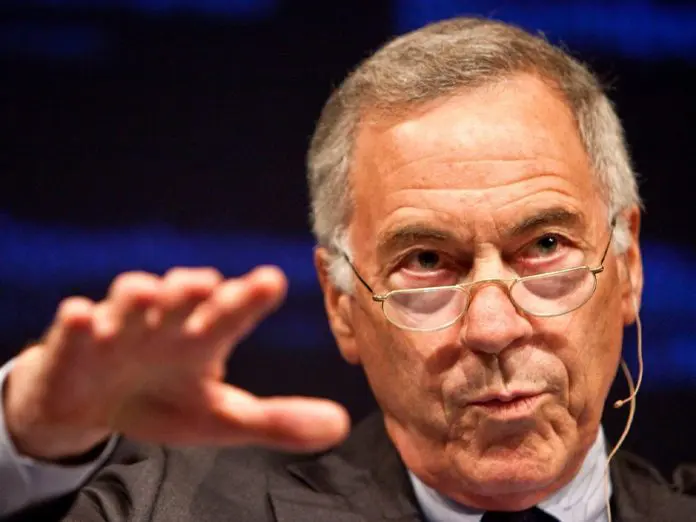
After finally speaking, Steve Hanke claims that the Cedi has dropped 31.17% against the USD since January.

0

According to Steve Hanke, a professor at Johns Hopkins, the Ghanaian Cedi has lost 31.17% of its value against the US dollar since January 2022.

In order to reflect this, he ranked the local money at number 14 on this week’s “Hanke’s Currency Watchlist.”

He tweeted on Tuesday night, “Thanks to Pres. Akufo-Addo, Ghana is in an economic death spiral.


He previously placed Cedi 15th among a list of nineteen performing currencies.

“By my calculations, the Ghanaian Cedi has depreciated 34.17% against the USD since Jan. 2020, which is why Ghana is in 15th place in this week’s Hanke’s #Currency Watchlist,” one of his earlier tweets said.

“To save the cedi,” he said, “Ghana must mothball its central bank and install a #CurrencyBoard.”


The Cedi has over the past few days, especially since the start of December 2022, been gaining strength against the major trading currencies particularly, the Dollar.

Per the Bank of Ghana (BoG) rate, the Cedi, as of Monday December 19, was buying at GHS7.9970 to a Dollar and and selling at GHS8.0050 to a Dollar.


President Nana Addo Dankwa Akufo-Addo indicated that the Cedi’s appreciation against the US Dollar is as a result of the measures taken by his government in partnership with the central bank, the Bank of Ghana (BoG).

Mr Akufo-Addo said the appreciation did not happen by chance.

Speaking at the centenary celebration of the Ga presbytery of the Presbyterian Church of Ghana in Accra on Sunday December 18, he said “At the height of our challenges there were some who doubted the capabilities of my government and I to return our nation back onto the path of progress and and prosperity and lift us out of our current problems. In those dark moments, my fellow Ghanaians and and congregation, I could only recount the words of the St Matthew chapter 19 vrs 26 which states ‘But Jesus looked at them and said to them, with men this is impossible but with God all things are possible.”

He added “With the appropriate policy, determination and hard work on our part things are beginning to turn around. What seemed impossible yesterday is now becoming possible. We are definitely not yet out of the woods. However, today, the Cedi is rapidly appreciating against the US Dollar and all major currencies, making up for its losses and the prices of petroleum products are reducing at the pump.

“The strengthening of the Cedi has not happened by chance but through the implementation of deliberate policies by government in collaboration with the Bank of Ghana. These include Cedi liquidity tightening measures resulting in the offloading of forex as stalled value by speculators, the improvement of forex inflows from remittances and the mining sector and the reaching of the staff level agreement with the IMF for a 3 billion US Dollar package. All these have combined to bring the Cedi to this position and I can assure you that government will continue to work hard to maintain and sustain the gains made.

“Indeed, in the weeks ahead, the BoG will continue with the purchases of forex from the mining and oil sectors to enhance liquidity supply to the markets, continue with single unified forex forward auction and some modest targeted bilateral support  to critical import.”