Home Blog Page 457

Musk to resign as Twitter’s CEO

0

Elon Musk has stated that he will step down as Twitter’s CEO if he finds someone “foolish enough to take the position.”

Prior to this, the billionaire made a commitment to follow the outcome of a Twitter poll in which 57.5% of respondents favoured his leaving the position.

He claims that even once a replacement is found, he will continue to lead the software and servers teams.

The platform’s modifications since his takeover have drawn a lot of flak.

Since Mr Musk bought the social media site in October, he has fired about half of its staff and attempted a rollout of Twitter’s paid-for verification feature before putting it on pause. The feature was relaunched last week.

Civil liberties groups have also criticised his approach to content moderation, accusing him of taking steps that will increase hate speech and misinformation.

On Friday, Mr Musk was condemned by the United Nations and European Union over Twitter’s decision to suspend some journalists who cover the social media firm.

The UN tweeted that media freedom was “not a toy”, while the EU threatened Twitter with sanctions.

This is the first time the multibillionaire has responded to the poll launched on Sunday asking if he should resign. Finding someone to take over the social media platform may be a challenge, according to Mr Musk. Some people speculate Twitter co-founder Jack Dorsey could also come back to run the company. He resigned as chief executive in November 2021.

“No one wants the job who can actually keep Twitter alive,” he tweeted following the poll.


Other names mentioned as possible replacements include Sheryl Sandberg, Facebook’s former chief operating office, Sriram Krishnan, engineer and close confidante to Mr Musk, and Jared Kushner, US former presidential adviser and son-in-law of Donald Trump.

In the past Mr Musk has obeyed Twitter polls. He is fond of quoting the Latin phrase vox populi, vox dei which roughly means “the voice of the people is the voice of God”.


In response to a tweet saying Twitter Blue subscribers “should be the only ones that can vote in policy related polls. We actually have skin in the game”, Mr Musk said: “Good point, Twitter will make that change.”

Twitter’s paid-for verification feature was rolled out for a second time last week after its launch was paused. The service costs $8 per month, or $11 for people using the Twitter app on Apple devices, and gives subscribers a “blue tick”.

Previously a blue tick was used as a badge of authenticity and was free.

For weeks, investors have called on Mr Musk to step down from running the social media platform, saying he has been distracted from properly running Tesla.

Shares in the the electric car company have plummeted more than 65% over the past year.

Mr Musk sold billions of dollars worth of Tesla shares to help fund his purchase, which helped to push the shares down.

“Finally a good step in the right direction to end this painful nightmare situation for Tesla investors,” said Dan Ives from investment firm Wedbush Securities after Mr Musk’s tweet on Tuesday.


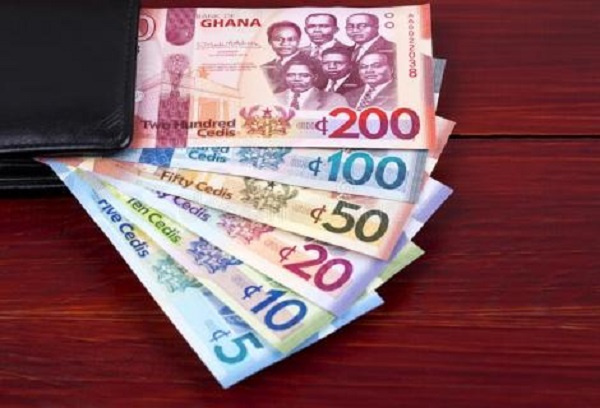
After moving up to position 14 from position 15 on Steve Hanke’s Currency Watchlist, Cedi gains ground.

0

On Tuesday, December 20, the Ghana Cedi rose to number 14 from position 15 on Hanke’s Currency Watchlist.

According to calculations made by Johns Hopkins Professor Steve Hanke, the Cedi has lost 31.17% of its value against the US dollar since January 2022, which is why Ghana is ranked 14th on this week’s Hanke’s Currency Watchlist. Ghana’s economy has entered a death spiral as a result of President Akufo-Addo.

He previously placed Cedi15th among a list of nineteen performing currencies.

“By my calculations, the Ghanaian Cedi has depreciated 34.17% against the USD since Jan. 2020, which is why Ghana is in 15th place in this week’s Hanke’s #Currency Watchlist,” one of his earlier tweets said.

“To save the cedi,” he said, “Ghana must mothball its central bank and install a #CurrencyBoard.”


The Cedi has been gaining strength against the major trading currencies particularly, the Dollar starting December 2022.

Per the Bank of Ghana (BoG) rate, the Cedi, as of Monday December 19, was buying at GHS7.9970 to a Dollar and and selling at GHS8.0050 to a Dollar.


President Nana Addo Dankwa Akufo-Addo indicated that the Cedi’s appreciation against the US Dollar is as a result of the measures taken by his government in partnership with the central bank, the Bank of Ghana (BoG).

Mr Akufo-Addo said the appreciation did not happen by chance.

Speaking at the centenary celebration of the Ga presbytery of the Presbyterian Church of Ghana in Accra on Sunday December 18, he said “At the height of our challenges there were some who doubted the capabilities of my government and I to return our nation back onto the path of progress and and prosperity and lift us out of our current problems. In those dark moments, my fellow Ghanaians and and congregation, I could only recount the words of the St Matthew chapter 19 vrs 26 which states ‘But Jesus looked at them and said to them, with men this is impossible but with God all things are possible.”

He added “With the appropriate policy, determination and hard work on our part things are beginning to turn around. What seemed impossible yesterday is now becoming possible. We are definitely not yet out of the woods. However, today, the Cedi is rapidly appreciating against the US Dollar and all major currencies, making up for its losses and the prices of petroleum products are reducing at the pump.

“The strengthening of the Cedi has not happened by chance but through the implementation of deliberate policies by government in collaboration with the Bank of Ghana. These include Cedi liquidity tightening measures resulting in the offloading of forex as stalled value by speculators, the improvement of forex inflows from remittances and the mining sector and the reaching of the staff level agreement with the IMF for a 3 billion US Dollar package. All these have combined to bring the Cedi to this position and I can assure you that government will continue to work hard to maintain and sustain the gains made.

“Indeed, in the weeks ahead, the BoG will continue with the purchases of forex from the mining and oil sectors to enhance liquidity supply to the markets, continue with single unified forex forward auction and some modest targeted bilateral support  to critical import.”


Saving to save lives: How ‘susu’ helped me flee from violence

0

Two years ago, Yaa Ataa (not her real name) led a life of quiet despair at Bomaa, a farming community in eastern Ghana. Her husband would beat her if she did not cook his favourite meal and rain blows on her accusing her of infidelity if she came home late from visiting her ailing mother in the neighboring village.  

Her relatives and neighbors often told her to walk away, but the 36-year-old mother of three felt trapped. She wondered where she would go, what she would live on and who would take care of her children if she left. Without her own source of livelihood, she was fully dependent on her husband of 12 years and, in spite of the abuse, she stayed because she had a roof over her head, food for her children and sometimes enough to share with her mother. 

Moreover, her husband threatened to disown their children and stop taking care of her ailing mother if she left. She endured for the sake of the children.  

Now, all that is behind her. Today, she stands on her own with her children and is free from abuse thanks to a village savings and loans group commonly referred to as susu.  

Yaa joined the susu initiated by the Obasima Foundation in 2019 when the local Queen Mother selected her to join the project to empower needy women in the community.  

Women in rural communities in Ghana engage in subsistence farming, providing labour for farms. They also do small-scale cassava and corn flour production and gari and palm oil processing and petty trading. They have no fixed salary and do not earn a living wage, making them vulnerable to economic violence at home.  

Economic violence involves making or attempting to make a person financially dependent by maintaining total control over financial resources, withholding access to money and/or curtailing attendance at school or employment. 

Yaa, was among 20 women who were trained in gari processing, soap making, beads making, and cassava processing into flour and chips. The women were put into four groups of five women each and given seed money of Gh¢1,000, which they used to start their small businesses. They were trained to save from the profits and given six months to repay the loans.  

The susu is led by five trustees, including the queen mother of the local community, who get basic training in bookkeeping and accounting to run group affairs. Each day, the women in the group contribute between Gh¢1 to Gh¢5, which is recorded in a ledger. Each member has a passbook to record contributions, loan disbursement and loan repayment.  

After saving for three months, the women can borrow between Gh¢1,000 and Gh¢2,500 based on their contributions and needs. The women can use the money to expand their businesses or pay for school fees or other necessities. The loan attracts an interest rate of five per cent which is used to run the association. The susu provides access to credit, which the women would not normally have access to due to the stringent criteria for borrowers in the formal sector.  

 Members of the group meet twice a week, at a designated place, for forums on social issues, where they discuss gender-based violence, sexual and reproductive health, housekeeping, parenting, bookkeeping and basic business management skills. After these discussions, they make their contributions and get loans.  

Yaa joined the gari processing group, and after saving for six months, she qualified for a business expansion loan of Gh¢1,500 with a repayment period of a year. With savings of Gh¢800 from her business and loans from the group, she moved out of her husband’s house and rented a room for herself and her children.  

“Now I am able to rent my own house and take care of my children. Through the susu, I can confidently take care of my needs and contribute to community development,” she said. 

When she left her husband, he stopped meeting their children’s needs, so she pays for her daughters’ fees and hopes that completing school will prepare them to be economically independent.  

Between 2016 and 2020, more than half a million (543,131) girls aged 15-19 years had teenage pregnancies, while 13,444 teenage pregnancies were in girls aged 10-14 years according to the Ghana Health Service District Health Information Management System (DHIMS). The latest census showed that teenage girls aged 15-19 years accounted for one in every 10 births (52,250 births) in 2021.  

Obasima Founder, Ms Ama Frimpoma told GNA that many of these girls drop out of school, live in poverty and suffer abuse when they get married. Nana Kuma Asi, the Queen Mother of Boma said that some of the women depended on their partners for everything and girls often got pregnant and dropped out of school, fueling the vicious cycle.  

This was the case for Yaa, who dropped out of school at age 15 due to pregnancy. She was forced to live with the 23-year-old man who impregnated her, even though that was child abuse because the legal age of marriage in Ghana is 18 years, while the age of consent is 16 years. The baby died two months after birth and she got her second child two years later, at age 17, and a third later. The abuse that started in her teen years, continued into adulthood until she joined the susu and raised enough money to escape. 

Ms Frimpoma told GNA that these conditions – teenage pregnancy and child marriage – drive a vicious cycle of poverty, economic dependency, and gender-based violence.  

“It is difficult for most of these young women to leave abusive relationships because they have nothing to live on. Most of them are school dropouts, having dropped out of school as a result of teenage pregnancy,” she said, adding that making women self-reliant is one of the ways of addressing gender-based violence. 

By gaining skills the women begin to earn a living and become economically independent. Once the women become self-reliant, it has a ripple effect on keeping their own daughters in school and breaking the cycle of poverty that makes girls vulnerable to abuse. This improves the lives of women in rural areas.  

“Most of our beneficiaries have daughters and once they are able to take care of them, we see a reduction in teenage pregnancy and school dropouts in their families,” she said 

Yaa is now training two girls who dropped out of school and hopes that within a year, they will stand on their feet, establish their own businesses, and mentor others.  

Yaa’s story lends credence to a UNICEF report that states that tackling violence in households requires social protection interventions to relieve the financial stress that drives intimate partner violence. The UN agency adds that women’s economic empowerment is an effective strategy for tackling gender-based violence in communities because it reduced the need for women and girls to rely on exploitative or transactional sex or marriage for economic security.  

 

Ghana Federation of Labour against domestic debt exchange programme

0

Mr Abraham Koomson, Secretary General of the Ghana Federation of Labour (GFL) has reiterated that Organized Labour, which comprises all registered trade unions and workers’ associations, still stand by their position against the government’s domestic debt exchange programme.

Mr Koomson, in an interview with the Ghana News Agency (GNA) Tema, said organized labour has vehemently opposed the debt exchange programme.

He, therefore, called on the government to respect the position of labour unions to avoid any labour unrest in the country.

He stressed that the resolve to oppose it was because it would have adverse effects on workers and pensioners.

“Organized Labour vehemently opposed to government’s announced of domestic debt exchange programme to satisfy the International Monetary Fund (IMF) conditions for a bailout from the self-inflicted economic mess,” he said.

The GFL Secretary General added that, “various workers’ organizations have spontaneously reacted against this programme having considered the devastating consequences on workers’ pensions, and other investments when implemented.”

According to him, the government had not demonstrated good faith in discussions with organized labour prior to opting for IMF support in addressing Ghana’s economic crisis.

He said it was on record that the government never considered going to IMF as a progressive alternative to revive the ailing economy.

“The 13 affiliate unions of GFL were taken aback by the government reneging on its assurance in Parliament never to seek IMF assistance in dealing with Ghana’s economic challenges,” he started.

The Ministry of Finance on December 04, 2022, announced its domestic debt restructuring programme; noting that “Under the Programme, domestic bondholders will be asked to exchange their instruments for new ones.”

Also under the programme, existing domestic bonds as of December 1st, 2022, would be exchanged for a set of four new bonds maturing in 2027, 2029, 2032 and 2037.

“The annual coupon on all these new bonds will be set at zero percent in 2023, 5 percent in 2024 and 10 percent from 2025 until maturity. Coupon payments will be semi-annual.”

Treasury Bills were, however, completely exempted and all holders will be paid the full value of their investments on maturity, according to the Finance Ministry.

The Ministry also noted that there would be no haircut on the principals of bonds, while individual holders of bonds would not be affected.


Parliament approves 2023 GH¢ 2.074 billion budget estimates for Local Govt Ministry

0

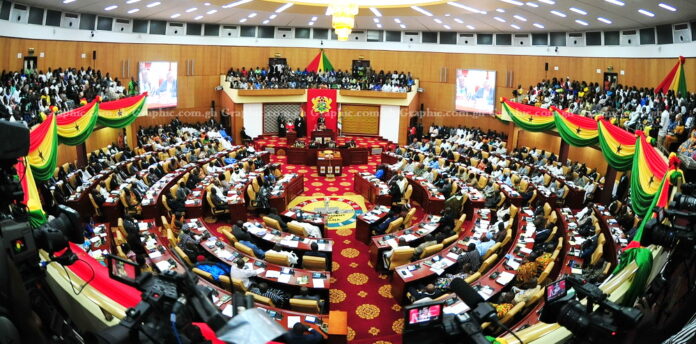
Parliament on Monday approved the sum of GH¢2, 074, 323, 448 for the Ministry of Local Government, Decentralisation and Rural Development (MLGDRD) and its Departments and Agencies for the 2023 Fiscal year.

An amount of GH¢1, 861,335,000.00 was allocated to the MLGDRD and agencies for the 2022 fiscal year.

While a total amount of GH¢859,805,000 was approved for the Ministry for Compensation in 2022, GH¢741,470,596.23 had been released as of September 2022, leaving a difference of GH¢118,334,403.77 for the fourth quarter of the year, a report of the Committee of Local Government and Rural Development observed.

It said: “The amount released constitutes 86.2 per cent of the Compensation Budget and the difference mentioned afore, constitutes 13.8 per cent which an average will not be sufficient to pay salaries and allowances of staff of the Ministry and its agencies for the fourth quarter.”

Mr Dan Botwe, Minister for MLGDRD moved the Motion for approval for the ministry’s budget estimate.

Seconding the Motion, Mr Emmanuel Akwasi Gyamfi, the Chairman of Parliament’s Local Government and Rural Development Committee, said on average, an amount of GH¢214,951,250 representing 25 per cent of the allocation for Compensation would be needed for payment of salaries for the last quarter of the 2022 fiscal year.

“Mr Speaker, the officials from the Ministry admitted that the 13.8 per cent left for the fourth quarter of 2022, was not sufficient, and they added that it was as a result of the government’s directive for the payment of Cost-of-Living Allowance (COLA) for all public servants on the Single Spine Salary Structure,” he said.

Mr Gyamfi, however, expressed the Committee’s unhappiness with the Birth and Death Registry not having an office for their day-to-day administrative works and urged the District Assemblies Common Fund to find the Registry an edifice.

In 2023, the MLGDRD among its actions would continue to assess the performance of the Metropolitan, Municipal, and District Assemblies (MMDAs) using the District Assemblies Performance Assessment of Tool (DPAT) based on the outcomes of the 2020 and 2021 Fiscal Years.

“In line with this, GH¢220.59 million will be transferred to qualifying MMDAs,” the report said.

Further, in 2023, the Department of Parks and Gardens under the Ministry would continue to maintain 2.1 million square meters of landscaped areas and road medians in urban and peri-urban communities.

The Department would also propagate 400,000 seedlings for sale and supply to institutions, and plant 100,000 trees across the country as part of the horticultural sensitisation programs.

Debating the Motion, Mr Abdul-Salam Adams, National Democratic Congress (NDC) Member of Parliament, (MP) for New Edubiase, questioned why an update on the property rate was missing from the report.

He, therefore, advocated for fair treatment to be accorded the Birth and Death Registry, especially when they worked with data just as the Electoral Commission.

Mr Richard Acheampong, NDC MP, Bia East, alleged that the Ministry failed to transfer finance to the local assemblies the whole year.

Mr Alban Bagbin, Speaker of Parliament, called for support for the ministry to strengthen those at the grass-root to have the benefit of the ministry.

Pursuant to Article 179 of the Constitution, and Order 140 (1) and (2) of the Standing Orders of the House, the Minister for Finance Mr Ofori-Atta presented the Budget Statement and Economic Policy of the Government of Ghana for the 2023 financial year to Parliament on Thursday, November 24, 2022.

By Orders, 140 (4) and 181 of the Standing Orders of the House, the Speaker of Parliament referred the Annual Draft Estimates of the MLGDRD to the Committee on Local Government and Rural Development for consideration and report.


Digital adoption can offer women, girls opportunities to overcome hurdles

0

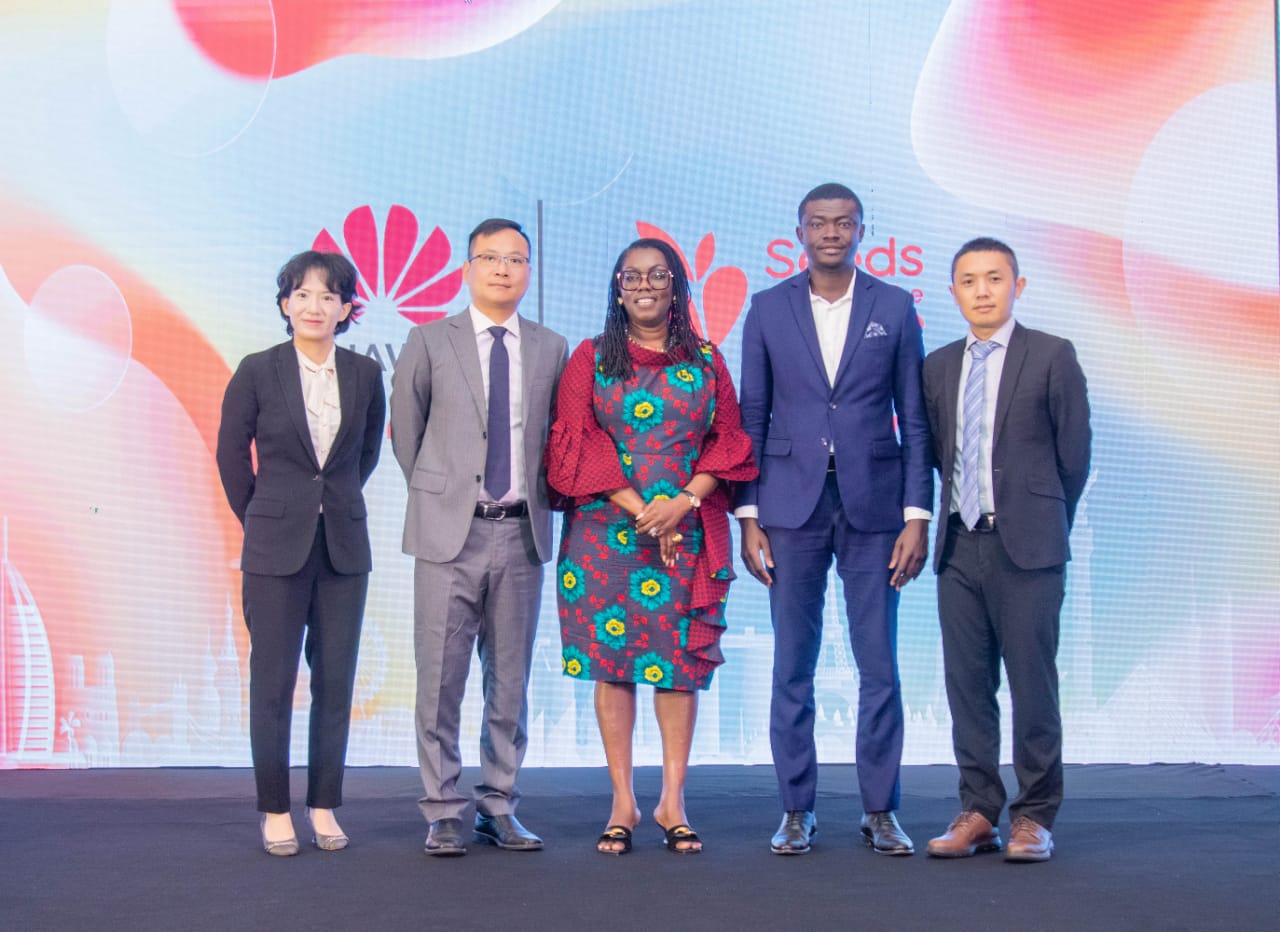
Mrs Ursula Owusu-Ekuful, the Minister of Communications and Digitalisation, says digital adoption and use can offer women, and girls opportunities to overcome hurdles they may face in the physical world.

She said digital access could empower women and girls, help expand their sense of self in the world, increase civic engagement, and raise awareness of their rights.

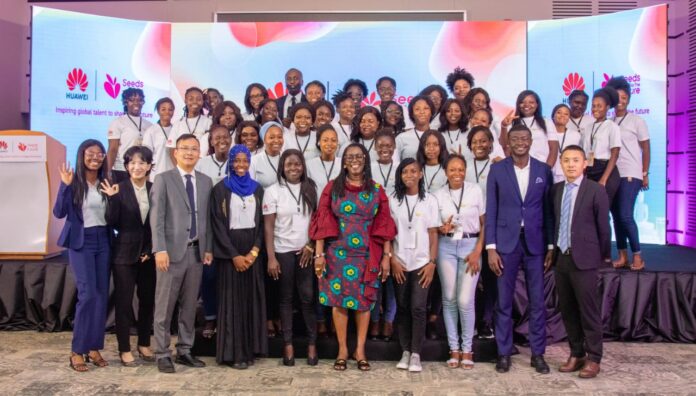
Mrs Owusu-Ekuful was speaking at the 2022 Huawei Ghana Seeds for the Future Programme closing and Awards ceremony.

The programme seeks to promote the participation of more women and girls in ICT and empower them to take up careers in Science Technology and Mathematics (STEM).

The eight-day Seeds for the Future journey aimed at exposing participants to cutting-edge technologies, Chinese culture and other industry trends.

The all-female programme had talents coming from 14 tertiary institutions across the country.

She said it would also facilitate flexible working hours, enabling women to combine their caregiving roles and careers effectively by working from home with digital platforms.

Out of 50 young women shortlisted for the training, 30 outstanding beneficiaries will be graduated.

She said the girls have spent several days investing in their future, and it was inspiring to see how they plan to use the new STEM skills, including enhanced digital skills, and strengthened leadership ability.

The Minister said the programme had over the years developed a strong talent foundation for Ghana, particularly among young women.

She commended Huawei Ghana for their excellent achievement on the Seeds for the Future programme and for the successful outcome.

She said to better understand the role of technology and the opportunities therein and find a better way to communicate it to the young girls, while at the same time showcasing female role models in the field.

“We stand a better chance of churning out more and more technology focused young women.

This has been our underlying principle and finds expression in our girl focused initiatives,” she added.

She said the government would continue to invest heavily in ICT infrastructure and it is essential that “we prioritize cybersecurity and take steps to prevent and manage security threats as a way of protecting our investments.”

The Minister said by investing in the development of experts and talents, “we can help ensure that our systems and networks are secure and resilient, protecting individuals, businesses, and the society.”

Mr Tommy Liang, the Managing Director of Huawei Ghana, said over the past few weeks, “we have been privileged to host a group of 50 talented young ladies from various universities across the country.”

He said while in the programme, these students received training in cutting-edge ICT technologies such as 5G, AI, Big Data, Cell Site Design, Augmented reality and Virtual reality.

He said they also had the chance to be mentored by professionals during the Tech4Good programme, and they created solutions to developmental challenges.

“As an all-girls edition, the programme sought to empower and inspire young women to pursue careers in the male-dominated field of ICT,” he added.

He expressed the hope that they would use the valuable insights and experiences gained to excel in their future careers.

“As you embark on the next chapter of your professional journeys, I want to encourage you to continue to learn, innovate, and strive for excellence,” he said.


We will declare an indefinite nationwide strike if government defaults Pensions Payments-CLOGSAG

0

The Civil and Local Government Staff Association, Ghana (CLOGSAG), has hinted of an indefinite strike if the Government fails to honour the payment of pensions on due dates.

Mr Isaac Bampoe Addo, Executive Secretary, said, “CLOGSAG is serving notice on the National Labour Commission that, should the Government default in honouring any of the coupons, when due for the schemes, it would declare an indefinite nationwide strike.”

He said this at a press briefing in Accra on Thursday, as the Government embarks on a domestic debt exchange programme, where bondholders would exchange their instruments for new ones.

Under this arrangement, existing domestic bonds as of December 1, 2022 would be exchanged for a set of four new bonds maturing in 2027, 2029, 2032 and 2037.

Also, the annual coupon on all these new bonds would be set at zero per cent in 2023, five per cent in 2024 and 10 per cent from 2025 until maturity – coupons would be semi-annual.

With the coming of this development and the potential impact on the financial sector, including pension funds, Mr Bampoe Addo, cautioned the Government not to default in honoring any of the coupons, when due.

Making reference to Section 98 of the Pensions Act, which made pension funds to be viewed as contributions of individuals and the Finance Minister’s statement that individual holders of bonds were exempted, he asked the Government not to renege on such commitment.

Mr Addo said, “Per section 102 on protection of accrued benefits, pension funds cannot be used for Domestic Debt Exchange Programme.”

“If these provisions in the National Pensions Act 2008 (Act 766) had escaped the Government, CLOGSAG would wish to draw the attention of the Government to these important provisions,” he added.

Mr Addo entreated all members to be calm and go by their usual duties and continue to contribute to good governance in Ghana.

Hajia Samira Bawumia receives a rousing welcome to Sunyani

0
smart

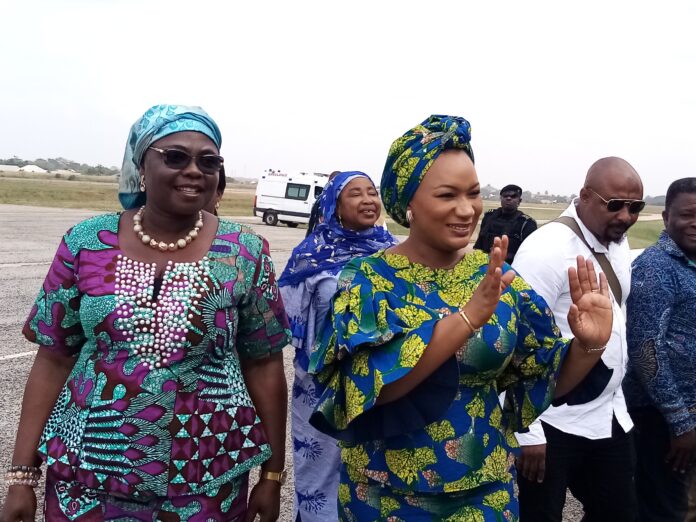
The Second Lady, Hajia Samira Bawumia touched on the tarmac of the Sunyani Airport at exactly 1045 hours on board the Ghana Airforce Flight GHF 581 to begin her day’s visit to the Bono Regional capital.

Scores of women, mostly New Patriotic Party (NPP) supporters and faithfuls from the Bono, Bono East and Ahafo Regions gave the Second Lady a rousing welcome to the capital.

As at 0800 hours, Madam Justina Owusu-Banahene, the Bono Regional Minister, and Party faithful had arrived at the Sunyani Airport nicely dressed in an African wax print to wait for the arrival of the Second Lady.

Hajia Bawumia will pay courtesy calls on the Sunyani Traditional Council and the Chiraa Divisional Council in the Sunyani West Municipality.

She is expected to interact with the chiefs and queens of the two traditional domains and later present medical items and equipment to the Regional Hospital in Sunyani.


Comport yourselves, abide by rules – Chief of Defence Staff to prisoners

0

The Chief of Defence Staff, Vice Admiral Seth Amoama, has advised inmates of Nsawam Medium Prisons to comport themselves and abide by rules.

The chief soldier said the purpose of their incarceration is not to punish them but to make them better people hence the need to obey instructions and orders to make their stay bearable.

“The purpose of the prison is to reform them, so if they comport themselves and heed to their instructions and orders given by the supervisors, I think they will not have any problem staying in the prisons until their time is over and can join the society at large.” He said.

Vice Admiral Amoama led a delegation from the Military high command and members of the Men’s Fellowship of the Garrisons Methodist/Presbyterian Church, Burma Camp to visit inmates at the special block that held condemned prisoners at the Medium Security Prison.

The visitors held nine lessons and carols service, spent time with inmates and  donated two industrial sewing machines to facilitate skills training, an unspecified amount of cash, wall fans, food items and sachet water bags.

The gesture, he said, formed “part of the Biblical Commission” to visit those in prison.

“Christmas is here with us again and Jesus is the reason. It is also a period of sharing, so we came to share a few items for the use of the inmates,” he said.

In the past, the Garrison Methodist/Presbyterian Church with support from the Military high command, had executed several projects for the Nsawam Prisons, including painting and renovation of structures.

Since December 2018, the group have visited the cell 12 times and had supported inmates with para legal aid and skills training.

Upper West Region sitting on peg of gunpowder – NPC

0

The National Peace Council has reiterated the urgent need for pragmatic steps to be taken to safeguard the Upper West Region from any security infractions that could mar the peace the region is enjoying.

It said the Region was one among others in the country exposed to activities of violent extremists and insurgences due to the occurrences of those activities in neighbouring Burkina Faso.

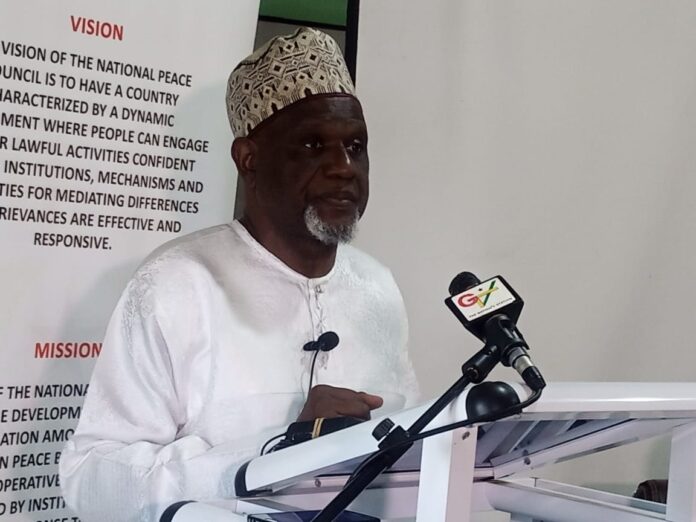
Maulvi Mohammed Bin Salih, a Board member of the National Peace Council, said this in Wa during the inauguration of the reconstituted Upper West Regional Peace Council.

The 13-member Council comprised representatives from the Upper West Regional House of Chiefs, SD Dombo University of Business and Integrated Development Studies, religious groups, and the Regional Coordinating Council among others, with Venerable Moses Z. Banungwiir as the chairman.

The newly inaugurated Council is expected to, among other things, ensure that there was peaceful coexistence among the people and communities in the area through effective conflict resolution and mitigation.

“The Upper West Region, when you look at it from the peace perspective, one can say we are sitting on a peg of gunpowder that can explode at any moment and if it does explode it will be very devastating for our own existence as a region, and by extension as a nation.

With these, therefore, the slightest disturbance in the Upper West Region has the potential of easily allowing these insurgences, these opportunists, these extremists to find a foot hole on Ghana through the Upper West Region,” Maulvi Salih explained.

He stressed the need to prevent violent extremist groups from accessing Ghana as that would be deleterious to the sub-region because they would capitalize on the sea to increase their nefarious activities in the sub-region.

“We must be warned that the insurgences out there will be happy to set a foot in Ghana not only to destroy the peace of our country but also to use Ghana as a platform for the destabilization of the whole of the sub-region.

Their greatest wish, therefore, is to be able to penetrate Ghana, get to the coastal part and have access to the sea where they will be able to bring those devastating weapons through boat or ship to carry out their nefarious activities that are currently going on in parts of the world”, Maulvi Salih explained.

He expressed worry that the chieftaincy and land disputes in the region if not checked could serve as breeding grounds for the insurgences to penetrate the country.

“This is only to tell us that we need to go the extra mile and not allow internal squabbles to destroy our region as doing that we will be inviting those outside to come in and disturb the country”, he added.

Maulvi Salih, therefore, urged the members of the regional peace council to be ready and prepared for the herculean task of peace-building and amicable conflict resolution among others as that was critical for the country’s development.