Home Blog Page 461

Accountability systems at the local level not favouring the ordinary citizens – CDD Ghana

0

The political settings at the local level in Ghana leaves much room for Metropolitan, Municipal and District Chief Executive (MMDCEs) to evade conversations on accountability, according to the Ghana Center for Democratic Development (CCD-Ghana).

Mr Paul Osei-Kuffour, Programmes Manager of CDD-Ghana, who made the observation, said the current arrangement did not favour the ordinary citizen as the MMDCEs always found a way to avoid accounting to the people.

“When you want to really demand accountability or create a space that will bring the MMDCEs to the centre or to the fore to be able to engage them on a continuous basis, they find alternatives to run from that kind of conversation,” he said during a two-day media workshop in Accra.

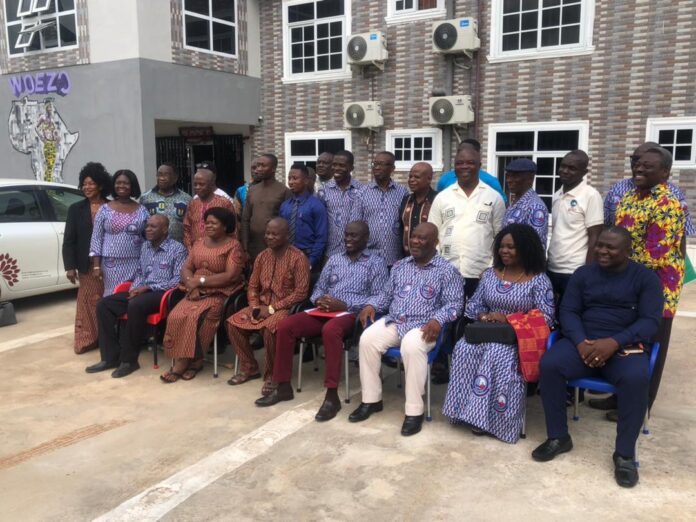
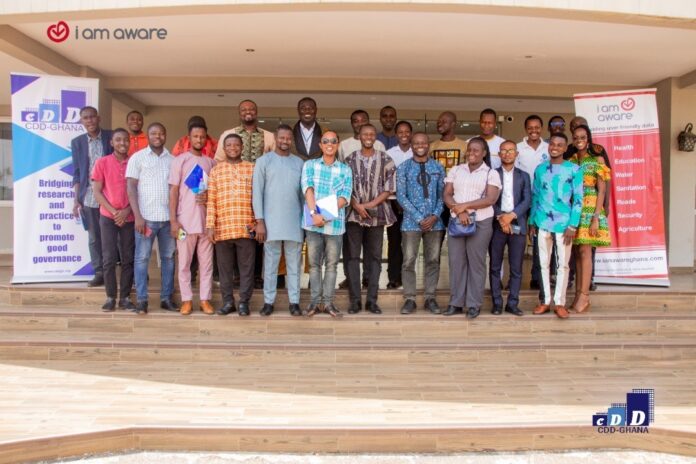
The workshop, which was attended by selected journalist from six regions, formed part of the “I Am Aware” (IAA) Project being implemented by CDD-Ghana with funding from the Hewlett Foundation.

“Strengthening Civic Participation at the Local Level: The Role of the Media in Improving the Civic Space and Fostering Civic Engagement at the District Level,” was the theme chosen for workshop.

The IAA initiative seeks to strengthen citizens’ participation and promote accountable governance for improved social service delivery across 20 districts in Ghana through informed and active citizen action.

The goal of the workshop was, therefore, to support a broad spectrum of journalists working with both electronic and print media to identify ways to strengthen the participation of civil society and citizens to influence government decision-making processes at the district level.

Mr Osei-Kuffour said lack of accountability at the local level informed the decision of CDD-Ghana to champion some reforms at the local level, especially the election of MMDCEs.

He said the level of engagement between Members of Parliament (MPs) and their constituents was much better because they were elected and would require the mandate of the people to retain their positions.

“Look at the role of the MPs and their affinity with the community and citizens. Because they are elected, every four years they need to come back to the citizens to renew their mandate so they cannot afford to stay at a distance without engaging the people,” he submitted.

He said the incentive for the MPs to continuously engage the people was the power of election, a reason CDD-Ghana was running a campaign to get MMDCEs elected.

The major constraint, he noted, was whether to do it partisan or non-partisan, but was convinced that doing it either way would still be beneficial because they would guarantee accountability.

He charged the participants to amplify the conversation to open up the civic space to create much more incentives to engage actively as actors within the space.

He said it was interesting how most Assemblies often scored high marks in the Functional and Organisational Assessment Tool (FOAT) which required regular engagements with the citizenry yet the situation on the ground was completely different.

Mr. Mohammed Awal, Team Lead for Social Accountability, CDD Ghana, said the media was not only actors in the civic space but also enablers and charged the participants to step up their game to give voice to citizens in their localities.

He said the media had a role to play by leading the conversation on accountability by providing the platform for citizens to participate in the civic space to ensure inclusive development.

He gave the assurance that CCD-Ghana would continue to work with the media to improve local governance to give true meaning to the decentralisation concept, which sought to bring governance closer to the people.
Western Regional Coordinating Council develops mobile application to manage waste

0

The Western Regional Coordinating Council (WRCC) is adopting innovative methods to address the pressing sanitation issues in the region. 

Subsequently, an electronic application dubbed, ‘e-tankas’ has been developed and is being piloted in three districts to manage and report waste nuisances in the districts. 

The three districts are Effia-Kwesimintsim Municipality (EKMA), Shama District and the Wassa East District Assembly (WEDA). 

The e-tankas application was initiated under the leadership of the Regional Minister, Kwabena Okyere Darko-Mensah, to digitize the operations of the Environmental Health Departments in the fourteen MMDAs of the Region. 

The idea was to transform the work of the environmental health workers from the manual way of managing and reporting waste nuisance in society into the electronic platform.  

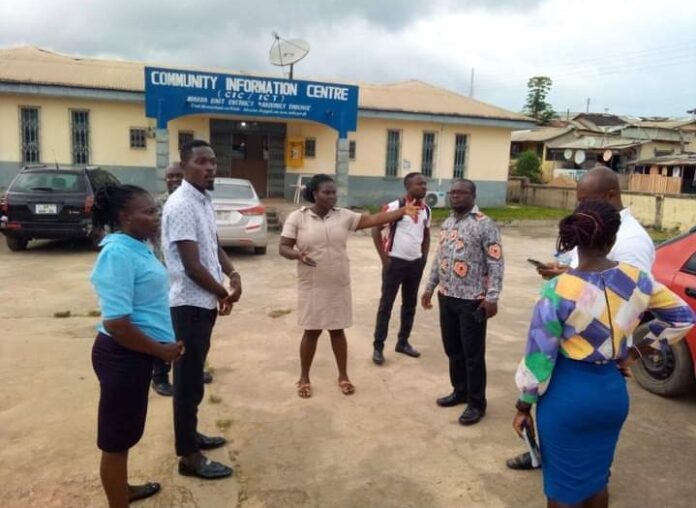
This came to light during a short briefing on the e-tankas application to Management members of the Environmental Health Departments in each of the three Assemblies.  

After the briefing, field officers undertook pilot exercises to appreciate how the system aligned with their traditional ways of administering their operations on the field. 

In the pilot exercise, the team accosted several the community members who were in the process of violating the rules already. 

The field officers used the application to capture some of them and warned them to desist from those acts since the main implementation of the programme would not spare them when they were caught. 

In the Shama districts, a young lady in her twenties was seen engaging in open defecation at Aboadze during the pilot exercise. 

While at the Wassa East District, one of the communities was seen very dirty with their waste dustbin site left unattended to while the whole community left notoriously difficult. 

The system was used to capture the offenders by one of the field officers where the offender was cautioned to desist from such acts since they would be prosecuted in the coming days when the systems got to the final stage of implementation. 

A household in Effiakuma No.9 in the EKMA was seen in a very untidy manner which the system would have facilitated their arrest and prosecution. 

This mobile application, which is essential for public education and enforcement of sanitation bye laws by community members and Environmental Health Officers, is the first of its kind in the Region. 

The objective was to improve environmental sanitation service delivery in the region.  

Ghana Hotels Association swears in new regional executives for Volta and Oti

0

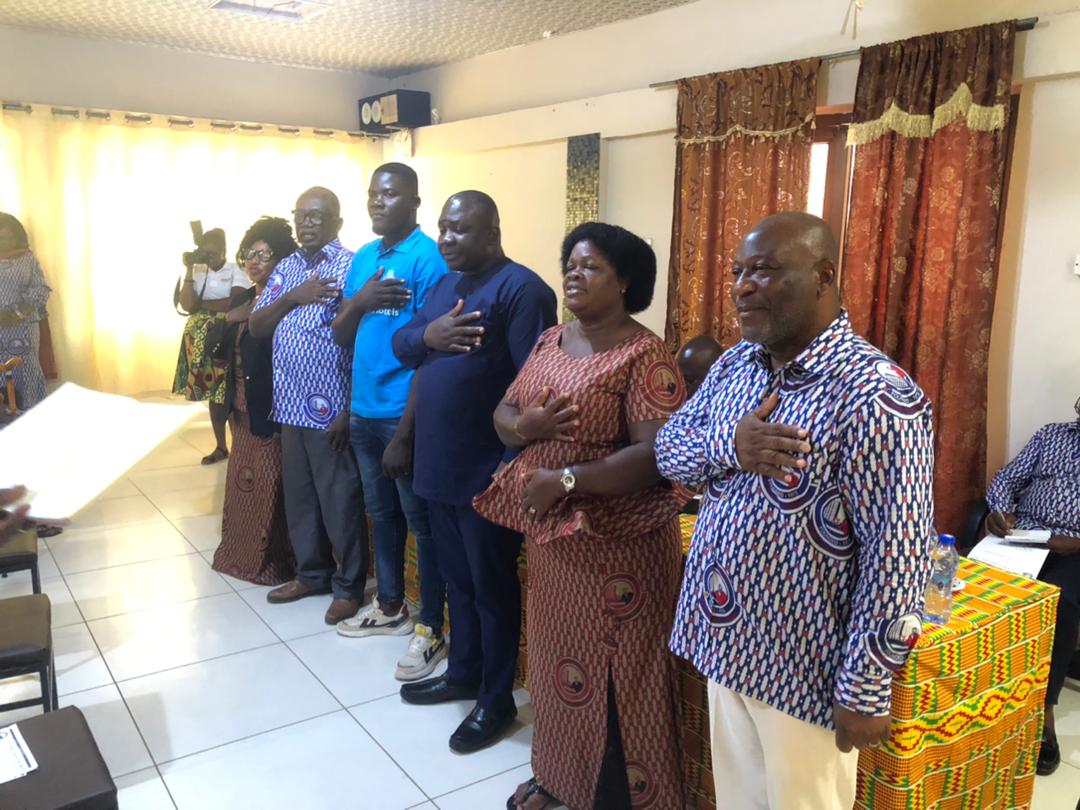
Leadership of the Ghana Hotels Association (GHA) has sworn into office, six newly elected executives to serve the Association in the Volta and Oti regions. 

Dr Edward Ackah-Nyamike, National President of the Association, in a brief address said good leadership remained an important pillar in every association “so you must see the seriousness attached to your portfolios to propel the hospitality industry.” 

He called for dedication, commitment, and sacrifice from the new executives always. 

Dr Ackah-Nyamike also charged members of the Association to work closely with the new leaders and that any member having issues must come out for it to be resolved. 

Mr Martin Kotsey Nyahe, the Municipal Chief Executive for Akatsi South, charged the new executives to live up to expectation and seek partnership to expand facilities to acceptable standards. 

Mr Mac Kwaku Hotor, the outgone Chairman, said they have chalked several successes regardless of the global Coronavirus pandemic in addition to the myriads of increases in taxes and levies. 

He assured the new executives of their support at any point they would need their input for the growth of the Association. 

Mr Anthony Klutsey, the new Regional Chairman, in his remarks, assured to expand the membership drive of the Association in the two regions. “We are open to ideas and all positive contributions. We will adhere to integrity, honesty, and transparency.” 

Mr Klutsey lamented the unavailability of some important factories meant for producing essential products such as soap, toiletries, bottled water in the region to aid their business activities as well as to reduce the cost involved in buying them from other parts of the country. 

This, he said, would be their topmost priority for the executives in the region and pledged to revive the Zonal coordinators for effective leadership. 

The other executives include Mrs Regina Coffie Dzimale, Vice Chairperson, Mr George Avadzi, Secretary, Mr Felix Kodjo Edodzi, Assistant Secretary, Madam Vivian Agbotse, Treasurer, and Mr Vincent Gligui as Financial Secretary. 

The new executives have since been sworn into office by the National President. 

The GHA in Volta has a total membership strength of 59 in good standing. 

Gender Ministry trains over 80 market executives as paralegals

0

Over eighty market executives have been trained as paralegals by the Ministry of Gender, Children and Social Protection since the introduction of the concept of paralegals in Ghana.  

The market executives were empowered with basic knowledge in the country’s legal frameworks to educate the public on Domestic and Gender-Based Violence (GBV) and to respond better and assist survivors at the markets and communities.   

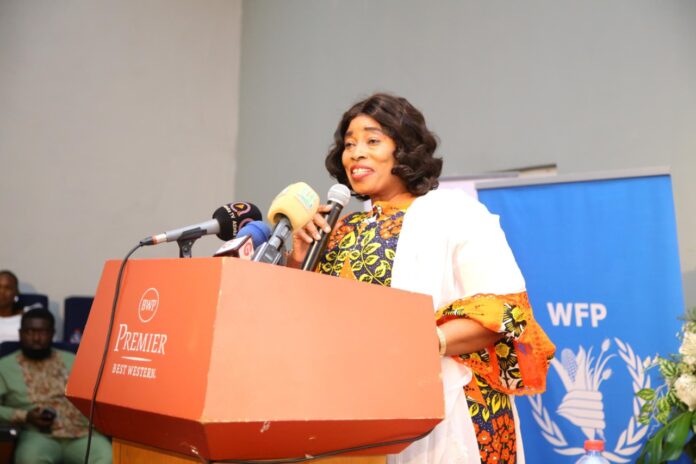
Mrs Zuweira Lariba Abudu, Minster Designate, Gender Ministry, said this at an awards ceremony as part of activities to mark the 16 Days of Activism against Gender-Based Violence.  

The 16 Days of Activism against Gender-Based Violence, an annual international campaign begins on 25th November (International Day for the Elimination of Violence against Women) and runs until 10th December (Human Rights Day) to fight violence against women and girls.  

The theme for this year’s campaign is : “ Unite! Activism to End Violence against Women and Girls.”  

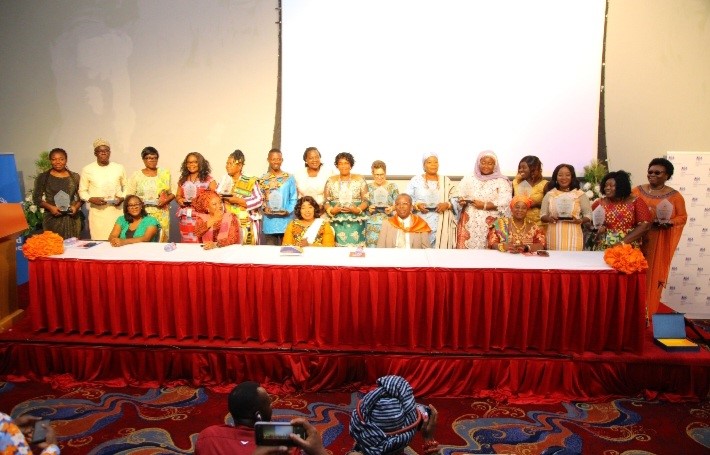
The awards ceremony was to recognise and honour individuals and organisations that help in the fight against  domestic violence in the country.  

Fifteen individuals and organisations from the Northern, Upper West and East, North East, Oti, Savanna, Bono and Bono East, Ahafo, Ashanti, Central, Western, Volta, Eastern and Greater Accra Regions were presented with plagues and table top fridges.  

Mrs Abudu noted that the lack of empowering communities to speak and act appropriately against the various abuses that affected women and girls caused the continuous rise in the menace.  

She said :“As the saying goes, prevention is better than cure and so, it is important for communities to prevent the abuses before they escalate.”  

The Minister Designate noted that GBV acts including Intimate Partner Violence, Female Genital Mutilation, harmful widowhood rites, child and forced marriages with deep cultural and religious roots, affected all countries.  

Hence, the Ministry was reviewing its Legal Frameworks such as the Domestic Violence Act and its Legislative Instrument, the National Domestic Violence Policy and the National Gender Policy amongst others to respond better to the abuses.  

“Government will not relent in its efforts to provide empowerment opportunities for women and girls as well support all structures working in the areas of prevention, prosecution and rehabilitation of survivors of sexual and gender-based violence.” 

Mr Charles Abani, United Nations Resident Coordinator, re-emphasised  the need for the Affirmative Action  Bill which had been on the table for ten years  to be passed. “How will we get this bill passed unless we have more women in parliament in the process,” he stated.  

The Bill aims to ensure the achievement of gender equality in political, social, economic and educational status, which is vital to ensuring gender parity, reduction in GBV and reductions in overall poverty levels for Ghana to be self reliance. 

Mr Abani called for a whole community approach to eliminate discrimination and GBV, raising awareness on the situation, uphold international and national commitments, and to conduct advocacy on the protection of rights and empowerment.  

He commended the Government and the Ministry for their commitments and continuous efforts towards highlighting the issues as they stood and fought against. 

Madam Harriet Thompson, British High Commissioner in a speech read on her behalf by Madam Enyonam Hazumah, Team Lead, Human Resource, British High Commission said, violence was preventable.  

Hence, she called for the implementation  of legislations that protected women and girls in Ghana.  

Madam Thompson said the country could be proud of its achievement on women’s rights and the reduction of gender-based violence.  

Gold Fields provides start-up kits for forty-three youth

0

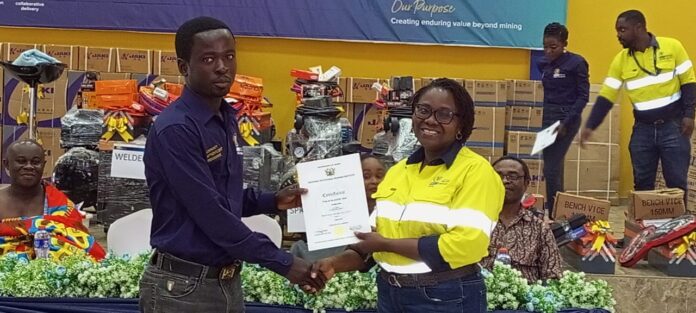
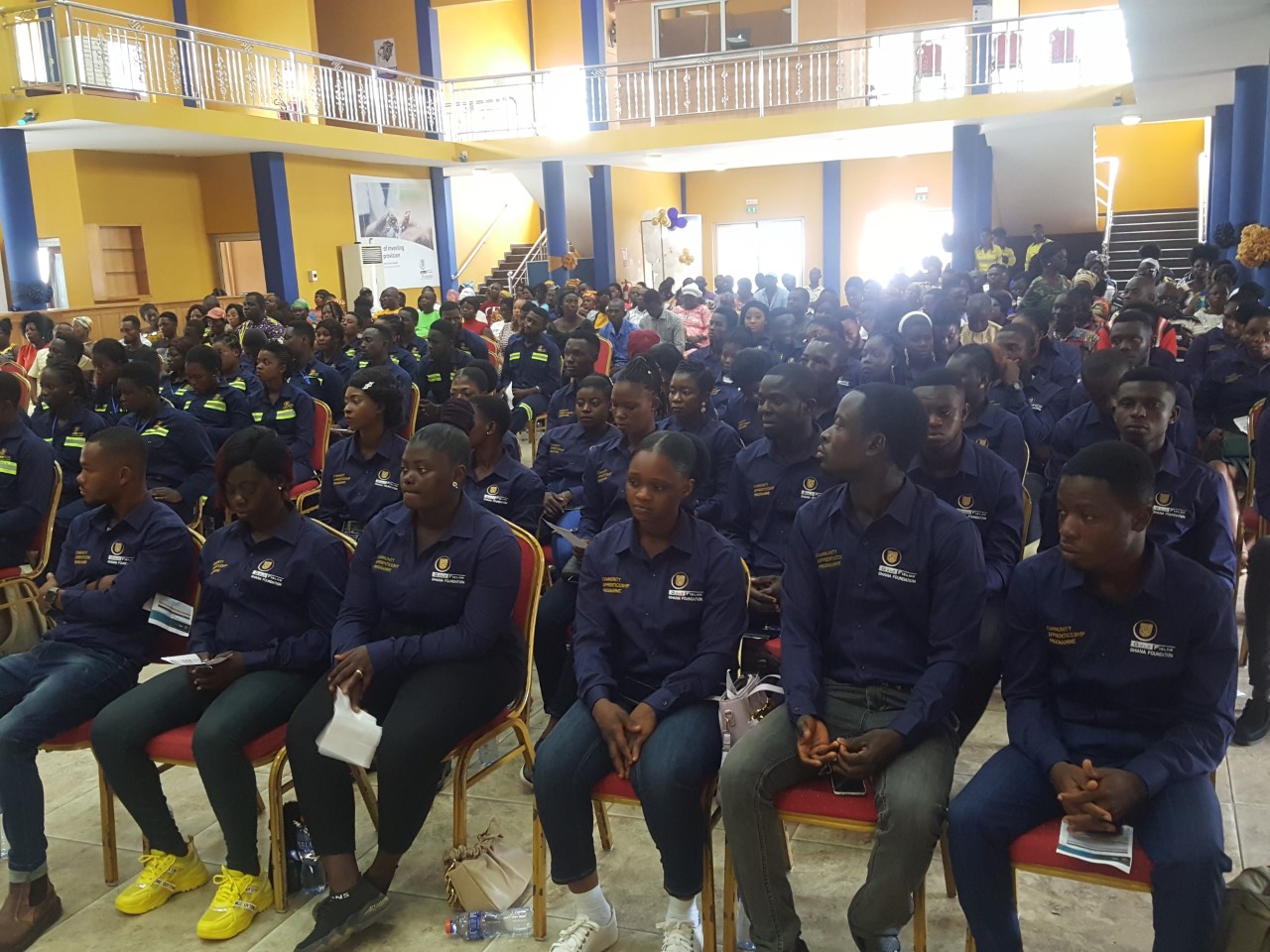
Forty-three youth who received apprenticeship training from the Gold Fields Ghana Foundation (GFGF), have been presented with start-up kits to begin their own business.

The beneficiaries received four-year training in trades like welding, auto electricals, auto mechanical, spraying, dressmaking, and hairdressing.

In addition, a four-day training programme on entrepreneurship was organized for the beneficiaries to equip them with entrepreneurship and business management knowledge to run their business successfully.

Speaking at the graduation ceremony at Akoon, Dr Celestina Allotey, Vice President and Head of Sustainable Development, Gold Fields West Africa, explained that the beneficiaries were made up of 17 males and 26 females representing 60 per cent.

She said “it was worthy to note that all the seven ladies who got pregnant during the period did not drop out but continued with the training after giving birth”.

The Sustainable Development Goals (SDGs) 4, 5 and 8 highlight the importance of technical and vocational training for employment and sustainable development as well as gender equality and empowerment, Dr Allotey added.

She hinted that before the apprenticeship programme started, community leaders and trade association executives were engaged to solicit their views and support.

“To ensure the effectiveness of the training programme, there was constant monitoring of apprentice activities throughout the period. Apprentices were visited at their various workplace to supervise their activities and assess their performance” The Vice President further said.

The Chief Executive Officer (CEO), of the Design and Technology Institute, Ms Constance Swaniker, urged the beneficiaries to work on their attitude and have a disciplined mindset, adding, “60 per cent of your success would depend on your attitude”.

She continued “the current industry requires a new skill sets and standards so work on these areas. Do not be limited, think of working in Ghana and outside the country. The GFGF programme is a great initiative and l would encourage other mining companies to emulate”.

Mr Benjamin Kessie, Municipal Chief Executive (MCE) of Tarkwa-Nsuaem, praised GFGF for initiating such a programme, and expressed the hope that they would continue to assist the youth in their host communities to be economically independent.

The queen mother of Apinto Divisional Council, Nana Abena Boaduwaa II, advised the youth in the Mines host communities to embrace programmes introduced by the GFGF to better their fortunes and contribute their quota to national level.

Mr Michael Nkansah, a beneficiary, on behalf of his colleagues, presented citation to GFGF and thanked them for creating more sustainable jobs for the youth in its host communities.

The programme was officially used to open the two-year Mine apprenticeship training in welding and fabrication for thirty youth for both Gold Fields Ghana Limited (GFGL) Damang and Tarkwa Mines host communities.

GRA confident ICUMS will boost trade facilitation in Africa 

0

The Ghana Revenue Authority (GRA) has expressed confidence in the Integrated Customs Management System (ICUMS) as a tool to boost trade facilitation in Africa, following its implementation in Ghana. 

The single window electronic customs trade and revenue mobilisation tool, which has been implemented at the Tema and Takoradi ports (Ghana), is set to be replicated in the Gambia’s seaport. 

Data provided by the Government has shown that revenue generated from Ghana’s sea and land borders has increased by about 33 per cent, from GHS12 billion in 2019 to GHS16 bn, since its deployment of ICUMS in June 2020. 

Reverend Ammishaddai Owusu-Amoah, the Commissioner-General of GRA, noted that when the project is extended to other African countries, it would serve as a major tool to facilitate trade on the continent. 

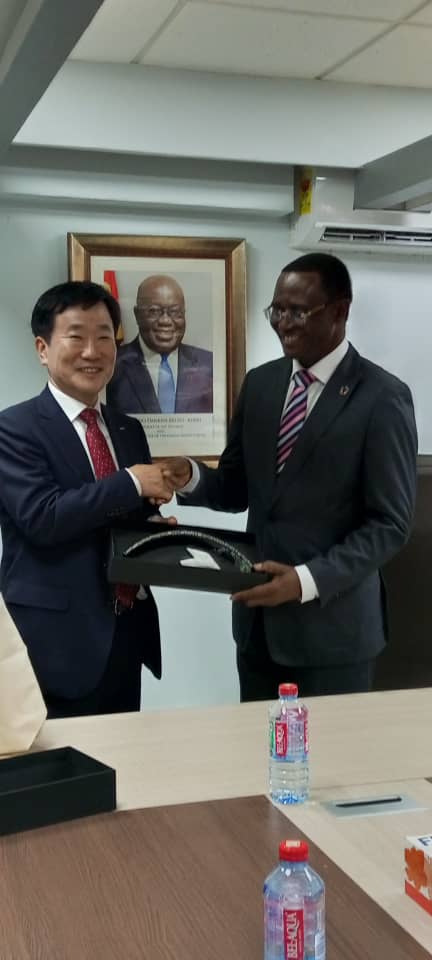
He spoke to the Ghana News Agency on the sidelines of a visit by officials from Ghana Link Network Services Ltd Network Services Ltd, the ICUMS implementer and Customs Uni-Pass Agency of Korea (CUPIA), partner for the project. 

He said: “It is an opportunity for a Ghanaian company to move into another country and deploy a system that have successful use in Ghana and Gambia and Ghana Link would get contracts in other countries and that would boost trade facilitation.”   

Rev Owusu-Amoah added that the project, when scaled up, would create opportunities for Ghanaians to go and work in other countries. 

On the success of the implementation of ICUMS in Ghana, Rev Owusu-Amoah, said: “Even in the pilot phase, we’ve seen significant improvement in the returns that we get from the auctions of various vehicles and goods.” 

“The ICUMS system generally, has been excellent so far, we have seen significant improvement in our revenue generation, we have seen improved efficiency and received commendations from our stakeholders, which include importers, exporters, and freight forwarders.” He added. 

Mr Nick Danso Adjei, the Chairman of Ghana Link, was confident that the system would help transform the trade landscape in the sub-region and the continent by making African countries achieve their “right revenue” at their various borders. 

He noted that though there were some challenges during the initial implementation of the project: “All the stakeholders are satisfied with the performance of ICUMS, which has had a great impact on trade and revenue generation.” 

Mr Kim Yoon-Shik, the Chairman of CUPIA, expressed appreciation to GRA and all stakeholders for their support in making the implementation of ICUMS successful in Ghana.  

He said the Korean Customs would deepen its relationship with GRA for mutual benefits, while adding more modules to improve on the functionalities of ICUMS to further increase revenue generation for Ghana.   

Eggs have the potential to prevent strokes and diabetes

0

Ms. Comfort Kyerewa Acheampong, Coordinator for the Ghana National Egg Campaign Secretariat, says eating eggs, particularly among the aged, has the potential to control cardiovascular diseases and diabetes.

She explained that the choline in eggs, among other essential vitamins and minerals, also prevented the risk of strokes as well as control the rise in blood sugar significantly, since it fought against crave crazy.

Ms. Acheampong at a training for Nutrition Officers and members of Poultry Farmers Association in the Western Region on the need to highlight the nutritional benefits of egg, said that taking one egg a day was ideal for all ages to improve upon brain function and smoothen skin whilst fighting malnutrition in children and promoting total wellness.

Children after six months of exclusive breastfeeding could have eggs incorporated in their diets, and pregnant mothers, youth and aged population should feed on whole egg for proper development, she added.

Ms. Acheampong, who is also the Secretary to the Ghana Office of the World Poultry Science Association, said the need to choose a healthy lifestyle was critical to nib in the bud emerging disease conditions that continued to increase healthcare burden.

She said evidence-based research did not prohibit any persons from eating eggs throughout the lifecycle since it had many health benefits such as for the eye, blood, muscles, bone, brain, heart and the stomach.

The coordinator called for proper storage and handling of the egg, the need to avoid overcooking, adding, “eggs only take between two to three minutes to cook”.

She also spoke against myths and misconceptions that eggs were only good for administering curses, and not good for pregnant mothers, adding, “no science supports these activities…rather pregnant mothers need more eggs for their development and that of the unborn child”.

The country, she announced, had developed pictorial quality standards for edible eggs in shell to regulate the production of eggs.

The pictorial quality standards, grades eggs from A to C and give information on defects, sizes, weight, labelling and packaging of the chicken eggs.

The quality standards developed together with the Ghana Standards Authority, the Ghana Poultry Project and the Ghana National Egg Campaign Secretariat would ensure a harmonized environment for production and sales to achieve optimum benefits from eggs.

Government outlines 10 strategic sectors for economic growth and prosperity

0

Government has outlined 10 strategic sectors for development to help propel Ghana’s economic growth and prosperity.  

The sectors had investments as the engine of growth with the focus on foreign exchange and foreign direct investment (FDIs) through export promotion.  

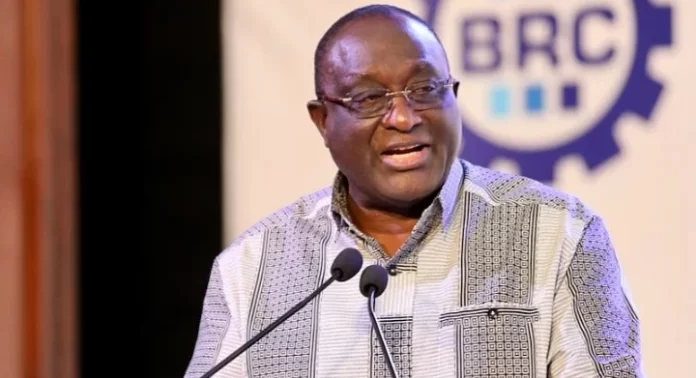
Mr Alan Kyerematen, Minister for Trade and Industry, said this at the 3rd Annual Investment Week 2022, organised by the Ghana Free Zones Authority (GFZA).  

The event which was dubbed: “GFZA: Championing Export-led Industrial Growth in the Context of AfCFTA and World Trade,” was to discuss and improve operations of the Authority and address challenges of enterprises under free zones.  

The forum also put across policies that that would positively impact the operations of the enterprises. 

Mr Kyerematen, in his address said the Agro, Petrochemical, Bauxite and Aluminum, Iron and Steel, Automotive Assembly and Manufacturing, Pharmaceutical industries and Industrial Chemical were the sectors.  

The rest were  Garments and Textile, Manufacturing of Electronic and Electrical Appliances and the Manufacturing of Machinery and Equipment industries.  

Key areas to be developed under the agro industry would be oil palm, rice processing, poultry, fruits and juices with value addition being the driving force. 

Having had some automobile companies to establish vehicle assembling plants in the country, the Minister said a component manufacturing policy would soon be out to help localise component manufacturing.  

He said the garments and textiles industry was yet to be fully harnessed as done in Bangladesh with a 30 US$ billion earnings from export yearly. 

Ghana is one of the few countries (Senegal, Namibia, Botswana, Kenya, Tanzania) with volumes of industrial salts and with a capacity to mine three million tons annually.  

Ghana could serve as a huge market for the petrochemical industry, however, she is mining less than 150, 000 tons. 

“We want to rebuild our economy with these strategic sectors which we believe can diversify our economy away from cocoa and gold,” he said.  

He said: “There is the need to promote exports as a nation now more than ever. I invite both foreign and domestic investment community to look at these sectors.”  

False reports of a fire at the Bank of Ghana, according to BoG

0

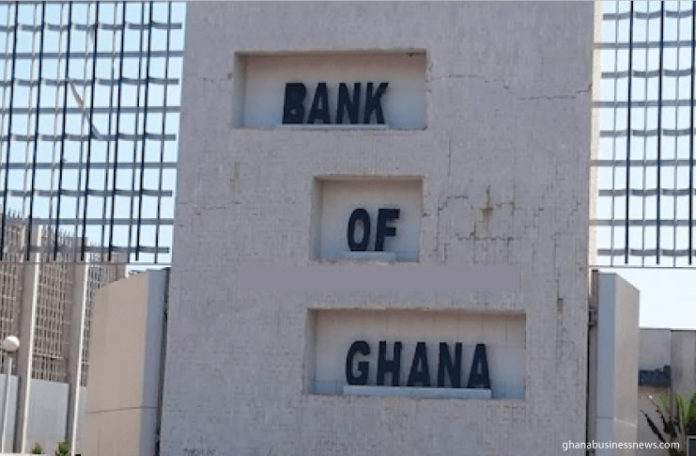
The Bank of Ghana (BoG) has denied reports that there was fire outbreak at the Headquarters in Accra.

The BoG said the reports on social media are untrue.


“As a public facility, routine fire drill is necessary for testing the efficiency and preparedness of the Bank’s safety systems to manage emergencies like fires, and inculcate in the staff of the Bank fire safety evacuation procedures,” the Bank said in series of tweets on Thursday December 8.


It added “Bank of Ghana by this medium cautions against false reportage intended to create fear and panic in the country.”


The Bank also said in Facebook post that “The Bank, today, Thursday,8th December 2022, conducted a routine fire drill (simulation exercise) to prepare staff for real-time fire situation.

“The exercise was conducted in collaboration with the Ghana National Fire Service, the National Ambulance Service and the Ghana Police Service.

“As a public facility, routine fire drill is necessary for testing the efficiency and preparedness of the Bank’s safety systems to manage emergencies like fires, and inculcate in the staff of the Bank fire safety evacuation procedures.

“Bank of Ghana by this medium cautions against false reportage intended to create fear and panic in the country.”

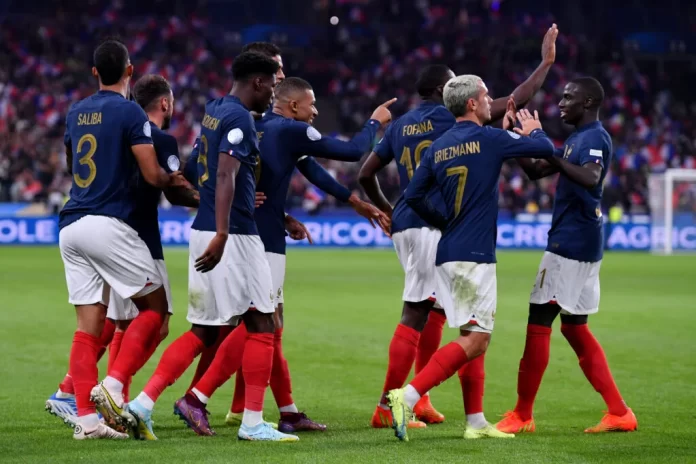
“France are going to demolish England,” Mbappe predicts as Evra evaluates the quarterfinal of the 2022 World Cup.

0
  • Les Bleus preparing to face Three Lions
  • Last eight encounter at Qatar 2022
  • Legendary left-back favouring his countrymen

WHAT HAPPENED? Les Bleus have made impressive progress in defence of a global crown that they claimed four years ago in Russia, with Didier Deschamps looking for his side to go back-to-back. England will provide the sternest of tests for France, as the leading scorers at Qatar 2022, but Evra is convinced that the holders have enough – particularly in attack – to fire their way into the last four.

WHAT THEY SAID: Former Manchester United defender Evra, who earned 81 caps for France in his playing days – has told Betfair: “I feel confident, but not arrogant. I’m happy with what France are doing right now, but I’m also happy with what England are doing right now. I think it’s going to be an interesting game, but while I think England will have to worry about players like Kylian Mbappe, France also have to worry about players like [Bukayo] Saka and [Phil] Foden. France have got worries about the England team. You can tell me that Kyle Walker is going to block Mbappe, he did it against Neymar very well in the Champions League, but I know Mbappe will move into the centre and he will come up against John Stones and Harry Maguire, and it will be difficult for them to stop him. It’s a big mix, I feel like France are going to smash England, but England can also beat France, so I’m going into the game confident but I could also be surprised.”

THE BIGGER PICTURE: Mbappe has been starring for France, registering a Golden Boot race-leading five goals so far, and Evra added on the threat that the Paris Saint-Germain superstar will pose to England: “How do you stop him? I don’t have the answer, when he plays down the side he is unstoppable. To stop him, he needs to have a bad day. Kyle Walker can be confident and say he’s got him, he’s fast, he’s strong, but Mbappe will find a way to escape. I hope he moves into the centre, because no disrespect to them, but the two centre-backs for England won’t be able to deal with him. When he plays in the central position, he still has to learn, he doesn’t like it when he receives the ball and the defender is on his back. He doesn’t use his body properly, he’s not got that yet. To stop him when he’s in the centre, you have to be close to him every time, you have to frustrate him, foul him, he doesn’t like to be fouled, but it’s going to be difficult to stop him.”

IN THREE PHOTOS:

Kylian Mbappe France 2022 World CupGetty


Olivier Giroud France Poland 2022 World CupGetty


Harry Maguire England World Cup 2022Getty

WHAT NEXT? England and France are due to lock horns on Saturday, with their eagerly-anticipated encounter set to take place at the Al Bayt Stadium in Al Khor.