
Praise Achievement Awards… A Celebration of True Gospel Experience.
Portugal Coach defends “No VAR” decision
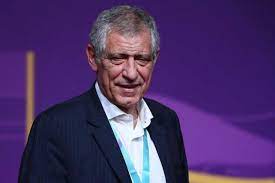
Fenando Santos Head Coach of Portugal, has defended the refusal of the match officials to consult the Video Assistance Referee (VAR) during the Group H match against Ghana on Thursday, at the Stadium 974 in Doha, Qatar.
Ghana protested the refusal of the match officials to consult the VAR after a penalty was awarded to Cristiano Ronaldo, and a seemingly offside goal by Rafael Leao.
However, Coach Santos thinks otherwise and defended the decision at a post-match press conference saying “I think if the VAR team had felt the referee should consult the VAR, they would have prompted him.
“I also think Joao Felix was fouled at a point and I expected the referee to check the VAR, but he didn’t. So I don’t think there was a call the VAR would have been necessary for the referee,” he added.
Touching on the quality of the Black Stars, Coach Santos said, “Ghana played the way they played against Brazil in the second half and so we expected them to play like that and they did.
“To be honest, Ghana played very well against Switzerland, and we expected they would play like that today. They played like the way they played Brazil in the first half and played like they played Switzerland in the second half.
“They played the way we expected, but we won. And we are happy,” he stated.
Investment in infrastructure key to economic recovery – Prof. Peprah
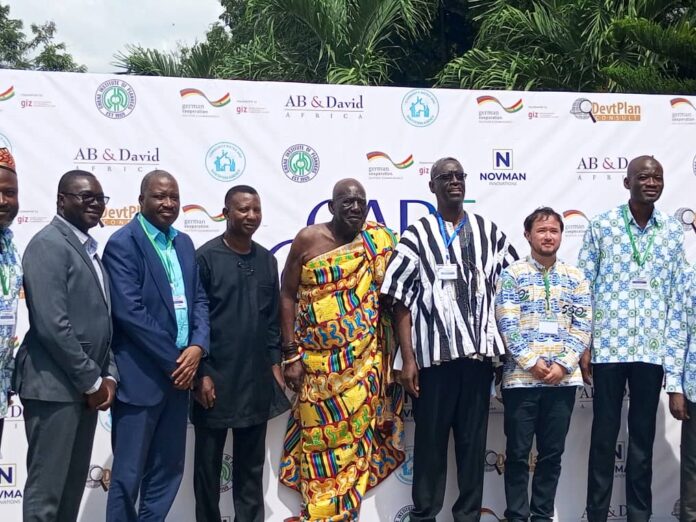
Professor Emeritus Kwasi Kwarfo Adarkwa, former Vice-Chancellor, Kwame Nkrumah University of Science and Technology (KNUST), says the Government needs to inject more capital into infrastructure development to build a resilient economy to attract and retain investments.
In the interest of the greater good, planning should be at the vanguard of delivering long-term strategic, all-encompassing and sustainable answers to the country’s economic dilemma, he said.
“Planning must become an integral part of any recovery strategy rather than an afterthought that merely serves as a diversion or a hindrance,” Prof. Adarkwah cautioned.
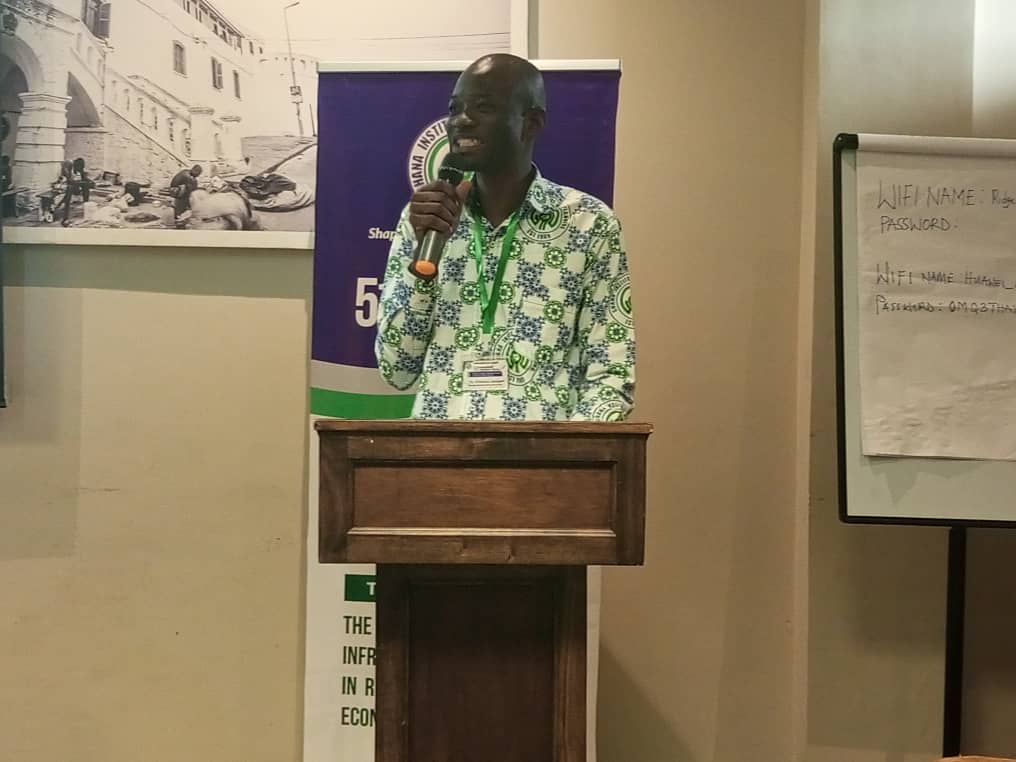
He made the call in a speech read on his behalf at the opening of the 51st Annual General Conference and Meeting of the Ghana Institute of Planners (GIP) in Cape Coast, on Thursday.
The two-day meeting is on the theme: “The Role of Strategic Infrastructure in Building a Robust Economy.”
Prof Adarkwa, who was the Special Guest, charged the Government to execute the national development framework to raise productivity and employment for development.
He said modern infrastructure was necessary due to the country’s prime location for investment in West Africa, adding that; “a nation lacking in modern infrastructure was weak and unable to sustain rapid economic growth and development that satisfied the needs of its populace.”
“In Ghana, the value added by infrastructure is about 6.8 per cent of the total Gross Domestic Product (GDP). It is seriously affecting efficiency and competitiveness of the business world as a good infrastructure system is necessary to reduce the cost of energy, transportation, and waste.”
However, the medium-to-long term infrastructural planning was essential to achieving quality comparable to the best in developed nations and other African nations and to support Ghana’s growing population, Prof Adarkwa said.
He cited the construction of the Boankra Inland Port as key to easing congestion at the ports, as well as the Sino-Hydo Road projects in many parts of the country.
Although Ghana’s infrastructure lags compared to other African countries like Algeria and Gabon, it was not behind in terms of per capita income.
The former VC said Ghana had implemented a number of infrastructure development schemes, over the years, that saw monumental projects like the Tema Motorway, Tema Harbour, Akosombo Dam, Pwalugu Tomato Factory, State Housing and Akosombo Textiles and is could do more with proper planning.
Mr Mohammed Damba, President of GIP, bemoaned the worsening economic challenges that were crippling many businesses.
He said the hyper-inflation and depreciation of the currency had eroded living standards, amid concerns of rising poverty in Ghana over the coming years.
Under this circumstance, he underscored the importance of planners in shaping development that promoted and stimulated economic growth and urged members to live above reproach.
“Development plans are often based on assumptions that need to hold with limited margin of error or miss.”
“Under these circumstances, all such assumptions in relation to our economic development trajectory seems to be shifting, and we need to urgently review the national as well as sector and district medium term plans recently prepared, to feed into the ongoing adjustments,” he advised.
Osabarima Kwasi Atta II, Omanhen of Oguaa Traditional Area, who chaired the function, urged all planners to adapt to technologically advanced strategies in their planning to achieve the desired outcomes.
Despite his team losing to the Portugal star at the World Cup, Ghana’s Osman Bukari imitates Cristiano Ronaldo’s “SIU” celebration.
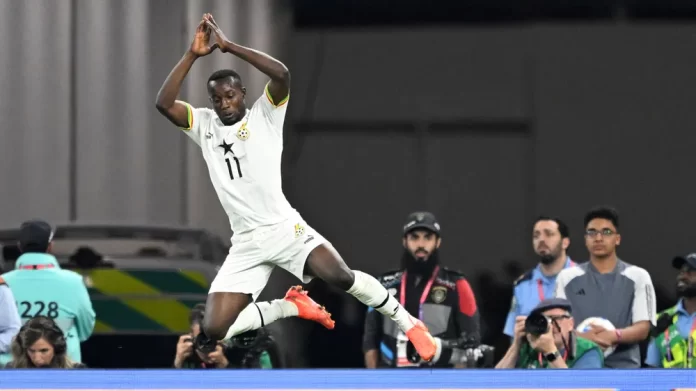
- Bukari scored to make it 3-2
- Goal kept Ghana in game late on
- Winger celebrated with “SIU”
WHAT HAPPENED? As the World Cup contest between Portugal and Ghana tailed off to a close with Fernando Santos’ side looking comfortable with a 3-1 lead, Bukari ensured injury time was as nervy as possible by making it 3-2 in the 89th minute. But instead of rushing the ball back to the centre-circle to push for an equaliser, he insisted on mimicking Ronaldo’s trademark celebration.
THE BIGGER PICTURE: Ronaldo had scored from the penalty spot earlier on and celebrated a goal at a fifth different World Cup tournament by hitting the “SIU” himself, but saw his celebration used against him later on. It came as a surprise with the African outfit still in search of a point from the Group H clash.
AND WHAT’S MORE: Ghana had a glorious chance to level the game at the death, but Inaki Williams slipped after he pickpocketed goalkeeper Diogo Costa from behind.
IN THREE PHOTOS:
 Getty
Getty Getty
Getty Getty
Getty
WHAT NEXT FOR GHANA? Having failed to take any points out of their opener against Portugal, there is no time for celebration for Ghana, whose attention turns to Monday’s clash with South Korea.
2023 Budget: Ghana to implement Economic Enclave Project for agricultural productivity
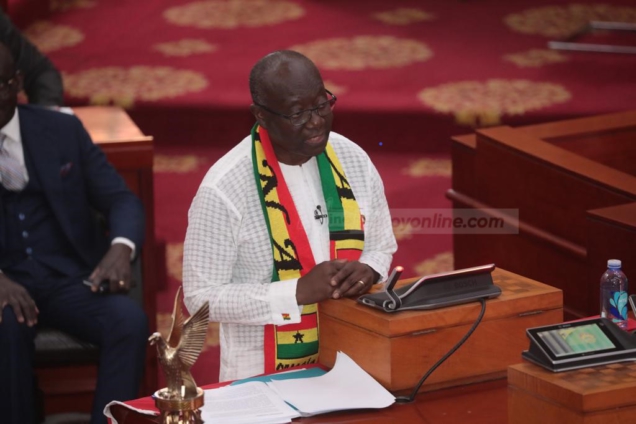
The Government is pursuing an Economic Enclave Project to provide support for the cultivation of up to 110,000 acres of land in the Greater Accra, Ashanti, Central, Savannah and Oti Regions.
The initiative, under the Ghana CARES Programme, seeks to expand the production in rice, tomato, maize, vegetables and poultry.
Mr. Ken Ofori-Atta, the Finance Minister, who disclosed this in the 2023 Budget Statement and Economic Policy of the Government on Thursday, said the initiative was being led and coordinated by the Millennium Development Authority (MiDA) in collaboration with other Government institutions.
The institutions are: the Ministry of Food and Agriculture (MoFA), Ministry of Energy, Ghana Irrigation Development Authority (GIDA), 48 Engineers Regiment of the Ghana Armed Forces (GAF) under the Ministry of Defence, the National Entrepreneurial and Innovation Programme (NEIP) and the National Service Secretariat (NSS).
The Ghana CARES Programme is a GH¢100 billion development initiative designed by the Government to mitigate the economic challenges brought on by the coronavirus pandemic.
It is meant to stabilise, revitalise and transform the country’s economy to create jobs and prosperity for the citizenry over a three-year period, with focus on commercial Farming, light manufacturing, fast-track digitisation, housing and construction.
Mr. Ofori-Atta indicated that the Economic Enclave Project would engage interested private sector actors to expand agricultural production and processing in the Asutuare-Tsopoli Economic Enclave area based on a partnership framework.
The same approach will be adopted for the lands secured in the Ashanti, Central, Savannah and Oti Regions.
‘Avenor Tutudoza’ grand durbar promises to be mega – Organisers
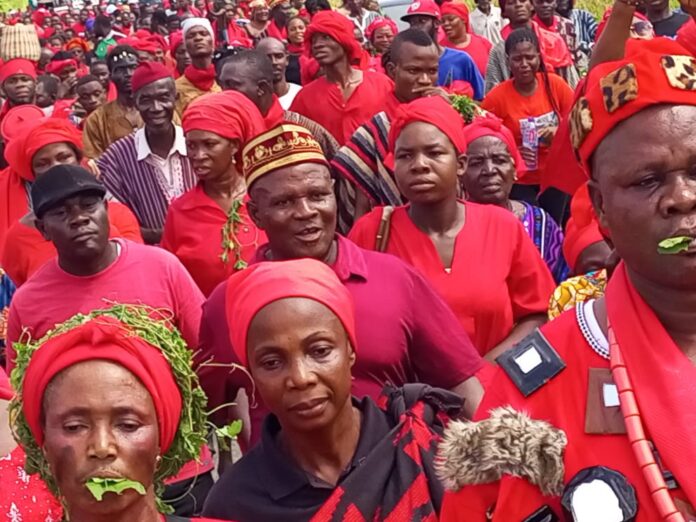
Organisers of this year’s ‘Avenor Tutudoza’ festival celebrated by the people of Avenor have stated that this year’s celebration would exhibit another great sign of future growth and progress within the Traditional Area.
They expressed excitement about the return of the festival. The theme for the festival is “Empowering and Awakening the Natives of Avenor to Take Responsibility Towards the Development of Avenor.”
The celebration of the festival took a break due to the outbreak of COVID-19, and this year’s celebration is the third edition.
Togbui Tali Gafatsi Ill, a member of the festival’s Central Planning Committee, explained to the Ghana News Agency that the committee had already experienced massive participation in some activities ahead of the grand durbar on Saturday.
“Our health walk, pilgrimage to Datsutagba, street jams, and others recorded huge participation from residents and citizens of Avenor,” he said.
Other events earmarked for celebration ahead of the grand durbar include, musical concerts, paying homage to Togbe Dorglo Anumah VI, Paramount Chief of Avenor and President of the Avenor Traditional Council at Avenorpeme, the traditional capital of Avenor, and others.
The festival is literally a call on all sons and daughters of Avenor and non-indigenes to visit and see what area is made of and support in building a vibrant traditional area.
The celebration would also see a sod cutting ceremony for the construction of a proposed ultra-modern Traditional Council office complex.
Many dignitaries, including government officials, Chiefs and Queen mothers would grace the grand celebration at Akatsi, which is slated for Saturday, November 26.
All private events such as funerals and others have since been banned by the Traditional Council during the period.
Stay awake, Christ will come unannounced – Rev. Camillos
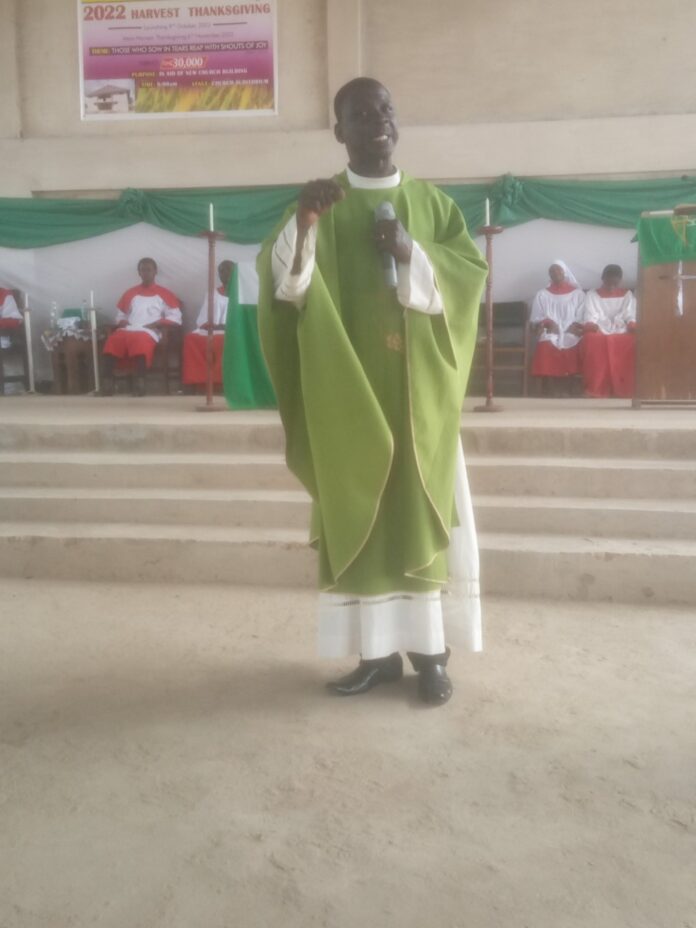
Reverend Fr. Camillos Baba Ababagre, Parish Priest at the Saint Cyprian’s Anglican Church in Bolgatanga has admonished Christians to remain faithful to God to have a better focus and their bond with God.
Rev. Ababagre who preached the sermon on the theme “Stay Awake”, said: ” We sleep in the practice of our Christian faith, and that is why Christ warns us to stay awake.”
The cleric reminded the congregation that Christ would come back to judge humanity and therefore warned his followers to stay awake.
“Remember, next week is Advent and reminds us of the end times, the Rev Fr. Abagabre noted
Rev. Camillos referred to the story of King Ahab in the Bible said disobedient Ahab had polluted the worship of Yaweh by introducing foreign gods to the people of Israel and therefore warned members of the church to remain steadfast in their relationship with God. “The consequences of Ahab’s actions and inactions led to his punishment in destruction,” he added.
He reiterated that, “The coming of Christ will be unannounced and that is why we need to stay awake” and warned lukewarm Christians to be weary of the unannounced coming of Christ.
The Parish Priest described the attitude of some Christians as self-centered and said “as Christians, we must learn to share. That is what it means by practicing the faith.”
He warned against Christians with unforgiving hearts to “learn to forgive, share and love one another.”
Rev. Camillos described the attitude of some Christians as seasonal, occasional, self-centered, and unforgiving, and advised them against lukewarm attitude in practicing the Christian faith.
Knights and Ladies of Marshall climax 50th anniversary celebration
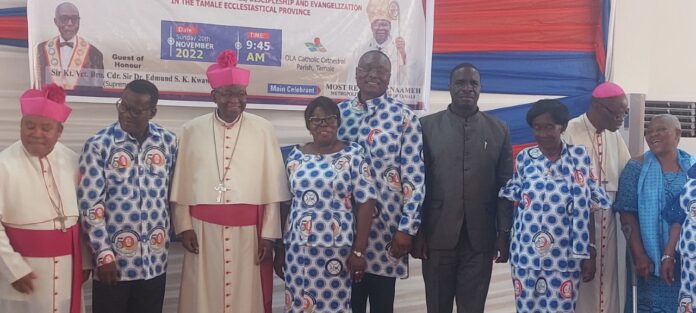
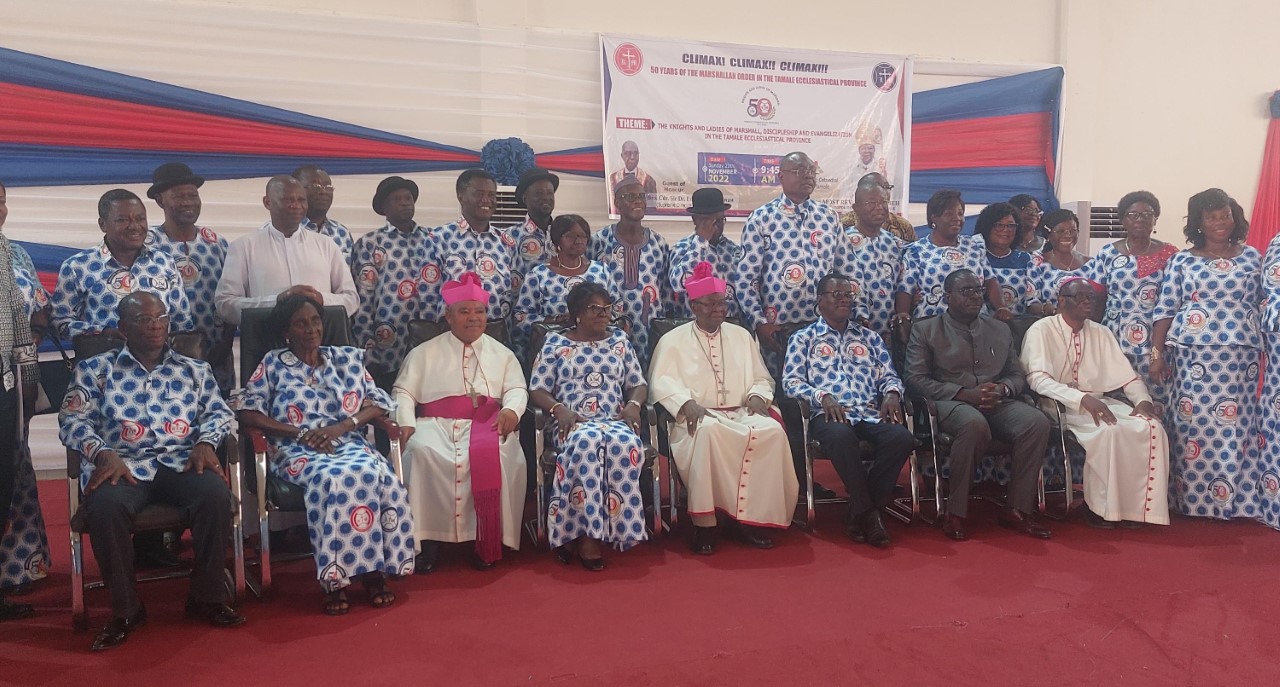
Members of the Knights and Ladies of Marshall, a fraternal society in the Catholic Church, who are in the Tamale Ecclesiastical Province (TEP), have held their reunion conference to climax their year-long 50th anniversary celebration.
The four-day conference, which ended on Sunday, featured activities that included public lectures and closed with a mass at the Our Lady of Annunciation Cathedral in Tamale.
The celebration was on the theme: “The Knights and Ladies of Marshall: Discipleship and Evangelisation in the Tamale Ecclesiastical Province.”
About 700 participants attended the reunion conference, which was graced by Sir Kt. Bro. Patrick Anumel, the Supreme Knight and Most Respected Sister Elizabeth Anderson-Yebuah, the Grand Lady, who led a high-powered delegation from the Supreme Council and Grand Court to the conference.
The first council (male branch) of the society in the TEP, which covers the five administrative regions of the north, was consecrated on September 16, 1972, in Tamale.
Council 27, the premier Council in the TEP, has since grown in number and currently there are 32 Councils and 29 Courts (female branch) in the TEP impacting positively on the Church and society.
Most Reverend Philip Naameh, Metropolitan Archbishop of Tamale, speaking during the opening ceremony of the conference in Tamale, said the fraternity’s decision to reflect on discipleship and evangelisation was commendable.
He said Marshallans were expected to live together in the practice of unity, charity and service with all people.
He said “In my view, this reunion conference offers this opportunity for you as Marshallans to discern new ways to evangelise anew the people in our time. I want to let you know that whichever way you may look at it, discipleship will be key and central. So, you need to focus on how you can form yourselves as disciples of Christ.”
Most Reverend Naameh entreated the Marshallans to emulate Sir James Marshall, who championed the re-establishment of the Catholic Church in Ghana with evangelisation, adding that, “he showed us that laity can contribute a lot to the evangelisation of people.”
Alhaji Shani Alhassan Saibu, Northern Regional Minister, whose speech was read on his behalf, urged the Catholic Church and the Marshallans to work towards recruiting more members to advance their cause.
He also commended the society for its charity activities.
Professor Seidu Al-hassan, Vice-Chancellor of UDS, whose speech was read on his behalf, encouraged the Catholic Church to continue its contributions towards the socio-economic development of the country.
Daily minimum wage increments not realistic -Workers
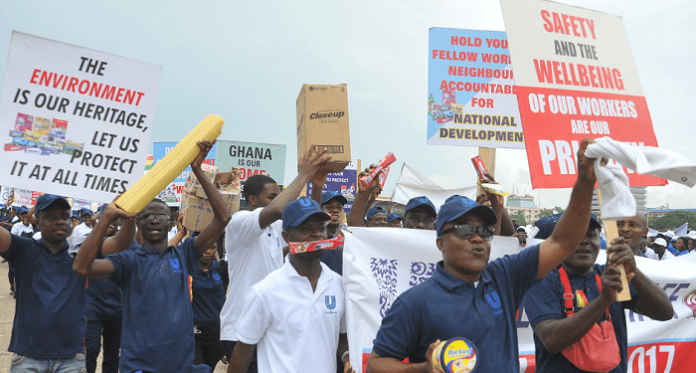
A cross section of formal and informal sector workers in Techiman, Techiman South Municipality of Bono East Region have appealed to the government to raise the daily minimum wage beyond the GhC14.88 from the current GhC13.53.
According to them, the increment which is due to take effect from January 2023 is not realistic because of the sharp increases in prices of goods and services.
Speaking in a random public interview with the Ghana News Agency in reaction to the government’s recent announcement about the wages increment on Friday, several of them who spoke on condition of anonymity argued that “the increment did not translate well to meet the current inflationary figures of the country..”
Mr. Solomon Awini, a general merchant at the Techiman Central Market bemoaned that there had been poor patronage of goods nowadays and attributed the situation to the “no-money syndrome” by workers.
Mr. Awini therefore pleaded with government to consider the proposed 60 per cent increment on the 2022 base pay by organised labour such as the teacher unions and the Ghana Registered Nurses and Midwives Association to “cushion workers a bit”.
Other interviewees including civil servants, traders and transport operators told the GNA that the increment would not make any impact on the lives of the ordinary Ghanaian, saying the way to improve their socio-economic lives “is for government to continue to reduce the prices of petroleum products” for reduction of transport fares.
Entrepreneur in Cameroon turns recycled charcoal into green gas
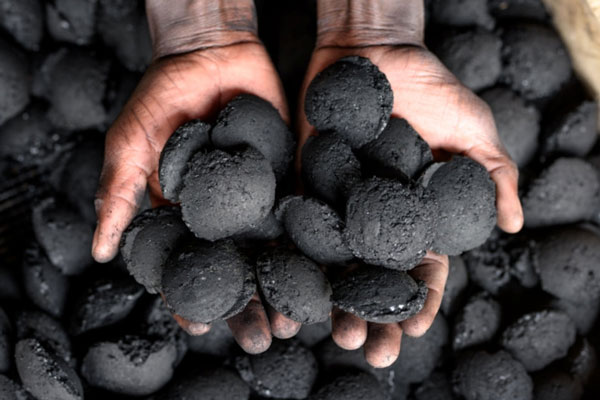
Tonnes of coal waste are thrown away each year in Douala, the economic capital of Cameroon.
The waste can pollute both the air and water supplies and is also a fire hazard.
Eric Tankeu came up with a environmentally-friendly solution – recycling the charcoal and turning it into a usable “green gas”.
Tankeu is no stranger to going green – for years he worked on different projects to help protect the environment.
He says the “gas” project has helped to repurpose many hectares of forest by reusing the discarded charcoal waste.
Tankeu explains that the “gas” is a synthetic gas, produced from carbon-containing materials. Not only charcoal waste, but also biomass, plastics, household waste or similar materials.
The end product is bottled in a cylinder that can be used for a household stove.
Tankeu explains that his “gas” stove offers a safer and more sustainable way of cooking food or heating water.
A large part of Cameroon’s population has no access to electricity and domestic gas is expensive or even unavailable in some areas.
As a result, many Cameroonians rely on firewood and coal for cooking and covering basic needs.
- In Cameroon, new seed varieties help cocoa crops bloom and farmers thrive
- Feature: Cameroonians upbeat about exciting CHAN amid COVID-19
According to Global Forest Watch (GFW), Cameroon’s forests are feeling the pressure.
The platform provides data and tools for monitoring forests online.
It says Cameroon lost 1.7 million hectares (4.2 million acres) of tree cover between 2002 and 2021, more than 5% of its total.
The main causes were harvesting wood for fuel, logging, and conversion of forests into agricultural land, GFW reported.
SOURCE: africanews.com