Home Blog Page 76

New book sheds light on monetary economics in EDCs

0

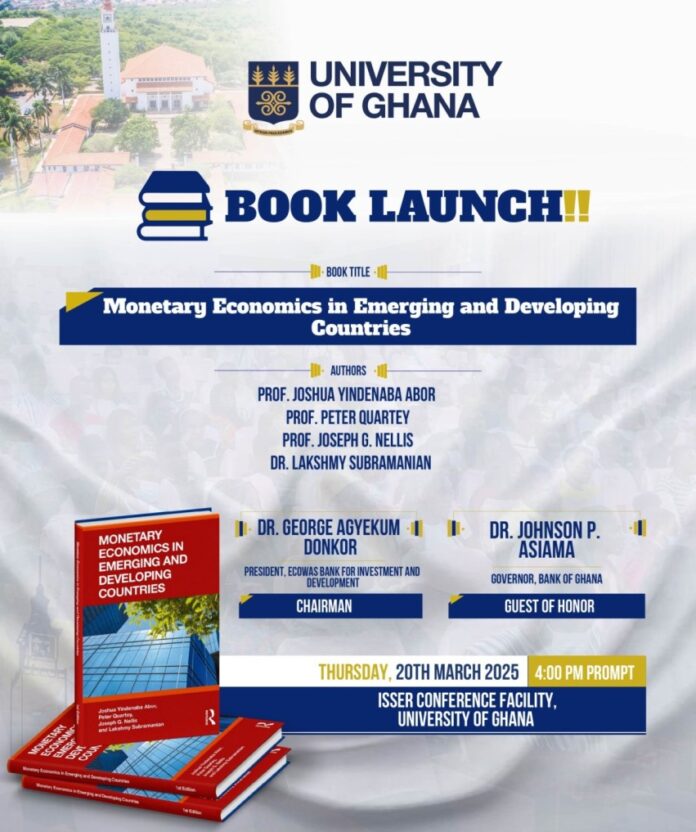
A new book, ‘Monetary Economics in Emerging and Developing Countries,’ which aims to offer a comprehensive understanding and solutions to the challenges of monetary economics in Emerging and Developing Countries (EDCs), is to be launched soon.

The book is written by two professors with the University of Ghana, Joshua Yindenaba Abor, and Peter Quartey, together with two counterparts from Cranfield University, Prof Joseph Nellis of and Dr LakshmySubramanian.

It would be launched on Thursday, March 20, 2025, at the Statistical, Social and Economic Research (ISSER) conference facility, University of Ghana, Legon.

Emerging and Developing Countries (EDCs), including Ghana, are nations that are in the process of rapid growth and industrialisation, but still face significant economic, social, and institutional challenges.

The book covering a wide range of topics, including financial systems and markets, money and payment systems, monetary institutions and policies, exchange rate policies, and financial crises, explores the antidotes to the challenges facing these economies.

Emeritus Professor of Economics, Ernest Aryeetey, a reviewer of the book, noted that the scholarly work combined theory with empirical evidence from EDCs, striking a good balance between technical jargon and easy reading for the less technical reader.

He described the book as a valuable resource for policymakers, academics, practitioners, and students seeking to understand the complexities of monetary economics in EDCs.

“I commend the authors for covering very pertinent issues in monetary economics in EDCs and I strongly recommend the book to those interested in understanding monetary economics in EDCs,” said Prof Aryeetey.

One of the key findings of the book was that the behavioural patterns of the monetary system in EDCs were better aligned with classical economic theory than with Keynesian theory, emphasising the importance of strong financial systems in supporting economic development in those countries.

The authors argued that monetary economics could drive economic growth and development by shaping and implementing effective financial policies.

They encouraged policymakers to make good use of the book to understand the global economy and financial policies amidst an increasingly interconnected and competitive world.

2025 Budget: Business community in Sunyani anticipates tax incentives

0

The business community in Sunyani says they anticipate some tax incentives and reduction of import duties in the 2025 Budget statement.

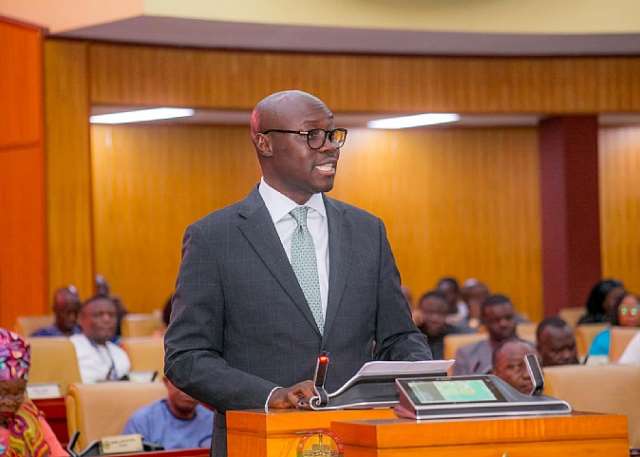
Dr Cassiel Ato Baah Forson, the Minister of Finance will present the first Business Statement and Economic Policy of the government to Parliament on Tuesday, March 11.

During a visit on Monday, traders, market women and entrepreneurs at the Sunyani Central Business District (CBD) told the Ghana News Agency (GNA) that they were worried about high taxes and import duties.

That, they added, was contributing to price instability and increasing market products, including food items, goods, and services.

They were of the view that high taxes were not the option now, though the country was experiencing economic crisis, however, called on the government to ensure that loopholes in the nation’s tax systems were tackled and cemented.

“Tax evasion is the problem, and we expect the government to tighten the system so that no payer can be able to evade tax. However, I expect that the government will reduce import duties and give us some tax holiday,” Madam Pricilla Boakyewaa, a dealer in cosmetics stated.

Another businessperson, Anthony Frimpong noted that tax collection in the informal sector was not the best, calling for a digitized way of tax mobilization in the country.

He expressed worry that some private enterprises and businesses entrepreneurs “find their way out and dodging taxes our system is polarised.”

“In fact, you can’t do that in Europe and elsewhere because their tax system works and is a serious economic crime to evade tax there,” Mr Frimpong who said he had lived in Germany for more than 30 years stated.

Mr Stephen Ayensu, an importer and dealer in second hand clothing and footwear, said “high import duties are collapsing our business.

Price of goods and services keeps increasing because anytime you return from the ports you must do something about the price of the imported goods to meet your profit,” he stated.

Mrs Bernice Aboagyewaa, a trader selling building materials at the Sunyani Night Market enclave, even though the price of building materials remained unstable and kept increasing, the demand for her products was still high.

“It is the ordinary people enduring the most of the nation’s economic crisis, and the government fiscal policy must tackle that and give some tax incentives to petty businesses and traders.

Mrs Aboagyewaa also called on the government to provide some financial assistance to recognised traders and market women to expand their economic activities.

Government reads budget tomorrow after fruitful economic dialogue.

0

The Minister of Finance is expected to present the first budget of Mr John Mahama after becoming the president on January 7, 2025, to parliament.


The presentation is taking place barely a week after the government had put together some finest brains on economics and key private sector players to deliberate on the current economic challenges in the country, a situation government has described as a crisis.


It is the hope of many that the budget and the economic policy statement for the year 2025 will reflect the solutions proffered at the end of the two-day event that focused on six thematic areas.


These areas are macro-economic stability, restoring good governance, private sector led growth, structural policy reforms, infrastructure development and growth with diversification, export competitiveness, productivity, technology and human well-being.


Based on outputs captured in a communique, stakeholders are expecting the government to lead a comprehensive and durable public sector reforms to improve productivity as well as increase private sector participation and investment in the economy.


Government is expected to restore macroeconomic stability and inject confidence in the economy by announcing major tax reforms to address revenue leakage and expand the tax net and establish a credible medium term expenditure framework that ensures adequate provision of funding for projects before commencement.


To aggressively pursue inclusive and sustainable growth for economic transformation, stakeholders are expecting the government to review and introduce a streamlined tax system for agricultural inputs and outputs to promote efficiency, reduce burdens, and support sector growth.


They want the government to champion policies that proactively address skill gaps by aligning current and projected developmental priorities.


Stakeholders want government to address infrastructure deficit by introducing a range of investable asset classes in infrastructure through the Ghana Stock Exchange (GSE)and the Ghana Infrastructure Investment Fund (GIIF); revise Pension Fund investment regulations to align with infrastructure projects and ensure sustainable development and long-term economic growth.


The Government is expected to provide direction on the restructuring of the economy through effective execution of the Energy Sector Review Policy to improve efficiency, sustainability, and service delivery in the sector.


Conducting a comprehensive review of ECG’s operations and implement necessary reforms to position it for potential private sector involvement; strengthening ECG’s billing and collection systems while enforcing cost-cutting measures to improve operational efficiency and service delivery.


Players in the energy sector are also expecting the announcement of moves to finalise the review of Independent Power Producers (IPP) contracts and renegotiate terms to lower power purchase costs.

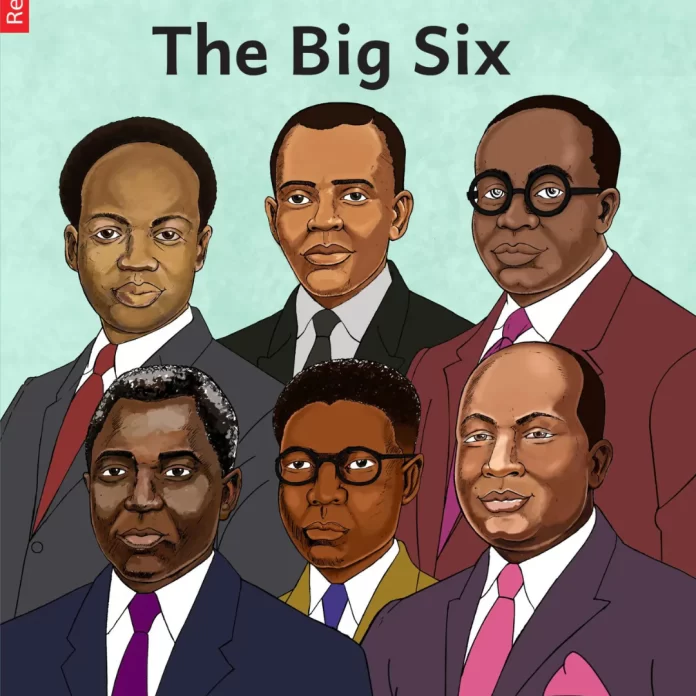
Court orders transmission of records on “Big Six” monument destroyer to Attorney-General.

0

The Kwabenya Circuit Court has ordered that its records on the man held for allegedly destroying six effigies at the Airport roundabout should be transmitted to the Attorney General.  


The transmission of the court records should be done to the Attorney General through the Judicial Secretary, the GNA has gathered.  


The Court also ordered the Police to send Nowell Gavu, the accused person, to the Pantang Psychiatric Hospital to receive periodic treatment pending the advice of the Attorney General.  


The Court on February 14, 2025, after hearing prosecution and considering sections of the law, ordered the medical director who authored the report on the accused to appear to testify as to the unsoundness of the mind of the accused.   


Gavu is being held on charges of causing damage to six effigies on August 31, 2024, at the Kotoka International Airport roundabout in Accra. 

 
A complainant, who witnessed Gavu breaking the statues with a hammer, reported the incident, leading to his arrest.  


Gavu’s initial statements were inconsistent, but he later claimed that a spirit in his dream had instructed him to destroy the statues.  


Police Investigations revealed that Gavu had exhibited abnormal behaviour and had stopped taking his prescribed medication.  


His uncle had previously taken him to the Pantang Psychiatric Hospital for treatment. 

 
Gavu’s plea was not taken by the court. The court ordered that he should be taken to a Psychiatric hospital to ascertain the soundness or unsoundness of his state of mind.  


It directed the hospital to provide a comprehensive report on Gavu.  

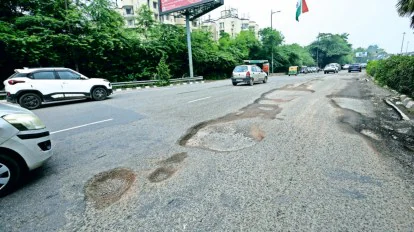
Our poor roads should be captured in the budget -Kenyasi resident.    

0

Some people in at Kenyasi, in the Asutifi North District of the Ahafo Region on Monday said they would be disappointed if the 2025 budget fails to capture the reconstruction of deplorable of roads in the area .

Dr Cassiel Ato Baah Forson, the Minister of Finance will present the first Business Statement and Economic Policy of the government to Parliament on Tuesday, March 11.

As one of the food baskets of the nation and mining area, the residents told the Ghana News in an interview that various roads linking farming communities were very deplorable and expressed the fear that those roads would be unmotorable as the rains set in.

In an interview with the Ghana News Agency (GNA), some of the residents bemoaned the bad condition of the Kenyasi-Sunyani highway and anticipated that the budget would capture for construction work to begin on the rehabilitation of the road.

“We are all hoping that the budget statement will provide funds for rehabilitation of the roads not only in Kenyasi but the entire Ahafo Region, Madam Cynthia Okyere, a petty trader stated.

Mr Francis Takyi, a teacher said he expected that budget to outline measures to stabilize and appreciate the Ghana cedi and to correspond with the dollar accordingly.

Other residents also expressed concern about high import duties and taxes, calling on the government to do something about that too.

Decentralisation is the way forward for Ghana – Swiss Ambassador.

0
Ghana - Swiss Ambassador

Madam Simone Giger, the Ambassador of Switzerland to Ghana, has described decentralisation as a powerful tool for local development, accountability, and efficient governance in Ghana.


She explained that decentralisation in Ghana divides the country into districts, municipalities, and metropolises, allowing local authorities to make decisions and manage resources based on their unique needs.


“Transferring power and decision-making authority from the central government to local governments and communities is the way forward for local development,” she said during a courtesy call to the Ministry of Local Government, Chieftaincy, and Religious Affairs to discuss national issues.


Madam Giger noted that Ghana was ready to begin a new phase of decentralisation, which would bring numerous benefits.


She stated that Switzerland, as a longstanding partner, remained committed to supporting Ghana’s progress.


“If Ghana continues to demonstrate its dedication to decentralisation, empowering local governments with greater autonomy and authority, we will be delighted to intensify our support in this area,” she added.


Madam Giger highlighted a key challenge in providing technical assistance: the need for concurrent political reform in Ghana.


She said decentralisation would only work if Ghana committed to empowering local authorities and encouraging a participatory approach.


The Ambassador was optimistic about the Constitutional Review Committee’s work.
She said the initiative could lead to more effective governance and improved collaboration between central and local authorities.


“Switzerland is very excited to be part of this journey, and that’s why we decided that we want to support the Constitutional Review Committee in their work,” she said.


She expressed hope that Ghana’s decentralisation reform would succeed
Mr. Ahmed Ibrahim, the Minister of Local Government, Chieftaincy, and Religious Affairs, praised the Swiss Embassy’s contributions to decentralisation.


He said it was encouraging to see that stakeholders were now satisfied with the reforms introduced by President Mahama.


Mr. Ibrahim noted that decentralisation, which started in the late 1980s, had significantly addressed development challenges.


He added that decentralisation was crucial for national development because it allowed local authorities to address regional needs.


The Minister acknowledged challenges in the decentralisation process, particularly with the District Assemblies Common Fund (DACF), which supports local development.


He said President Mahama was working to enhance decentralisation by consolidating development authorities under the Ministry of Local Government.


Mr. Ibrahim disclosed that the President had pledged to allocate about 80 per cent of the DACF directly to districts.


“Clearly, as a responsible minister, I think if we are able to walk the talk, Ghana will be a different place altogether,” he said.

Mentor the youth as inflow for the Methodist Church – Supt Minister.

0

The Association of Methodist Men’s Fellowships Northern Accra Diocese has called on members to mentor the youth to easily take over the Wesleyan zeal of evangelism and discipleship.


The Association, at its Sixth Annual General Meeting on Saturday in Accra, expressed concern over the lack of trained youth to take up the mantle.


Very Rev Benjamin Gorman, the Superintendent Minister of the Ashongman Circuit of the Methodist Church, said: “Our fellowship is suffering because we don’t have inflow.

If the church felt we are only copying what the women fellowships are doing and they don’t want to recognise the formation of the boys’ fellowships, it doesn’t mean we should throw away the vision.”


The conference was on the theme: “Discipleship; Growing into Maturity – (Ephesians 4:14-15).)
Very Rev Gorman expressed the sentiments when he addressed the members of the Men’s Fellowship at the Most Rev Prof K.A. Dickson Memorial Methodist Ashongman Circuit in the Greater Accra Region on behalf of the special guest, Rt. Rev Andrew Mbeah-Baiden, Diocesan Bishop.


He charged the members to pick five boys each and mentor as well as nurture them to become the next leaders to stir up the Wesleyan mission.


Kwamina Amoasi-Andoh, the immediate past Diocesan Chairman, in his third and final address, said 2024 had been a year of significant growth, challenges, and spiritual enrichment for the Men’s Fellowship in the Northern Accra Diocese.


“We started the year 2024 with 1,955 members, and by the grace of God, we now number 2,331, an increase of 376 brothers,” he stated.


“This increase in membership is a testament to the power of unity and the strength of our collective commitment to Christ. My target has been 2,500, the end of my term but we could not achieve it and I leave this to my successor to continue.”


He stated that the core focus of the fellowship remained evangelism and discipleship, “as we strive to stir up the Wesleyan zeal of evangelism, discipleship, and holiness towards accelerated church growth.”


As part of members’ efforts to respond to the needs of the youth, they had developed entrepreneurial/youth development schemes for the Diocese to empower young people to become active participants in the mission of the church.


He expressed gratitude to the members for their support during his tenure and pledged to assist in any venture when the need arose.


The Association elected Nana Atto Hope, Chairman, Kwamina Amoasi-Andoh, Immediate Past Chairman, and Joseph Nii Attram, Secretary to execute its mandate.


The rest were Samuel Kow Acquah, Treasure, Frank Ansah Addo, Organiser, Eric Bonney, Evangelism Coordinator, Henry Brown, Co-opted Executive, and Benjamin Anum Quaye, Assistant Secretary.

Minority Leader urges BoG to resist political influence.

0

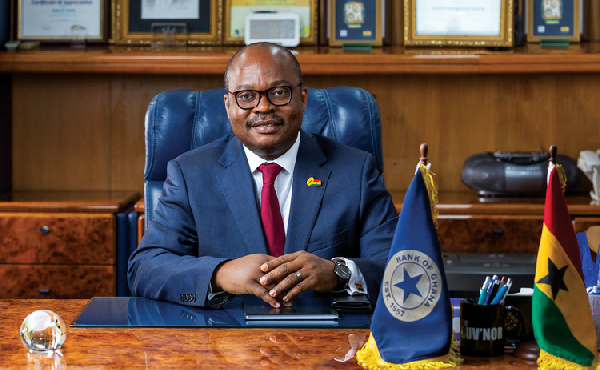
Minority Leader Alexander Afenyo-Markin has advised Dr Johnson Asiama, the Governor of the Bank of Ghana (BoG), to maintain the independence of his office and avoid political controversies.


Speaking in Parliament on Wednesday, Mr Afenyo-Markin cautioned against selective scrutiny of the central bank’s actions.


Mr Afeny-Markin said: “Mr Speaker, I recall that in the 2015 State of the Nation Address, Mr. President [John Dramani Mahama] raised concerns about poor supervision of the banking sector by the Bank of Ghana. The governor today was the deputy governor then.


He questioned: “Are we now picking and choosing which matters we want the governor to brief us on?”
The Minority Leader further urged Dr Asiama to resist political influence, warning, “… Mr Governor, don’t make yourself a tool for political football.


“The role of the governor of the central bank is critical to the economy of this country. I do not want to politicise the office of the governor, and I urge others to do the same.”


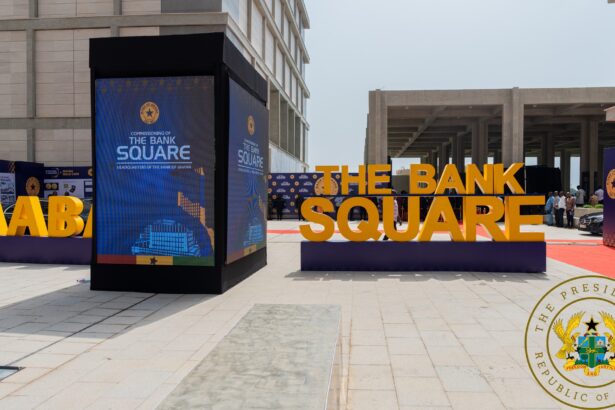
Mr Afenyo-Markin’s remarks came amid ongoing debates over the siting of the BoG’s new headquarters, with the Minority arguing that due process had not been followed, while the Majority defended its legitimacy.


The Minority Leader also called on the Majority in Parliament to approach economic discussions with caution, emphasising that their handling of such matters could have significant consequences for Ghana’s financial stability.


Dr Johnson Asiama, the Governor of the BoG appeared before Parliament to address concerns over the BoG’s headquarters building.


The new state-of -the-art facility, located at Ridge Roundabout in Accra, was inaugurated on Friday, Movement 20, 2024, by former President Nana Adding Dankwa Akufo-Addo.

Opoku-Agyemang eulogises Rawlings for instituting President’s Independence Day Award.

0

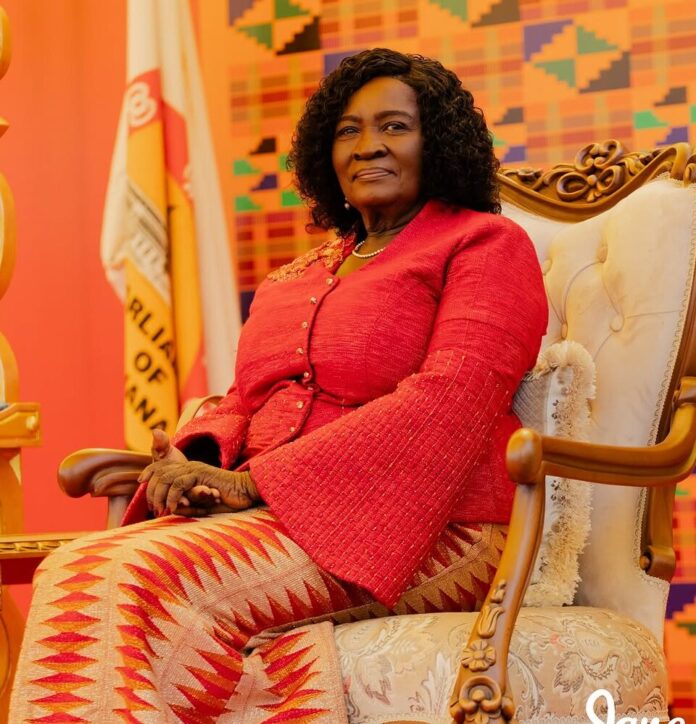
Vice President Professor Naana Jane Opoku-Agyemang on Wednesday eulogized late former President Jerry John Rawlings for instituting the President’s Independence Day Awards.


The President’s Independence Day Awards, established in 1993, have recognized academic excellence.
The award is now a key part of Ghana’s Independence Day Celebration.


The Vice President gave the commendation in her address at this year’s President’s Independence Day Awards Ceremony in Accra, during which 52 best deserving students in the 2024 Basic Education Certificate Examination (BECE) were honoured.


The annual event, which is sponsored by Nestlé Ghana Limited, recognizes and rewards exceptional young students aged 14 to 19 from across the regions.


The 52 awardees for the 2024 BECE include 32 students from public schools, 16 from private schools, and four students with hearing and visual impairments.


As part of their award package, each student received a laptop, Nestlé souvenirs, and one year’s supply of Nestlé products, as well as a plaque and a signed certificate from the President of the Republic of Ghana.


The students also engaged in a series of exciting activities prior to the event, which included a tour of the Nestlé factory in Tema, visits to Jubilee House, the Ministry of Education and the University of Ghana.


Vice President Prof Opoku-Agyemang personally congratulated the Awardees for how far they had come.
“…Yes, you have come far, you have much further to go. This is a good step, keep it up, keep going. Keep realizing your dreams. Don’t stop yourself, and don’t allow others to stop you. But you know and I know that you didn’t get here today by yourselves,” the Vice President said.


She advised the students to be grateful to their parents for the good roles they had played in their upbringing and educational pursuit.


“Your parents, those who helped your parents to raise you, the drivers who took you to school, the teachers who taught you, your friends that you socialized with, they have all been part of this journey.


But because you were the ones who studied, you were the ones who wrote the exams, and you are the ones who are here today, I want you to first clap for yourselves,” she said.
Vice President Prof Opoku-Agyemang said the Government was there to play its roles, such as providing school buildings, learning materials, teachers and a good learning environment.


She also reiterated that those who helped the parents to raise the children, such as the drivers who drove them in cars to school, also made huge contributions.
The Vice President also lauded teachers for their contributions towards the educational success of the awardees and other students.


“And of course, they have been your teachers. We like to give them names and all of that. Don’t worry, you are not the only generation to do that. I’m sure many in this room have done similar. But we also remember them with fondness, with thankfulness for how far they have brought us. Clap for your teachers.”


She said in all of this, there was an invisible hand of God that guided the Awardees, that protected them, which had brought them this far.
“I want to use this medium to address all our school children. Those who didn’t make it today, you can make it tomorrow. So don’t give up. Keep learning. Aim for excellence. You will get there,” she said.
“And as I used to tell my students on campus, you shoot for the moon. And if you don’t get to the moon, make sure you land among the stars.”
She congratulated the Awardees and their parents and teachers; saying “Congratulations. Keep the fire burning.
Keep it burning all the time. Keep working. Keep excelling.”
Mr Georgios Badaro, the Managing Director of Nestlé Ghana Limited, emphasized the company’s commitment and unwavering dedication to fostering positive change and ensuring the prosperity of individuals and communities.


He said education was a crucial foundation for development, and Nestlé firmly believes in acknowledging and celebrating the achievements of students.
In attendance at the event was Mr Haruna Iddrisu, the Minister of Education.

Caption:
1). Vice President Professor Naana Jane Opoku-Agyemang speaking at the event
2). Vice President Professor Naana Jane Opoku-Agyemang in a group photograph with the awardees and dignitaries

Bank of Ghana defends $11 million furnishing cost for new headquarters

0

Dr Johnson Asiam, the Governor of the Bank of Ghana (BoG), on Wednesday appeared before Parliament’s Committee of the Whole to address concerns over the $11 million furnishing cost for the central bank’s new headquarters.

A Committee of the Whole is a Meeting where both the Majority and Minority Caucuses converge to discuss matters of national interest, mostly closed doors.

However, on Wednesday, the Media was allowed in the proceedings.

The state-of-the-art facility, located in Accra, was inaugurated on Friday, November 20, 2024, by former President Nana Addo Dankwa Akufo-Addo.

Dr Asiama in his address to the House defended the decision, stating that the old BoG office had structural defects and was no longer fit for purpose. He said: ” Mr Speaker, furniture and furnishings were awarded at $11.1 million.”

He reassured Parliament of the central bank’s commitment to prudent financial management and its role in maintaining financial stability.

The new facility is expected to enhance the BoG’s ability to regulate Ghana’s financial system while aligning with the government’s broader agenda for economic stability and financial sector growth.

However, the project has faced criticism over its cost, with some questioning the prioritisation of the project amidst economic challenges.

The BoG had maintained that the new headquarters would provide a secure and modern workspace for its staff, enabling them to better serve the country’s financial sector.

Despite the controversy, Dr Asiama remained confident in the project’s benefits, citing the importance of a stable and efficient financial system for Ghana’s economic growth.